
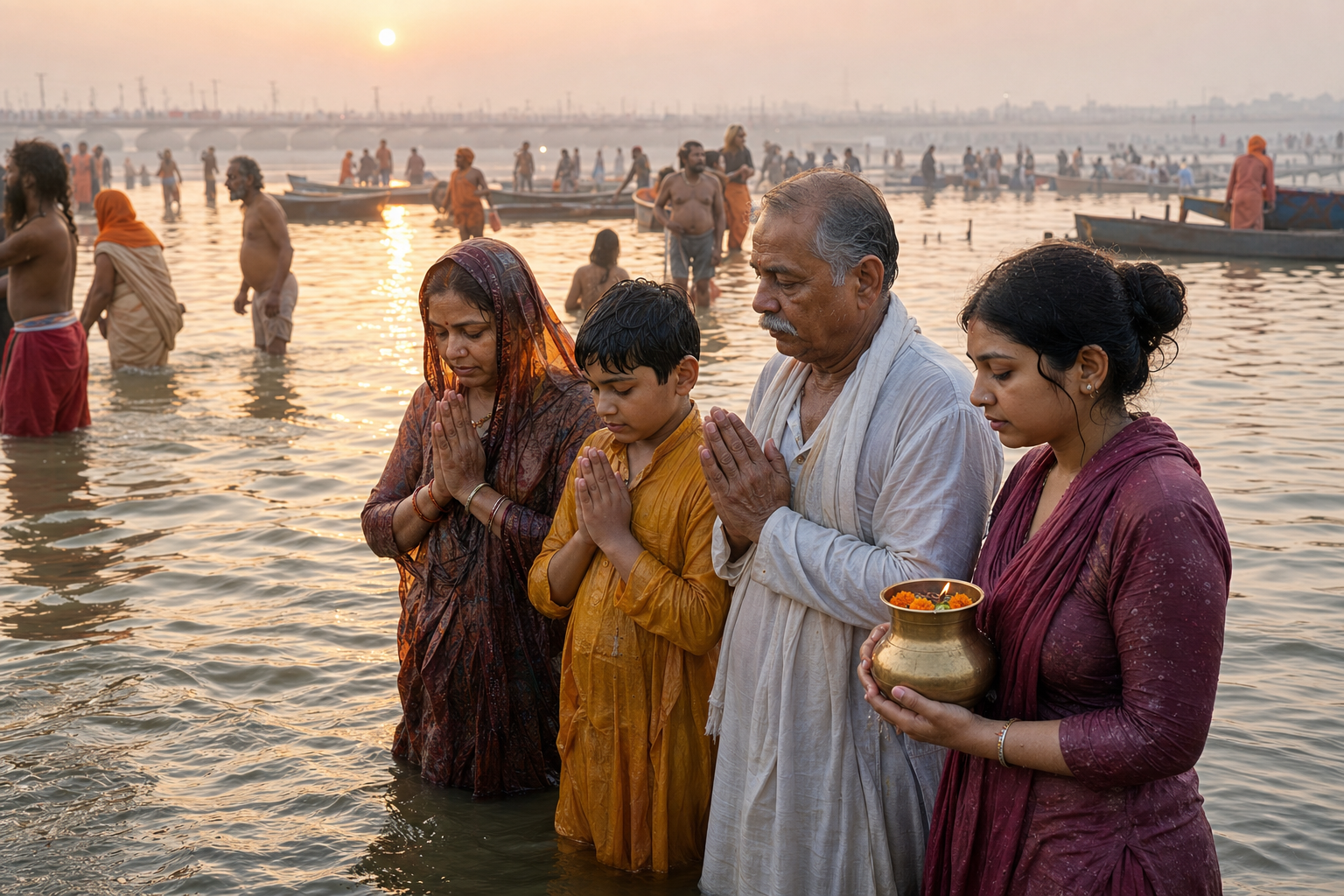
If you saw the crowds at Maha Kumbha Mela 2025 and wondered what a devotee could perceive beyond the spectacle, begin by separating scale from meaning. A camera can show the size of a gathering. It cannot show you what a pilgrim sought, which encounter changed the journey, or what discipline returned home with that person.
Devotee perspectives are most useful when you read them as situated experiences, not as a single verdict on the Mela. The practical questions are simple: Where does this pilgrim stand within the Dharmic world? How did that person participate? What became spiritually important enough to remember?
The crowd was the setting, not the spiritual conclusion
Maha Kumbha Mela 2025 took place at the sacred Triveni Sangam in Prayagraj and drew hundreds of millions of pilgrims, sadhus, saints, and seekers from Bharat and beyond. That scale matters. It demonstrates the continuing power of pilgrimage to move an immense and varied society towards a sacred place.
But a very large number does not tell you what everyone experienced. A sadhu, a temple volunteer, a first-time visitor, and an overseas devotee may occupy the same physical gathering while following different spiritual paths through it. Treating all of them as an undifferentiated crowd erases the very thing a pilgrimage is meant to engage: the intention of the individual seeker.
When you hear a devotee describe the Mela, listen for three layers:
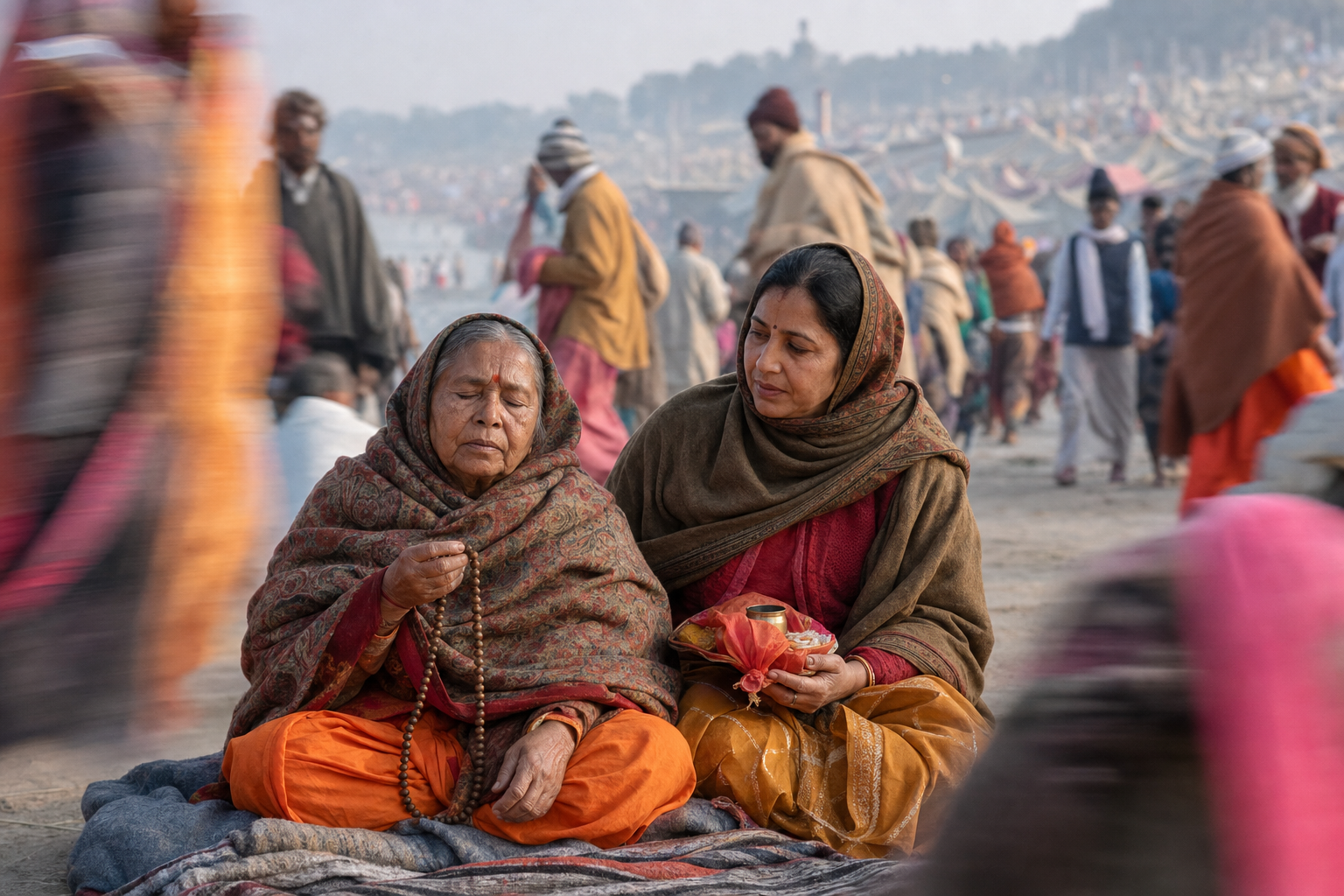
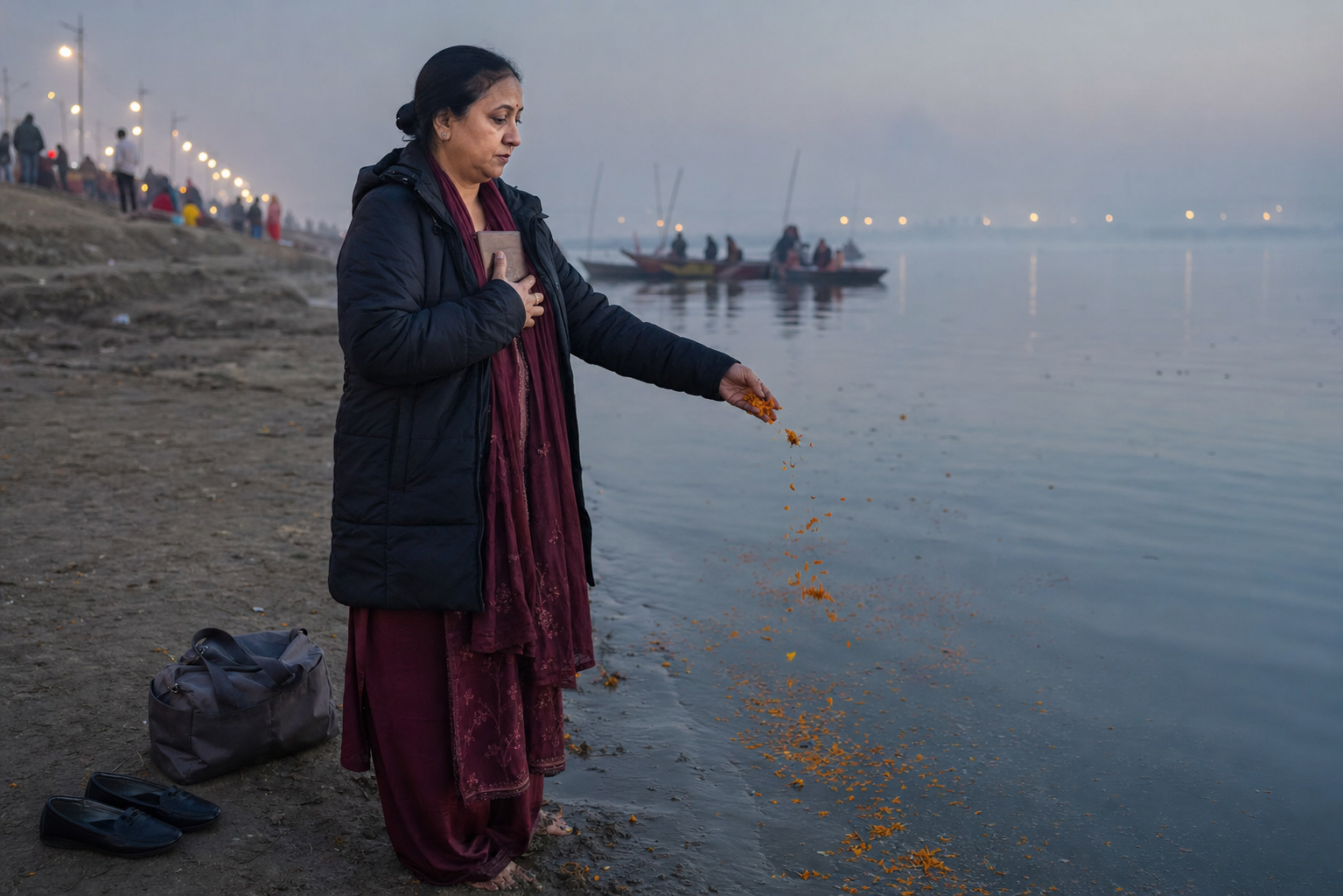
- Sankalpa: What intention brought the person to Prayagraj? Travel becomes pilgrimage when it is directed towards a sacred purpose.
- Participation: Did the pilgrim primarily seek darshan, saintly association, chanting, learning, hospitality, or service? The answer identifies the spiritual centre of the experience.
- After-effect: What continued after departure? Awe may be genuine, but a changed practice reveals whether the experience acquired durable form.
This keeps you from confusing visual grandeur with spiritual depth. It also prevents the opposite mistake: dismissing an immense public gathering merely because its inner consequences cannot be measured from a distance.
Pilgrimage, teaching, and seva occupied the same sacred field
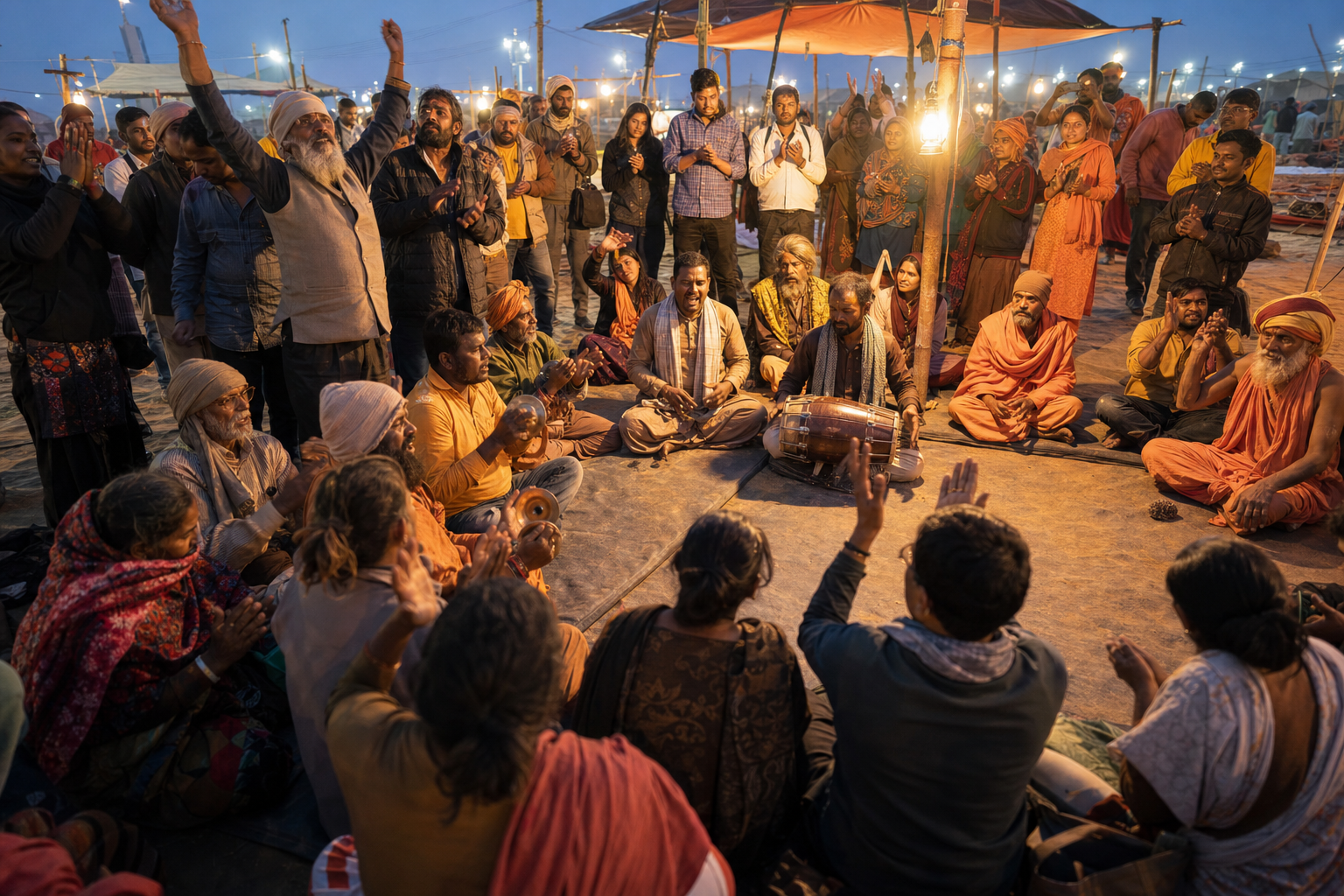
ISKCON’s presence offers one clear example of how a devotional tradition can inhabit the Mela. Its devotees welcomed thousands of visitors each day through harinama sankirtana, book distribution, prasadam, exhibitions, lectures, and the Hare Krishna maha-mantra. These were not six unrelated attractions. Together, they formed a cycle of receiving pilgrims, sharing teachings, serving them, and inviting them into direct spiritual practice.
Each activity expressed a different dimension of Vaishnava participation:
- Harinama sankirtana made the divine name audible in a public space. A visitor did not need prior learning to hear or join the chanting.
- Book distribution and lectures gave philosophical structure to an experience that might otherwise remain emotional or fleeting.
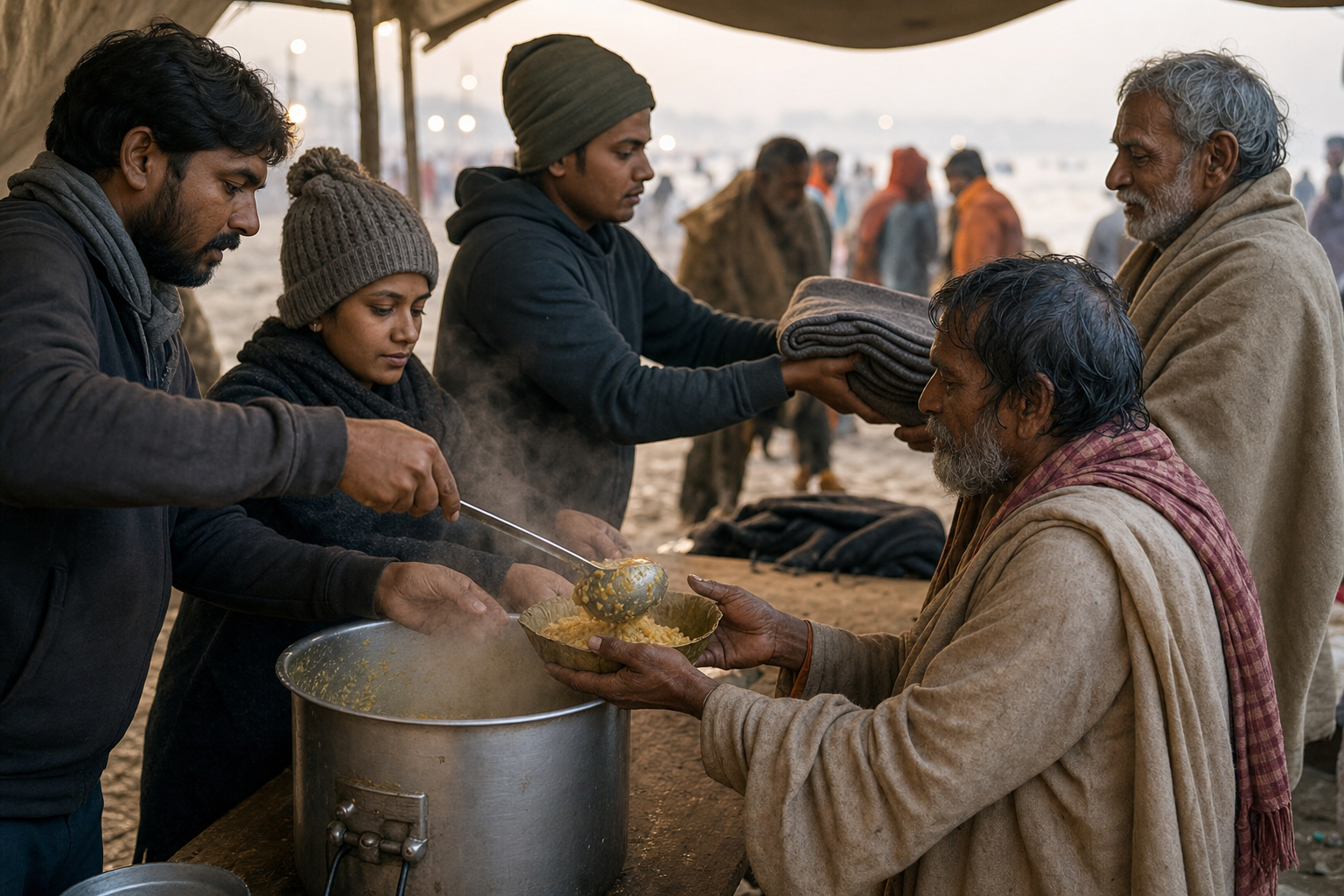
- Prasadam turned hospitality into seva. The pilgrim was received not merely as an attendee but as someone to be served.
- Exhibitions helped visitors connect a crowded living festival with a coherent devotional teaching.
This is recognisably a Gaudiya Vaishnava perspective, not a neutral description of every tradition at the Kumbha. That specificity is a strength when it is stated plainly. For devotees formed by Srila Prabhupada’s teachings, sharing Krishna consciousness with people from many places gave the international gathering a theological meaning. The widespread chanting of Krishna’s names could be understood in relation to Lord Caitanya Mahaprabhu’s prediction that the holy name would be heard in every town and village.
When you encounter any Mela testimony, identify its devotional grammar. A Shaiva ascetic, a Vaishnava kirtaniya, and a pilgrim seeking the Sangam need not emphasize the same acts for their experiences to be sincere. Ask what the person’s tradition teaches them to notice. That will tell you why one moment, among countless possible moments, became decisive.
Overseas devotees bring distance, belonging, and translation
Two of the personal viewpoints associated with the 2025 gathering came from Britain’s Hindu community: a Hindu resident of Hendon and Jaya Krishna Das of Bhaktivedanta Manor. Their journey from the UK to Bharat adds a distinct layer to the meaning of pilgrimage.
Physical distance can intensify intention. Someone who crosses national borders must actively set aside ordinary routines, enter an unfamiliar scale of religious life, and decide what the journey means upon returning to a diaspora setting. For such a pilgrim, Maha Kumbha may be both a visit to a sacred place and an encounter with a civilizational world in which public expressions of Dharma are not marginal.
Distance can also create a work of translation. An overseas devotee often returns to relatives, colleagues, or neighbours who have never seen a Kumbha. Explaining the experience requires choices: whether to emphasize the Sangam, the multitude of renunciants and pilgrims, the chanting, the service, or the simple fact that faith can gather people on a scale difficult to imagine from abroad.
That makes an overseas viewpoint valuable, but not universal. Neither diaspora identity nor temple affiliation grants one person the authority to speak for every pilgrim. You can listen more carefully by applying five filters:
- Locate the speaker. Note the person’s home, tradition, institution, and reason for travelling.
- Identify the role. A person serving visitors will notice different things from someone whose time is centred on personal pilgrimage.
- Separate observation from interpretation. Crowds, chanting, lectures, and prasadam are observable. What they signify is shaped by the devotee’s theology.
- Respect the stated scope. A personal reflection can disclose spiritual meaning without representing hundreds of millions of people.
- Look for the return path. The strongest testimony tells you what the pilgrim will practise, serve, remember, or communicate after coming home.
These filters let you honour devotional speech without turning it into a census. They also help you recognise something a purely logistical account can miss: pilgrims do not experience a tirtha only as a location. They approach it through inherited teachings, communal practices, vows, relationships, and acts of seva.
Bring the Mela home through one repeatable discipline
Whether you attended Maha Kumbha Mela 2025 or followed it from afar, borrowed emotion will not carry its meaning for long. You do not need to reproduce the scale of Prayagraj. You need to identify one spiritual movement within the gathering and give it a stable place in ordinary life.
Use the forms of participation visible in ISKCON’s service as a practical menu. Choose only the option that belongs naturally within your own practice:
- Nama: Set a definite daily time or count for chanting the Hare Krishna maha-mantra. Decide the measure before beginning so that the practice does not depend on mood.
- Svadhyaya: Read one short, defined passage from a work by Srila Prabhupada each day. Write one sentence explaining what the passage asks you to understand or change.
- Prasadam: Prepare food suitable for offering within your tradition, receive it with attention, and share it with at least one other person.
- Seva: Help with one concrete need at a temple or devotional gathering. Choose a task with a visible completion point rather than a vague intention to volunteer.
- Dharma communication: Invite one person to a kirtana or lecture, share one appropriate book, or explain one practice in clear language without pretending to represent every Hindu tradition.
Then follow the same discipline for seven consecutive days. Keep a two-line record: what you did, and what resisted the practice. On the seventh day, ask whether the action should continue unchanged, become smaller so it remains sustainable, or deepen through guidance from your guru, acharya, or local devotional community.
This exercise shifts your attention from consuming an extraordinary religious image to cultivating an ordinary spiritual commitment. The Mela’s magnitude may awaken you, but repetition is what gives awakening a place to live.
Key takeaways
- Maha Kumbha Mela 2025 was one immense gathering, but it contained many situated devotional experiences rather than one uniform response.
- A devotee’s intention, form of participation, and practice after returning home reveal more than expressions of awe alone.
- ISKCON devotees approached the Mela through a specifically Gaudiya Vaishnava combination of chanting, teaching, prasadam, hospitality, and public seva.
- Overseas viewpoints can illuminate pilgrimage, diaspora belonging, and the work of explaining Dharma across cultures, but they should not be treated as representative of every pilgrim.
- The most useful response is one repeatable discipline that converts inspiration into practice.
Before you leave this page, choose your one practice and place it on the calendar for the next seven days. You cannot bring the crowds of Prayagraj home, but you can protect the spiritual direction in which they pointed you.
References
