
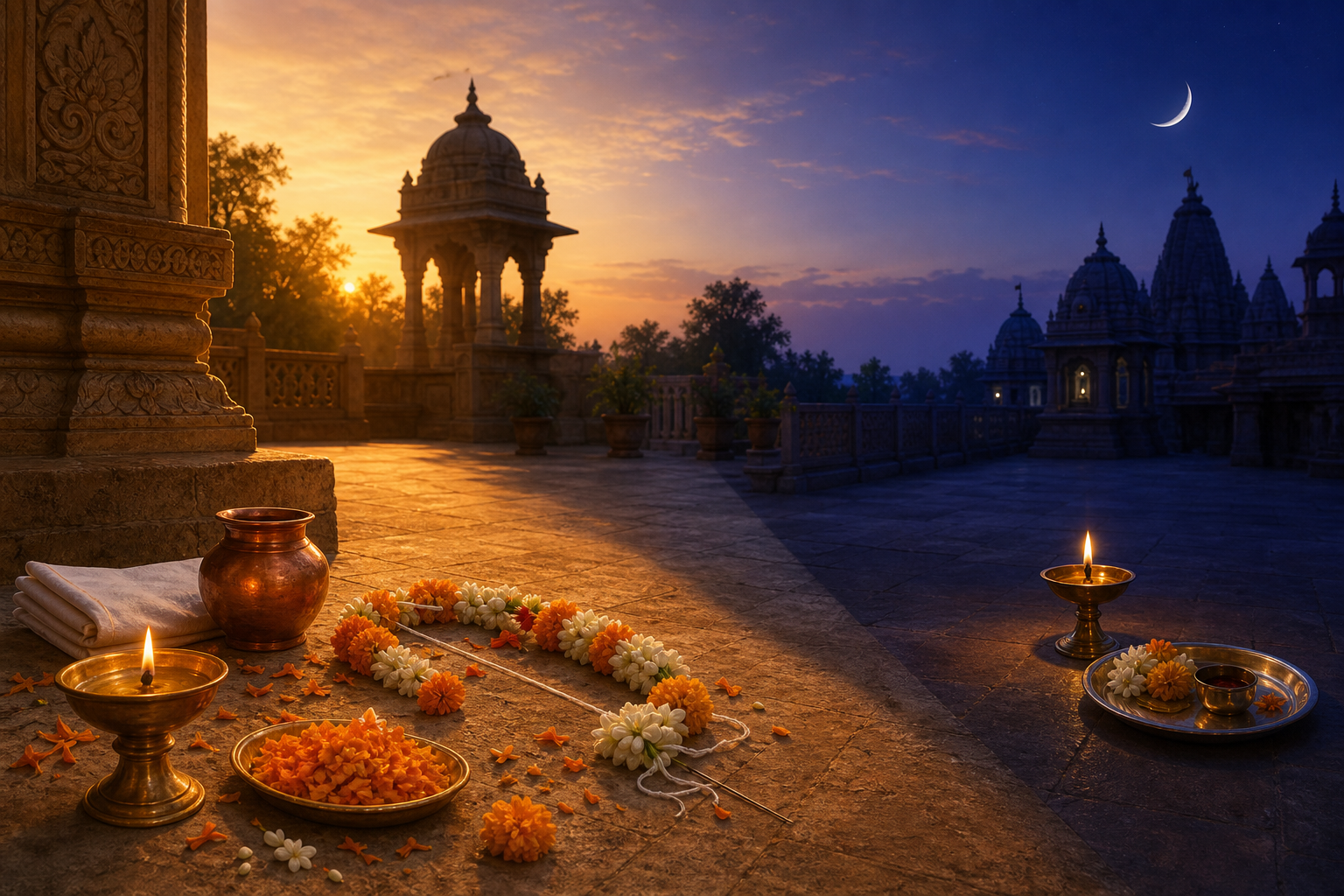
If you are choosing a time for important work, puja, or a Sankashti observance on June 3, the crucial fact is that this is not one uniform lunar day.
Use Krishna Paksha Tritiya as the working tithi until 6:53 PM in the calendar reference used here, followed by Krishna Paksha Chaturthi. Do not carry that clock time unchanged to another city: local sunrise, sunset, moonrise, and tithi calculations still determine the correct ritual and scheduling choices for you.
Read June 3 as two ritual windows, not one date
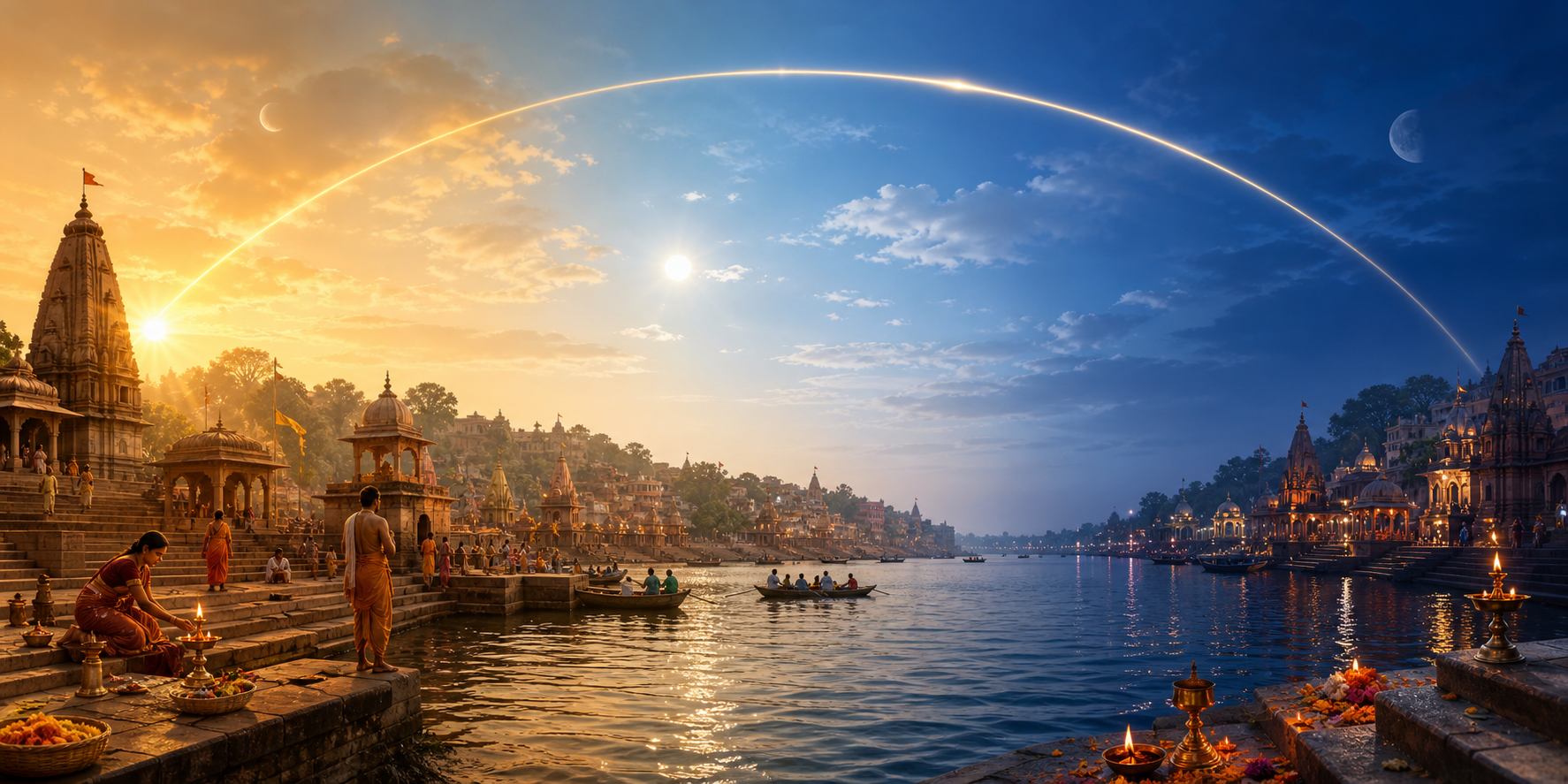
A tithi does not begin at midnight. It is defined by each 12-degree interval in the angular relationship between the Sun and Moon, and its duration can vary from roughly 19 to 26 hours. That is why a tithi may change in the afternoon or evening while the civil date remains the same.
For most everyday calendar purposes, the tithi present at local sunrise identifies the date. A vrata may use a different rule, however, because the tithi prevailing at the required ritual moment can matter more. Chaturthi observance, for example, is closely tied to local moonrise. You therefore need to distinguish between the day’s sunrise tithi and the tithi at the event you intend to observe.
| Period on June 3 | Working tithi | Practical emphasis |
|---|---|---|
| From local sunrise until 6:53 PM | Krishna Paksha Tritiya | Study, review, organization, maintenance, and preparation |
| After 6:53 PM | Krishna Paksha Chaturthi | Ganesha worship and location-verified Sankashti practice |
Treat 6:53 PM as the day’s central transition point, not as a universal time valid in every country. A person in Bharat and a member of the diaspora may share the same tithi sequence while seeing different local clock times and moonrise conditions.
Use the Tritiya daytime for careful, finishing-oriented work
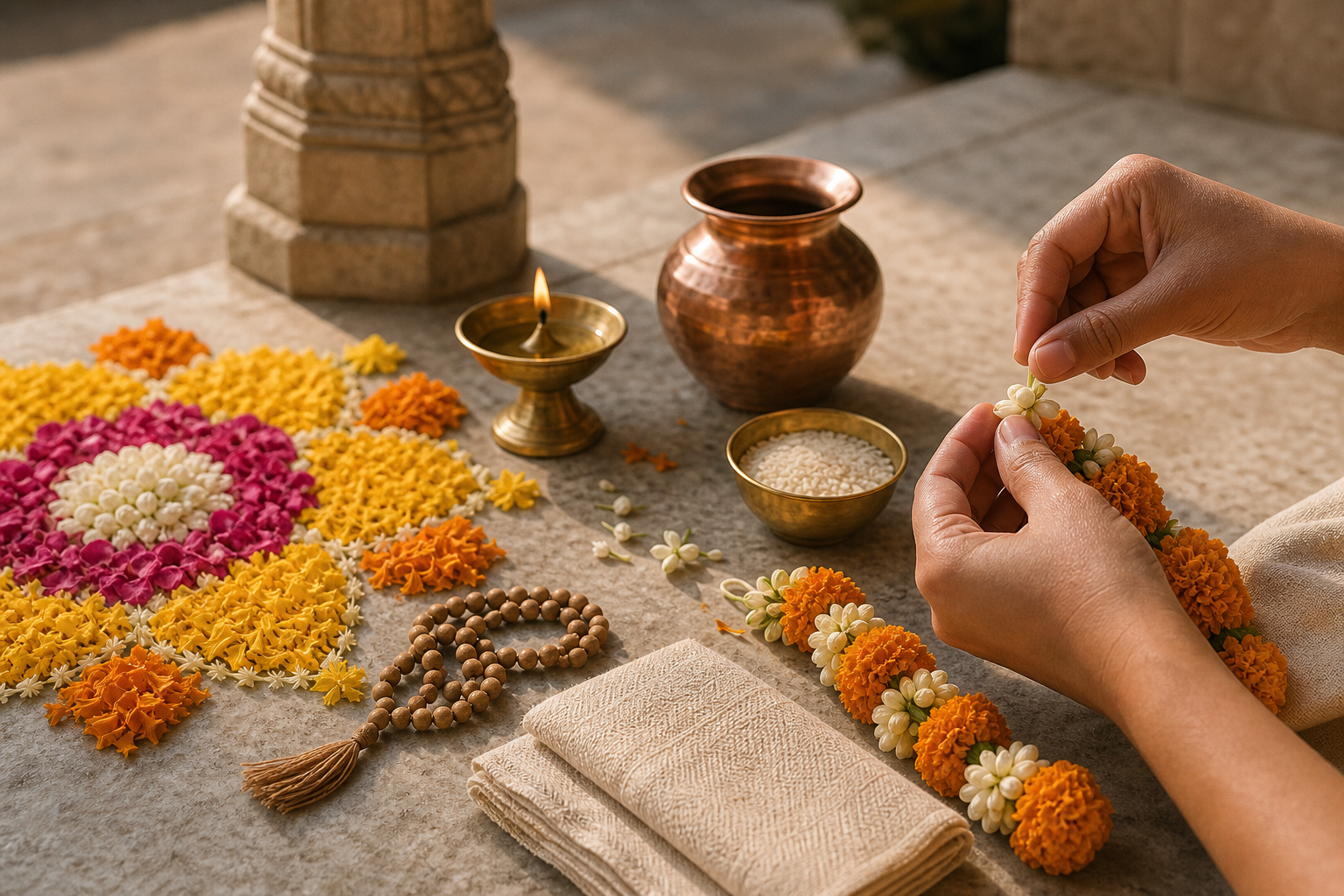
Krishna Paksha, the waning half of the lunar month, traditionally supports reduction, consolidation, and completion. Tritiya during this phase is better suited to measured progress than to unnecessary spectacle. If you have a choice, place tasks requiring concentration and orderly follow-through before the evening transition.
June 3 is also a Wednesday, or Budhavara, associated with Budha. Its traditional qualities include intellect, articulation, documentation, trade, and analytical clarity. The combination gives you a sensible daytime agenda:
- Edit a document, reconcile records, or review the details of an agreement before signing.
- Study a difficult subject, organize notes, or practise a skill that improves through precise repetition.
- Handle correspondence, negotiation preparation, and fact-checking that should not be rushed.
- Review a household budget or financial plan, while judging the decision on its real merits rather than assuming an auspicious time can remove financial risk.
- Clean the altar, replenish puja materials, arrange sacred books, and prepare what you will need after Chaturthi begins.
This does not mean every hour before 6:53 PM is equally suitable. Rahu Kalam, Yamaganda, Gulika, and the moment’s Nakshatra, Yoga, and Karana can change the choice. Use the broad character of Tritiya to decide what belongs in the daytime, then use your local Panchang to decide when to begin it.
Handle the evening Chaturthi transition correctly
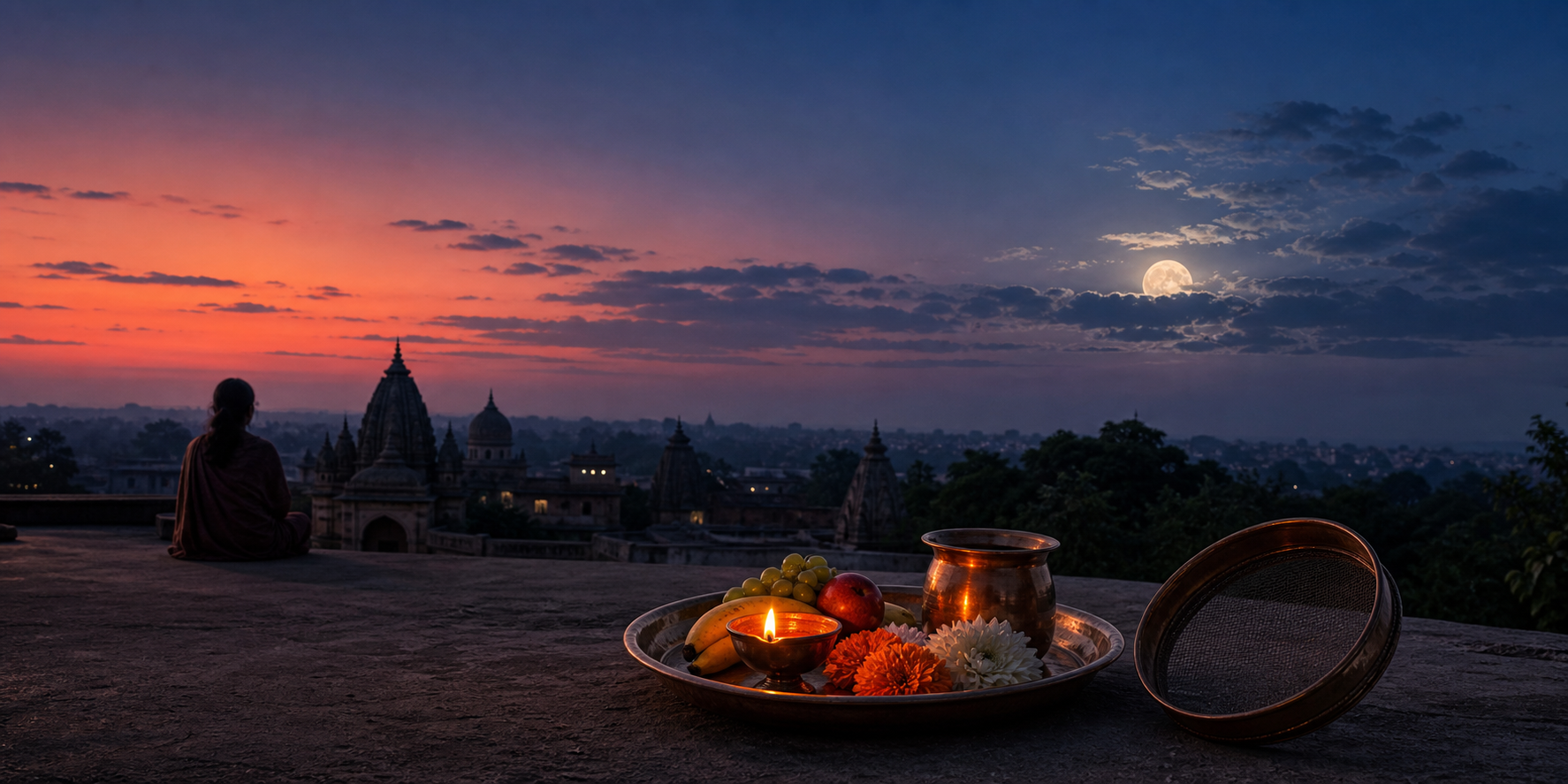
Krishna Paksha Chaturthi begins after 6:53 PM in the working calendar for this date. The waning-phase Chaturthi is observed as Sankashti Chaturthi in many regions and as Sankatahara Chaturthi in much of southern Bharat. The vrata is associated with Bhagavan Ganesha and the removal of sankata, or obstacles.
The common mistake is to see “Chaturthi begins tonight” and assume that the civil date alone settles the observance. It does not. Moonrise-dependent rites require local information, and the relevant question is whether Chaturthi prevails at the ritual time in your location.
- Confirm the local tithi ending time for your city rather than relying on a screenshot or timetable prepared elsewhere.
- Check the local moonrise time for June 3 and verify the tithi prevailing then.
- Follow your family, temple, or sampradaya procedure for the fast and Ganesha puja; regional sequences are not interchangeable in every detail.
- Where your tradition prescribes it, conclude the vrata after moonrise, Chandra darshan, and the customary offering to Ganesha.
If fasting is medically unsuitable for you, do not let a calendar instruction override your health needs. Seek appropriate medical guidance and ask a trusted acharya or family elder about a suitable devotional observance that does not require an unsafe fast.
Calculate Wednesday’s caution periods from local daylight
Fixed clock-time charts are convenient, but they become unreliable when moved between cities or seasons. Rahu Kalam, Yamaganda, and Gulika are determined by dividing the interval from local sunrise to local sunset into eight equal segments.
For Wednesday, Yamaganda occupies the second daylight segment, Gulika the fourth, and Rahu Kalam the fifth. To calculate them, subtract sunrise from sunset, divide the result by eight, and count the segments forward from sunrise. If you do not want to calculate them manually, make sure the Panchang you consult is set to the correct city and date.
Abhijit Muhurat is centered on local solar noon and can provide a useful auspicious interval when a stronger muhurta is unavailable. Wednesday creates a practical complication because Rahu Kalam commonly falls around the middle of the day. If Abhijit overlaps Rahu Kalam in your location, do not assume that the Abhijit label cancels the conflict. Classical practice generally favors moving a major beginning to another suitable window.
Choghadiya can help with short journeys, errands, submissions, and other routine beginnings when a full muhurta analysis is impractical. Favorable blocks include Amrit, Shubh, and Labh; Kaal, Udveg, and Rog are generally avoided. Even then, check whether your chosen Choghadiya overlaps Rahu Kalam before acting.
Check the missing Panchang limbs before you commit
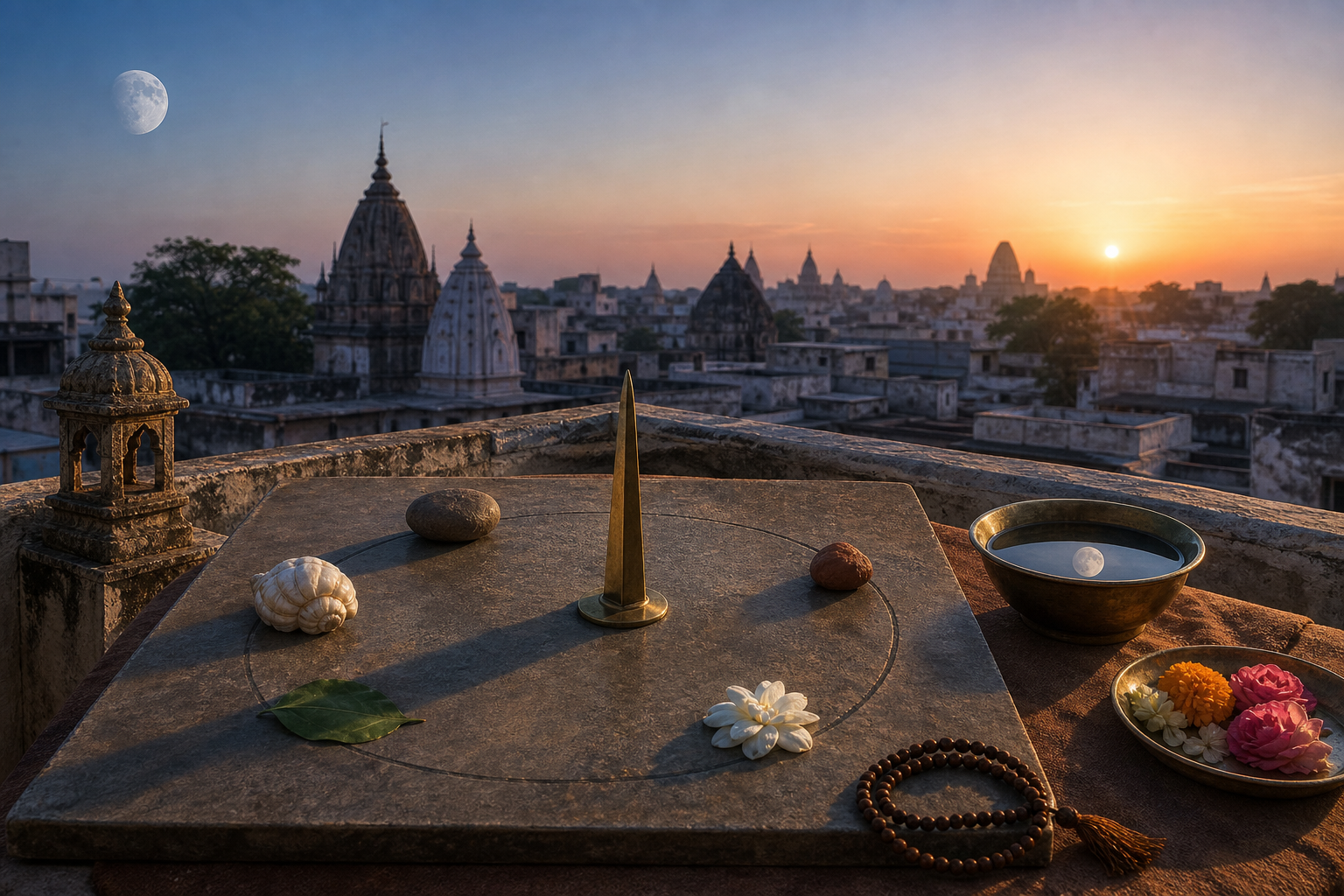
Tithi and Vara give you only two of the Panchang’s five classical limbs. Nakshatra describes the Moon’s lunar mansion, Yoga combines the longitudes of the Sun and Moon into another qualitative measure, and Karana divides a tithi into halves for finer timing. The Moon’s Rashi adds further context for the emotional and practical tone of a chosen moment.
An exact Nakshatra or Moon-sign claim for every reader would be misleading without a location-specific calculation, especially near a change during the day. Before fixing a wedding-related step, contract, journey, major purchase, initiation, or elaborate vrata, obtain these details for your actual city:
- Local sunrise and sunset
- Tritiya ending time and Chaturthi beginning time
- Local moonrise and the tithi prevailing at moonrise
- Nakshatra and its ending time
- Moon Rashi and any sign-change time
- Yoga and Karana at the intended beginning
- Rahu Kalam, Yamaganda, Gulika, and any usable Abhijit window
You may also encounter different lunar-month names. Amanta and Purnimanta calendars divide the month differently, and some 2026 almanacs identify this period with Adhik Jyeshta Maas. A difference in the printed month label does not necessarily mean the underlying tithi sequence is wrong. Compare the location, calendar convention, and event-time rule before deciding that two Panchangs disagree.
Key takeaways
- June 3 begins under Krishna Paksha Tritiya and shifts to Chaturthi at 6:53 PM in the working reference.
- Use the daytime for study, editing, organization, careful review, and preparation for evening worship.
- For Sankashti Chaturthi, verify local moonrise and the tithi prevailing at moonrise; the civil date alone is insufficient.
- Calculate Wednesday’s Rahu Kalam, Yamaganda, and Gulika from local sunrise and sunset rather than copying fixed clock times.
- Do not choose a major muhurta without checking Nakshatra, Rashi, Yoga, and Karana for your location.
Before you place anything consequential on the calendar, set your Panchang to the correct city and write down four items: the 6:53 PM reference transition, your local sunrise and sunset, local moonrise, and the tithi at moonrise. That small check turns June 3 from a generic calendar entry into a day you can actually observe with precision.
References
