

You may already have a spiritual routine, yet still live as if the serious part of spiritual life can begin later: after work settles down, after the family needs less from you, after the mind becomes quieter. Mortality exposes the weakness in that bargain. Later is possible, but it is never promised.
The value of remembering death is not that it makes you think constantly about dying. It makes you stop postponing the way you mean to live. Used properly, mortality awareness turns belief into a present-tense refuge, clarifies your duties, and reveals which parts of your spiritual identity are real enough to survive pressure.
Let mortality clarify your life without darkening it
Most of us quietly treat death as a scheduling issue. We know it exists, but we place it somewhere beyond the visible horizon. Old age appears to be the natural deadline for renunciation, sustained sadhana, reconciliation, and surrender. The flaw is simple: mortality is not reserved for the old.
Srila Prabhupada once challenged the conventional meaning of an old person by pointing to a child who could also die at any moment. The teaching is not a prediction of disaster. It removes the false permission to delay. If life has no guaranteed minimum length, readiness cannot sensibly be postponed until the body announces its decline.
This does not mean treating pleasure, ambition, or family life as spiritual failures. Within the Hindu framework of purushartha, kama and artha have legitimate places when governed by dharma and viewed in the light of moksha. Mortality awareness restores that order. It asks whether enjoyment serves a wholesome life or rules it, whether wealth supports duty or consumes it, and whether your public religious identity matches your private conduct.
Use that perspective at an actual decision point. Before accepting another commitment, escalating an argument, hiding an inconvenient truth, or buying something mainly for status, pause over one of these questions:
- If my available time were visibly limited, would this still deserve it?
- Is this choice being led by dharma, or by appetite, fear, resentment, and the need to be seen?
- Which duty, apology, or act of service am I postponing while telling myself that there will be a better moment?
- Will this deepen a worthy relationship, or merely give me another possession, role, or distraction to defend?
Do not turn the questions into a demand for dramatic life changes. Their first purpose is discrimination. If the same contradiction keeps appearing, choose one proportionate correction and carry it through. Mortality becomes useful when it changes a decision, not when it merely produces a solemn mood.
Old age can intensify this clarity because the body no longer permits every excess without consequence. That constraint may become a teacher, but it should not be romanticized. Illness, disability, dependency, and pain are not automatically sanctifying. The spiritual opportunity lies in how you meet limitation, not in pretending that limitation is pleasant. The lesson available in old age is also available now: your body is temporary, your capacity is finite, and your response remains morally significant.
Choose a form of remembrance you can actually sustain
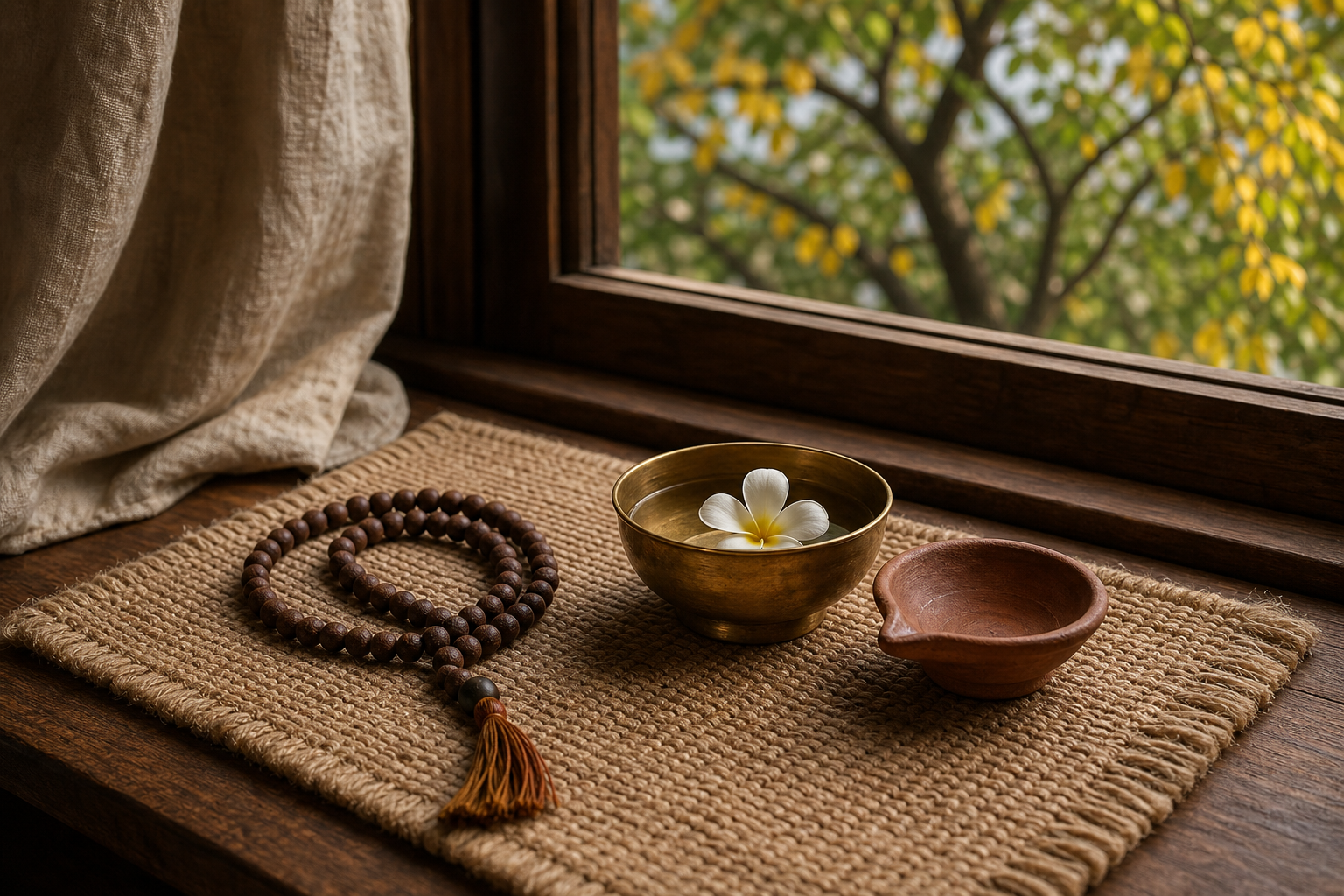
Shared discipline does not mean identical doctrine
Dharmic traditions do not make one interchangeable claim about God, selfhood, karma, or liberation. You do not have to flatten those differences to recognize a practical convergence: remembrance must be cultivated before the moment of crisis.
- For a Vaisnava, mortality gives urgency to bhakti through japa, kirtan, seva, scriptural hearing, and surrender to Krishna. Bhagavad Gita 2.13 places bodily change within a continuing passage, while 8.5-8.6 connect the final state of awareness with what the mind remembers.
- In Buddhist practice, maranassati brings death into calm awareness, while contemplation of anicca trains the mind to see arising and passing without trying to possess what cannot remain.
- In Jain practice, anitya-bhavana examines impermanence and aparigraha loosens the grip of possessions, identities, and attachments that cannot be carried beyond this life.
- In Sikh practice, naam simran anchors consciousness in remembrance of Akal Purakh while hukam places acceptance alongside responsible participation in life.
Choose the discipline that belongs to your actual path. A Vaisnava does not need to abandon japa for a fashionable meditation method. A Buddhist does not need to import devotional conclusions that conflict with Buddhist teaching. A Jain can work deeply with anitya-bhavana rather than collecting techniques, and a Sikh can make naam simran more continuous within ordinary duty. Depth usually requires staying with a practice long enough for it to challenge you.
If you are not firmly rooted in a lineage, begin with a practice that can be responsibly learned and honestly repeated. Seek guidance from a trustworthy teacher or mature community. The important distinction is between a refuge you are cultivating and an idea you merely admire.
Build remembrance into the shape of an ordinary day
A practice intended to steady you at death must first survive fatigue, irritation, distraction, and inconvenience. Build a rhythm small enough to keep on an unremarkable day:
- Before taking in messages or news, acknowledge that this life is finite. Take a few attentive breaths and begin your chosen remembrance: japa, simran, contemplative silence, prayer, or another discipline proper to your lineage.
- Read a short passage from a text you are actually studying. Do not measure the session by pages covered. Ask what the passage requires from your conduct before the day ends.
- At a transition in the day, pause before moving into the next task. Return to the Divine Name, the breath, or the fact of impermanence instead of carrying agitation forward automatically.
- Before sleep, review where appetite, fear, anger, or image-making governed you. Name one repair, restraint, or act of service for the next available opportunity.
- Keep regular satsanga. Private discipline is essential, but a sound community can detect self-deception, support practice during difficulty, and give remembrance a practical expression through seva.
The practical implication of Bhagavad Gita 8.5-8.6 is not to gamble on producing a sacred thought at the final instant. What arises under pressure is influenced by what has been rehearsed in ordinary consciousness. If the mind repeatedly runs toward resentment, possession, or status now, a devotional identity alone does not guarantee that its deepest habit has changed. Daily remembrance is how refuge becomes familiar.
Let conduct reveal whether your spiritual life is real
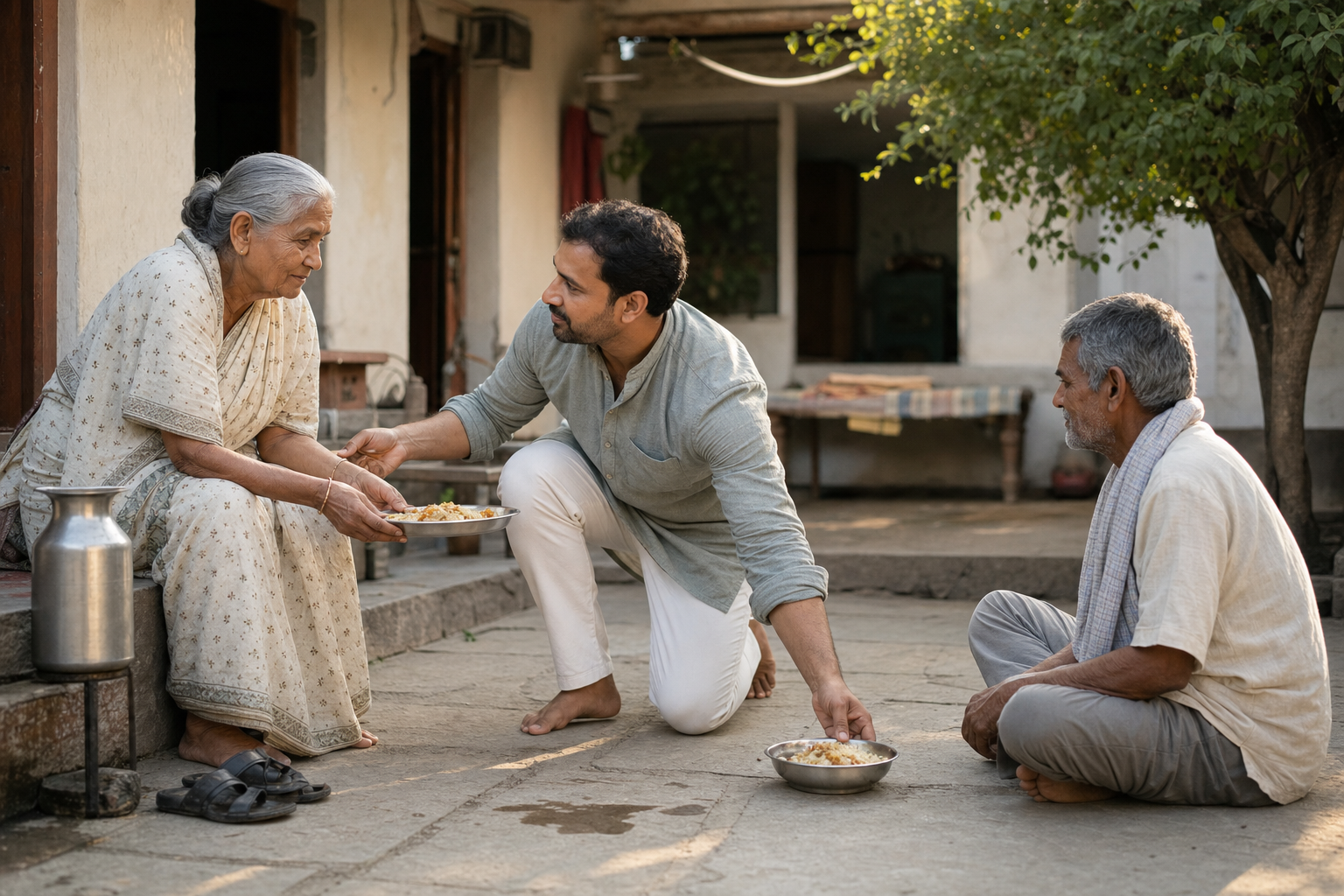
Spiritual performance can survive for years when the surroundings reward it. You can learn the vocabulary, clothing, gestures, dietary rules, and approved opinions of a community without allowing the practice to reach your attachments. Pressure exposes the difference. What remains when admiration disappears, plans fail, the body weakens, or control is lost is closer to your actual refuge.
Intellectual sophistication does not by itself dissolve fear. Knowing arguments about atman, anatman, rebirth, karma, or moksha is not the same as having trained the mind and heart to rest in a lived discipline. Study matters, but its fruit must appear in attention, conduct, and character.
Use a private audit rather than comparing your level of realization with someone else’s:
- Speech: Does remembrance make you more truthful and less eager to injure, gossip, humiliate, or win every disagreement?
- Livelihood: Are you asking spiritual practice to soothe a conscience that your way of earning repeatedly violates? Honest livelihood is part of the practice, not a secular detail outside it.
- Attachment: Can you use possessions without building your identity around them? Aparigraha begins with noticing what you cannot bear to share, lose, or stop displaying.
- Duty: Are you using detachment to avoid obligations to children, parents, spouse, community, or those who depend on you? Surrender does not excuse negligence.
- Service: Does your sadhana increase your willingness to help when there is no audience and no spiritual status to gain?
- Repair: When you recognize harm, do you admit it and make amends, or protect the image of being spiritually advanced?
Choose the contradiction that costs your integrity most and make one concrete repair. Offer the apology without explaining away the offense. Return what is not yours. Stop repeating the confidence entrusted to you. Give up the small dishonest advantage. Perform the neglected duty. If a livelihood conflict is serious, do not make a reckless change that abandons dependents; plan a responsible transition rather than using either spirituality or responsibility as an excuse for permanent inaction.
Yama-niyama, ahimsa, seva, restraint, and honest work keep mortality contemplation from becoming self-absorption. Death awareness that makes you fascinated with your own spiritual condition but less available to others has turned inward in the wrong way. A sound practice should gradually make you easier to trust.
Keep urgency from turning into fear or resignation

Mortality awareness is not the continuous visualization of catastrophe. Its proper direction is toward presence, gratitude, ethical urgency, and refuge. Pair the recognition of impermanence with something life-affirming: name a gift you have received, a person you can serve, and a duty that deserves your full attention. This prevents contemplation from collapsing into aversion to life.
You can also judge the practice by its effects. A constructive form of death awareness tends to reduce postponement, make ordinary time more precious, and strengthen deliberate practice. It should not be used to cultivate panic, punish yourself, or prove that you are more detached than other people.
If deliberate contemplation produces persistent intrusive images, panic, loss of sleep, inability to carry out ordinary duties, or deepening despair, stop the death-focused exercise. Return to grounding routines, supportive company, and a familiar spiritual practice that does not center on mortality. If the distress persists, intensifies, or includes thoughts of self-harm, seek qualified mental-health care urgently. Spiritual counsel may accompany appropriate clinical care, but it should not replace it.
Fresh grief also calls for gentleness. You do not have to turn bereavement immediately into a lesson or force yourself through a demanding contemplation. Prayer, communal support, rest, remembrance of the person who died, and simple daily duties may be the more truthful practice until the mind can approach impermanence without being overwhelmed.
Surrender is often confused with passivity. Dharmic surrender does not mean refusing treatment, abandoning responsibility, tolerating adharma, or pretending not to care about an outcome. It means acting as fully and cleanly as you can without claiming absolute control over what follows. You protect dependents, seek appropriate help, keep promises, and serve life while accepting that no action can make the body permanent.
Do not make composure at death into another status competition. Fear can arise even in a sincere practitioner, especially amid pain or confusion. The work is to cultivate refuge now, not to manufacture an impressive final performance or judge another person’s realization from the appearance of their last hours.
Key takeaways
- Death is certain, but its timing is not. Treat spiritual readiness as a present duty rather than a retirement project.
- Stay rooted in the discipline of your own lineage. Choose a form of remembrance you can keep when the day is difficult, not only when conditions are ideal.
- Test practice through speech, livelihood, restraint, service, duty, and willingness to repair harm. Religious appearance is not the same as refuge.
- Pair mortality contemplation with gratitude, satsanga, and seva so that urgency deepens participation in life rather than aversion to it.
- Pause death-focused exercises if they destabilize you, and seek qualified care when distress is persistent, severe, or connected with self-harm.
Before sleep, choose the remembrance you will begin with tomorrow and place what you need – a mala, text, prayer, or quiet seat – where you will encounter it before distraction. Then identify one delayed repair and take the first honest step. Authentic spiritual living does not begin with a dramatic feeling about death. It begins when you stop asking an uncertain future to do the work that belongs to you now.
References
