
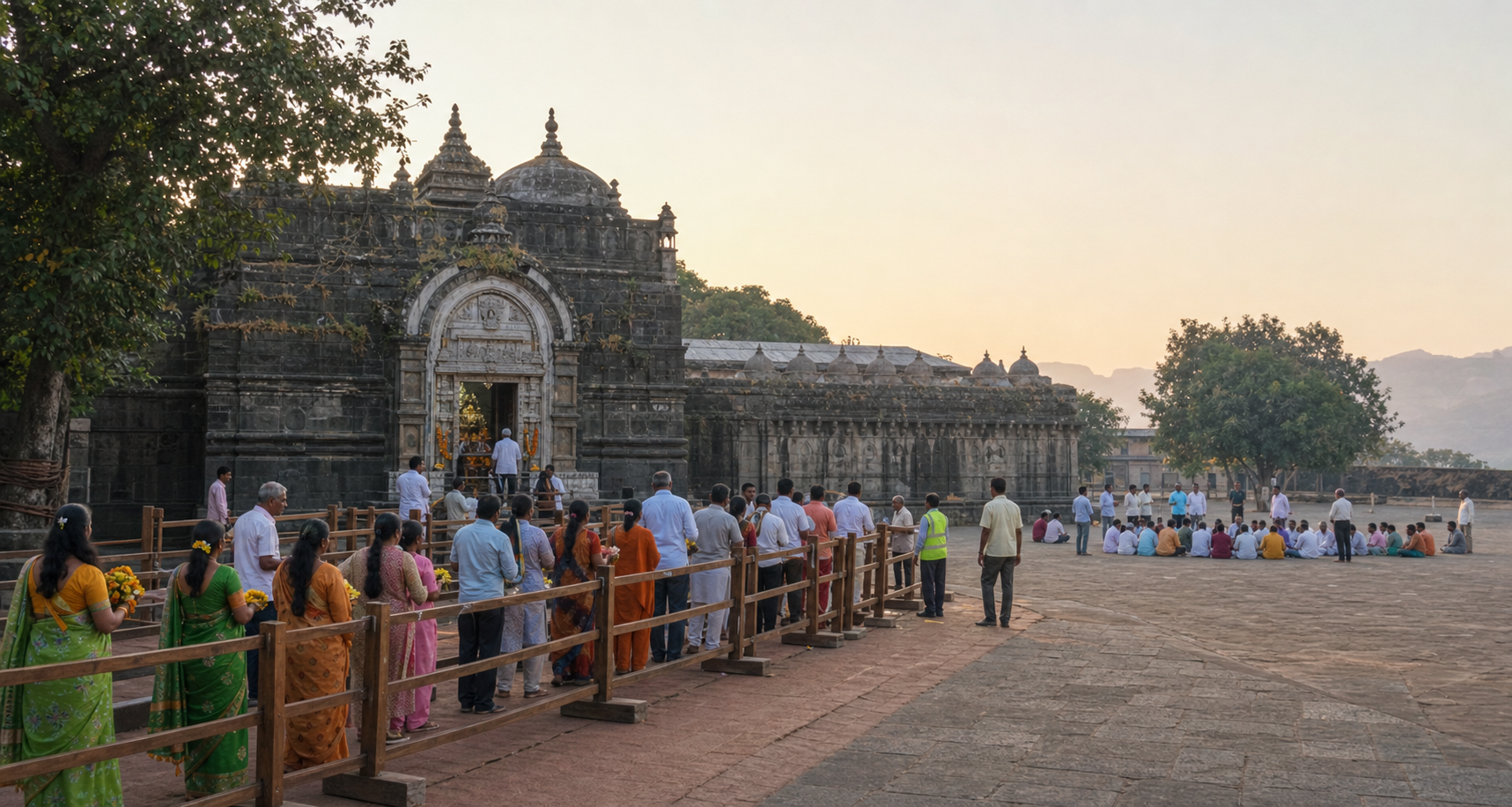
If you are asking whether the administration may restrict darshan at Durgadi Fort whenever another large religious gathering is scheduled nearby, the answer is not a simple yes or no. Public order can justify temporary regulation, but it cannot become a phrase that ends scrutiny.
You should ask for the exact restriction, the risk it addresses, the alternatives considered, and the time at which normal temple access will resume. Those details reveal whether officials are managing a difficult overlap or merely transferring its entire burden onto Hindu devotees.
Temple access is a right, not a scheduling favour
The Shri Durgadevi Temple is not interchangeable with a convenient venue. It is part of Durgadi Fort’s sacred identity and Kalyan’s cultural memory. For a devotee, darshan is the purpose of the visit, not a recreational activity that can be deferred without explanation.
That is why the recent confrontation carried more meaning than an ordinary disagreement over traffic. Hindu workers used Ghantanad, or the ringing of bells, to assert the presence of worship and demand access. Police detained several participants amid reported temporary restrictions connected with Eid prayers. The detentions may have reduced an immediate flashpoint, but they did not answer the underlying question: was restricting temple access necessary, proportionate, and fairly administered?
The Constitution of India supplies the starting point. Article 25 protects freedom of conscience and the freedom to profess, practise, and propagate religion, subject to public order, morality, and health. Article 26 protects the ability of religious denominations to manage their religious affairs. Neither provision makes every religious preference absolute, but neither allows the state to treat worship as an administrative afterthought.
Public order therefore permits regulation; it does not automatically validate whatever regulation an authority chooses. A restriction can be brief and still be arbitrary. It can be described as preventive and still be broader than the actual risk. Conversely, a carefully limited change to a route or access window can be legitimate when officials can show that simultaneous crowd movements would create a concrete danger.
The right question is not whether darshan or namaz matters more. Both are religious observances. The question is whether the state protected both while imposing no more interference than the circumstances required. At Durgadi Fort, accommodation cannot mean planning fully for one observance and closing the temple route by default. The administration must first test whether both can proceed through changes in timing, gates, pedestrian flow, or the use of nearby space.
Apply five tests to any public-order restriction
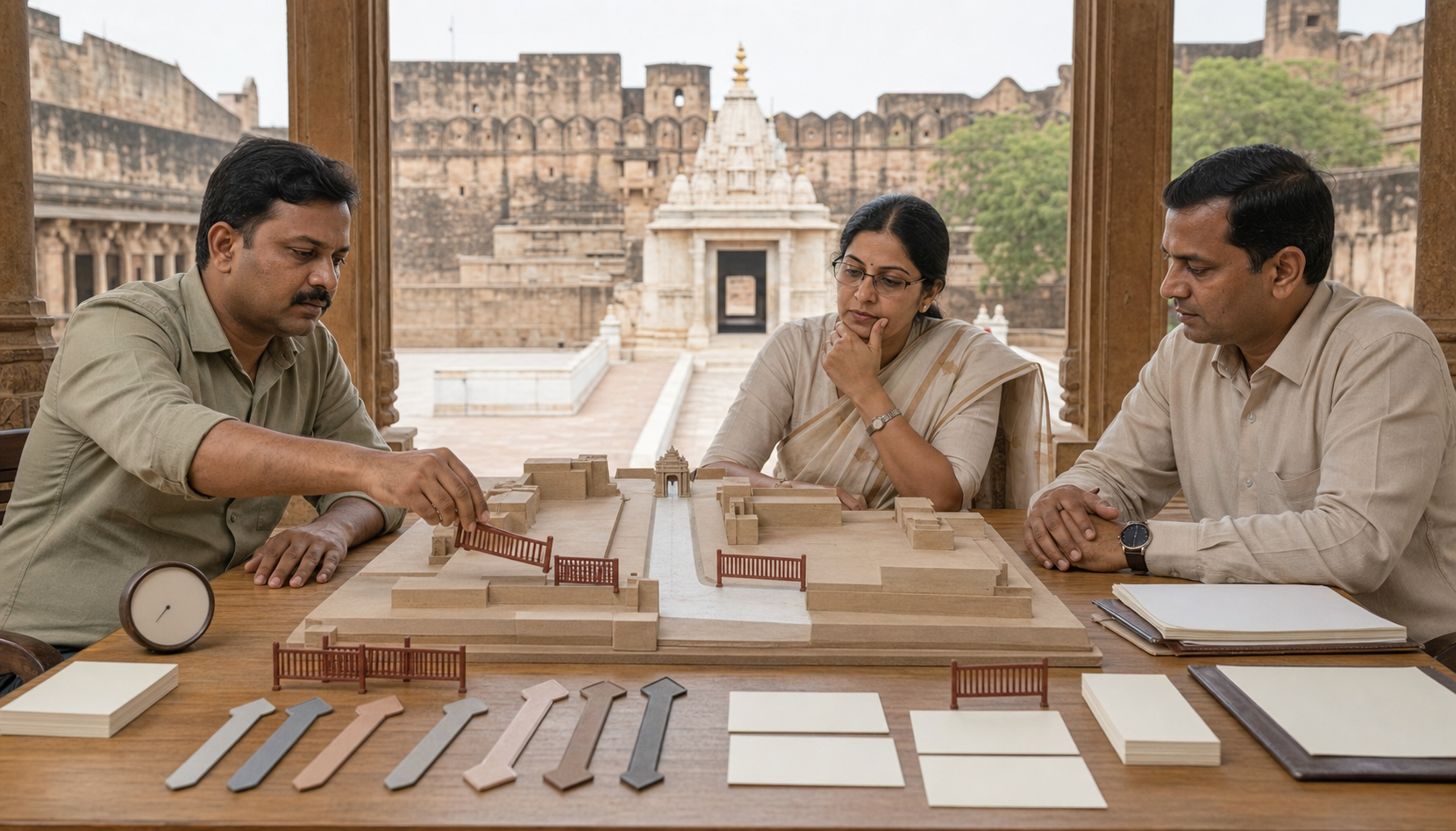
A barricade tells you what the police are doing. It does not tell you whether the decision behind it is fair. Devotees, temple trustees, elected representatives, and community organisations should examine an access order against five practical tests.
- The order must be knowable. Officials should publish a reasoned direction before the restriction takes effect wherever circumstances allow. It should identify the regulated area, affected gates or routes, starting and ending points, and the authority responsible. An oral statement that the temple is closed “for security” gives devotees no meaningful way to understand or question the decision.
- The risk must be specific. A large gathering can create congestion, opposing pedestrian flows, blocked emergency access, or a risk of confrontation. Officials should say which of these problems they expect. A general fear that sentiments may be high is not the same as a documented assessment of crowd movement and physical capacity.
- The restriction must be narrow. If the risk concerns one corridor during an overlapping prayer period, closing more space for more time requires a separate explanation. The regulated geography and duration should follow the risk rather than administrative convenience.
- Less restrictive options must be considered first. Staggered access, separate gates, one-way pedestrian routes, buffer areas, controlled queues, and moderated amplification may preserve both worship and safety. Authorities should be able to show why workable alternatives were accepted or rejected.
- Accommodation and reopening must be real. A temporary restriction should include an announced method of darshan during the affected period or a definite reopening arrangement. Devotees should not have to wait beside a barricade for an indefinite decision after the other gathering has ended.
Fairness does not always require identical arrangements for every community. Different crowd sizes, routes, and timings can require different controls. It does require the same decision-making standard: identify the risk, minimise the burden, facilitate worship, and remove the restriction as soon as its reason expires.
This distinction also helps you evaluate claims of discrimination. A difference in gates or time slots does not prove bias by itself. A stronger warning sign is an unexplained difference in burden: one gathering receives planned access and clear instructions while devotees at the temple encounter an improvised closure, uncertain waiting, or enforcement without an offered alternative.
No checklist can deliver a binding legal ruling on a particular order. That depends on the complete facts and, if challenged, legal review. If temple representatives are considering litigation or responding to detention, they should obtain advice from a qualified lawyer and preserve the written order, notices, photographs of access arrangements, and a factual timeline. The safe immediate course is to contest the decision through documentation and representation, not by attempting to breach a police cordon.
A fair crowd plan can protect darshan and namaz
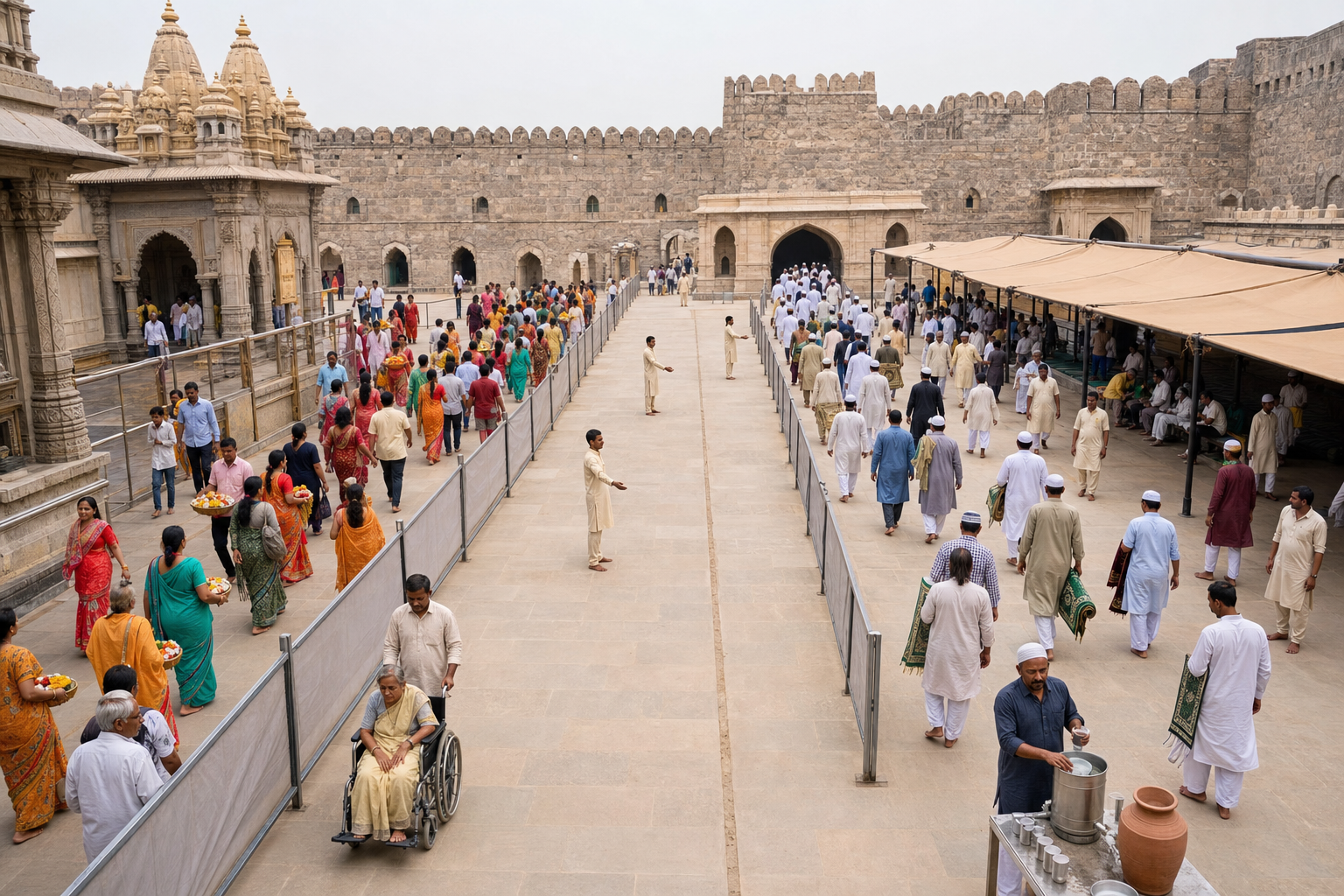
Durgadi Fort should not need a fresh crisis plan whenever important observances overlap. The administration can turn a recurring source of tension into a predictable civic procedure by planning before crowds arrive, communicating while restrictions operate, and reviewing what happened afterward.
Before the overlap
A joint coordination group should meet several weeks ahead of known high-footfall dates. Its task is operational, not theological. Temple representatives, Muslim organisers, police, municipal officials, emergency services, and local volunteer groups should compare schedules and map where people are expected to arrive, queue, worship, and leave.
- Mark the temple access routes, prayer area, emergency lanes, likely congestion points, and possible buffer zones on one shared map.
- Give darshan and namaz defined operating windows while keeping any period of exclusive route control as short as the actual crowd movement requires.
- Assign separate ingress and egress paths where the site permits. One-way movement reduces the crosscurrents that cause queues to lock against each other.
- Publish one consolidated notice through the temple, mosques, ward offices, local media, and digital channels. It should use the languages worshippers are likely to understand and state which route is open at which time.
- Provide a helpline and an on-site grievance point so that a wrong sign, blocked gate, or delayed reopening can be corrected before frustration becomes confrontation.
The most important product of this meeting is not a declaration of harmony. It is a usable plan that a devotee can understand before leaving home. If someone still has to discover the arrangement from a barricade or a forwarded message, communication has failed.
During worship
On the ground, uncertainty is often more inflammatory than delay. Signs should show the open gate, current queue, next access change, and expected reopening. Loudspeaker announcements should repeat the same information at reasonable intervals rather than issuing vague instructions to disperse.
Mixed volunteer marshals can help people follow the plan without making every interaction feel like a police command. Their role should be clearly limited to directions, queue assistance, and rapid reporting of obstructions. Police remain responsible for security and lawful enforcement.
Sound needs equally careful treatment. Ghantanad has devotional and expressive meaning; it should not be dismissed as mere noise. Yet amplification or organised sound immediately beside another prayer area during the narrow overlapping period can intensify conflict. A fair plan should moderate amplification by location and time without suppressing ordinary temple worship or treating Hindu sacred sound as inherently provocative.
Rumours require immediate correction. A message claiming that the temple has been closed for the day can mobilise anger even if access is due to resume shortly. Officials and trusted local representatives should issue the same verified update: what is restricted, why, which alternative remains available, and when the arrangement changes.
After normal access resumes
The end of the crowd is not the end of the administrative task. An after-action review should record crowd volumes, queueing times, medical incidents, complaints, detentions, the time each regulated corridor reopened, and how quickly reported problems were resolved.
Useful measures include the average wait for darshan, the interval between the end of the identified risk and full reopening, and the balance between facilitation and enforcement. These reveal failures that a simple claim of “no major incident” can conceal. An event may remain peaceful while devotees still endure an avoidable denial of access.
How devotees can defend access without weakening their case
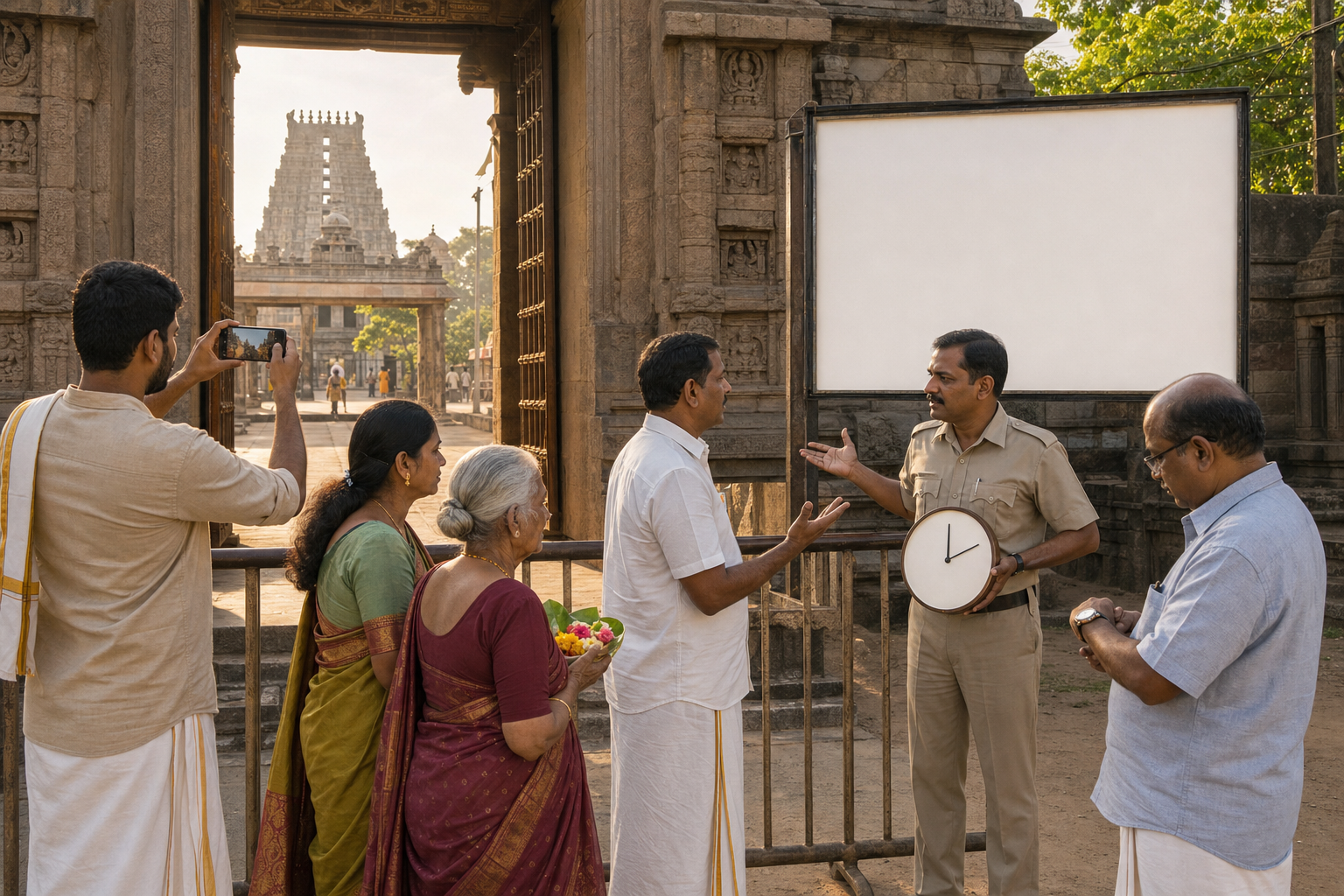
A strong response begins by making the administration answer concrete questions. Anger may be justified, but a vague confrontation allows the central issue to disappear into arguments about slogans, sound, or individual conduct. Keep the demand fixed on access, proportionality, and equal civic treatment.
- Obtain the exact direction. Ask whether there is a written order, which authority issued it, which gate or road it covers, when it began, when it expires, and what arrangement has been made for darshan.
- Separate verified facts from forwarded claims. Record what you can directly establish: whether the temple itself is inaccessible, whether only one route is closed, whether another gate is operating, and whether the announced reopening occurred.
- Offer a workable alternative in writing. Request a protected darshan corridor, staggered access, a controlled queue, or prompt reopening after the overlapping movement ends. A specific solution makes it harder for officials to answer with a generic reference to security.
- Use a named delegation. Temple trustees and Hindu organisations should identify representatives authorised to communicate with police and the district administration. Multiple competing messages create confusion at the moment when precision matters most.
- Document impact, not provocation. Preserve notices, timings, gate conditions, waiting periods, and official responses. Do not obstruct emergency movement or cross barricades. Such action creates a safety risk, exposes participants to enforcement, and can distract from the underlying access grievance.
- Ask for review after the event. Seek the administration’s risk assessment, the alternatives it considered, the record of reopening, and the procedure planned for the next calendar overlap. The goal is a standing protocol, not another improvised confrontation.
Preventive detention also needs disciplined analysis. Detention may be presented as an immediate de-escalation measure, but that description does not establish that every detention was necessary or lawful. Ask what conduct prompted it, what legal power was invoked, how long the person was held, and whether similarly situated people were treated consistently. Anyone directly affected should rely on individual legal advice rather than assumptions drawn from public statements.
Ghantanad can communicate a specifically Hindu grievance with clarity: devotees are present, worship matters, and silence should not be mistaken for consent. Its strategic value is greatest when the demand beside it is equally clear. State the requested gate, access window, or reopening time. That keeps the focus on remedy rather than allowing officials or opponents to recast the entire protest as a dispute over sound.
Key takeaways
- Public order can regulate temple access, but it is not a blank cheque for an unexplained closure.
- A credible order identifies the risk, exact area, duration, available accommodation, and reopening point.
- Time-staggering, separate routes, one-way pedestrian flow, buffer zones, clear signs, and limited acoustic management should be considered before access is denied.
- Fairness means comparable respect and burden under the same criteria, not necessarily identical arrangements for different crowds.
- Devotees strengthen their position by documenting the restriction, proposing a specific alternative, and keeping protest focused on darshan and accountable administration.
- Detention should neither be presumed lawful nor labelled unlawful without the individual facts and applicable legal authority.
Before the next overlapping religious date, temple trustees and local Hindu organisations should request a planning meeting and leave it with something concrete: a route map, access schedule, communication channel, escalation contact, and reopening procedure. If officials cannot provide those basics, the deficiency is visible before the first barricade appears.
Durgadi Fort needs a settled presumption in favour of worship: darshan continues through a protected route wherever possible, and any unavoidable pause is confined to a defined place and period with a publicly announced end. Insisting on that standard does not weaken public order or deny Muslim worshippers their observance. It makes administration do its proper work while ensuring that Hindu access is treated as a constitutional and sacred concern, not the easiest variable to remove.
References
