
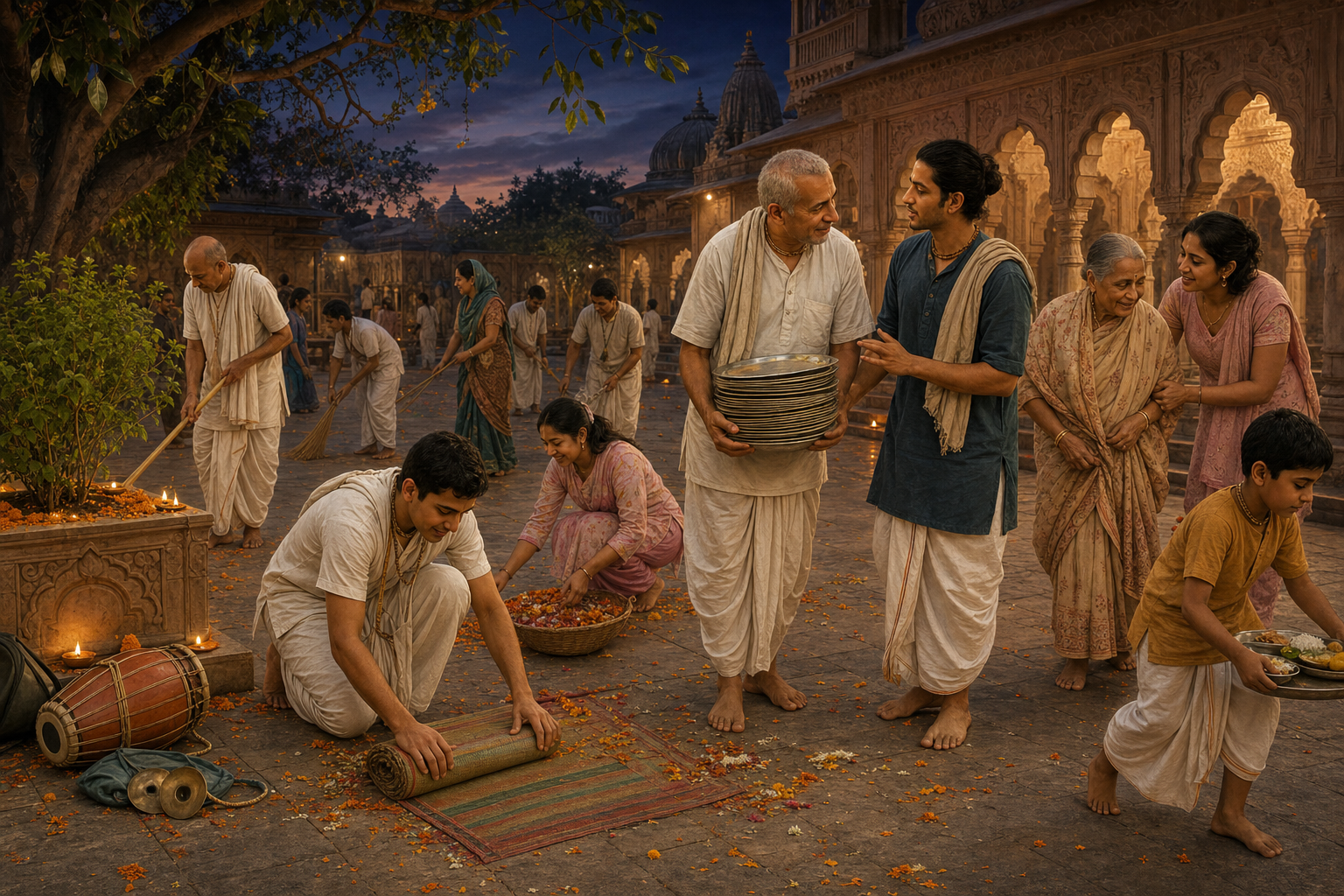
You can leave a powerful kirtan resolved to serve Krishna and still carry the same need to win into a temple meeting, family conversation, or community dispute. That gap is where communal dharma usually weakens: not in what we profess, but in how we behave when status, habit, or authority is challenged.
If you want Vrindavan bhakti to shape your household, congregation, or dharmic organisation, watch what happens after the devotional programme ends. The practical test is whether remembrance makes power more protective, correction more welcome, relationships more truthful, and inspiration more likely to become seva.
Vrindavan practice begins after the kirtan ends
Vrindavan gives devotion a powerful environment. Its temples, kirtan mandalis, darshan rhythms, scriptural teaching, prasadam culture, and opportunities for service continually turn attention toward Krishna. Sacred geography can make remembrance easier, but it does not make transformation automatic. You still have to carry the mood of service from the temple floor into ordinary relationships.
A useful sequence is sravanam, kirtanam, smaranam, and seva: hear, chant, remember, and serve. The first three should change the fourth. After a class or kirtan, ask yourself three questions: What truth did I hear? Where am I most likely to forget it under pressure? Whom will I serve differently because I remembered it? Without that final question, spiritual inspiration can remain an experience you consume rather than a discipline that reforms you.
You can notice the failure of this sequence in small moments. Someone quotes scripture accurately but dismisses a junior volunteer. A committee sings together and then uses contempt in its messages. A family honours a guru while refusing to acknowledge an avoidable injury within the home. The remedy is not to abandon chanting or reverence. It is to complete their moral movement through repair.
That repair can be concrete: name the person you dismissed, restate the concern fairly, apologise for the conduct without defending your rank, and agree on the next act of service. Humility does not mean pretending that you have no knowledge or responsibility. It means seeing your place accurately. You are neither the centre of the community nor disposable to it. Your ability, office, or seniority is entrusted for service.
Use Govardhana as a test of power, not just a beloved image

In Srimad Bhagavatam 10.25.8-14, Indra’s wounded pride unleashes destructive weather upon Vraja. Krishna does not answer endangered people with a lecture about their duty to tolerate authority. He raises Govardhana and calls the whole pastoral community – elders, children, gopas, gopis, and cows – into a common refuge.
The contrast is exact. Indra has functional power, but pride severs it from proportion and care. Krishna’s supremacy appears as immediate, inclusive protection. Govardhana becomes sacred service: a mountain does not tower over the frightened community but shelters it. The episode does not make every role, deva, or offering meaningless. It corrects ritual when appeasing authority begins to outrank compassion, gratitude, and duty.
Before defending a decision in your family, temple, or association, apply a Govardhana test:
- Does the decision protect the community, or mainly protect the decision-maker’s prestige?
- Can people with the least influence find shelter within it, including newcomers, children, elders, volunteers, and those who raised an inconvenient concern?
- Have the effects on animals, land, and shared resources been treated as part of dharma rather than as an afterthought?
- If new harm becomes visible, can the leader revise the decision without treating correction as humiliation?
Humility looks different at each level. For a leader, it means correctability. For a follower, it means service without flattery. For a community, it means that truth does not change with the speaker’s rank.
Do not weaponise Govardhana-lila against everyone who disagrees with you. A difference of preference is not automatically an Indra-like abuse of authority. Look for a real failure of care: preventable harm, exclusion from legitimate refuge, neglect of entrusted duty, or refusal to examine consequences. Then challenge the decision through shared standards – shastra, stated responsibility, and the welfare of those affected – rather than through an attack on someone’s character.
Honour teachers by making their virtues reproducible
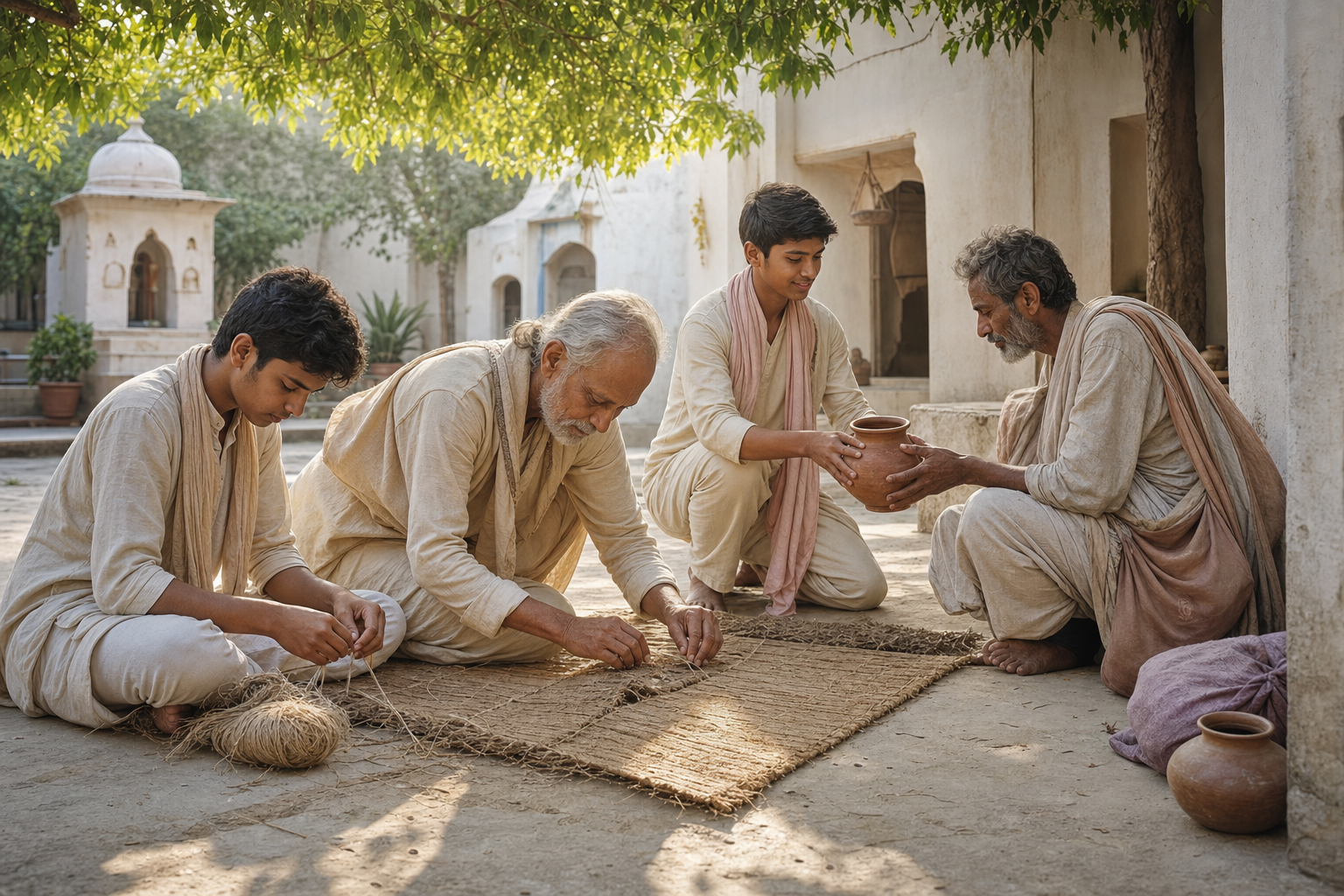
Vaishnava glorification is not merely ceremonial praise. Remembering a senior devotee’s scriptural teaching, congregational kirtan, mentoring, and steady community service gives people a lived picture of sadhana. Gratitude softens envy and keeps intergenerational memory alive. Yet a tribute has missed its purpose if listeners leave knowing that the honouree was extraordinary but cannot identify one practice they can adopt.
A sound remembrance gathering can follow four steps:
- State the service precisely. Name what the person consistently did: taught Bhagavad-gita, explained Srimad-Bhagavatam, led kirtan, mentored householders, welcomed seekers, or supported a community responsibility.
- Name the virtue revealed by that service. Steadiness, compassion, scriptural fidelity, patience, or accessibility is more instructive than a string of superlatives.
- Return the memory to parampara. Show how the virtue serves guru, sadhu, shastra, and Srila Prabhupada’s mission. This keeps gratitude from becoming a personality cult.
- Give the community a next practice. Begin a study circle, pair a younger practitioner with a mature mentor, strengthen japa, or convert the gathering’s energy into a defined service project.
The same discipline should govern archives. Label an exact quotation as a quotation, a remembered paraphrase as a paraphrase, and a personal recollection as an anecdote. Record the speaker, place, date, and scriptural setting when those details are known. Preserve complete recordings where possible, because an isolated clip can lose the qualification that made a teaching accurate. Contextual notes help future students distinguish a universal instruction from advice given to a particular person in a particular circumstance.
This is also humility. We admit the boundary of memory instead of turning affection into false certainty. Careful remembrance allows the guru-shishya tradition to remain living without becoming vague: faithful enough to preserve doctrine, personal enough to transmit character, and practical enough to guide the next generation.
Build dharmic unity around service without erasing difference
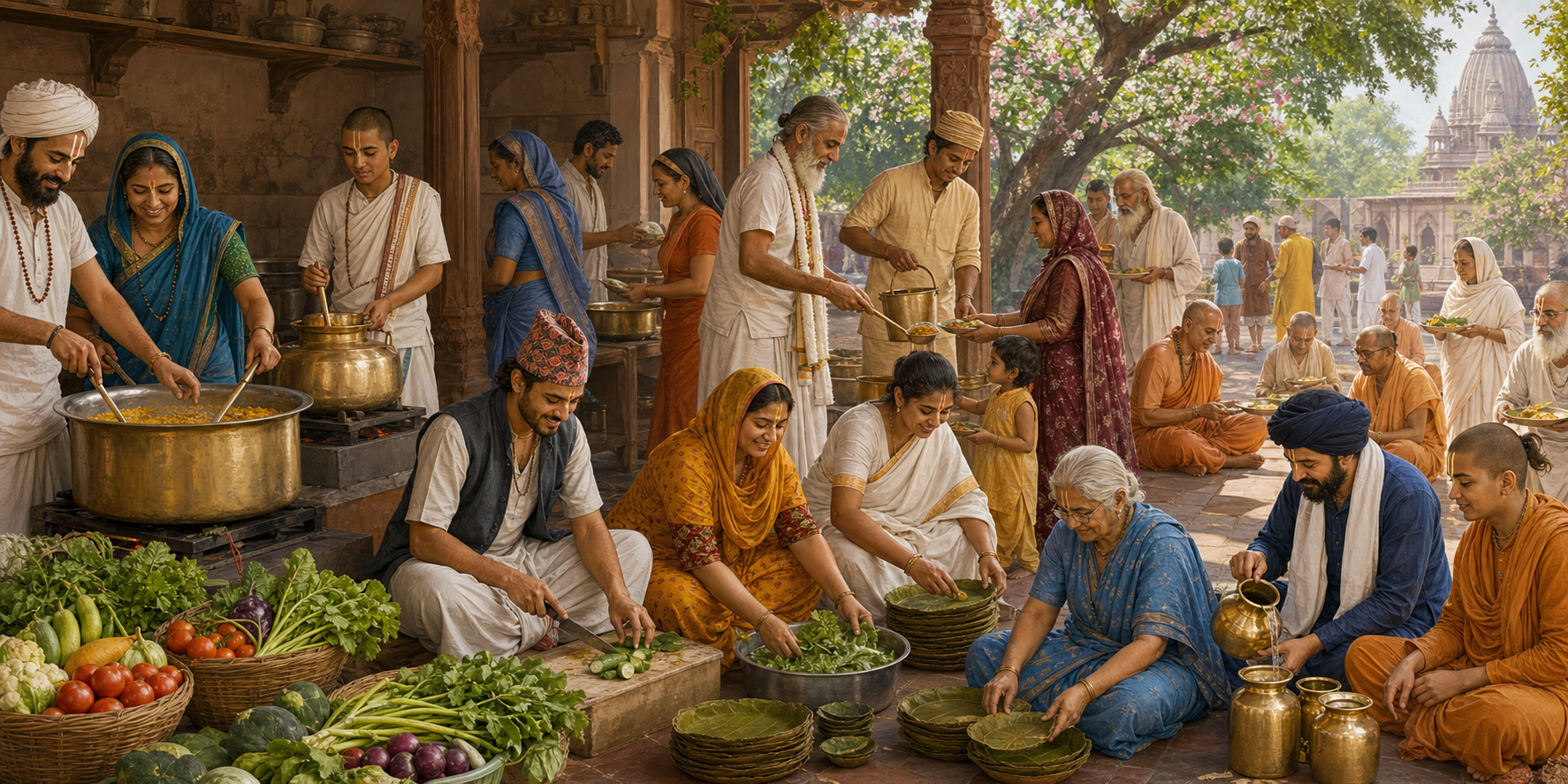
Vrindavan bhakti can contribute to a wider dharmic fellowship because several ethical commitments are recognisable across traditions: Vaishnava seva and nama-smarana, Sikh seva and simran, Buddhist karuna and mindful remembrance, and Jain ahimsa and reverence for teachers. These resonances form a shared civilisational grammar of truth, restraint, service, remembrance, and compassion. They do not make the traditions doctrinally identical.
Communal unity fails in two opposite ways. Sectarian boundary-marking treats every difference as a threat. Sentimental flattening calls distinct teachings interchangeable and therefore fails to respect any of them. A stronger method lets each tradition speak in its own vocabulary while asking what shared duty can be performed together.
Use a three-part design for an inter-dharmic gathering or local partnership:
- Let participants name their own practice. Sikh langar should remain intelligibly Sikh, Vaishnava prasadam intelligibly Vaishnava, Buddhist cultivation of compassion intelligibly Buddhist, and Jain ahimsa intelligibly Jain. Respect begins before translation.
- Identify the common ethical aim. Choose one principle such as compassionate service, responsible stewardship, truthful conduct, or care for vulnerable beings.
- End with a shared responsibility. Connect the principle to education, environmental care, a meal served without status distinctions, mentoring, or compassionate community outreach. Name the task, the responsible people, and the next point of accountability.
The Govardhana image helps here. One shelter can hold different relationships without dissolving them. The Vrajavasis do not become interchangeable beneath the hill; they become safe together. In the same way, dharmic unity does not require one vocabulary. It requires a common refusal to let pride, neglect, or institutional rivalry expose people to a preventable storm.
When a partnership becomes tense, bring the discussion back to three things: the shared principle, the beings affected, and the next protective act. If everyone has defended an identity but no one can name who will be served, communal dharma has not yet become seva.
Key takeaways
- Complete the movement from hearing and chanting to remembrance and a specific act of service.
- Measure humility by correctability, truthful relationships, and the protective use of authority – not by passivity or self-erasure.
- Apply the Govardhana test to decisions: ask who receives shelter, whose prestige is being defended, and whether visible harm can change the plan.
- Glorify senior devotees through precise, reproducible virtues anchored in guru, sadhu, shastra, and parampara.
- Preserve teachings carefully by distinguishing quotations, paraphrases, anecdotes, and context.
- Build inter-dharmic unity around shared ethical work while allowing each tradition to retain its own language and theological integrity.
At your next gathering, choose one place where prestige currently outruns care. Put it through the Govardhana questions, return the decision to a clear dharmic principle, and leave with a named act of seva, a responsible person, and a point of follow-through. Vrindavan bhakti becomes communal dharma at precisely that moment: when remembrance stops decorating the heart and starts governing what your hands do.
References
- Dandavats – Honoring His Grace Kratu Prabhu: ISKCON Vrindavan’s Living Parampara and Unity in Dharma
- Dandavats – Lifting Govardhana: Scholarly Insights on Srimad Bhagavatam 10.25.8-14 and Dharmic Unity
