
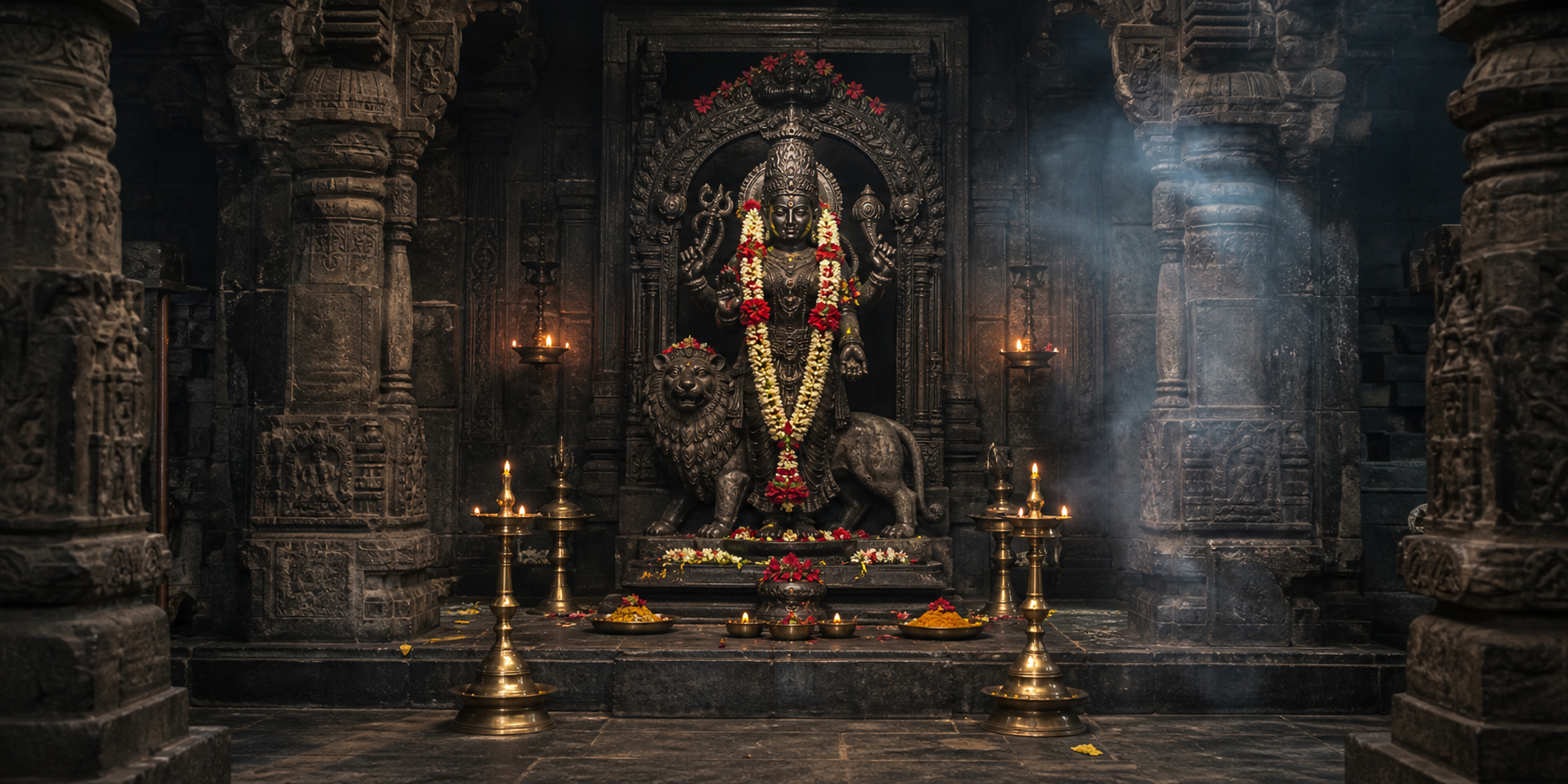
If you came looking for the Patteeswaram Durgai Amman Ashtottaram, the first question is not how quickly you can finish it. It is whether the text in your hand is actually the 108-name namavali, rather than the eight-verse hymn that is also cherished at Patteeswaram.
You can begin a disciplined home practice without an elaborate altar. What you need is a complete and trustworthy text, a clear intention, a few simple offerings, and enough attention to let each name shape the way you meet fear, duty, and other people.
Key takeaways before you begin
- Ashtottaram means a recitation of 108 divine names. Ashtakam means a hymn of eight verses. They are complementary practices, not interchangeable texts.
- Use the complete Patteeswaram namavali received from the temple, a knowledgeable teacher, or a trusted family tradition. Do not reconstruct a 108-name sequence from scattered names.
- A lamp, red flowers, and a 108-bead mala can support the worship, but sincerity and sustained attention matter more than an expensive arrangement.
- Fridays, Ashtami, Navami, Navaratri, sunrise, and twilight are traditional choices. A time you can keep consistently is better than an auspicious time you repeatedly miss.
- Complete the worship by choosing one action that expresses Devi’s courage, compassion, clarity, or protection in ordinary life.
Know whether you have an Ashtottaram or an Ashtakam
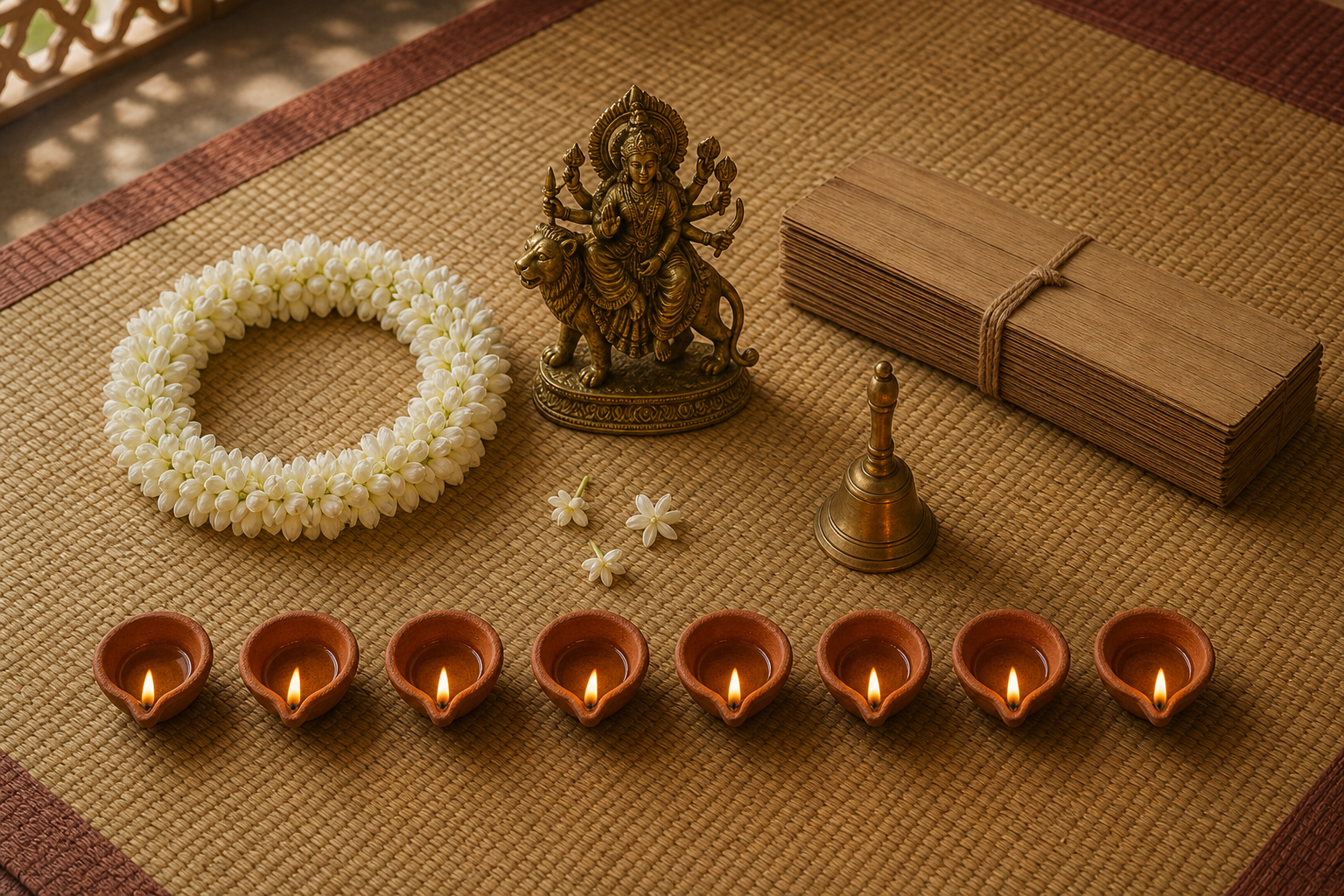
An Ashtottara Shatanamavali is a sequence of 108 names. In the familiar archana form, each name is framed by Om and Namah. A representative invocation is Om Ambikayai Namah. The grammatical form can change with the divine name, so follow the wording of the complete text instead of modifying endings by guesswork.
The number 108 signals completeness within several Dharmic systems. The 27 nakshatras have four padas each, producing 108 divisions; traditional learning also remembers 108 Upanishads, while yoga and Ayurveda associate the number with the marma points of the body. In worship, the count creates a full circuit of remembrance rather than a race to reach the final name.
The Patteeswaram devotional tradition preserves both the 108-name practice and Sri Patteeswaram Durgai Ashtakam. The latter is an eight-verse hymn meant for lyrical praise and contemplation. Reciting the Ashtakam does not become an Ashtottaram because it invokes the same Devi, and repeating eight verses does not turn it into a canonical list of names.
You may perform either practice or both. If time is limited, choose one and do it attentively. When performing both, keep their identities clear: complete the namavali as the 108-name archana, pause, and then recite the Ashtakam as a hymn.
Names associated with Patteeswaram worship include Katyayani, Ambica, Kali, Lokamata, Jagadamba, Mahishasuramardini, Bhavani, Amba, Mahavidya, and Jnana-prada. These examples help you recognize the theology of the practice, but they are not a substitute for the full 108-name sequence. If a handout or online copy is incomplete, obtain a complete version before treating it as the Patteeswaram Ashtottaram.
A complete home-worship sequence you can follow
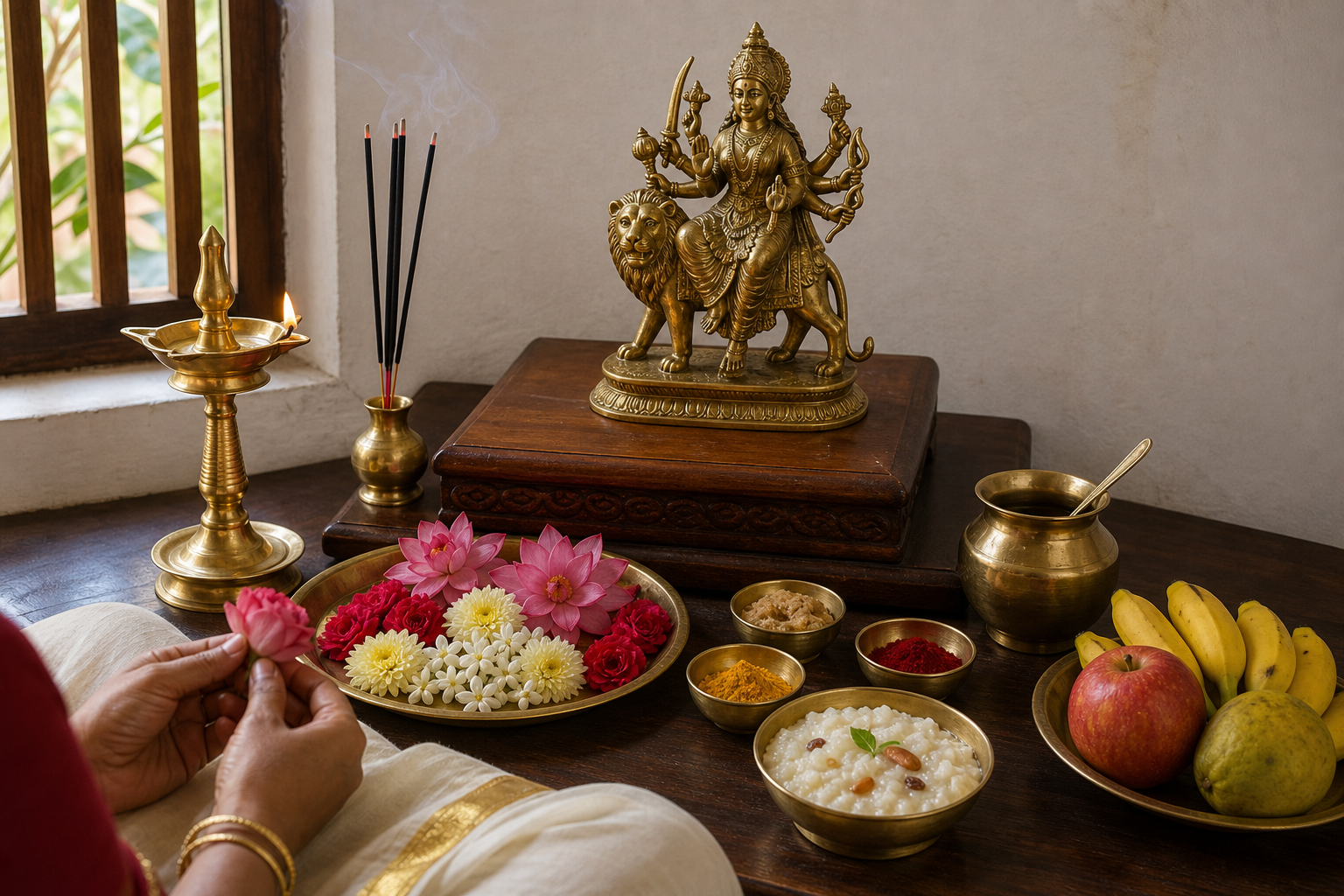
Keep the arrangement simple enough that you can repeat it. The following sequence preserves the essential movement of preparation, invocation, namavali, thanksgiving, and ethical resolve.
- Prepare a clean place. Sit before your altar, an image of Durgai Amman, or an uncluttered space in which you can visualize her. Silence avoidable distractions before you begin.
- Light a deepam safely. A sesame-oil or ghee lamp is traditional. Place it on a stable, heat-resistant surface and never leave the flame unattended. Set out a simple offering; red flowers, especially hibiscus, are customary when available.
- Settle the body and breath. Perform acamana if it belongs to the practice you have been taught. Otherwise, wash your hands, sit steadily, and take a few unforced breaths. Brief pranayama is meant to collect attention, not to produce strain.
- Visualize Patteeswaram Durgai Amman. Hold the image of the Mother as serene and protective, granting abhaya while remaining ready to confront adharma. Let strength and maternal compassion appear together in the visualization.
- State one sankalpa. Make it concise and ethically clear. You might pray for courage to fulfil a duty, discernment in a difficult choice, protection of your family, or the welfare of all beings. Avoid turning the sankalpa into a demand for harm, domination, or revenge.
- Use a short preliminary prayer if it supports concentration. One traditional invocation is Sarva-mangala-mangalye sive sarvartha-sadhike, saranye tryambake Gauri, Narayani namo ‘stu te. Recite only what you can approach respectfully; a long prelude is not required.
- Chant the 108 names deliberately. If you have a 108-bead mala, advance one bead for each invocation. If you do not have one, follow the numbered text carefully. Speak at a pace that allows you to hear the name. If you lose your place, return to the last name you clearly remember completing rather than rushing or improvising.
- Keep the Ashtakam separate. If you also recite Sri Patteeswaram Durgai Ashtakam, begin it after completing the namavali. Let its eight verses function as praise and meditation, not as a counting device for the Ashtottaram.
- Close the worship. Offer a brief kshama-prarthana for errors in pronunciation, attention, or procedure. Perform arati if that is part of your home practice, dedicate the punya to the welfare of others, and bow before rising.
A mistake does not require frantic repetition of the whole rite. Correct what you can, complete the sequence with care, and use the closing prayer honestly. The discipline is to become more attentive over time, not to turn worship into fear of technical failure.
Let the names become virtues, not merely sounds
Each epithet concentrates one way of understanding Devi. The names become easier to contemplate when you recognize their broad devotional groupings. After chanting, use the group that most closely touches your sankalpa as a test for your next decision.
| Facet of Devi | Representative names | What to examine in yourself |
|---|---|---|
| Cosmic motherhood | Lokamata, Jagadamba | Does your prayer include the welfare of people beyond your immediate circle? |
| Protection of dharma | Dharma-rakshini, Shubha-kari | Are you protecting what is right, or merely defending what is convenient? |
| Protective courage | Mahishasuramardini, Khadga-dharini | What necessary duty have you postponed because it is uncomfortable? |
| Maternal compassion | Bhavani, Amba | Can you be firm without humiliating or dehumanizing another person? |
| Spiritual illumination | Mahavidya, Jnana-prada | Which assumption must you question before making your decision? |
This is where Patteeswaram Durga worship becomes more than recitation. Mahishasuramardini’s weapons signify the capacity to resist disorder, while the serene countenance and abhaya express protection rather than uncontrolled aggression. If your chanting makes you harsher, more self-righteous, or less truthful, pause and return to the union of strength and karuna.
Pronunciation deserves patient attention, but speed is the wrong remedy for uncertainty. Mark unfamiliar names in the text, learn them from a qualified teacher or temple practitioner, and keep your breath comfortable. Rhythmic repetition can collect a scattered mind; its deeper value lies in using that collected attention to see your conduct more clearly.
The practice should not be presented as a guaranteed cure for anxiety or any other health condition. If fear or distress is disrupting daily life, devotional support and appropriate professional care can stand alongside each other; one need not be misrepresented as a replacement for the other.
Build a sustainable rhythm and approach the temple well
Fridays, Ashtami and Navami tithis, Navaratri, sunrise, and twilight are traditional occasions for Durga upasana. Fridays in the Tamil month of Aadi carry particular importance for Shakti worship. These times can strengthen a practice by placing it within a shared ritual rhythm, but they should not become reasons to postpone worship indefinitely.
For a workable household routine, choose one recurring time first. A Friday sunrise or twilight practice is suitable if your responsibilities allow it. Keep the complete text, mala, lamp, matches, and offering plate together so preparation does not become the weekly obstacle. On festival days, you can add the Ashtakam, a fuller alankaram, or a longer period of silent contemplation without changing the identity of the 108-name recitation.
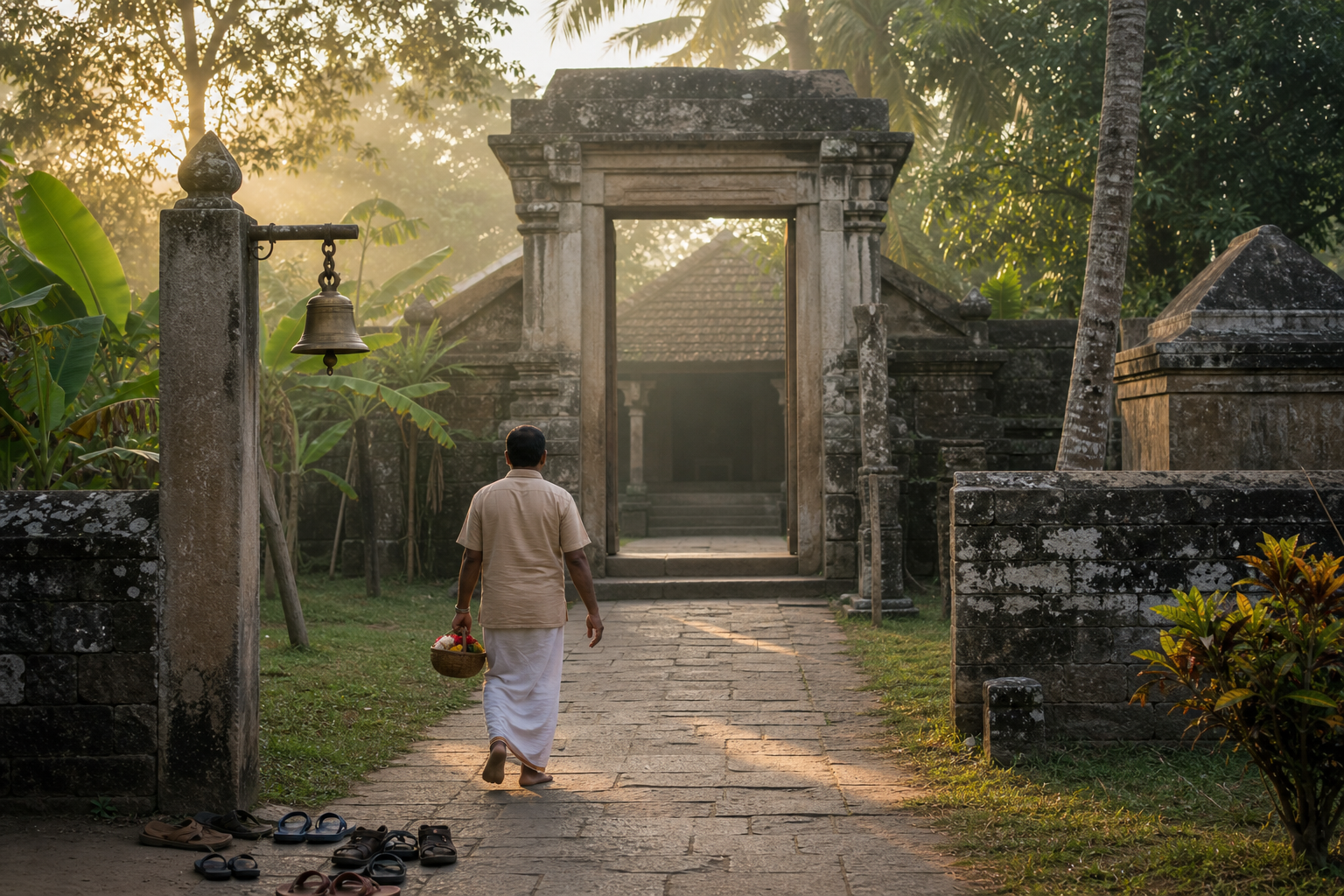
Patteeswaram Durgai Amman is worshipped within the Thenupuriswarar Temple near Kumbakonam. Her presence in a Saiva kshetra is important: Shakta devotion is not treated as an alien addition to Saiva life, but as an integrated expression of the protecting power of Devi. The arrangement embodies the organic plurality of Tamil temple tradition.
If you plan a pilgrimage, confirm the current morning and evening darshan hours locally because schedules can change with seasons and festivals. Wear modest clothing, keep conversation restrained in queues, and follow the temple’s archana procedures. Aadi Fridays and Navaratri can bring larger congregations, so allow additional time rather than expecting a quiet, hurried visit.
The temple is also the right place to resolve uncertainty about the local namavali. Ask respectfully which complete text is used for Patteeswaram Durgai archana and how unfamiliar names are pronounced. Observe how alankaram, gesture, sound, and the surrounding Saiva shrines work together; the ritual setting teaches aspects of the worship that a printed list cannot convey by itself.
On your next chosen day, write a one-sentence sankalpa, obtain the complete 108-name text, and chant it once without rushing. Before you leave the altar, name one concrete act that will carry Devi’s quality into the day: tell a necessary truth without cruelty, protect someone vulnerable, complete a neglected duty, or revise a decision clouded by pride. That act is where the Ashtottaram begins to enter your life.
References
