
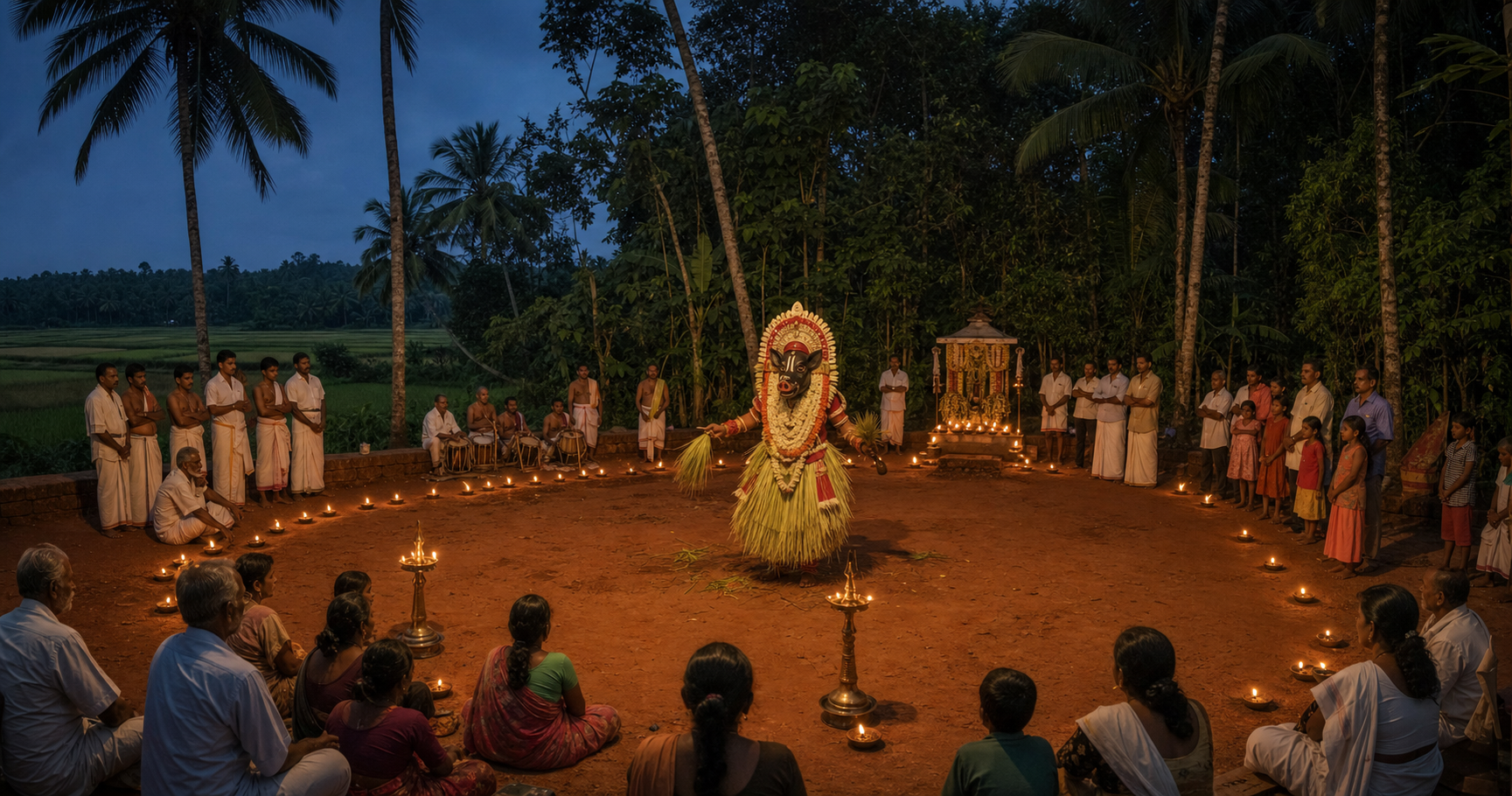
You may have encountered Panjurli through an image, a performance clip, or a brief explanation and come away with a simple question: who, exactly, is Panjurli Daiva? The clearest answer begins in Tulunadu itself, with its language, cultivated land, and the relationship between people and the wild creatures around them.
If you want to understand the tradition rather than merely recognize its most striking symbol, keep three things together: Panjurli is a Daiva, the form is associated with a male wild boar, and the worship belongs especially to Tulu-speaking communities. Separating any one of these from the others produces a thinner and often misleading picture.
Start with what the tradition actually identifies
Panjurli is believed to be the divine spirit of a male wild boar and is worshipped mainly by Tulu-speaking people. That compact description gives you a dependable starting point without forcing the tradition into a category that may not fit.
The most useful sentence to remember is therefore not simply, Panjurli is a boar. Say instead: Panjurli is a Daiva associated with the divine spirit of a male wild boar. The first wording reduces a sacred presence to an animal identification. The second preserves the relationship between form, sacred agency, and worship.
Likewise, calling Panjurli a character, mascot, or curious piece of folklore misses what worship means. A figure can appear in stories and still be approached as sacred. The presence of narrative does not turn a living tradition into fiction.
You should also retain the regional name Daiva when discussing Panjurli. Divine spirit can help an English-speaking reader, but it is a gloss, not a perfect replacement. Keeping Daiva in the sentence reminds you that the tradition has its own vocabulary and should not be made to conform too quickly to an imported religious taxonomy.
The cultivated field explains why the boar matters
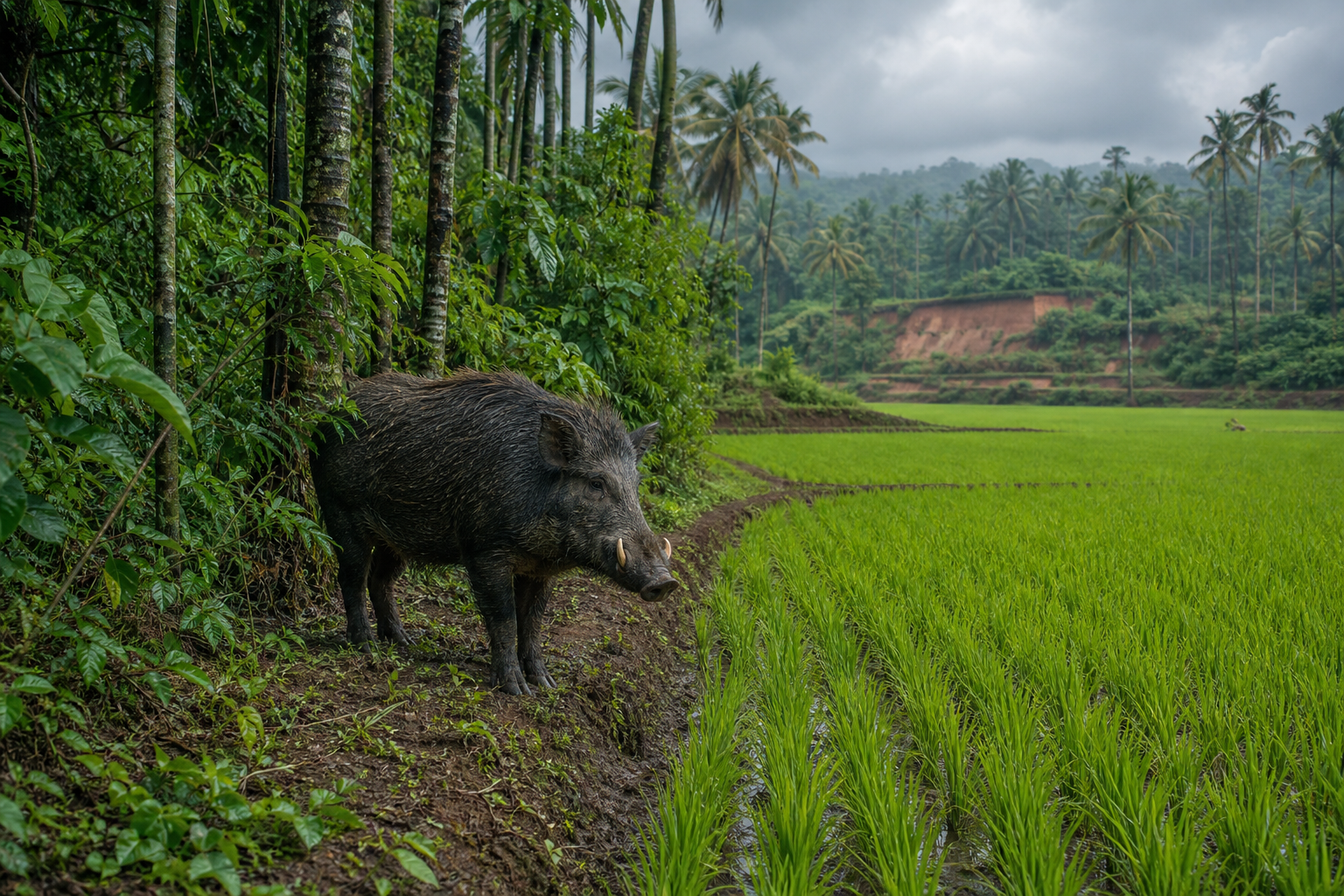
The wild-boar form is not an arbitrary decoration. In Tulunadu, wild boars were known to destroy cultivated crops. That places the tradition at a consequential boundary: the field sustains the farmer, while the wild animal can enter it and undo human labour.
A shallow reading sees only conflict. Farmers grow crops; boars damage them; people therefore fear the animal. A more attentive Dharmic reading notices another possibility. The being that disrupts human plans is not necessarily treated as worthless, profane, or outside the sacred order. The dangerous presence can also become an object of reverence.
This does not justify claiming that Panjurli worship was invented merely to control crop damage. The available fact supports an agrarian context, not a complete theory of origin. Treat the field-boar conflict as a key to the tradition’s meaning, not as a formula that explains away the tradition.
That distinction matters because reduction works in two directions. A visitor may romanticize the boar as a harmless nature symbol, erasing the farmer’s real vulnerability. Another may treat it only as a pest, erasing the sacred recognition embodied in the Daiva. Understanding Panjurli requires you to hold danger and reverence together.
When explaining the tradition to a child, student, or reader unfamiliar with Tulunadu, begin with this concrete relationship: people depended on cultivated crops, wild boars could destroy those crops, and the same animal form became associated with a worshipped divine presence. Only then move to broader ideas about nature and sacred order. The concrete setting prevents the explanation from dissolving into vague claims that all nature is divine.
Do not manufacture an answer about incarnation
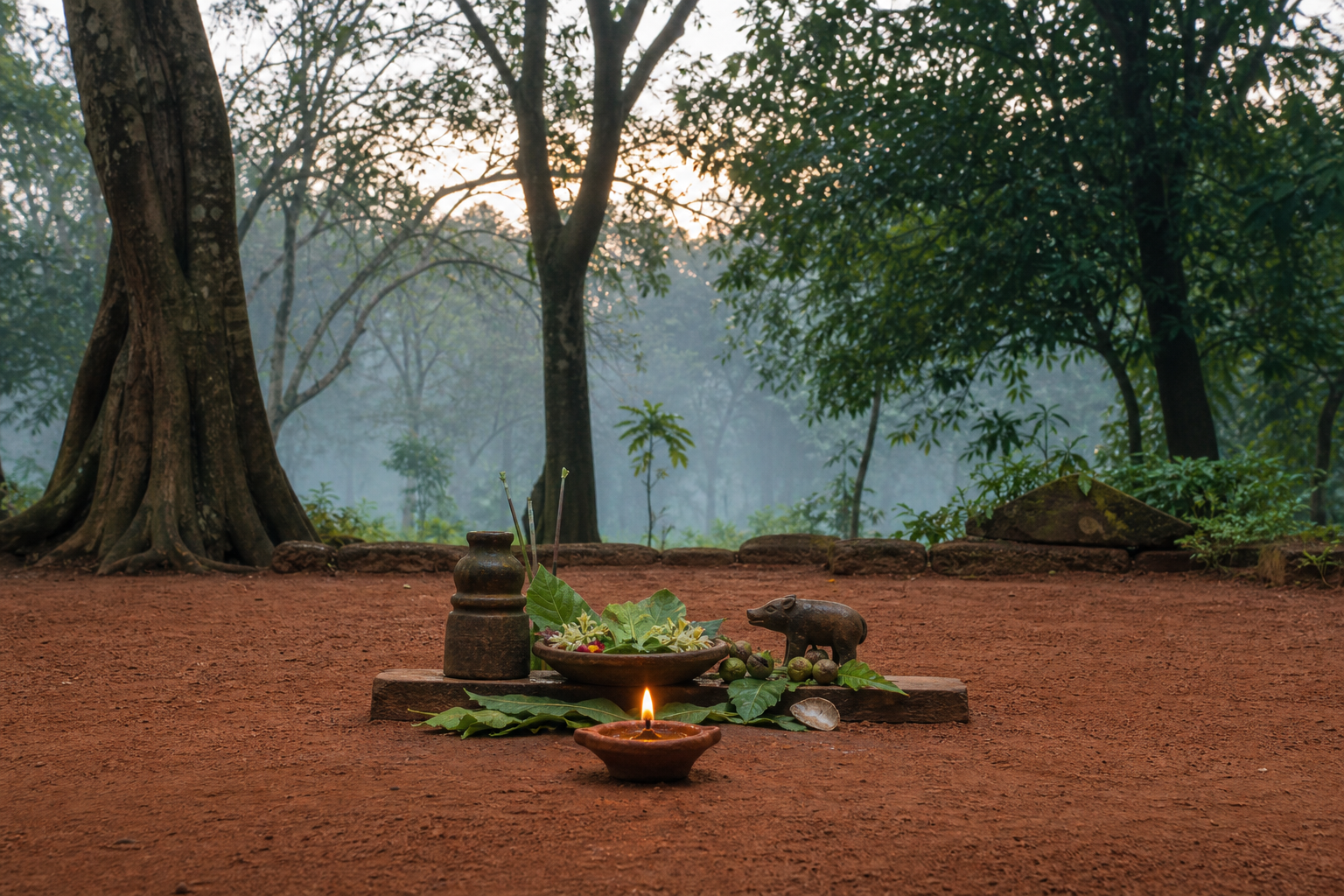
One of the first questions people ask is, Whose incarnation is Panjurli? It sounds natural because many Hindu traditions describe sacred beings through avatara, lineage, emanation, or association with a better-known deity. But a familiar question does not give us permission to supply an unsupported answer.
Begin with what can be said securely: Panjurli is worshipped as a Daiva and is believed to have the sacred identity of a male wild boar. If a particular local tradition gives Panjurli an additional divine relationship or origin account, identify it as that community’s account and learn it from people responsible for preserving the tradition. Do not silently turn a local explanation into a universal doctrine.
This discipline protects the tradition from two common distortions. The first is sensationalism, in which the strangest-looking claim is repeated because it attracts attention. The second is forced standardization, in which every regional sacred presence must be presented as a renamed version of a nationally familiar deity before outsiders will take it seriously.
You can avoid both errors with careful language:
- Say Panjurli is worshipped as a Daiva in Tulunadu rather than assigning a broad label and treating the matter as settled.
- Use associated with the divine spirit of a male wild boar rather than reducing Panjurli to an ordinary animal.
- Describe the connection with crop-damaging wild boars as agrarian context, not as a proven and exhaustive origin theory.
- Attribute a specific incarnation or origin account to the community that teaches it rather than presenting it as the only version.
- Preserve Tulu names and categories wherever possible, then explain them in plain language.
This is not evasiveness. It is the difference between respecting what is known and filling a gap with a convenient claim.
How to approach Panjurli as a living tradition
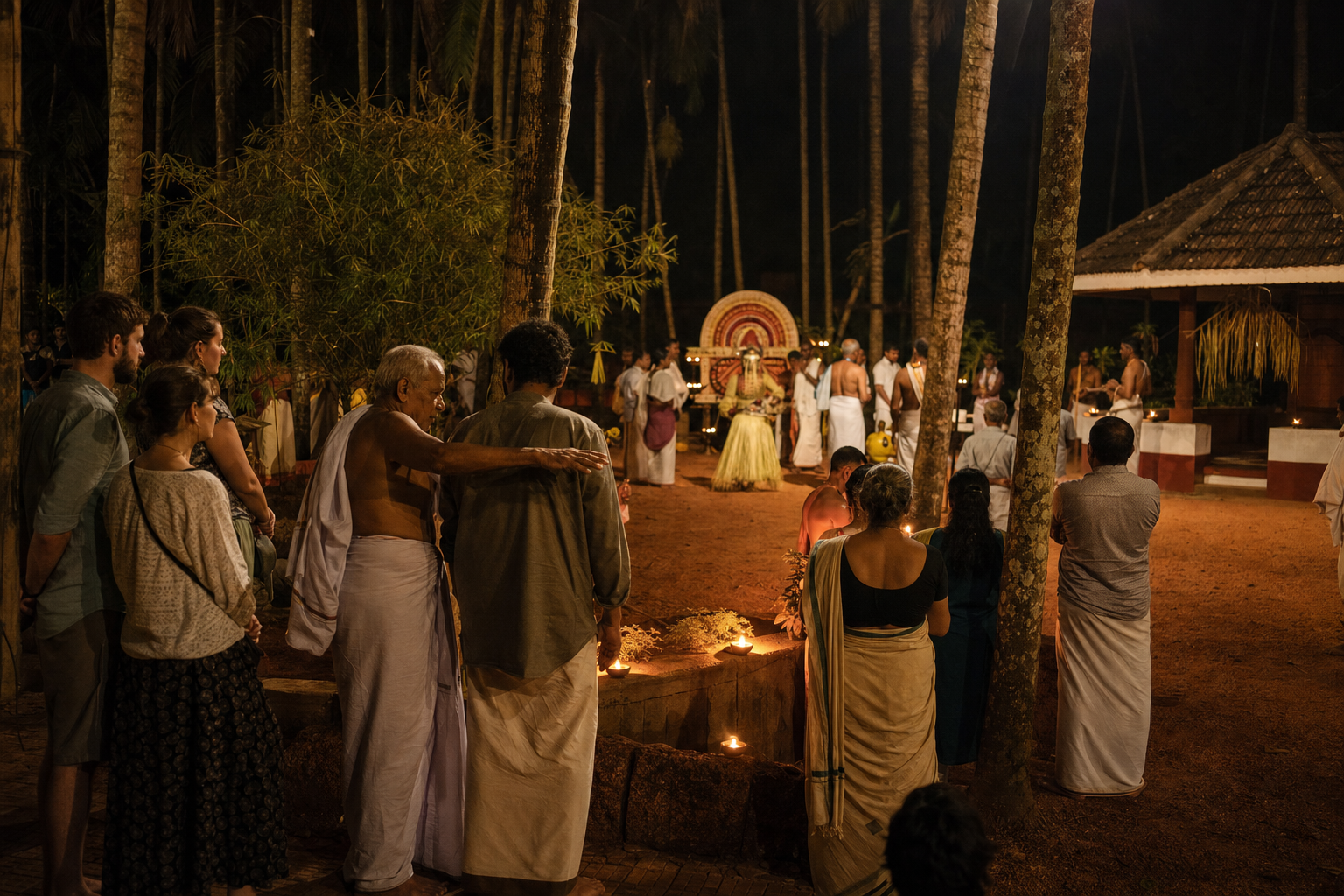
If you visit Tulunadu, attend a community observance, or speak with someone who belongs to the tradition, your conduct will reveal whether you see Panjurli as living worship or merely as cultural spectacle. A respectful approach is practical and uncomplicated.
- Follow the community’s vocabulary. If people say Daiva, retain Daiva. Ask what a term means in that setting instead of immediately replacing it with god, ghost, demon, or spirit.
- Ask before photographing or recording. Public visibility is not the same as permission. Find out whether recording is acceptable, where visitors may stand, and what should remain outside the frame.
- Listen for the local account before offering your own. A general explanation can orient you, but it should not overrule the understanding of the family or community sustaining the worship.
- Separate observation from interpretation. You may accurately describe what you saw. If you infer what an act symbolizes, identify it as an interpretation unless a knowledgeable participant has explained it.
- Keep the agrarian setting in view. Ask how cultivated land, crops, wild animals, and community memory shape the way Panjurli is understood. This question is more productive than asking only which pan-Indian figure Panjurli resembles.
- Do not imitate sacred gestures for entertainment. A visually powerful form can circulate widely without losing its religious significance. Treating it as costume or content strips away the relationship that gives it meaning.
The same rules apply when you write a caption, teach a class, or share a video. Name Tulunadu. Name the Tulu-speaking community. Use Daiva. Explain the wild-boar and crop relationship carefully. Leave claims you cannot establish unstated.
Key takeaways
- Panjurli is believed to be the divine spirit of a male wild boar and is worshipped mainly among Tulu-speaking people.
- The history of wild boars damaging cultivated crops gives the tradition an important agrarian setting.
- Crop damage helps explain why the boar is consequential, but it does not by itself prove a complete origin story.
- Daiva should be retained as the tradition’s own category; English terms can clarify it but should not replace it carelessly.
- An incarnation claim should be repeated only when a particular tradition actually supplies it, with that local context kept attached.
- Respectful engagement means seeking permission, following local vocabulary, and treating worship as more than spectacle.
The next time Panjurli appears in your reading or on your screen, pause before asking which familiar deity the Daiva must really be. Begin with Tulunadu, the Tulu-speaking people, the cultivated field, and the sacred presence of the wild boar. That order of attention will bring you closer to the tradition on its own terms.
References
