
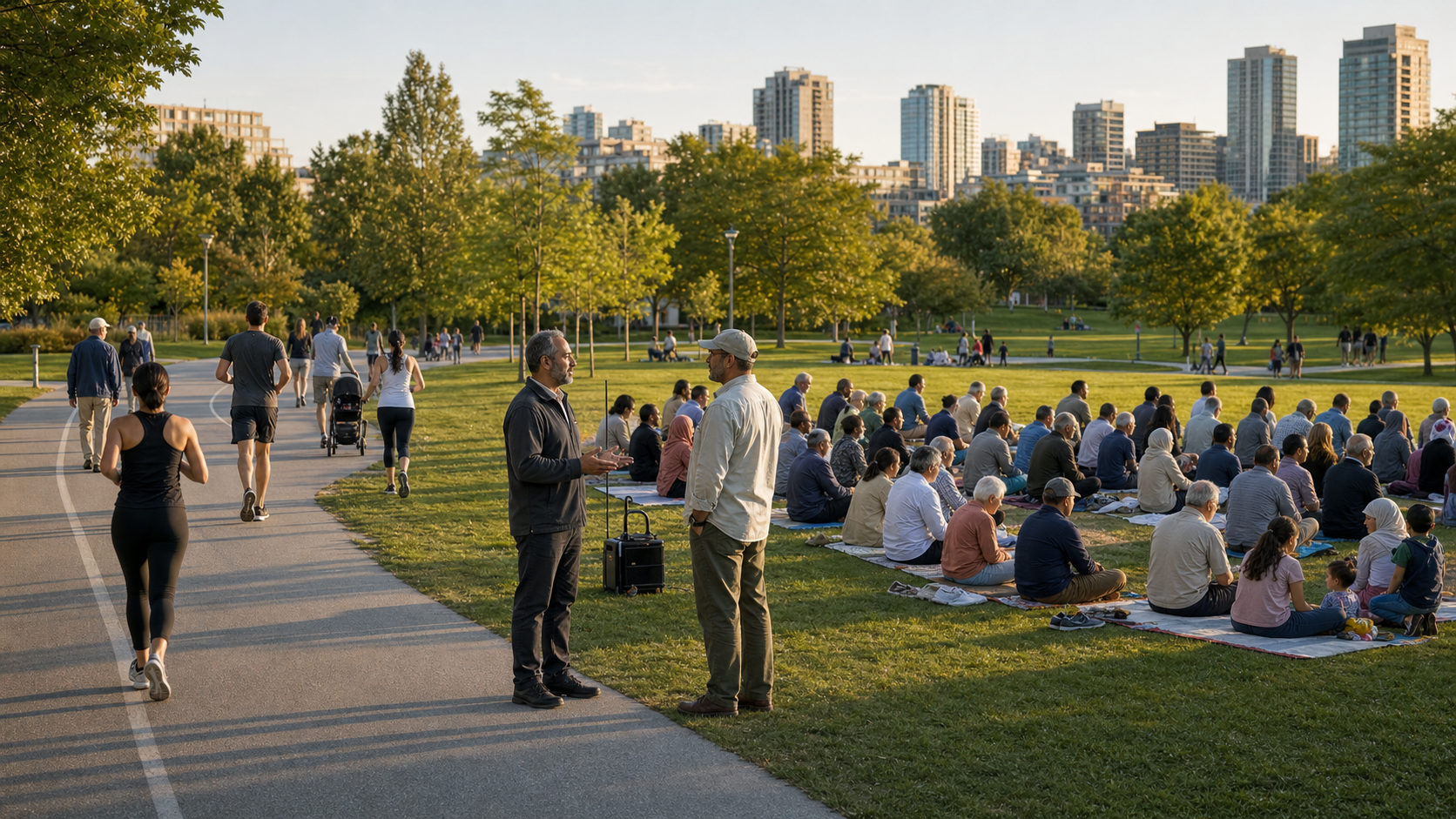
You see a video of collective prayer in a neighbourhood park. One person calls it religious freedom; another calls it encroachment. Soon the argument is about entire communities, while the facts that could settle the immediate dispute remain unknown.
The useful question is not whether religion may appear in public. It is whether this particular use of a shared space was authorised, proportionate and governed by the same rules that would apply to Namaz, kirtan, satsang, path, a langar-linked assembly or any other organised gathering. If you want a fair remedy, that is where you should begin.
Establish what happened before deciding what it means
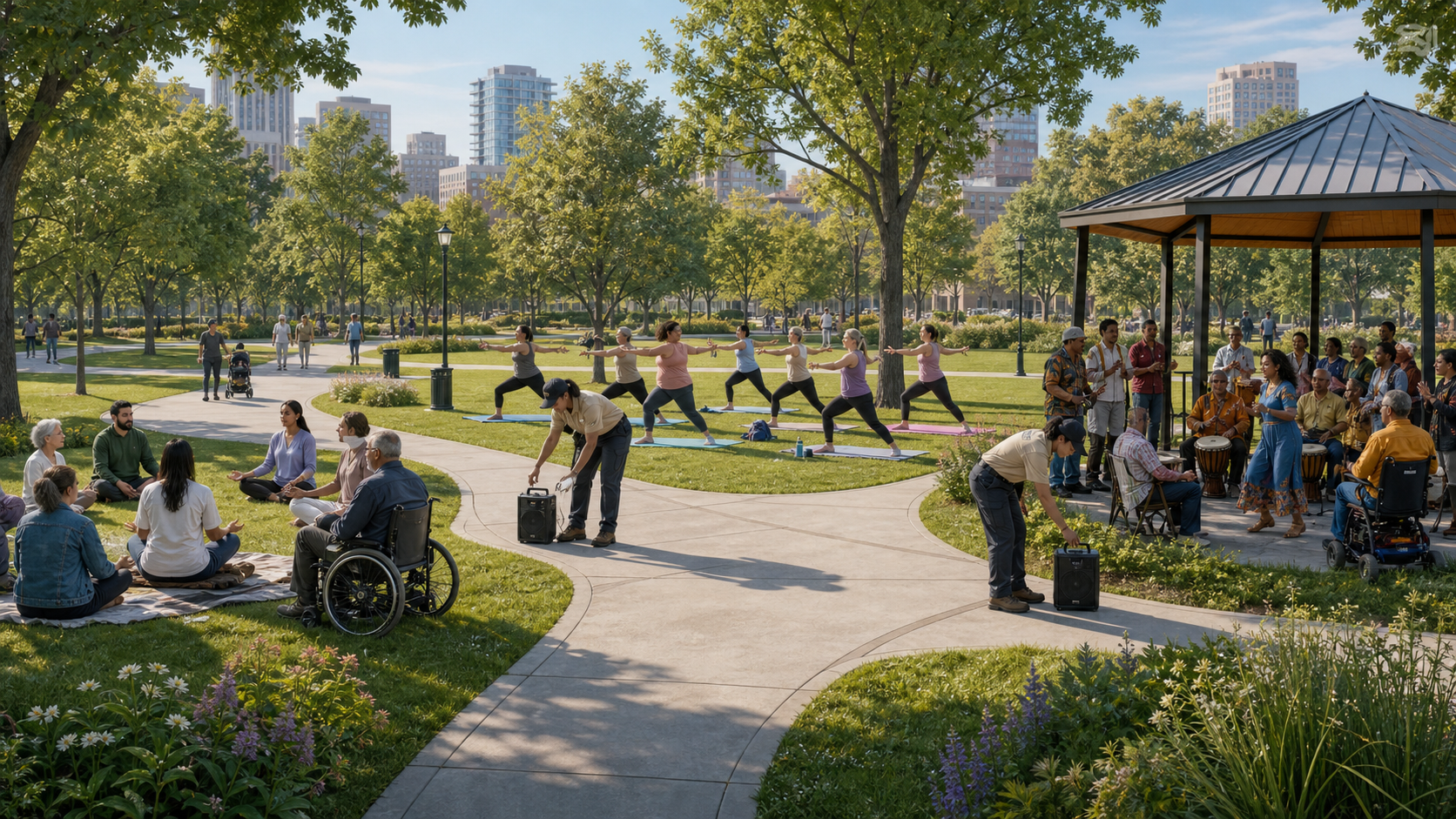
A public park has several legitimate users at once. Walkers expect open paths. Children need access to play areas. Senior citizens may depend on predictable, calm surroundings. Worshippers want enough dignity and quiet to pray. None of those interests disappears merely because another one has entered the space.
That is why a complaint should begin with administrative facts, not assumptions about a faith. Establish five things:
- Who controls the location? Identify the municipal department or other public authority responsible for the park, along with any displayed rules governing group activity.
- Was notice or permission required? Ask whether an application was made, which authority decided it, and what conditions were imposed. Do not assume that every small gathering needs permission or that every religious gathering is automatically exempt.
- What was the actual effect? Record whether paths, gates, play areas or emergency routes were blocked. Note any sound amplification, crowd-management problem, litter or interference with ordinary park use.
- Was the activity isolated or recurring? A short, one-off observance and an attempt to establish continuing control over part of a park raise different administrative questions.
- How has the same authority treated comparable gatherings? Ask for the rule applied to similar events, not an exception designed either to favour or punish one community.
These distinctions matter in Ahilyanagar. Collective Namaz was reported at Ganga Udyan, followed by protests from Hindu organisations and demands for administrative action. Yet the decisive event-specific questions include whether permission existed, whether access or safety was affected, whether amplification was used, and whether the gathering was a single occurrence or a pattern. A confident communal verdict cannot substitute for those answers.
If an online clip shows only people praying, it does not establish a permit violation, obstruction or permanent claim. If it shows a blocked path, that still does not reveal whether the authority authorised temporary use of that area. Ask for the complete administrative record before forwarding a conclusion.
Religious freedom protects practice, not unregulated control
Article 25 of the Constitution protects freedom of conscience and the right to profess, practise and propagate religion. That protection is expressly subject to public order, morality, health and the other fundamental rights in Part III. It therefore protects collective worship, but it does not by itself settle access to a particular park, road or public facility at any chosen hour.
The constitutional tradition associated with the 1954 Shirur Mutt decision recognises religious autonomy while allowing the State to regulate public manifestations where competing rights and public order are genuinely involved. The practical result is a distinction too often lost in public debate: prayer is not unlawful merely because it is collective, and reasonable regulation is not religious persecution merely because it affects prayer.
Articles 19(1)(a) and 19(1)(b) also protect expression and peaceful assembly, subject to reasonable restrictions that include public-order considerations. Residents and Hindu organisations may therefore raise objections and hold a lawful protest. But that protection does not extend to intimidation, forcible dispersal, a confrontational blockade or private enforcement of a rule that only public authorities are empowered to apply.
Three propositions can be true at the same time:
- Worshippers retain constitutional protection for religious practice.
- Other citizens retain equal access to civic space and the right to make a lawful complaint.
- The administration may regulate time, place, manner, capacity, safety and sound through neutral rules.
In Maharashtra, the applicable requirements may come from municipal park regulations, the Maharashtra Police Act and local orders concerning assemblies that could affect traffic, safety or public order. Sound amplification is separately governed by the Noise Pollution (Regulation and Control) Rules, 2000. The commonly applicable night restriction runs from 10 p.m. to 6 a.m., subject to narrowly defined exemptions. A park permit should never be read as permission to disregard sound rules or other conditions.
Exact permit triggers can depend on the local by-law, the size and nature of the event, and its likely effect. Before alleging an offence, obtain the relevant rule and written decision. If you have received a legal notice, face prosecution or need to challenge an administrative order, consult a lawyer familiar with Maharashtra public-order and municipal law rather than relying on social-media interpretations.
A neutral rulebook is more demanding than a slogan
Equal treatment does not mean that every application must produce the same decision. A quiet gathering away from a pathway is not administratively identical to a large amplified event at the busiest entrance. Neutrality means using the same relevant factors for everyone and explaining any different outcome through those factors.
| Test | Workable rule | What the authority should disclose |
|---|---|---|
| Time and place | Use defined time windows and mapped gathering zones that avoid peak use and chokepoints. | The approved period, location and reason for any restriction. |
| Notice and permission | Set a published size or impact threshold above which prior notice or permission is needed. | Whether permission was sought, granted or refused, with conditions and reasons. |
| Access and safety | Keep paths, play areas, gates and emergency routes usable throughout the event. | Any capacity limit, safety plan or recorded obstruction. |
| Sound | Apply statutory limits and night restrictions to every organiser and every kind of programme. | Whether amplification was approved and whether a breach was recorded. |
| Upkeep | Make organisers responsible for prompt litter removal and restoration of the site. | Any cleanup condition, deposit requirement or compliance failure. |
| Non-exclusion | Do not allow temporary permission or repeated use to become permanent control of public land. | The scheduling method and confirmation that the space remains open to all. |
A city can make this system easier to trust by publishing one shared-spaces protocol online and at the park. A workable process would accept applications through a single channel and commit to a decision within 72 hours. That response period is a policy proposal, not a claim about the present Ahilyanagar procedure. Organisers could also display their permission status at the site so park users do not have to resolve uncertainty through confrontation.
The non-exclusion rule is especially important. First-come-first-served scheduling can allocate temporary use; it cannot convert a common garden into the customary territory of one organisation or faith. Regular gatherings should receive a formal recurring schedule, if the rules permit one, rather than acquiring an informal claim through repetition.
Administration must be consistent in both directions. If an unamplified Namaz gathering is restricted because it blocks a path, an otherwise comparable bhajan or satsang should face the same access rule. If a small Hindu observance is allowed because it remains within a designated zone and meets every condition, a comparable gathering from another faith should not be refused merely because its theology differs. The comparison must be conduct against conduct, not identity against identity.
A community mediation committee can help before calendars collide. Representation should extend beyond formal religious leaders to resident groups, women, teachers and senior citizens, as well as Hindu, Muslim, Buddhist, Jain and Sikh organisations. Its job is not to rewrite constitutional rights. It is to identify scheduling conflicts, mediate fast when tension rises, and examine aggregate information about permits, complaints and compliance so weak rules can be corrected.
What you can do without escalating the dispute
If you are a resident or park user
- Document effects, not identities. Record the date, time, exact location and duration. Describe a blocked gate, amplified sound or inaccessible play area plainly. Avoid guesses about motive or claims about a whole community.
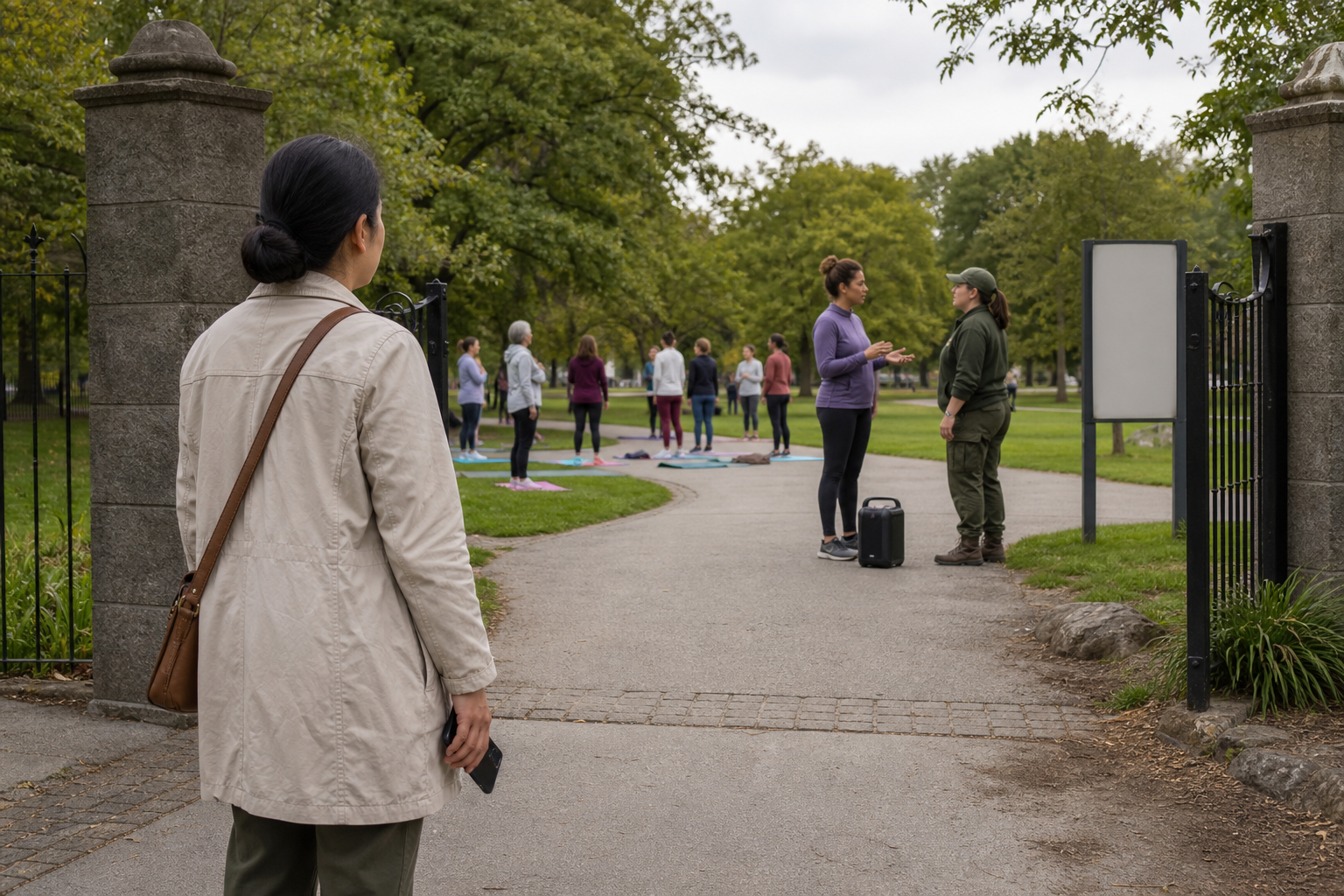
- Check the displayed rules. Photograph the park noticeboard if one exists, and identify the municipal office responsible for the garden.
- Request the permission facts in writing. Ask whether prior permission or intimation was required, whether it was received, what conditions applied and whether officials recorded a breach.
- File one structured complaint. Include the observed conduct, its practical effect and the remedy you seek. Ask for an acknowledgement or reference number so the matter can be followed without repeated confrontation.
- Use the same standard for comparable events. If your concern is selective enforcement, request records or explanations showing how the relevant rule has been applied to similar gatherings.
- Leave enforcement to the authorities. If there is an immediate safety problem, contact the local police or park authority. Do not attempt to remove worshippers, seize equipment or block exits yourself.
A useful written grievance can be simple: identify the place and time; state the observable interference; request confirmation of permission and conditions; ask what corrective action will follow; and request the rule that will govern future events. This forces the administration to answer a civic question instead of rewarding the loudest communal accusation.
If the only objection is that another religion was visible, you do not yet have a public-space complaint. Identify a rule, unequal treatment or concrete interference. Without one of those, the demand is exclusion rather than regulation.
If you organise a religious gathering
- Identify both the park authority and any police notice requirement before announcing the event.
- Obtain written permission where required, read every condition, and keep a copy available at the venue.
- Choose a low-conflict time and a defined area away from entrances, paths, play spaces and emergency access.
- Do not assume that event permission includes sound amplification. Secure any separate approval and comply with statutory limits and night restrictions.
- Appoint visible stewards to manage arrival, departure and questions from officials or other park users.
- Remove litter immediately after the gathering and restore the space to ordinary public use.
- If the activity will recur, seek a transparent schedule instead of relying on an unwritten custom.
Voluntary transparency is protective. Displaying the approved time and zone can prevent rumours and show that your gathering accepts the same civic discipline expected of everyone else. Religious dignity is strengthened, not diminished, when neighbours can see that worship is neither secretive nor an attempt to appropriate their common space.
If you are asking an official or elected representative to act
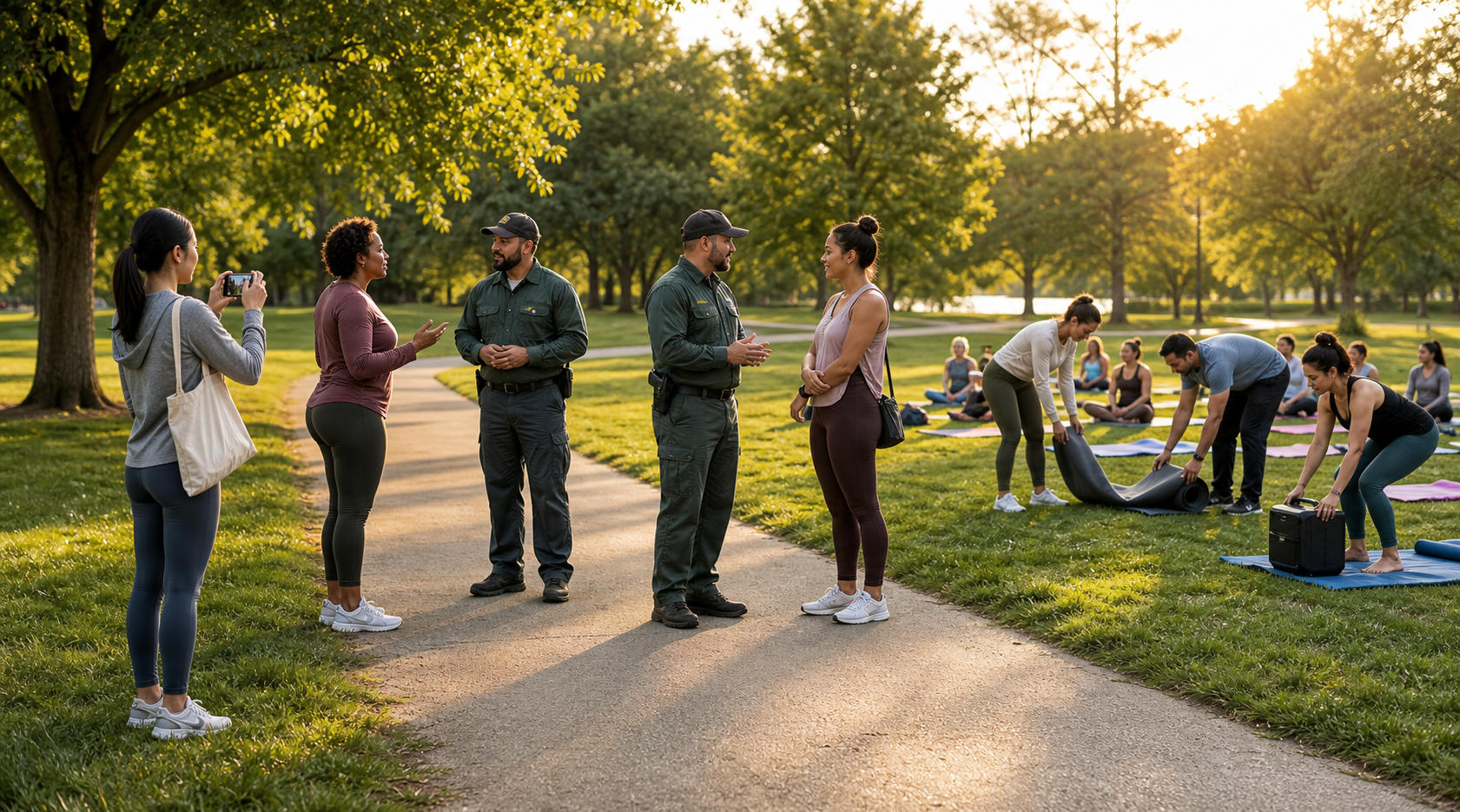
Ask for a factual response with a deadline, not a vague assurance to maintain harmony. The administration should publish whether permission was required and obtained, the approved timing and location, relevant sound conditions, any recorded obstruction or sanitation failure, and the action taken. Personal information that is unnecessary to public accountability need not be disclosed.
Then ask for a standing rule. A shared-spaces protocol should specify permit thresholds, decision timelines, designated zones, sound compliance, access requirements, organiser duties, complaint channels and consequences for breaches. Police and civic staff should be trained to begin with communication, use proportionate measures if conditions are violated, and reserve compulsory dispersal for situations in which lesser steps cannot protect safety and order.
Public communication should name the condition and the evidence: unauthorised amplification, obstruction of a route, excess capacity, lack of required notice, or failure to clean the site. It should not present the religious identity of participants as though identity itself were the violation. Clear official facts also leave less room for rumours to produce a second, more dangerous gathering around the first one.
Key takeaways for a fair public-space response
- Collective prayer is not inherently unlawful, but public religious activity remains subject to public order, health, competing rights and valid local rules.
- The decisive questions are permission, time, place, scale, recurrence, sound, obstruction, safety and sanitation.
- Neutrality means applying the same factors to every faith and explaining different outcomes through relevant differences in conduct.
- A temporary permit does not create permanent ownership or exclusive customary control of a park.
- Residents should document concrete effects and seek written administrative answers; organisers should obtain permission and protect ordinary access.
- Peaceful protest is protected, while intimidation, blockade and private enforcement undermine both the grievance and the rule of law.
The next time a contentious clip appears, do not begin by forwarding it with a verdict. Send the civic authority a precise request for the permit record, applicable conditions and observed impact. Then ask your representative to support a published shared-spaces protocol that will still look fair when the community using the park is your own.
That is a practical dharmic response: ahimsa without passivity, accountability without collective blame, and religious freedom without the surrender of common civic space.
References
