

You may see Venezuela’s acting president, Delcy Rodriguez, combine an India visit about energy with a return to Sathya Sai Baba’s spiritual home and wonder which part really matters. The practical answer is that both matter, but they do different work. Oil diplomacy concerns supply, commercial terms and execution. A spiritual relationship can build familiarity and trust; it cannot substitute for any of them.
That distinction lets you read India-Venezuela relations without falling into either of two traps: dismissing dharmic ties as ornamental, or treating personal devotion as proof that a strategic agreement has already been secured.
Read the relationship on two separate tracks
The first track is material. India is a major energy importer, while Venezuela possesses some of the world’s largest proven hydrocarbon reserves. That creates a clear basis for discussion, but complementary interests do not automatically produce workable trade. Negotiators still have to address crude supply, refinery compatibility, investment structures, debt questions and regulatory clarity.
The second track is relational. Rodriguez’s connection to Prasanthi Nilayam in Puttaparthi gives her a point of familiarity with Bharat that exists beyond ministerial meetings. This is the realm of soft power: attraction, cultural recognition and voluntary affinity that can make political relationships easier to sustain.
Keep a two-column ledger when you assess developments. Under “relationship signals,” record repeat visits, institutional exchanges, service partnerships and evidence of sustained engagement. Under “policy deliverables,” look for named agreements, responsible parties, commercial terms, approvals, implementation dates and evidence that commitments have begun moving. A warm relationship belongs in the first column until an executable decision moves it into the second.
This approach protects you from a common analytical mistake. Cultural goodwill can lower mistrust and keep a difficult conversation open, but it cannot make incompatible crude suitable for a refinery, settle an unresolved financial obligation or supply the legal authority required for an investment. Its value is real precisely because its limits are real.
Why the repeated Puttaparthi visits are a meaningful signal

Public communications from the Sri Sathya Sai Central Trust place Rodriguez at Prasanthi Nilayam in August 2023 and again in October 2024. On the latter visit, when she was Venezuela’s executive vice president, she offered prayers at Sathya Sai Baba’s Mahasamadhi and engaged with activities at the ashram.
Repetition changes the weight of the signal. One spiritual stop during an official itinerary might be ceremonial. A return on a later journey is stronger evidence of continuing personal interest, although it still does not prove a political motive or a policy concession. The responsible conclusion is narrow but significant: the relationship with Puttaparthi appears to be more than a one-time protocol gesture.
Mahasamadhi also needs to be understood in its own dharmic setting. Devotees use the term for the conscious departure of a realized master from the physical body. The memorial is therefore approached not merely as a historical marker, but as a focus for prayer, remembrance and continuity of teaching. Visiting it communicates a form of spiritual regard that a secular photograph beside an Indian monument would not carry.
What should you infer from this? At the personal level, the visits indicate familiarity with a living Indian spiritual tradition. At the institutional level, they connect a Venezuelan leader with an international network organized around devotion and service. At the state level, however, they establish no energy commitment by themselves. Personal, institutional and governmental evidence must not be collapsed into one claim.
The Sathya Sai movement has also faced sustained public controversy. Responsible analysis neither erases contested claims nor treats every allegation as an adjudicated fact. For the diplomatic question, concentrate on what can be established: Rodriguez made repeat visits, and the institutions associated with Prasanthi Nilayam maintain a service-oriented presence in health care, education and drinking-water access. Those facts are enough to explain why the connection can generate social capital without requiring you to settle every dispute surrounding a large charismatic movement.
The oil table still has hard tests of its own

The announced diplomatic agenda covers energy cooperation, trade and investment. Those headings identify areas of interest, not completed outcomes. If you want to know whether the relationship is becoming operational, test each announcement in sequence.
- Identify the status. Was an issue explored, was a framework announced, or was a binding commercial arrangement reached? These are different stages and should not share the same headline.
- Check the physical fit. A country may hold vast reserves while individual crude grades still require suitable refinery configurations and commercially acceptable processing. References to reserves alone do not answer the compatibility question.
- Find the settlement mechanism. Sustainable trade requires workable payment arrangements, treatment of any relevant debt questions and clarity about the obligations of each party.
- Look for regulatory authority. Diplomatic intent has to operate within applicable legal, licensing and regulatory conditions. A general promise of cooperation is not the same as approval to execute it.
- Demand an investment structure. Serious proposals identify the parties, capital responsibilities, risk allocation, project scope and a realistic timetable.
- Watch implementation. Contracts, approvals, scheduled activity and completed delivery carry more evidentiary weight than another declaration of friendship.
This sequence matters because energy diplomacy is often reported at the moment of maximum political visibility, while its success or failure emerges later in commercial and administrative work. Do not judge the relationship only by the ceremony at the beginning. Follow the chain until you can see who must do what next.
Nor does an energy transition make hydrocarbon diplomacy irrelevant overnight. India can pursue diversification while continuing to examine crude supply and refinery needs. Venezuela can seek investment and trade while engaging in broader economic diplomacy. The useful question is not whether oil or transition will “win,” but whether a particular proposal is technically compatible, legally executable and economically durable.
Dharmic soft power works best when it becomes service
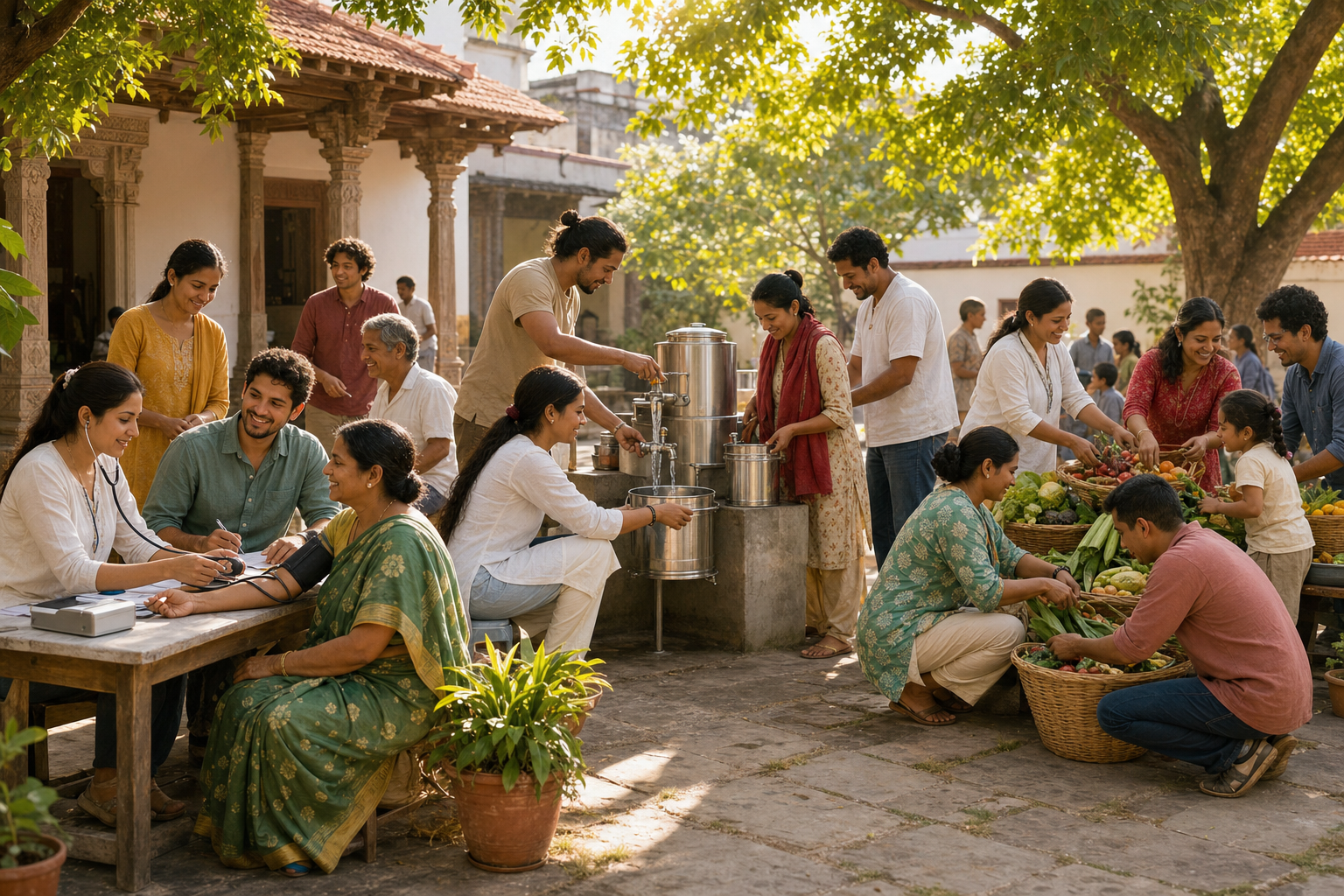
Prasanthi Nilayam offers more than devotional symbolism because Sathya Sai institutions connect spiritual discipline with seva. Health care, education and water initiatives turn an inward teaching into an outward social practice. That gives the relationship a vocabulary that governments, civil society and local communities can understand even when they do not share the same theology.
This vocabulary is wider than one sect. Seva asks whether a relationship benefits people beyond its senior participants. Satya requires honest claims about what has and has not been achieved. Daya and karuna direct attention toward human need. Ahimsa places cooperation within a non-coercive moral frame. Sarva Dharma, respect for multiple spiritual paths, allows the participants to cooperate without demanding religious uniformity.
These principles are recognizable across Hindu, Buddhist, Jain and Sikh traditions, though those traditions remain doctrinally distinct. Shared ethical language should be used as a bridge, not as a claim that every dharmic path teaches precisely the same thing. That is especially important in diplomacy, where pluralism earns trust only when it respects real differences.
Sai centres, yoga institutions and bhakti communities in Latin America can also support contacts outside formal negotiations. In diplomatic language, citizen-led exchanges are often called Track II engagement; settings that bring unofficial participants into contact with serving public figures are sometimes described as Track 1.5. Such networks cannot bind a government, but they can identify partners, preserve communication and correct cultural misunderstandings before those misunderstandings reach an official negotiating room.
You should therefore look beyond photographs of leaders at shrines. The stronger sign is an institutional bridge with a defined public purpose: cooperation in education, public health, drinking-water access, disaster response, scholarly exchange or community dialogue. A credible initiative names its beneficiaries, governance arrangements and responsibilities. Invoking seva without accountability reduces dharma to branding; joining service to transparent execution makes it diplomatic infrastructure.
Key takeaways: how to judge the next phase
- Rodriguez’s repeat visits to Prasanthi Nilayam support a careful claim of continuing personal spiritual interest, not a claim that an oil agreement necessarily follows from it.
- India’s import needs and Venezuela’s hydrocarbon reserves create strategic complementarity, but refinery compatibility, settlement, regulation, investment terms and delivery determine whether it becomes trade.
- Spiritual affinity matters most as relationship capital: it can sustain attention, familiarity and trust during negotiations that remain technically difficult.
- Sathya Sai institutions add practical relevance through seva in health, education and water access, providing possible channels for cooperation beyond hydrocarbons.
- Dharmic pride is best served by satya. Describe a visit as a visit, a framework as a framework and a delivered result as a delivered result.
As the next phase unfolds, watch for named mechanisms rather than warm adjectives: a specific commercial instrument, an authorized institutional partnership, a timetable, responsible parties and visible implementation. If those appear, the Sathya Sai connection may have helped soft power perform its proper role by sustaining trust around serious work. If they do not, the visits can remain spiritually meaningful without being recast as a geopolitical breakthrough. Keeping that distinction is not skepticism toward dharma; it is an application of satya to statecraft.
References
