
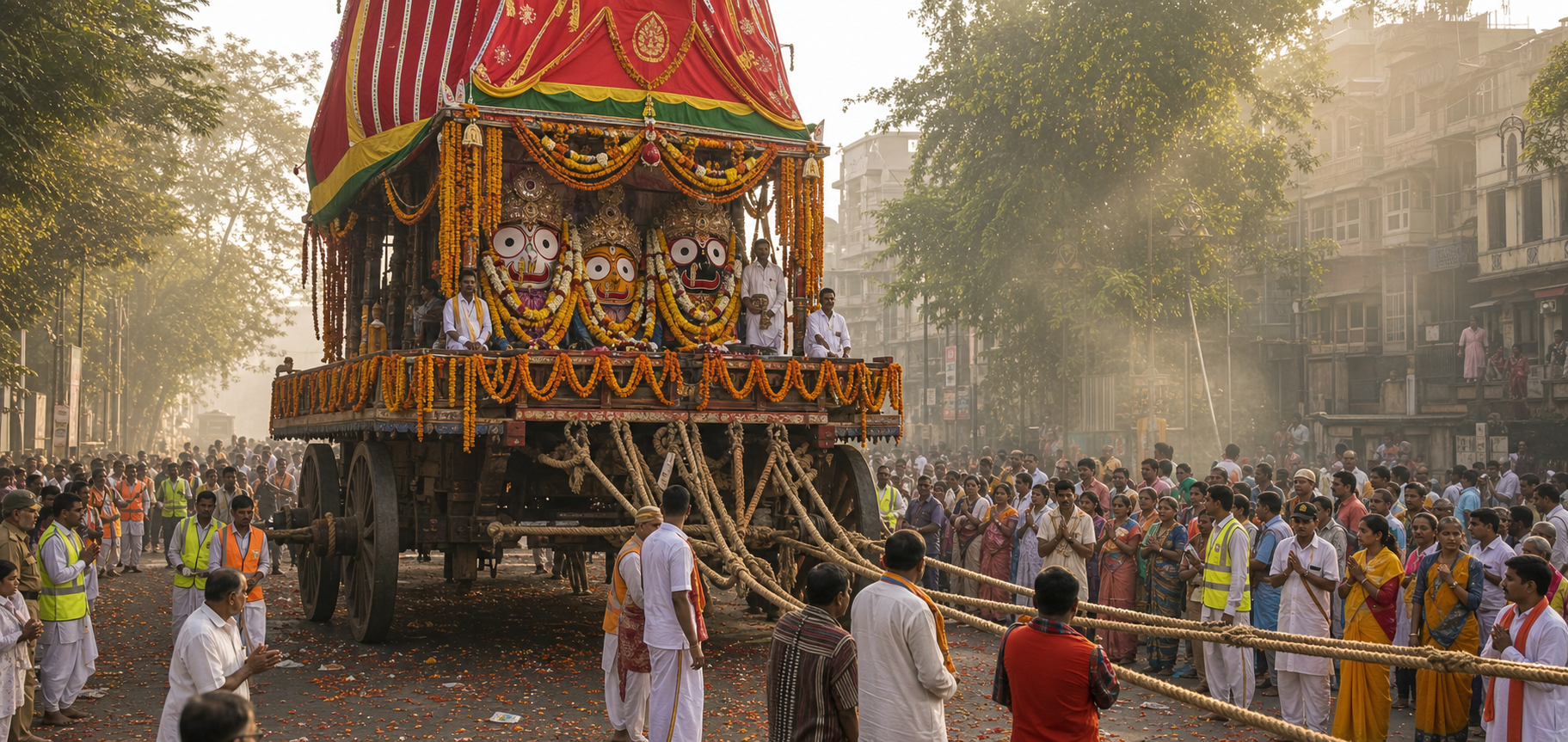
If this is your first Ratha Yatra, the colour, music, crowd and immense chariot can make one practical question surprisingly difficult: what should you actually do? You don’t need to master every custom before approaching Lord Jagannath. You do need to know where to place your attention.
Go for darshan, accompany the Lord without competing for access, offer whatever service is genuinely needed, and leave with one devotional commitment. That simple sequence turns attendance into pilgrimage.
When the Lord comes onto the road
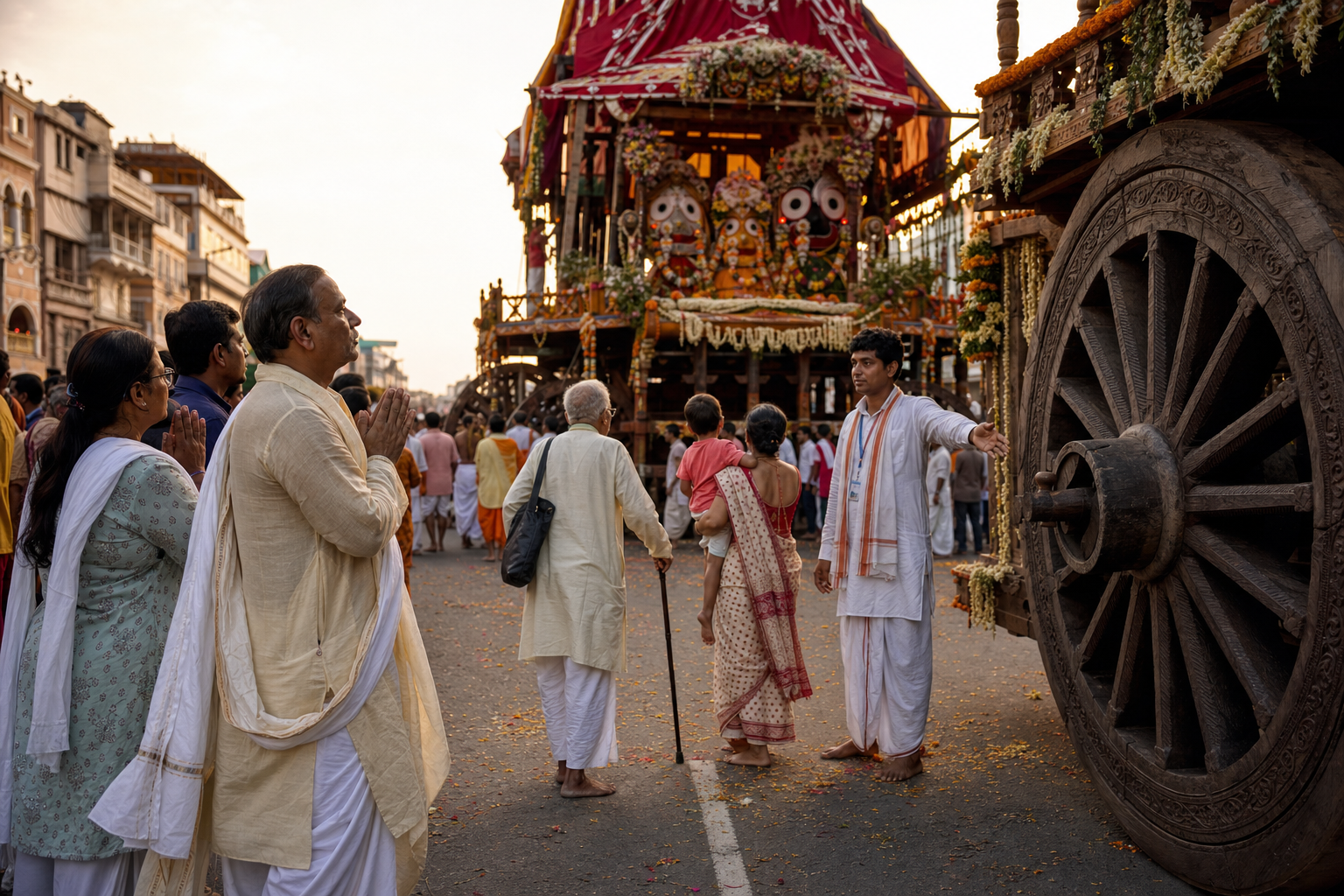
Ratha means chariot and yatra means journey or procession. Yet the festival is not primarily about a vehicle. Its centre is Lord Jagannath, accompanied by Balabhadra and Subhadra. The chariot matters because of whom it carries.
In Hindu temple worship, a consecrated murti is approached and served as a divine presence, not handled as a decorative representation. When the deities emerge in procession, darshan moves beyond the usual temple setting. People who might not enter the sanctum can behold the Lord in public space. The road becomes a place of encounter, and the assembled community becomes more than an audience.
This is why you shouldn’t reduce Ratha Yatra to either a parade or a display of heritage. Its beauty and scale are real, but they serve a devotional event. You have come to see the Lord, to be seen by the Lord, and to move in his company. Ratha Yatra may therefore be approached as devotional longing becoming a shared pastime: the wish for divine company takes visible form in a journey through the world.
Three actions will help you read what is happening. Darshan directs your eyes toward the deities. Accompaniment lets your body follow their movement. Seva turns your presence into an offering. If you remember those three, the festival will remain intelligible even when local customs, languages and arrangements are unfamiliar.
Prepare, participate and carry something home
Before the procession
Check the local temple or organiser’s current instructions rather than relying on an old announcement. Routes, gathering points, footwear arrangements, photography rules, prasad distribution and access to the chariot ropes can vary. Following those directions is part of seva; it protects the devotional atmosphere and the people sharing the route with you.
Then make a small sankalpa, or devotional intention. Keep it short enough to remember in a noisy crowd. You might pray, “Let me see without distraction,” “Let me serve without seeking recognition,” or “Let this journey awaken steadiness in my practice.” One honest intention is more useful than a long list of wishes you will forget when the procession begins.
During the yatra
- Take darshan before taking a photograph. Pause long enough to look directly at Jagannath, Balabhadra and Subhadra. A picture can help you remember the occasion, but it cannot replace the attention you withheld while making it.
- Join the sacred sound at your actual level. If you know the chant, sing. If you know only the response, repeat it attentively. If the words are unfamiliar, listen rather than pretending. Participation begins with receptivity.
- Treat the rope as service, not a prize. Pull only where organisers permit it, wait for direction, and make room for others. Physical contact with the rope is not a licence to shove, argue or ignore the people around you.
- Keep vulnerable companions close. Agree on a meeting point before entering a dense crowd. Children, elders and anyone with limited mobility should not be pulled toward the busiest place merely because it offers a closer view.
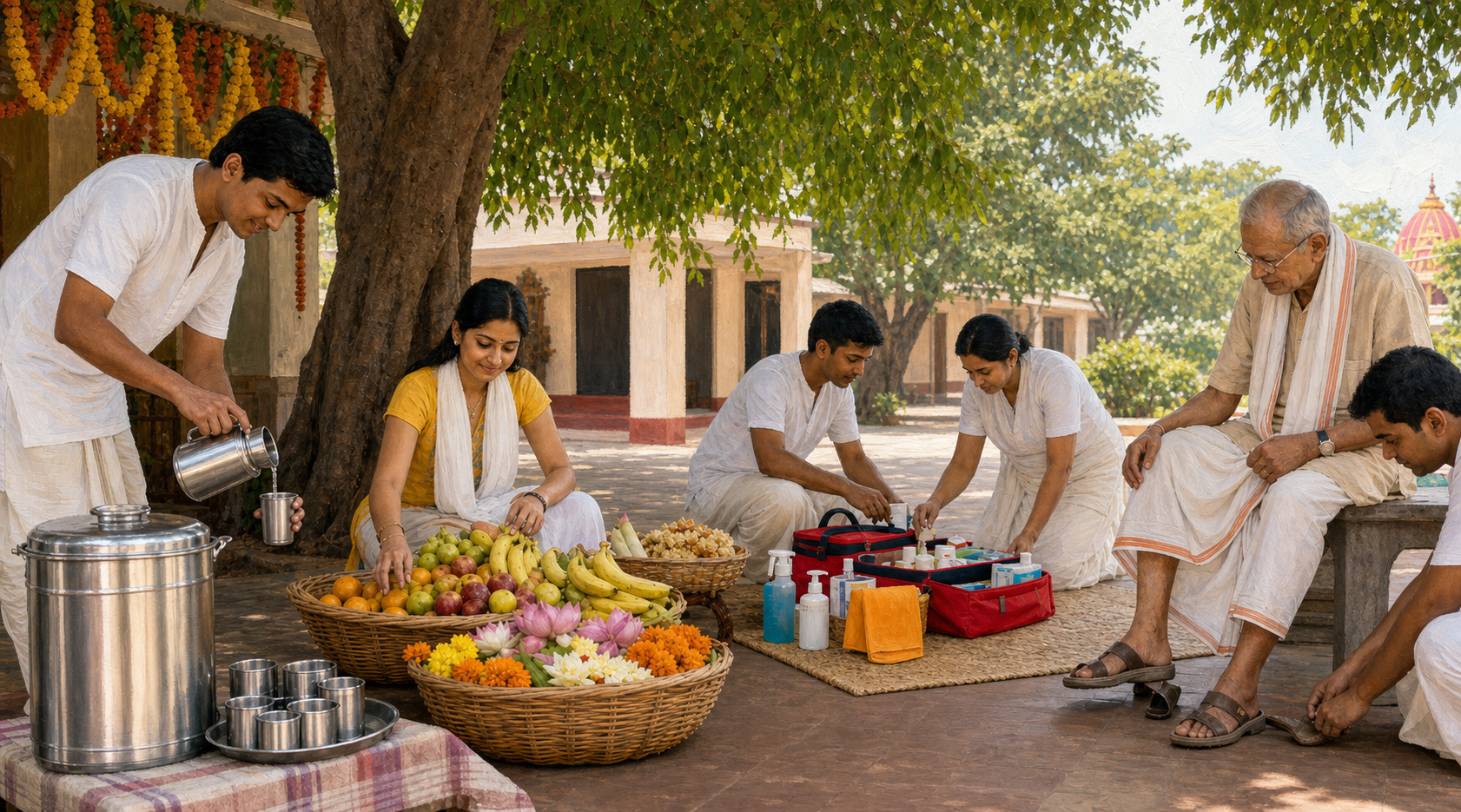
- Choose an unglamorous seva. Follow an organised request to distribute water or prasad, help direct people, support an elder, or clean the route. Don’t invent a task that obstructs volunteers already responsible for it.
- Receive prasad without waste. Take an amount you can honour. Wait until everyone with you is settled, and leave the distribution area clear for the next person.
A moving chariot and a dense crowd create real physical risk. Never wrap a rope around your wrist or body, reach beneath barriers, step into the chariot’s path, or pull from an unauthorised position. If the crowd becomes unstable, release the rope, move toward the edge without pushing, and follow the stewards. Missing a particular moment of access is preferable to endangering yourself or another pilgrim.
After the procession
Don’t let the day end at the exit gate. Sit quietly for a few minutes when you return home and recall one moment without consulting your photographs. Then convert your sankalpa into a small practice you can keep: a fixed period of nama-japa, one regular temple seva, a weekly offering of food, or a deliberate act of reconciliation. Choose one. Ratha Yatra is movement, so its mark on your life should also be visible in movement.
Five ways participation loses its devotional centre
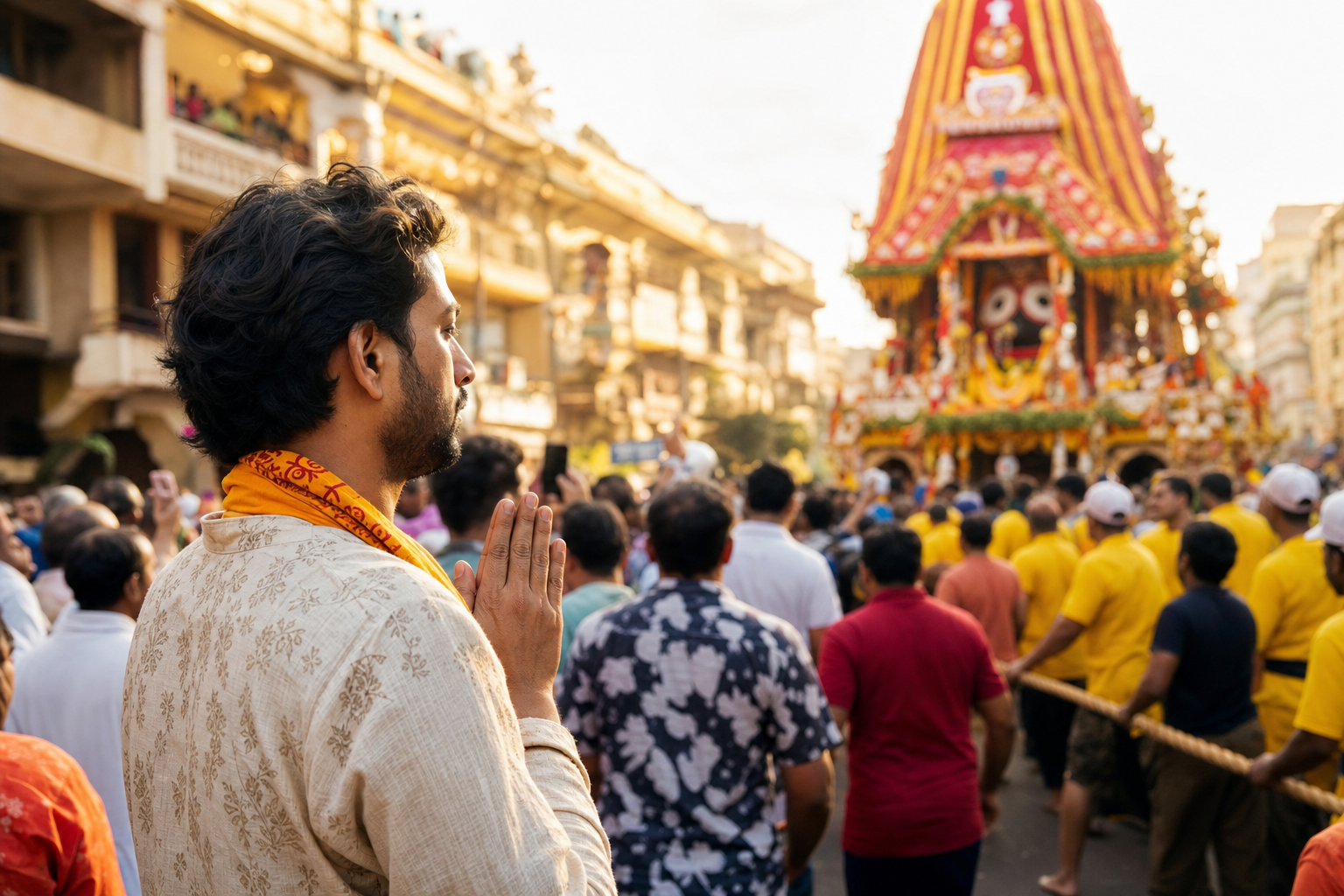
- Competing for the rope: If pulling becomes a contest for proximity or religious merit, the means has displaced the Lord. Wait, cooperate and accept that another devotee may receive the place you wanted.
- Watching through a screen: Constant recording fragments attention and can block someone else’s darshan. Take a limited number of photographs where permitted, put the phone away, and remain present for the chanting and procession.
- Confusing public access with informality: A festival on the road remains worship. Wear clean, respectful clothing, observe local instructions, and avoid treating the chariot as a prop for entertainment.
- Testing newcomers: Someone who doesn’t know when to bow or how to respond may still have come with sincere longing. Offer one quiet explanation when it is needed; don’t turn etiquette into a barrier between that person and Jagannath.
- Collecting emotion without accepting discipline: A powerful day can fade quickly if it demands nothing afterward. Decide before sleeping what practice, service or restraint will carry the encounter into ordinary life.
These mistakes share one pattern: the self moves back to the centre. The correction is not self-reproach. It is redirection. Look again toward the deities, listen again to the divine names, and notice the person beside you who may need space or help.
If you cannot attend a public Ratha Yatra
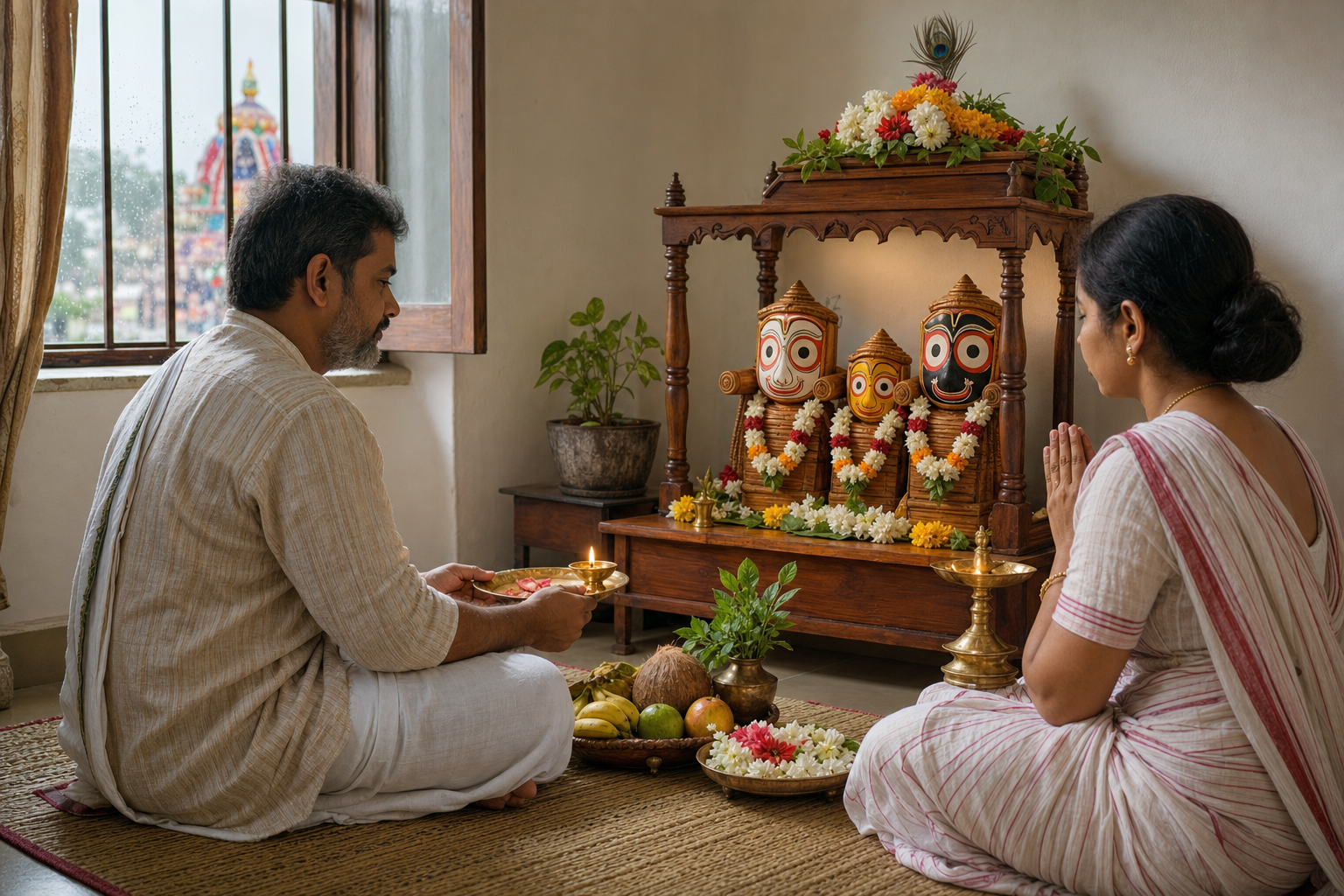
Distance, health, work or family duties may keep you away. You can still honour the festival at home without pretending to reproduce temple worship. If you belong to a particular sampradaya or follow instructions from a guru or family tradition, those practices should guide you.
- Prepare a clean place. Set a picture of Jagannath, Balabhadra and Subhadra where everyone can sit without rushing. Don’t move a consecrated murti unless your established worship permits it.
- State your intention. Offer a brief prayer for darshan, devotion and the welfare of those taking part in the procession.
- Hear and chant. Recite divine names you already know, sing familiar kirtan, or listen attentively to a trusted temple broadcast if one is available. The aim is remembrance, not performance.
- Make movement meaningful. If your family custom permits, carry a simple picture in a small procession through the prayer space while chanting. Let children participate, but explain that the playfulness serves devotion rather than turning the deities into toys.
- Offer and honour food. Prepare a simple vegetarian offering according to your household practice, then share the prasada without waste.
- Extend the worship through service. Feed someone, support a temple, help a neighbour, or undertake another concrete act that places divine remembrance into circulation.
- Keep one vow. Select a practice modest enough to continue after the festival. Consistency is more valuable than a dramatic promise abandoned the next day.
The purpose of a home observance is not to simulate a large procession. It is to receive the same invitation: make room for the Lord, accompany him through remembrance, and allow devotion to cross the boundary between a worship space and daily conduct.
Key takeaways for your next Ratha Yatra
- Keep Jagannath, Balabhadra and Subhadra at the centre; the chariot, crowd and photographs are secondary.
- Approach the festival through three actions: darshan, accompaniment and seva.
- Follow local instructions, especially around the moving chariot, crowd flow and access to the ropes.
- Measure participation by attention and service, not by how close you came or whether you pulled the rope.
- Carry the yatra home through one specific devotional practice you can sustain.
Choose that continuing practice before you arrive, or choose it before today ends. When the chariot has passed, the useful question is not whether you obtained every experience you wanted. Ask what within you is now willing to move with Jagannath.
References
