
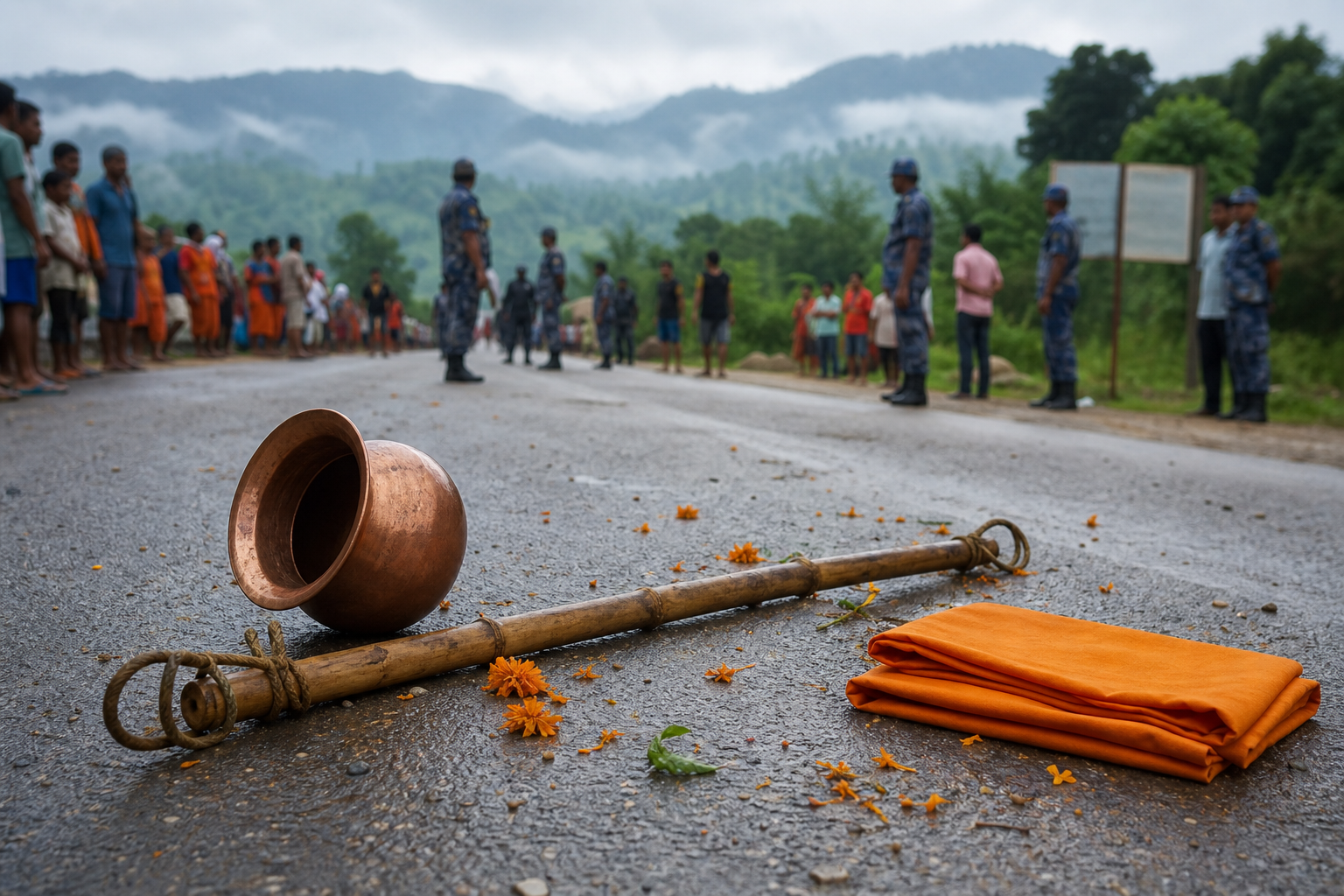
You may have seen the Kaptanganj violence described in stark communal terms and wondered what you can safely repeat. The responsible answer begins by separating the death that demands accountability from the allegations that still require proof.
This distinction matters whether you are a pilgrim deciding whether to attend a yatra, an organizer preparing a route, or a Hindu advocate asking for justice. Precision protects people, strengthens public pressure, and keeps Om Prakash Mehta’s death from being buried beneath arguments over unverified claims.
What we can establish, and where certainty stops
During preparations for the Bolbam yatra in Kaptanganj, near the India-Nepal border, a dispute over religious flags and a DJ escalated into communal violence. In the police firing that followed, 24-year-old Hindu man Om Prakash Mehta was killed.
Those are the central facts available to us. We do not have a police statement, a detailed incident report, a court finding, an identified firing officer, witness accounts from different sides, or a minute-by-minute chronology. We therefore cannot establish who initiated physical violence, what immediate threat the police faced, who ordered the firing, or whether the use of lethal force was lawful and necessary.
- Established here: the confrontation arose during Bolbam preparations; religious flags and a DJ were part of the dispute; communal violence followed; police fired; Om Prakash Mehta died.
- Not established here: the identities and organizational affiliations of attackers, the first person or group to use physical force, the police command sequence, and the legal justification for firing.
- Not established as a current condition: whether the route is presently restricted or dangerous. One episode cannot substitute for a same-day local safety assessment.
You should not repeat the label “jihadis” as an established identification. The facts available here do not name attackers, organizations, arrests, charges, or judicial findings that would substantiate it. That restraint does not minimize possible anti-Hindu violence. It prevents a demand for justice from depending on a claim that can be challenged before the central questions are answered.
Flags and music identify the flashpoint, not the guilty party
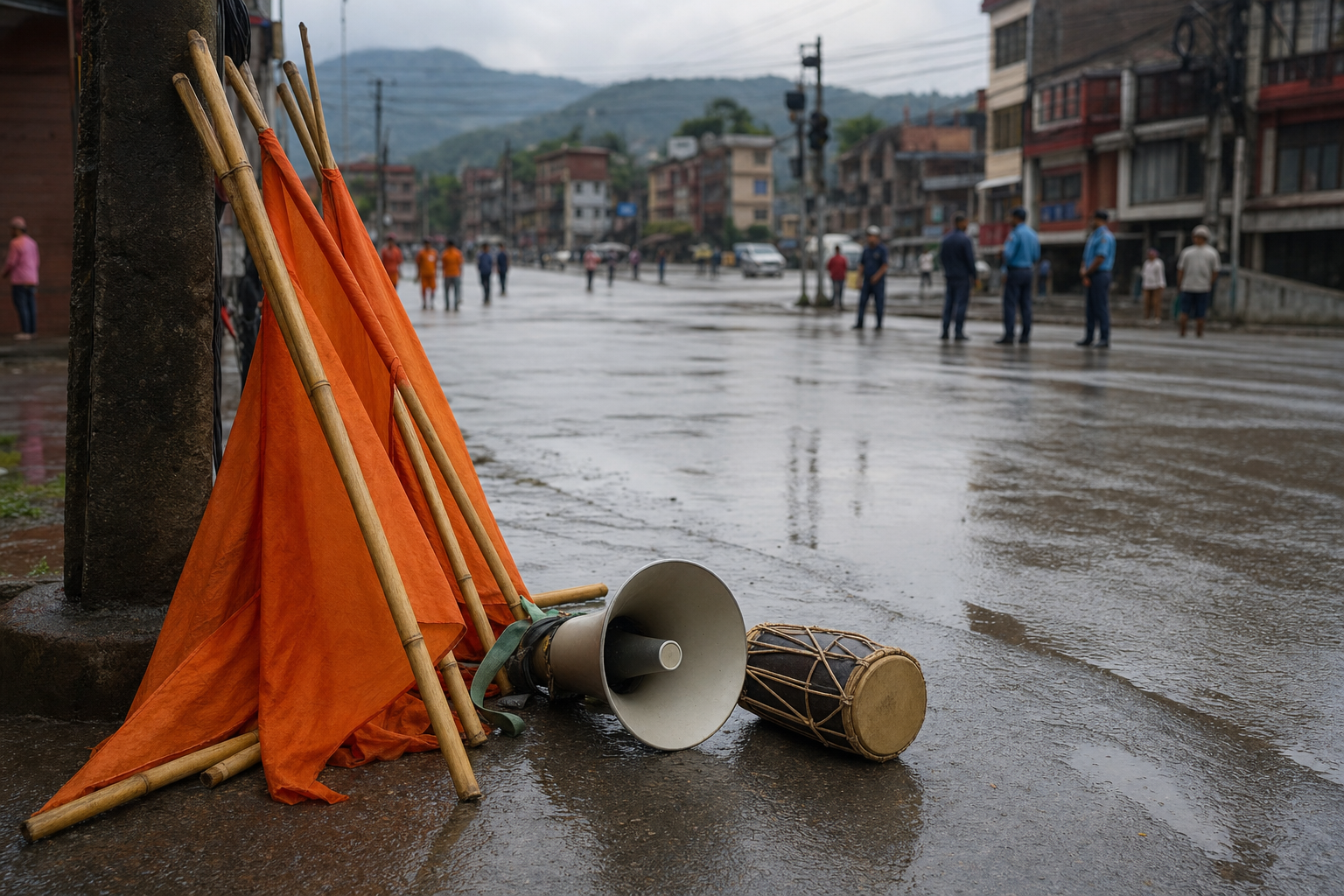
The dispute over religious flags and a DJ tells you what issue was present when tensions rose. It does not decide responsibility for the violence. A trigger, the conduct of a crowd, and the state’s use of force are three separate matters, and each requires its own evidence.
- The initial dispute: What had organizers and local authorities agreed about the route, flags, sound equipment, timing, and assembly points?
- The communal violence: Who used threats or physical force, against whom, and in what sequence?
- The police response: Who gave the firing order, what danger was present at that moment, what warnings were issued, and what alternatives were considered?
- The aftermath: What medical help was provided, what evidence was preserved, and what investigation followed?
This separation also improves the language you use. “Killed in police firing” states the reported event. “Murdered by police” alleges a criminal conclusion that has not been established here. Likewise, saying that a dispute “caused” the death skips the independent decision to use firearms. Exact verbs are not timid; they prevent accountability from being blurred.
Bolbam is a public expression of Hindu devotion, and pilgrims should not have to surrender their religious identity to intimidation. At the same time, practical rules may govern routes, timing, sound, and public space. Such rules should be known beforehand, applied evenly, and handled through lawful civic processes. Neither a hostile crowd nor an improvised confrontation should decide whether a yatra may proceed.
If you plan to join a yatra, verify the ground conditions
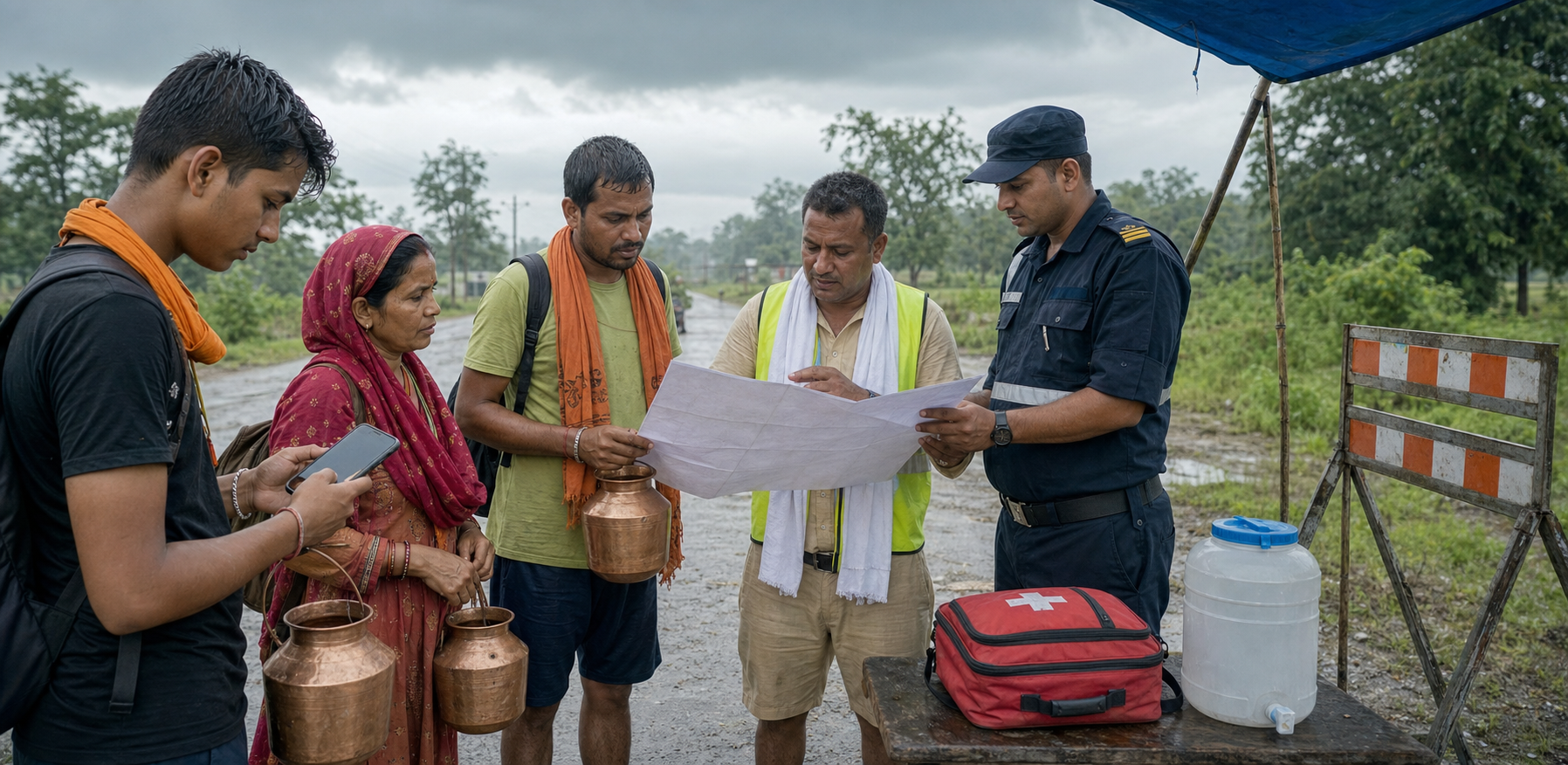
The Kaptanganj episode is a reason to prepare, not evidence that every Bolbam gathering in Nepal is unsafe. Conditions can differ by route and day. Before leaving, get current information from both the named yatra organizer and the relevant local administration; a forwarded message from an unknown account is not a safety plan.
- Confirm the exact route on the day of travel. Ask where the procession starts and ends, whether any segment has changed, and which assembly or dispersal points are authorized.
- Ask about flags and sound equipment explicitly. Do not assume that last year’s arrangements apply. Find out whether any restrictions exist, who communicated them, and who is responsible for resolving a disagreement.
- Name the liaison before the crowd gathers. Organizers should designate the person authorized to speak with police, residents, and other community representatives. Individual pilgrims should not conduct competing negotiations from inside a tense crowd.
- Create a simple separation plan. Travel with a companion, choose a regrouping point away from the procession route, and store two organizer contact numbers offline in case mobile service becomes unreliable.
- Move away from a developing confrontation. Do not approach an argument merely to film it or answer slogans. If violence or firing begins, prioritize distance and cover, leave by the safest available route, and follow lawful emergency directions.
- Verify before redirecting others. A false message about an attack, road closure, or police action can draw more people toward danger. Forward location-specific warnings only when the sender, place, and time can be checked.
Organizers should settle predictable points of friction before participants arrive. A written route plan, clear responsibility for the DJ or sound system, named contacts, and an agreed method for pausing the procession give everyone a way to de-escalate without debating authority in the street. Documentation matters, but no photograph is worth remaining in the path of violence or gunfire.
Put Om Prakash Mehta at the center of the justice demand
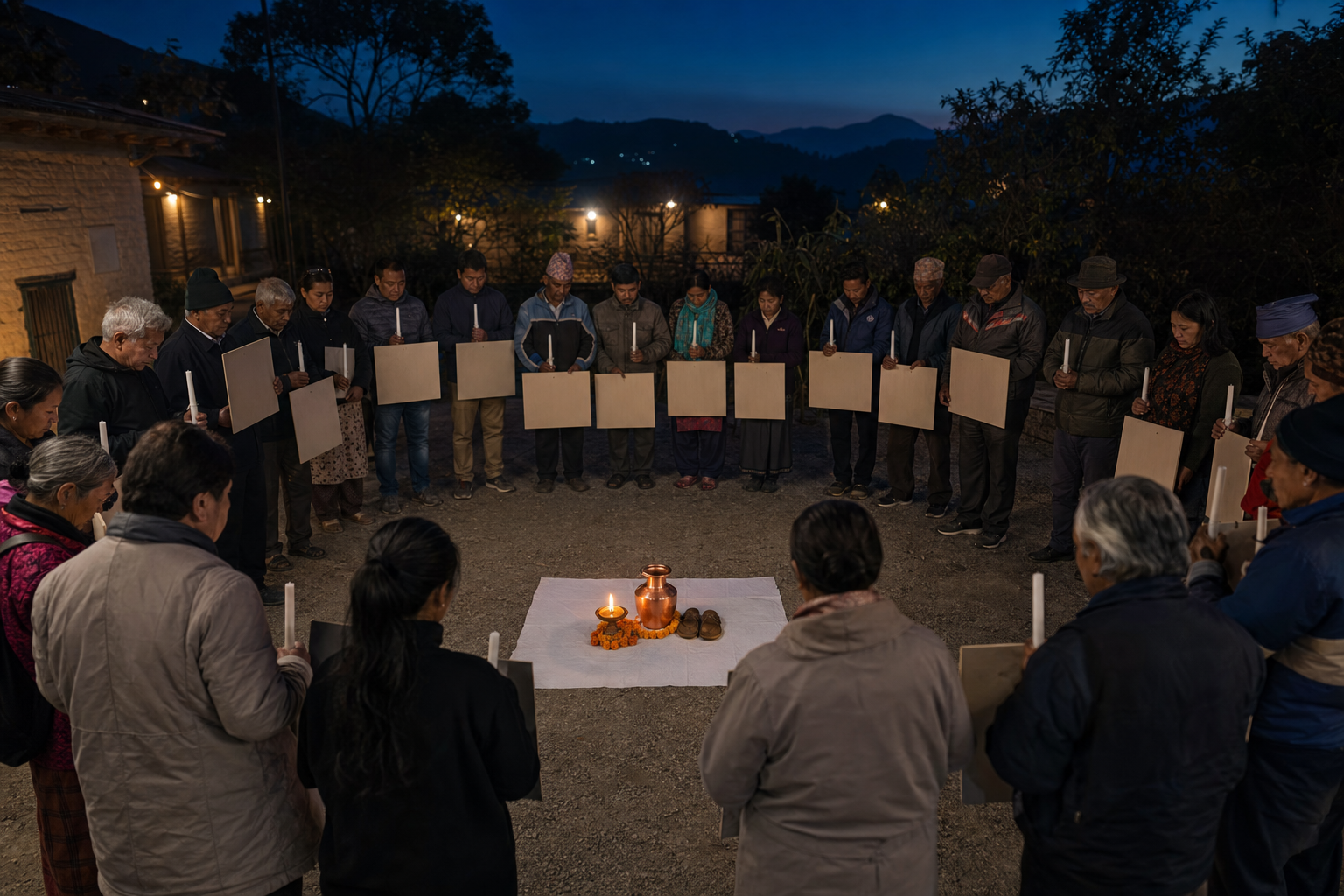
A strong pro-Hindu response does not need maximal rhetoric. It needs a disciplined factual record and direct questions for the authorities. Om Prakash Mehta’s name, age, and reported cause of death should remain central; unsupported descriptions of unidentified people should not displace them.
- Lead with the narrow facts. Name Kaptanganj, the Bolbam preparations, the dispute over flags and a DJ, the communal violence, the police firing, and the death of the 24-year-old Hindu man.
- Mark allegations as allegations. If a claim about an attacker, organization, motive, or firing order cannot be tied to identifiable evidence, do not convert it into a declarative sentence.
- Preserve provenance. Keep original links, full screenshots, dates of access, and the identity of the person who supplied any photograph or video. Do not crop away captions or surrounding material that could reveal when and where an image originated.
- Ask answerable questions. Seek the official chronology, the names or roles of commanding officers, the grounds for opening fire, the warnings given, the number and direction of shots, available medical records, and the status of any impartial investigation.
- Protect uninvolved people. Do not publish unverified names, home addresses, or communal accusations. Misidentification can expose innocent people to retaliation and weaken the credibility of the entire justice effort.
- Correct errors openly. If evidence disproves something you shared, amend it where the original audience can see the correction. Quiet deletion leaves the false version circulating.
A defensible public statement would read: “During preparations for the Bolbam yatra in Kaptanganj near the India-Nepal border, a dispute over religious flags and a DJ escalated into communal violence. In the police firing that followed, 24-year-old Hindu man Om Prakash Mehta was killed. We seek a transparent account of the firing decision and an impartial investigation into the violence and his death.” Add further details only after they are verified.
Key takeaways
- The documented core is limited but grave: communal violence arose during Bolbam preparations, and Om Prakash Mehta was killed in subsequent police firing.
- The dispute over flags and a DJ identifies a flashpoint; it does not establish who initiated violence or whether the police response was justified.
- Do not present communal labels or attacker identities as facts without names, evidence, official findings, or independent corroboration.
- If you are attending a yatra, verify the route, rules, liaison contacts, and exit plan on the day of the event.
- If you are seeking justice, preserve original evidence and demand specific answers about the firing order, warnings, threat assessment, medical response, and investigation.
If you share this case, make one change before publishing: remove every unsupported identification and replace it with a precise question for investigators. Keep Om Prakash Mehta’s name and the reported sequence at the center. That is how you defend Hindu pilgrims while building a case that can withstand scrutiny.
References
- Hindu Jagruti Samiti – Attack on Hindus by jihadis in Nepal; death of a Hindu youth in police firing
