
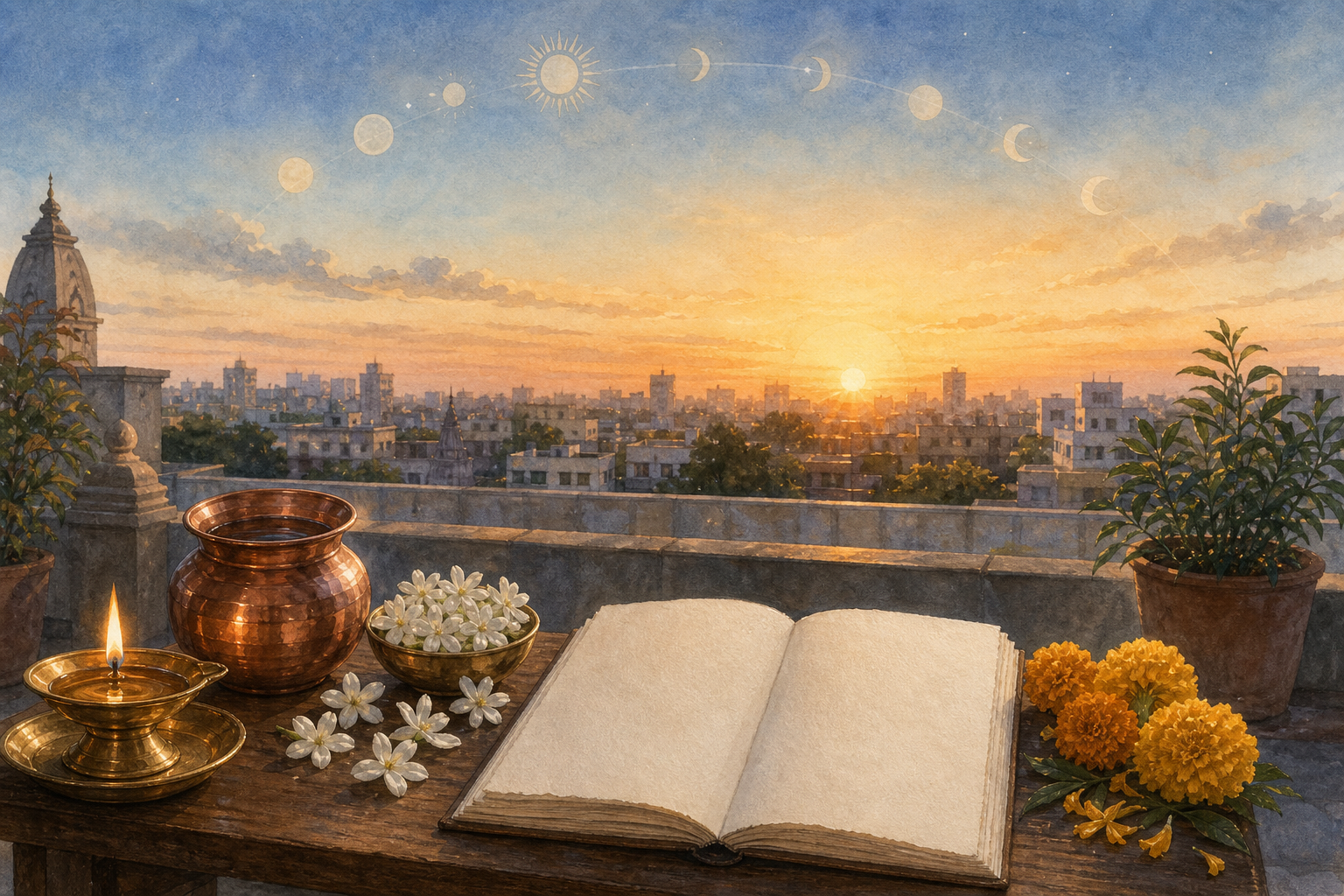
If you need to schedule a puja, begin a course, sign documents, make a considered purchase, negotiate an agreement, or take a short journey on Wednesday, June 17, 2026, the central point is straightforward: plan for Shukla Paksha Tritiya, but do not copy an exact muhurat from a calendar calculated for another city.
Dwitiya gives way to Tritiya at about 3:54 AM in the cited calendar calculation. Because that transition precedes sunrise in the working calendar, June 17 is generally observed as Tritiya. Your practical sequence is to fix the location, confirm the local Panchang, remove the periods you intend to avoid, and then select a favorable window suited to the actual task.
June 17 Panchang at a glance
| Panchang factor | Working reading for June 17 | What you must verify locally |
|---|---|---|
| Tithi | Shukla Paksha Dwitiya until about 3:54 AM, followed by Shukla Paksha Tritiya | The local clock time of the transition, especially for a pre-dawn observance |
| Vara | Wednesday, or Budhavara | No location adjustment is needed for the weekday |
| Masa | Generally Jyeshtha Shukla Paksha in both the North Indian Purnimanta and Southern or Deccan Amanta systems | Whether your regional calendar designates the period as Adhik Jyeshtha |
| Nakshatra and Moon Rashi | The Moon falls broadly within the late Mithuna to early Karka corridor in many regions | The exact Nakshatra, its ending time, and the moment of any Rashi change |
| Daily muhurat | Use favorable Choghadiya or a suitable Abhijit period after applying the customary exclusions | Local sunrise, sunset, Rahu Kaal, Yamaganda, Gulika Kaal, and true local noon |
A complete Panchang has five limbs: tithi, vara, nakshatra, yoga, and karana. Treating the date as Tritiya answers only the first question. If your activity depends on a particular nakshatra, karana, or yoga, the five factors need to be checked together rather than replaced by a generic label such as good day.
The distinction matters because a Hindu calendrical day is reckoned from sunrise to the following sunrise. A tithi is determined by the angular separation of the Sun and Moon, with each tithi covering 12 degrees. Civil midnight therefore does not decide which tithi governs a sunrise-based observance.
Build a local muhurat instead of copying a clock time
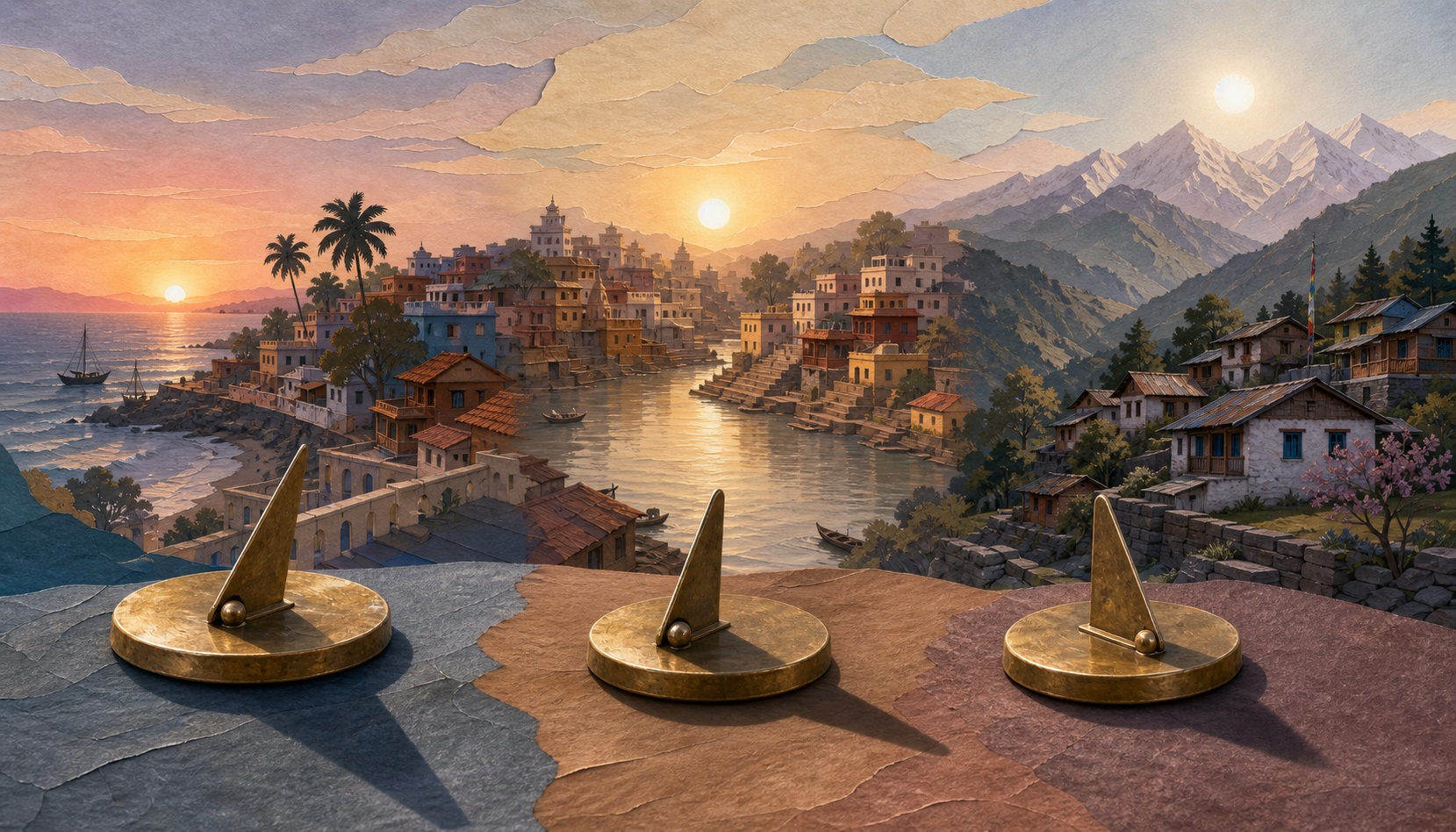
There is no universally valid June 17 muhurat stated only in hours and minutes. Sunrise and sunset determine the daily divisions, while the displayed transition times must match your location and time zone. A timetable prepared for Delhi should not be treated as exact for Toronto, London, Singapore, or even a distant Indian city.
- Choose the city where the activity will physically begin. Use that location even if other participants are joining remotely.
- Open a reputable Panchang calculated for that city and confirm the local sunrise, sunset, tithi, nakshatra, yoga, karana, and Moon Rashi.
- Check that Tritiya is active at the actual starting time. This is especially important if you plan something before sunrise or close to a listed transition.
- Mark Rahu Kaal, Yamaganda, and Gulika Kaal as unavailable if your family or sampradaya follows those exclusions.
- Within the remaining time, look for Amrit, Shubh, or Labh Choghadiya. These are the practical favorable divisions commonly used for meetings, routine purchases, short journeys, and marketplace activity.
- If no convenient favorable Choghadiya remains, inspect the local Abhijit Muhurat for an urgent, ordinary undertaking. Check it against the excluded periods rather than assuming that a noon-based label settles every conflict.
- For a samskara or another major rite, use the daily method only as a first filter. Have the complete local Panchang and the participants’ requirements assessed according to the relevant tradition.
Abhijit Muhurat is centered on true local noon and lasts approximately 24 minutes on either side of it. That makes it useful when an ordinary task cannot wait for a longer elective muhurat. It is not simply a fixed 12:00 PM appointment, because true local noon and the surrounding daily divisions depend on place and date.
The commonly repeated Wednesday estimate of 12:00 PM to 1:30 PM for Rahu Kaal assumes a simplified day with sunrise near 6:00 AM and sunset near 6:00 PM. Use it to understand the pattern, not to schedule the event. If your local sunrise differs, the window moves. An apparent overlap between an approximate Abhijit period and an approximate Rahu Kaal is a signal to obtain the exact local calculation.
Choose work that fits Tritiya and Budhavara

Shukla Paksha Tritiya carries a constructive but measured character. It is better suited to a clear beginning than to dramatic, poorly examined action. Wednesday adds the traditional Budha emphasis on language, learning, calculation, correspondence, and negotiation. Together, they make the day especially usable when success depends on thought and communication.
- Begin a course of study, reading plan, writing project, or disciplined practice with a defined first session.
- Prepare, review, sign, or submit routine documents after checking every name, date, amount, and obligation.
- Hold a negotiation in which both sides need precise language and a written record of what was agreed.
- Make a thoughtful household or educational purchase that has already been researched. Auspicious timing should support sound judgment, not replace it.
- Conduct a light household puja, make dana, or begin a modest act intended to strengthen family well-being.
- Schedule a short journey or practical marketplace task within an Amrit, Shubh, or Labh Choghadiya after excluding the periods your tradition avoids.
The common mistake is to treat favorable tithi as permission to ignore the rest of the day. Tritiya describes the lunar quality; it does not make every minute equally suitable. The opposite mistake is to keep searching for a flawless minute until nothing gets done. For normal work, a sound local window, a fitting activity, and careful preparation are usually the useful combination.
If a decision carries serious financial or long-term consequences, keep the roles separate: the Panchang can help you choose when to begin, while due diligence determines whether you should proceed. Read the agreement, verify the counterparty, and understand the obligation before assigning it an auspicious time.
Keep the Tritiya observance simple and locally grounded
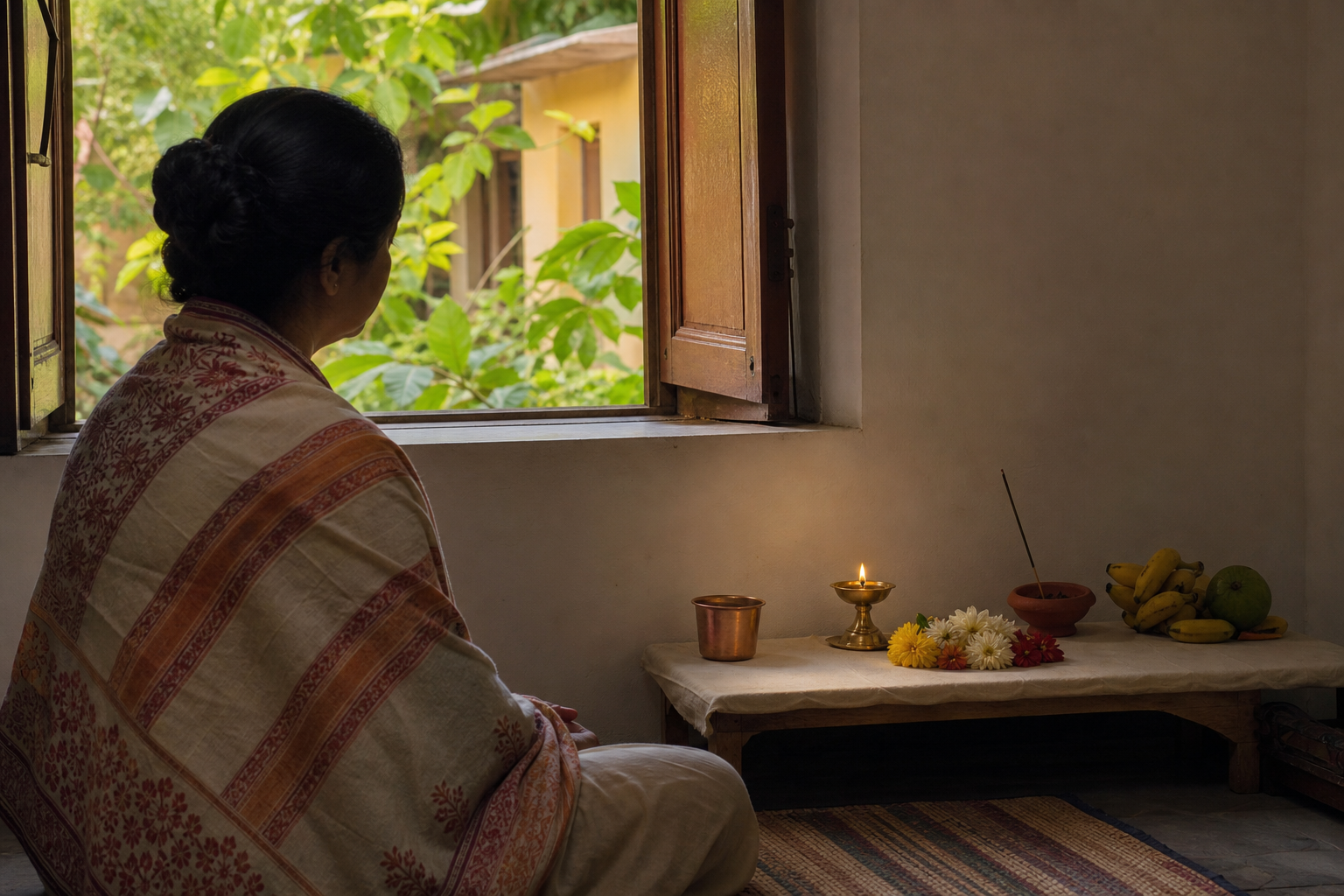
Some regional calendars observe Jyeshtha Shukla Tritiya as Rambha Tritiya, also called Rambha Teej, with attention to sauhagya and household welfare. Do not assume that every family observes the vrata or follows the same procedure. First check the name and rules used by your regional Panchang, temple, family, or sampradaya.
- Clean the puja space and prepare the lamp, flowers, water, and any customary offerings before the chosen time.
- State a simple sankalpa using the date details supplied by your local calendar. Do not guess the nakshatra, Moon Rashi, or masa designation.
- Light the lamp and offer flowers with a steady mind. Use a familiar stotra or prayer from your own tradition rather than assembling an elaborate new ritual from fragments.
- Make an act of dana that is appropriate to your means. The ethical act is part of the observance, not an ornamental addition to it.
- Close by dedicating the merit toward steadiness, household harmony, and the welfare of family and community.
This restrained approach preserves the purpose of the Panchang. Auspicious time is not a mechanism for controlling every outcome. It trains attention: you pause, identify the nature of the moment, choose a fitting action, and carry it out with discipline.
That discipline also has recognizable counterparts across the wider dharmic family. Buddhist Uposatha practice attends to lunar phases, while Jain vrata and pratikraman are organized around recurring calendrical rhythms. Sikh observance primarily follows the solar Nanakshahi reckoning, though many families also encounter festivals shaped by the subcontinent’s lunar culture. The calendars are not interchangeable, but each can turn timekeeping into ethical recollection rather than mere datekeeping.
Key takeaways for June 17, 2026
- Treat the date as Shukla Paksha Tritiya for ordinary daytime planning; Dwitiya ends at about 3:54 AM in the working calculation.
- Wednesday favors study, writing, documentation, careful purchasing, and measured negotiation.
- Do not publish or follow one universal Nakshatra, Moon Rashi, or muhurat time for every location.
- Remove local Rahu Kaal, Yamaganda, and Gulika Kaal before choosing Amrit, Shubh, or Labh Choghadiya.
- Use Abhijit Muhurat around true local noon as a practical option for an urgent ordinary undertaking, subject to the other filters you observe.
- Check whether your regional calendar calls the period Jyeshtha or Adhik Jyeshtha and whether Rambha Tritiya is actually part of your tradition.
Before June 17, save or print the Panchang for the city where your activity will begin and write the location beside the timings. Then plan in this order: confirm Tritiya, mark the avoided periods, choose a favorable segment, and prepare the work itself. That turns the Panchang from a vague promise of luck into a disciplined guide for action.
References
