
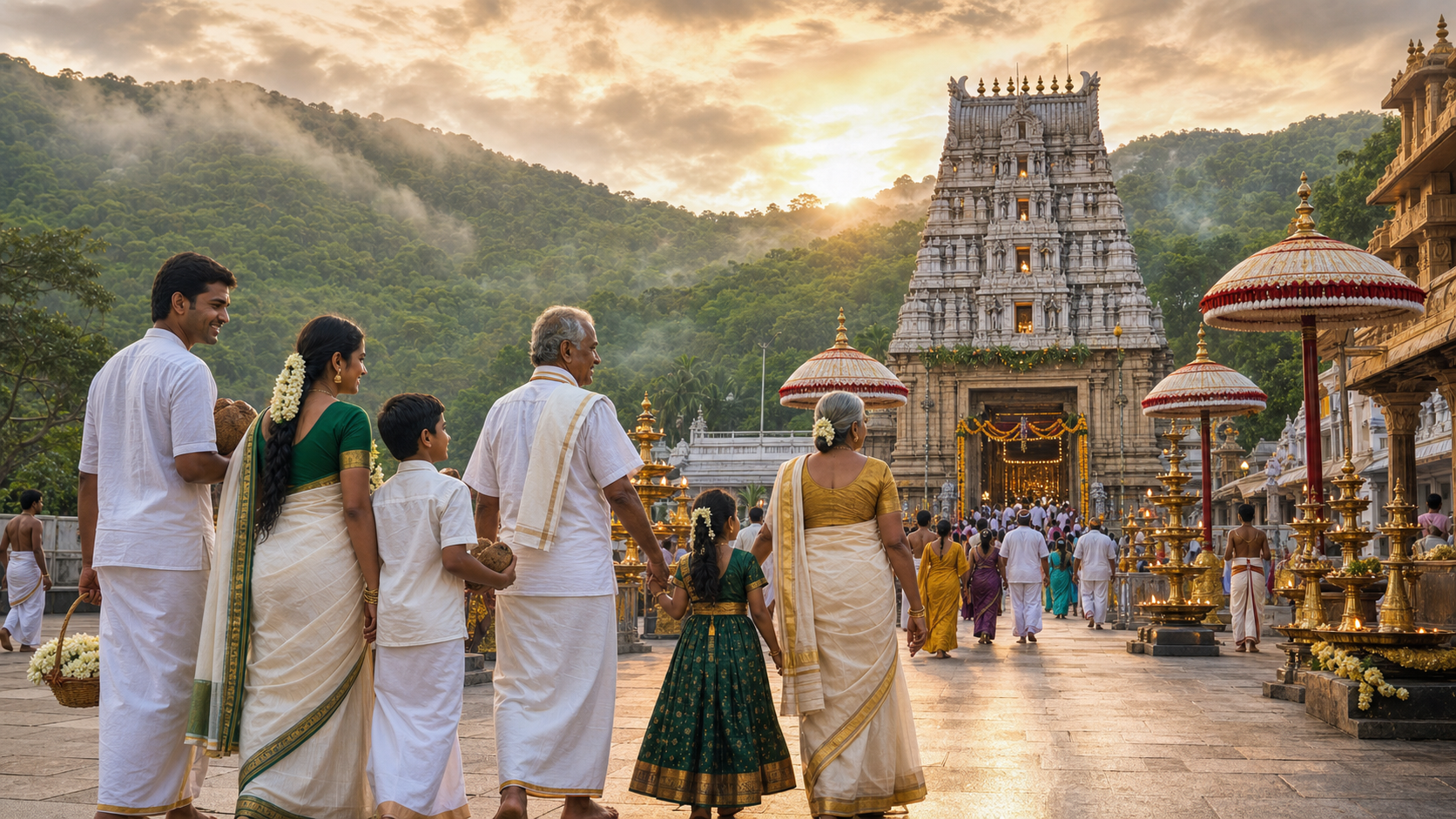
If you are planning a Tirupati pilgrimage in June 2026, the difficult part is not finding a festival. It is deciding which sacred experience deserves your time when several observances overlap.
The crucial date is 25 June. Sri Periyalwar Utsavam reaches its final day in Tirupati, the Appalayagunta Brahmotsavam begins, and Sri Padmavathi Ammavaru’s Teppotsavam opens at Tiruchanur. You can build a coherent pilgrimage around all three traditions, but only if you choose an anchor event for each day and resist the urge to race between temples.
The June festival calendar at a glance
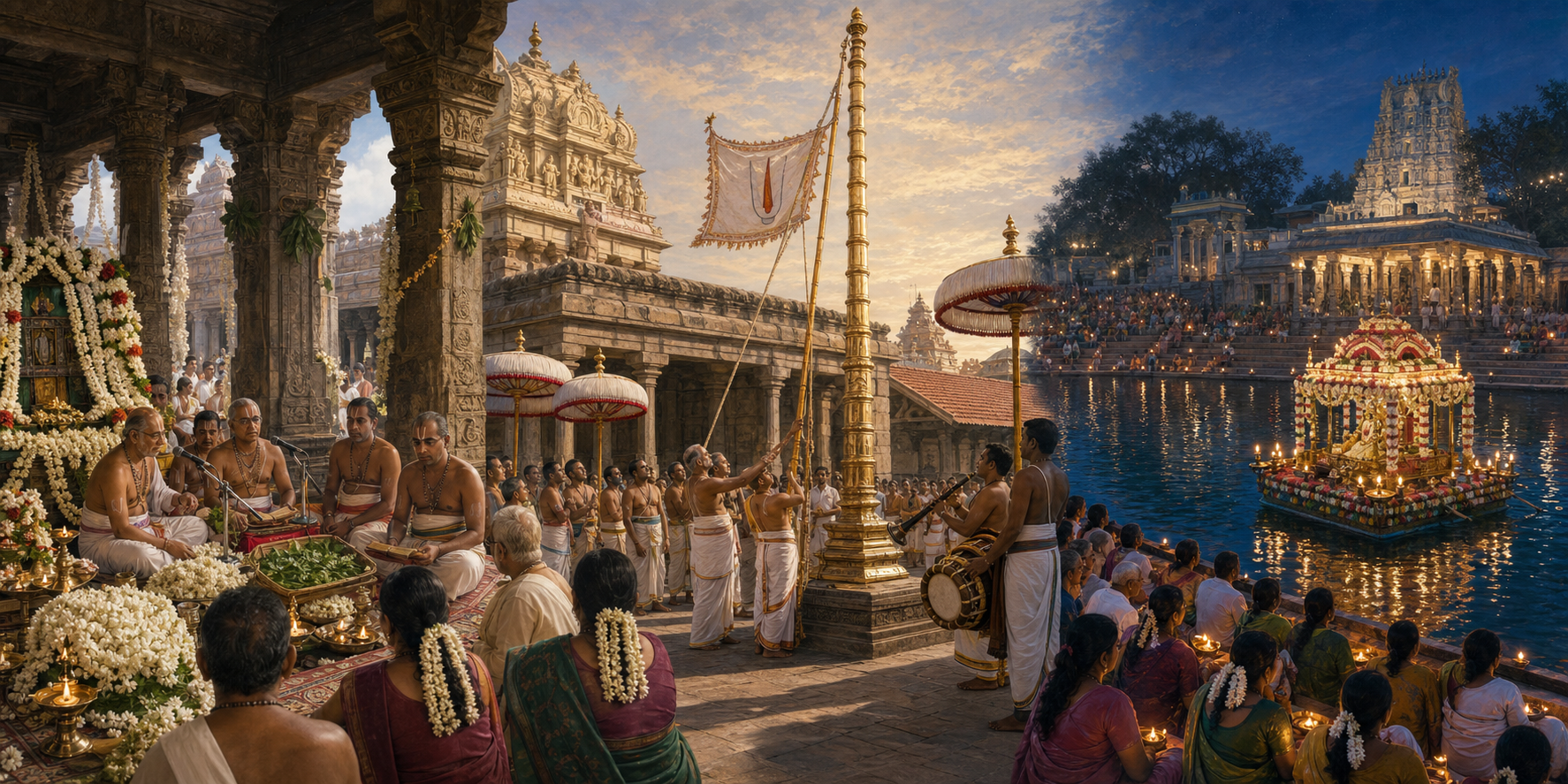
A date range alone does not tell you how to plan. Some observances centre on sustained recitation, some on processions at fixed hours, and one unfolds on a temple tank in the evening. Use the final column below as your verification list when TTD issues operational notices closer to the dates.
| Observance | Venue | 2026 dates | Established pattern | What you must verify |
|---|---|---|---|---|
| Sri Periyalwar Utsavam | Sri Lakshmi Narayana Swamy Temple, attached to Sri Govindaraja Swamy Temple, Tirupati | 16-25 June | Divya Prabandham Pasuram recitation in the morning and evening under HH Pedda Jeeyar Swamy and HH Chinna Jeeyar Swamy, with their disciples | Daily start times, access arrangements and any special programme for the concluding day |
| Koil Alwar Tirumanjanam | Sri Prasanna Venkateswara Swamy Temple, Appalayagunta | 23 June | Pre-festival cleansing and sanctification of the temple | Ritual timing and how normal pilgrim access will be managed |
| Ankurarpanam | Sri Prasanna Venkateswara Swamy Temple, Appalayagunta | 24 June | Ceremonial sowing of seeds and articulation of the festival sankalpa | Timing and viewing or participation arrangements |
| Sri Prasanna Venkateswara Brahmotsavam | Appalayagunta | 25 June-3 July | Daily Vahana Sevas from 08:00-09:00 and 19:00-20:00 | The vehicle and alankaram assigned to each session, queue instructions and route diversions |
| Sri Padmavathi Ammavari Teppotsavam | Padmavathi Sarovaram, Tiruchanur | 25-29 June | Evening float observance with Pancharatra worship, beginning on Shuddha Ekadasi | Daily commencement time, entry and exit routes, viewing zones and weather-related changes |
The month therefore falls into five useful planning windows. From 16 to 22 June, Sri Periyalwar Utsavam is the sole major observance in this calendar. The preparatory rites at Appalayagunta overlap with it on 23 and 24 June. All three festival streams meet on 25 June. Appalayagunta and Tiruchanur then overlap from 26 to 29 June, while the Brahmotsavam continues alone from 30 June into 3 July.
Choose the experience that will anchor your pilgrimage
These observances are not interchangeable attractions. Each asks for a different kind of attention. Decide which form of bhakti matters most to you, then arrange the remaining visits around it.
For scripture, song and sustained attention: Sri Periyalwar Utsavam
The ten-day Sri Periyalwar Utsavam runs from 16 to 25 June. Its centre is not a single large procession but the repeated morning and evening recitation of Divya Prabandham Pasurams. That makes it the strongest choice if you want to listen, learn and remain with a tradition long enough for its cadence to become familiar.
Periyalwar, also known as Vishnuchitta and revered as the father of Andal, expresses an unusually intimate form of devotion. His Tiruppallandu offers mangala-asasana, a protective benediction for the Lord. The apparent reversal is the point: the devotee loves Bhagavan so deeply that praise takes the form of wishing Him enduring auspiciousness.
Do not treat the recitation as background sound while moving through the temple. Arrive before the session begins, settle where directed and stay for a complete segment if circumstances permit. If Tamil is not familiar to you, bring a compact text with transliteration and meaning. Follow the lead of the prabandha goshti rather than trying to anticipate its pace. Listening attentively is already participation; you do not need to imitate words you cannot yet pronounce with confidence.
For a full public utsava cycle: Appalayagunta Brahmotsavam
The Appalayagunta festival cycle begins with preparatory rites on 23 and 24 June, followed by the Brahmotsavam from 25 June to 3 July. Its twice-daily Vahana Sevas give you the clearest fixed framework in this calendar: 08:00-09:00 and 19:00-20:00 each day.
Choose a morning procession when you want a calmer, more observant encounter with the Utsava Murti and the vahanam. Choose an evening procession when lamps, music and the assembled congregation are essential to the experience you seek. If your stay permits it, attend one of each rather than assuming that the two sessions merely repeat one another.
Do not build your trip around an unconfirmed claim that Garuda Seva, Rathotsavam or another particular vahanam will occur on a given date. Sesha, Hamsa, Simha, Hanumantha, Surya Prabha, Chandra Prabha, Sarvabhoopala and Garuda are among the forms commonly associated with Vaishnava Brahmotsavams, but the Appalayagunta sequence can vary. If one vahanam is the reason for your journey, wait for the temple’s day-wise display or TTD notification before fixing that part of your plan.
For evening darshan on sacred water: Tiruchanur Teppotsavam
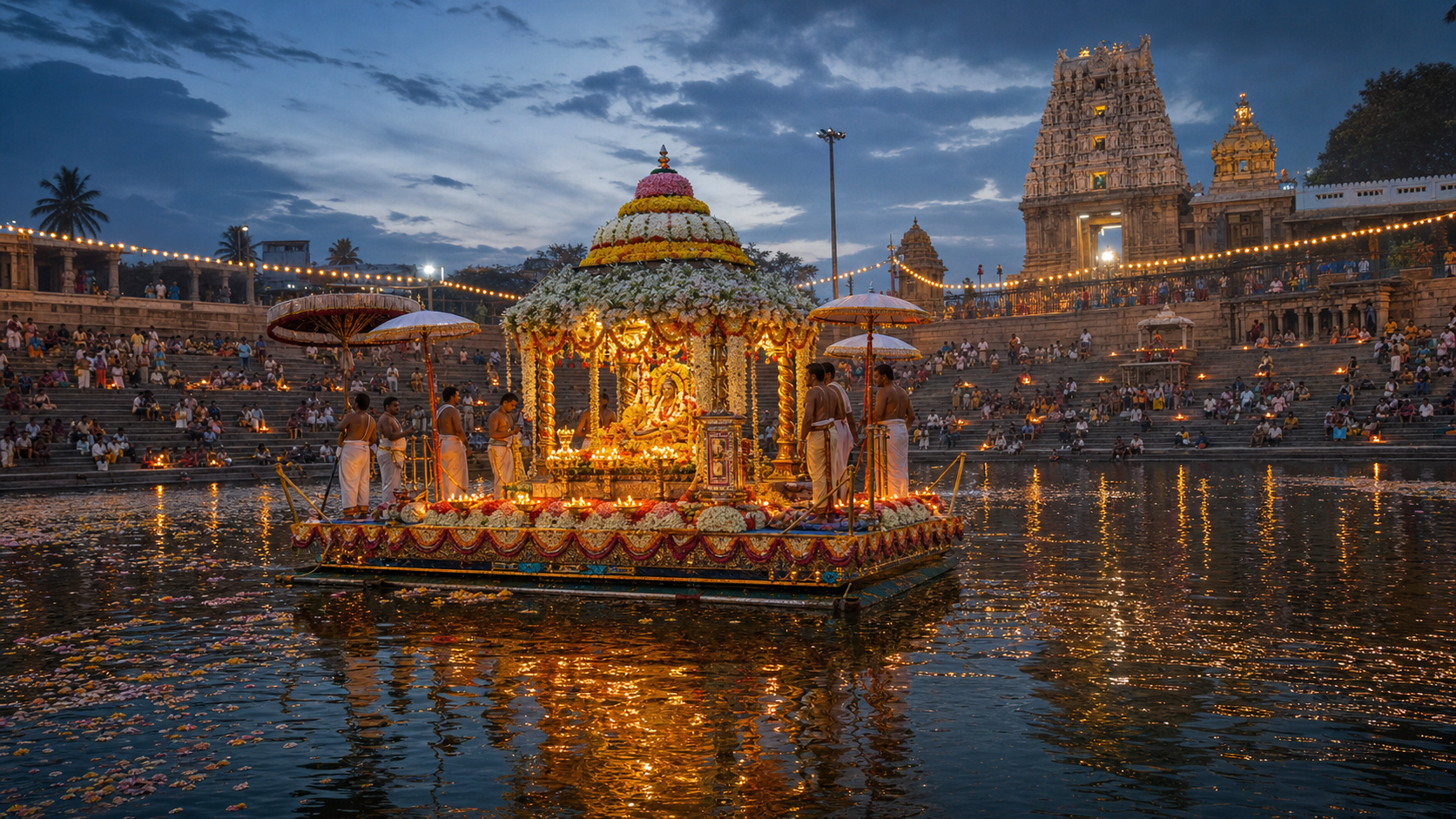
The five evenings from 25 to 29 June belong to Sri Padmavathi Ammavaru’s Teppotsavam. Her Utsava Murti is brought to Padmavathi Sarovaram and placed upon the decorated teppa, where ritual worship accompanies the float’s rounds on the water.
This is a natural choice for a family group whose members need a visually legible form of worship. Children can follow the movement of the float, elders can receive darshan from the tank-side viewing area, and the reflection of lamps makes the evening’s sacred focus unmistakable. Yet visibility depends on crowd management and your assigned position, so arrive well before the announced start rather than expecting to walk in as the float begins moving.
The final evening commonly draws especially heavy attendance. Attend on an earlier date if your priority is manageable movement rather than the culminating atmosphere. If 29 June is important to you, give the Teppotsavam the whole evening and avoid stacking another procession immediately before it.
On 25 June, choose one evening anchor. Appalayagunta has an announced 19:00-20:00 Vahana Seva, while the precise Tiruchanur time remains subject to a later notification. Treat the two evening events as a probable conflict until the schedules prove otherwise. If the concluding Periyalwar recitation is your first priority, reserve space for it and make any same-day procession optional rather than turning a devotional day into a transport race.
Build a realistic itinerary around the overlaps
You do not need to attend every date to understand the month. A useful itinerary follows the ritual arc while protecting time for rest, meals and unhurried movement.
- 16-22 June: Base yourself in Tirupati and attend at least one complete morning or evening Periyalwar recitation. If this tradition is new to you, return for a second session after learning the refrain and recitation pattern.
- 23 June: Consider Appalayagunta for Koil Alwar Tirumanjanam only after confirming the timing and access arrangements. This is a working rite of temple sanctification, not simply another public procession. Keep your Periyalwar session as the day’s dependable devotional anchor if Appalayagunta access is limited.
- 24 June: Attend Ankurarpanam at Appalayagunta if the announced arrangements allow it. The sowing of seeds prepares the festival ritually; it should be approached as an inauguration of sankalpa, not as a substitute for the public Vahana Sevas that begin the following day.
- 25 June: Make a deliberate choice. Attend the final Periyalwar observance, the opening of Brahmotsavam or the first Teppotsavam evening according to your central purpose. Combining a confirmed morning event with one evening event may be possible, but do not promise yourself all three before the final timings and routes are known.
- 26-28 June: A morning Vahana Seva at Appalayagunta and an evening Teppotsavam at Tiruchanur form the most workable two-temple pattern. Keep the afternoon free for food, hydration, rest and travel. Recheck the Tiruchanur start time before leaving Appalayagunta.
- 29 June: Give the concluding Teppotsavam evening priority if you want the culmination on the sarovaram. Because the final day can be more crowded, reduce other commitments instead of trying to arrive after a full evening elsewhere.
- 30 June-3 July: If your pilgrimage can extend beyond June, use these days for the remaining Appalayagunta Brahmotsavam. The absence of the Tiruchanur overlap makes it easier to attend both morning and evening Vahana Sevas without rushing.
Use one Tirupati-area base instead of repeatedly changing accommodation. Sri Govindaraja Swamy Temple’s area is connected to the city’s principal transit points, Tiruchanur can be reached by local bus, auto-rickshaw or taxi, and Appalayagunta is connected within the wider Tirupati region. Connectivity does not guarantee quick movement during a festival, so leave a genuine buffer and follow temporary traffic or procession diversions.
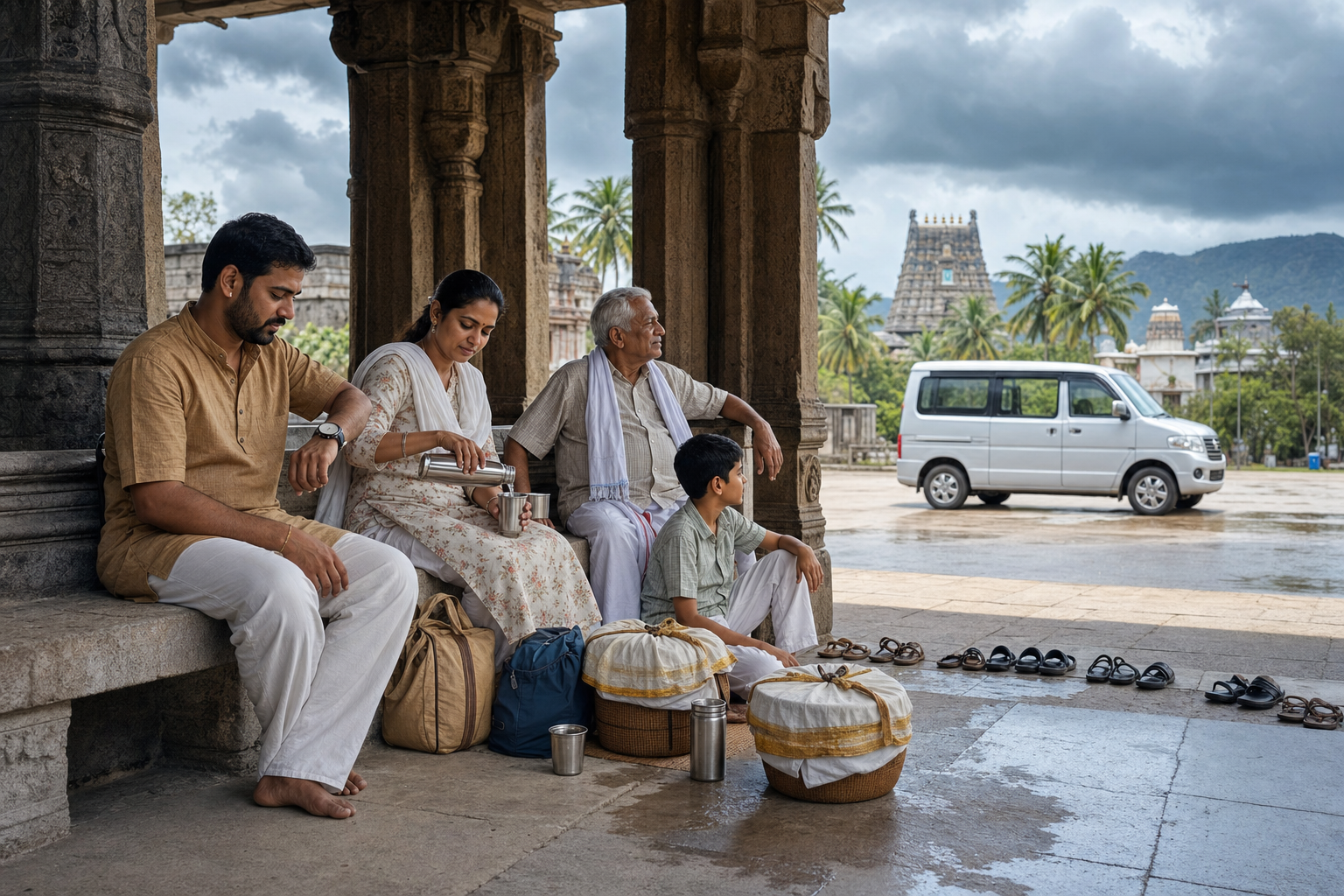
Late June can bring warmth, humidity, light rain and slippery surfaces. Carry compact rain protection, drinking water in a reusable container where permitted, and walking footwear that you can manage easily at designated footwear points. A dry cloth or shawl can also be useful for sitting where temple arrangements allow. Families with children and seniors should plan a midday rest instead of remaining outdoors between morning and evening observances.
Keep your daily plan editable. Check TTD notices and temple display boards before departure, then check on-site directions again when you arrive. Weather, tank operations, crowd flow and ritual requirements can change a route or timing even when the published festival dates remain the same. Volunteers and security personnel may also direct you to a different entry, exit or viewing lane.
Know what the rituals are teaching you
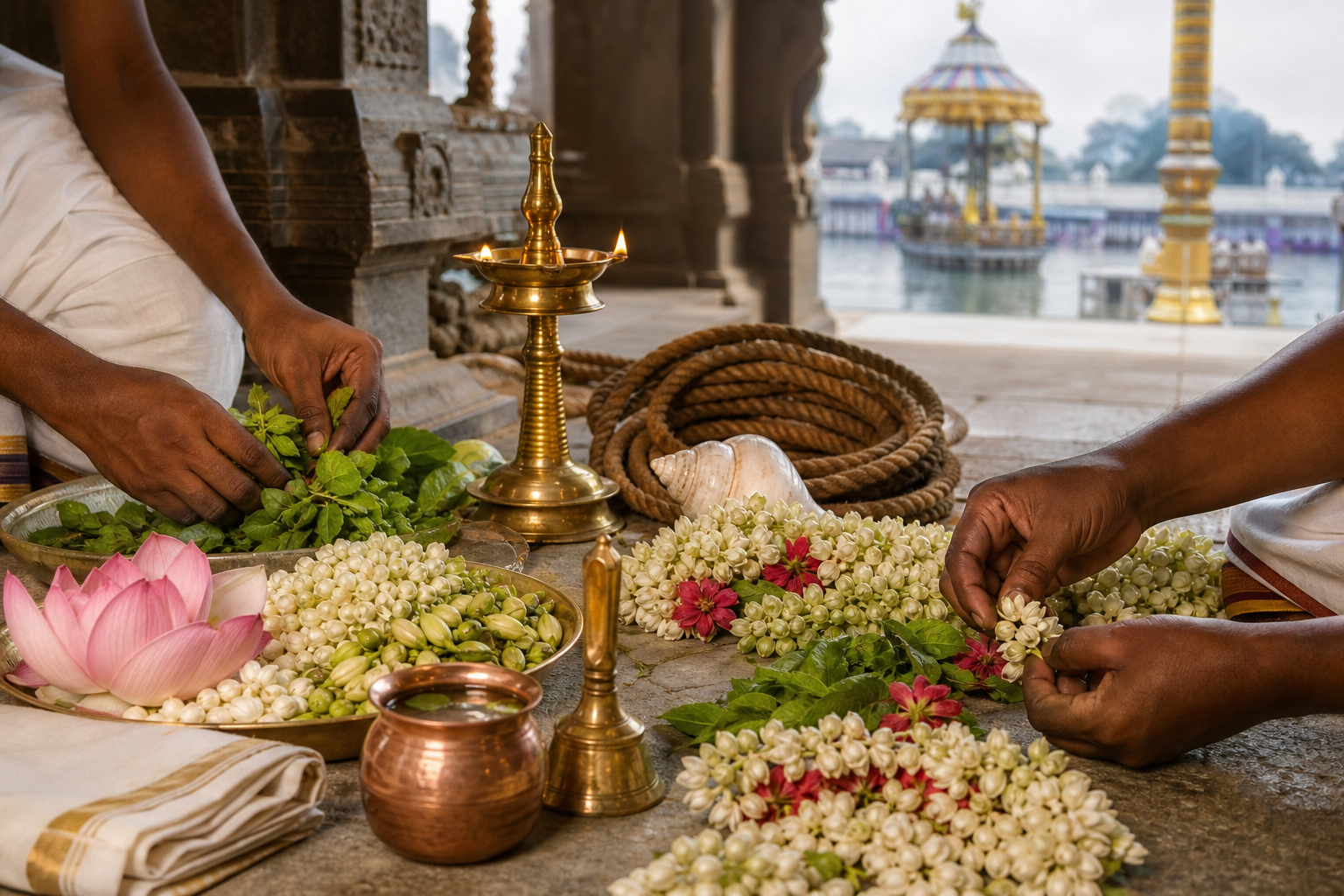
The three festivals share a Vaishnava devotional world, but they reveal it through different ritual grammars. Recognising those differences turns a crowded calendar into a connected spiritual journey.
Periyalwar makes protective love audible
The morning and evening parayana preserves the Nalayira Divya Prabandham as a lived oral tradition. Taniyan invocations, measured Pasuram recitation and the coordinated response of the goshti transmit more than a written text. Breath, metre, pronunciation and communal memory all become forms of seva.
If you bring children, give them one task: listen for a recurring phrase or follow a short passage in the text. That is more useful than asking them to sit through an unfamiliar session with no point of attention. Adults can do the same. One recognised refrain carried home is a more meaningful result than a hurried photograph outside the precinct.
Appalayagunta shows sacred order becoming public
Koil Alwar Tirumanjanam cleanses and prepares the temple before the great festival. Punyahavachana, cleansing and the use of a fragrant parimalam bring ritual purity, physical order and care for a high-footfall sacred space into one discipline. Ankurarpanam then plants auspicious grains, expressing the hope that the festival’s sankalpa will germinate and bear fruit in the community.
The Brahmotsavam traditionally opens its public cycle with Dwajarohanam, the raising of the Garuda-bearing festival flag, and eventually closes with the lowering of the flag. Chakrasnanam, the ceremonial bath of the Sudarshana Chakra, commonly belongs to the concluding movement. Between those points, the deity leaves the inner sanctum in procession, making divine presence accessible along the temple streets.
Each vahanam presents a virtue in visible form: support and transcendence through Sesha, discrimination and purity through Hamsa, courage through Simha, devoted service through Hanuman, cosmic beneficence through the solar and lunar forms, or divine protection through Garuda. Use these associations to observe more closely, but do not mistake a general symbolic vocabulary for Appalayagunta’s confirmed 2026 running order.
Tiruchanur carries worship onto the cosmic waters
At Tiruchanur, Padmavathi Sarovaram is not merely a picturesque setting. The water evokes purification, fertility and the cosmic waters, while the moving teppa expresses the Goddess’s grace reaching devotees beyond the fixed threshold of the sanctum. The lotus associations of Sri Padmavathi become especially vivid when lamps and the Utsava Murti are reflected on the tank.
Pancharatra procedures preserve ritual continuity as worship moves from temple to float: sankalpa, purification, alankara, archana, offerings, lamps, recitation and mangala harati remain part of the sacred order according to the day’s direction. Appalayagunta’s Brahmotsavam, by contrast, is described within a Vaikhanasa framework. You do not need to collapse these traditions into one system to appreciate their unity; their disciplined differences are part of the richness of Tirupati’s Vaishnava landscape.
Your conduct is part of that order. Wear modest temple-appropriate clothing, silence your phone near sanctum areas, respect restrictions on photography and keep procession paths clear. At the sarovaram, never throw flowers, lamps, coconuts, plastic or other material into the water unless temple personnel explicitly direct an approved offering procedure. Follow barricades even when another position appears to offer a better view. Queue discipline, environmental care and consideration for elders are not interruptions to darshan; they are practical forms of dharma and seva.
Key takeaways
- Sri Periyalwar Utsavam runs from 16 to 25 June at Sri Lakshmi Narayana Swamy Temple, with morning and evening Divya Prabandham recitations.
- Appalayagunta observes Koil Alwar Tirumanjanam on 23 June, Ankurarpanam on 24 June and Brahmotsavam from 25 June to 3 July.
- Appalayagunta’s announced Vahana Seva windows are 08:00-09:00 and 19:00-20:00 daily; the day-wise vahanam sequence still needs confirmation.
- Sri Padmavathi Ammavari Teppotsavam takes place at Tiruchanur from 25 to 29 June, with exact evening timings to be confirmed closer to the festival.
- On 25 June, choose one principal observance and one evening destination at most. Do not assume Appalayagunta and Tiruchanur can both be completed that evening.
- From 26 to 28 June, Appalayagunta in the morning and Tiruchanur in the evening offer the most practical two-festival pattern, subject to updated timings and routes.
Start your plan by circling 25 June as a decision day, not merely a festival date. Choose whether recitation, Brahmotsavam or the float festival is your non-negotiable experience, keep the other events flexible, and confirm the operational timetable before you travel. A pilgrimage with room to listen, wait and serve will give you far more than a checklist of temple appearances.
References
- DharmaRenaissance Blog – Appalayagunta Sri Prasanna Venkateswara Brahmotsavam 2026: Grand Dates, Rituals & Vahana Sevas
- DharmaRenaissance Blog – Sri Periyalwar Utsavam 2026, Tirupati: Dates, Rituals, Significance, and Visitor Guide
- DharmaRenaissance Blog – Tiruchanur Padmavathi Teppotsavam 2026: Essential Dates, Rituals, Darshan Guide & Significance
