
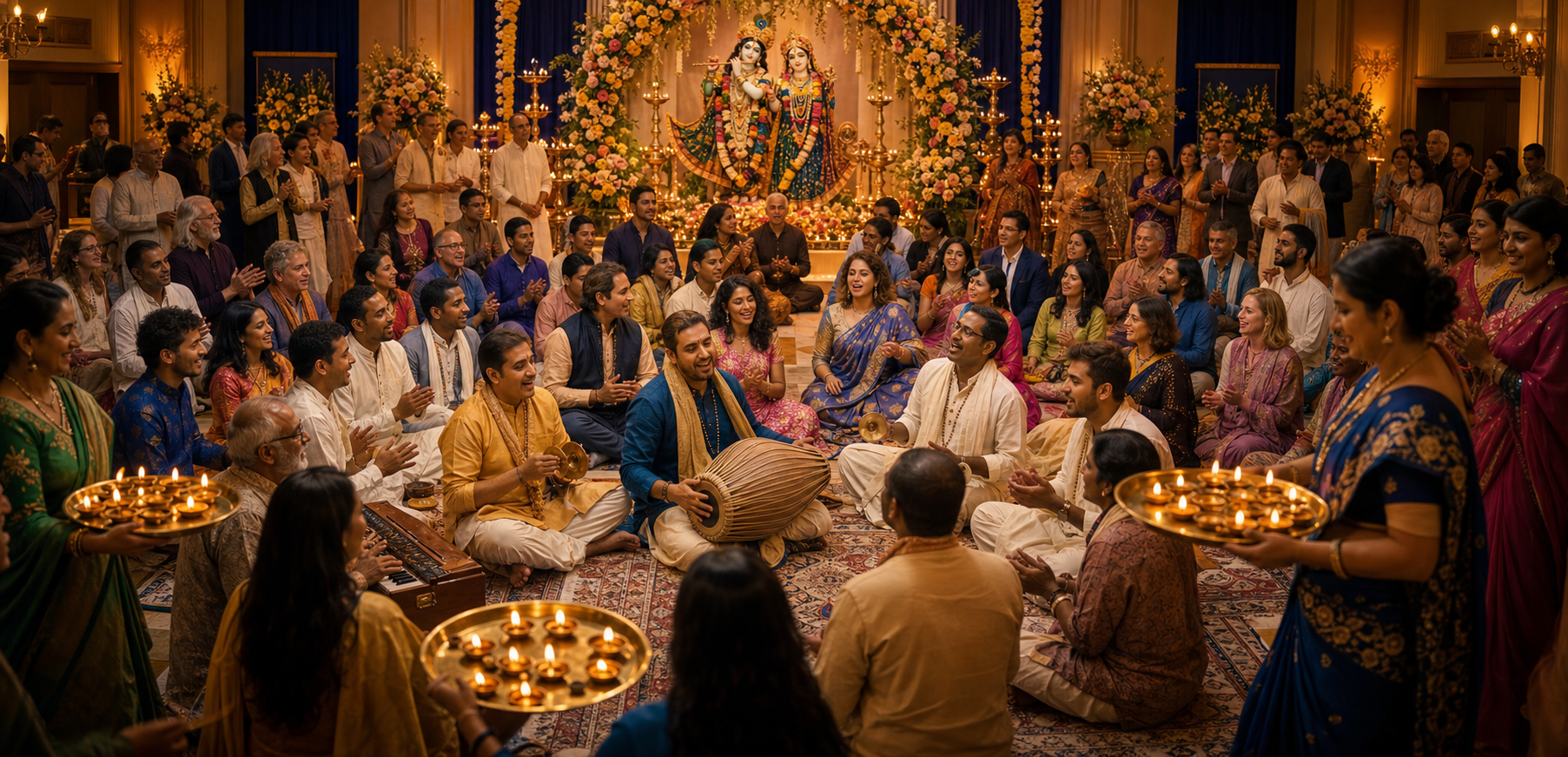
If you left the ISKCON 60 Houston Gala spiritually moved, the important question is what happens after the music, arati and shared meal have ended. If you missed the evening, the same question still applies: how can a community celebration deepen your practice rather than become another pleasant memory?
The Houston celebration marked six decades since ISKCON’s 1966 founding and honored A.C. Bhaktivedanta Swami Prabhupada. Its enduring value lies in a practical pattern: remember the acharya clearly, experience bhakti together, serve people carefully and turn the resulting inspiration into a definite spiritual commitment.
An anniversary matters when remembrance changes conduct
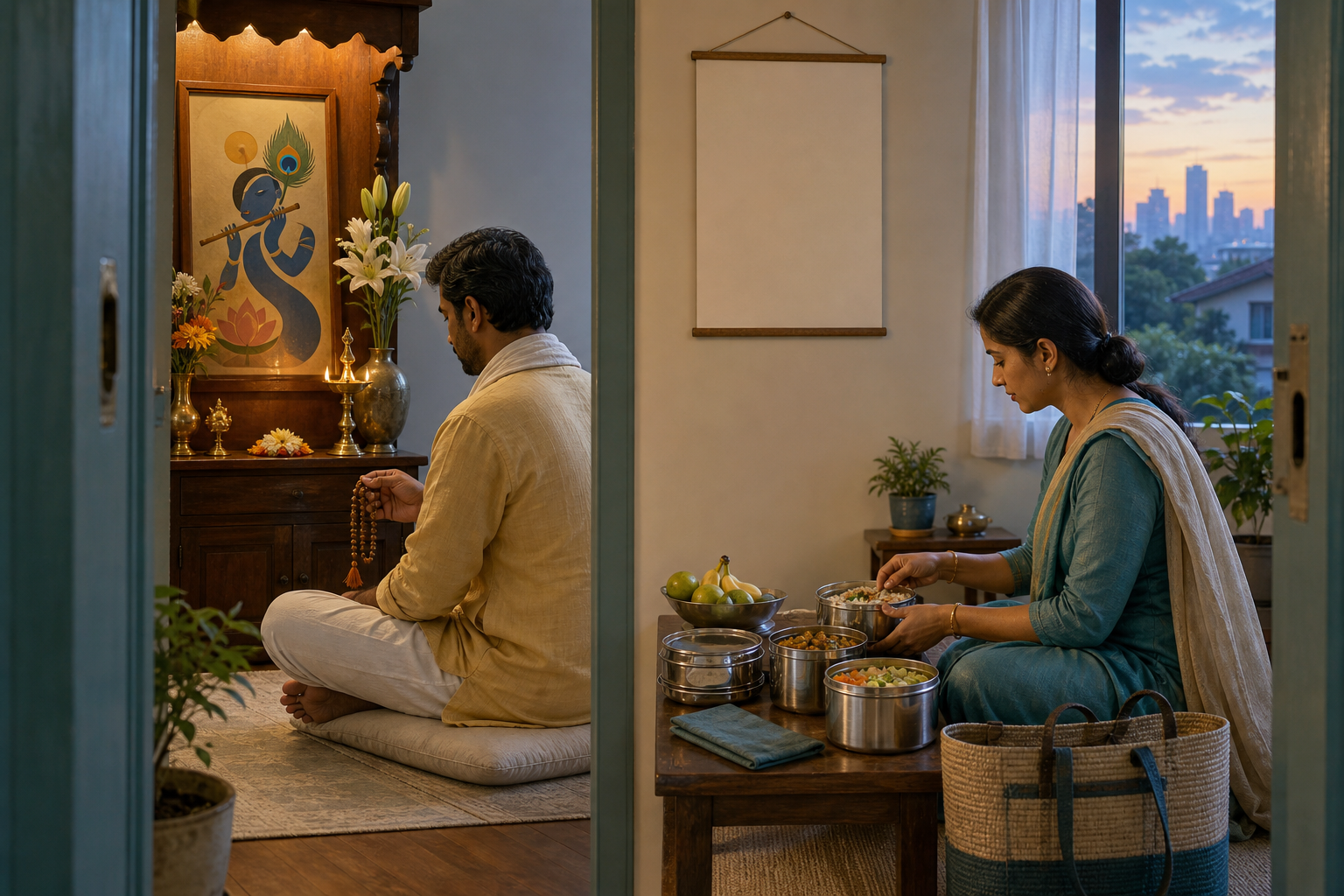
An anniversary naturally looks backward. Bhakti asks a harder question: what does faithful remembrance require from you now?
The Houston program recalled Srila Prabhupada’s translation and commentary work, his establishment of temples and communities, and his insistence that spiritual life be made accessible through remembrance of Krishna and the holy name. Those achievements should not be treated as a distant institutional record. They point to three living responsibilities: study what he taught, practise it consistently and help make that practice available to someone else.
This is where smarana, or remembrance, becomes more than respectful recollection. Remembering the guru-parampara should influence how you speak, eat, work, welcome others and respond when cooperation becomes difficult. Truthfulness, restraint, hospitality and non-harm are not decorative values placed around devotion. They are among the ways devotion becomes visible in ordinary life.
Choose one commitment while the purpose of the celebration is still clear. Fix a regular time and place for nama-japa, select a defined portion of scripture for steady study, or accept a named seva responsibility in your temple or community. Avoid the vague promise to “be more spiritual.” A commitment becomes workable when you know what you will do, where you will do it and who is expecting you to follow through.
Kirtan, devotional art and prasadam made philosophy tangible
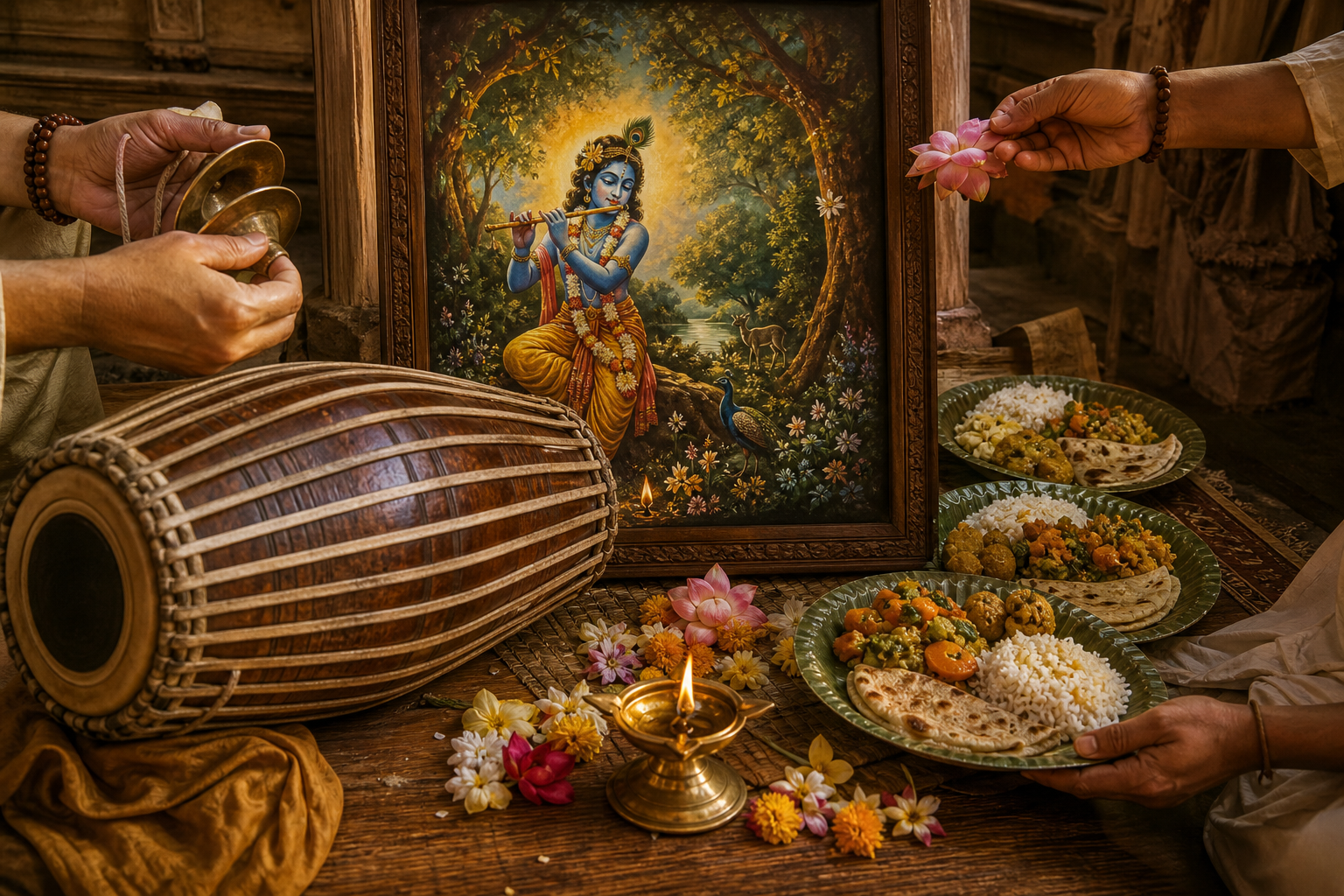
The gala’s sankirtana moved through call-and-response chanting, gathered intensity and then resolved into contemplative quiet. Traditional percussion and hand cymbals carried the rhythm, but the deeper structure mattered more than musical display. One voice offered the invocation, others answered, and individual attention gradually became shared attention.
That pattern gives a newcomer an immediate way into bhakti. A person may not yet understand Gaudiya Vaishnava vocabulary, the role of the guru-parampara or the theology of the holy name. They can still listen, respond and experience the difference between observing devotion and participating in it. The silence after an energetic kirtan also has a purpose: it lets collective joy settle into attention rather than allowing the experience to end as excitement alone.
Devotional performances extended the same teaching through movement, sound and visual form. Themes such as bhakti, dharma and kripa, or grace, can remain abstract when they are presented only as definitions. Sacred art gives the intellect, senses and emotions a common object of attention. When you watch such a performance, ask what disposition it is training: humility, longing, gratitude, courage or surrender. That question turns appreciation into contemplation.
Prasadam completed the movement from philosophy to relationship. Vegetarian, sattvic food was sanctified and distributed through organized service lanes, with seating help and attention to elders and families. Equality was therefore expressed through an action everyone could receive. The meal did not merely follow the spiritual program; it embodied Vaishnava hospitality.
If you welcome newcomers at a Dharmic gathering, remember that they often encounter its values through logistics before they understand its teachings. A clear greeting, an explanation of what will happen, an accessible seat and patient help with prasadam can communicate care more convincingly than a long speech about community. Assign these responsibilities deliberately instead of assuming someone will notice what is needed.
The quiet achievement was disciplined, coordinated seva
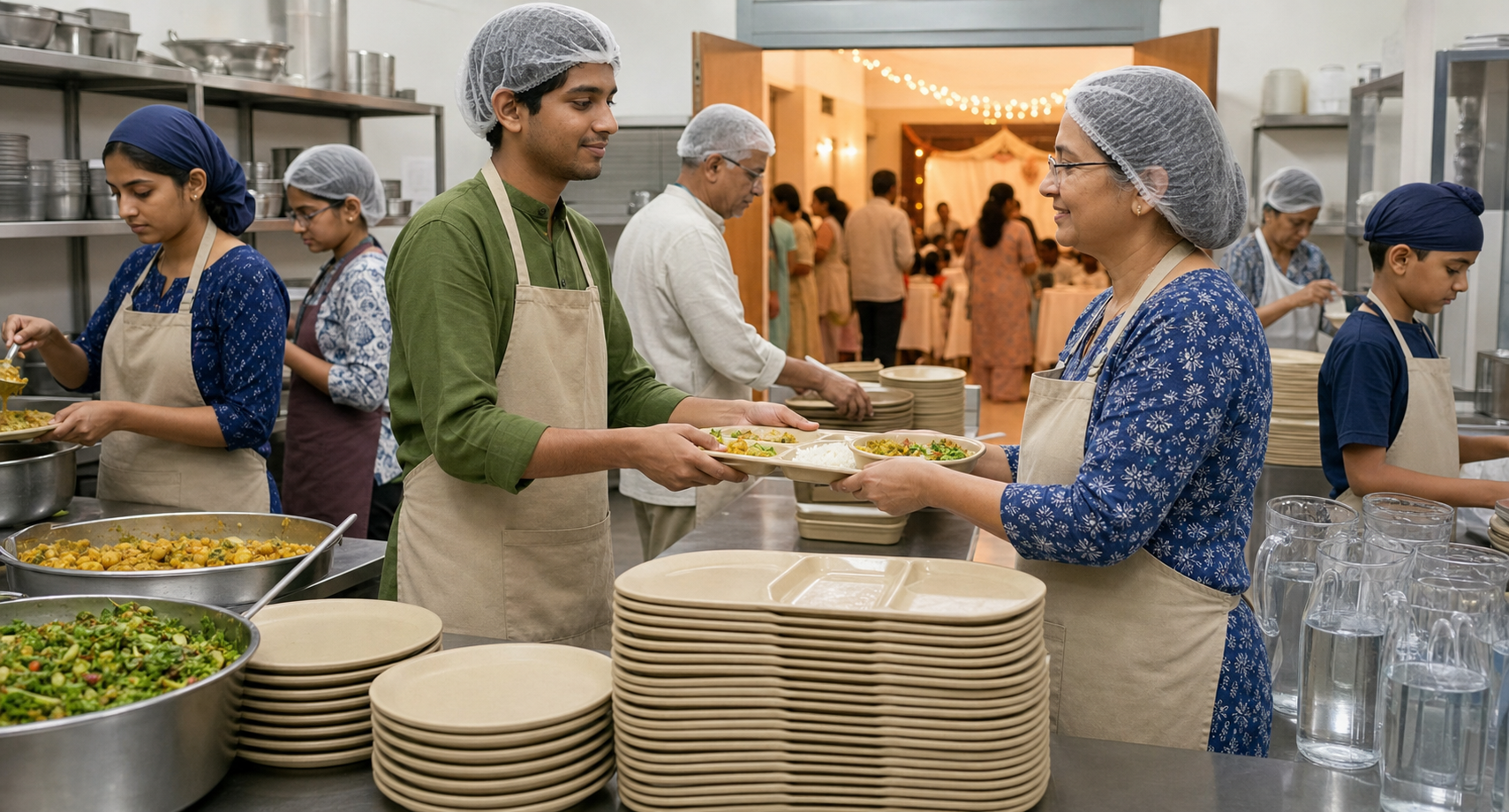
The ease experienced by attendees rested on weeks of preparation. Volunteers handled registration, welcoming, seating, kirtan flow, stage changes and prasadam distribution. Rehearsals, concise run sheets, coordinated sound and lighting cues, and preparation for schedule changes allowed the devotional purpose to remain in the foreground.
This is an important correction to a common misunderstanding. Organization is not separate from spiritual intention when poor organization would leave a newcomer confused, an elder unsupported, a performer uncertain or a prasadam team overwhelmed. Reliable coordination protects people’s attention and gives every participant a better opportunity to hear, chant and serve.
If you are planning a temple anniversary, cultural program or community gathering, use the Houston service pattern as a practical checklist:
- Give registration, welcoming, seating, stage transitions, kirtan coordination and prasadam service clearly named owners. A task assigned to “everyone” is easily missed.
- Maintain one current run sheet showing the order of the program and the cues that connect speakers, performers, sound, lighting and service teams.
- Brief frontline volunteers on the event’s spiritual purpose as well as their operational duties. A correct answer delivered impatiently still weakens hospitality.
- Walk through the gathering from the attendee’s point of view: arrival, registration, finding a seat, following the program, receiving prasadam and leaving safely with family members.
- Prepare for timing changes before the program begins. When a segment runs long, the team should know who can adjust the sequence without creating public confusion.
- Afterward, review where people needed help, where cues failed and which unnoticed acts of seva kept the gathering peaceful. Carry those lessons into the next event.
The last step matters because seva often disappears from view when it succeeds. Stage transitions seem natural, seating appears effortless and meals arrive on time. Recognizing the discipline behind that ease helps a community value volunteers without turning service into a search for recognition.
You do not need to wait for another gala to enter this form of service. Ask a coordinator for one bounded responsibility and complete it reliably. Welcoming one family, assisting elders during seating or taking a specific prasadam shift is more useful than expressing general willingness without accepting a task.
Dharmic unity grows through clarity, not sameness
The Houston gathering was firmly centered on the Hare Krishna movement’s practice of bhakti-yoga. That clear center did not prevent it from illuminating values shared across the wider Dharmic family: ahimsa, compassion, truthful living, self-discipline and seva.
There are genuine resonances among the traditions. Congregational sacred music has an important place in Sikh practice. Buddhist and Jain paths cultivate demanding contemplative disciplines. Hindu, Buddhist, Jain and Sikh communities all recognize forms of service and ethical self-restraint. These parallels can support friendship, but they do not make the traditions doctrinally interchangeable.
We should resist two easy mistakes. The first is to flatten every Dharmic path into a generic spirituality, erasing the distinct meaning of Krishna-bhakti, Jain ahimsa, Buddhist contemplation or Sikh kirtan and seva. The second is to treat doctrinal difference as a reason communities cannot cooperate. Honest unity does neither.
When you participate in an intercommunity program, name your own practice precisely and listen when others name theirs. Then identify the ethical ground on which joint action is possible: compassionate hospitality, care for families and elders, disciplined service or the protection of non-harm. This is a practical expression of Vasudhaiva Kutumbakam, the vision of the world as one family, without demanding uniformity from that family.
The distinction also improves how you explain ISKCON to a first-time visitor. You can clearly say that the gathering is rooted in Gaudiya Vaishnava devotion to Krishna while welcoming anyone who wishes to listen, chant respectfully, learn and receive prasadam. Clarity gives hospitality a trustworthy foundation.
Key takeaways
- The gala’s six-decade milestone points forward: honoring Srila Prabhupada means carrying study, the holy name and service into daily life.
- Kirtan becomes transformative through participation and attention, not musical intensity alone.
- Devotional art is most useful when you ask which inner quality it is helping you cultivate.
- Prasadam distribution, seating assistance and newcomer care are expressions of theology through hospitality.
- Clear roles, current run sheets, rehearsed cues and contingency plans protect the spiritual focus of a community event.
- Dharmic unity becomes credible when shared virtues support cooperation without erasing the distinct teachings of each tradition.
Your next step can be small, but it should be definite. Before your next temple gathering, decide whether your offering will be a fixed nama-japa practice, a defined course of reading or a specific seva duty. Put it into your schedule and tell the person who needs to know. That is how an anniversary stops being only a date in the past and begins shaping the community that comes next.
References
