

If The Dharma Dispatch has deepened your understanding of Hindu history or helped you recover a neglected part of Bharatiya civilisation, you may be deciding whether its seventh-anniversary request deserves a paid subscription or contribution. The useful question is not whether you agree with every sentence it publishes. It is whether this independent body of civilisational work is valuable enough to keep available, growing and free of advertiser pressure.
Seven years is long enough to judge more than intention. You can examine the archive, the work that readers have carried into universities and local communities, the cost of producing it, and the funding model that protects its editorial freedom. That gives you a practical basis for deciding whether to support it, how to do so, and what to do if money is not an option.
An anniversary should be an audit, not a victory lap
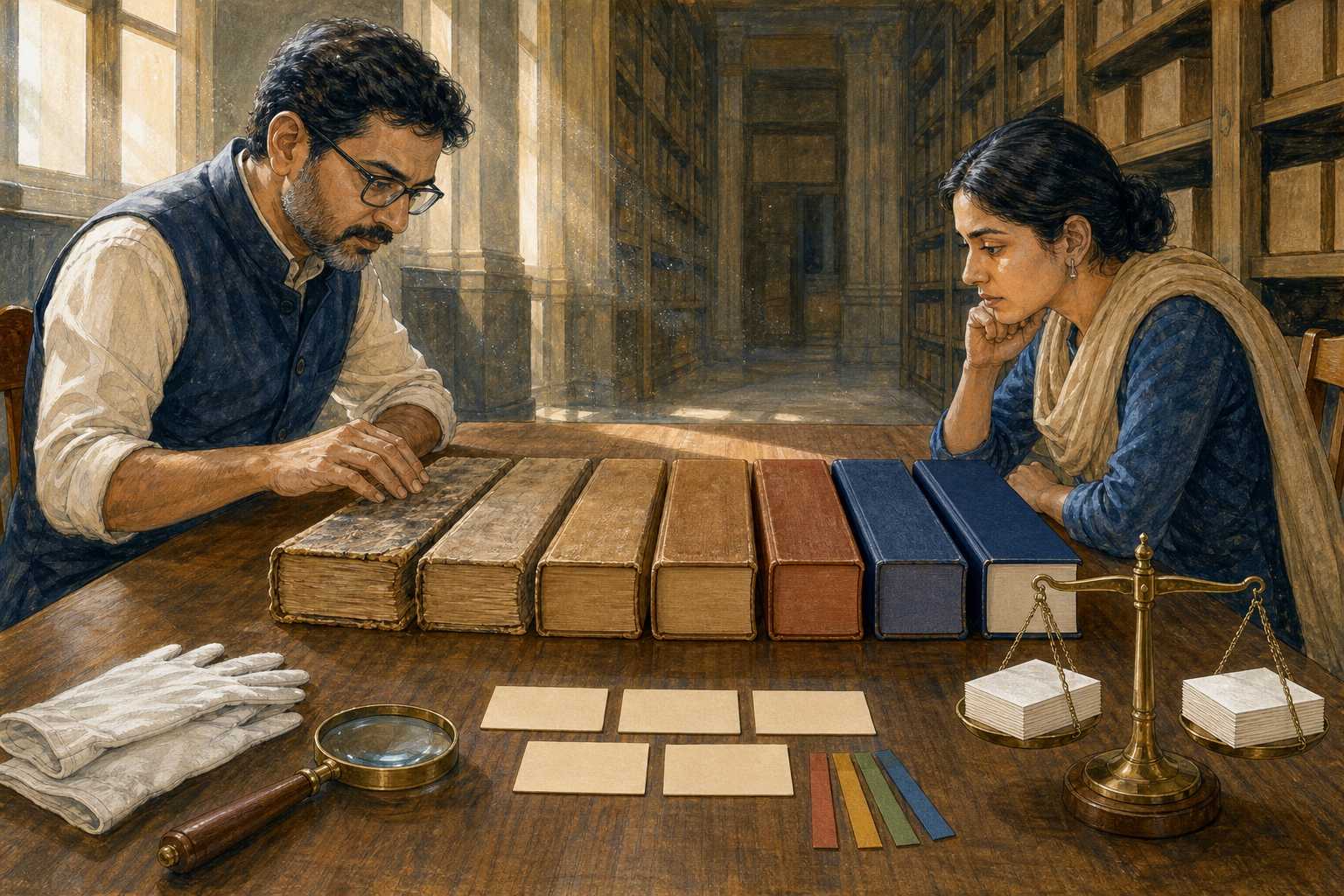
The seventh anniversary arrived at the beginning of Sharannavaratri, following Mahalaya Amavasya and the remembrance of the debt owed to the Pitrs. Vijaya Dasami then became the occasion for a direct request for reader support. The sacred calendar supplies an appropriate frame: gratitude for what was inherited, an honest reckoning of present duty, and renewed effort for what must be carried forward.
That setting does not make a financial request worthy by itself. The case must still rest on the work. What the setting does reveal is the institution’s understanding of its purpose. This is not a general-interest media venture decorated with occasional Hindu themes. It explicitly locates its work within service to Sanatana Dharma and the larger task of Hindu civilisational restoration.
Its operating temperament is equally revealing. The publication has deliberately chosen quiet, simplicity, minimalism and sustained contemplation over compulsive spectacle. In an online culture that rewards reaction speed, personal branding and perpetual provocation, this can look unfashionable. Yet slow historical work needs precisely this resistance to the daily attention cycle.
When you assess the anniversary, therefore, do not ask only whether the publication generated headlines during the year. Ask whether it added durable material to the civilisational archive. Can a student still use the work after the day’s controversy has vanished? Can a family or study circle use it to understand a place, personality or institution that ordinary education neglected? Can it prompt somebody to visit, document, discuss or preserve what remains? Those are better tests of generational work than online excitement.
What seven years of patient work has put into circulation

The strongest reason to support a publication is not the grandeur of its mission statement. It is the body of work already delivered. The recent output of The Dharma Dispatch covers several forms of civilisational recovery:
- A twelve-part treatment of Ghar-Wapsi developed a sensitive and consequential subject at a length that daily commentary rarely permits. It received a favourable response from a broad section of Hindu society, including the Sadhu-Sant Samaj.
- A biographical series recovered the role of Murshid Quli Khan in Bengal’s history, while another series explored D.V. Gundappa’s contribution to renunciate poetry. These are very different subjects, but both restore names, texts and historical consequences that can disappear when Hindu memory is reduced to a few familiar episodes.
- A seven-part study of Saartha, the mobile caravan system of ancient and pre-medieval India, became prescribed reading in several Indian universities. A separate investigation of an engraving of Bharata Mata on a silver dish found at Lampsacos became a discussion topic at a Turkish university.
- A four-part history of Gandikota examined the destruction of a fort associated with the Vijayanagara Empire. Work on the Mandsaur silk-weavers’ restoration of a ruined Sun Temple during the Gupta era connected an inscriptional and institutional past with the present condition of civilisational sites.
- The spoken-word archive has also expanded. By the seven-year mark, the podcast catalogue had reached a stated 297 episodes, with at least one episode a week since late 2023, covering Hindu history, civilisation and culture.
These achievements matter because an archive becomes civilisationally useful only when people move it beyond passive consumption. The documented responses show several such movements. A reader resolved to visit Gandikota after learning what had happened there. A college student was inspired by the Mandsaur account to travel to damaged historical sites and document their present condition. In December 2024, a young man from Tiruvannamalai personally showed that he was distributing printouts of relevant essays among people in his town.
Notice the progression: reading led to recognition, recognition led to travel or local circulation, and those actions returned neglected history to a living community. That is a more meaningful form of reach than a fleeting viral statistic.
Scale still has relevance. At the anniversary, The Dharma Dispatch gave a self-reported figure of more than one million pageviews per month, described as entirely organic. That figure should be understood as the publication’s own account rather than an independently audited measurement. Even so, it points to a substantial appetite for serious pro-Dharma material.
It also corrects a common misunderstanding. A million pageviews is not the same as a million paying supporters. When a publication refuses advertising, traffic does not automatically pay for research, travel, equipment or editing. Large readership and financial vulnerability can exist at the same time.
Reader funding protects the conditions of independence
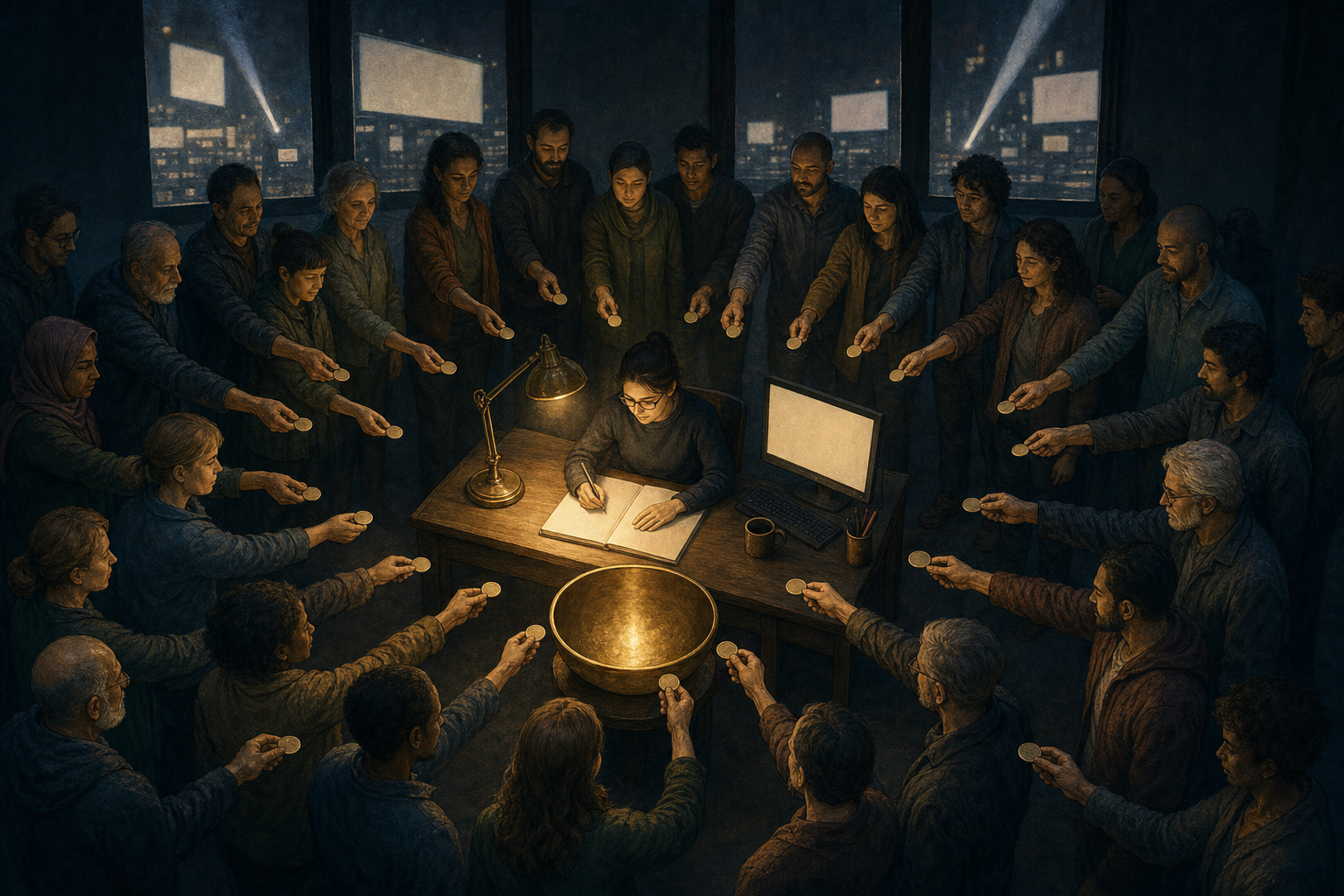
Long-form civilisational work has an unglamorous production chain. The Dharma Dispatch describes hundreds of hours each month spent researching, travelling, writing, filming, interviewing and editing. Each visible essay or podcast therefore sits on top of labour and expenses that the reader never sees.
The funding choice is central to the appeal. Since its inception, the publication has consciously declined corporate funding and advertising in order to preserve independence. That does not guarantee that every claim will be correct, eliminate editorial bias or place the work beyond criticism. Reader-supported institutions still need accuracy, intellectual honesty and accountability.
What reader funding changes is the direction of pressure. An advertiser-funded publication must remain useful to advertisers. A corporate-funded institution must remain viable in the eyes of its patrons. A reader-funded publication must repeatedly earn the confidence of the community that reads it. None of these models is free from incentives, but the final model is well suited to work whose declared purpose may not fit corporate fashion or mass-market expectations.
Before contributing, give yourself a simple reader’s audit:
- Test durable value. Open one historical series you have already read. Can you still identify a fact, argument, place or personality that changed your understanding? If nothing remained after the initial reaction, read more before paying.
- Test actual use. Have you cited the work in a discussion, shared it with a student, added a site to your travel plans, or used it in a study circle? Material that changes what you do has crossed the line from content to resource.
- Test mission alignment. The purpose is openly pro-Sanatana and directed toward Hindu civilisational reclamation. Support it because you value that purpose, not because an anniversary creates temporary emotional pressure.
- Test replaceability. Ask what would fill the gap if this archive stopped growing. A subject may be important while still being well served elsewhere. Support becomes more consequential when careful, sustained alternatives are scarce.
- Test affordability. Choose only an amount that does not interfere with essential household obligations. A voluntary Dharmic contribution should be made with clarity, not guilt or financial strain.
A contribution is not a pledge to accept every interpretation without examination. You are supporting the capacity to research and publish. Retaining your judgement is part of being a serious reader, not a sign of disloyalty.
Choose a form of support you can actually sustain
The right form of support depends on your budget, reading habits and level of confidence. There is no virtue in choosing the most visible option. Choose the one you can carry out responsibly.
A paid subscription for continuing readers
A paid subscription is the clearest choice if you use the archive regularly and want to support continuing production. Recurring income gives an independent publication more predictability when planning research, travel, editing and podcast work.
Treat the subscription as a renewable judgement, not an irreversible declaration. Set a yearly reminder to ask whether the work still serves the mission you intended to support. Continue when the answer is yes. Reassess when it is not.
A one-time contribution without an ongoing commitment
A one-time contribution suits readers who value the work but cannot responsibly add another recurring payment. At the time of the Vijayadashami appeal, the listed UPI ID was ddispatch@axl. The official support route also listed cards, wallets, netbanking and a QR code.
Payment information can change, and digital payments may be difficult to reverse. Open the official page yourself, confirm the current recipient details inside your payment application, and check the amount before authorising it. Do not rely on a forwarded screenshot, copied QR code or old social-media message when the first-party page is available.
Useful participation when money is not available
Financial support pays the production costs, so non-financial participation should not be presented as an exact substitute. It can still make the work more useful. Subscribe to the podcast channel through the official anniversary page, send a carefully chosen essay to one person who will genuinely benefit from it, or bring a relevant historical series into a local reading group.
Add context when you share. Tell the recipient why the material matters and which claim deserves attention. A personal note such as, “This changed how I understood Gandikota,” is more useful than dropping an unexplained link into a crowded group. The aim is not maximum forwarding. It is thoughtful circulation that leads to reading, discussion and, where appropriate, action.
You can also act on the subject itself. If an essay introduces you to a neglected temple, fort, inscription or literary figure, place it on your study or travel list. Record what you learn, verify before repeating claims, and help move civilisational memory from the screen back into family and community life.
Key takeaways
- The seventh anniversary is best treated as a chance to assess a seven-year body of work, not merely as a ceremonial milestone.
- The case for support rests on sustained long-form research, a growing podcast archive and documented examples of readers carrying the work into universities, travel and local communities.
- High traffic does not automatically fund a publication that refuses corporate money and advertising.
- Reader funding protects editorial independence, but it does not remove the reader’s duty to examine evidence and question interpretations.
- You can choose a paid subscription, a verified one-time contribution or thoughtful non-financial circulation according to your means.
If the work has proved useful to you, make one concrete decision now. Take a paid subscription you can sustain, make a one-time contribution through the official support route, or select one valuable entry from the archive and put it into the hands of someone who will read it seriously.
Civilisational renewal is rarely built by dramatic gestures alone. It is built when research is completed, archives remain accessible, readers become participants, and support is repeated long enough for quiet work to become generational work.
References
- The Dharma Dispatch — Happy Vijayadashami and a Heartfelt Appeal
- The Dharma Dispatch — The Dharma Dispatch Turns Seven: A Huge Thank You to All!
