

If you came looking for the name of an attacker, an organisation behind the assault, or a settled ideological motive, the honest answer is that none of those conclusions has yet been established by the facts available here. On 28 February 2026 in Ghaziabad, Uttar Pradesh, Saleem Wastik was reportedly stabbed, sustained serious injuries, and was initially described as being in critical condition. A formal medical update from his treating doctors or the authorities was still awaited in the early account.
That leaves you with a narrower but important task: distinguish the reported attack from the theories growing around it. You can demand a rigorous investigation, support Wastik and his family, and take the possibility of ideological violence seriously without presenting an unproved motive as fact.
Key takeaways
- The reported stabbing and the first description of serious injuries are the central established claims. The complete sequence of events remains unresolved.
- The early description of Wastik’s condition as critical is not a continuing medical bulletin. Treat later claims about recovery, deterioration, surgery, or discharge as unconfirmed unless they come from an authorised medical or family channel.
- The identities of the assailants, their motive, any organisational connection, the weapon, and the possibility of a conspiracy were not established in the information available.
- Wastik’s identity as an ex-Muslim voice and Sanatan defender makes threats connected to his public commentary a legitimate line of inquiry. It does not, by itself, prove why the attack occurred.
- The most useful developments will be official police findings, authenticated court records, an authorised medical update, recoveries supported by chain-of-custody records, and forensic results.
- If you possess a threat, recording, photograph, or eyewitness detail, preserve the original and give it privately to investigators. Publishing it first can expose witnesses, alert suspects, distort recollections, or damage evidentiary value.
Separate the attack from theories about it
Three different questions are being compressed into one: Did an attack occur? Who carried it out? Why did they do it? Evidence supporting the first answer does not automatically answer the second or third.
| Question | What can presently be said | What would materially strengthen the answer |
|---|---|---|
| What happened? | Wastik was reportedly stabbed in Ghaziabad on 28 February 2026 and sustained serious injuries. | Scene documentation, medical records, consistent witness accounts, camera footage, and a police reconstruction of the sequence. |
| Who attacked him? | The assailants were initially unidentified. No identity should be treated as established on that basis. | Reliable identification supported by footage, witnesses, forensic traces, digital records, a recovery, or other corroborated evidence. |
| Why was he attacked? | No specific motive had been established. Ideological hostility is a possible investigative line, not a concluded fact. | Authenticated threats, suspect communications, evidence of surveillance or planning, and statements corroborated by independent evidence. |
| Was there a conspiracy? | The participation of more than one assailant does not by itself prove a wider organisation or conspiracy. | Evidence of coordination, prior contact, financing, transport arrangements, shared instructions, or deliberate assistance before or after the assault. |
| What is his medical condition? | Early accounts called it critical, while a formal medical update was awaited. | An authorised update from the treating hospital, doctors, family, or investigating authority that clearly states when the assessment was made. |
This separation matters because motive is often the claim with the greatest social consequence and the weakest early evidence. Wastik’s public work addresses faith, social ethics, and Sanatan perspectives. That visibility can expose a creator to intense hostility, and investigators should examine any threats connected with it. Yet a public profile is context, not attribution. Ideological, interpersonal, and opportunistic possibilities must be tested against evidence rather than selected according to which story feels most plausible.
Use three labels when you discuss a new claim: confirmed, alleged, or unknown. Confirmed means an identifiable authority or primary record supports it. Alleged means a named person has made the claim but it has not been proved. Unknown means no reliable evidence available to you answers the question. A viral repetition does not move a claim from one category to another.
What a sound investigation should establish
A credible investigation is more than an arrest announcement. It must connect the scene, the injuries, the alleged assailants, and any claimed motive through evidence that can survive judicial scrutiny. You should watch for the following sequence.
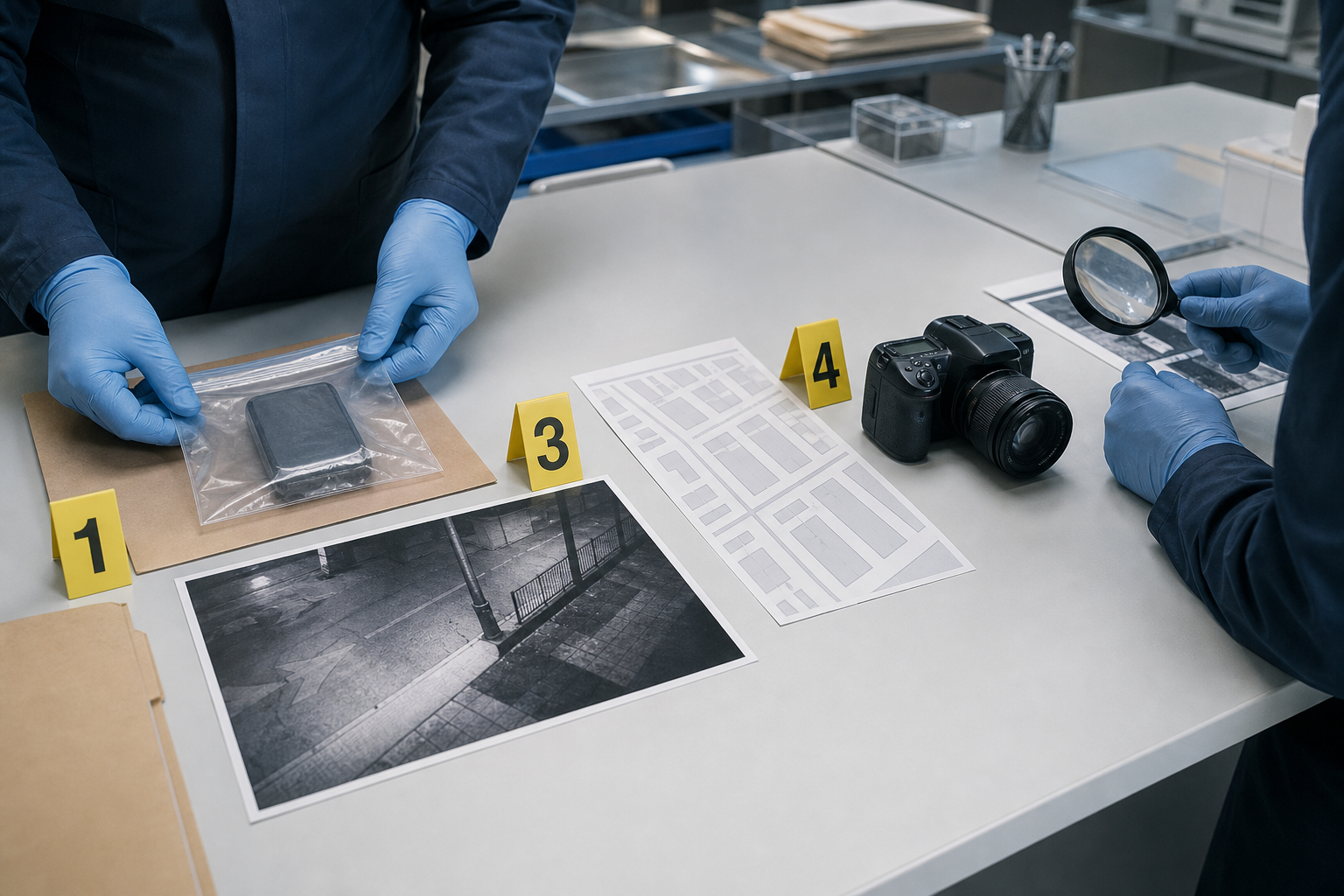
- Scene preservation and reconstruction. Investigators should document where the assault occurred, the positions and movements of those involved, possible entry and escape routes, visible bloodstains, abandoned objects, and nearby cameras. CCTV and private camera feeds need prompt preservation because routine recording systems may overwrite older footage.
- Medical and forensic documentation. A stabbing victim is ordinarily registered as a medico-legal case. Injury mapping, scans, treatment records, and operative notes can help specialists assess the nature of the wounds and whether they are consistent with a recovered weapon. These records can illuminate the seriousness and mechanics of the assault, but they do not identify the attacker by themselves.
- Witness accounts. Investigators should record recollections separately and as early as practicable. Agreement on independently remembered details carries more weight than accounts that converge after witnesses have watched the same clips or discussed the event in a group.
- Physical evidence and chain of custody. Clothing, biological traces, fingerprints where recoverable, and any suspected weapon must be collected, sealed, labelled, transferred, examined, and stored under documented control. A dramatic recovery means little if the prosecution cannot establish where the item came from and who handled it.
- Digital and telecom analysis. Lawfully obtained call records, location-related data, messages, platform records, and camera timelines may reveal contact or coordination. Under the Information Technology (Intermediary Guidelines and Digital Media Ethics Code) Rules, 2021, platforms can be required to preserve relevant information when they receive a valid lawful request. Preservation is important, but the meaning and ownership of a digital record still require authentication.
- Testing the motive. Investigators should compare any earlier threats with the method, timing, route knowledge, communications, and conduct of identified suspects. A threat becomes more probative when it is attributable to a real person, predates the attack, contains non-public details, or connects with other independent evidence.
- Judicial checkpoints. Remand proceedings, later charging decisions, and court filings can disclose what the police allege and what evidence they say requires further investigation. An arrest or charge is not a finding of guilt; it is a stage at which the asserted case becomes more specific and testable.
The initially unresolved questions included the assailants’ identities, the specific motive, weapon recovery, and the complete sequence of events. Those are therefore the points on which a meaningful official update should provide evidence, not merely confident language.
Silence from investigators does not necessarily mean that nothing is happening. Premature disclosure can help suspects coordinate accounts, destroy data, threaten witnesses, or evade recovery efforts. At the same time, indefinite opacity encourages rumours. The reasonable public demand is for periodic, fact-limited updates that identify completed procedural steps without compromising operational details.
Help the case without creating a second risk
If you possess possible evidence
Your first responsibility is preservation, not publication. A screenshot can show what appeared on a screen, but an original message, email, file, or recording may contain timestamps, account identifiers, headers, and other metadata that a forwarded or edited copy loses.
- Keep the original file, device, message thread, URL, account name, and visible date or time. Do not crop, annotate, enhance, rename, or repeatedly re-save the only copy.
- Write down how you obtained it and whether anyone else had access. Keep your factual observation separate from what another person told you.
- Make a working copy if you need one, but leave the original unchanged. Record every place to which you send it.
- Give it privately to the investigating police or a lawyer assisting the victim. Ask for an acknowledgement or reference number where the process allows one.
- Do not confront the person you suspect, solicit a confession online, or announce that investigators are seeking particular data. That may put you at risk and give a suspect time to destroy evidence.
- If a threat appears immediate, use India’s emergency response number or the 112 India emergency facility rather than waiting to assemble a social-media dossier.
If you witnessed the incident, resist the urge to compare memories with other witnesses before your account is recorded. Describe what you personally saw or heard, where you were standing, and what limited your view. Saying that you do not remember a detail is more useful than filling a gap with something learned later.
A witness facing intimidation should promptly document it and ask the investigating authority or legal counsel about protection under the Witness Protection Scheme, 2018. The victim’s family can also ask the relevant State Legal Services Authority about victim-compensation procedures. Eligibility and the correct legal route depend on the case, so these requests should be handled with qualified legal assistance rather than social-media advice.
If you are supporting Wastik and his family
- Share an authorised medical update with its date and origin intact. Do not convert an old description of “critical” into a claim about his present condition.
- Do not circulate hospital-room details, family phone numbers, home addresses, witness identities, travel routes, or live locations. Sympathy does not cancel privacy or security.
- Do not name a suspect or blame an entire religious community without evidence. Collective accusation can endanger uninvolved people, intensify retaliation, and give defence counsel grounds to argue that witnesses or identification processes were contaminated.
- When correcting a rumour, state only the correction and the evidentiary status. Reposting a sensational falsehood in full often spreads it further.
- Keep vigils, appeals, and public meetings peaceful. Coordinate responsibly, avoid obstructing medical or police work, and refuse speeches that turn support for justice into incitement.
- Direct practical help through a channel verified by the family or an authorised representative. A familiar photograph or urgent caption is not enough to authenticate a fundraiser.
If you are a public-facing dharmic creator
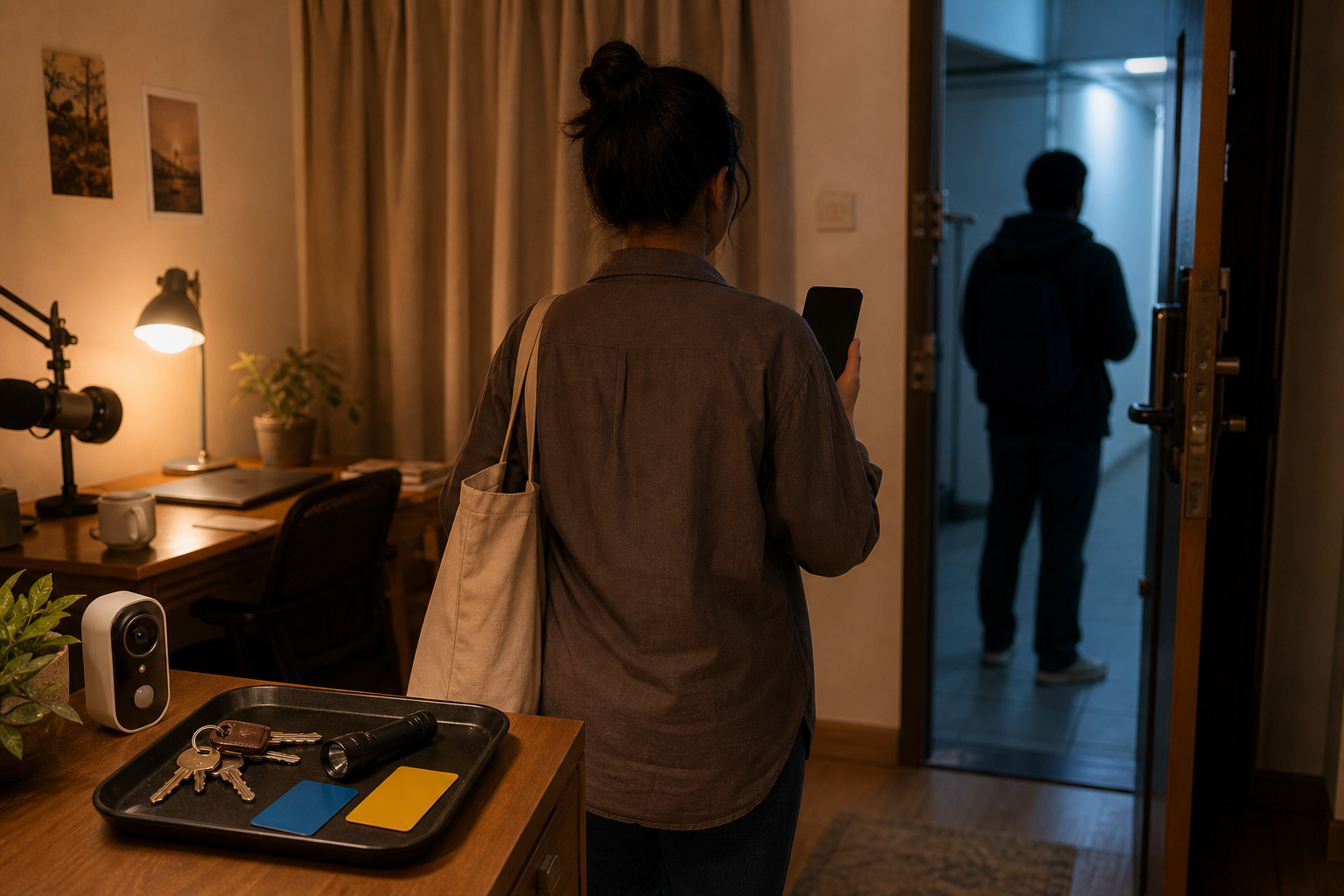
You do not need to abandon lawful speech, but you should stop treating online and physical security as separate problems. Public visibility becomes dangerous when identity exposure, predictable routines, an intense grievance, and easy access to your movements converge.
- Audit what a stranger can learn about your home, family, vehicle, workplace, regular venues, and commute from old posts. Remove unnecessary exposure where you control it.
- Delay location posts until after you have left. Disable automatic geotagging where it serves no clear purpose, and ask companions not to publish your live position.
- Vary routes and timings when credible threats exist. Do not publicly announce the variation.
- Share live location silently with a small trusted group during higher-risk travel, with a pre-agreed time for them to check in or call for help.
- Maintain a threat log containing dates, URLs, usernames, screenshots, original messages, email headers where available, and any offline sightings. Preserve context, including messages that may weaken your theory.
- Use vetted security and controlled entry for public events when the risk warrants it. Provide organisers with a contact and evacuation plan before arrival.
- Give your household a short emergency contact tree, identification and medical information, and a pre-decided hospital preference. The plan should work even if your phone is unavailable.
A threat assessment should be based on behaviour, not merely offensive speech. Repeated attempts to locate a home, disclosure of family information, surveillance of routines, specific descriptions of intended violence, weapon references, or movement from online contact to physical proximity deserve rapid professional attention. Do not investigate a threatening person on your own.
The dharmic response: courage disciplined by truth
For a dharmic audience, ahimsa and satya are not decorative words for calmer occasions. Ahimsa requires us to reject the knife, retaliation, and collective punishment. Satya requires equal discipline: we must not replace an evidentiary gap with the explanation we most expect or desire.
That restraint is not passivity. You can insist that threats against a Sanatan voice be examined, that evidence be secured quickly, that witnesses be protected, and that every participant be prosecuted where the evidence supports it. You can also refuse to hand the attackers a wider victory by helping fear, rumour, or communal hostility govern public life.
Hindu, Buddhist, Jain, and Sikh traditions approach non-violence through distinct teachings and histories, but each gives us resources for disciplined public conduct. Compassion attends to the wounded person and family. Truth protects the integrity of the case. Courage keeps lawful expression from being silenced. Justice demands individual accountability through evidence rather than inherited blame.
When the next update reaches you, ask four questions before sharing it: Who is making the claim? What primary record or attributable evidence supports it? Does it establish the event, the identity, or the motive? What remains unknown? Then act on the answer: preserve useful evidence, protect private information, support lawful investigation, and leave unproved claims unamplified.


References
