
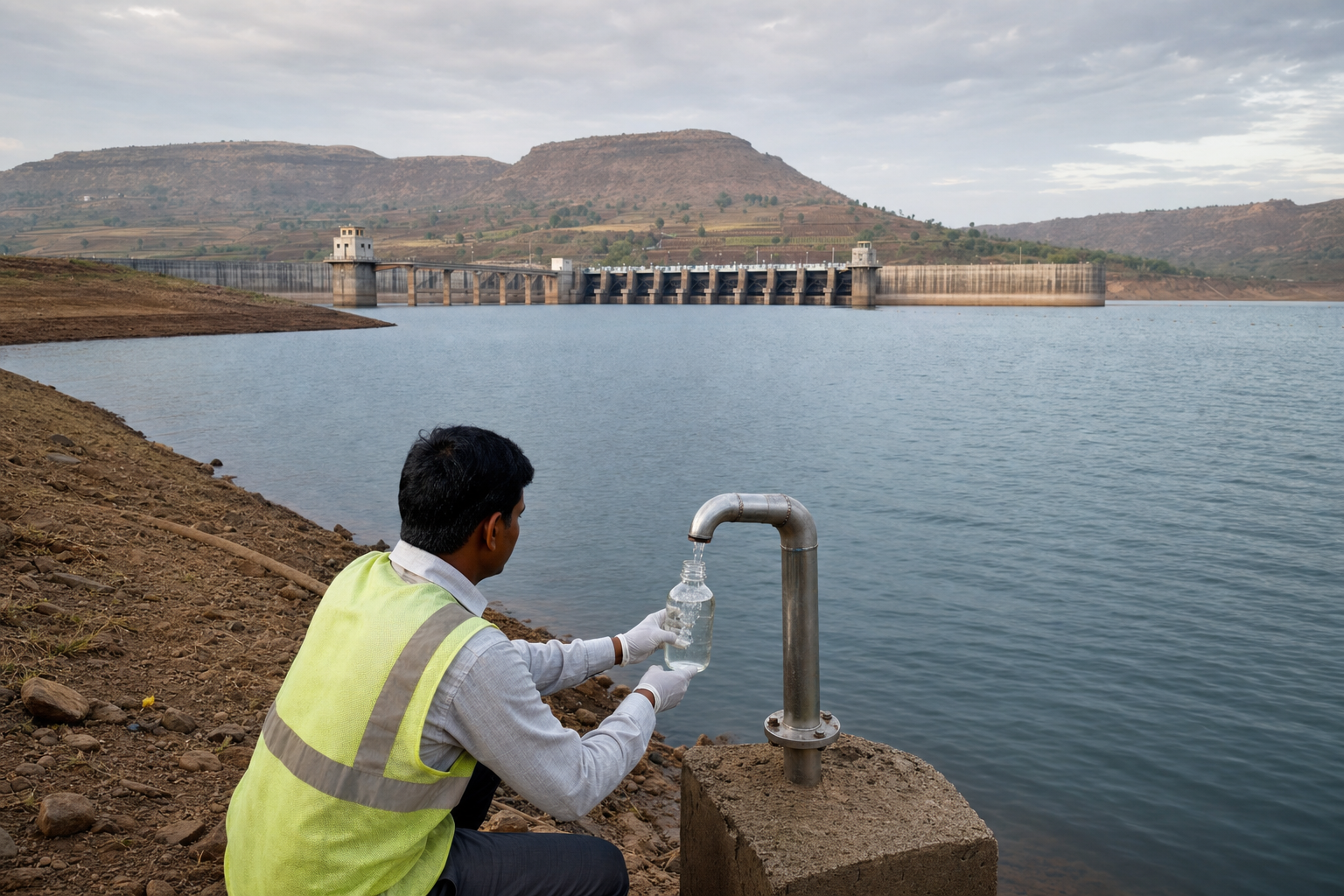
If your family receives water connected to Ujani Dam, the reported manganese contamination leaves you with a practical question: is the water reaching your tap safe to drink? The reported figure is serious enough to demand immediate precautions, but it does not prove that every household tap contains manganese at the same concentration.
You need two things now: a verified result from the water after treatment and a safe interim plan for anyone especially vulnerable to prolonged exposure. Here is how to separate a reservoir warning from a household exposure finding, avoid ineffective remedies, and ask authorities for evidence that can actually guide your decisions.
Key takeaways
- Manganese in Ujani Dam has been reported at 51 times the permissible limit, but that figure still requires repeated, independently validated measurements.
- A reservoir result, a treatment-plant outlet result, and a household-tap result answer different questions. Ask which one was tested before deciding what the number means for your family.
- Infants, children, pregnant women, and other sensitive residents should receive priority access to verified safe water while elevated results are investigated and treatment is stabilised.
- Boiling does not remove dissolved manganese. Any household filter used for this problem must be specifically designed and demonstrated to remove manganese at the concentration entering your home.
- A durable response must address the entire chain: sewage and industrial inputs, reservoir oxygen conditions, treatment performance, distribution pipes, public reporting, and independent verification.
Start with the right question: where was manganese measured?
“Fifty-one times the limit” sounds like a complete answer. It is not. A multiplier is useful only when you also know the measured concentration, the unit, the benchmark used, and the location of the sample. Without those details, you cannot reliably translate a dam-level warning into a decision about the water in your kitchen.
There are three critical sampling points:
- Raw reservoir or intake water shows the challenge entering the treatment system. A high result here means the plant may need rapid operational changes, but it does not reveal how much manganese remains after treatment.
- Finished water at the treatment-plant outlet shows whether oxidation, filtration, and other controls are removing manganese before distribution.
- Distribution-zone or household-tap water is closest to actual exposure. It can differ from plant-outlet water because ageing pipes, deposits, corrosion, and biofilms may introduce further variability.
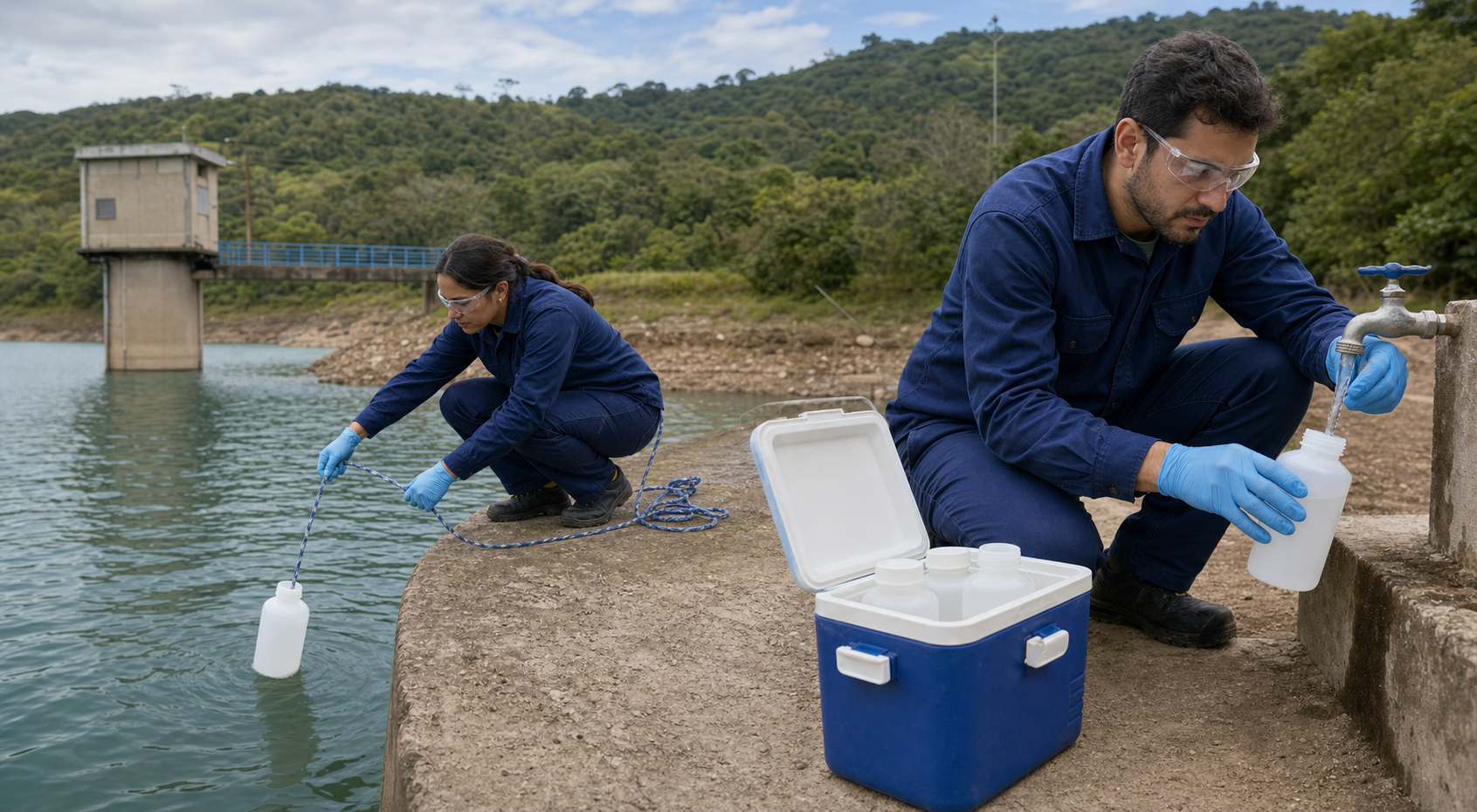
Ask the municipality or water supplier for a dated laboratory sheet, not just a statement that the water “passed” or “failed.” It should identify the exact sampling point, whether the sample was raw or treated, the concentration and unit, the applicable Bureau of Indian Standards IS 10500 criterion, the collection date, and the analytical method. It should also state whether the result represents total or dissolved manganese. AAS or ICP-MS analyses and confirmation by an accredited laboratory provide a stronger basis for action than an unexplained multiplier.
Depth and timing matter in a reservoir. A surface sample can look different from water near a deep intake, and a result collected during stable stratification can differ from one collected during turnover or an operational drawdown. Authorities should therefore publish repeated samples across relevant depths and stages of the supply chain rather than relying on a single reading.
The National Human Rights Commission issued notices after a complaint by Surajya Abhiyan raised the Ujani crisis. That is an important accountability step, but a notice is not a replacement for confirmatory monitoring. The necessary next product is a detailed, time-bound action-taken response supported by laboratory data, immediate protections, and named corrective measures.
Protect your family without relying on a false fix
Manganese is a trace element with a normal physiological role at very low levels. The concern is sustained overexposure. Elevated intake has been associated with neurotoxic effects, with particular concern for infants, children, and pregnant women. Staining and an unpleasant taste may appear at lower concentrations, but appearance and taste cannot determine safety. Clear water is not proof of compliance, and visible staining is not a concentration measurement.
If a finished-water or distribution sample is confirmed above the applicable drinking-water standard, or if the competent authority restricts use, take these steps:
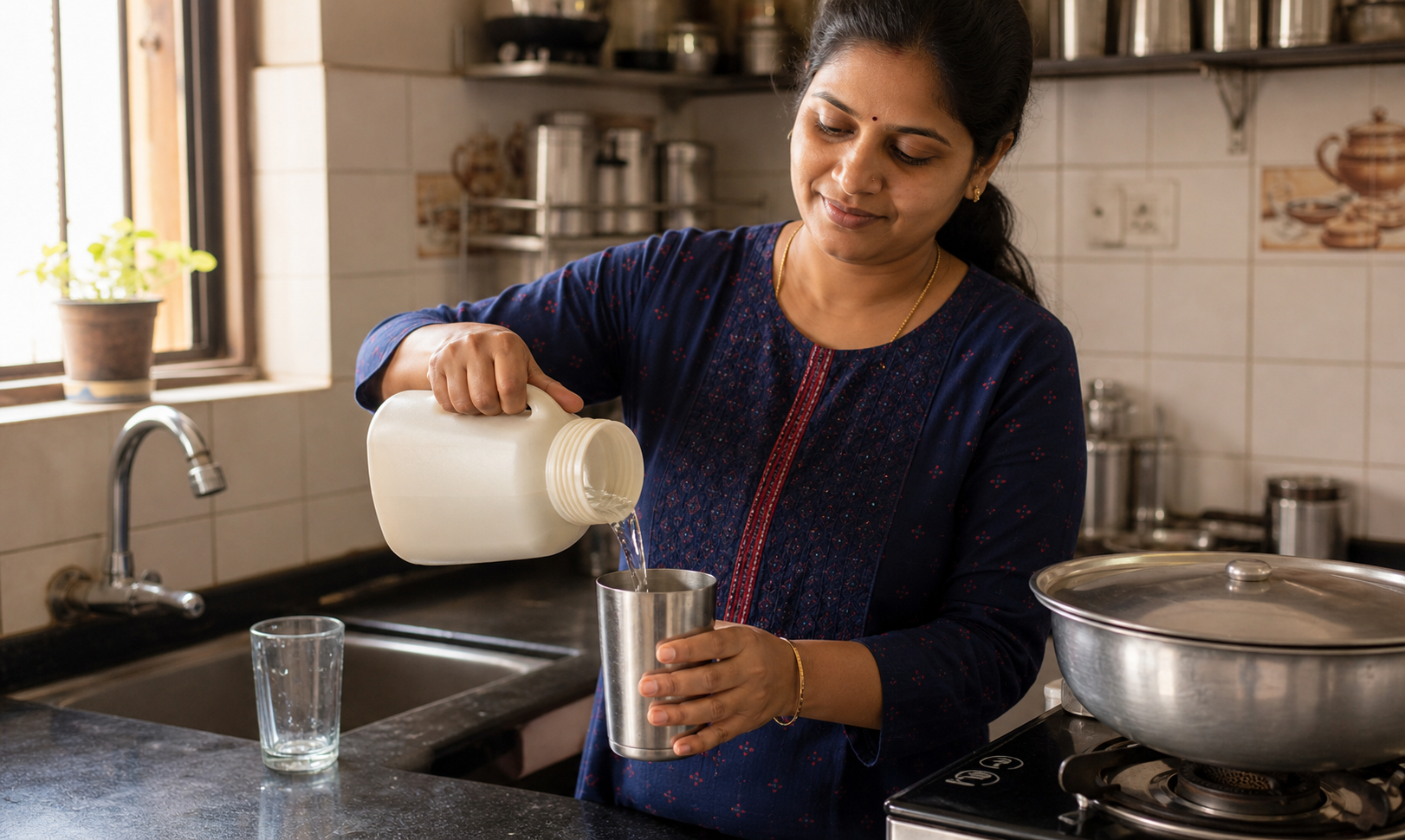
- Use a verified safe alternative for ingestion. This includes water used for drinking, preparing food, and mixing infant formula. Where treated-water results have not yet been disclosed after a severe reservoir warning, prioritise this precaution for infants, children, pregnant women, and medically vulnerable family members.
- Do not treat boiling as metal removal. Boiling is used against certain microbial hazards; it does not remove dissolved manganese. It cannot turn an unverified manganese-contaminated supply into verified safe drinking water.
- Check what a filter actually removes. Point-of-use systems for manganese generally require oxidative or catalytic filtration, such as appropriate MnO2-based media or an equivalent technology. A label promising better taste, clearer water, or general purification does not demonstrate manganese removal.
- Demand performance at your actual inlet concentration. Ask the supplier for the device’s manganese-removal range, required flow rate, media-replacement interval, and operating conditions. Confirm performance through accredited before-and-after testing rather than trusting the appearance of filtered water.
- Do not improvise chemical dosing at home. Chlorine, ozone, and carefully controlled potassium permanganate can be used within engineered treatment trains, where oxidation is followed by particle removal. Adding chemicals to a household container without dosing control and effective filtration can create a new hazard while leaving manganese behind.
- Keep the evidence. Save laboratory results, written notices, bills for alternative water, dates of supply changes, and written replies from authorities. This creates a usable record if the problem persists or official claims conflict.
If an infant, child, pregnant person, or another family member may have consumed water confirmed above the standard for a sustained period, contact a qualified clinician or public-health service. Bring the actual laboratory result, the estimated period of exposure, the person’s age or pregnancy status, and the address or distribution zone. A taste complaint or isolated symptom cannot diagnose manganese exposure, and a general online checklist cannot replace individual medical assessment.
Alternative supplies must also be verified. “Packaged,” “filtered,” or “from another tanker” is not by itself a water-quality result. Schools, anganwadis, health facilities, and households with vulnerable residents should receive priority access to a supply whose safety has been documented.
Why Ujani can release manganese in sudden spikes
Finding manganese does not by itself identify who caused it. Natural mineral weathering in basaltic terrain is one plausible contributor. Untreated or partly treated sewage, industrial effluent, and other organic loads can also intensify the problem, even when they are not the only direct source of manganese.
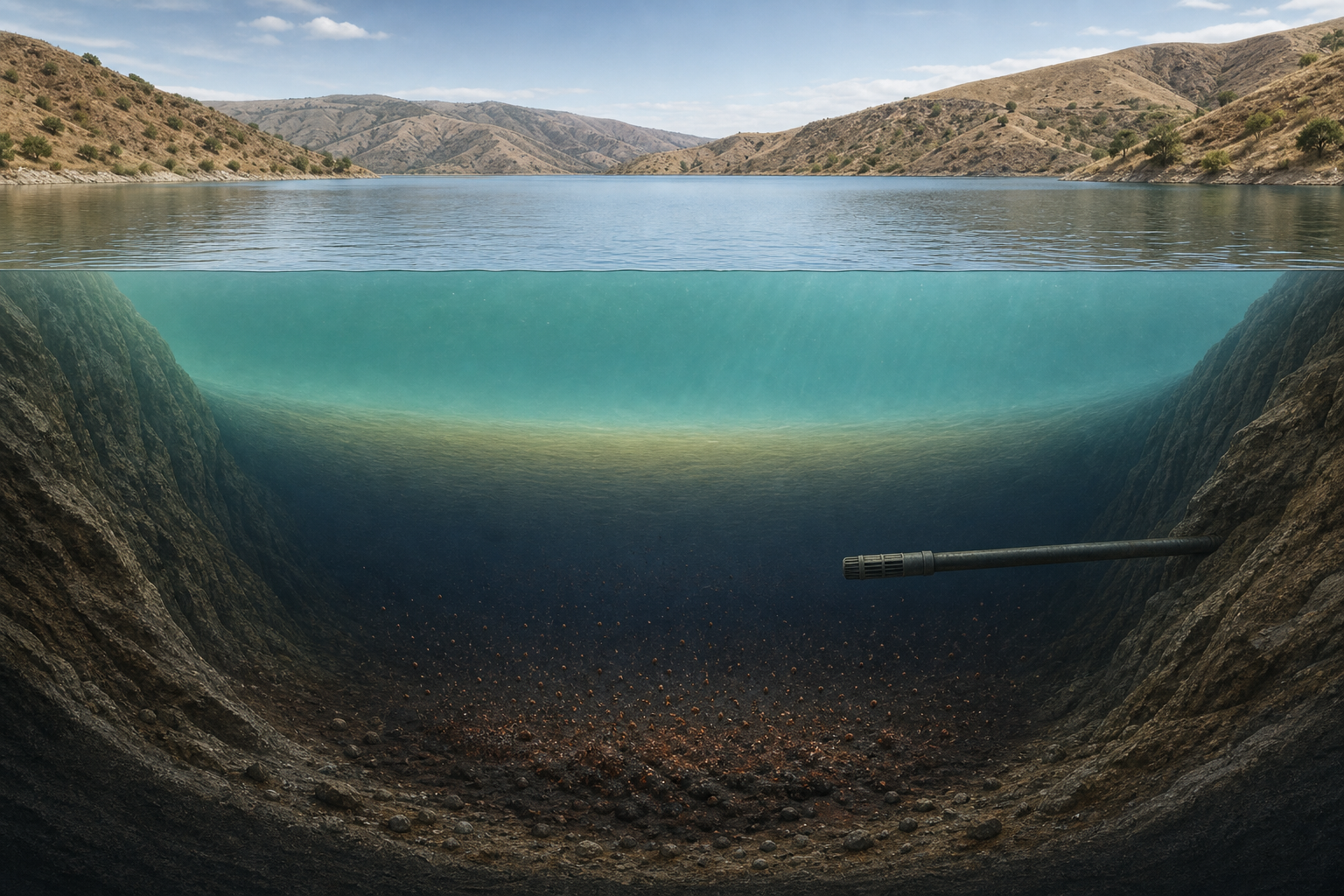
The mechanism matters. Organic matter consumes oxygen as it decomposes. When deep reservoir water loses enough oxygen, manganese held in sediment as particulate Mn(IV) oxides can be chemically reduced into more soluble Mn(II). The metal then moves from sediment and pore water into the deep water column, where it is harder for a conventional treatment process to handle unless that process is adjusted.
Thermal stratification can strengthen this cycle during dry and pre-monsoon periods. Warm surface water remains separated from cooler deep water, limiting oxygen replenishment near the bottom. A later turnover event, a shift in intake depth, or an operational drawdown can move manganese-rich deep water toward an abstraction point. That helps explain why a plant may face a sharp change even when the visible condition of the reservoir seems unchanged.
This chemistry changes what good monitoring looks like. Investigators must test more than one surface location. They should track samples by depth, distinguish total from dissolved manganese, measure conditions linked to oxygen loss, and compare results with intake operations and seasonal changes. They must also examine sewage and industrial loading. Blaming only geology can excuse preventable pollution; blaming one discharge before evidence is available can miss the reservoir process that is mobilising the metal.
The public response must solve the whole water chain
Immediate protection begins with transparent measurement. Authorities should commission repeated testing by accredited laboratories at the reservoir, relevant intake depths, the treatment-plant inlet and outlet, distribution endpoints, schools, anganwadis, health facilities, and representative homes. Public results must show actual concentrations and units, not merely colour-coded compliance. Each entry should identify the sampling date, sample type, location, method, applicable standard, and validation status.
Where finished water remains elevated, the short-term response can include a verified alternative supply or technically controlled blending. Those protections should continue until repeated results demonstrate stability, including through operational or seasonal conditions that could bring deep water toward the intake.
Treatment must oxidise, capture, and verify. Dissolved manganese generally has to be converted into a removable form and then filtered. Proven treatment trains can use controlled pre-oxidation with free chlorine, ozone, or carefully dosed potassium permanganate, followed by catalytic media such as greensand or MnO2-coated filtration. Biological filtration may be suitable in some plants. The correct choice depends on the water chemistry and existing infrastructure; simply adding more oxidant is not a complete process.
Operators must also handle manganese-bearing sludge so that captured material does not return to the water system. Online sensors can track useful surrogate conditions and trigger operational attention, while periodic AAS or ICP-MS analysis verifies the actual metal concentration. SCADA-based control can help plants respond to changing intake conditions, but instrumentation does not replace laboratory confirmation. Distribution mains must also be investigated where outlet results meet the standard but neighbourhood results do not.
Catchment and reservoir controls are the defence against recurrence. Sewage treatment plants must operate consistently, industrial discharges must meet applicable controls, and riparian buffers should reduce contaminant and organic loading. Within the reservoir, selective withdrawal, diffused aeration or destratification, and carefully managed drawdowns may help keep critical zones oxygenated or keep manganese-rich deep water away from drinking-water intakes. Floating wetlands or targeted desiltation may have a supporting role only after technical and environmental review; neither is a universal cure.
Accountability requires one plan from catchment to consumer. The Water Resources Department, Maharashtra Pollution Control Board, public-health authorities, local bodies, and water-treatment operators should work from a shared Water Safety Plan. That plan should name each hazard, the responsible agency, the control point, the monitoring frequency, the trigger for corrective action, and the evidence required before restrictions are lifted.
The legal framework already treats this as more than an aesthetic water complaint. BIS IS 10500 supplies the drinking-water benchmark, while the Water (Prevention and Control of Pollution) Act, 1974 and the Environment (Protection) Act, 1986 establish statutory responsibilities around pollution control. Persistent failure also engages the right to life and health under Article 21. A dashboard of validated results, third-party audits, and written action milestones would allow residents to see whether that responsibility is being met.
For a Dharmic society, jal raksha is not a slogan added after the engineering work. Ahimsa requires preventing avoidable harm. Aparigraha challenges the treatment of a shared reservoir as a limitless sink. Seva puts safe water first for children, pregnant women, patients, and families with the fewest alternatives. Hindu, Buddhist, Jain, and Sikh traditions give us different vocabularies, but they converge on disciplined care for life and the commons.
If you live in the Ujani supply area, ask one precise question in writing: “What was the latest manganese concentration in finished water for my distribution zone, on what date, in what unit, and which laboratory verified it?” Keep the reply. That answer is the starting point for a household decision, a credible public-health response, and a remediation programme residents can hold to account.
References
