
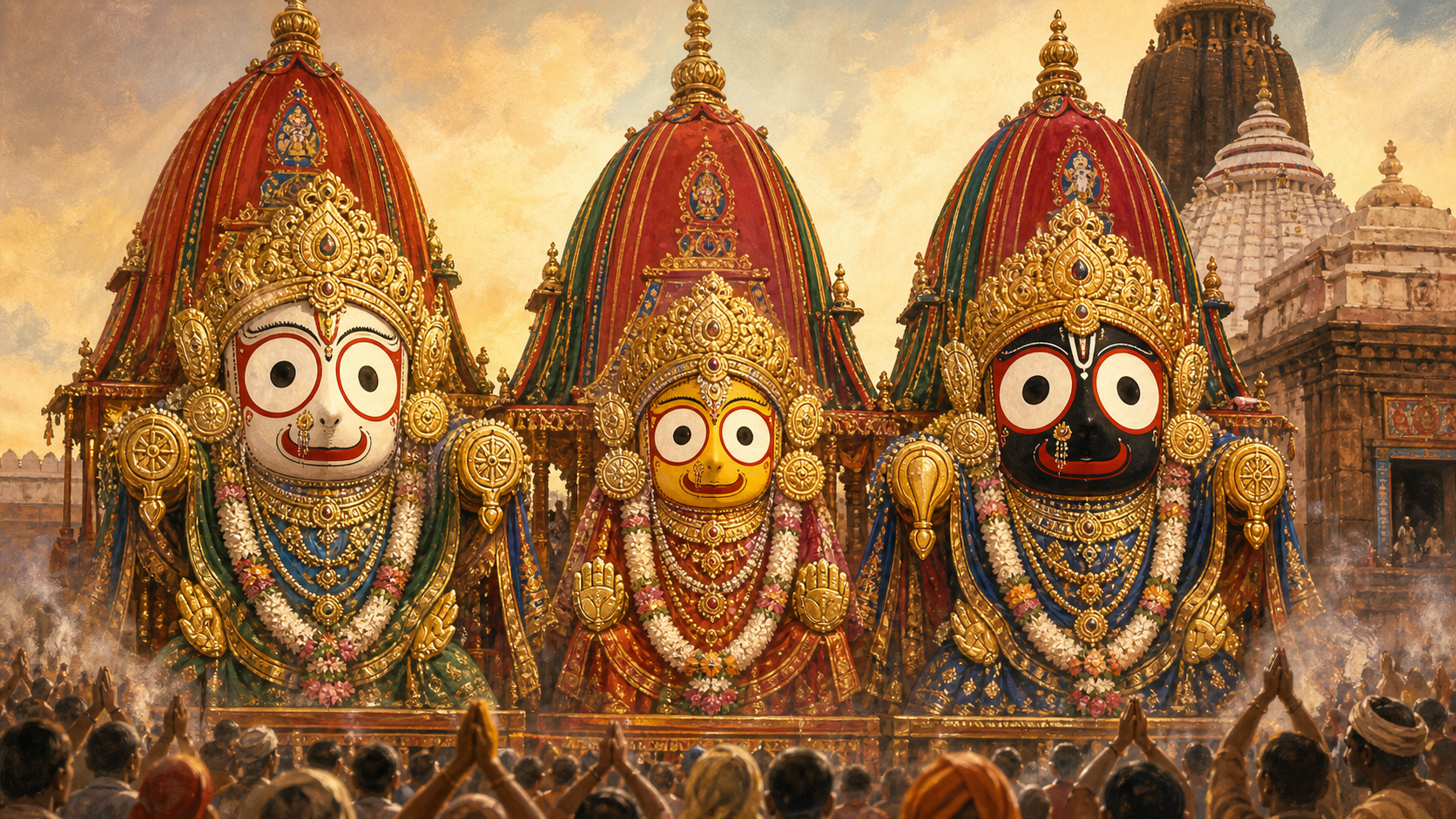
You may have encountered Lord Jagannath’s golden form in a photograph, a devotional message, or an announcement and wondered what you are really meant to see. The question is not only what appears before your eyes. It is how to look without reducing a sacred encounter to jewellery, spectacle, or a picture to forward.
Sona Besha invites a simple shift: let beauty gather your attention, and then let attention become devotion. You do not need an inventory of ornaments to begin. You need to understand what the adornment is doing and what your own response reveals.
What Sona Besha names – and what it does not
In the plainest terms, Sona Besha presents Lord Jagannath in gold. “Sona” refers to gold, while “besha” refers to an adorned appearance or dress. The name therefore directs your attention to a particular manifestation of the familiar Lord: Jagannath revealed through golden splendour.
The term identifies the form of adornment. By itself, it does not establish a date, venue, viewing schedule, access arrangement, or complete ritual sequence. This distinction matters when you are planning a visit. An undated devotional image is not a current notice, so confirm practical details through the responsible temple or organiser before making travel plans.
The outward appearance also should not be confused with a change in divine identity. Gold does not make Lord Jagannath more divine. The Lord is adorned, and the adornment serves the devotional relationship. That is why a serious reading of Sona Besha begins with Jagannath rather than with the monetary value of what is displayed.
Let the gold direct you beyond the gold
Gold naturally commands the eye. In a devotional setting, that visual force creates a useful test: does your attention stop at the precious material, or does the material lead you toward the Lord who wears it?
Adornment of the divine form can be understood as seva, an offering of attentive care. From that perspective, gold is not merely possessed wealth. It is wealth placed in service. Its devotional meaning rests less in ownership than in offering, less in price than in surrender.
This also guards against a common misreading. Sona Besha is not a formula promising that viewing gold will produce personal riches. Turning the darshan into a bargain – attention given in exchange for material gain – makes the devotee’s desire the centre of the encounter. A better question is sharper and less comfortable: what in you is attracted to splendour, and can that attraction be redirected toward reverence, gratitude, and generosity?
You need not pretend that beauty has no effect on you. Its effect is part of the practice. Notice whether the sight awakens wonder, possessiveness, comparison, pride, longing, or peace. Once noticed, that reaction can be offered rather than obeyed.
A practical way to receive Sona Besha as darshan
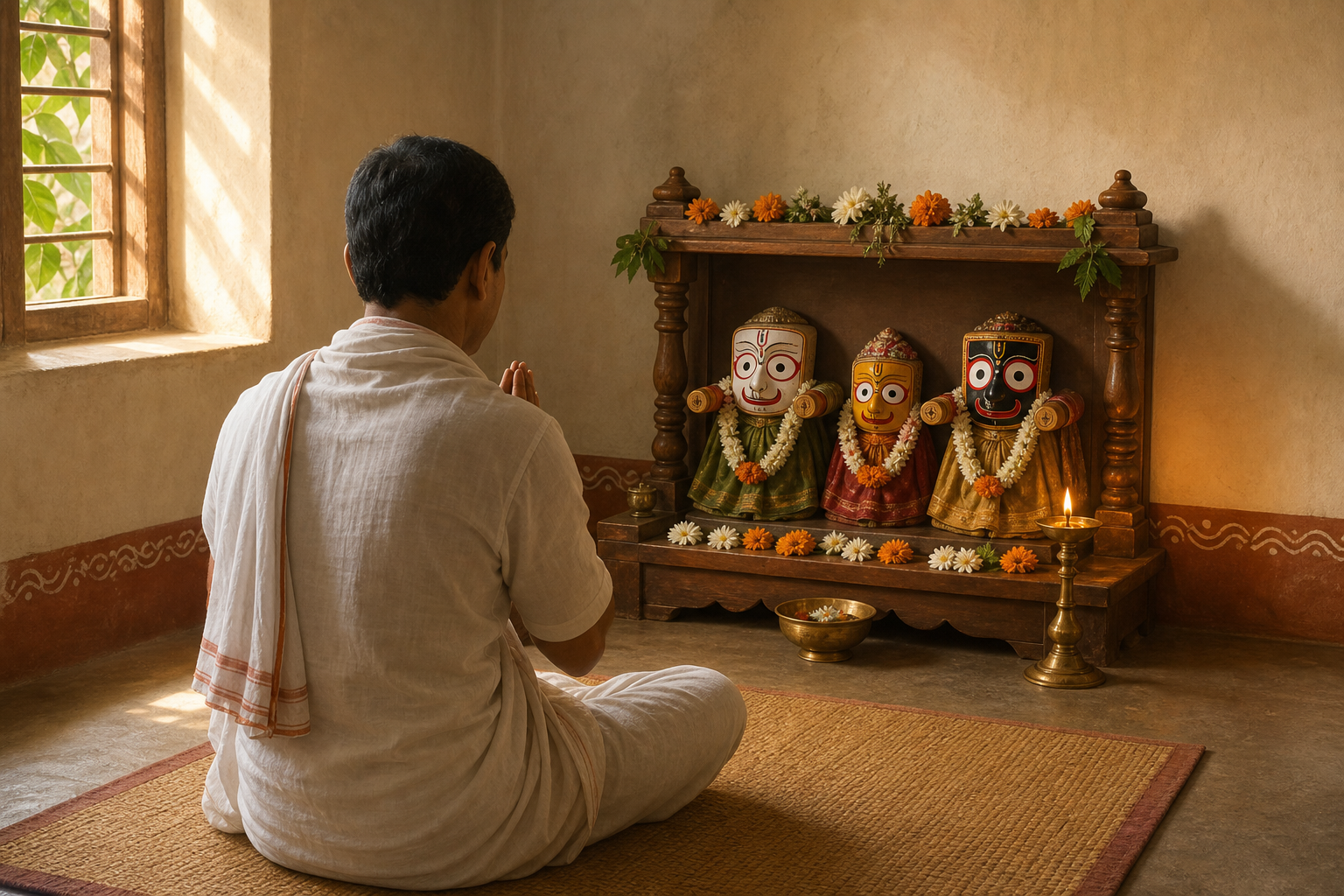
The following is a contemplative method, not a claim about a prescribed temple liturgy. Use it when you stand before the adorned form or when a photograph is your only access.
- Begin with the Lord’s identity. Silently say “Lord Jagannath” before you study any ornament. This keeps the wearer central and the adornment secondary.
- Receive the whole form first. Let your gaze rest on the complete appearance before moving to individual details. This prevents visual curiosity from fragmenting the darshan into an inventory.
- Notice your first inward reaction. Name it honestly: awe, desire, gratitude, distraction, comparison, or something else. You do not have to condemn the reaction, but you should not let it pass unnoticed.
- Offer one clear prayer. Ask for a quality that turns splendour into dharma – generosity instead of possession, humility instead of status, or steadiness instead of distraction.
- Complete the darshan through conduct. Choose one modest action consistent with that prayer. Share something without displaying your generosity, restrain an unnecessary purchase, give proper attention to someone you usually overlook, or care for a sacred space. The action should be concrete enough to complete that day.
This sequence does not attempt to manufacture a particular emotion. Its purpose is to prevent the encounter from ending at visual admiration. Darshan has begun to work on you when what you see alters how you attend, choose, and give.
Keep cameras, captions, and claims in their proper place
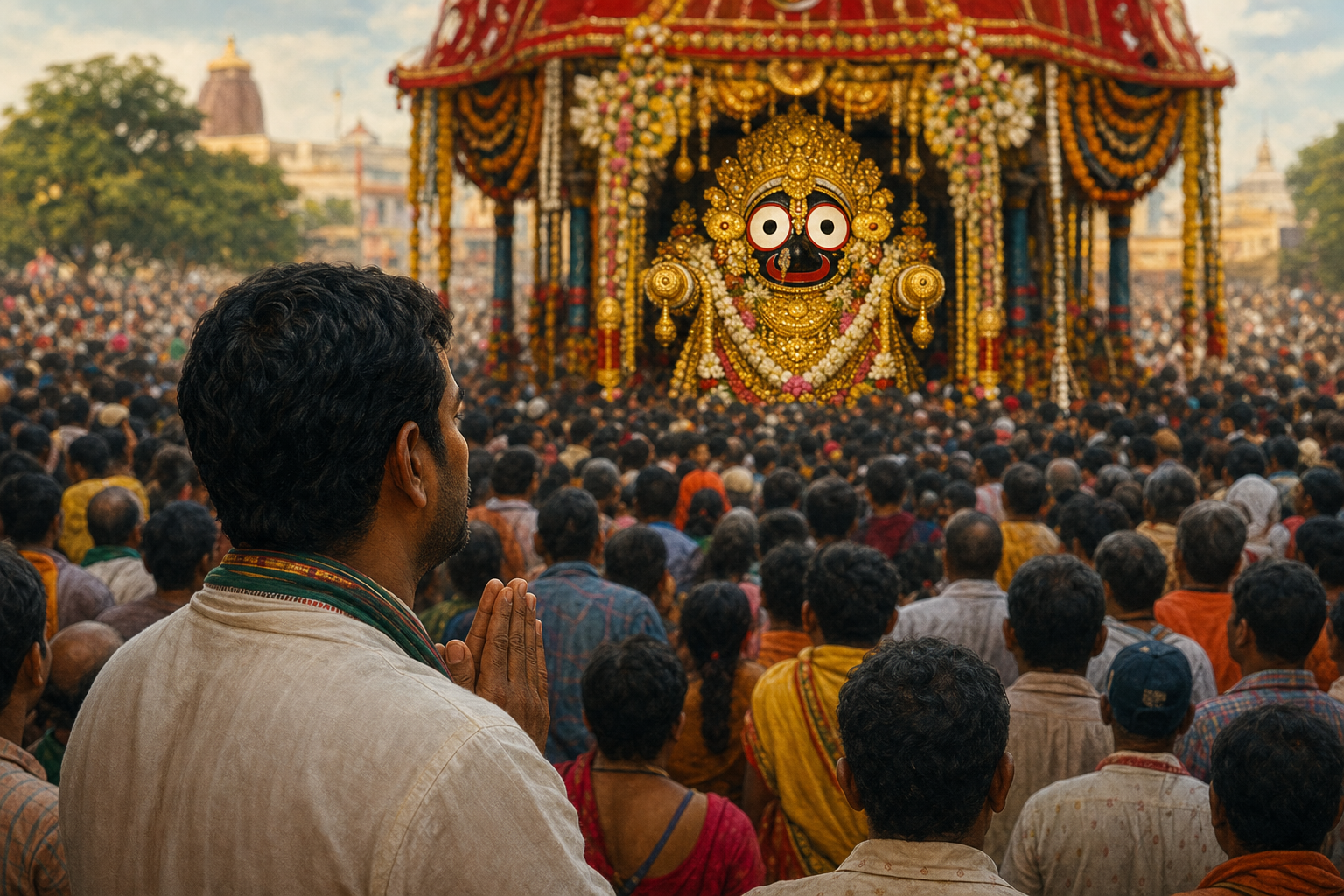
If photography is permitted where you are, receive the darshan before reaching for your phone. Otherwise, the search for a good frame can replace the act of seeing. If photography is prohibited, accept the restriction without treating the absence of a personal image as a lost experience. The image is not the darshan’s proof.
When viewing or sharing Sona Besha online, separate what the image shows from what it cannot establish. A picture may show Lord Jagannath in golden adornment without proving when it was taken, where it was displayed, or whether an attached schedule is current. If those details have not been verified, use a limited factual caption such as “Lord Jagannath in Sona Besha” and leave the uncertain information out.
Avoid attaching promises of wealth, compulsory forwarding instructions, or claims that misfortune will follow anyone who does not share the image. Such messages replace devotion with pressure and turn a sacred form into a device for gaining clicks. Share because the darshan may serve another devotee, not because a fabricated reward or threat demands circulation.
The same discipline applies to debate over symbolism. You can contemplate gold as splendour, offering, radiance, or abundance without insisting that every ornament has one universal meaning. Where a temple lineage or qualified teacher provides a specific interpretation, preserve that context rather than presenting it as the only possible reading everywhere.
Key takeaways
- Sona Besha is Lord Jagannath’s golden adornment; the Lord, not the gold, remains the centre of darshan.
- Read precious material as something offered in seva, not as a guarantee of personal prosperity.
- Look at the complete divine form before inspecting individual ornaments.
- Notice what splendour awakens in you, and redirect that reaction toward a dharmic quality and a concrete action.
- Verify dates and practical arrangements independently, respect local photography rules, and do not add unsupported promises to devotional images.
The next time Sona Besha comes before you, pause before analysing, photographing, or forwarding it. Name Lord Jagannath, receive the form as darshan, and decide what act of humility or generosity will carry that golden vision into the rest of your day.

References
