
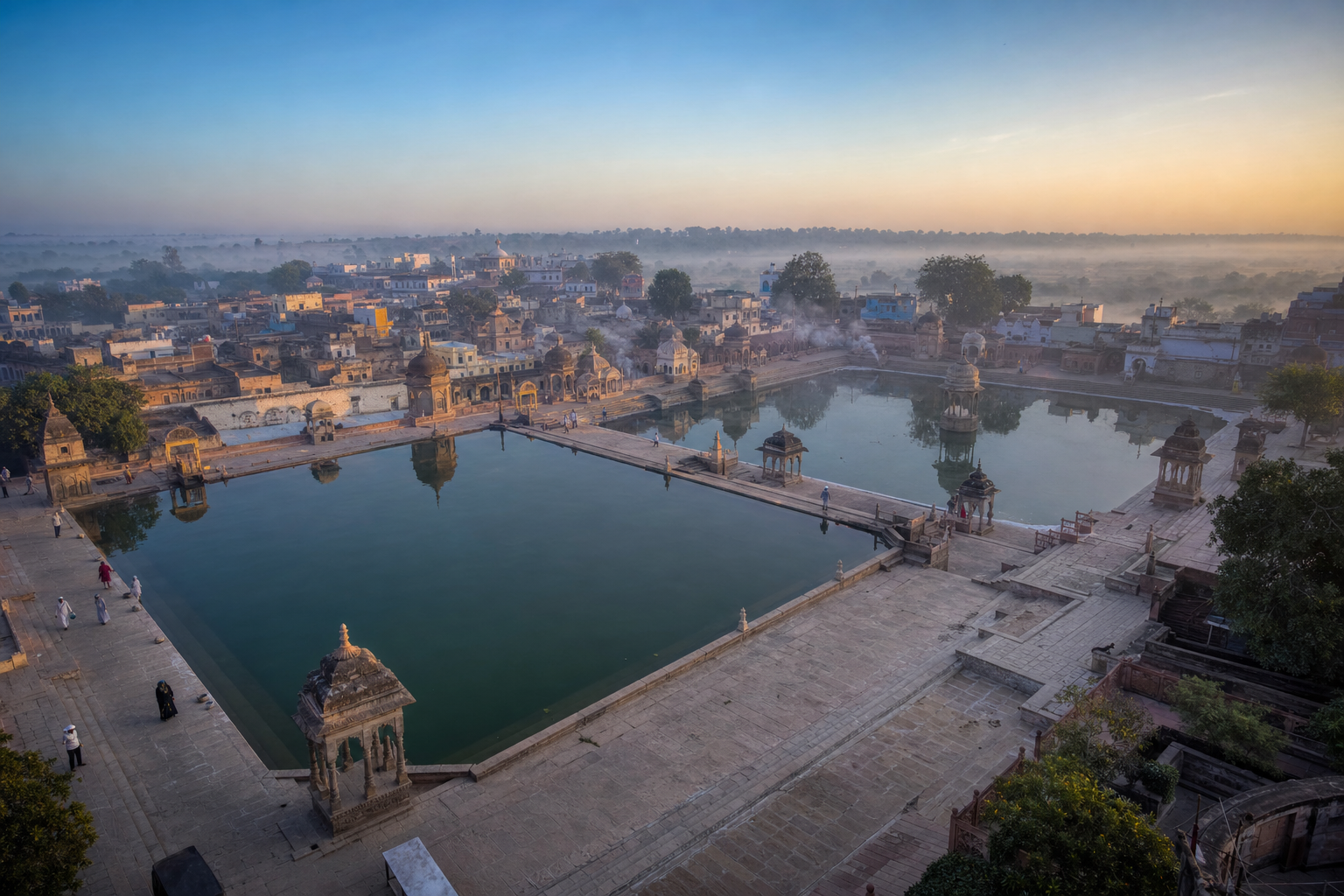
You may know that Radha-kunda and Syama-kunda are sacred. The harder question is how to visit them without turning the yatra into a hurried round of photographs, ritual gestures, and places checked off a list.
A worthwhile pilgrimage begins before you reach the ghats. Decide how you will approach the kundas, what practice you will follow, and what you will not do merely because others are doing it. That preparation lets you give your attention to darshan rather than negotiating every decision in a crowd.
Know what you are approaching
In Gaudiya Vaishnava understanding, these are not two ordinary ponds with religious associations added later. Radha-kunda is revered as the sacred manifestation of Sri Radha, while Syama-kunda is inseparably associated with Sri Krishna. This is why Radha-kunda and Syama-kunda are approached together in yatra, even though each retains its own identity.
The traditional lila account begins after Krishna kills Aristasura, who had appeared in the form of a bull. Sri Radha and the sakhis playfully challenge Krishna over the impurity of killing a bull. Krishna creates Syama-kunda and invokes the holy waters; Sri Radha and the sakhis create Radha-kunda. The account culminates in the joining of the two waters.
That lila gives you the proper interpretive key. The two kundas should not be treated as competing attractions. Their distinction expresses relationship: Radha and Krishna, devotion and the beloved of devotion, loving challenge and loving reunion. Visit both. Give each unhurried attention. Notice their connection without collapsing one into the other.
You also do not need to manufacture an elevated inner state. If the confidential theology is new to you, humility is more appropriate than imitation. Hear the lila from a teacher you trust, chant the holy names, and admit what you do not yet understand. At a sacred place, receptive attention is a better beginning than borrowed spiritual language.
Prepare the visit before you reach the ghats
Yatra groups and Gaudiya lineages may differ over the order of particular stops, the manner of taking kunda water, and the prayers recited. Do not assemble a hybrid ritual from social-media clips. Before travelling, ask your guru, senior Vaishnava, or responsible yatra leader three direct questions: Which sequence should we follow? What is our practice regarding bathing? Which prayers or kirtans should we prepare?
If you are travelling independently, contact a trusted local ashram or temple before the visit and confirm current access arrangements. Festival crowds, maintenance work, and local instructions can affect what is possible. A map cannot tell you whether a particular ghat is suitable for entering the water or whether worship is taking place there.
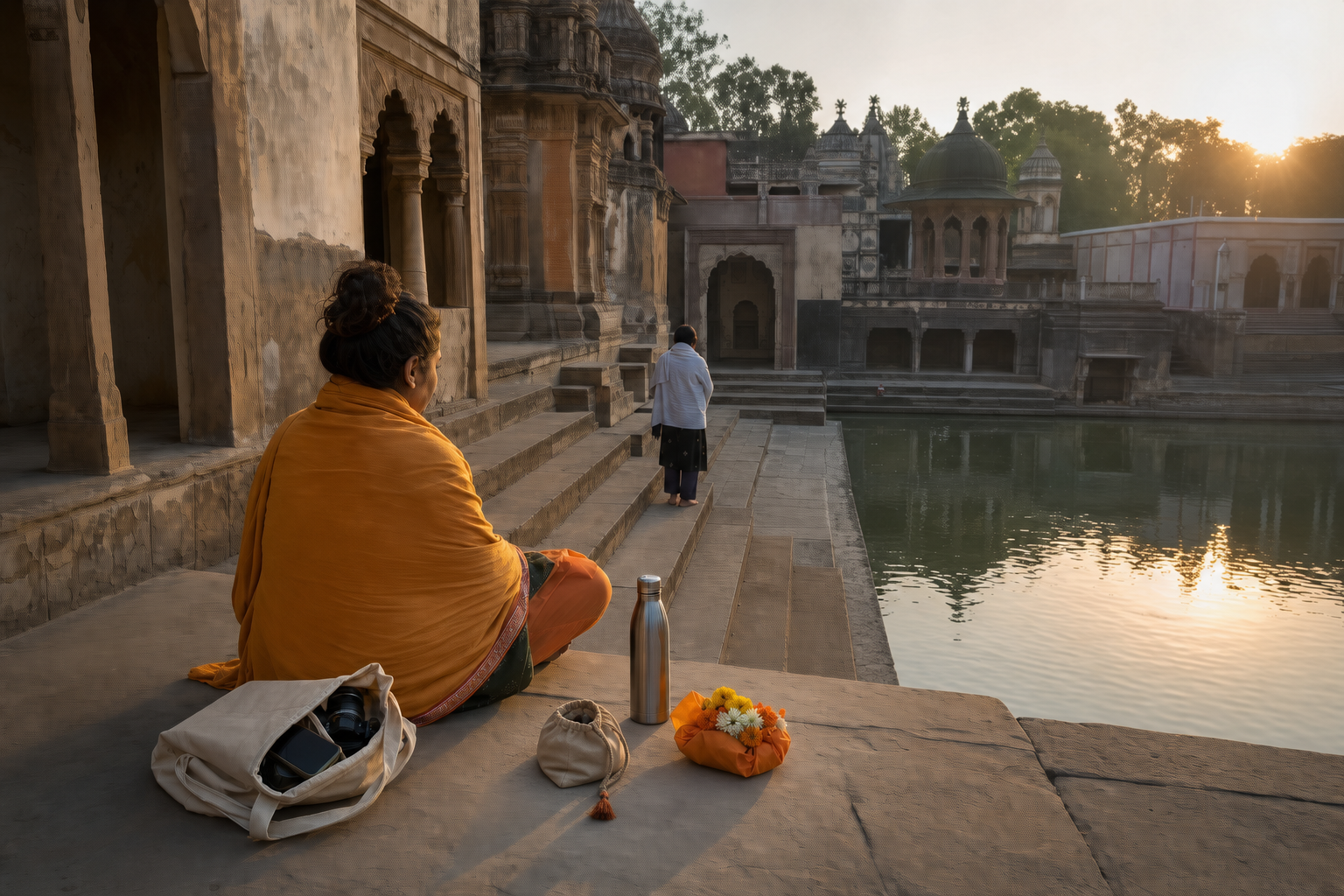
Pack for attention, not for every contingency. A practical first-visit kit includes:
- Modest clothing that permits you to sit, bow, and walk comfortably.
- Footwear that can be removed and carried without creating a distraction.
- Known-safe drinking water. Sacred status does not establish that pond water is potable.
- A small cloth for your head or hands if your tradition uses kunda water reverentially.
- Only the prayer book, beads, medicine, and personal items you genuinely need.
- A separate pouch for any waste so nothing is left at the ghats.
Choose one sankalpa, or devotional intention, before you arrive. It might be to chant a fixed portion of your japa attentively, hear the appearance lila without checking your phone, pray for the disposition to serve, or refrain from criticism throughout the visit. One clear intention is more useful than a long list you will not remember.
Settle practical limitations honestly. If you are travelling with children, older relatives, or someone with limited mobility, decide in advance which parts of the route are essential and where the group can rest. No one should be pressured onto wet steps or into water to prove devotion. A person who remains safely on the bank can still offer pranam, chant, hear katha, and take darshan.
Use a simple, reverent yatra sequence
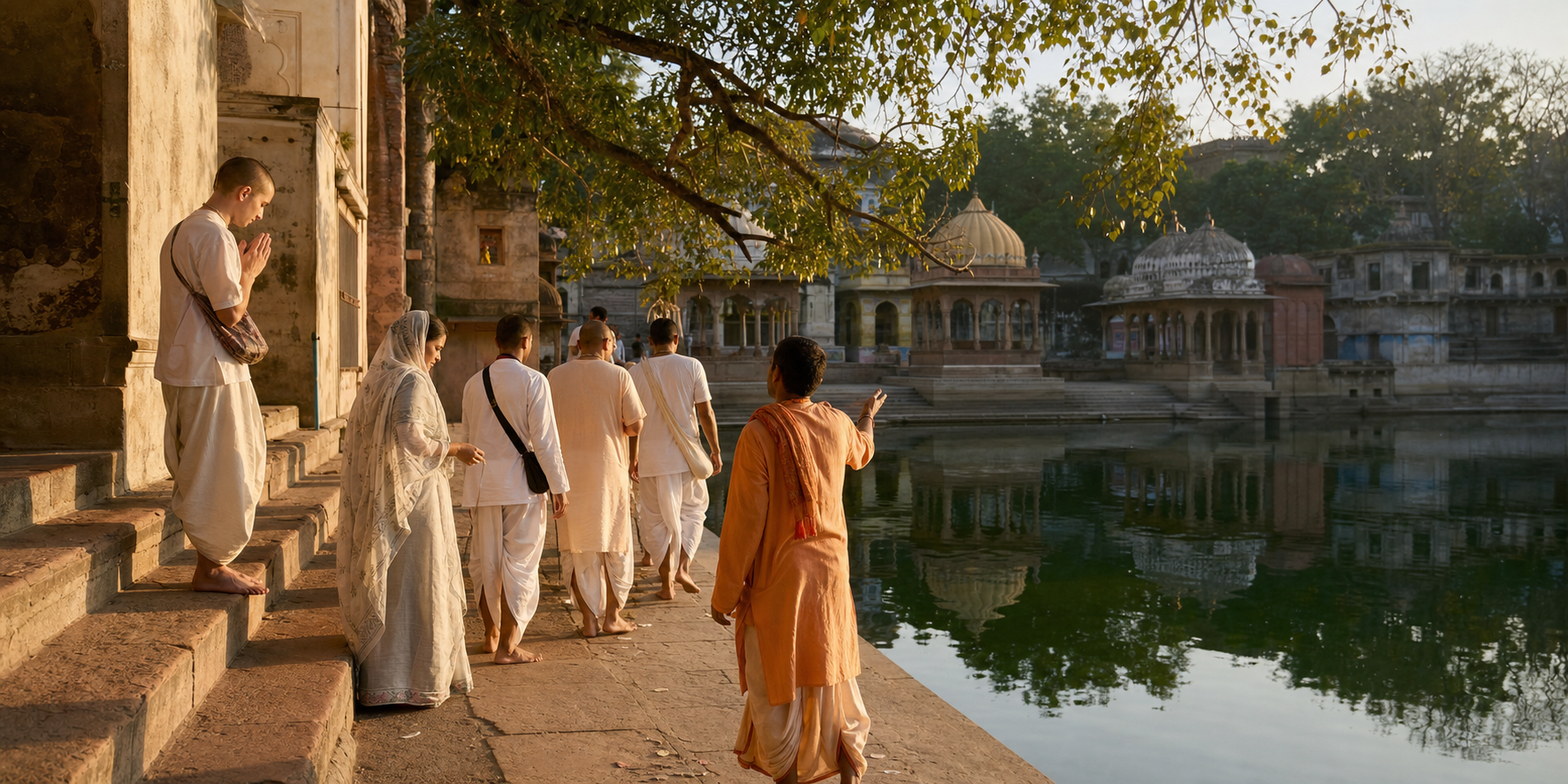
A first visit does not need an elaborate performance. The following sequence gives the day enough structure while leaving room for the instructions of your lineage and the realities on the ground.
- Pause before entering the immediate sacred area. Silence unnecessary conversation, put away food, secure your belongings, and shift from travel mode to pilgrimage.
- Offer pranam and state your intention inwardly. Ask permission to enter the dhama in a mood of service. If you know an authorized prayer, recite it. If not, a sincere invocation of Radha and Krishna is sufficient.
- Hear before trying to visualize. Listen to the appearance lila or recall the account you studied beforehand. If you do not have a qualified speaker, chant the maha-mantra instead of improvising confidential meditation.
- Take darshan of both kundas. Follow the order taught by your guide or lineage. Do not rush from one bank to the other merely to say that both have been visited.
- Perform parikrama according to the established route. Follow local signs and the lead of experienced devotees. Walk attentively, keep passages clear, and let chanting or remembrance set the pace.
- Approach the water only after deciding what practice you are following. Bathing, sprinkling a few drops on the head, respectfully touching the water, and taking darshan from the bank are distinct actions. Do not slide casually from one into another because a crowd is moving.
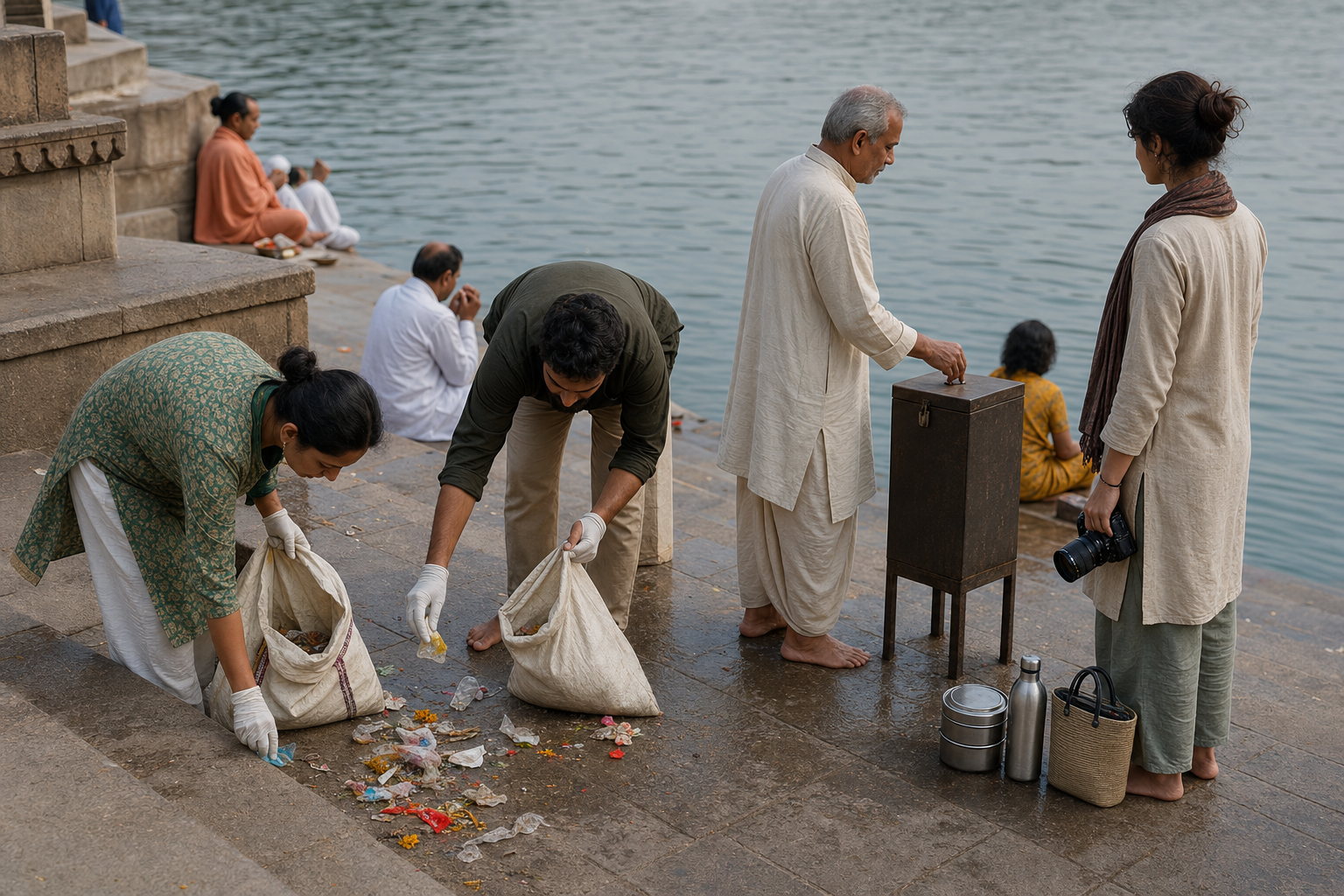
- End with stillness and service. Sit where permitted, complete your prayer, pick up any waste around you that can be handled safely, and leave without turning the final minutes into a shopping or photography scramble.
Do not measure the yatra by the number of minor locations reached. A knowledgeable guide can identify ghats, shrines, samadhis, and places connected with Vaishnava acharyas, but names alone do not create remembrance. For a first visit, it is better to understand a few places and retain their significance than to collect dozens of labels.
Parikrama is also not a race. Keep to the side where appropriate, allow worshippers and residents to pass, and do not block steps for group photographs. If your physical condition requires a shorter route, say so before the party begins. Quietly completing what you can is more responsible than pushing until someone must manage an avoidable injury.
Treat water, cameras, money, and waste as matters of seva
Do not assume that bathing is required
Devotees do not all follow the same practice regarding entry into Radha-kunda and Syama-kunda. Some undertake a prescribed ritual bath; others express reverence by taking a small amount of water on the head or by remaining on the bank. Follow the discipline you have actually received. If you have received none, ask a responsible Vaishnava rather than copying the nearest person.
If water entry is permitted and appropriate for you, use only a safe, designated access point and remain with your group. Wet stone steps can cause a serious fall, and crowded water can make it difficult to regain footing. Do not enter if you cannot identify a safe exit, if the steps are congested, or if you are responsible for a child who cannot be securely supervised. Do not swim, dive, splash, or turn the kunda into a recreational bathing place.
Never use soap, shampoo, detergent, or cosmetic products in the kundas. Do not wash clothing, rinse containers, discard flowers wrapped in plastic, or pour packaged offerings into the water. Do not drink kunda water as drinking water; carry water from a source you know to be safe. Reverence for tirtha and basic protection from waterborne illness belong in the same pilgrimage.
Let photography remain secondary to darshan
Ask before photographing worship, sadhus, private rituals, or people entering the water. Do not photograph children or local residents as picturesque scenery. Avoid staging repeated pranams, moving lamps or offerings, or asking worshippers to interrupt their practice for your frame.
A useful rule is to complete your first darshan without a phone in your hand. If photography is permitted, take a small number of images afterward and put the device away again. When every stop is experienced through a screen, the record of the pilgrimage grows while the pilgrimage itself becomes thin.
Make donations without creating confusion
Decide your donation budget before entering the busiest area. Give through a temple, ashram, or seva effort whose purpose you understand, preferably where the recipient can explain how the contribution will be used. A sacred place does not remove the need for ordinary clarity about money.
If you hire a local guide, agree on the route, approximate duration, language, and dakshina before starting. This protects both sides from resentment at the end. Pay respectfully when the agreed service is complete. Additional generosity can remain voluntary rather than becoming the result of an unresolved expectation.
Do not remove soil, stones, plants, or bottles of water merely because they feel like meaningful souvenirs. Ask a responsible custodian whether taking anything is permitted. The cleaner form of remembrance is to support the place without diminishing it: carry out your waste, avoid single-use packaging, and contribute to a trusted cleaning or preservation effort when one is available.
Key takeaways for a first pilgrimage
- Approach Radha-kunda and Syama-kunda as a connected sacred yatra, not as two attractions to be photographed.
- Ask your guru, senior Vaishnava, or yatra leader about sequence, prayers, and bathing practice before travelling.
- Take darshan of both kundas, but give yourself permission to understand a few places well rather than rushing through every named stop.
- Do not enter the water without clear guidance, local permission, safe footing, and a reliable way out.
- Keep soap, detergent, plastic, food waste, and recreational behaviour away from the kundas.
- Complete your first darshan before using your camera, and never treat worshippers or residents as scenery.
- Agree on a guide’s service and dakshina in advance, and direct larger donations through a trusted institution or defined seva.
- Leave with one practice to carry home, such as more attentive nama-japa, less criticism, or regular service to a sacred place.
Before you arrange transport, make the two decisions that most affect the pilgrimage: whom you will follow for spiritual guidance and how you will approach the water. Then write your sankalpa in one sentence. With those choices settled, you can arrive ready to receive darshan instead of spending the visit deciding what kind of pilgrim you meant to be.
References
