
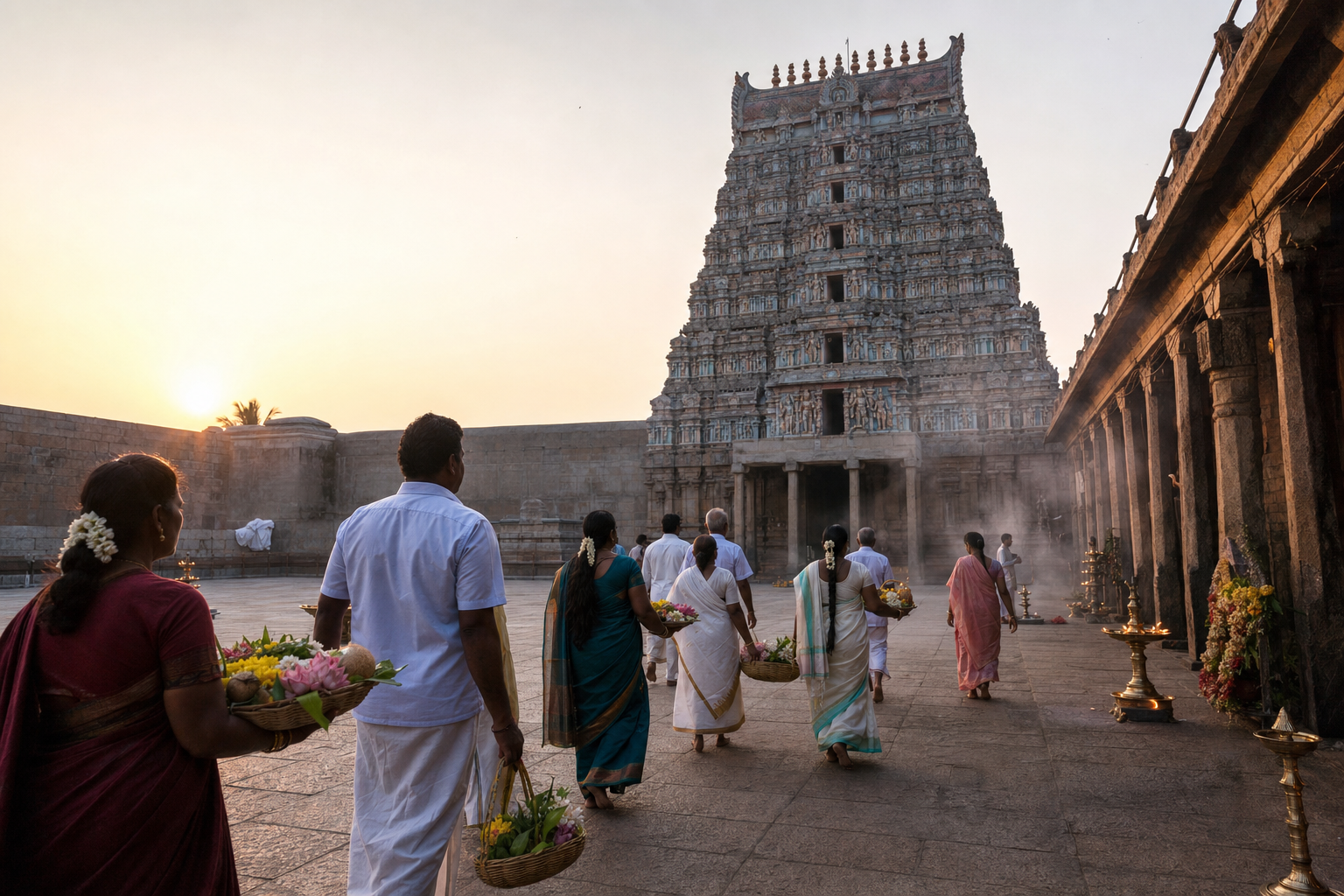
You are choosing among several important South Indian temple dates in spring 2026, but the real decision is not which celebration sounds grandest. One observance centres on a floral act of gratitude, another temporarily interrupts darshan so Tirumala can be ritually cleansed before Ugadi, and another celebrates sacred union across major Tamil Shaiva, Vaishnava, and Murugan temples.
The useful way to plan is to choose the spiritual experience you want first, then build travel and darshan expectations around its ritual character. Between 14 March and 1 April, a well-planned pilgrimage can take you from Pushpayagam at Srinivasa Mangapuram to Tirumala’s Ugadi cycle and, if your time permits, to Panguni Uthiram in Tamil Nadu.
The spring 2026 temple calendar at a glance
| Date | Temple or region | Observance | What it means for your visit |
|---|---|---|---|
| 14 March 2026 | Sri Kalyana Venkateswara Swamy Temple, Srinivasa Mangapuram | Senadhipati Utsavam and Ankurarpanam, 6:00 PM to 8:00 PM | Attend this evening if you want to experience the preparatory rites, not only the following day’s floral culmination. |
| 15 March 2026 | Srinivasa Mangapuram, approximately 12 km from Tirupati | Annual Pushpayagam | Expect a festival atmosphere, organised queues, floral worship, chanting, and heavier attendance than on an ordinary temple day. |
| 17 March 2026 | Sri Venkateswara Swamy Temple, Tirumala | Koil Alwar Tirumanjanam | Morning access is affected while the temple is cleansed. VIP Break Darshan is cancelled, and later reopening remains subject to temple operations. |
| 19 March 2026 | Tirumala | Ugadi Asthanam | Make this your anchor date if your purpose is New Year worship rather than observing the temple’s preparatory cycle. |
| 1 April 2026 | Tamil Nadu | Panguni Uthiram | Choose a specific temple and consult its local schedule because nakshatra windows and festival sequences can vary by location. |
Do not read these as five interchangeable sightseeing dates. The evening of 14 March explains the ritual foundation of Pushpayagam. The cleansing on 17 March is important precisely because normal access is interrupted. Ugadi Asthanam on 19 March is the public New Year focus at Tirumala. Panguni Uthiram on 1 April takes different forms according to the deity, temple, and local tradition.
This is therefore a focused pilgrimage plan, not an exhaustive calendar for every temple in southern Bharat. If you have only one or two available days, selecting one observance deliberately will give you more than trying to collect several hurried darshans.
Choose the observance by the devotion you want to practise
Pushpayagam: gratitude, repair, and the offering of beauty
Choose Srinivasa Mangapuram if you are drawn to worship through flowers, colour, fragrance, and collective thanksgiving. Pushpayagam is not simply an elaborate decoration of the deities. It is an expiatory and thanksgiving rite associated with seeking forgiveness for inadvertent ritual lapses, expressing gratitude, and praying for wider well-being.
The festival begins conceptually before the flowers are offered. On 14 March, Senadhipati Utsavam honours Sri Vishvaksena, while Ankurarpanam consecrates the sowing of seeds. One invokes the removal of obstacles; the other establishes an auspicious beginning through an image of fertility and renewal. If you want to understand how a temple festival is ritually opened, be present for the 6:00 PM to 8:00 PM preparatory period rather than arriving only for the most visually striking stage.
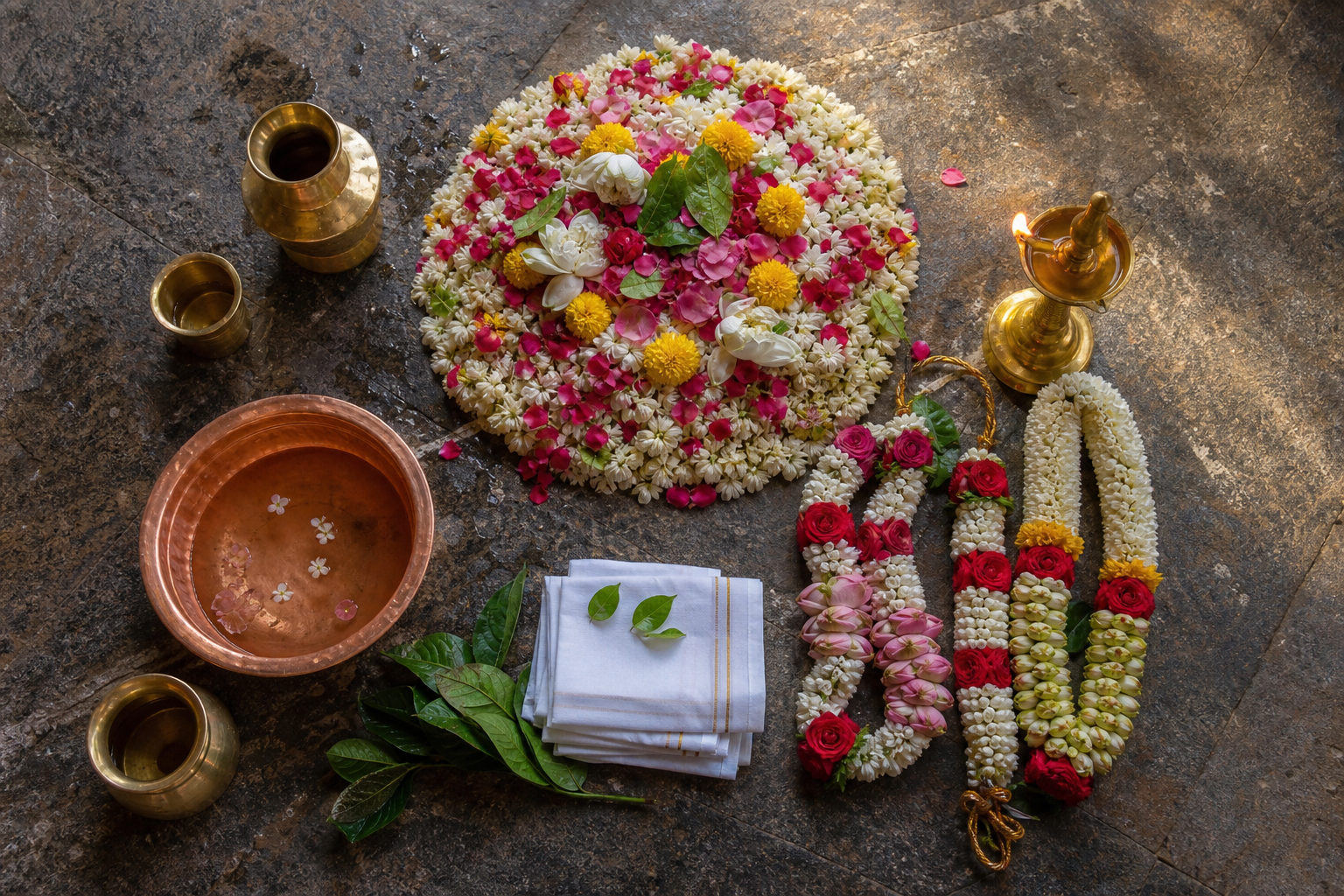
On 15 March, the sequence ordinarily brings together sankalpa, homa according to temple practice, alankara, archana, and the ceremonial offering of flowers over the Utsava Murthis. Seasonal offerings may include jasmine, chrysanthemum, marigold, roses, tulasi, and other sacred leaves. The point is not the inventory of blossoms. Nature’s most refined colours and fragrances become vehicles for surrender.
Your best preparation is therefore an inward one. Before entering the queue, identify something for which you are genuinely grateful and one neglected duty you intend to correct. That turns the floral rite from a spectacle into a sankalpa you can carry home. If you want to bring flowers, do not assume that every personal offering will be accepted or carried into the principal ritual; follow the temple’s arrangements on the day.
Koil Alwar Tirumanjanam and Ugadi: purification before renewal
The Tirumala sequence is built around a simple but demanding principle: renewal begins with putting the sacred space in order. Koil Alwar Tirumanjanam is the major cleansing of the temple before high observances such as Ugadi, Anivara Asthanam, the Annual Brahmotsavam, and Vaikuntha Ekadasi. The 2026 Ugadi cleansing takes place on Tuesday, 17 March, two days before Ugadi Asthanam.
After the pre-dawn worship, the relevant precincts are secured. The sanctum curtains remain drawn while the garbhagriha, vestibule, halls, corridors, sub-shrines, and principal circulation areas are cleaned. A traditional aromatic preparation called Parimalam, associated with substances such as turmeric, sandalwood, and camphor, helps remove the residue of lamps, incense, and daily offerings. The areas are then dried and ritually prepared before darshan resumes.
This changes how you should use 17 March. VIP Break Darshan is cancelled, morning darshan is temporarily suspended, and routine access generally resumes only after cleansing and re-sanctification. If that is your only possible Tirumala day, treat darshan as dependent on the announced reopening rather than building an inflexible schedule around a normal morning entry.
If your principal purpose is Ugadi worship, make 19 March your anchor and regard 17 March as a preparation day in the temple’s life. Ugadi Asthanam ceremonially receives the New Year through offerings, auspicious recitation, and prayers for prosperity and dharmic continuity. Pilgrims with slotted entry categories should still check their reporting instructions close to the date; a confirmed festival date does not guarantee that every access category will operate on its ordinary timetable.
Koil Alwar Tirumanjanam also corrects a common misunderstanding about seva. Sacred service is not confined to what is publicly visible. Cleaning residue, managing corridors, restoring order, and waiting for the shrine to be ready are part of preserving the conditions in which worship can occur. Accepting the temporary closure without agitation is itself a small way of respecting that discipline.
Panguni Uthiram: choose the divine relationship you wish to honour
Choose Tamil Nadu on 1 April if your spring observance centres on sacred vows, harmony, and divine union. Panguni Uthiram occurs when Uthiram, or Uttara Phalguni, falls during the Tamil solar month of Panguni. In 2026 the main observance is anchored to 1 April and lies close to Pournami, but the exact nakshatra window can straddle dates differently by location. A local panchang and the chosen temple’s programme matter more than a generic statewide timetable.
Your choice of temple determines the devotional emphasis. At Srirangam, the Panguni Uthiram Serthi brings Ranganathar and Ranganayaki together in a major Sri Vaishnava celebration of grace and divine sovereignty. At Murugan temples including Thiruparankundram, Tiruchendur, Palani, and Tiruttani, the day may include special abhishekam, alankaram, Kalyanotsavam, vahana processions, bhajans, and annadanam associated with Murugan, Valli, and Devasena. At Chennai’s Kapaleeshwarar Temple, the observance belongs within the wider Panguni Brahmotsavam, whose individual highlight days depend on the annual temple schedule.
Decide by sampradaya rather than fame. Choose Srirangam if Serthi and Sri Vaishnava theology are your primary draw. Choose a Murugan kshetra if your vrata concerns courage, clarity, or a relationship with Subrahmanya. Choose a Shaiva temple if the union of Shiva and Parvati is central to your worship. This prevents the common mistake of booking for the name of the festival and discovering that the local ritual form is not the one you intended to experience.
Paal kudam and kavadi-related vows are customary in some Murugan settings, but they should not be improvised because you have seen others perform them. Follow the locally prescribed form, temple supervision, and the principle of moderation. A vrata is disciplined devotion, not a competition in visible austerity.
Build an itinerary around access, not just festival dates
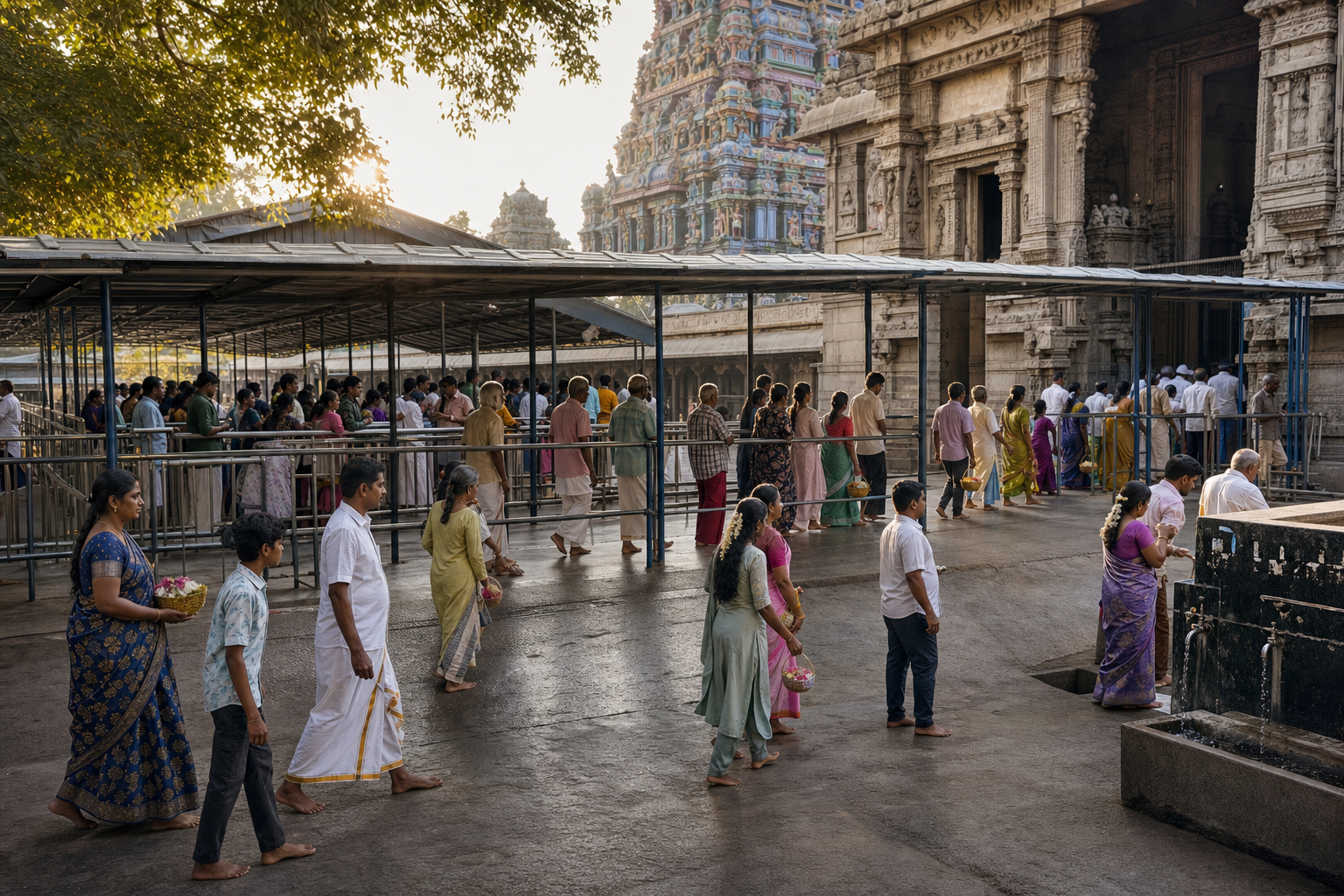
A festival date tells you when a sacred observance occurs. It does not by itself tell you when you will enter the sanctum, how long queues will be reorganised, or whether a particular seva category will operate. Before committing to transport or accommodation, separate three questions: when is the rite, when can the public enter, and when must your own ticket category report?
If you want the Andhra Pradesh sequence
- Reach Srinivasa Mangapuram in time for the 6:00 PM to 8:00 PM preparatory observances on 14 March if Senadhipati Utsavam and Ankurarpanam matter to you.
- Keep 15 March for Pushpayagam rather than trying to fit the temple into a narrow transit window. Festival queues, chanting, and the culminating floral worship deserve time.
- Do not make a normal Tirumala morning darshan on 17 March the non-negotiable centre of your plan. Koil Alwar Tirumanjanam changes access, and VIP Break Darshan is cancelled.
- If Ugadi is your priority, preserve 19 March for Ugadi Asthanam and avoid scheduling your departure so tightly that an operational delay would force you to abandon the visit.
- Book accommodation through authorised TTD channels and check temple communications again close to the dates for reporting windows, reopening information, and queue arrangements.
The March dates form a coherent devotional progression: auspicious preparation, floral thanksgiving, cleansing of the sacred precinct, and reception of the New Year. You do not need to force every date into the trip. A Pushpayagam-focused visit can end after 15 March; a Tirumala-focused visit can begin later and centre on Ugadi. Combining them makes sense only if you can give each observance enough time.
If Panguni Uthiram is your only destination
Select the temple before you book the town. Then verify the local panchang window, the principal abhishekam or Kalyanotsavam time, the likely procession route, and any access controls. Large pilgrimage centres can introduce barricades and managed entry during peak ritual periods. Arriving early may help, but it does not replace following the temple’s reporting and queue instructions.
If you are travelling with elders or children, do not plan the day around continuous standing. Use staggered arrival windows where practical, identify opportunities for hydration and rest, and carry only essentials. The most crowded ritual moment is not automatically the best moment for every member of a family to enter the same space.
Prepare in a way that protects the character of worship
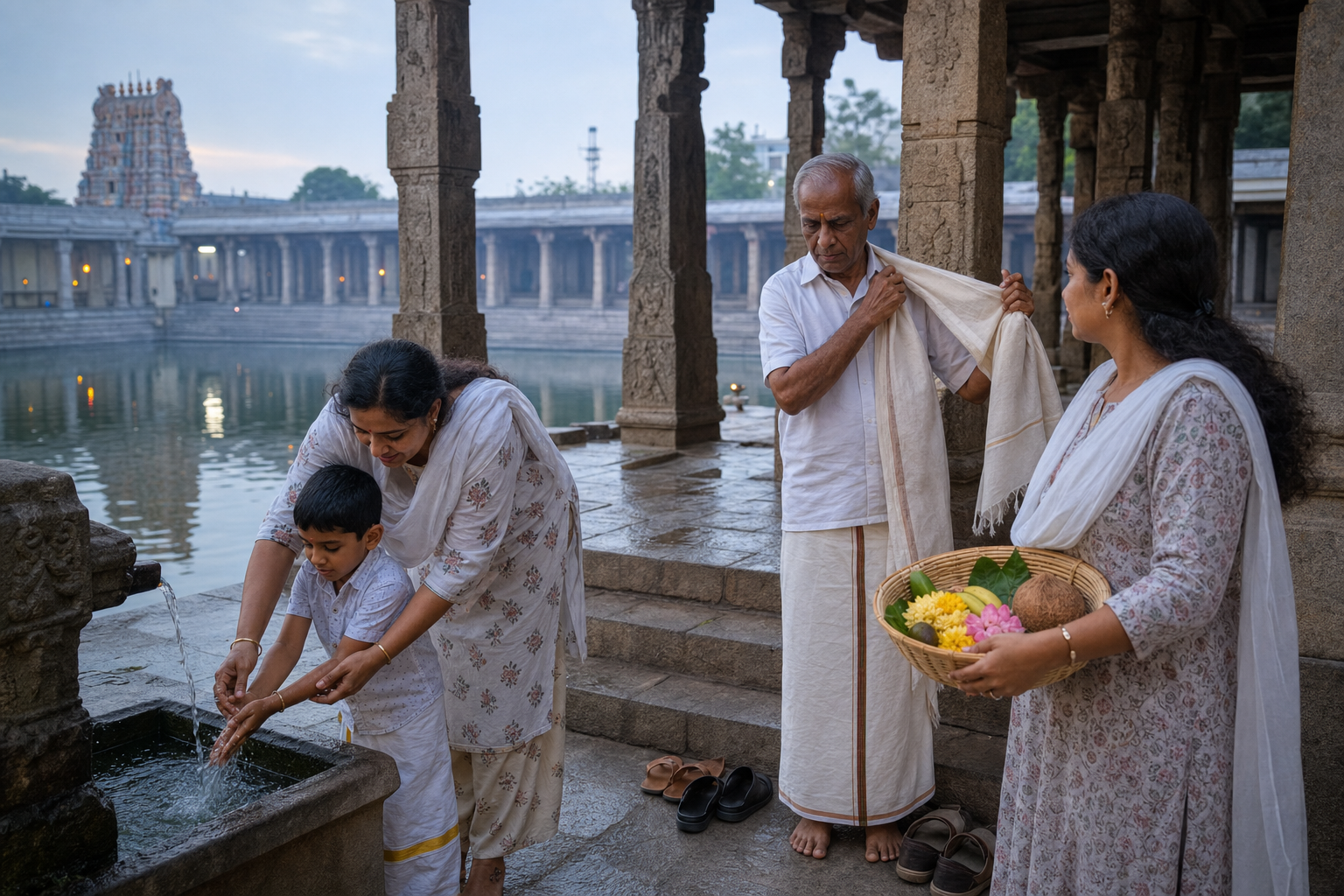
Temple logistics are not separate from temple etiquette. Heavy bags slow security and queue movement. Unapproved photography distracts other devotees. Packaging from offerings creates work for the same community maintaining the sacred precinct. A few decisions made before arrival can keep your presence aligned with seva.
- Wear temple-appropriate clothing from the start. Do not depend on finding a changing space near a crowded entrance.
- Carry only what you can manage in a dense queue. Keep tickets, identification, and essential medicines accessible without repeatedly unpacking a large bag.
- Confirm offerings locally. Flowers, paal kudam vessels, kavadi materials, and other vrata items may be governed by temple-specific rules.
- Use reusable containers where permitted. Avoid single-use plastic and dispose of flower wrapping or food packaging only in the designated place.
- Treat photography as permission-based. Conservative rules are common inside temple premises, and staff directions should override your desire to record the moment.
- Do not purchase access on the strength of an unofficial assurance. This is especially important at Tirumala on 17 March, when VIP Break Darshan is expressly cancelled.
For Pushpayagam and Panguni Uthiram, arrive with a clear idea of which ritual moment matters most to you. For Koil Alwar Tirumanjanam, arrive with flexibility because the rite’s purpose requires restricted access. These are different planning problems and should not be solved with the same assumption that earlier entry always produces a better pilgrimage.
Carry the ritual home instead of leaving it at the gate
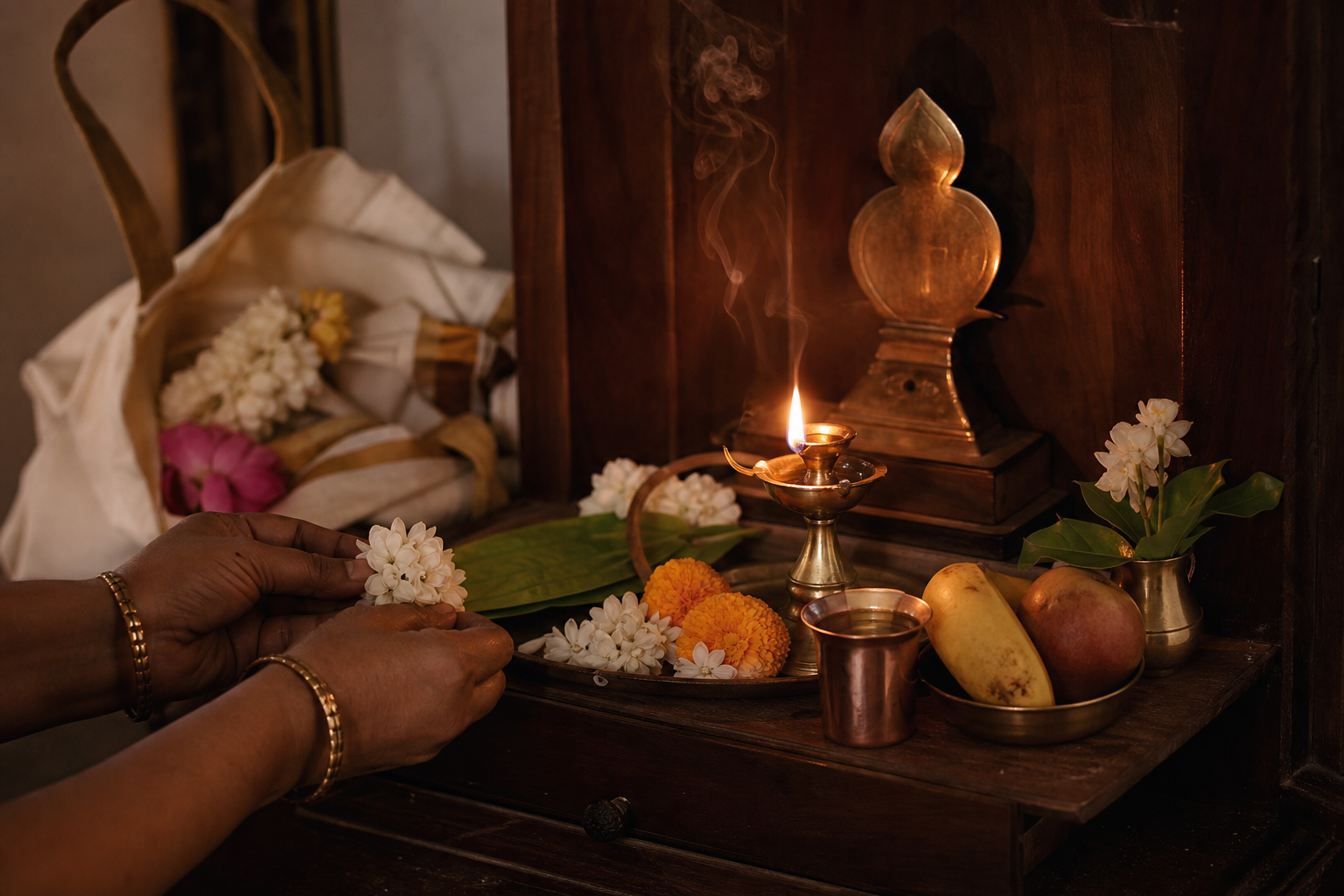
Each observance gives you a different discipline to practise after darshan. Pushpayagam asks what is finest in you that can be offered rather than hoarded. Koil Alwar Tirumanjanam asks what must be cleaned, ordered, and maintained before a new cycle can begin. Panguni Uthiram asks whether your vows are being upheld through responsibility, generosity, fidelity, and service.
You can make those questions concrete. After Pushpayagam, act on one overdue expression of gratitude. Around Ugadi, clean and reorder the part of your home used for puja before adding New Year decoration. On Panguni Uthiram, renew one specific family or community commitment: time promised to an elder, a neglected shared duty, or a seva you can perform reliably. The action should be small enough to keep and clear enough to verify.
The wider Dharmic family recognises related values without making every tradition the same. Hindu floral worship, Buddhist flower puja, Jain offerings of flowers in established forms of worship, and floral adornment in Sikh sacred spaces can all direct attention toward reverence, impermanence, gratitude, and care. Cleanliness, disciplined service, non-harm, and responsibility likewise travel across traditions through distinct theologies and institutions. Shared values are most meaningful when difference is respected rather than erased.
Key takeaways for spring 2026
- Attend Srinivasa Mangapuram on 14 March from 6:00 PM to 8:00 PM for Senadhipati Utsavam and Ankurarpanam; return on 15 March for Pushpayagam.
- Do not plan an ordinary Tirumala morning on 17 March. Koil Alwar Tirumanjanam affects access, and VIP Break Darshan is cancelled.
- Use 19 March as the anchor date if Ugadi Asthanam is your principal reason for visiting Tirumala.
- Observe Panguni Uthiram on 1 April at a temple chosen for its Shaiva, Sri Vaishnava, or Murugan tradition, then verify the exact local schedule.
- Confirm the ritual date, public access window, and your ticket reporting time as three separate details.
- Leave each observance with one practical sankalpa: gratitude after Pushpayagam, order before Ugadi, or renewed responsibility after Panguni Uthiram.
Make one decision now: name your primary shrine and the single ritual you do not want to miss. Once that is fixed, arrange every ticket, reporting window, and secondary visit around it. A spring pilgrimage becomes coherent when devotion sets the timetable.
References
- DharmaRenaissance Blog — Tirumala Koil Alwar Tirumanjanam, 17 Mar 2026: Sacred Cleansing & Darshan Guide for Ugadi
- DharmaRenaissance Blog — Sacred Blossoms: Pushpayagam at Srinivasa Mangapuram Kalyana Venkateswara on 15 March 2026 (TTD)
- DharmaRenaissance Blog — Panguni Uthiram 2026 in Tamil Nadu: Date, Temple Highlights, Rituals, and Spiritual Significance
