
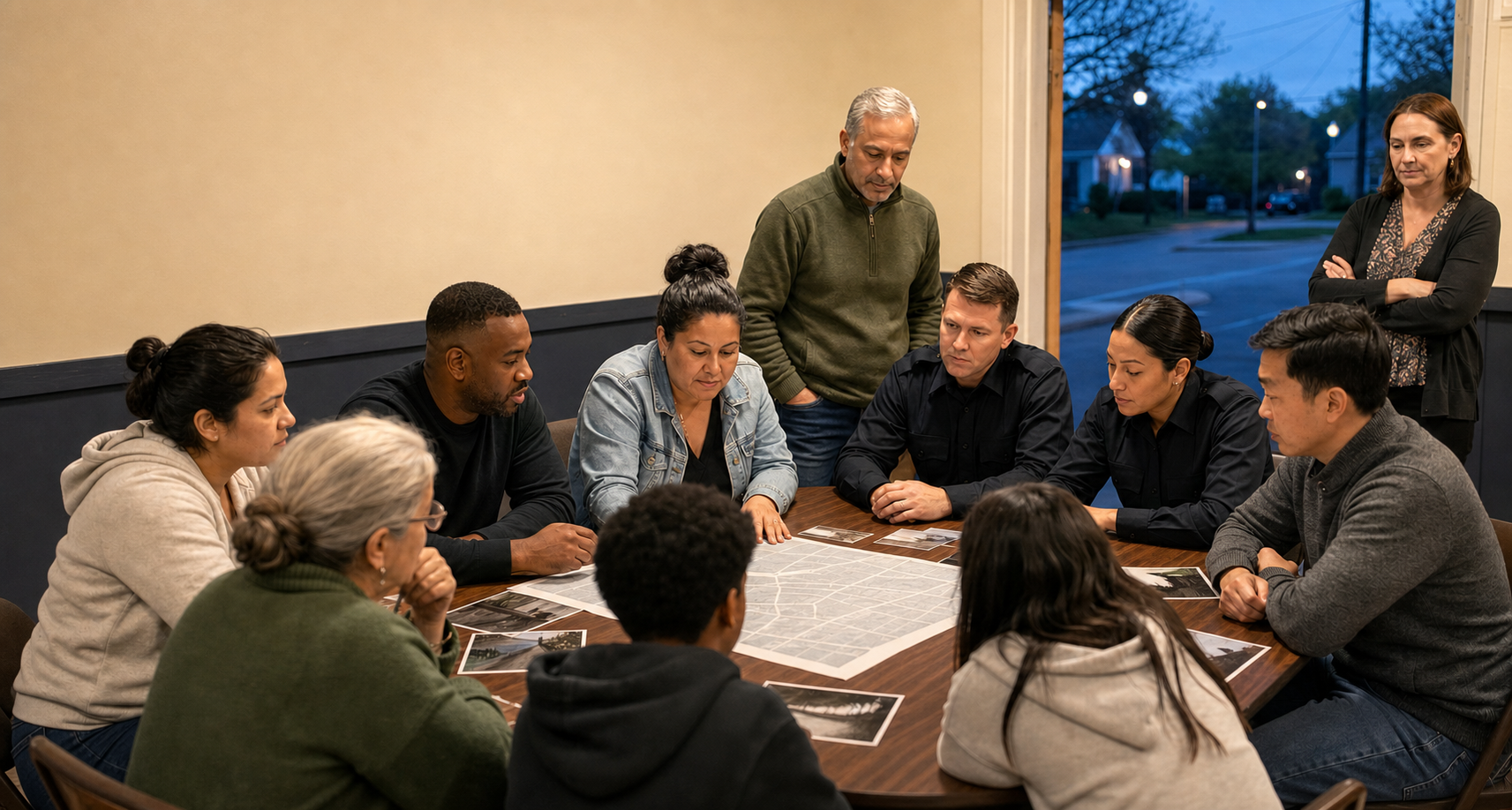
You may be reading this because threats are circulating, drug selling has become visible near young people, or a violent incident has shaken your neighbourhood. You want the police to act before more people are harmed. You also do not want rumour, collective blame, vigilantism, or unlawful force to create a second crisis.
A workable response joins three disciplines: protect the person in danger, give investigators evidence they can use, and insist that every exercise of police power can withstand independent scrutiny. You do not have to choose between firm policing and accountable policing. A safe community needs both.
Turn community alarm into evidence police can act on
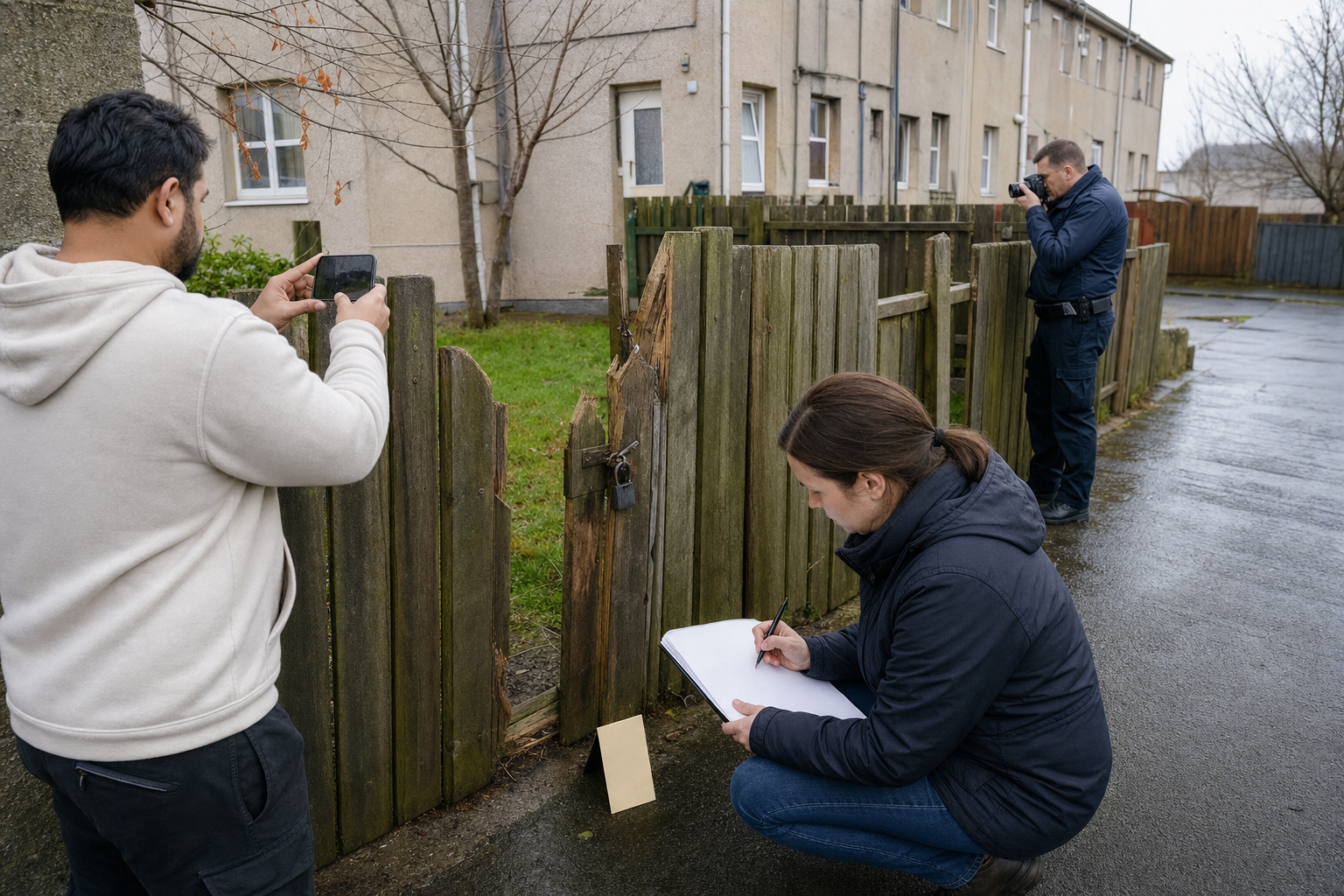
Fear spreads faster than usable information. A residents’ group may receive dozens of forwarded messages while still lacking a reliable account of what happened, where it happened, and who directly observed it. The first job is therefore not to amplify the alarm. It is to create a protected route from witness to police.
- If violence is occurring or appears imminent, move people away from danger, contact emergency services, and obtain medical help. Do not pursue, surround, or attempt to detain an armed person.
- Record what was directly seen or heard: the place, date, time, conduct, identifying details, and names of willing witnesses. Keep assumptions about motive in a separate field, clearly marked as unverified.
- Preserve original digital material. Retain the message, account name, visible timestamp, link, and screenshot instead of repeatedly forwarding an edited image. Do not engage the threatening account, impersonate anyone, or try to gain unauthorised access.
- Submit one concise complaint that identifies the person or place at risk, the conduct reported, the supporting material, and the action being requested. Attach an index so an investigating officer can see what each file contains.
- Ask for an acknowledgement, complaint or case reference where applicable, and a named point of contact. Keep subsequent updates in the same record rather than starting disconnected message chains.
If disclosure could expose a witness or victim to retaliation, do not place that person’s identity in a public petition or messaging group. Give the information directly to the authorised officer, request confidential handling, and ask what protection or support process is available. Anonymous reporting channels and protected feedback loops are especially important when traffickers or violent actors use intimidation to isolate witnesses.
A public mobilisation can still serve a legitimate purpose. It should demand a recorded investigation, protection for vulnerable people, disruption of the wider network, and periodic public information. It should not conduct a parallel trial, publish unverified names, or pressure police to produce an instant confession. Once a crowd begins supplying its preferred conclusion, reliable witnesses may be drowned out and the eventual prosecution may be weakened.
Match the response to the kind of harm
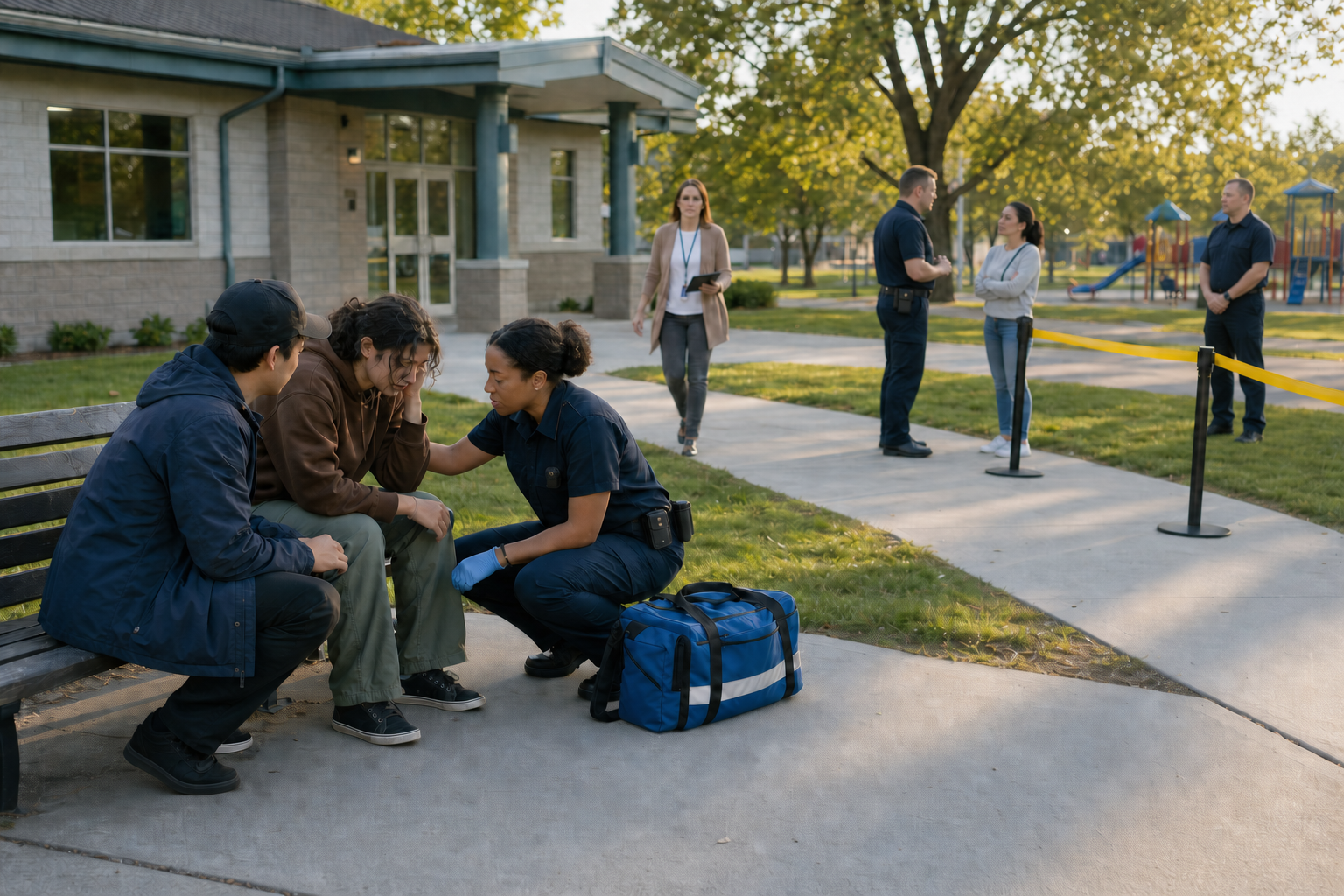
Targeted violence, recurring drug distribution, and substance dependence can overlap in the same locality, but they require different interventions. Treating every concern as the same law-and-order problem wastes police attention and can stigmatise the people who most need protection.
For a targeted threat, reduce exposure before debating motive
A knife, vehicle, or other readily available means can make a planned attack low in technical complexity but high in intent. The practical question is not whether the threatened person looks frightened. It is whether an aggressor can locate, approach, and isolate that person.
- Review exposure at the home entrance, workplace, regular transit points, public events, and online accounts.
- Limit publication of live locations, predictable routes, guest lists, access arrangements, and private contact details.
- Give event volunteers one emergency communications plan: who contacts police, who guides people away from danger, who stays with the threatened person, and who preserves evidence.
- For a public-facing person receiving repeated threats, ask police for a structured risk assessment rather than relying on an informal assurance to be careful.
- Arrange qualified bleeding-control and emergency-response training for the relevant team. Training can improve the immediate response if prevention fails, but it is not a substitute for professional medical care.
Do not publish the completed vulnerability review. A document listing weak entrances, routine travel, or gaps in coverage can itself become a security risk. Share only what each volunteer needs for the assigned role.
For drug activity, separate trafficking from dependence
Visible street selling may be only one part of a network involving couriers, storage points, financiers, and digital communications. Repeatedly removing a low-level seller without examining goods, money, and information flows can leave the distribution system intact. Residents can help by confidentially recording recurring places and patterns; trained investigators must handle surveillance, financial inquiry, searches, seizures, and digital forensics.
Someone struggling with dependence should not be used as a public exhibit in an anti-drug campaign. Families need a confidential route to counselling, treatment, and recovery support. Police action should concentrate on verified trafficking and coercion while schools, health services, families, and dharmic institutions reduce demand through early support. This is the practical meaning of being firm toward organised distribution and humane toward vulnerable users.
| Situation | First priority | Appropriate police request | Community role |
|---|---|---|---|
| Violence in progress | Life safety and medical care | Emergency response, scene control, and victim protection | Move people to safety, call for help, and avoid confrontation |
| Specific or repeated threat | Protection and evidence preservation | Risk assessment, complaint registration, digital preservation, and a liaison contact | Reduce exposure and keep a factual incident record |
| Recurring drug selling | Lawful disruption of the distribution chain | Hotspot assessment, confidential intelligence handling, and network investigation | Report patterns without staging a sting or publicly naming suspects |
| Possible substance dependence | Confidential care and reduced harm | Referral to appropriate support where available | Offer non-stigmatising family, counselling, and recovery pathways |
The NDPS Act distinguishes cannabis-related offences under Section 20, consumption under Section 27, and abetment or criminal conspiracy under Section 29; Section 37 contains stringent bail conditions for serious offences. Sections 42, 43, and 50 govern important aspects of search and seizure. These provisions matter because procedural compliance and a documented chain of custody affect whether enforcement produces a durable legal result. Residents should report facts, not dictate charges. If a search, seizure, detention, or prosecution directly affects you or a family member, obtain advice from a qualified Indian lawyer rather than relying on a community message group.
Ask police for outcomes that can be checked
“Take strict action” expresses urgency, but it does not define success. A better representation gives the authorities a written set of requests and gives the community a lawful way to check progress without demanding sensitive operational details.
- Acknowledge the complaint and identify the unit or officer responsible for follow-up.
- Assess immediate risk to victims, witnesses, public-facing individuals, and relevant premises.
- Preserve digital records and physical evidence before accounts, messages, or scene material disappear.
- Connect the matter to specialist units when narcotics, organised plotting, digital evidence, or cross-district links exceed the local unit’s capacity.
- Provide medical, legal, psychological, or witness-support referrals appropriate to the people affected.
- Issue verified public updates when doing so will not compromise the investigation or expose protected people.
- Review results against safety, case quality, and public confidence rather than arrest totals alone.
Accountability becomes most important when police use lethal force. In an officer-involved death commonly described as an encounter, the safeguards identified in PUCL v. State of Maharashtra (2014) include an FIR, a prompt and independent inquiry, forensic and post-mortem documentation, and notification of the relevant human-rights body as appropriate. Independent scrutiny of an encounter death does not excuse the original crime or deny the danger officers may have faced. It tests whether the state’s account is supported by evidence and prevents a lawful response from being discredited by avoidable doubt.
The same principle applies to narcotics enforcement. A seizure announced publicly is not the end of the job. The material must be lawfully recovered, documented, preserved, tested, linked to the accused through admissible evidence, and presented through a process that can survive judicial examination. Firmness without procedure may generate headlines while producing a fragile case.
Use a simple community scoreboard for periodic review. Separate activity measures from actual outcomes:
- Response: Were complaints acknowledged, urgent risks assessed, and victims or witnesses contacted?
- Case quality: Was relevant evidence preserved, was chain of custody documented, and were procedural challenges addressed?
- Safety: Are repeat incidents and reports of intimidation falling? Are vulnerable people using support pathways?
- Youth well-being: Are schools and families seeing changes in attendance, exposure, overdoses, or requests for counselling?
- Trust: Do residents feel able to report concerns confidentially, and do they believe complaints receive a fair hearing?
Track seizure volume and arrest totals, but treat them as enforcement activity rather than proof that harm has fallen. A quarterly review involving police, schools, victim-support representatives, health or recovery services, and trusted civic organisations can examine the wider pattern and adjust the response. Individual case details and protected identities must remain confidential.
Build a safety coalition without creating a vigilante group
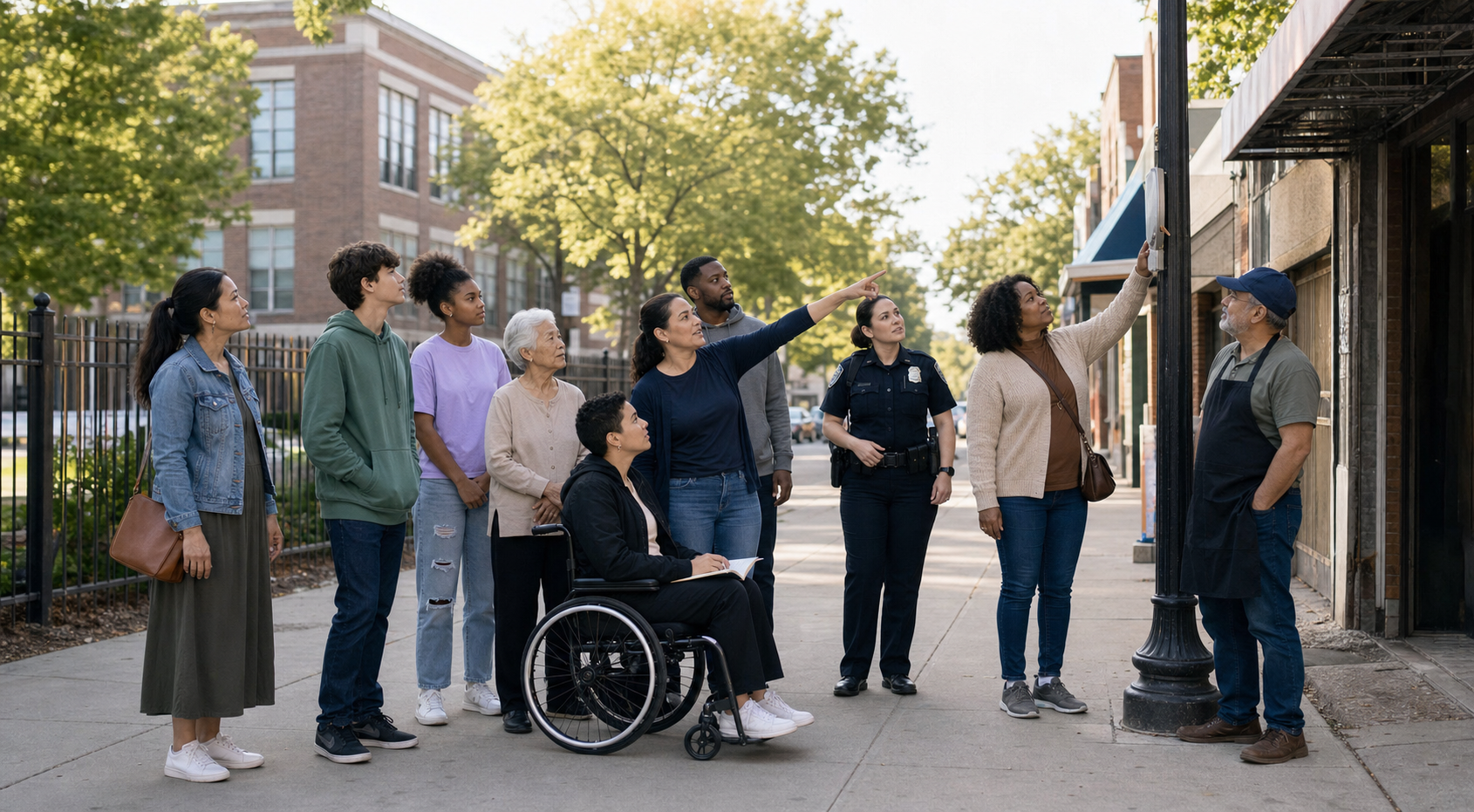
A temple, vihara, derasar, gurudwara, neighbourhood association, parent group, or youth club can make reporting and support easier. It should not become an intelligence agency, detention squad, or public court. Give the coalition narrow roles with clear limits.
- Police liaison: submits consolidated factual concerns, maintains references, and requests authorised updates.
- Evidence steward: protects original records, controls access, and keeps fact, allegation, and inference visibly separate.
- Victim and witness support contact: helps people reach medical care, legal assistance, counselling, or available protection services.
- Youth and recovery contact: maintains confidential links with schools, families, district health facilities, and de-addiction support.
- Communications contact: corrects rumours, shares verified safety instructions, and avoids details that could prejudice a case or expose a person.
Apply a three-label rule to every public update. Information is either verified, under investigation, or unknown. If it is unknown, do not convert repetition into certainty. Do not circulate a suspect’s religion, caste, or community identity unless an authorised public record makes it necessary to understand a verified fact. Criminal responsibility belongs to individuals proved responsible under law, not to an entire population.
This discipline fits a dharmic understanding of public duty. Ahimsa is not passive acceptance of violence; it requires preventing avoidable harm without reproducing hatred. Daya and karuna direct compassion toward victims, frightened families, and people struggling with dependence. Lokasangraha asks whether our conduct holds society together. These values support resolute action against predatory violence and organised trafficking while rejecting humiliation, retaliation, and collective blame.
Faith leaders can host awareness sessions, family support meetings, and referral clinics. They can also lower the temperature after a disturbing event by repeating only confirmed facts and directing grievances toward lawful remedies. They should not pressure victims to disclose private experiences publicly or attempt informal settlements where serious violence, coercion, or trafficking may be involved.
Key takeaways
- In immediate danger, prioritise distance, emergency assistance, and medical care. Do not confront or pursue an armed person.
- Give police a factual incident record with preserved originals, willing witnesses, a clear request, and a traceable acknowledgement.
- For targeted threats, reduce exposure across home, transit, events, work, and digital accounts while seeking a formal risk assessment.
- For drug concerns, distinguish organised supply from dependence: investigate networks lawfully and connect vulnerable users with confidential support.
- Judge policing by victim safety, evidence quality, procedural integrity, durable legal outcomes, and community trust – not by spectacle or arrest totals alone.
- When police use lethal force, independent review is part of public safety because unexplained state power erodes the legitimacy on which cooperation depends.
At your next committee or residents’ meeting, approve a one-page protocol answering four practical questions: how urgent danger is reported, who serves as the police liaison, where sensitive evidence is kept, and who connects victims or vulnerable users with professional support. If those answers exist only in someone’s memory, the community is still depending on improvisation. Put them in writing, protect the document, and review the process after every serious incident.
The standard is demanding but clear: police should be capable of acting decisively, victims should not have to navigate danger alone, and every coercive action should be explainable through law and evidence. That is how public vigilance becomes durable safety rather than another source of fear.
References
- Hindu Jagruti – Lucknow attack on ex-Muslim YouTuber Saleem Vastik: swift police action, security lessons
- Hindu Jagruti – Hupari Mobilizes: Hindu Rashtra-Jagruti Andolan Urges Relentless Action on Drug Trade in Kolhapur
