
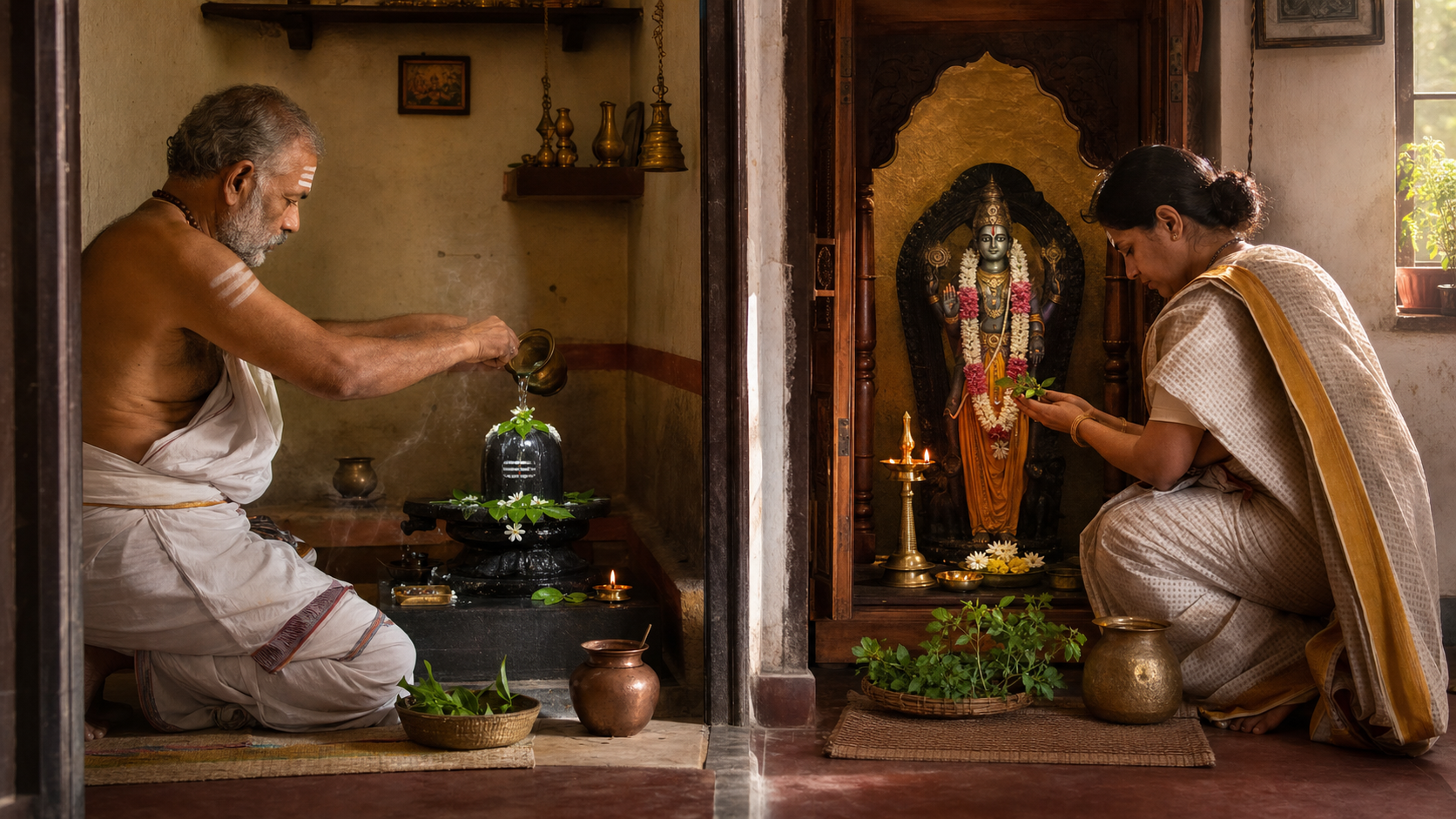
You may already chant, read scripture or visit a temple, yet find that remembrance disappears as soon as work begins. The problem is not necessarily weak devotion. Your practice may live mainly in thought while your hands, voice, meals, schedule and reactions continue along older tracks.
Shaiva and Vaishnava traditions address this gap by giving the body repeated devotional work. You touch or approach a sacred form, pronounce the Divine Name, listen, bow, offer, receive prasada and serve. If you want bhakti to survive an ordinary day, build a rule in which your senses know how to return before the mind begins negotiating.
Key takeaways before you begin
- Embodied bhakti gives remembrance a physical route: a sacred focus, a repeated sound, a reliable time and a corresponding action.
- Virashaiva Lingadharana and Gaudiya Vaishnava japa can perform comparable practical functions, but their theology, initiation and ritual disciplines remain distinct.
- Let one lineage organize your core practice. Respecting several paths does not require combining their mantras and rites into a private mixture.
- Use a minimum daily practice that you can keep on a difficult workday. Regularity trains remembrance more reliably than occasional intensity.
- Judge your practice by conduct as well as concentration. Speech, appetite, livelihood, service and treatment of others reveal whether worship is reaching the rest of life.
The body is not an accessory to bhakti
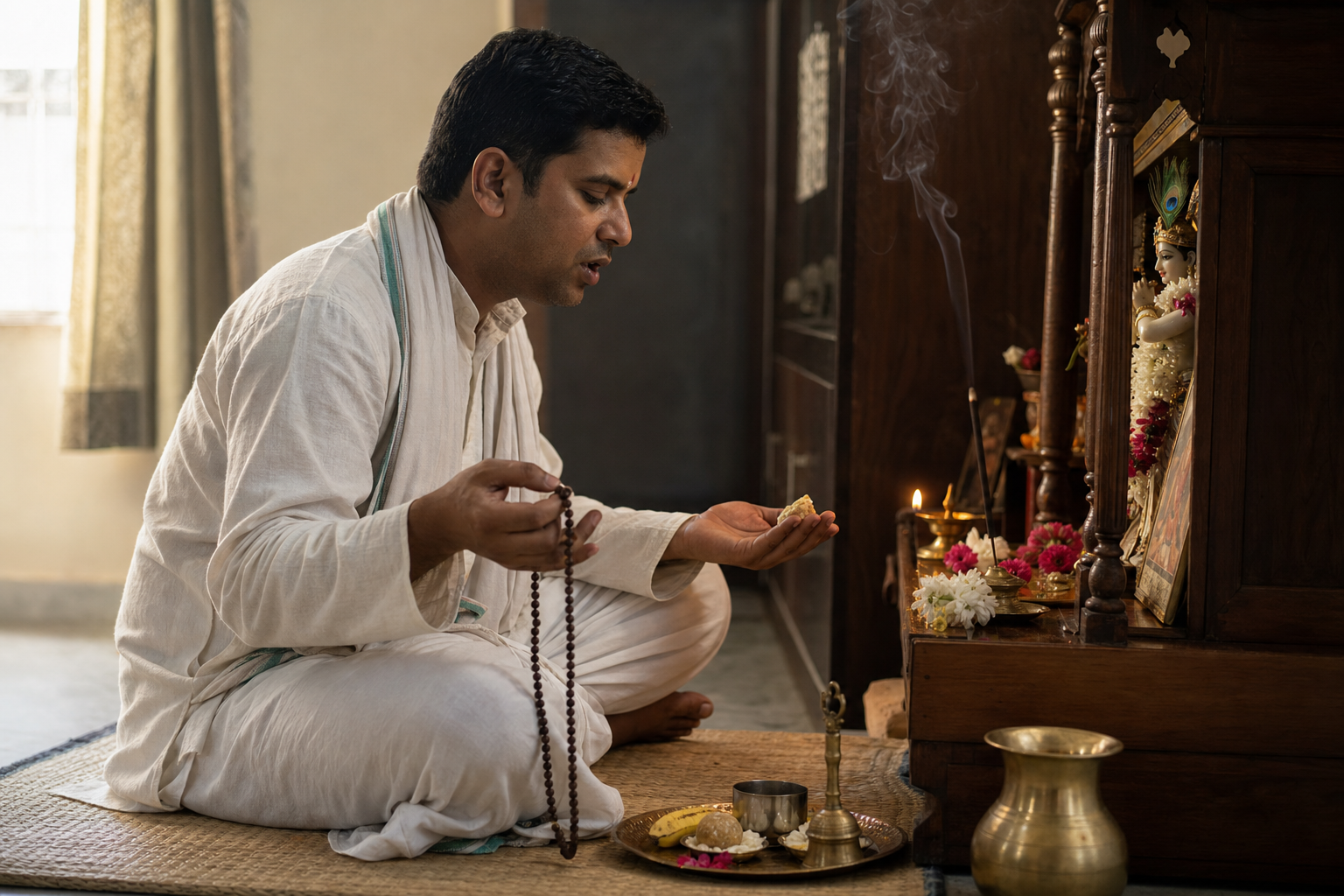
Embodiment does not mean reducing devotion to posture, sensation or a wellness exercise. It means allowing a theological relationship to shape what your body repeatedly does. The hand reaches for a sacred sign. The tongue returns to a mantra. The ear receives the name it has just uttered. The head bows. Food is received with gratitude. Service turns intention into labor for someone beyond yourself.
This creates a practical loop. A bodily cue interrupts distraction; mantra or worship restores the relationship; the relationship then asks something of your conduct. In Virashaiva Lingadharana, the worn Ishtalinga joins continuous Shiva-remembrance to ethical accountability. In a Gaudiya Vaishnava setting, japa, kirtan, arati, study, seva and prasadam form a recurring devotional rhythm. Neither model treats spiritual life as an idea to be admired from a distance.
The physical action is therefore not magical by itself. Wearing a sign while ignoring its discipline turns it into an identity badge. Repeating a mantra while refusing its ethical demand turns sacred sound into background noise. Embodied practice works when the outer act repeatedly returns you to the inner relationship and the inner relationship changes the next outer act.
Two distinct ways of training devotional remembrance
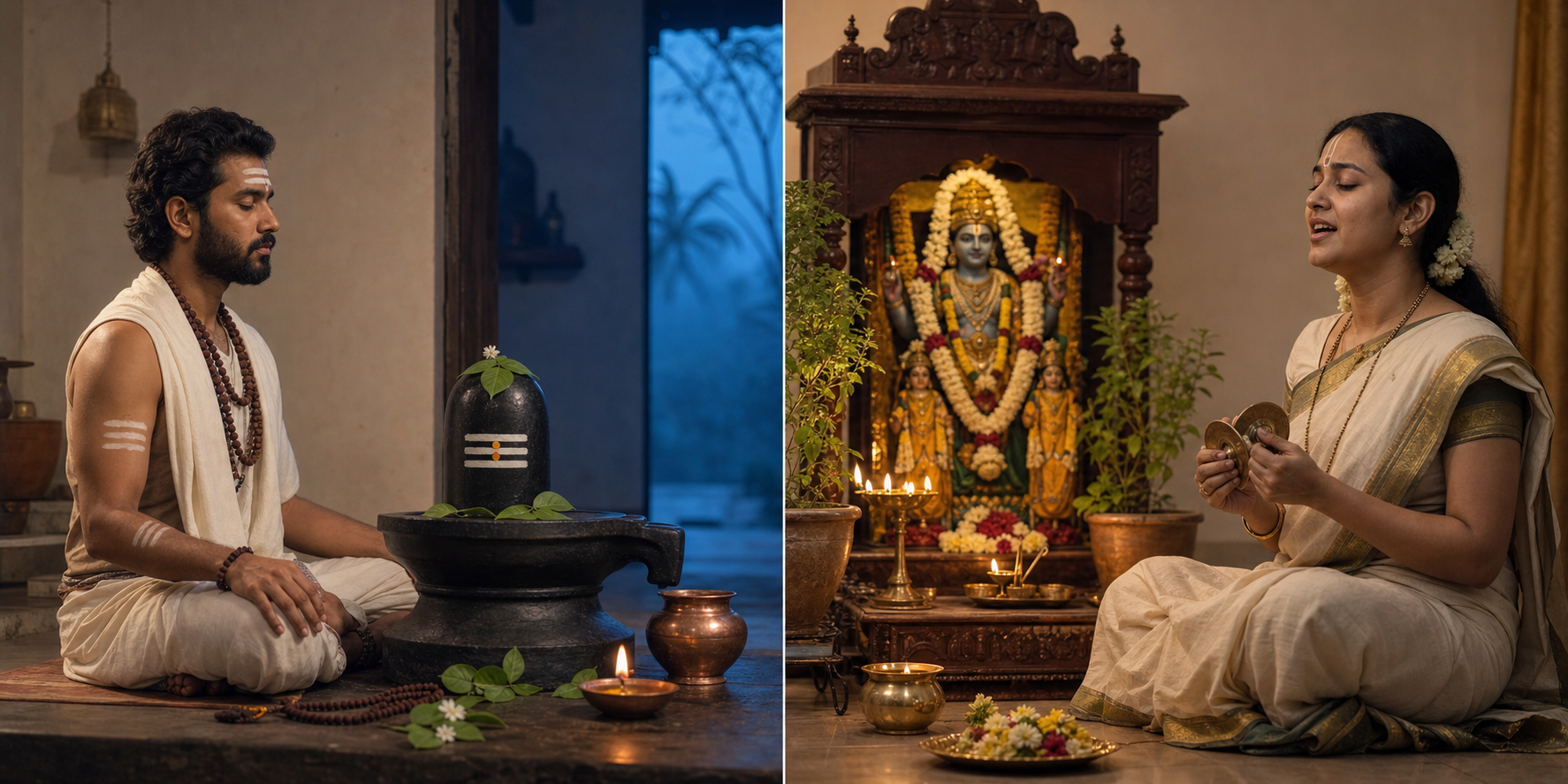
Shaivism and Vaishnavism contain many sampradayas, so no single routine represents either family in full. Virashaiva Lingadharana offers a particularly clear Shaiva example, while Gaudiya japa and kirtan offer a clear Vaishnava example. Place them beside each other to notice their practical architecture, not to collapse their teachings into one system.
Virashaiva practice: proximity, touch and attentive worship
Lingadharana means more than possessing a representation of Shiva. The Ishtalinga is carried on the person, commonly protected in a kavacha or karadige and worn near the heart or on the upper arm. The practice brings together the sense of a linga as a sign and dharana as sustained steadiness. Touch, proximity and repeated worship make remembrance available in the middle of daily movement.
This discipline acquired a prominent public and social form in twelfth-century Karnataka around Basava and the vachana movement. Its devotional force was joined to an ethic of dignity, service and opposition to ritual exclusion. That history matters because it prevents the wearable linga from being misunderstood as private ornament. It belongs to a disciplined way of seeing and acting.
The Ishtalinga is ordinarily conferred through Linga diksha by a Jangama, who also teaches its worship. A typical daily puja may include respectfully opening the protective case, bathing the linga with clean water, applying vibhuti or sandal paste, offering attentive worship and reciting Om Namah Shivaya before returning the linga to the body. Dawn and dusk provide stable points of return.
The larger discipline makes clear that the object is not self-sufficient. Ashtavarana names Guru, Linga, Jangama, Paduka, Vibhuti, Rudraksha, Mantra and Prasada as mutually supporting protections, while Panchachara connects devotion with codes of conduct. Guru, community, sacred sound, food and ethical behavior surround the linga with a complete practice.
If you have not received Linga diksha, do not imitate initiation by purchasing an Ishtalinga and inventing rules for it. You can learn about the tradition, visit a community and chant a Shaiva name with reverence, but the initiated practice should be learned from someone authorized to teach its handling, worship and obligations. The useful questions are concrete: How is the linga opened and returned? Which substances are appropriate? Which mantra and schedule belong to your instruction? What conduct is expected of the wearer?
Gaudiya Vaishnava practice: voice, hearing and shared rhythm
Gaudiya Vaishnava practice gives sacred sound a central bodily role. In japa, you repeat the name steadily and hear what you pronounce. In kirtan, individual voices enter a shared response. The maha-mantra is: Hare Krishna, Hare Krishna, Krishna Krishna, Hare Hare / Hare Rama, Hare Rama, Rama Rama, Hare Hare.
A temple day can connect predawn mangala-arati, guru-puja, kirtan, japa, Bhagavad Gita instruction, seva and prasadam. Each transition gives the body another way to participate. You rise and attend. You sing and hear. You sit with the mantra. You learn. You perform useful work. You receive food as grace rather than mere consumption.
The practice is relational, not merely acoustic. Gaudiya theology describes the self and the Supreme through achintya-bhedabheda, simultaneous oneness and difference. Intimacy with Krishna therefore does not erase the distinction that makes devotion, service and love possible. If you use the mantra only as a device for calming the breath, you may experience a quieter mind while missing the devotional center of the practice.
Guidance also protects repetition from becoming self-invented spirituality. Bhagavad Gita 4.34 connects learning with humility, sincere inquiry and service. Those are practical tests for approaching a teacher: you should be able to ask real questions, observe how teaching becomes conduct and participate in service rather than being pressed into passive admiration.
| Practice dimension | Virashaiva example | Gaudiya Vaishnava example |
|---|---|---|
| Sacred focus | The personally worn Ishtalinga | Krishna approached through arati and devotional relationship |
| Recurring sound | Om Namah Shivaya | The Hare Krishna maha-mantra in japa and kirtan |
| Daily rhythm | Linga puja at dawn and dusk | Predawn worship followed by chanting, study and service |
| Consecrated food | Prasada within the Ashtavarana discipline | Prasadam received with gratitude and restraint |
| Social expression | Relationship with Guru and Jangama, fellowship and ethical livelihood | Satsang, guru-puja, scriptural learning and seva |
The correspondences in this table are functional, not claims of theological equivalence. Both paths recruit time, sound, food, community and action for remembrance. They differ in the identity and relationship through which those elements receive meaning. That difference should be understood and honored.
Build a daily rule that can survive an ordinary workday

A useful daily rule needs a clear center, a dependable cue and an ethical consequence. It should still function when you are busy, traveling or emotionally flat. Begin with a small structure that you can actually keep, then deepen it with guidance.
- Establish the devotional center. Follow the Ishtalinga discipline you have received, the Vaishnava mantra and worship taught in your sampradaya, or another clearly defined lineage practice. If you are still exploring, attend, learn and ask questions before adopting an initiation-dependent sacred object.
- Attach practice to a reliable transition. Dawn and dusk are established Shaiva anchors; predawn worship is prominent in the Gaudiya temple rhythm. Choose the point you can protect consistently, preferably before discretionary screen use or competing demands scatter your attention.
- Give your body the same sequence each time. Prepare yourself and the worship space as your tradition directs. Settle your posture, bow or offer respect, attend to the sacred focus, recite the mantra, listen and close carefully. A stable order reduces the number of decisions standing between intention and practice.
- Set a minimum mantra commitment. Choose a modest quota that remains possible on a difficult day. Complete it without chasing a particular mood. You can add more when time permits, but the minimum keeps the relationship from depending on enthusiasm.
- Install a daytime return cue. An initiated wearer may be recalled by the Ishtalinga at the chest or arm. A chanter can return inwardly to the Divine Name at a stable transition such as beginning work, pausing before a meal or moving from one responsibility to another. Use the cue to become present, not to escape the task in front of you.
- Pair worship with one behavioral commitment. Carry remembrance into truthful speech, restraint in appetite, honest work, kind dealing or a concrete act of seva. Select the point where your conduct most often contradicts your prayer.
- Review the rule with a community or teacher. Satsang and accountable instruction expose blind spots that private enthusiasm cannot see. Ask whether your sequence, mantra, handling of sacred objects and expectations fit the lineage you intend to follow.
Keep initiation-dependent disciplines distinct from practices open to a visitor or beginner. Temple attendance, respectful learning, kirtan and simple remembrance can introduce you to a tradition. Wearing a consecrated object, assuming lineage marks or improvising a prescribed puja carries a different kind of commitment. Do not use external resemblance as a shortcut around formation.
Also resist the urge to collect every attractive practice. One morning does not need a Shaiva mantra, the Gaudiya maha-mantra, unrelated visualizations and several borrowed ritual objects. A practice becomes deep because the same relationship is revisited through sound, form, food, service and conduct. Diversity deserves reverence; your core discipline needs coherence.
Measure bhakti where ritual meets conduct
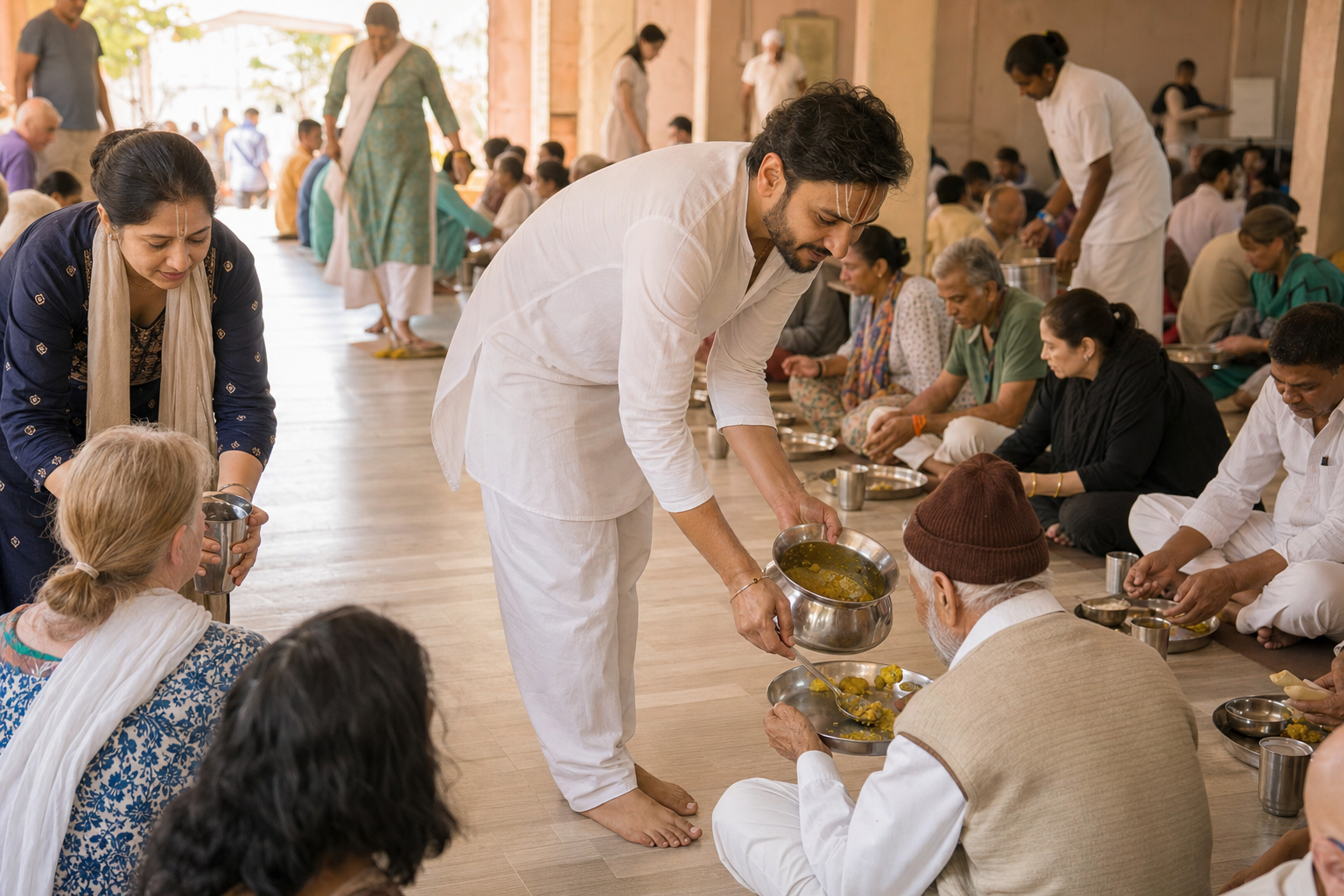
A vivid devotional feeling may encourage you, but it is not a dependable measure of maturity. A quieter test is whether remembrance begins to interrupt habitual reaction. The Ishtalinga near the heart or the Divine Name on the tongue should eventually matter in the marketplace, family conversation, classroom and workplace.
At the end of each week, examine your practice with questions that behavior can answer:
- Did remembrance arise before any avoidable harsh word, dishonest shortcut or impulsive choice?
- When you became distracted during worship, did you return without turning the lapse into either pride or self-condemnation?
- Did receiving food as prasada produce visible gratitude, moderation or willingness to share?
- Did seva cost you some convenience, attention or effort, or did it remain an admired idea?
- Did contact with a teacher or community make you more accountable, or merely more certain of your religious identity?
These questions help locate the broken link. If you repeatedly miss practice, your minimum may be too ambitious or its cue too unstable. Reduce the floor and protect the transition. If you complete the ritual but remain careless in speech, add a specific restraint to the closing prayer and review it that evening. If chanting has become mechanical, slow enough to hear the name you pronounce and restore its relational meaning. If a sacred wearable attracts more concern about appearance than conduct, wear it discreetly and return attention to its obligation.
Community is especially important when private practice becomes self-confirming. Satsang, study, seva and prasadam make a temple a living school, while the Virashaiva relationship among Guru, Linga and Jangama places personal worship inside accountable fellowship. A sound community should help you become steadier and more useful, not merely more performative.
Begin tomorrow with one lineage-aligned act at one protected transition, and connect it to one change in conduct. Keep that rule through the ordinary days before adding complexity. Bhakti becomes embodied when your body learns to remember the Divine at the very moment an old habit asks to take control.
References
- DharmaRenaissance Blog — Lingadharana in Virashaivism: The Sacred Wearable of Shiva-Bhakti Shaping Identity and Unity
- Dandavats — From Disillusionment to Hare Krishna: A Rigorous Bhakti Path Back to the Eternal Friend
