
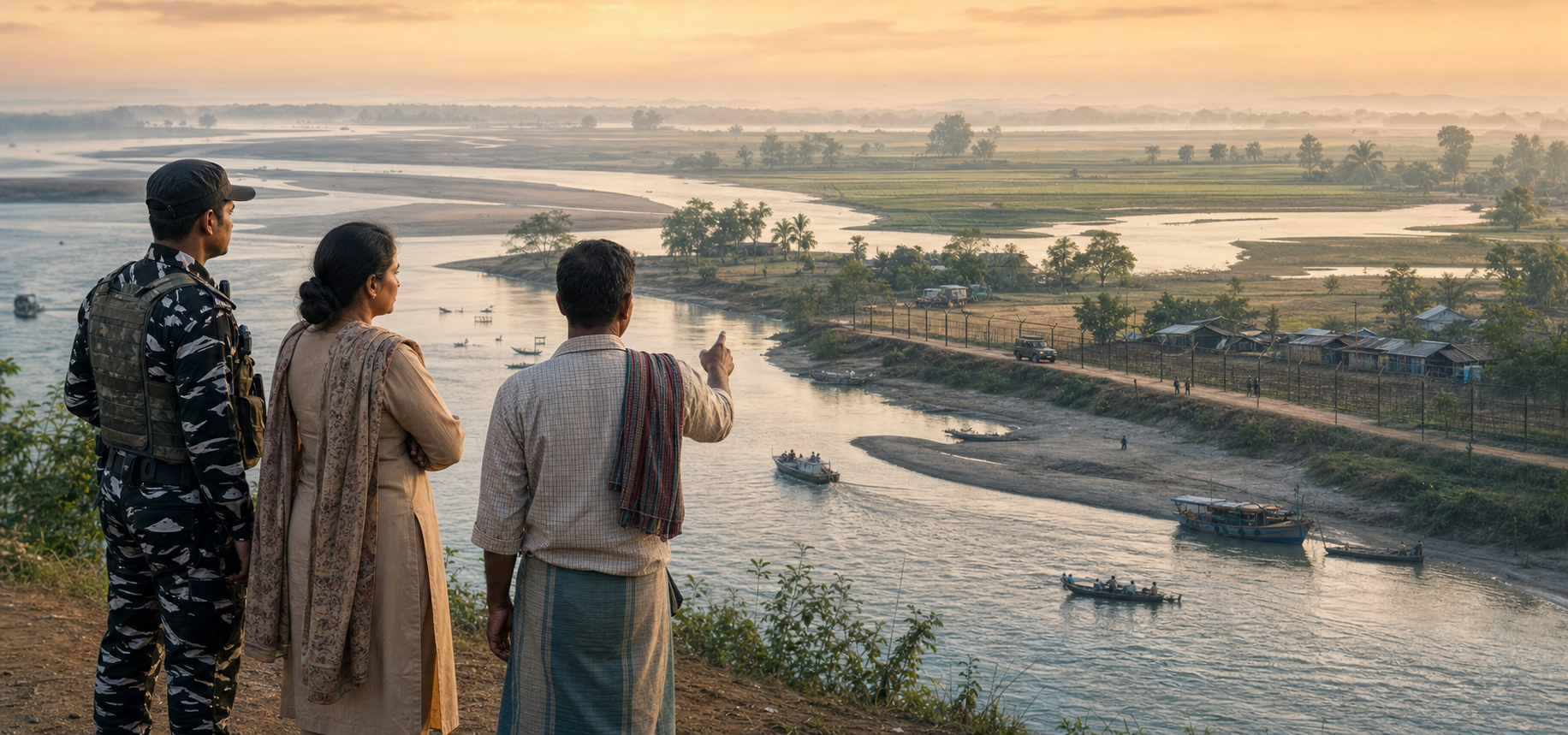
If you live, trade, worship, teach, or administer a district near Bangladesh, the hardest security decision often begins with an unverified message: a warning about unfamiliar movement near a river, an inflammatory video, a donation drive, or an alleged threat to a temple. You need to know what deserves immediate reporting, what requires verification, and what is merely communal rumor.
The right response is neither complacency nor collective suspicion. It is a behavior-based system that distinguishes political mobilization from terrorism, connects apparently separate warning signs, protects Hindu and other vulnerable communities, and keeps innocent Muslims out of the suspect category.
Start with the distinction that prevents bad decisions
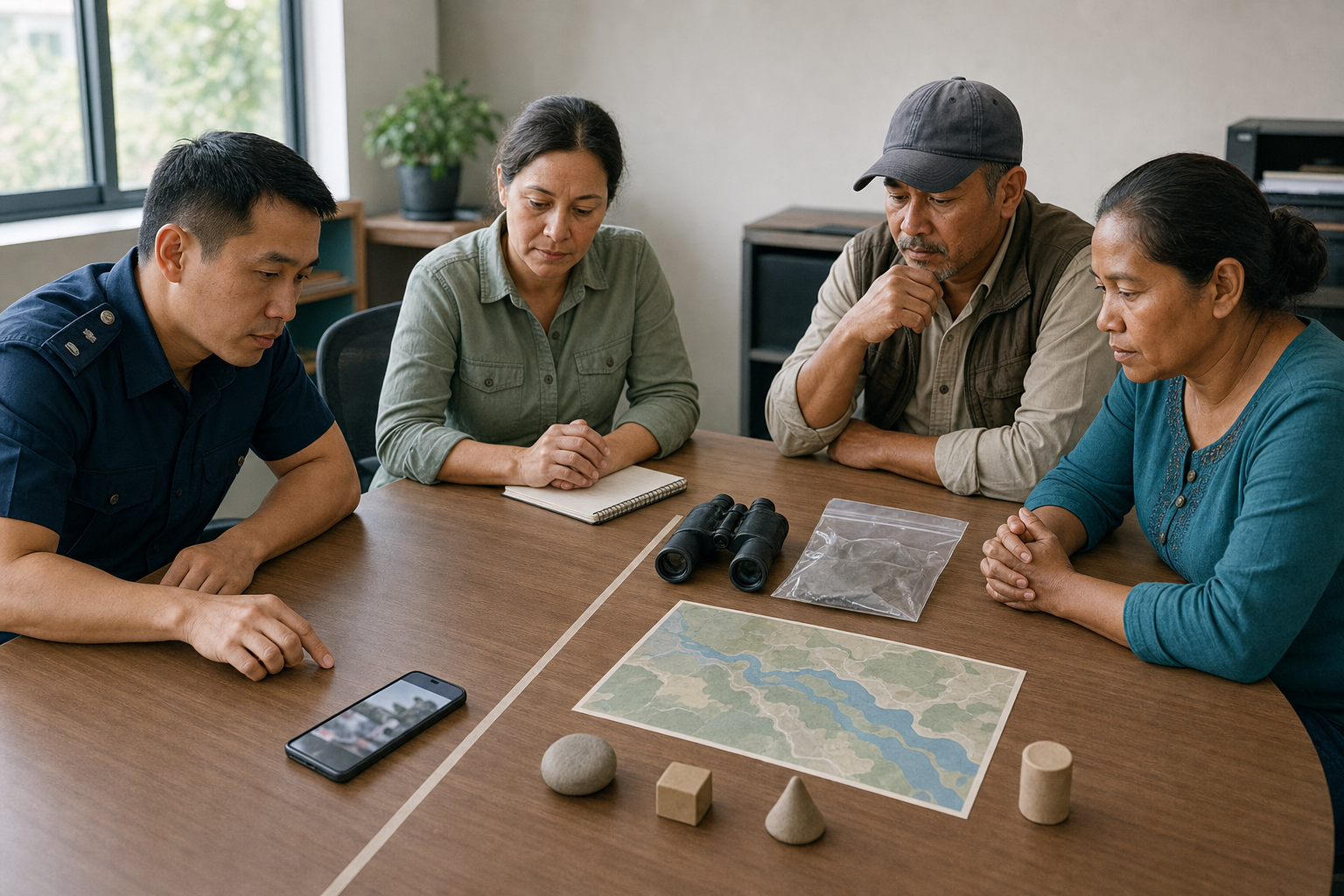
Jamaat-e-Islami Bangladesh is a political-religious movement. Jamaat-ul-Mujahideen Bangladesh, commonly called JMB, and Neo-JMB are distinct extremist organizations. Their similar names do not make them interchangeable. During volatile periods, however, personnel, logistical contacts, charities, local committees, and harder-line networks can develop overlapping seams. Security agencies must investigate those seams without treating political affiliation or religious observance as proof of terrorism.
Use the term “Jamaat-linked” narrowly. It should mean that credible evidence connects a person, institution, financial channel, communication network, or facilitation route to Jamaat-aligned actors. It should not mean that someone is a conservative Muslim, attends a madrasa, has relatives across the border, speaks Bengali, criticizes the government, or lives in a migration-prone settlement.
- Low-specificity observations: religious dress, ordinary mosque or madrasa attendance, political slogans, cross-border family connections, or a forwarded allegation with no original evidence. These do not establish an extremist link.
- Patterns that warrant verification: coercive sectarian recruitment, opaque donation collection paired with inflammatory messaging, repeated use of burner identities, unusual requests to store packages or documents, or recurring contact between local facilitators and known hardline networks.
- Indicators that warrant urgent reporting: firearms, explosives precursors, counterfeit currency, narcotics or trafficking activity tied to a suspected safe house; a planned clandestine crossing; or a specific threat naming a religious site, community leader, place, and time.
Indian investigations since 2014 have uncovered JMB and Neo-JMB modules and facilitators in West Bengal and Assam, including cases involving counterfeit currency, weapons, explosives precursors, and safe-house infrastructure. That history establishes the capability of small extremist networks. It does not establish that every Islamist political organization, madrasa, charity, or border settlement is part of one command structure.
Bangladesh’s internal crackdowns degraded many violent cells, but residual networks can seek shelter in illicit markets. Gold, narcotics, human trafficking, clandestine finance, and document fraud matter because an ideological cell does not need to own an entire smuggling chain. It may need only one transporter, one safe house, one financier, or one corrupt intermediary. The practical unit of analysis is therefore the operational connection, not the communal label.
Read the frontier as several risk systems, not one line
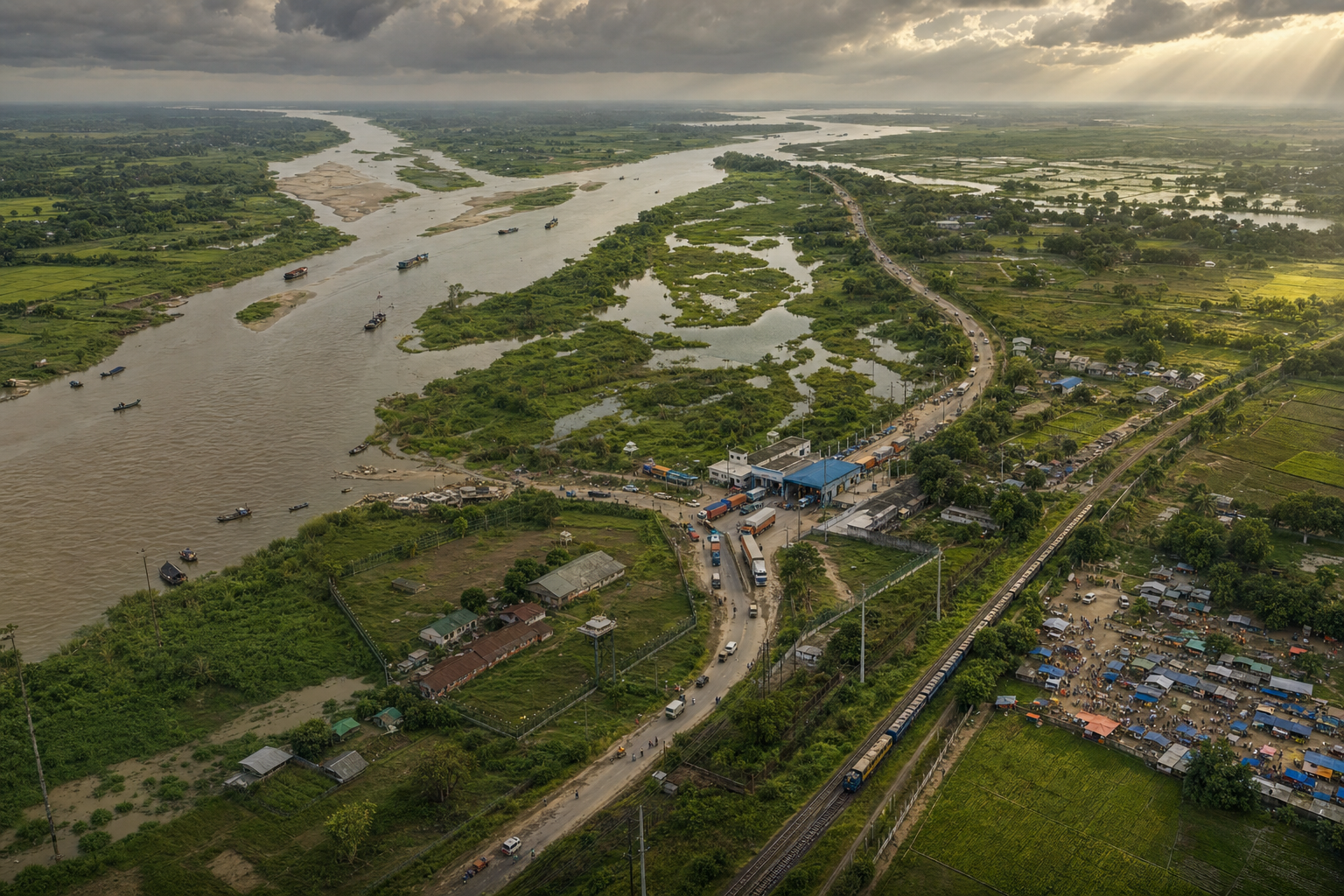
The India-Bangladesh boundary extends for roughly 4,096 kilometres across West Bengal, Assam, Meghalaya, Tripura, and Mizoram. Rivers shift course, char islands emerge and erode, settlements sit close to the boundary, and kinship and commerce predate the modern border. The same geography supports lawful livelihoods and creates openings for clandestine movement. A useful risk map must preserve both truths.
| Area | Relevant exposure | What the exposure should change |
|---|---|---|
| Malda, Murshidabad, North 24 Parganas, and Nadia | Riverine and densely settled stretches intersect with routes historically used for counterfeit currency and, more recently, gold, yaba tablets, and human trafficking. | Correlate financial, transport, safe-house, and digital evidence. A seizure should not automatically be relabelled an ideological case without that connection. |
| Dhubri and Assam’s char belts | Alluvial islands, changing channels, seasonal movement, and small boats complicate persistent surveillance. | Combine terrain awareness with trusted local reporting. Do not treat climate displacement, poverty, or incomplete paperwork as evidence of radicalization. |
| Tripura-Akhaura and Meghalaya’s Dawki-Tamabil axis | Busy gateways and border commerce create high movement volume that can conceal illicit consignments or facilitators. | Strengthen compliance and intelligence-led inspection while preserving regulated trade. Border haats give legitimate traders a reason to resist disruption and report criminal coercion. |
| Mizoram and the wider eastern arc | Proximity to Myanmar creates a second-order route through which contraband and conflict spillovers can interact with Bangladesh-facing networks. | Fuse intelligence about the Myanmar and Bangladesh approaches instead of treating them as unrelated files. |
| Siliguri Corridor and its periphery | The approximately 22-27 kilometre land bridge connects mainland India to the Northeast, magnifying the consequences of disruption or extremist facilitation near the axis. | Treat credible threats to access, communications, or transport around the corridor as a national-connectivity problem requiring early inter-state coordination. |
This is a deployment map, not a map of suspect populations. Geography tells authorities where surveillance and contingency planning are harder. It does not tell them who is guilty. A district that confuses vulnerability with culpability will waste resources on innocent residents while adaptive networks move through the gaps.
Recognize escalation before rumor becomes crisis
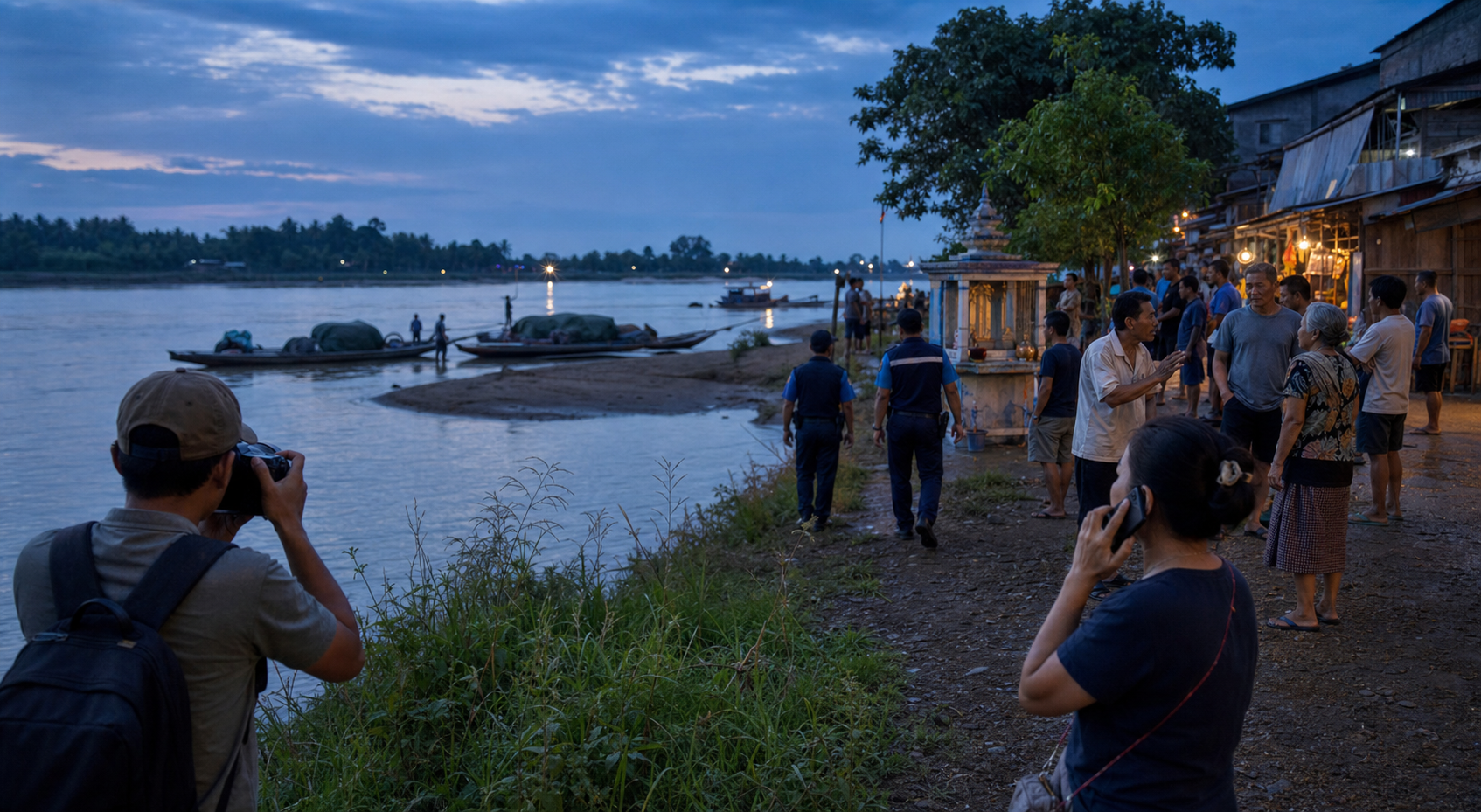
A single inflammatory post, smuggling seizure, street protest, or anonymous donation drive may deserve attention, but it does not by itself prove a coordinated cross-border threat. Escalation becomes more credible when changes appear simultaneously across mobilization, finance, logistics, minority intimidation, and information operations.
- Check the event: Is political agitation in Bangladesh being accompanied by specific threats or attacks against Hindus, Buddhists, Christians, indigenous communities, or political opponents?
- Check the network: Are hardline recruiters, burner accounts, encrypted groups, opaque charities, or diaspora-linked donation routes amplifying the same grievance?
- Check the logistics: Is there a related increase in safe-house activity, clandestine river movement, counterfeit currency, weapons, gold, narcotics, or trafficking flows?
- Check the intended effect: Are coordinated rumors or targeted provocations trying to trigger panic, retaliation, a communal clash, or pressure on a strategically important route?
The more of these questions produce independently verified answers at the same time, the stronger the case for escalating from routine policing to a coordinated district, state, and federal response. Repeated copies of the same social-media allegation are not independent confirmation.
Baseline: intermittent criminal and micro-cell activity
Under the baseline scenario, political mobilization remains limited, small extremist nodes occasionally try to exploit community contacts, and border forces continue to interdict smuggling or unauthorized movement. You would expect isolated arrests, seizures, alerts, and local tension rather than sustained disruption. Routine investigation, BSF vigilance, financial tracing, and disciplined public communication are proportionate at this level.
Escalation: several systems begin moving together
The serious scenario begins when large political agitation in Bangladesh is captured by harder-line elements and coincides with attacks or organized intimidation against minorities. Cross-border financing may rise, facilitators may test riverine gaps, and coordinated rumors may seek retaliation inside India. At that point, district administrations should protect temples, monasteries, gurdwaras, Jain institutions, schools, markets, and vulnerable neighbourhoods before a provocation produces a crowd crisis.
This scenario also requires humanitarian judgment. Violence against Bengali Hindus or other minorities in Bangladesh must not be reduced to a border-control statistic. India should pursue minority protection through diplomacy and legal channels while preparing orderly humanitarian and consular support for families under duress. People escaping intimidation are potential victims, not presumptive security threats; screening and humane treatment can operate together.
De-escalation: enforcement and legitimate exchange gain ground
A sustained crackdown on violent outfits in Bangladesh, reliable intelligence fusion with India, stronger prosecution of financiers, and development in vulnerable border communities can reduce recruitment and facilitation. Authorities should use quieter periods to formalize trusted contacts, improve regulated commerce, audit welfare delivery, and prosecute remaining networks. De-escalation is the time to strengthen systems, not dismantle them.
These three bands are planning scenarios, not predictions. Their purpose is to match the response to observable conditions and prevent both delayed action and politically convenient overreaction.
Build security around behavior, evidence, and trust
India does not need to begin from a legal vacuum. The Coordinated Border Management Plan, the 2015 Land Boundary Agreement, the 2013 extradition treaty, and mutual legal-assistance arrangements already provide channels for cooperation. The operational gap lies in implementation: identifying financiers, standardizing watchlists, sharing time-sensitive intelligence, coordinating prosecutions, and assigning clear ownership when a case crosses institutional boundaries.
What district and security authorities should do
- Maintain one behavior-based district risk picture. Combine terrain, illicit-market, financial, extremist, and community-safety information. Keep allegations separate from verified links so rumor does not silently become intelligence.
- Assign an owner to every cross-agency lead. The BSF, state police special branches, National Investigation Agency, and Multi-Agency Centre have different roles. A lead involving movement, finance, and digital coordination should not disappear because each institution assumes another is handling it.
- Follow enabling services. Focus on financiers, document suppliers, safe houses, transporters, weapons channels, narcotics routes, gold movements, and trafficking intermediaries. Disrupting a small number of essential facilitators can be more precise than broad detention campaigns.
- Audit vulnerable institutions and public spaces. Review access, lighting, locks, cameras, emergency exits, crowd flow, and official contact points around temples, monasteries, gurdwaras, Jain institutions, schools, cultural centres, and border markets.
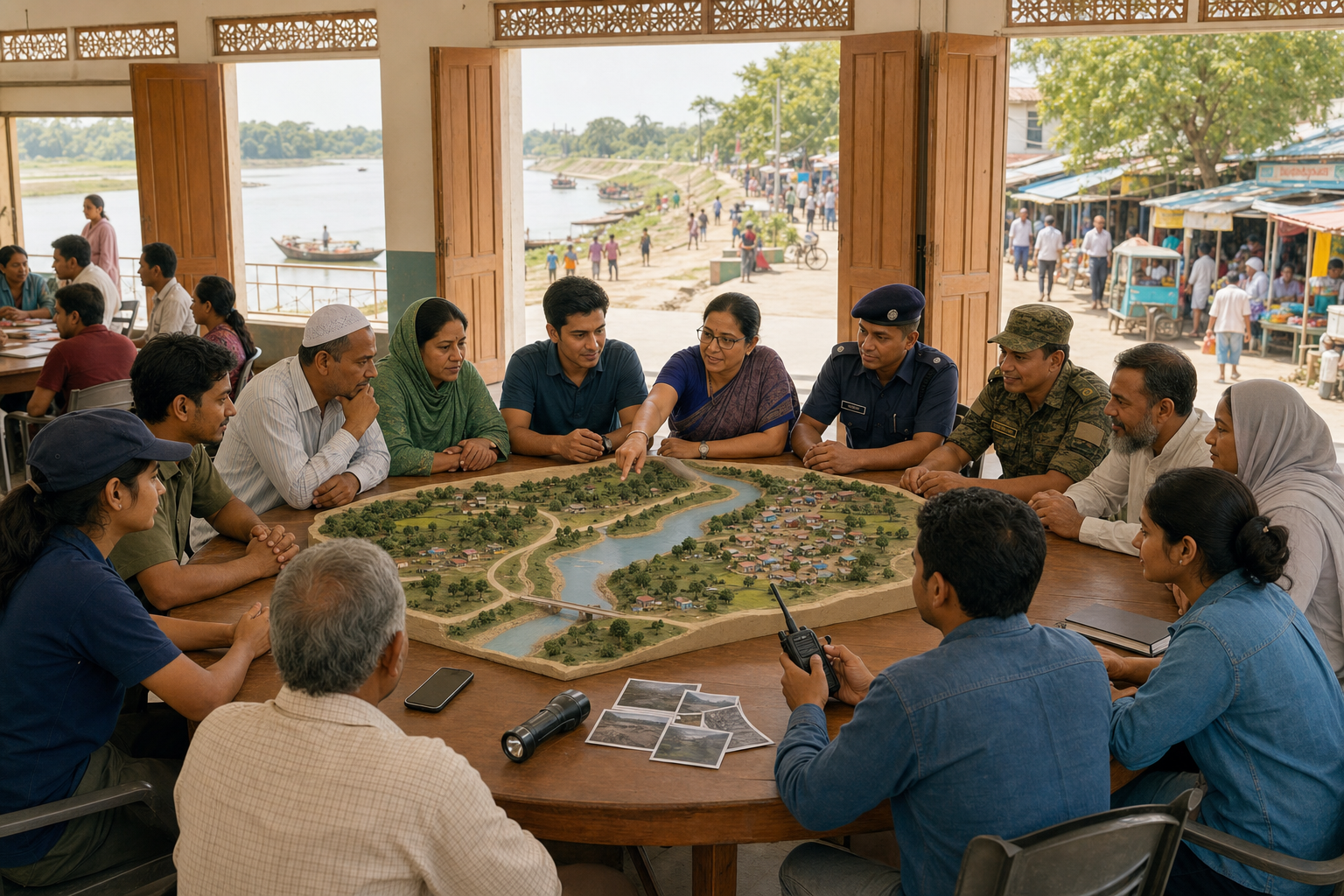
- Exercise the rumor problem. Tabletop exercises should include district magistrates, police, border forces, school representatives, traders, and religious leaders. Test who verifies a viral claim, who communicates publicly, and who protects a named site while verification is underway.
- Protect lawful livelihoods. Transparent welfare delivery, regulated border trade, accountable microfinance, and youth opportunities reduce the leverage of smugglers and ideological recruiters. Cutting off ordinary commerce can push more households toward the illicit networks authorities are trying to weaken.
Precision is not softness. Collective profiling consumes investigative capacity, discourages witnesses, and gives extremists a grievance they can exploit. The strongest local intelligence often comes from residents who trust that reporting suspicious behavior will not expose an entire neighbourhood to indiscriminate punishment.
What residents, teachers, traders, and religious committees can do
- Create a verified contact sheet. Record the published contact details for the nearest police station, BSF post, district control room, site manager, and one primary and backup community contact. Keep printed copies where power or mobile service may fail.
- Run a physical security walk-through. Check entrances, emergency exits, exterior lighting, locks, camera coverage, and whether camera clocks show the correct time. Correct timestamps make footage far more useful to investigators.
- Adopt a no-forwarding rule for unverified alarms. Preserve the original message, account name, link, and time received. Verify it through the police or district administration and a known local contact before circulating any warning to a larger group.
- Report conduct, not identity. Note what happened, where, when, in which direction people or vehicles moved, and whether there was a specific package, threat, or request. Do not add guesses about religion, nationality, or organizational membership.
- Do not confront or publicly accuse. If you encounter weapons, explosives material, trafficking, a clandestine crossing, or a specific threat, move to safety and contact the police or BSF immediately. Attempting to detain someone or publishing names can endanger you, compromise an investigation, and expose an innocent person to mob violence.
- Make charity transparent. Religious and community bodies should record donors, recipients, purposes, and disbursements. This protects legitimate relief work from both co-option and false allegations.
Teachers and parents have an additional role because digital recruitment can turn a local grievance into a transnational sectarian narrative. A sudden change in a young person’s political or religious views is not itself evidence of violence. The more serious signs are coercive recruitment, celebration of attacks, instructions to conceal contacts, collection of unexplained funds, or pressure to move people or material. Respond with careful safeguarding and lawful reporting, not public shaming.
Dharmic solidarity should be disciplined and inclusive. Protecting Hindu families and institutions is a legitimate security priority, especially when minorities face intimidation during polarized cycles. The same protective principle must extend to Buddhists, Jains, Sikhs, Christians, indigenous communities, and every law-abiding neighbour. Ahimsa does not require passivity in the face of organized harm; it requires restraint, accuracy, and refusal to punish the innocent.
Key takeaways: your next 30-day readiness checklist
- If you are a resident: save official police, BSF, and district contact details; learn how to preserve a suspicious message without forwarding it.
- If you manage a temple or cultural institution: complete one documented security walk-through, fix access or lighting gaps, confirm camera timestamps, and name primary and backup emergency contacts.
- If you teach or work with young people: establish a confidential route for reporting coercive recruitment, concealed fundraising, or threats without branding ordinary religious expression as extremism.
- If you trade near the border: document unusual requests to move unidentified goods, store packages, alter invoices, or bypass regulated channels; report coercion rather than negotiating with the network.
- If you lead a district institution: request a tabletop exercise covering a minority-site threat, a riverine incident, a viral falsehood, and a cross-agency handoff.
- If you advocate for Hindus in Bangladesh: verify names, places, dates, and original evidence before publication; pair public advocacy with private support for families at risk and consistent concern for other persecuted minorities.
The frontier will remain socially connected, economically necessary, and geographically difficult. Your best defence is a reporting culture that notices operational connections early, protects vulnerable people quickly, and refuses to turn fear into indiscriminate blame. Put the contact sheet, security audit, evidence protocol, and agency handoff in place before the next rumor or interdiction tests them.
References
