
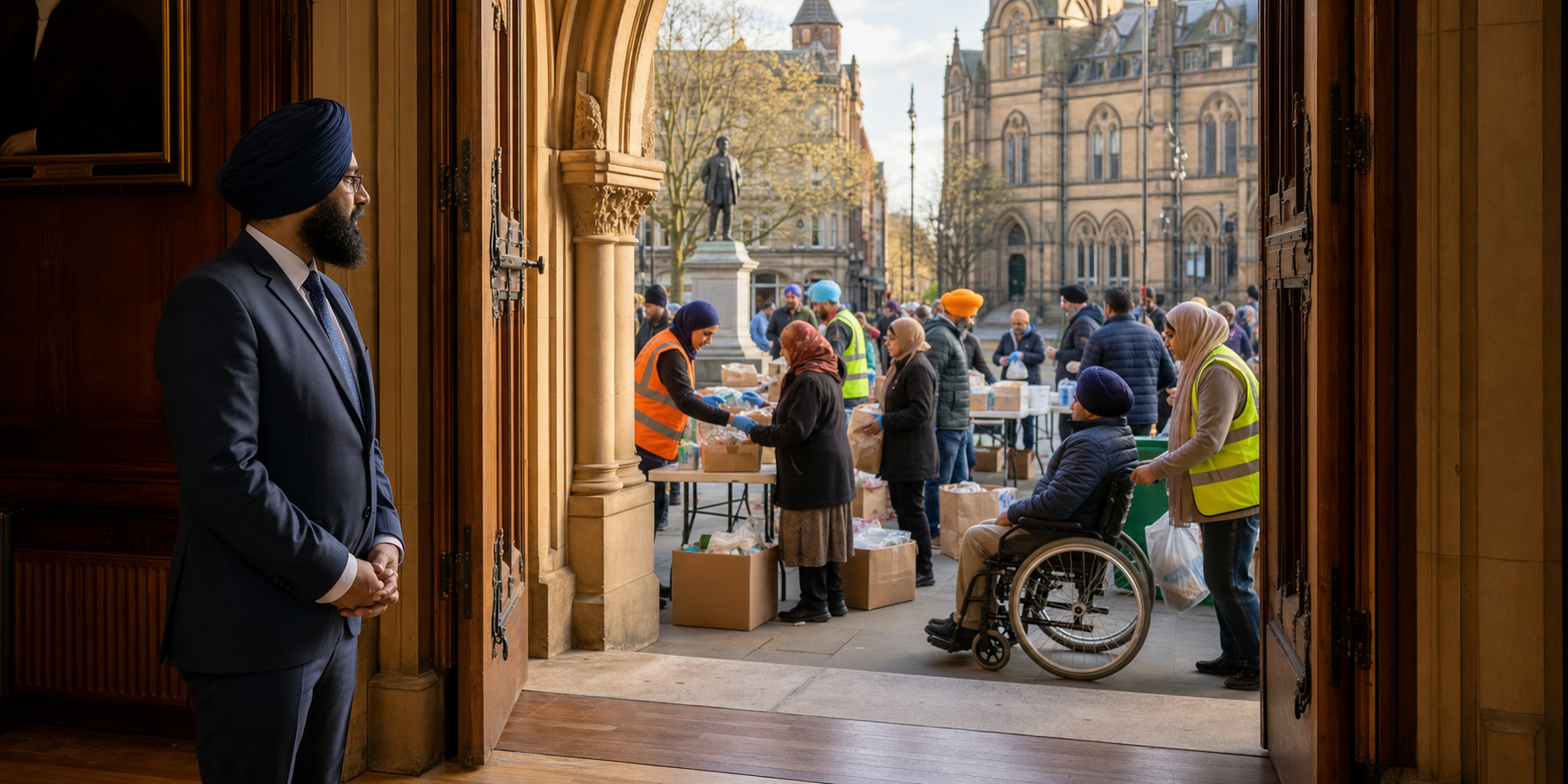
When a Sikh community leader receives an ancient civic distinction, you may reasonably ask what changes beyond the ceremony. Param Singh MBE’s honour matters because it makes a larger pattern visible: Sikh identity can remain spiritually rooted while contributing confidently to the shared institutions of British public life.
The practical lesson is not that recognition should become the goal. It is that seva becomes more durable when communities connect moral purpose to skilled volunteers, institutional partnerships and evidence of public benefit. If you serve through a gurdwara, a professional network or a Dharmic organisation, that is the part worth carrying forward.
The honour is significant, but not for the civic folklore
Param Singh MBE, the founder of City Sikhs, has received the Freedom of the City of London. The City of London Corporation confers this longstanding distinction, whose institutional history reaches back to medieval municipal government and the Livery Companies. Admission culminates in a formal declaration and the presentation of a parchment certificate at Guildhall.
The Freedom once carried practical privileges connected with trade, property and civic participation. Its modern importance is primarily ceremonial: it recognises public-spirited contribution rather than granting an office or a mandate. Stories about freemen driving sheep across London Bridge are memorable, but they can distract from the serious point. An old institution has acknowledged service arising from a community that is now part of London’s civic fabric.
Three distinctions will help you read the honour accurately:
- It is recognition, not governing authority. The Freedom does not make its recipient a representative of every Sikh or confer the power to speak for an entire community.
- It is personal, but the work behind it is collective. Civic leadership depends on volunteers, participants, partner organisations and the trust accumulated through repeated engagement.
- It marks a milestone, not the completion of the work. An honour becomes socially useful when it opens relationships that can support mentoring, service delivery and wider participation.
This is the right way to use symbolic recognition: as a door-opener rather than a trophy cabinet. A community organisation can refer to it when approaching a school, charity, public body or professional institution, but the next conversation should quickly move from prestige to a defined public need.
Seva becomes civic power when it gains a method
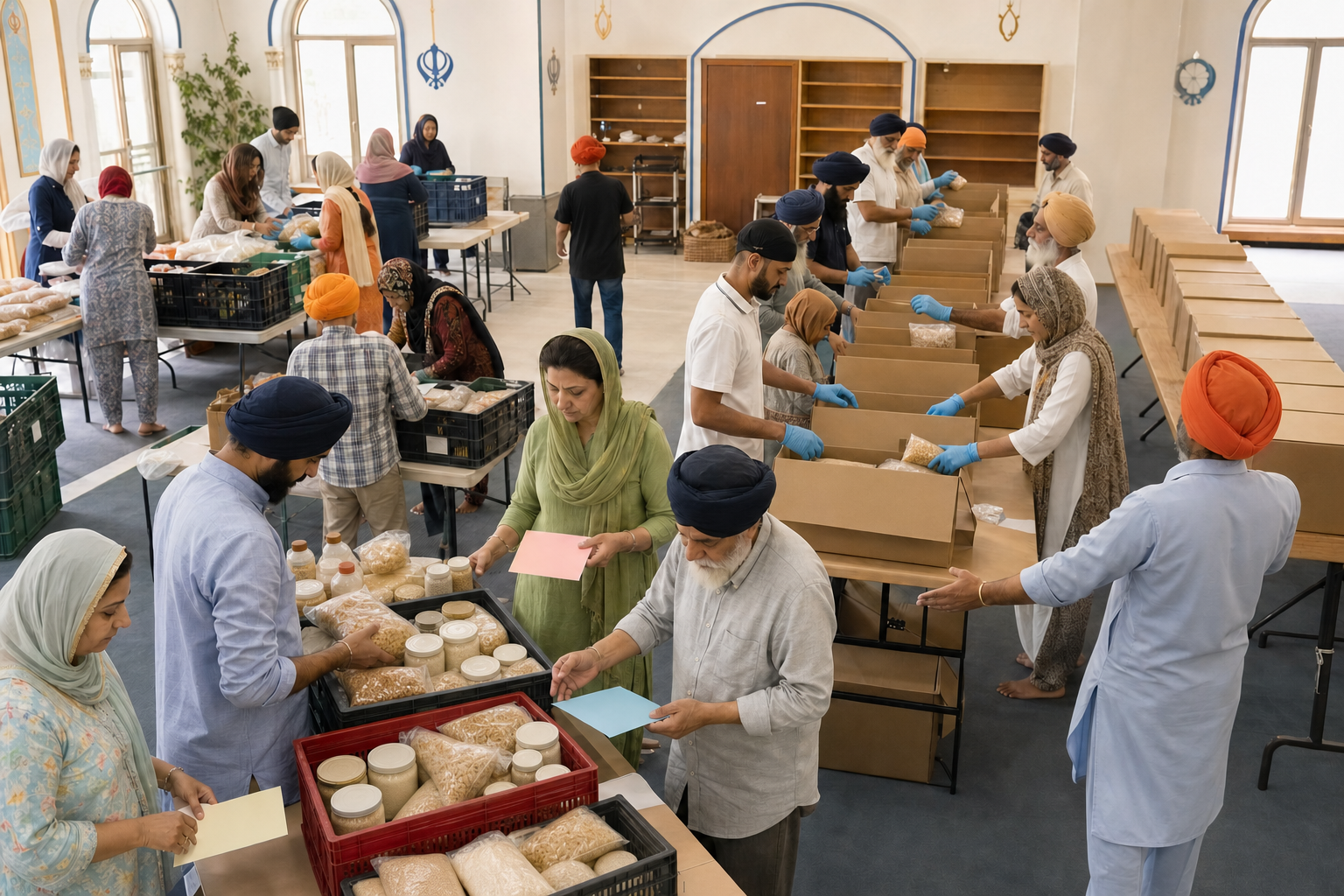
Seva is often translated simply as selfless service. In public life, however, good intention must acquire a working form. City Sikhs has brought together professionals, students, policy thinkers and faith leaders through mentoring, leadership development, policy literacy, dialogue and community service. That combination matters because it joins the willingness to help with the ability to navigate institutions.
The guiding Sikh commitment to sarbat da bhala—the well-being of all—also sets the test for inclusion. A service project may grow from Sikh conviction without restricting its benefit to Sikhs. The tradition supplies the motive and ethical discipline; the public need determines whom the work should reach.
If you want to move a service idea from aspiration to civic practice, use this sequence:
- Define the need narrowly enough to act on it. “Help young people” is too loose; a mentoring pathway for students or early-career professionals has identifiable participants, mentors and responsibilities.
- Recruit by capability as well as enthusiasm. A useful team may need people who understand safeguarding, communications, budgeting, policy, evaluation or the institution you hope to work with.
- Turn goodwill into a repeatable activity. Specify who convenes the work, who delivers it, how participants enter and what must happen after the first meeting.
- Invite an institutional partner into the design. Schools, civil-society organisations, public bodies and professional networks can identify constraints that a community group may otherwise discover too late.
- Separate outputs from outcomes. Attendance, mentor matches and service hours show that activity occurred. Retention, progression, confidence, belonging and institutional trust help you judge whether the activity made a meaningful difference.
This last distinction protects seva from becoming performance. A crowded event can be well organised and still leave no durable benefit. Conversely, a modest programme may change access to leadership, policy knowledge or professional opportunity. Count what happened, but also ask what became possible because it happened.
Accountability does not make service less spiritual. It respects the volunteer’s time, the participant’s trust and the partner’s resources. It also gives you the evidence needed to improve a programme rather than preserving it merely because it is familiar.
Cross-Dharmic unity works best around a defined task
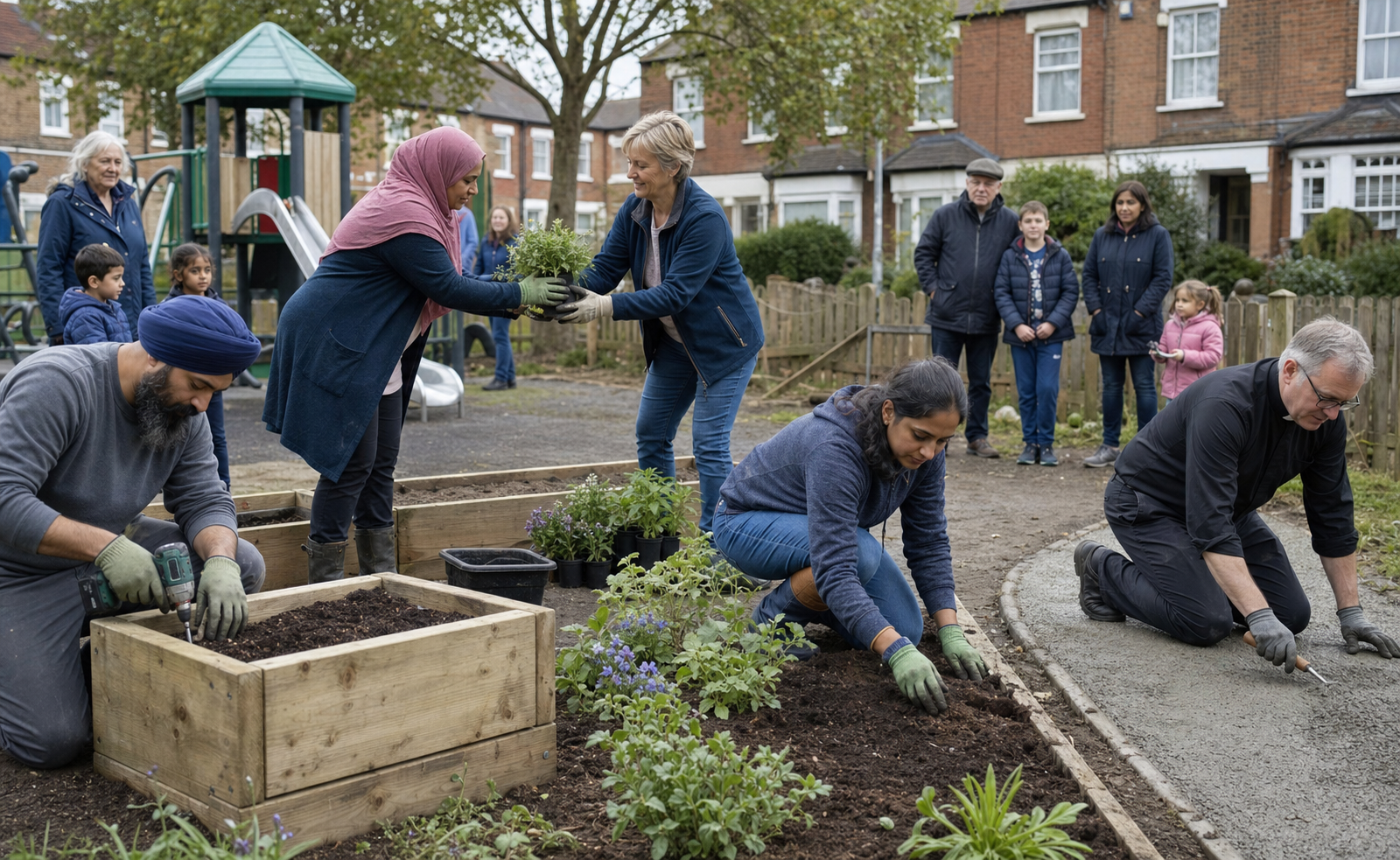
Sikh seva belongs to a wider Dharmic moral landscape, but unity should not be built by pretending that every tradition teaches the same doctrine. Hindu traditions speak through concepts including dana and seva; Buddhism gives central importance to karuna and metta; Jainism places demanding emphasis on ahimsa and aparigraha. These ideas are not interchangeable. They do, however, give Hindu, Buddhist, Jain and Sikh communities strong reasons to cooperate for the common good.
The sound model is shared action without theological erasure. Begin with a public problem—loneliness, a skills gap, unequal access to mentoring or another need that participants can actually address. Let each tradition explain why the work matters in its own vocabulary. Then allocate responsibilities according to competence, agree on the intended benefit and decide how you will recognise progress.
Gurdwara-led langar has already shown why this approach can travel beyond communal boundaries. During periods of national strain, food reached key workers and vulnerable people through a practice rooted unmistakably in Sikh life yet offered without a sectarian test. The service did not become less Sikh by being open to everyone. Its openness expressed the principle behind it.
You can apply the same logic to a joint Dharmic initiative. A gurdwara might provide volunteer coordination, a Hindu professional association might recruit mentors, a Jain group might contribute experience in philanthropy, and a Buddhist organisation might support reflective or compassionate engagement. These are examples of functional roles, not fixed identities; the actual division should follow local capacity.
Avoid stopping at the interfaith panel. Dialogue can establish trust, but trust proves its civic value when people accept responsibility together. Before a gathering ends, name the task, the person responsible for the next step, the partner who must be consulted and the evidence that will show whether the effort helped. The public problem is the meeting place; doctrinal merger is neither necessary nor desirable.
Key takeaways: test service by what remains
- Read Param Singh’s Freedom as civic recognition of sustained contribution, not as authority over the Sikh community.
- Use recognition to gain access for worthwhile work, then lead with the public need rather than the prestige of the award.
- Translate seva into a clear programme with capable people, assigned responsibilities, institutional partners and follow-through.
- Measure activity and benefit separately. Participation shows reach; retention, progression, trust and belonging reveal whether anything durable changed.
- Build Dharmic cooperation around a specific service task while allowing each tradition to retain its language and integrity.
- Pair professional advancement with responsibility. A stronger network should produce more mentors, informed civic participants and public servants—not only better-connected individuals.
If you are a student or professional, offer a defined skill rather than a general promise to help: mentoring, budgeting, communications, policy reading or project coordination. If you lead an organisation, map one initiative from volunteer inputs to activities, outputs and intended outcomes. If you represent a public institution, do more than invite Sikh leaders to ceremonial occasions; create credible routes into mentoring partnerships, advisory work, apprenticeships, grantmaking and public appointments.
At your next committee or network meeting, replace “How should we celebrate this honour?” with “Which public problem can this recognition now help us solve?” Name an owner for the next action before the meeting ends. That is how civic recognition becomes civic capacity—and how seva continues after the parchment has been framed.
References
