
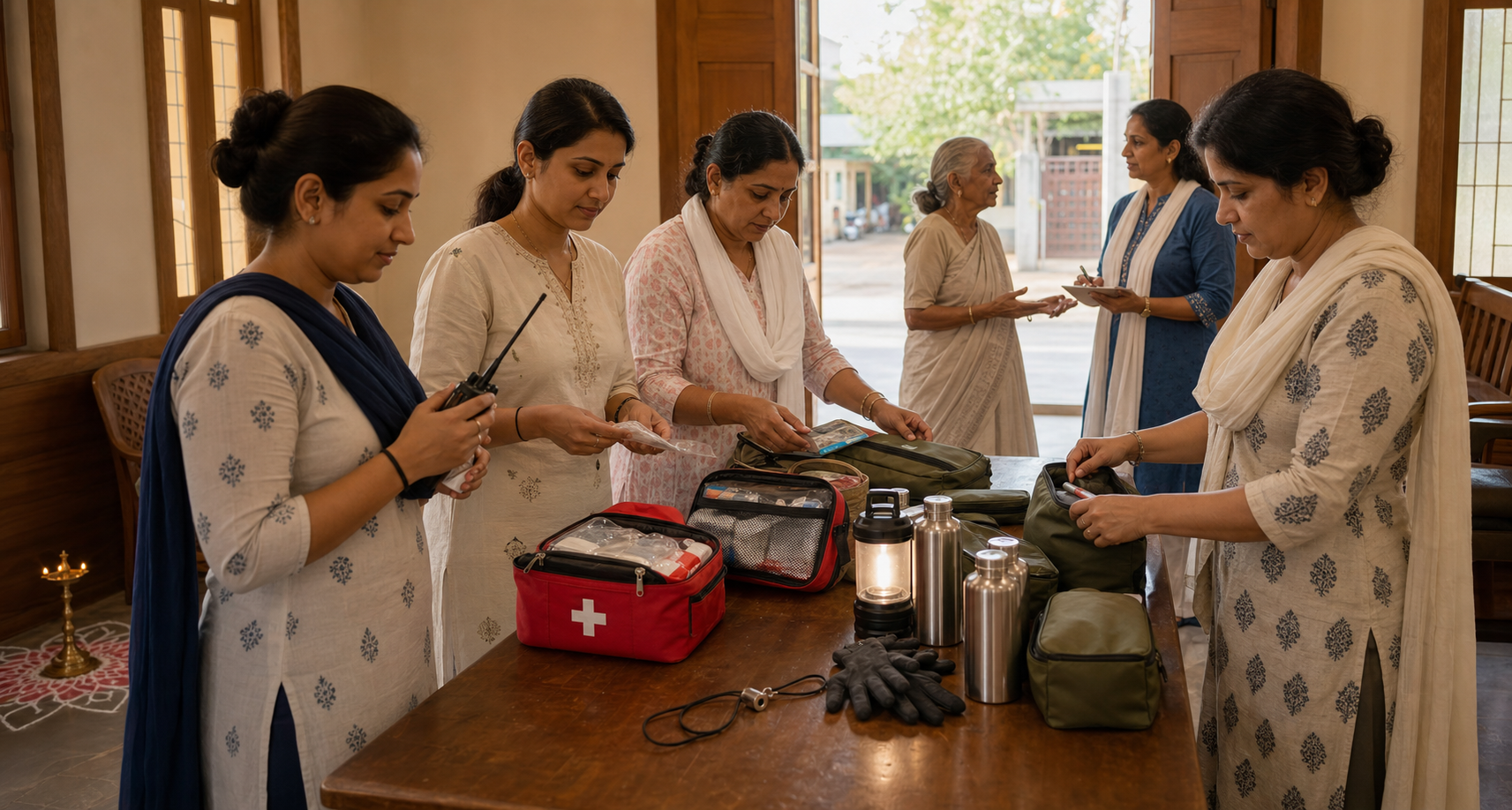
You may already be the person your family calls when a child is missing, a suspicious message arrives, a neighbor needs help, or confusion breaks out at a community gathering. Being dependable, however, is not the same as being prepared. Dependability becomes civic capacity only when you have practiced skills, clear limits, reliable contacts, and a plan for handing an incident to the proper authority.
Women’s dharmic civic preparedness is not about living in fear or searching for confrontation. It is the disciplined ability to prevent avoidable harm, respond without panic, protect evidence, coordinate lawful help, and support recovery. You can build that ability at home and then extend it to your temple, gurdwara, vihara, derasar, school, or neighborhood.
Key takeaways
- Define preparedness as protection and service, not retaliation or informal policing.
- Map the risks around your actual household and community instead of training for dramatic but unlikely scenarios.
- Pair every item of emergency equipment with a named person, a practiced skill, and an official handoff route.
- Learn first aid, evacuation, de-escalation, lawful self-protection, and accurate incident reporting as connected skills.
- Treat account security, cyber-abuse documentation, and rumor control as part of physical community safety.
- Measure readiness through completed training, working contact chains, maintained supplies, practiced drills, and faster reporting.
Start with risks, roles, and official handoffs
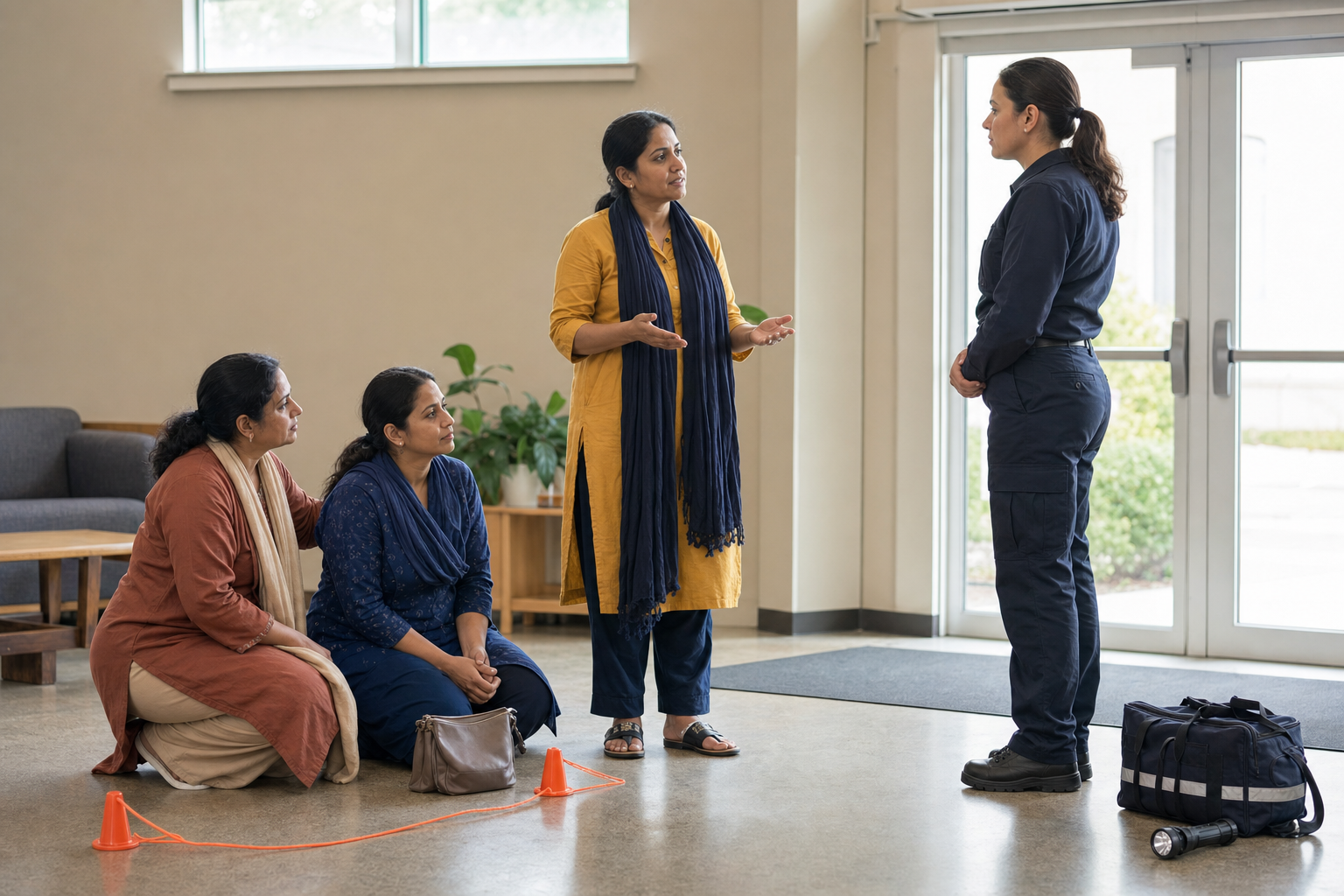
Personal safety asks, “How do I get out of danger?” Civic preparedness adds, “Who else may need help, what can I safely do, and who must take over?” That distinction matters. A capable volunteer can call for help, guide an evacuation, give first aid within her training, preserve information, and keep a crowd from amplifying a rumor. She does not need to become an investigator, enforcer, or combatant.
Begin with a local risk map. The relevant hazards may include natural disasters, public-health emergencies, cybercrime, misinformation, gender-based violence, and damage to cultural or religious sites. Rank them by their likely effect on the people and places for which you have some responsibility. Include mobility limitations, dependent children, elders, medicine needs, blocked exits, poor lighting, weak mobile reception, and the times when a building is most crowded.
For each risk, write down the first safe action, the person responsible for it, the authority that must be contacted, and the record that should remain afterward. A plan that says “someone will call the police” is not operational. A plan that names the designated caller, identifies a backup, records the correct contact route, and states who will meet responders at the entrance can be practiced.
| Preparedness phase | Question to answer | Useful output |
|---|---|---|
| Prevent | What avoidable condition makes harm easier? | A risk map covering access, lighting, account security, storage, crowd flow, and vulnerable people. |
| Prepare | Who needs which skill, supply, contact, and authority? | A volunteer roster, emergency contacts, maintained supplies, and a drill plan. |
| Respond | What protects life while keeping volunteers within their competence? | A clear call for official help, first aid where safe, evacuation, factual communication, and an incident log. |
| Recover | What support, evidence, repair, and correction are now needed? | Welfare checks, preserved records, referrals, an after-action review, and assigned improvements. |
This prevent–prepare–respond–recover cycle keeps preparedness from becoming a collection of equipment. It also reveals neglected work. Communities often discuss the response while leaving prevention and recovery unnamed. Yet an uncorrected entry hazard will remain after the emergency, and a woman affected by violence or online abuse may still need practical and psychosocial support after the immediate danger has passed.
During a fast-moving incident, use the observe–orient–decide–act loop. Observe what you can actually verify. Orient yourself by identifying immediate danger, safe exits, vulnerable people, and available help. Decide on the safest lawful objective you can achieve. Act, then observe again because the situation may have changed. This short mental sequence interrupts the common jump from an alarming impression to a risky reaction.
Train for the emergencies you can realistically influence
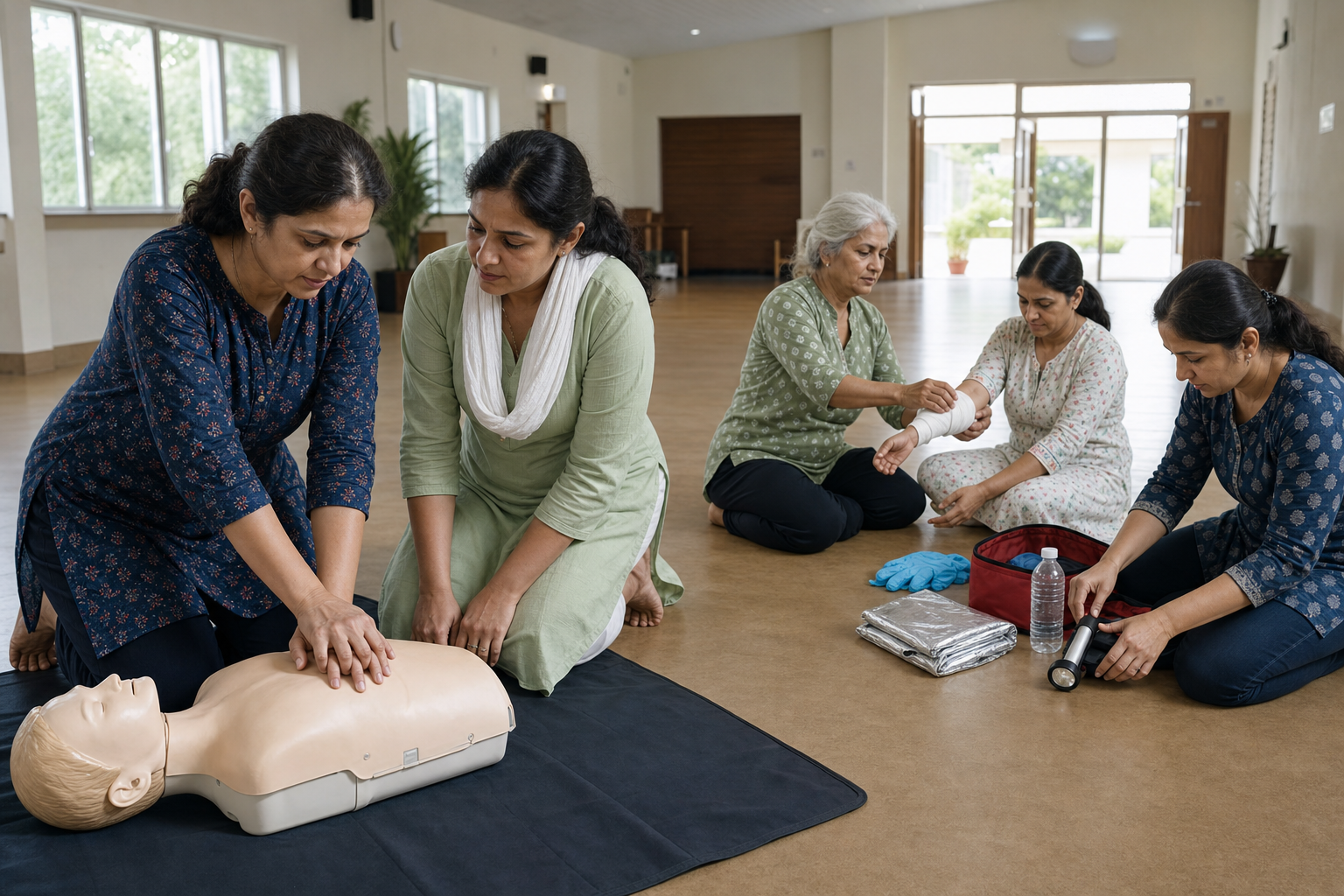
Equipment matters, but skills determine whether it helps. A household go-bag should support roughly 48–72 hours of disruption. Build it around the people who may actually use it: safe water and food, necessary medicines stored according to their instructions, copies of essential documents, basic first-aid materials, lighting, charging capacity, hygiene supplies, and items required by children, elders, or people with disabilities. Keep it where household members can reach it, and replace expired or damaged contents during a recurring household check.
Do not let the bag become a substitute for planning. Everyone who may depend on it should know where it is, which exit to use, where the household will reconnect if communications fail, and who will assist a person who cannot evacuate independently. If no one has practiced those decisions, the bag is stored property rather than a readiness system.
We would build practical competence in the following sequence:
- Emergency calling and legal literacy: know what information an operator needs, how to describe a location, where to report an offense, and when an incident requires immediate professional intervention.
- First aid and evacuation: learn from a qualified trainer, remain within the scope of that training, and rehearse movement through the buildings you actually use.
- Situational awareness and de-escalation: notice exits, crowd pressure, isolation, escalating speech, and opportunities to create distance or bring in responsible authorities.
- Lawful self-protection: train with a credible instructor who emphasizes breaking contact, escaping danger, protecting another person where lawful, and stopping once the immediate threat has ended.
- Coordinated drills: practice calling, evacuation, first aid, factual communication, and official handoff together rather than treating them as unrelated abilities.
- After-action review: record what failed, assign each correction to a named person, and carry the correction into the next practice.
India’s current criminal-justice framework includes the Bharatiya Nyaya Sanhita, Bharatiya Nagarik Suraksha Sanhita, and Bharatiya Sakshya Adhiniyam. It recognizes private defense and provides procedural routes concerning offenses against women, but private defense is not permission to punish, chase, or retaliate. The facts of an incident determine the legal position. When immediate danger has ended, disengage, contact the authorities, preserve evidence safely, and obtain qualified legal advice for the specific case.
Keep 112, the relevant state women’s helpline, the nearest One Stop Centre, local police contacts, and trusted family or community contacts in both accessible digital and printed form. Confirm that the local details still work rather than copying an unverified list. During an emergency, report the location, nature of the danger, known injuries, and the safest way for responders to enter. Do not delay a call in order to produce a perfect narrative.
Established programs can turn individual interest into coordinated capability. NCC, Civil Defence, and state disaster-response training can connect participants with recognized procedures and public authorities. Schools, colleges, and community institutions can also normalize self-defense, first response, de-escalation, and bystander skills before a crisis exposes their absence. A woman whose health, age, pregnancy, disability, or caregiving role changes what she can safely do should seek appropriate adaptations from qualified instructors rather than being pushed through a generic drill.
Secure the digital and physical community commons
Make digital hygiene part of family safety
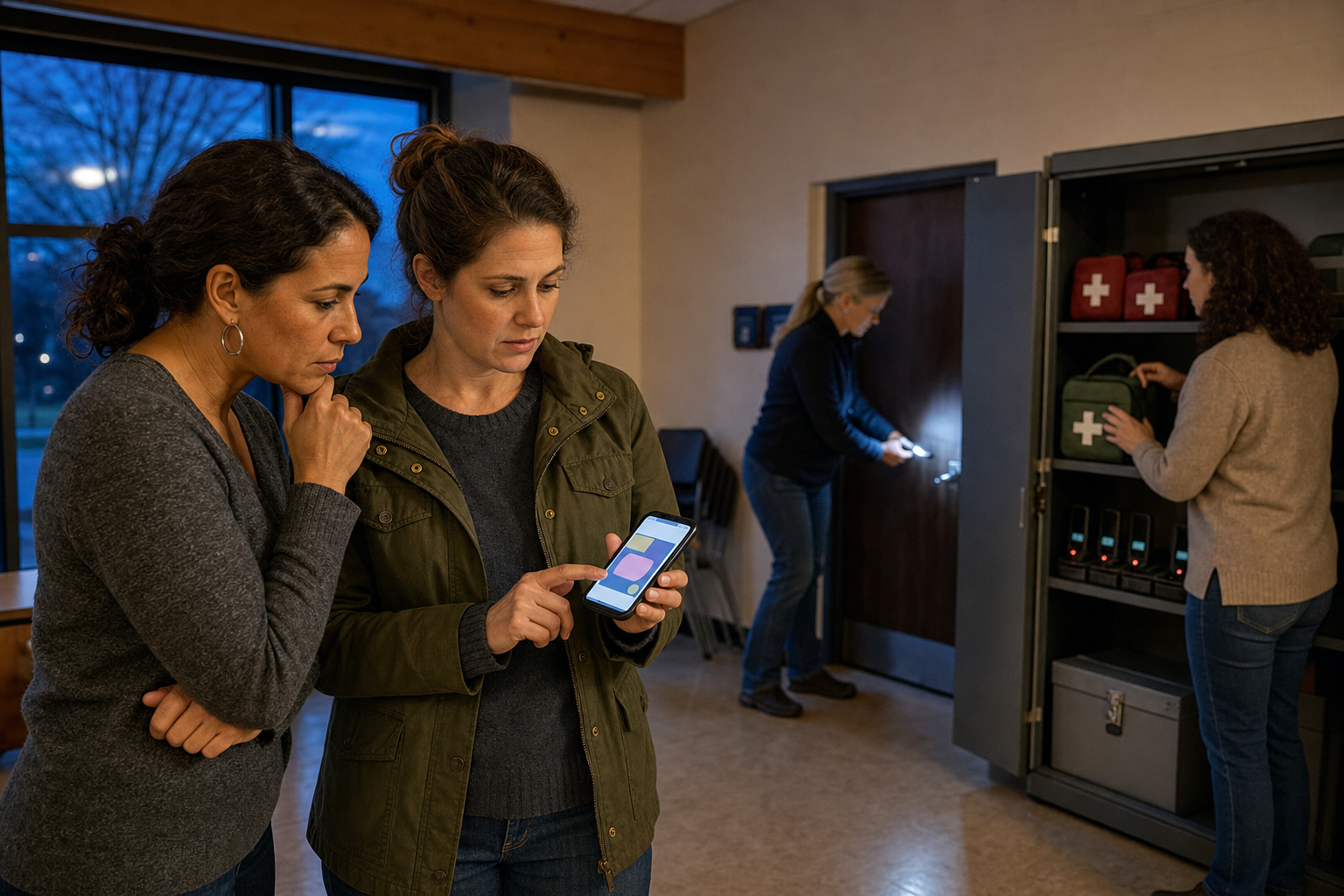
A compromised email or messaging account can expose routines, contacts, documents, and private conversations. Start with strong, unique passwords and multifactor authentication on the accounts that can unlock other accounts. Review privacy settings, remove unnecessary public location and family information, keep devices updated, and use encrypted messaging appropriately. Help adolescents and elders do the same; household security is only as strong as the account a scammer can most easily manipulate.
Agree on a direct verification route for alarming messages. If a message claims that a relative is in danger, that violence has begun nearby, or that a religious site has been attacked, contact the person or a trusted local liaison through a known channel. Check the original account, date, location, and full context. Do not forward the claim merely to ask whether it is true. Repetition increases reach even when the caption says “unverified.”
When cyberstalking, doxxing, fraud, threats, or deepfake abuse occurs, preserve useful evidence without spreading the harmful material. A practical incident record can include timestamps, screenshots, account identifiers, links, message headers where available, a short factual chronology, and receipts from official reports. Use the official cybercrime reporting route and follow professional guidance. If gathering evidence would prolong exposure, reveal your location, or place you in immediate danger, protect yourself first and ask the authorities how to proceed.
Documentation should be factual and controlled. Record what was seen, received, or done; separate that from what you infer. Keep access limited to people handling the report. Publicly confronting a suspected offender, crowdsourcing an identity, or repeatedly reposting abusive material can increase danger, damage evidence, and harm an innocent person if the identification is wrong.
Give sacred spaces a professional safety routine
A temple or other dharmic institution does not become safer merely by gathering more volunteers. It becomes safer when responsibility is visible and coordinated. Useful measures include entry lighting, appropriate CCTV coverage, verified volunteer rosters, incident-reporting procedures, secure storage for valuable ritual objects, and an established police liaison. Local legal and technical guidance should shape camera placement, access to recordings, privacy, and retention.
Assign roles before a crowded event. Someone contacts emergency services. Someone guides evacuation and keeps emergency access clear. A trained person manages first aid. Another records verified facts and preserves relevant records. The designated liaison meets public responders and follows their direction. These roles can overlap in a small institution, but they should not remain assumed or anonymous.
Verified identification protects both visitors and volunteers. A roster should state who is authorized, the role each person holds, and who supervises the shift. Volunteers should know that they are helpers, not enforcers. They should avoid searches, detention, confrontation, or evidence handling beyond what is lawful and necessary. Suspicious conduct should be documented and transferred promptly to the competent authority.
Run drills with local authorities where possible. A useful drill tests exits, crowd flow, emergency access, communication failures, assistance for people with limited mobility, and the handoff to responders. End with corrections, not congratulations. If an exit was blocked, a number was outdated, or no one could access the first-aid supplies, assign the remedy and verify that it was completed.
Keep protective strength under dharmic discipline

Dharmic traditions do not speak in one interchangeable vocabulary, but each offers a way to discipline power. Hindu understandings of Shakti and Kshatra Dharma place protective capacity in the service of order and the common good. The Sikh Sant-Sipahi ideal joins spiritual grounding to moral courage. Buddhist compassion directs vigilance toward reducing harm. Jain Ahimsa demands restraint and principled civic action. Their differences should be respected, yet their practical warning converges: strength without ethical control can become another source of injury.
The lives of Rani Durgavati, Rani Abbakka, Kittur Chennamma, Rani Lakshmibai, Ahilyabai Holkar, Onake Obavva, and Mai Bhago also prevent us from reducing protection to a single model. Women’s guardianship has included strategic defense, governance, institution-building, leadership, and decisive action under pressure. The useful lesson is not to imitate a historical battlefield. It is to identify the form of responsibility your present circumstances require and prepare for it seriously.
A community preparedness charter can make that ethical boundary explicit:
- Protect life and dignity before property, pride, or reputation.
- Use the least risky lawful action that can achieve the protective objective.
- Do not circulate an allegation as fact without verification.
- Do not punish, retaliate, or organize a crowd against a suspected person.
- Preserve relevant information and transfer the matter to the proper authority.
- Support affected people through recovery, including qualified legal, medical, or psychological help when needed.
- Review mistakes honestly and correct the system rather than concealing failure.
Inner practice belongs in this system, but not as a mystical guarantee. Yoga, pranayama, meditation, prayer, and reflective silence can help you notice fear, slow an impulsive response, and return attention to the next responsible action. Practice that pause during drills: exhale, observe, name the immediate objective, and act within your role. After a traumatic event, these disciplines may complement professional support; they are not substitutes for medical or psychological care.
Finally, track readiness without turning it into a performance. Useful measures include the share of households with maintained go-bags, the number of women who have completed first-aid or self-defense training, volunteer hours devoted to site safety, completed corrective actions, and the time required to report a cyber incident. A high volunteer count means little if emergency contacts fail or no one can explain the handoff procedure.
Your first move can be modest and concrete. Choose a household gap and a community gap, give each one an owner, and set the next gathering or drill as the point at which completion will be checked. Dharma Raksha becomes civic preparedness when compassion has a practiced skill, courage has a lawful boundary, and responsibility has a reliable handoff.
References
