
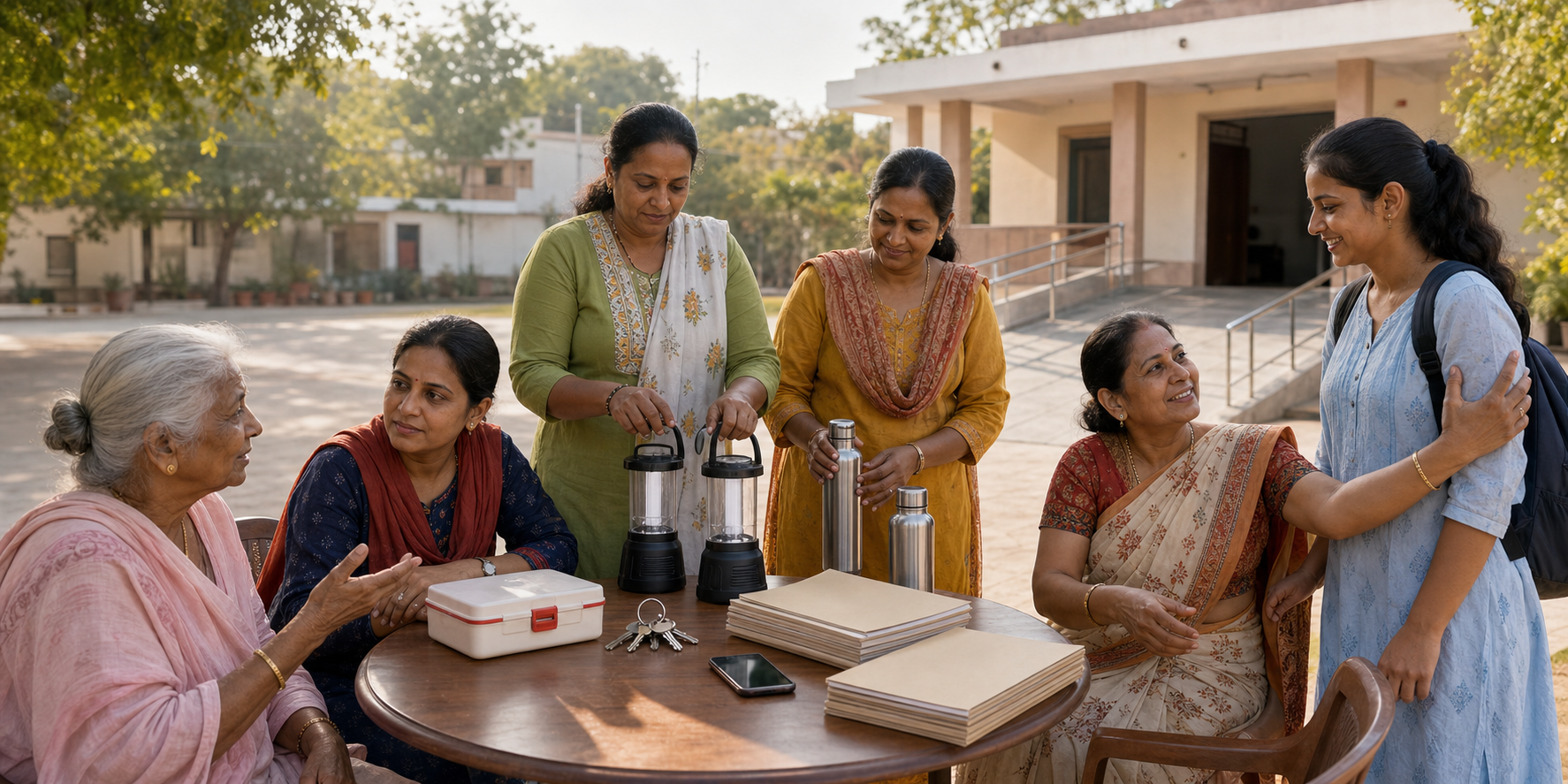
You may already be convening safety sessions, organizing cultural programmes, helping families find support, or bringing women together for legal and civic awareness. The difficult question is not whether this seva has value. It is whether people can rely on it, whether other women can help direct it, and whether it will continue when its original organizer steps back.
Dharmic civic leadership begins when service acquires a defined public duty, an accountable method, and a path for developing more leaders. If you are deciding how to move from occasional activity to durable neighborhood action, start with the structure below.
Choose one public duty that your group can actually own
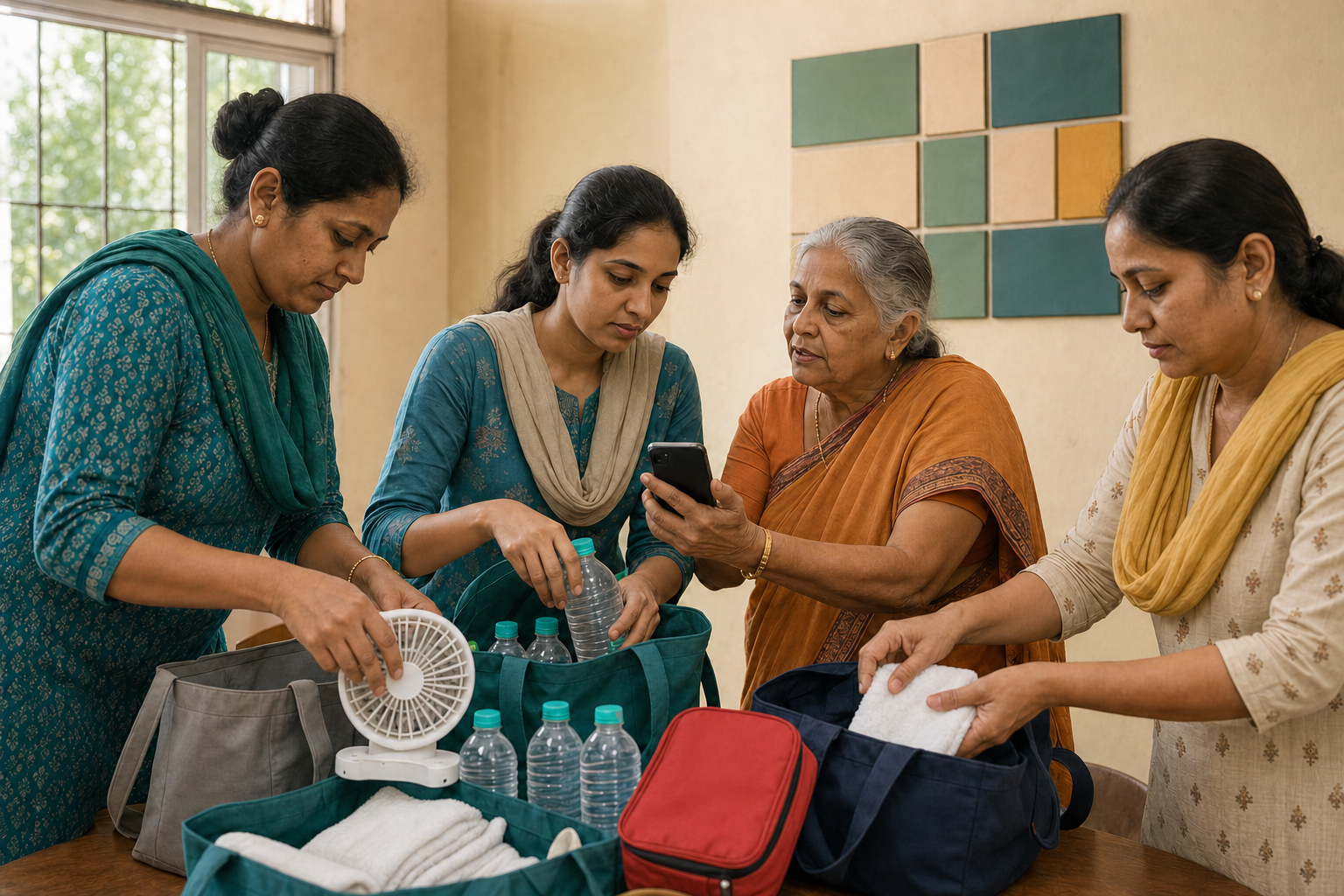
A mission such as empowering women or protecting Dharma is too broad to guide day-to-day decisions. It does not tell volunteers whom to serve, what to do first, or how to recognize progress. Broad language can inspire people, but a civic programme needs a bounded responsibility.
Write a one-sentence charter before announcing an event:
For [the people] in [the place], we will [perform a defined activity] so that [an observable change becomes possible], while referring [matters beyond our competence] to [an appropriate qualified service].
Test that sentence against five questions:
- Who is meant to benefit? Name the group clearly enough that you can invite and listen to the right people.
- What is the geography? Work at the level of a locality, ward, school-community network, or another area your volunteers understand.
- What is the recurring difficulty? Choose a concrete concern such as safety awareness, access to civic information, family support, or continuity of cultural education.
- What will be different afterward? Participants might know where to seek help, understand a civic process, gain a practical skill, or acquire a reliable local contact.
- Where does your responsibility stop? State which legal, medical, emergency, or safeguarding matters require a qualified professional or public service.
Place is not a minor administrative detail. A programme designed for one urban setting may fail in another because transport, school relationships, public-space concerns, and informal networks differ. Even within Bengaluru, a peripheral neighborhood can require a different strategy from a central district. Local knowledge should therefore shape the activity before publicity, speakers, or ceremonial plans are chosen.
Next, map the people already carrying responsibility. Look for informal women leaders, educators, health workers, social volunteers, cultural custodians, legal professionals, welfare associations, and institutions that can receive referrals. Record only what the work requires: the person’s role, possible contribution, agreed contact route, and permission to be contacted. A community map is not a licence to circulate private details.
This first exercise usually reveals an important distinction. A locality may not lack leaders; it may lack connections among leaders. Your task may be less about creating a new organization and more about giving existing competence a trustworthy way to cooperate.
Make Dharmic values operational, not ornamental
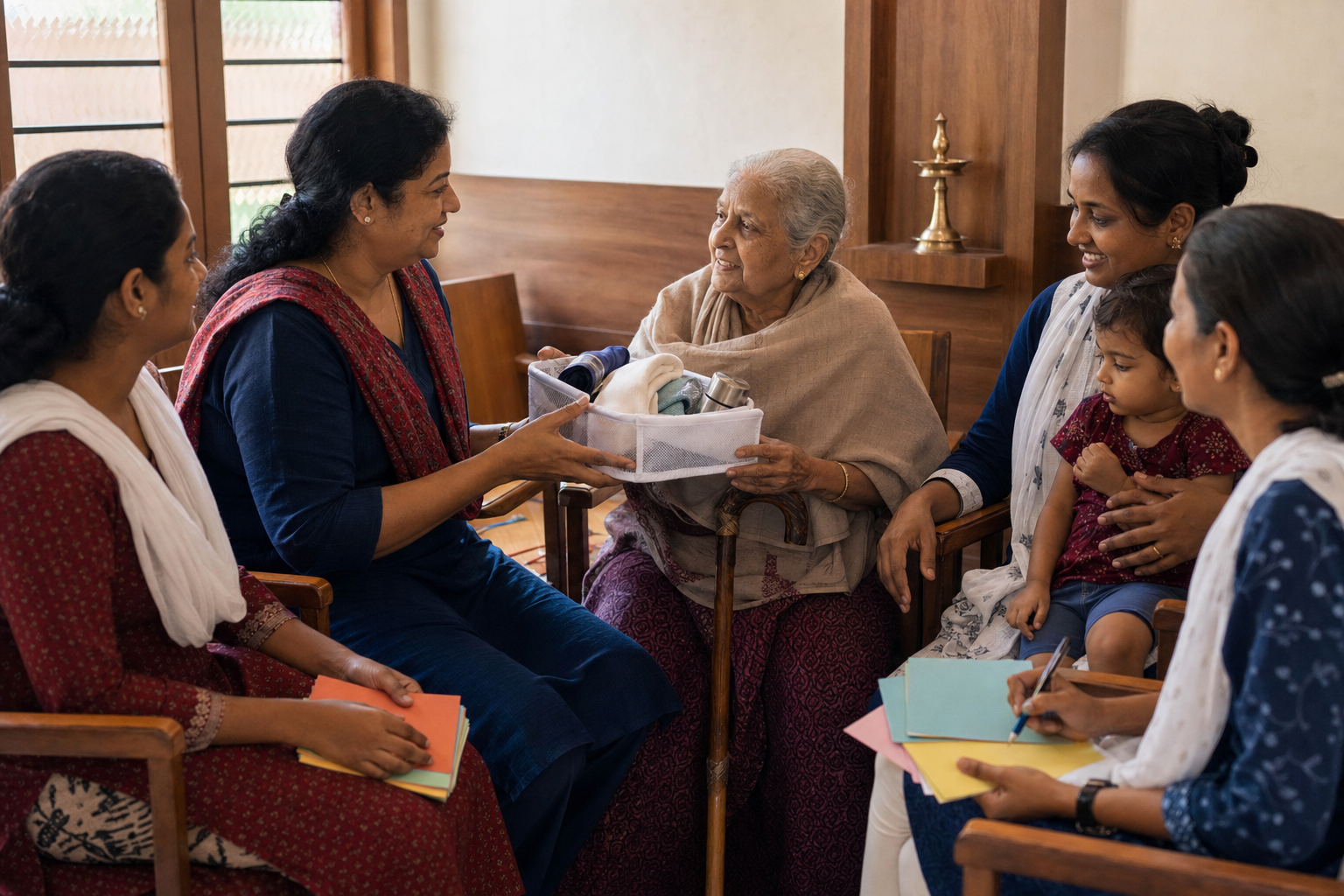
A Dharmic identity should change how a civic group behaves. It cannot be confined to the name of the programme, an invocation at the beginning, or praise of women as Shakti while decisions remain elsewhere.
Hindu, Buddhist, Jain, and Sikh traditions are distinct paths. Cooperation does not require blending their doctrines or ceremonies. It can rest on a shared civic vocabulary of seva, compassion, truthfulness, and non-violence while allowing every community to retain its own authentic practice.
- Seva means responsibility to the person served. Ask what is needed before designing the response. Do not turn a participant’s hardship into publicity, and do not promise support your group cannot sustain.
- Satya requires disciplined communication. Separate what has been witnessed, what has been reported, and what has been verified. Correct errors openly. Never use urgency as an excuse to circulate an allegation as fact.
- Ahimsa governs methods as well as intentions. Avoid humiliation, intimidation, needless exposure, and language that could escalate a vulnerable situation. Protecting dignity is part of effective action.
- Daya and karuna require attentive referral. Listening compassionately does not mean pretending to possess every answer. Explain the limit of the group’s role, seek consent, and help the person reach suitable expertise.
- Shakti must appear as authority. Women should help choose priorities, control relevant resources, lead meetings, speak publicly, and review results. If women merely execute decisions made elsewhere, the programme has women participants but not women’s leadership.
These principles matter most when the work touches safety or law. A volunteer can organize general awareness and explain available referral routes. A volunteer should not investigate allegations, guarantee a legal outcome, or present general information as personal legal advice. Have qualified people review specialized material, maintain a current referral pathway, and direct an immediate danger to the appropriate emergency or support service. Do not publish names, addresses, case details, or identifiable photographs without informed permission.
Cultural work needs its own guardrail. Cultural continuity becomes stronger when people are invited into learning and responsibility; it becomes brittle when belonging is tested through conformity. In a cross-tradition civic setting, agree on the common public purpose and leave doctrinal teaching to each tradition’s own competent institutions. Inclusion need not erase Hindu identity, and Hindu confidence need not require civic exclusion.
Turn these values into written operating rules. Decide who may speak on behalf of the group, how consent is recorded, who handles a safeguarding concern, how conflicts of interest are disclosed, and how factual corrections are issued. Written rules protect participants, but they also protect sincere volunteers from having to improvise under pressure.
Run a neighborhood cycle that connects effort to change

Many civic efforts stop at the event. A hall is booked, people attend, photographs are taken, and the organizers move to the next occasion. That records activity, not public value. Use a simple service chain to see what your effort is producing.
| Layer | Question | Practical example |
|---|---|---|
| Input | What are we contributing? | Volunteer time, local partnerships, relevant expertise, and a modest resource pool |
| Activity | What are we doing? | A safety workshop, civic or legal-awareness session, neighborhood dialogue, cultural class, or health orientation |
| Output | What happened immediately? | Participants trained, meetings held, questions answered, and referrals made |
| Outcome | What changed for people or the locality? | Greater confidence, clearer civic participation, stronger cooperation, or improved local safety norms |
The distinction between output and outcome is crucial. Attendance is an output. It does not prove that participants can use what they heard. A referral is also an output; it does not prove that the person successfully reached support. Record both layers without exaggerating what the programme established.
A workable cycle looks like this:
- Listen before selecting the activity. Ask affected women and existing local workers where confusion, risk, or repeated delay occurs.
- Choose a bounded result. Decide what participants should be able to understand, do, or access after the activity.
- Match the format to the need. Use a workshop for a skill, an orientation for a process, a dialogue for a shared local problem, and a referral for an individual matter requiring specialist attention.
- Assign accountable roles. Name the convener, subject lead, safeguarding contact, records keeper, and follow-up owner. One person should not quietly carry every function.
- Prepare the referral route. Confirm where questions beyond the group’s competence will go before inviting people to disclose problems.
- Deliver and document. Record the activity, intended participants, questions raised, referrals requested, consent status, and responsible follow-up person. Keep sensitive information separate from general programme records.
- Ask the same outcome questions later. Find out what participants can now do, what remains unclear, whether the next step was accessible, and what blocked action.
- Revise before repeating. Change the content, venue, partners, or referral pathway in response to evidence rather than preserving a familiar format.
You do not need a complicated dashboard. A useful record can answer: What did we promise? What happened? Who needs follow-up? What changed? What must be corrected? Keep aggregate programme information separate from private case information, and do not count a referral as a success merely because a telephone number was handed over.
Build transfer into the cycle as well. Pair the main convener with a co-lead. Keep agendas, contact permissions, programme notes, and follow-up decisions in an agreed location. Rotate visible responsibilities. Invite younger volunteers to own defined tasks, and involve elders where local memory or cultural judgment is needed. A programme becomes resilient when knowledge moves between generations instead of remaining in one person’s telephone and memory.
Turn public recognition into working civic infrastructure

Recognition can do more than reward past service. In Ullal, Bengaluru, a civic ceremony honoured a cohort of 100 women, including Smt. Bhavya Gowda of Ranrangini. Bringing educators, health workers, social volunteers, entrepreneurs, and cultural custodians into one forum made otherwise separate forms of neighborhood leadership visible to one another.
That visibility can strengthen legitimacy, volunteer retention, professional connections, and referrals. It does not happen automatically. An award without transparent selection or purposeful follow-up can become a popularity contest. A ceremony that exposes sensitive work can even create risk for the person being honoured.
Design recognition as a civic process:
- Before nominations: publish criteria such as sustained service, local relevance, ethical conduct, cooperation, and a demonstrable contribution. State who will decide and how conflicts of interest will be handled.
- During verification: confirm contributions without demanding confidential case histories. Let each nominee approve the public description of her work and decline details that could identify vulnerable people.
- During the gathering: describe the local problem addressed, the kind of action taken, and the expertise the honouree can share. With consent, connect women working on similar concerns instead of treating every award as an isolated story.
- After the gathering: create an opt-in directory, make relevant introductions, and hold a working session around specific local priorities. Give every proposed collaboration an owner and a next action.
- During review: record whether the recognition produced new referrals, partnerships, volunteer roles, or mentoring relationships. Photographs show that a ceremony occurred; they do not show that a network became useful.
Public recognition should also broaden the local picture of leadership. The loudest speaker or most visible office-holder is not necessarily the person sustaining family well-being, teaching civic literacy, maintaining cultural knowledge, or solving last-mile problems. Transparent criteria allow quiet, consistent work to become legible without turning service into self-promotion.
Use the occasion to create an intergenerational pathway. Elders can explain local history and the reasoning behind inherited practices. Experienced organizers can demonstrate how to convene people, handle disagreement, and complete follow-up. Younger women can document decisions, coordinate logistics, co-facilitate sessions, and gradually take responsibility for programme design. The real tribute to a respected leader is not permanent dependence on her; it is a growing circle of women able to exercise sound judgment.
Key takeaways
- Define one public duty by naming the people, place, need, intended change, and limit of responsibility.
- Map existing women leaders and institutions before creating another organization or announcing a large programme.
- Translate seva, satya, ahimsa, compassion, and Shakti into rules for consent, truthfulness, dignity, referral, and decision-making authority.
- Distinguish activities and attendance from changes in confidence, access, cooperation, or civic participation.
- Prepare professional referral routes before inviting disclosures about safety, legal problems, health, or family vulnerability.
- Use public recognition to make introductions and form working relationships, with transparent criteria and privacy protections.
- Pair every visible leader with co-leads, younger organizers, documented processes, and a deliberate handover path.
If your group is ready to begin, do not start with a grand launch. Write the one-sentence charter, map the people already doing the work, select one bounded activity, and define one output and one outcome. Then ask which other woman must share the decision for the effort to become genuinely collective. That is the first practical step from admirable seva to lasting civic leadership.
References
