If your evening drink has become the switch that turns work off, you may be wondering whether giving it up would genuinely help your brain or merely make the month less enjoyable. In midlife, the most useful answer rarely comes from arguing about alcohol in the abstract. It comes from removing it long enough to notice what changes in your sleep, attention, cravings and physical recovery.
Treat 31 alcohol-free days as a controlled observation period, not a purity test. You are trying to learn whether alcohol is quietly taxing the systems that support clear thinking. The result may justify a longer period of abstinence, a more deliberate pattern of occasional use, or a conversation with a health professional.
Key takeaways for a safe and useful alcohol break
- A bright-line rule such as “none for 31 days” is often easier to follow than making a fresh moderation decision every evening.
- Judge the experiment by sleep continuity, morning clarity, attention, recovery and craving patterns—not by weight alone.
- Expect your reward system to look for a substitute. If you do not plan one, sweets or prolonged snacking may fill the space left by alcohol.
- Wearable sleep scores and heart rate variability can help you compare patterns, but neither proves that your brain has been repaired or that future dementia has been prevented.
- If you drink heavily or daily, have experienced alcohol withdrawal, or drink to stop shaking, sweating or severe anxiety, do not quit suddenly without medical guidance. Alcohol withdrawal can be dangerous.
Why “none for now” can be easier than moderation
Moderation sounds flexible, but flexibility creates repeated negotiations. Is tonight a drinking night? Does a difficult day count as an exception? Is one glass enough? Each decision gives the established habit another opportunity to argue its case.
A temporary, binary boundary removes that negotiation. You are not deciding whether you will abstain forever. You are deciding that alcohol is unavailable until a date already written on the calendar. That distinction matters. “Never again” can feel overwhelming, while “none for now” is both clear and finite.
This approach also exposes the habit loop. The cue may be finishing work, beginning dinner, turning on a match or settling in for a film. Pouring the drink is the routine. Rapid relaxation, stimulation or a sense of occasion is the reward. Removing alcohol does not remove the cue or the desire for a reward, so the evening needs a replacement routine.
Make the boundary concrete before the first alcohol-free evening:
- Choose the exact beginning and end of your 31-day period.
- Use one social sentence: “I am not drinking this month.” It closes the conversation more cleanly than a long defence.
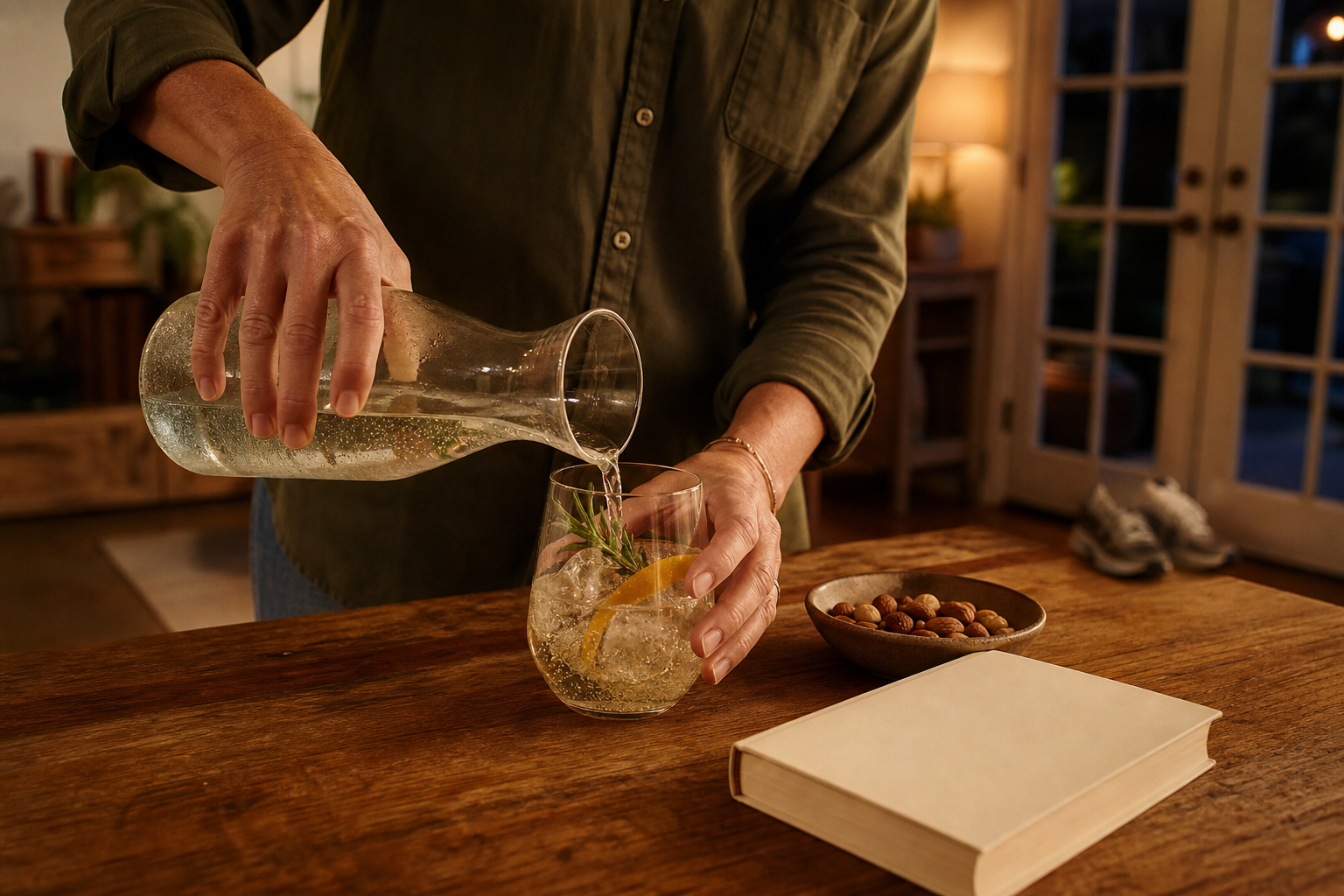
- Decide in advance what you will drink with dinner, while watching sport and at gatherings.
- Move alcohol out of sight and out of immediate reach. If other people in your home are willing to join you, ask them; a shared environment reduces cues.
- Mark the occasions most likely to test the boundary—birthdays, travel, restaurant meals or a stressful deadline—and choose your response before they arrive.
The point is not to prove that you possess exceptional willpower. It is to stop requiring willpower at every ordinary cue. A clear alcohol-free boundary, a supportive household and fewer visible temptations can make the experiment cognitively simpler than an improvised “damp” month.
This is a habit experiment, not treatment for alcohol dependence. If stopping feels physically unsafe, if you repeatedly cannot stop once you begin, or if alcohol is causing serious problems at home or work, speak with a physician or an addiction-medicine professional. Confusion, hallucinations or a seizure after reducing alcohol require emergency care.
Measure the brain-supporting systems you can actually observe
You cannot confirm dementia prevention with a sleep tracker, a clear morning or a successful month. You can observe whether removing alcohol improves the conditions that support cognitive health: restorative sleep, stable energy, physical activity, autonomic recovery and the ability to direct attention.
Start with sleep continuity, not sleep duration alone
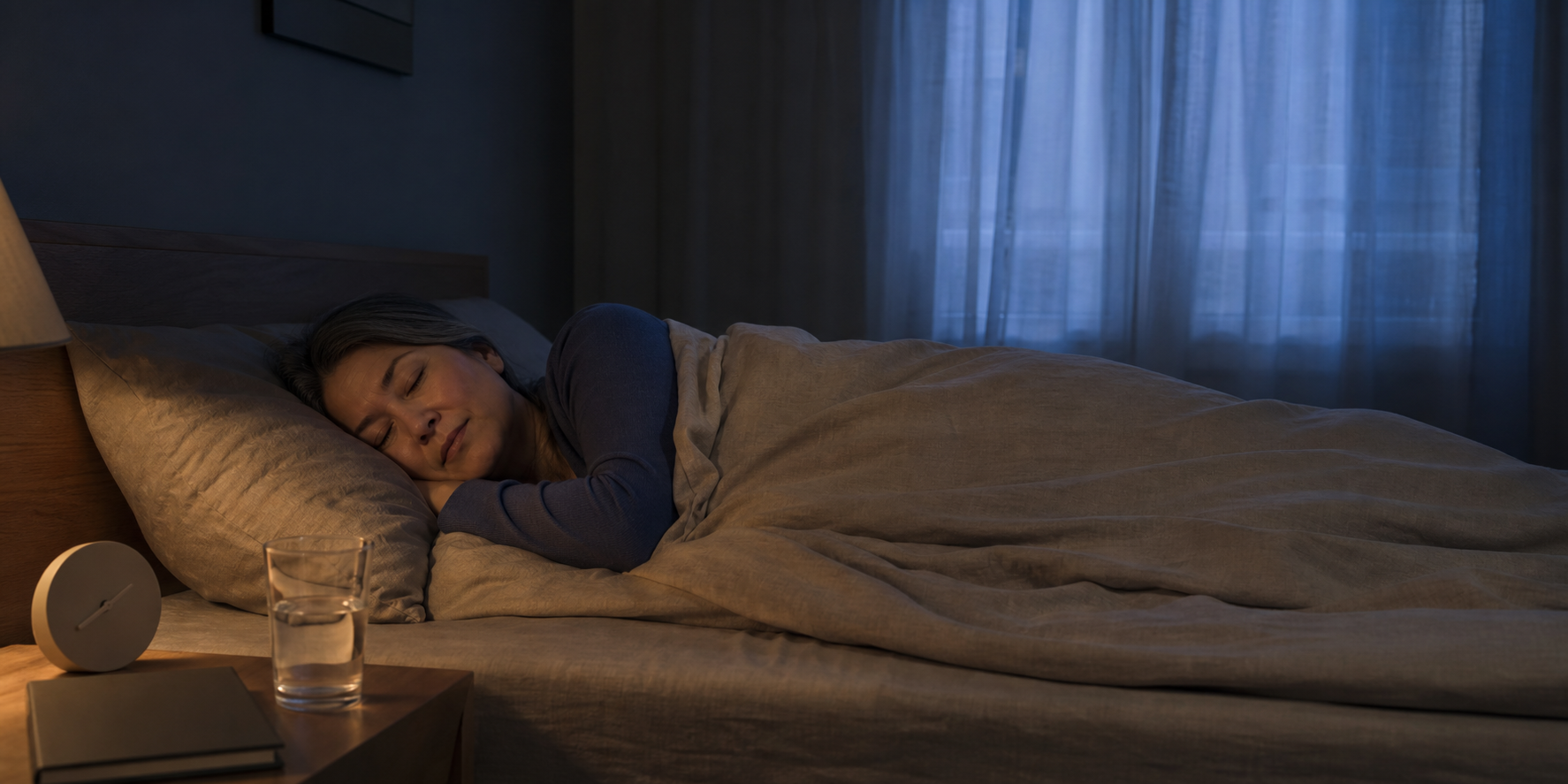
An evening drink may appear to help you fall asleep while still disrupting the structure and continuity of the night. The more revealing questions are whether you wake repeatedly, become mentally activated in the early hours, experience night sweats, or struggle to return to sleep.
Record your bedtime, waking time, awakenings and morning clarity in the same simple format each day. If you use a wearable, watch the direction of its sleep and heart rate variability readings across the month. Heart rate variability can serve as a proxy for recovery and parasympathetic activity, but a single high score is not a diagnosis and a low score is not a verdict.
Deep sleep is especially relevant because the brain’s glymphatic system is most active during this restorative state, helping clear metabolic waste. That does not mean one alcohol-free month “detoxes” the brain. It means that protecting consistent, deeper sleep is a practical way to support a process the brain already performs.
Notice whether the beginning of the week still feels like repair
Many people evaluate alcohol only by the presence or absence of a hangover. Midlife effects can be quieter: a Monday that feels like recovery rather than progress, less precise balance in yoga, reduced stamina, morning stiffness, puffiness or attention that takes longer to settle.
Choose one repeatable physical activity—walking, yoga, aerobic training or resistance work—and notice how it feels at comparable times. Look for continuity. Are you carrying fitness forward, or repeatedly rebuilding after tired evenings and fragmented nights? Aerobic and resistance exercise also belong in the larger brain-health plan because they support cerebral blood flow and neurotrophic signalling.
Treat genetic risk as context, not destiny
One copy of an APOE risk allele is associated with a higher likelihood of late-onset Alzheimer’s disease, but estimates vary across studies and populations. It is not a diagnosis, and it cannot tell you that a particular drink will cause dementia. Its practical value is narrower: it can make modifiable exposures and protective habits feel more consequential.
If a consumer genetic result is driving fear or major health decisions, review it with a qualified clinician or genetic counsellor. Whether or not you know your APOE status, the dependable foundations remain complementary: aim for 7–9 hours of sleep with consistent timing, maintain aerobic and resistance exercise, eat a Mediterranean-leaning and fibre-rich diet, practise mindfulness, and protect supportive social connection.
When alcohol leaves, cravings may simply change address
The missing drink creates a reward gap. The brain still recognises the usual evening cue and still expects something pleasant to happen next. Refined sweets offer a quick substitute, which is why someone who rarely cared about dessert may suddenly start searching the kitchen for sugar.
This is useful information, not evidence of weak character. Highly palatable sweets engage reward pathways and can establish their own cue-driven routine. If sugar intake rises while movement falls, the scale can rise during an alcohol-free month even though alcohol itself has disappeared. That does not invalidate the experiment; it reveals that the reward was removed without being redesigned.
Match each familiar cue with a replacement that is ready before the craving arrives:
- After work: change clothes, pour an alcohol-free drink and take a short walk before sitting down.
- While preparing dinner: eat a protein-rich component of the meal and begin hydrating rather than waiting until hunger and habit combine.
- During television or sport: keep one planned drink or snack available instead of grazing from an open package.
- When you want sedation: use breathwork, gentle movement, reading or calming music as the transition toward sleep.
- When you want company: call someone, sit with family or attend the event with your alcohol-free order already chosen. Do not ask food to solve a need for connection.
You may also notice temporary skin or appetite changes. Midlife hormonal fluctuation can affect the skin, while increased sugar intake can contribute to insulin and IGF-1 signalling associated with sebum production and inflammation. Do not assume every change is caused directly by abstinence. First compare what replaced the alcohol: sweets, later meals, less movement or longer evenings on the sofa. Persistent or concerning symptoms belong with a health professional, not a self-diagnosis.
Gentle self-massage, diaphragmatic breathing and light movement may feel helpful as part of an evening routine. Evidence for self-lymphatic massage remains emerging, however. It should not be presented as a way to manually flush toxins from the brain or as a substitute for sleep, exercise or medical care.
Use the 31 days to make a decision, not win a challenge
A useful experiment keeps the question narrow: what changes when alcohol is removed while the rest of your life remains reasonably stable? Beginning an extreme diet, a new training programme and a sleep overhaul on the same day may make you feel different, but you will not know which change mattered.
Before you begin, write a short baseline from several ordinary evenings. Include when you drank, what prompted it, how you slept, how clear you felt the next morning and how much energy you had for movement. During the break, record the same observations without turning the diary into another burden.
At the end, ask questions that produce a decision:
- Did I fall asleep differently, wake less often or return to sleep more easily?
- Did early-morning mental replay, sweating or restlessness change?
- Did attention become steadier at work or during reading?
- Did yoga, walking or training feel more consistent across the week?
- Which cues produced the strongest desire to drink?
- What replaced alcohol, and did that replacement create a new problem?
- Did abstinence feel simpler than moderation because it removed negotiation?
Your next step should follow your observations. If sleep and focus improved markedly, extending abstinence is a reasonable way to preserve the gain. If you choose to reintroduce alcohol, make the choice deliberate: reserve it for selected occasions, have it earlier rather than close to bedtime, pair it with a proper meal and hydration, and retain protected alcohol-free days.
An 80/20 approach can be a useful principle—protect brain-supporting habits most of the time while leaving room for an intentional exception—but it is not protective arithmetic. It does not make an unhealthy pattern harmless, and it is unsuitable if an intended exception repeatedly returns you to nightly drinking. In that situation, a clear abstinence boundary may demand less mental effort than moderation.
Dharmic restraint turns the pause into a practice
Dharmic traditions do not collapse into one wellness formula, and abstaining from alcohol does not by itself make a person spiritually advanced. Yet Hindu, Buddhist, Jain and Sikh paths repeatedly take attention, restraint, non-harm and balance seriously. Those values offer a richer frame than punishment.
Abhyasa—steady practice—asks you to return to the chosen action without making each evening a referendum on your worth. Ahimsa invites you to notice harm without self-contempt. Sattva and sehaj point, in their different settings, toward clarity and a more balanced way of being. These ideas shift the question from “What am I forbidden to enjoy?” to “What state of mind am I cultivating?”
Season matters too. Ayurveda’s idea of ritucharya, living in greater accord with seasonal rhythms, can help you stop treating winter quiet as a defect. An earlier night, reading, breathwork, gentle yoga and an unhurried meal may be more appropriate rewards than forcing social momentum with another drink. The discipline lies in listening closely enough to recognise fatigue before alcohol disguises it as a desire to continue.
Begin with one decision tonight: choose your 31-day window and write down what you want to observe. If stopping is medically safe for you, let the month show you what your evenings, sleep and attention feel like without alcohol. Then keep the habits that return the clearest mind—not because deprivation is virtuous, but because clarity is worth protecting.