

If instability in Bangladesh has made you wonder whether Bharat’s Northeast could suddenly become inaccessible, begin with one crucial distinction: vulnerability is not the same as imminent attack. Political disorder across the border can worsen the conditions around the Siliguri Corridor without proving that anyone has decided to strike it.
You will understand the danger more clearly if you treat Siliguri as a problem of concentrated dependence, recovery capacity and political relationships. That framework also reveals what a serious security response should accomplish – and which alarming headlines tell you almost nothing.
The corridor is a concentration risk, not a prophecy

Bharat’s Northeast depends on land connectivity through a narrow strategic passage commonly called the Siliguri Corridor or Chicken’s Neck. The broader planning environment connects West Bengal, Bihar, Assam and Meghalaya with the external geography of Bangladesh, Bhutan and the wider China factor. A disturbance in this setting can therefore have consequences far beyond its immediate location.
The important mechanism is concentration. A route becomes strategically sensitive when a large share of essential movement depends on it, alternatives are limited, and restoration could be difficult under pressure. The danger does not arise from narrowness alone. It arises from narrowness combined with dependence and uncertainty.
Bangladesh matters because cooperation with Dhaka has been one of the stabilising assumptions surrounding Bharat’s eastern connectivity. When that cooperation appears durable, planners can devote more attention to ordinary movement and development. When the political direction in Dhaka becomes uncertain, Bharat must prepare for less predictable border coordination, greater diplomatic friction and more room for other actors to exploit confusion. None of those possibilities, by itself, proves hostile intent.
When you encounter a claim about the corridor, test it with four questions:
- What has actually changed? Separate a change of government, street disorder, official policy, border administration and military activity. They do not carry the same risk.
- Which function could be affected? Ask whether the concern involves routine commerce, essential supplies, civilian travel, communications or military mobility. A map without a function tells you little.
- How long could the effect last? A temporary interruption and a sustained denial are different planning problems.
- What can be rerouted or restored? Vulnerability depends partly on the alternatives and recovery arrangements available, not merely on the point where disruption occurs.
This test keeps the analysis grounded. Siliguri deserves sustained preparation because its consequences are serious, not because every crisis in Bangladesh is a rehearsal for war.
Separate four levels of risk before judging a headline
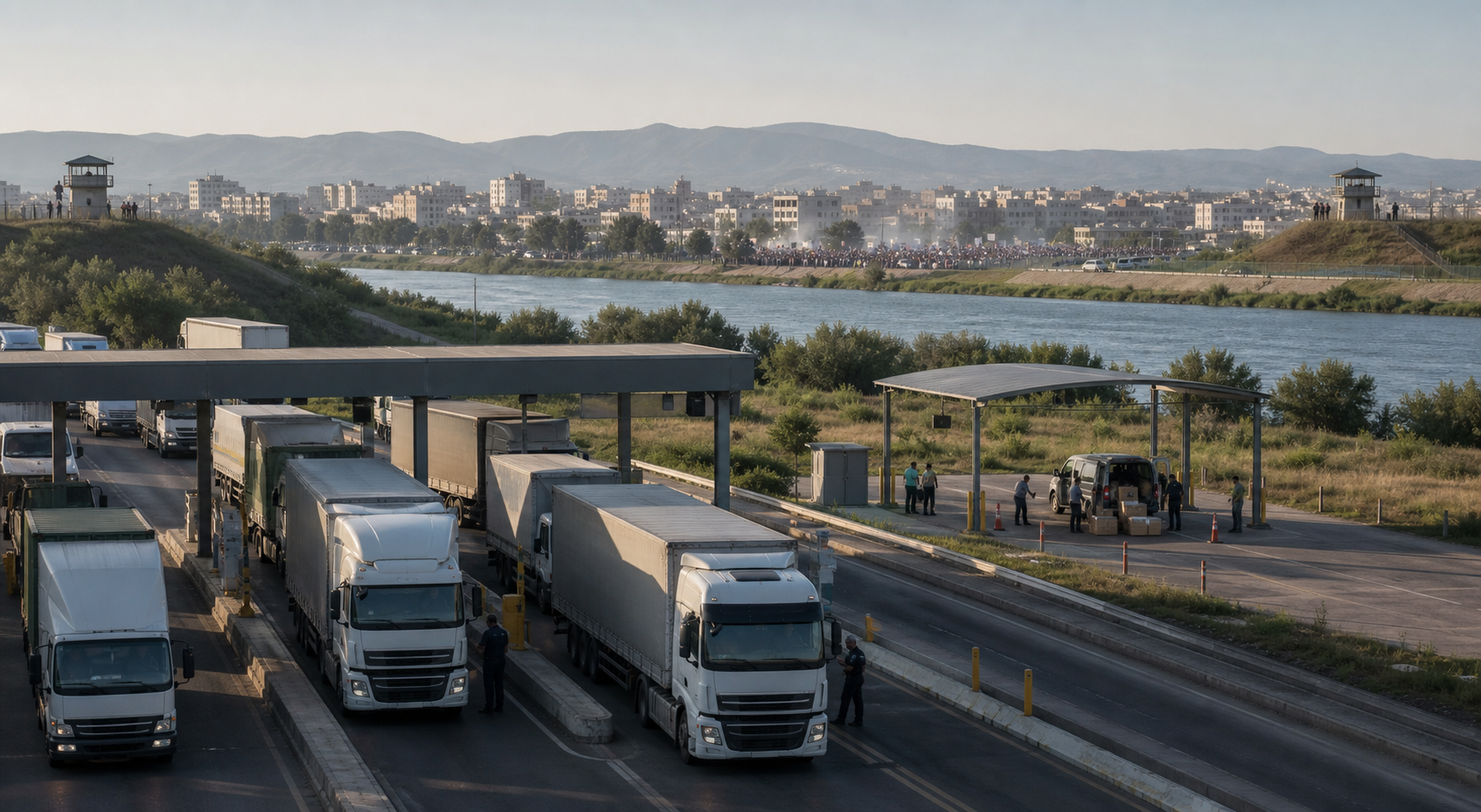
Bharat’s sacrifice in the creation of Bangladesh remains part of the historical relationship between the two countries. It cannot, however, serve as a permanent security guarantee. The belief that past assistance will determine every future government’s conduct confuses historical memory with present alignment. Bilateral relations have varied with the political formation governing Dhaka, which makes institutional preparation more reliable than personal or party-level goodwill.
A useful assessment places developments on a four-level ladder:
- Domestic instability while cooperation continues. Political turmoil may distract institutions or make decisions less predictable, but official communication and ordinary border management can continue. At this level, the main problem is uncertainty rather than demonstrated hostility.
- A less cooperative bilateral policy. Risk rises when sustained official decisions, rather than isolated rhetoric, make coordination harder. This is a diplomatic and resilience challenge even if no armed threat exists.
- Persistent coercion or indirect disruption. Repeated interference, tolerated hostile activity or verified attempts to disrupt connectivity would require a stronger response. Attribution matters here: coincidence, criminal activity, political agitation and state-directed pressure must not be treated as interchangeable.
- An open or coordinated armed contingency. This is the highest-consequence case. It requires evidence of intent, capability and observable preparation. The strategic importance of Siliguri makes such a contingency necessary to plan for, but does not make it a forecast.
Do not move a development up this ladder merely because the language around it becomes more dramatic. Look for changes in the actor involved, the authority behind the action, its persistence, the capability being assembled and the practical effect on connectivity. A slogan can reveal sentiment. It cannot substitute for evidence of operational intent.
This distinction also prevents two opposite errors. Complacency assumes that historical friendship has removed the danger. Panic assumes that any instability has already produced an enemy coalition. Responsible statecraft rejects both.
A credible response must preserve continuity, not display strength
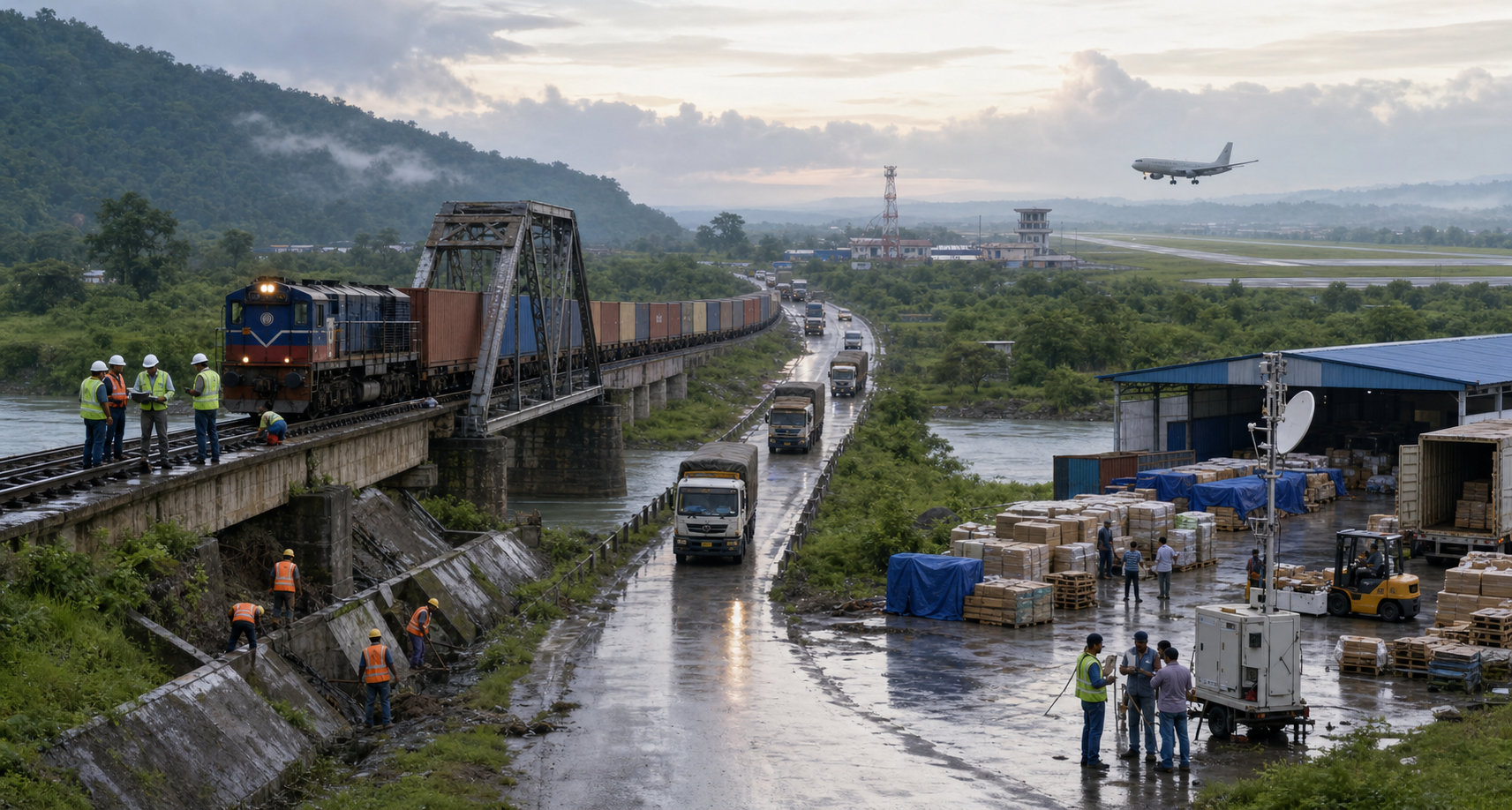
Large armed forces and impressive platforms do not automatically solve a geographically constrained problem. A smaller actor can use terrain, timing and narrowly designed capabilities to offset a broader material disadvantage. Brute power, geography, task-specific systems and diplomacy must therefore be considered together.
For Siliguri, that reasoning points to six priorities. The operational details should remain protected, but the purpose of each priority can be judged publicly.
- Reduce concentrated dependence. Alternative connectivity should be treated as strategic redundancy, not merely as a peacetime development project. For every essential function tied to the corridor, planners should know what alternative exists, what permissions it requires, what its capacity limits are and what conditions could make it unusable. An alternative on a map is not redundancy unless it can carry the required function when the primary route is under stress.
- Design for recovery as well as defence. Preventing disruption is only one part of security. A credible plan also needs rapid assessment, repair, rerouting and restoration. Exercises should test whether movement can resume under degraded conditions rather than merely demonstrate that forces can arrive. The revealing measure is continuity after a disruption, not the size of the display before one.
- Use capabilities suited to the mission. Surveillance, dependable communications, mobility, engineering support and rapid response may matter more in a confined contingency than a prestigious platform designed for a different theatre. The right question is not which asset appears most powerful. It is which combination can detect a problem, limit it and restore essential movement.
- Strengthen resilience beyond the corridor. The Northeast should be able to maintain essential administration and supplies during a temporary interruption. Distributed capacity on the far side of a chokepoint reduces the leverage created by that chokepoint. Public discussion need not reveal routes, quantities or response timings to insist that such continuity be tested.
- Build relationships wider than one government. Bharat needs durable channels with Bangladeshi state institutions and political stakeholders across changes of leadership. This does not mean intervening in Bangladesh’s domestic politics. It means ensuring that border coordination and crisis communication do not depend entirely on personal chemistry with one ruling formation.
- Keep diplomacy available during a crisis. Preparedness and communication reinforce each other. Diplomatic channels can clarify intent, prevent an isolated event from escalating and create an exit from confrontation. Closing those channels for the sake of appearing uncompromising can turn manageable friction into a larger security problem.
These priorities share one principle: Siliguri is secure when Bharat can absorb a disturbance without losing strategic freedom. Fortification may contribute to that result, but resilience also depends on alternatives, recovery, coordination and restraint.
Watch verified behaviour and refuse communal shortcuts

You do not need access to classified information to read this issue more intelligently. You do need to distinguish official behaviour from political theatre and verified patterns from viral fragments.
Signals that deserve closer attention
- Persistent official policy changes that weaken border cooperation or established communication.
- Repeated, independently verified disruption affecting the corridor or the approaches that support it.
- A sustained breakdown in crisis communication between relevant authorities.
- Observable changes in capability or posture that are accompanied by evidence of hostile intent.
- Pressure from more than one direction supported by credible evidence of coordination, rather than assumption based on geography alone.
Claims that should not move your assessment by themselves
- A viral map that shows proximity but says nothing about capability, duration or recovery.
- A speech by a party figure or activist presented as though it were settled government policy.
- One border incident extrapolated into a permanent strategic realignment.
- An anonymous claim that cannot identify the actor, action or corroborating evidence.
- A communal accusation that treats a government, political party, armed group and entire population as one actor.
The last distinction is especially important for a dharmic public culture. Viveka – disciplined discernment – requires us to identify actors accurately. Dharma does not require strategic naivety, but patriotism does not require collective suspicion either. A hostile decision by a government, a slogan from a party, an action by a mob and the daily life of ordinary Bangladeshis are not equivalent facts.
This precision makes Bharat safer. Communal generalisation obscures responsibility, amplifies propaganda and makes measured diplomacy harder. Clear attribution allows a firm response to the responsible actor without manufacturing unnecessary enemies.
Key takeaways
- Bangladesh’s instability raises uncertainty around Siliguri, but it does not by itself establish hostile intent or imminent attack.
- The corridor’s real vulnerability comes from the combination of concentrated dependence, limited alternatives and the difficulty of restoring movement under pressure.
- Historical gratitude and political goodwill are valuable, but neither can replace present-day capability assessment and institutional planning.
- A sound strategy combines alternative connectivity, rapid recovery, fit-for-purpose capabilities, resilience inside the Northeast and continuing diplomacy.
- Judge each new development by the actor, verified action, persistence, capability, practical effect and quality of corroboration – not by the emotional intensity of the headline.
As this situation develops, keep a simple five-column record: actor, verified action, duration, effect on connectivity and corroboration. Change your assessment only when the evidence in those columns changes. That habit will help you recognise a genuine escalation early without becoming an instrument of panic in the meantime.