

You have a screenshot of a hostile message. It may contain a slur, a threat, a false accusation, or a demand to target a temple, family, caste, or religious community. By the time anyone asks whether it is legally actionable, names and phone numbers may already be circulating through community groups.
That is the moment to slow the crowd down and speed the evidence up. A community protects itself best when it can remove immediate danger, preserve proof, and keep innocent people from being punished by rumor. Due process is the discipline that holds those aims together.
Name the conduct before you name the enemy
Labels such as Hinduphobia, Brahmophobia, caste hatred, “love jihad,” or “land jihad” may express a community’s fear, but they do not tell a police officer, court, employer, or platform exactly what happened. Some of these labels are also politically contested. Your first task is therefore translation: turn the label into observable conduct.
- Identify the target: Was the message directed at an individual, a named institution, a caste, a religious community, or an idea?
- Record the act: Did someone insult, threaten, impersonate, publish private information, solicit violence, commit fraud, forge a document, trespass, or repeatedly harass?
- Preserve the context: What came before and after the disputed words? Was the statement isolated, repeated, coordinated, satirical, argumentative, or attached to a concrete plan?
- Assess capability: Does the speaker know the target’s address, workplace, school, temple, or routine? Are other people responding as if they intend to act?
- State the present harm: Is anyone in immediate physical danger, being followed, losing control of an account, facing financial fraud, or being exposed through doxxing?
A harsh criticism of a doctrine, historical claim, social hierarchy, or institution is not automatically an attack on the people associated with it. The proper response may be evidence, counterspeech, or a platform complaint. A direct threat, incitement, targeted harassment campaign, or publication of private identifying information requires a different response. Only a competent authority can finally determine which legal provision applies, but you can make that assessment possible by describing the conduct precisely.
In Diary No. 69172/2025, a plea sought formal recognition of “Brahmophobia” as a distinct punishable form of caste-based hate speech. The Supreme Court permitted its withdrawal, left the petitioner free to approach appropriate forums, and emphasized that hate directed at any community is unacceptable. The practical lesson is limited but important: the absence of a bespoke label does not make a concrete threat or act of incitement harmless. It means the complaint must connect the facts to the general law that protects every community.
Article 19(1)(a) protects speech, while Article 19(2) permits specified reasonable restrictions. In disputes over hateful or incendiary expression, intent, context, and the likelihood of incitement matter. Do not promise a victim that an offensive sentence will necessarily produce a criminal case. Equally, do not tell a victim that nothing can be done merely because a community-specific offence has not been created. A qualified Indian lawyer or the competent authority should assess the current law against the complete facts.
Use a triage ladder, not a WhatsApp crowd
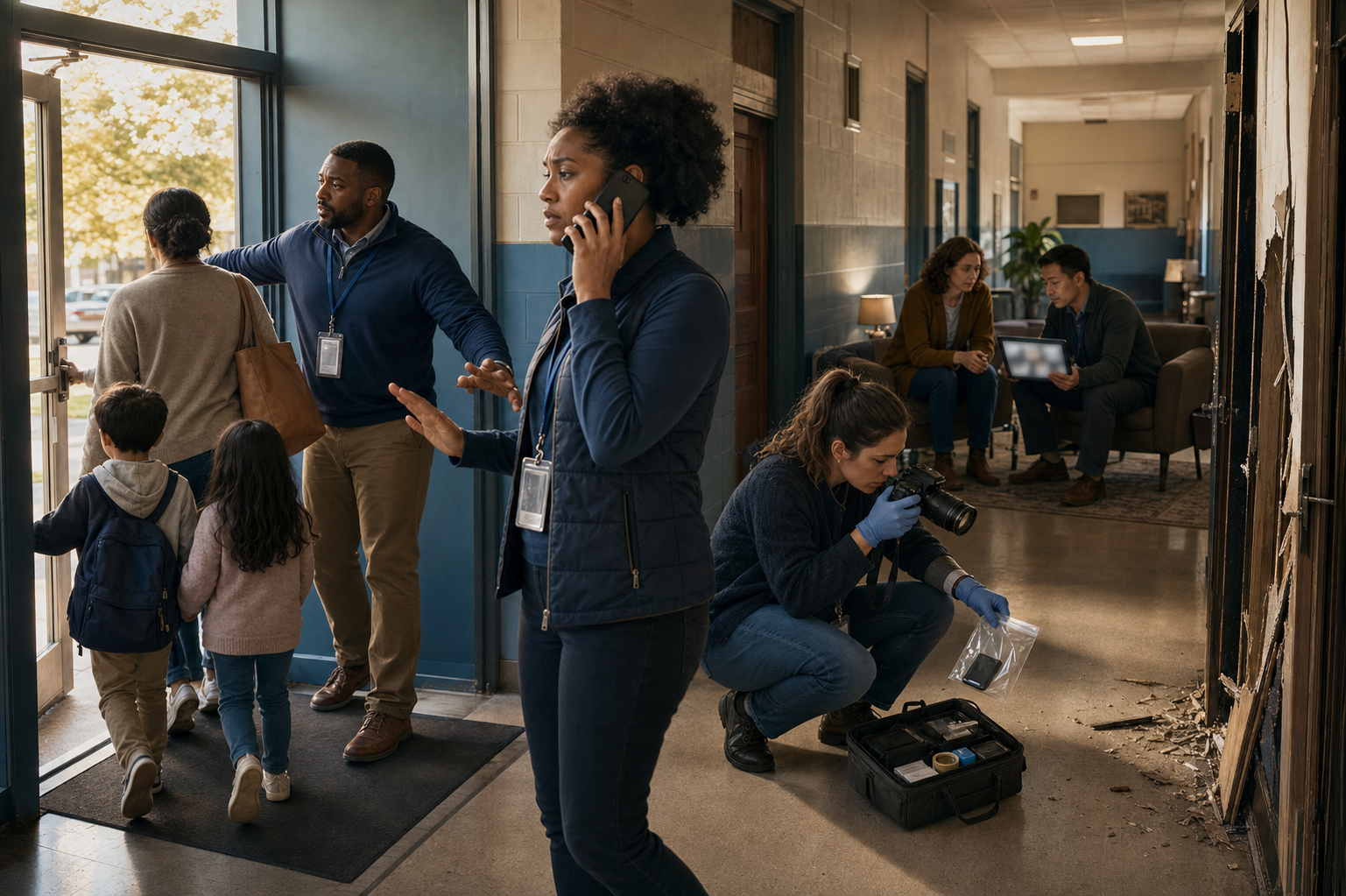
Different problems require different first doors. A community group becomes dangerous when every allegation triggers the same response: forward the screenshot, publish the accused person’s identity, and assemble people at a home, police station, workplace, or disputed property. Use the narrowest lawful route that can address the actual risk.
| What you observe | Likely first route | What to do | What not to do |
|---|---|---|---|
| A specific threat, assault, abduction risk, stalking, or danger to life | Emergency response and police | Call 112, move the person to safety if that can be done without confrontation, and preserve the threat | Do not send an informal crowd to confront the suspected person |
| Cyber-enabled or financial fraud | Cybercrime response | Contact 1930 promptly and preserve transaction references, account details, messages, and URLs | Do not transfer more money, reveal credentials, or attempt a retaliatory account takeover |
| A child may be endangered, exploited, missing, or coerced | Child-protection services | Contact 1098 and the appropriate authorities; restrict the child’s identity to people who need it | Do not publish the child’s photograph, address, school, or allegations in a public campaign |
| A dispute about two consenting adults in a relationship | Private safety check and lawful support, if requested | Ask whether either adult reports coercion, fraud, confinement, threats, or violence; respect voluntary adult choice | Do not treat religious difference itself as proof of a crime or subject the adults to confinement, intimidation, or public exposure |
| A land, title, tenancy, mutation, or boundary dispute | Property lawyer, revenue authority, civil forum, or police where a specific offence is alleged | Collect registered documents, revenue records, encumbrance information, notices, photographs, and a dated chronology | Do not attempt an informal eviction, occupation, demolition, or “on-ground intervention” |
| Hostile online content without an immediate threat | Evidence preservation, platform process, counterspeech, and legal assessment where warranted | Capture the complete thread, original URL, account identifiers, date, time, and relevant surrounding material | Do not crop away context, mass-forward the content, or declare guilt before verification |
The national emergency, cybercrime, and child-protection routes above are the appropriate starting points for the risks they cover. A community helpline may help a frightened caller find those routes, but it must remain a bridge to statutory services rather than a substitute for them.
During the first hour, use the following evidence routine:
- Establish safety. Ask where the affected person is, whether the suspected aggressor is nearby, and whether emergency assistance is needed. Do not delay an emergency call while debating terminology.
- Preserve the original. Save the native file where possible. Record the full URL, account handle, visible account identifier, date, time, time zone, platform, and the surrounding conversation. Keep an untouched copy.
- Write a neutral chronology. Record what happened in time order. Separate what the affected person directly saw or heard from what another person forwarded or inferred.
- Identify witnesses and custodians. Note who first received the message, who downloaded it, and who can authenticate a physical document, call, meeting, or property record.
- Restrict circulation. Give unredacted evidence only to the people who need it for safety, legal assessment, or investigation. Use redacted copies for internal briefing whenever possible.
- Assign one accountable lead. One person should maintain the incident file, record referrals, and prevent contradictory public statements. That person should not become an amateur investigator or contact the accused for a confrontation.
Deleting a hostile message may destroy useful context. Republishing it may amplify the abuse, reveal private information, or expose the target to further danger. Preserve first, restrict access, and ask the platform to act through its formal process when appropriate.
Build a complaint that can survive scrutiny

An angry compilation is not the same thing as an actionable complaint. The strongest file allows a stranger to understand the event without adopting your political vocabulary or trusting your conclusions in advance.
- Complainant and affected person: State who is reporting, who was targeted, and how each person knows the facts.
- Exact conduct: Describe the words or actions accurately. Use only the shortest quotation needed; attach the complete material separately.
- Time and place: Give the date, time, time zone, physical location, platform, URL, account, or property involved.
- Context: Include preceding messages, repeated incidents, prior warnings, related accounts, or a known dispute. Do not omit material merely because it complicates your interpretation.
- Evidence index: Number every screenshot, recording, document, witness note, transaction reference, property record, and previous complaint. Keep the index separate from the narrative.
- Specific harm or risk: Explain whether the conduct caused fear, exposed private information, disrupted worship or work, solicited violence, produced financial loss, or created an immediate safety risk.
- Requested action: Ask the recipient to preserve records, assess the conduct under applicable law or policy, protect the affected person, acknowledge receipt, and provide a reference number or next step.
A useful opening: On [date and time], [person or account] used [platform or place] to direct [specific words or conduct] at [target]. The attached material preserves the full context. We request an assessment under the applicable law or policy and any immediate protection required by the stated risk.
Keep the criminal, employment, platform, civil, and public-advocacy tracks distinct. A platform may remove content that does not meet the threshold for criminal liability. An employer may investigate workplace harassment under its own policy. A property dispute may belong before a civil or revenue forum even when community rhetoric surrounds it. Filing in the wrong forum wastes time and can turn a genuine grievance into a spectacle.
Be especially careful when alleging a coordinated domestic or foreign campaign. Similar slogans, simultaneous posts, or a cluster of anonymous accounts may justify investigation, but they do not by themselves prove common control. A defensible coordination claim needs incident-level timestamps, account relationships, patterns of amplification, multilingual comparison, digital-forensic analysis, and preferably independent replication. Until that work exists, call the pattern suspected or alleged. Do not present inference as attribution.
The same discipline applies when a dispute concerns textbooks, historical violence, memorialization, or the treatment of a Dharmic tradition. Preserve archives, survivor testimony, publication histories, and competing scholarly interpretations. Ask for transparent review and correction. Do not convert a weak historical assertion into a criminal accusation against living people who had no part in the event.
Design community protection so it cannot become vigilantism

If you operate a temple desk, volunteer network, legal-referral group, or round-the-clock helpline, good intentions are not enough. The service will receive frightened callers, family disputes, political claims, genuine emergencies, malicious reports, and incomplete information. Its structure must prevent a rumor from becoming an operation.
- Publish a narrow role: The service receives information, triages risk, preserves caller consent, and refers people to qualified authorities. It does not determine guilt, conduct raids, seize property, confine adults, or organize confrontations.
- Ask about behaviour before identity: Scripts should ask about threats, coercion, fraud, violence, forgery, trafficking indicators, trespass, or unlawful disclosure. Religion, caste, or nationality should never substitute for evidence.
- Respect adult autonomy: Shafin Jahan v. Asokan K.M. and Lata Singh v. State of Uttar Pradesh affirm adult choice in relationships. A call involving consenting adults must therefore focus on any reported coercion or crime, not on an interfaith relationship by itself.
- Require consent and minimize data: Tell callers what will be recorded, why it is needed, who may receive it, and how long it will be kept. Collect only what the referral requires.
- Separate intake from escalation: High-risk referrals should receive supervisory review. The volunteer who answers a call should not be able to publish an allegation or mobilize people unilaterally.
- Prohibit retaliation in writing: The code of conduct should expressly ban doxxing, harassment, threats, physical mobilization, informal property intervention, and contact intended to intimidate the reported person.
- Maintain a verified referral map: Keep the appropriate emergency, police, cybercrime, child-protection, women’s-support, legal-aid, counseling, civil, and revenue routes available to staff.
- Audit outcomes: Review whether callers received an appropriate referral, whether volunteers used profiling language, whether data was disclosed unnecessarily, and whether a correction was issued when a claim proved false.
- Report without exposing people: Periodic transparency reports may show call categories, referrals, and outcomes in anonymized form. They should not become lists of unproved accusations.
- Use independent oversight: Legal professionals, data-protection specialists, women and child-rights advocates, and representatives of Dharmic communities can examine difficult cases and recurring bias.
A helpline that collects names, relationship details, locations, identity documents, or property records is creating a sensitive data repository. The Digital Personal Data Protection Act, 2023 makes consent, data minimization, controlled access, secure handling, and limited retention central concerns. Obtain qualified advice on the service’s actual obligations before collecting such information at scale. A breach could expose the very people who asked for protection.
Quality control should be practical. Train volunteers with hypothetical calls. Use mystery-caller audits. Review whether the same facts receive the same response when names, caste markers, or religions are changed. If the answer changes with identity rather than evidence, the system is profiling, not protecting.
Key takeaways: five rules for disciplined protection

- Protect life before debating labels. Use 112 for immediate danger, 1930 for cyber or financial fraud, and 1098 when a child needs protection.
- Describe conduct, not an enemy category. Threats, coercion, fraud, incitement, doxxing, forgery, and trespass are facts that authorities can assess.
- Preserve the complete record. Keep originals, context, timestamps, URLs, witness details, and a neutral chronology. Redact material before wider circulation.
- Escalate through accountable channels. A community desk can document and refer; it must never become a crowd-dispatch service, informal court, or public blacklist.
- Apply one standard to everyone. Protect Hindu, Buddhist, Jain, Sikh, caste, and other communities from targeted hatred while preserving adult autonomy, the presumption of innocence, and the right to contest ideas.
Dharmic ethics give this discipline a recognizable shape. Ahimsa rules out retaliatory intimidation. Satya requires you to claim no more than the evidence establishes. Karuna keeps the endangered person at the center without treating an unverified accusation as permission to destroy someone else. Constitutional fraternity turns those commitments into a common civic standard.
Do not wait for the next crisis to invent your procedure. Prepare a one-page protocol containing the three urgent numbers, an evidence checklist, one qualified legal contact, one data custodian, one authorized public spokesperson, and a written ban on doxxing or physical mobilization. Run one practice scenario with your volunteers. When a real report arrives, that small amount of preparation can keep fear from outrunning fact.
References
- Hindu Human Rights — Supreme Court declines “Brahmophobia” plea: legal clarity on hate speech, caste, and fraternity.
- Hindu Existence — Rajasthan VHP’s 24/7 Helpline: A Critical Look at Safety, Legal Rights, and Harmony.