

You may have seen claims that children in Pakistan-occupied Kashmir are being drawn into extremist networks and wondered how seriously to take them. The responsible answer is neither instant dismissal nor instant certainty. Treat the danger as credible enough to protect children now, while demanding evidence strong enough to support public accusations and legal action.
That balance matters. Careless amplification can expose children, spread extremist propaganda, and turn an allegation against proscribed organizations into suspicion of an entire religious community. Excessive caution can give recruiters time to hide a pipeline. You need a standard that is urgent about safeguarding, exact about evidence, and disciplined about whom it holds responsible.
Key takeaways
- Children between 7 and 13 are alleged to have been groomed or trained in school-like settings connected to extremist networks in PoK. That claim warrants independent verification, not casual repetition as settled fact.
- Recruitment does not begin only when a child receives a weapon. Ideological conditioning, surveillance, carrying messages, moving supplies, identifying routes, or performing other auxiliary tasks can all place a minor inside an armed network.
- Secrecy, militarized discipline, martyrdom imagery, dehumanizing language, social isolation, and escalating demands are warning signs. No single sign proves recruitment, and religious education by itself is not evidence of extremism.
- Pakistan, as a State Party to the Optional Protocol to the Convention on the Rights of the Child on the involvement of children in armed conflict, has a duty to prevent non-state armed groups from recruiting or using minors in territory under its control.
- Children intercepted in a security operation should be treated first as possible victims of grooming or coercion. Public exposure, punitive interrogation, and automatic criminalization can deepen trauma and make reintegration harder.
- Your most useful response is to preserve verifiable information without recirculating propaganda, insist on independent investigation, name the organization allegedly responsible, and advocate for education, rehabilitation, and family support.
Recognize the recruitment pipeline without condemning the classroom
The most dangerous recruitment system rarely introduces itself as recruitment. It can resemble tuition, religious instruction, a youth club, charitable assistance, or a disciplined extracurricular program. The early promise is usually belonging, moral importance, protection, or purpose. The violent demand comes later, after the child has been separated from competing relationships and taught that obedience is a test of loyalty.
This is why alleged involvement by Jaish-e-Mohammad and Lashkar-e-Taiba deserves close scrutiny. Both organizations are sanctioned under the United Nations Security Council’s ISIL and Al-Qaida sanctions regime and have been implicated in major attacks in India. Their established militant character makes any credible connection to a children’s program a safeguarding emergency. It does not, however, prove that every named school, teacher, charity, or pupil is involved.
Watch for a sequence rather than one dramatic symbol. A recruitment pipeline may begin with emotionally charged lessons, then narrow the child’s social world, reward conformity, normalize an enemy image, introduce secrecy, and finally assign a small task. That first task may seem harmless. Carrying a package, observing a road, passing a message, or attending a restricted gathering can nevertheless create complicity, fear, and dependence. Each completed task makes the next refusal harder.
Several warning signs become more meaningful when they appear together:
- “Special classes” whose content, instructors, funding, or location are concealed from parents and ordinary school oversight.
- Paramilitary routines that go beyond normal physical education, including obedience drills tied to ideological loyalty.
- Repeated glorification of martyrdom, armed organizations, or named perpetrators of violence.
- Dehumanizing descriptions of Indians, Hindus, other religious communities, dissenting Muslims, or anyone placed outside the recruiter’s chosen in-group.
- Pressure on children to keep secrets from caregivers or to report the doubts and private conduct of peers.
- Efforts to cut off alternative teachers, media, friendships, or religious interpretations.
- Requests for logistical, reconnaissance, courier, fundraising, or online propaganda work, even when the child is kept away from a weapon.
Use these as prompts for investigation, not as a homemade verdict. Marching, strict discipline, religious vocabulary, political anger, or charitable funding can each have innocent explanations. The decisive question is whether adults are progressively binding a child to a violent organization, preparing the child for hostilities, or using the child to support such activity.
The invocation of Ghazwa-e-Hind requires the same precision. Violent propagandists use an ideologized version of the motif to sacralize hostility toward India and flatten a political project into a supposed religious obligation. Do not concede that framing. It does not represent Muslims as a whole, and repeating it without explanation can inadvertently give the recruiter’s interpretation the authority it seeks. Name it as extremist propaganda tied to specific actors.
Demand evidence that can survive scrutiny

A grave allegation needs more than a disturbing clip, an anonymous caption, or a recognizable flag in the background. Digital material can lose dates, locations, and context as it is copied. A child may be misidentified, an old recording may be relabeled, or conventional instruction may be presented as militant training. Weak evidence does not protect anyone; it gives a culpable organization an easy way to discredit the entire case.
Before treating a claim as established, separate it into facts that must each be verified:
- Who is the child, and how was the child’s age assessed? Appearance alone is not a reliable age determination.
- Where did the activity occur? A district name or a social-media caption is not a geolocation.
- When did it occur? Investigators should compare the original file, upload history, visible weather, landmarks, and other time indicators.
- What exactly was the child doing? Attending a lesson, repeating a slogan, performing a drill, carrying supplies, and participating in hostilities are different claims and require different evidence.
- Which organization controlled or financed the activity? Symbols and rhetoric can support attribution, but instructor identities, financial flows, organizational aliases, property records, and multiple witnesses create a stronger chain.
- Is the account independently corroborated? Testimony from children should be gathered through trained, trauma-informed personnel and checked, where safely possible, against parents, teachers, residents, records, and authenticated media.
Evidence collection must not become another form of exploitation. Do not publish a child’s face, name, school, home, or family details merely to make a claim persuasive. That exposure can invite retaliation, stigmatize siblings, compromise an investigation, and leave a permanent digital record attached to a child who may have been coerced.
If relevant material reaches you, record the original URL, account name, date, caption, and surrounding context without forwarding it through public groups. Preserve a screenshot or original message where doing so is lawful and safe, but do not edit the material or add confident claims you cannot substantiate. Send the information through a protected channel to a credible child-protection, human-rights, journalistic, or law-enforcement body capable of verification. Do not contact a suspected recruiter or publicly question an identifiable child yourself.
The UN Monitoring and Reporting Mechanism on Children and Armed Conflict, created under Security Council Resolution 1612, offers a useful evidentiary frame. It covers recruitment and use of children as well as killing, maiming, and attacks on schools. Documentation designed to support that kind of review is more valuable than viral material designed mainly to provoke outrage.
Make child protection the operating principle
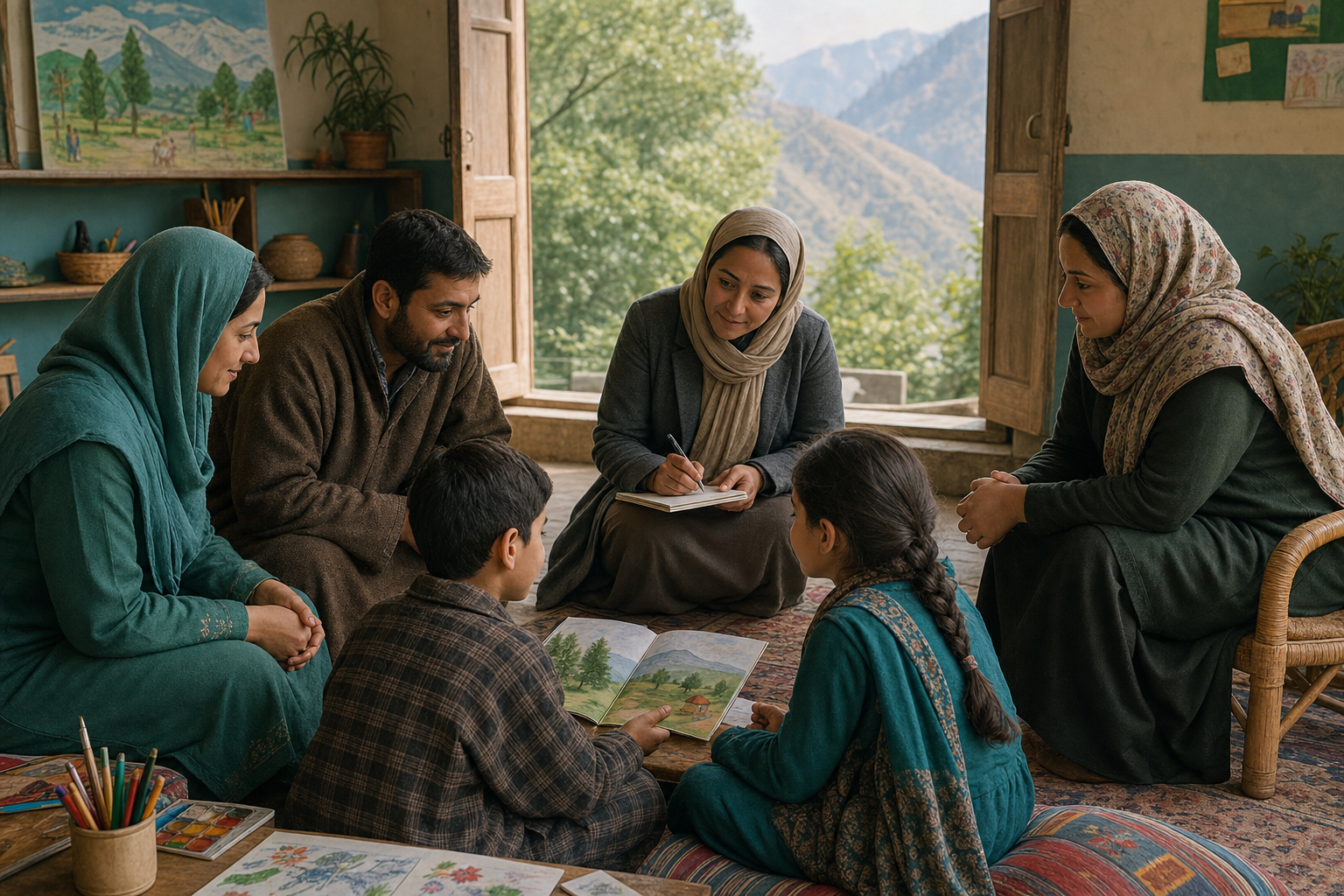
The law sets a clear floor. The Rome Statute classifies the conscription, enlistment, or use of children under 15 in hostilities as a war crime. The Optional Protocol on children in armed conflict requires States Parties to take feasible measures against recruitment or use of people under 18 by non-state armed groups. Customary international humanitarian law also prohibits the recruitment and use of children in armed conflict.
These rules matter before anyone proves that a child fired a weapon. A minor used as a courier, lookout, guide, propagandist, or logistical assistant may be contributing to hostilities while remaining physically distant from combat. Authorities should therefore investigate the entire support structure, not define the problem so narrowly that only armed children count.
Pakistan’s duty is practical, not rhetorical. A credible response in territory under its control would require unannounced safeguarding inspections where legally authorized, transparent oversight of curricula and extracurricular programs, instructor vetting, protected complaint systems, examination of suspicious funding, and prosecution of adults who recruit or use minors. Inspections should follow evidence and safeguarding risks rather than treating every madrasa or religious charity as suspect.
Financial investigation is particularly important because a training network needs premises, transport, staff, food, communications, and recruitment material. Scrutiny must follow designated entities through aliases and purported charitable fronts associated with JeM or LeT. Pakistan’s removal from the Financial Action Task Force grey list should not be treated as the end of monitoring; sustained enforcement is the test that matters.
India also needs a child-specific protocol wherever minors may cross the Line of Control or become involved in infiltration. The first secure encounter can determine whether the child cooperates, shuts down, or is further traumatized. A sound sequence is:
- Use non-lethal interception wherever operational conditions permit and separate the child from adult suspects.
- Secure urgent medical needs and notify the appropriate child-welfare authority.
- Have trained personnel assess age, coercion, trafficking indicators, immediate danger, and family circumstances.
- Conduct any necessary security interview in a child-sensitive manner, without public display or presumptions of adult culpability.
- Provide trauma-informed psychological care, education continuity, and legal safeguards.
- Use neutral humanitarian intermediaries for family tracing or cross-border return when return is lawful, safe, and in the child’s best interests.
This approach is not leniency toward the organization that recruited the child. It distinguishes the architect of the abuse from the person whose immaturity, deprivation, fear, or manipulated loyalty was exploited. Treating every recruited minor as a hardened militant can destroy intelligence opportunities, weaken public legitimacy, and push a recoverable child further into the identity imposed by recruiters.
Rehabilitation has to offer more than a brief ideological lecture. A child may need safety from the network, help with trauma, education catch-up, family support, a credible livelihood path, and a new peer community. Caregivers, educators, social workers, clinicians, and religious scholars who clearly reject violence all have different roles. Public shaming works against reintegration because it tells the child that the extremist group is the only community that will still provide belonging.
Turn Dharmic concern into disciplined public action
A pro-Dharma response should be recognizable by how it treats the vulnerable. Ahimsa rejects the conversion of a child into an instrument of violence. Karuna and daya require us to see a victim even when indoctrination has made that victim hostile. Seva turns concern into education, care, and restored opportunity. These principles do not weaken resistance to terrorism; they prevent resistance from reproducing the recruiter’s contempt for human life.
Language is the first test. Say “alleged recruitment by JeM- or LeT-linked actors” when that is the claim. Do not substitute “Muslims,” “Kashmiris,” or “madrasas.” Collective blame is inaccurate, alienates people whose cooperation may expose recruiters, and gives extremist propaganda fresh evidence for its claim that communities cannot coexist.
You can also make public advocacy more specific. Instead of asking only for condemnation, ask elected representatives, diplomatic institutions, child-protection bodies, and civil-society organizations to pursue measurable outcomes:
- Independent access for trained investigators and child-protection personnel.
- Documentation compatible with UN mechanisms rather than partisan social-media campaigns.
- Safeguarding inspections based on risk indicators, with protection for legitimate religious education.
- Financial tracing of designated groups, their aliases, and fronts.
- Confidential reporting and referral channels for teachers, parents, students, and local residents.
- Rehabilitation funds covering education, trauma care, family assistance, and safe reintegration.
- School programs that teach critical evaluation of propaganda and expose children to nonviolent forms of service, achievement, and belonging.
The digital part is equally concrete. Do not quote dehumanizing propaganda at length, repeatedly display extremist insignia, or repost videos merely to denounce them. Preserve what investigators need, report glorifying content through the platform’s available process, and describe the manipulation in your own words. Recruiters benefit whenever outrage delivers their imagery to a wider audience.
Regional mechanisms should remain focused on prevention. The Line of Control ceasefire reaffirmed in 2021 can support communication about child-protection incidents through UN channels or neutral humanitarian actors. Notifications concerning missing, intercepted, or endangered minors need not wait for a political settlement. Keeping a child from disappearing into an armed pipeline is a limited objective on which responsible institutions should be pressed to cooperate.
If another alarming claim reaches you, pause before sharing it. Record what is verifiable, protect every identifiable child, ask who can corroborate the place, date, age, activity, and organizational link, and direct your public pressure toward an independent inquiry and a child-first response. If the allegations are proved, that discipline will help expose the responsible network. If any detail is false, the same discipline will prevent an innocent child or community from becoming collateral damage.