
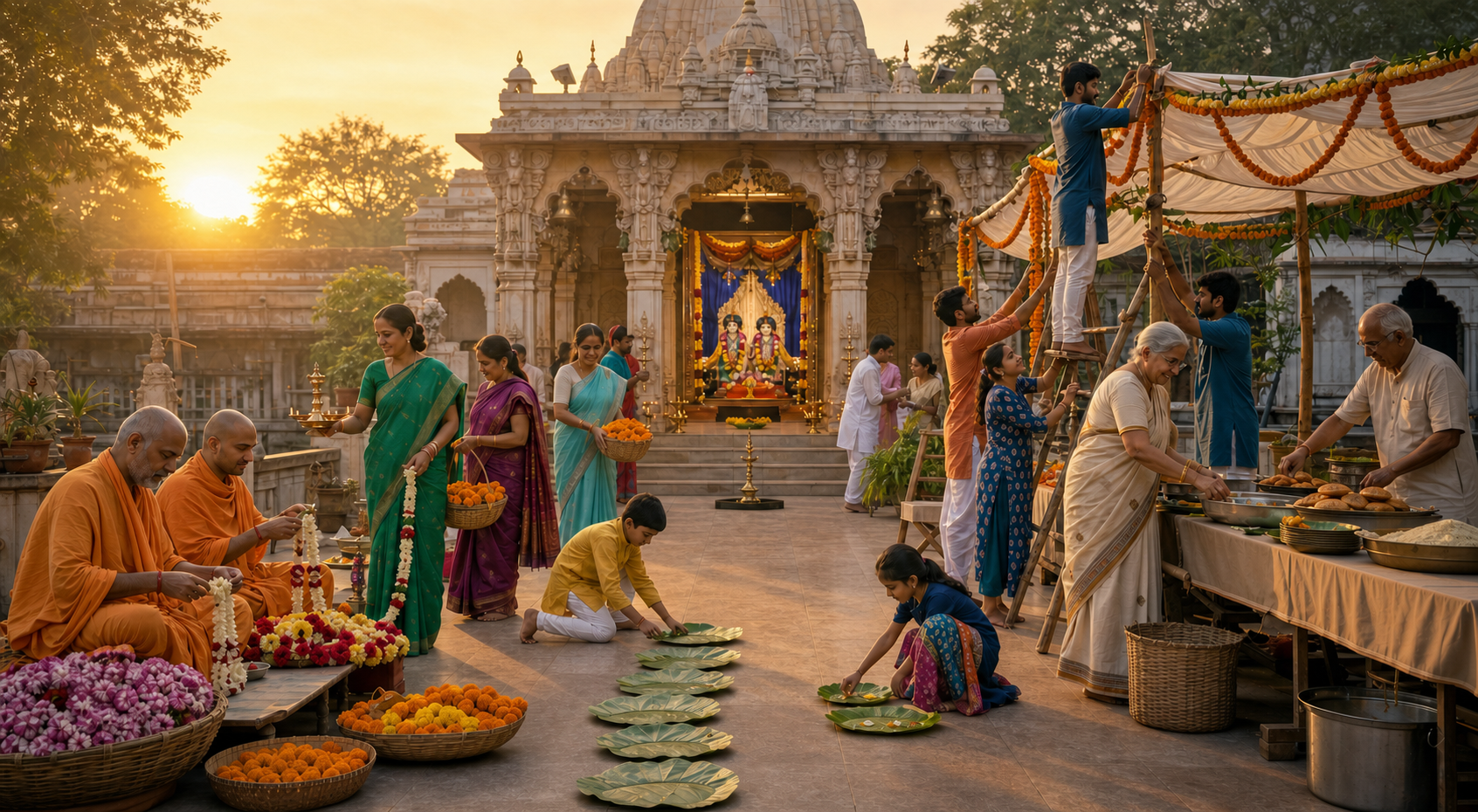
If you help run a temple, youth group, festival, or Dharmic association, you may be asking a difficult question: how do we cooperate across traditions without reducing them to a vague message that everyone believes the same thing?
ISKCON’s sixtieth anniversary offers a useful answer. Durable unity begins with rooted practice, honest differences, dependable institutions, and service that gives people something meaningful to do together. That is a more demanding standard than ceremonial goodwill, but it is also one you can apply at your next gathering.
What sixty years should prompt us to examine
On 21 March 2026, Bhaktivedanta Manor brought together its annual Srila Prabhupada festival, ISKCON’s sixtieth anniversary, and the fifth consecutive year of holding this particular celebration at the Manor. The convergence matters because it joins three forms of continuity: fidelity to an acharya, the endurance of an institution, and the repeated work of a local community.
ISKCON was incorporated in 1966 with a mission grounded in Gaudiya Vaishnava bhakti. Its public teaching joined the Bhagavad-Gita and Bhagavata Purana to practices people could enter directly: japa, congregational kirtan, satsang, devotional service, prasada distribution, and learning through guru-shishya parampara. The movement did not ask people merely to admire a philosophy. It gave them a discipline, a community, and a way to order ordinary life around remembrance of Krishna.
That is the first lesson of an anniversary. Institutional age is not spiritual achievement by itself. Longevity becomes meaningful when a community can still transmit what it was established to transmit. A celebration should therefore include an audit as well as a tribute.
- Test doctrinal clarity: Can a newcomer explain what your community teaches after attending, or do they leave with only photographs and pleasant impressions?
- Test practical transmission: Can attendees name a practice they can continue at home, such as japa, scriptural reading, kirtan, or seva?
- Test generational continuity: Are young people trusted with real preparation, teaching, music, hospitality, or service responsibilities, or are they treated only as an audience?
- Test institutional memory: Are the founder, lineage, primary texts, and purpose clearly presented to people who did not grow up inside the community?
- Test the culture of seva: Are cooks, cleaners, coordinators, greeters, and other behind-the-scenes volunteers honoured alongside visible speakers?
If those tests reveal a gap, the anniversary has already served a purpose. It has shown you where continuity needs deliberate repair.
Dharmic unity does not require doctrinal sameness
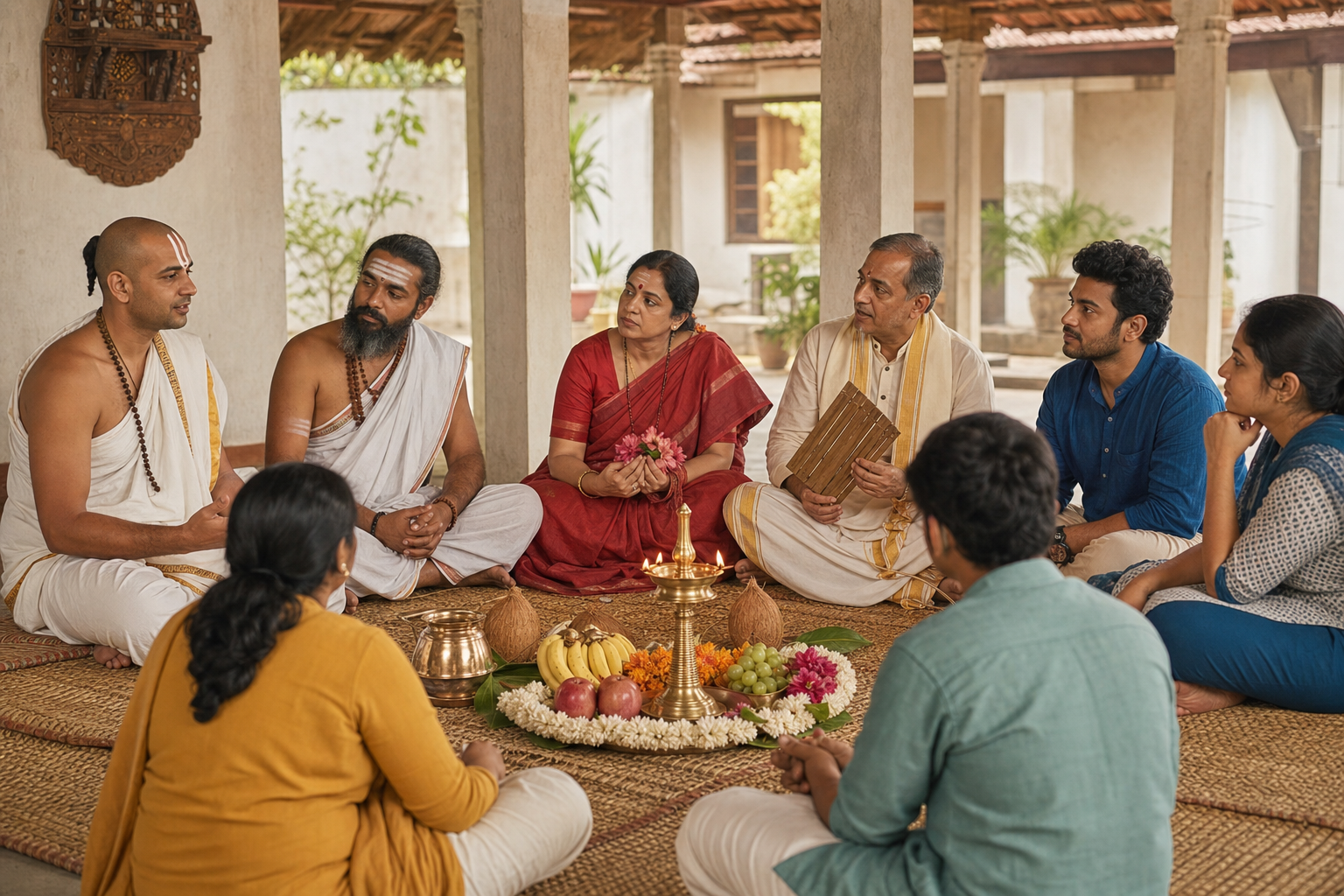
Hindu, Buddhist, Jain, and Sikh traditions do not use identical accounts of the self, the Divine, liberation, authority, or the path of practice. Even within Hindu dharma, Gaudiya Vaishnavas, Shaivas, Shaktas, Smartas, and other sampradayas preserve real philosophical and ritual distinctions. Declaring all these differences superficial may sound inclusive, but it fails to respect the people whose traditions you hope to unite.
Unity is stronger when it rests on truthful relationship rather than merged theology. The shared ground highlighted at Bhaktivedanta Manor included ahimsa, seva, inner discipline, and truth-seeking. Each tradition may interpret, balance, and express these principles differently. The point is not to manufacture a common creed. It is to recognise enough moral kinship to listen respectfully and work together without asking anyone to conceal who they are.
Use a simple discipline when planning a Dharmic gathering:
- Name the host tradition plainly. If an event is Gaudiya Vaishnava, say so. Hospitality does not require the host to become anonymous.
- Let guests describe themselves. Do not explain another tradition’s doctrine on its behalf when a qualified practitioner can speak from within it.
- Define the shared purpose. Choose a concrete focus such as community service, youth formation, care for living beings, cultural education, or the protection of sacred heritage.
- Keep disagreement proportionate to the occasion. A philosophical dialogue may examine differences directly. A seva day need not become a debate about metaphysics.
- Measure unity by conduct. Ask whether participants listened, served, kept commitments, and left with greater respect. Agreement on every proposition is the wrong test.
This approach also protects minorities within a larger coalition. No participant should have to trade doctrinal integrity for a place at the table. Nor should a host use the language of unity to make other traditions decorative additions to its own programme. Mutual dignity requires visible agency, not merely visible attendance.
Practice must carry more weight than messaging
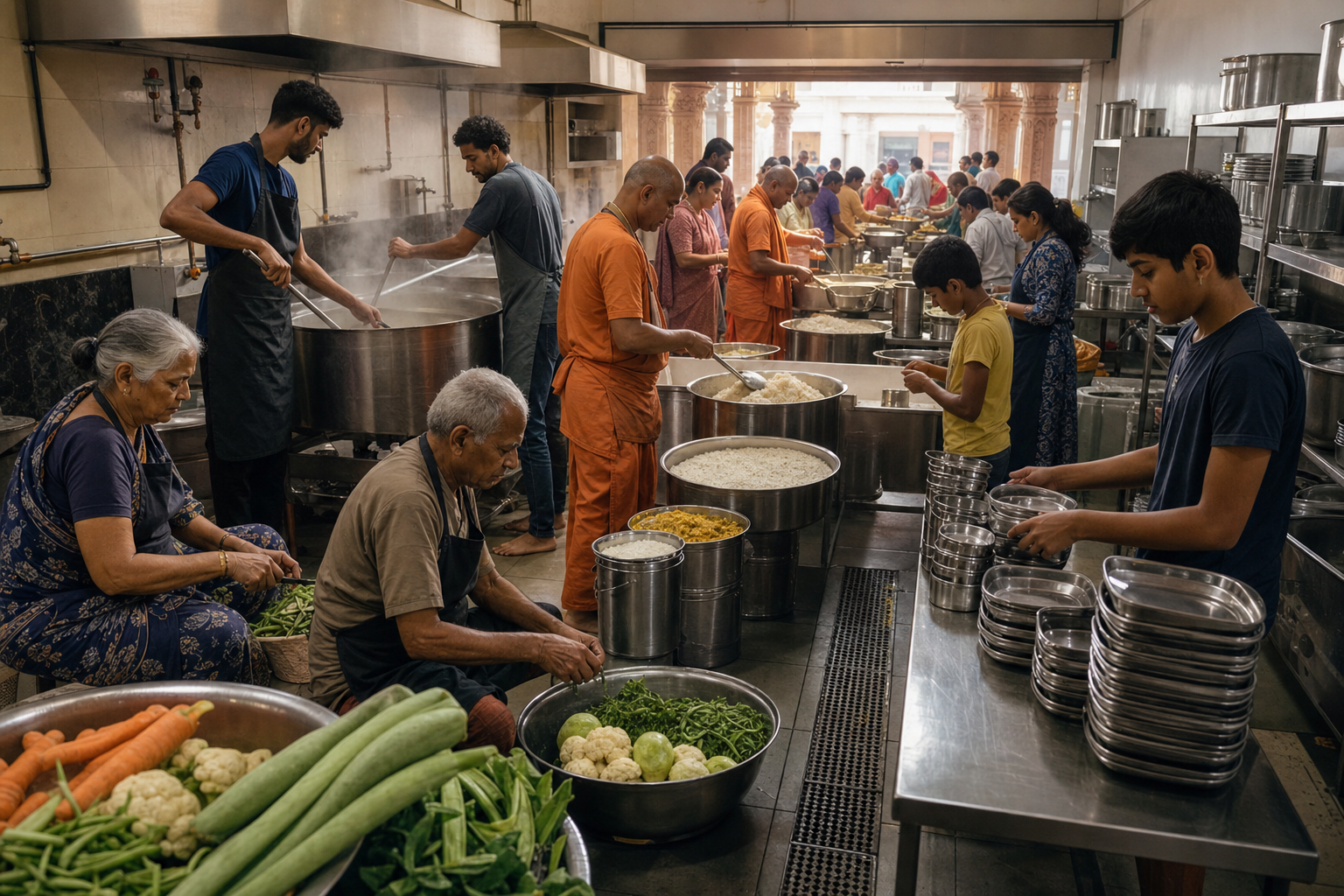
Srila Prabhupada’s enduring contribution was not only the circulation of ideas. He helped make a demanding devotional inheritance accessible through repeatable forms of learning and worship. Scriptural study, congregational chanting, devotional service, and prasada allowed philosophy to be heard, sung, enacted, and shared.
That pattern is especially important in the diaspora. A child may not begin with a philosophical vocabulary. A newcomer may be hesitant to ask what everyone else appears to know. A visitor from another Dharmic tradition may understand the value of devotion while remaining unfamiliar with Gaudiya Vaishnava theology. Participatory practices give each person an honest point of entry without pretending that every participant has the same level of understanding.
For your own programme, connect every element to a clear function:
- Siddhanta gives orientation. Read from a named text, explain the teaching in its proper tradition, and show how it bears on family life, work, citizenship, or ecological responsibility.
- Sadhana gives experience. Let people participate in japa, kirtan, prayer, meditation, or another practice appropriate to the host tradition. Explain what they are doing before expecting them to join.
- Seva gives responsibility. Move beyond applause by assigning useful work: preparing or distributing prasada, welcoming newcomers, supporting elders, reducing waste, or contributing to a continuing community project.
- Sangha gives continuity. Tell attendees where and when the next opportunity for study, worship, or service will occur. Inspiration without a point of return quickly becomes a memory.
The order matters less than the connection. Philosophy without practice can remain intellectual. Practice without explanation can become opaque habit. Fellowship without responsibility can become a social club. When teaching, disciplined practice, and seva reinforce one another, cultural continuity becomes lived rather than displayed.
Build festivals as community infrastructure
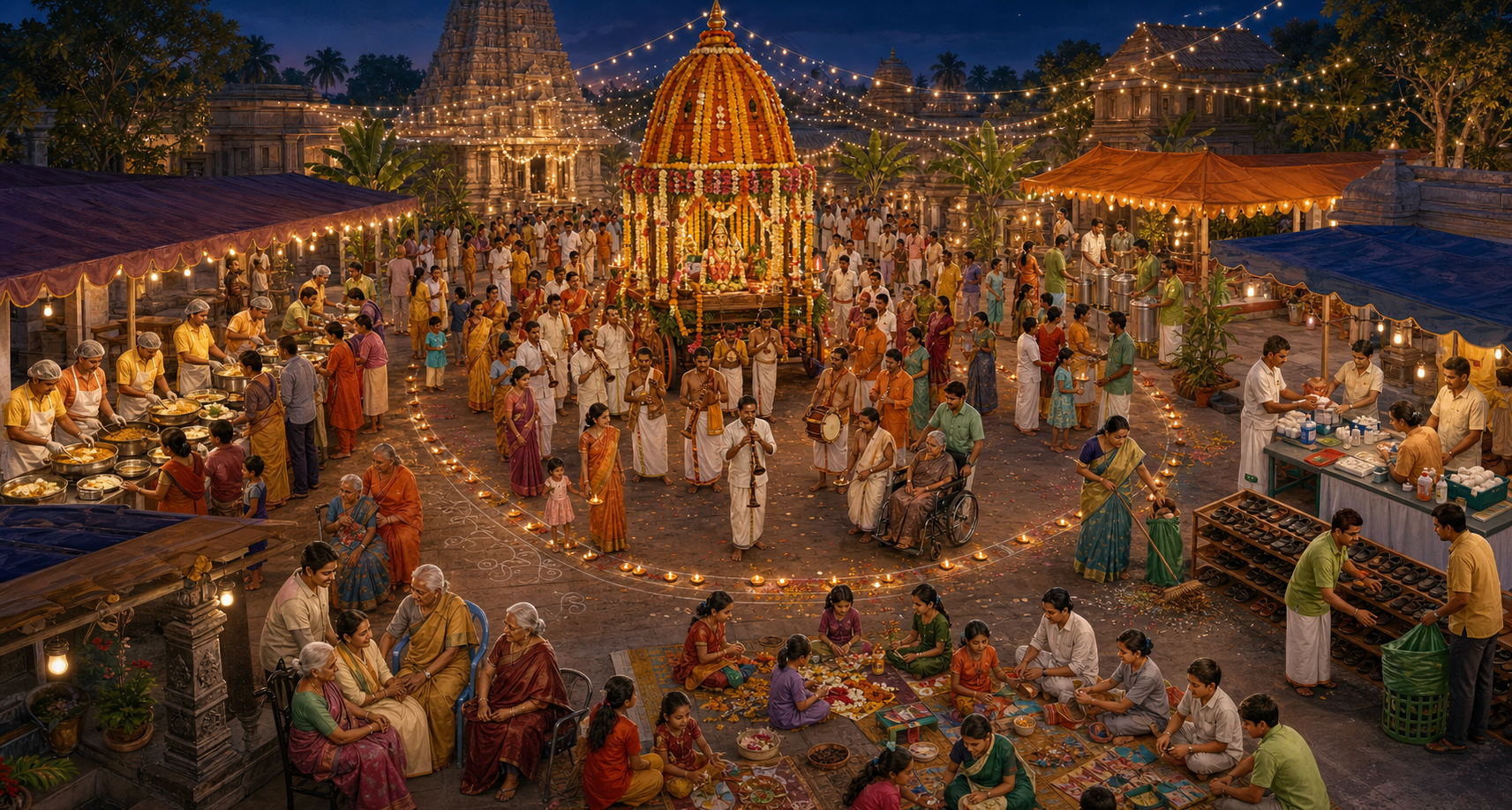
Bhaktivedanta Manor’s importance is not confined to a single festival. Its ongoing role in Hindu celebrations, spiritual education, intergenerational learning, and community outreach shows what a stable Dharmic institution can provide in a diaspora setting. People need sacred occasions, but they also need reliable relationships, accountable organisation, and repeated opportunities to serve.
Treat your next festival as part of that infrastructure. Before adding more speeches or stage items, settle the practical questions that determine whether people can actually belong.
- Publish a legible schedule. Distinguish discourse, worship, kirtan, meals, children’s activities, and service periods so families and newcomers can participate knowingly.
- Assign responsibility by name. Every essential task should have an accountable coordinator and a clear handover. Goodwill is not a substitute for ownership.
- Design for newcomers. Provide greeters who can explain etiquette, unfamiliar Sanskrit terms, the meaning of prasada, and what participation is optional.
- Make accessibility part of planning. Consider how elders, people with disabilities, parents with young children, and those unfamiliar with the venue will move through the day.
- Give youth consequential work. Invite them into planning, presentation, music, communications, hospitality, and follow-up. Responsibility transmits culture more effectively than token visibility.
- Align celebration with restraint. Reduce avoidable waste, encourage mindful consumption, and use repair or reuse where feasible. Environmental responsibility should be visible in operations, not confined to a speech.
- Close the volunteer loop. Thank contributors, record what worked, identify what failed, and preserve the information the next team will need.
These details are spiritual in consequence even when they look administrative. A confusing entrance can exclude a newcomer. An inaccessible room can sideline an elder. An undefined role can exhaust a dependable volunteer. Clear governance protects attention so that people can give themselves to worship, learning, and service.
A festival becomes a civic asset when neighbours encounter Hindu practice with dignity, families find a dependable cultural home, and volunteers develop the confidence to lead. It becomes an instrument of Dharmic unity when those capacities also support respectful cooperation beyond the host community.
Key takeaways
- Use ISKCON’s sixtieth anniversary as a prompt to examine transmission, not merely to praise longevity.
- Build unity around truthful relationship and shared service; do not ask distinct traditions to pretend their doctrines are interchangeable.
- Keep the host sampradaya visible while giving guests the authority to represent their own traditions.
- Join siddhanta, sadhana, seva, and sangha so that attendees know what the teaching means, how to practise it, where to serve, and how to return.
- Judge a festival by what survives after the stage is cleared: stronger practice, capable volunteers, youth responsibility, welcoming institutions, and continuing cooperation.
At your next gathering, pair public words about unity with a practice people can share and a service commitment they can keep. That is where an anniversary stops being a backward-looking commemoration and becomes preparation for the decades ahead.