
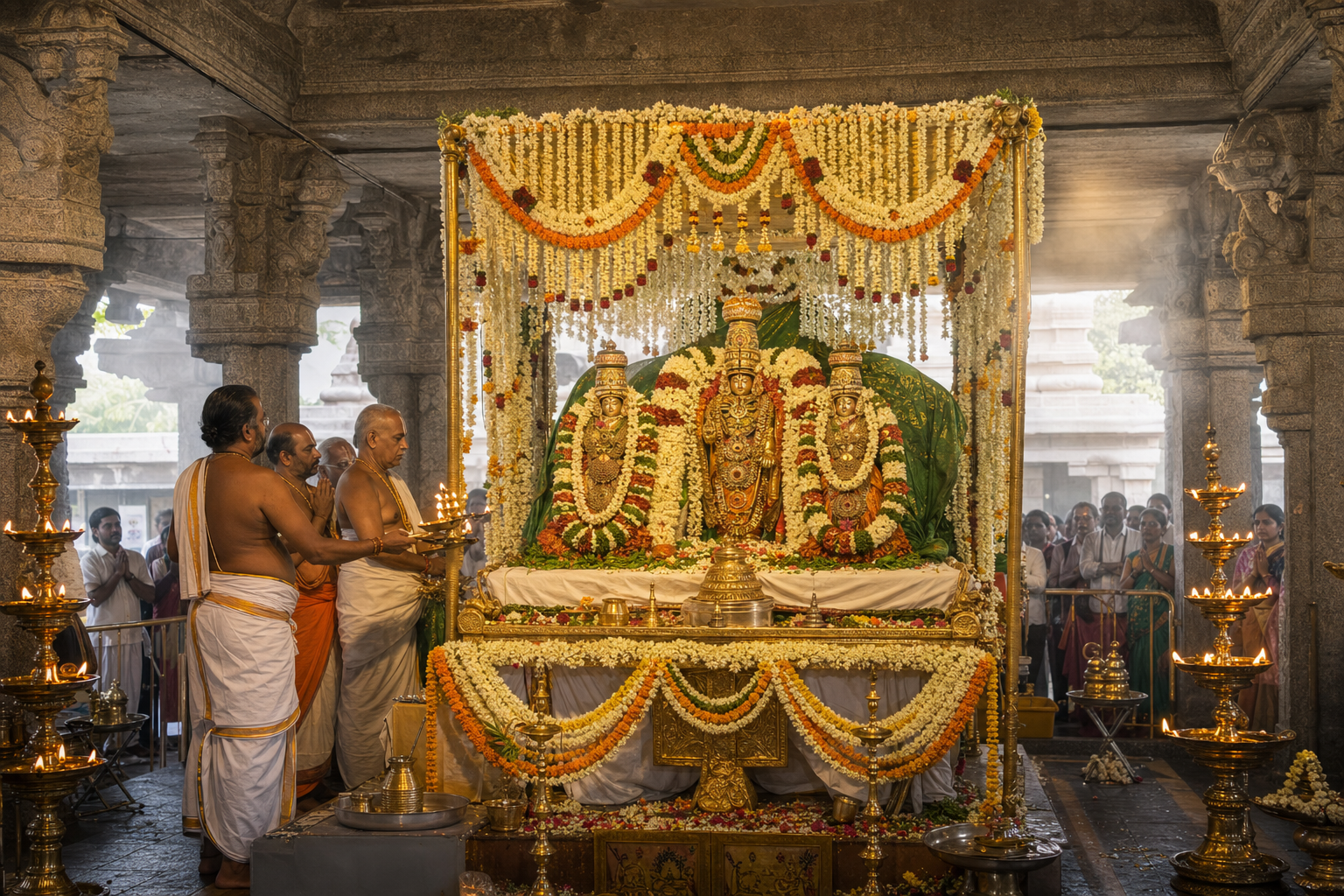
If you are looking up Tirumala Vasanthotsavam 2026, you probably need one of two things: a reliable record of the dates, or a clear explanation of what happened during those three sacred days. The festival window was March 30-April 1, 2026. Those dates should now be treated as a historical record, not as current entry or scheduling guidance.
The central celebration honored Sri Malayappa Swamy with Sridevi and Bhudevi through processions, Unjal Seva, ceremonial bathing, and alankara. If you are using 2026 to understand a future Tirumala visit, the most important planning lesson is this: the civil dates identify the festival window, but the lunar tithi and TTD’s operating arrangements determine when an individual rite takes place.
Key takeaways
- Salakatla Vasanthotsavam 2026 was observed over three civil dates: March 30, March 31, and April 1.
- The festival was traditionally aligned with Chaitra Shukla Trayodasi, Chaturdasi, and Purnima, so service times followed tithi boundaries rather than a simple midnight-to-midnight calendar.
- The principal festival deities were the Utsava Murthis: Sri Malayappa Swamy with Sridevi and Bhudevi. The immovable Mula Murti remained in the sanctum under the regular daily worship protocol.
- Snapana Tirumanjanam was the ritual center, accompanied by processions, Vedic recitation, archana, Unjal Seva, fragrant substances, and final adornment.
- A festival date did not by itself provide access, seating, or an arjitha-seva allocation. Those arrangements depended on TTD announcements.
- For a future visit, verify the current TTD schedule and access rules instead of reusing the 2026 timings.
The three days were governed by two different clocks
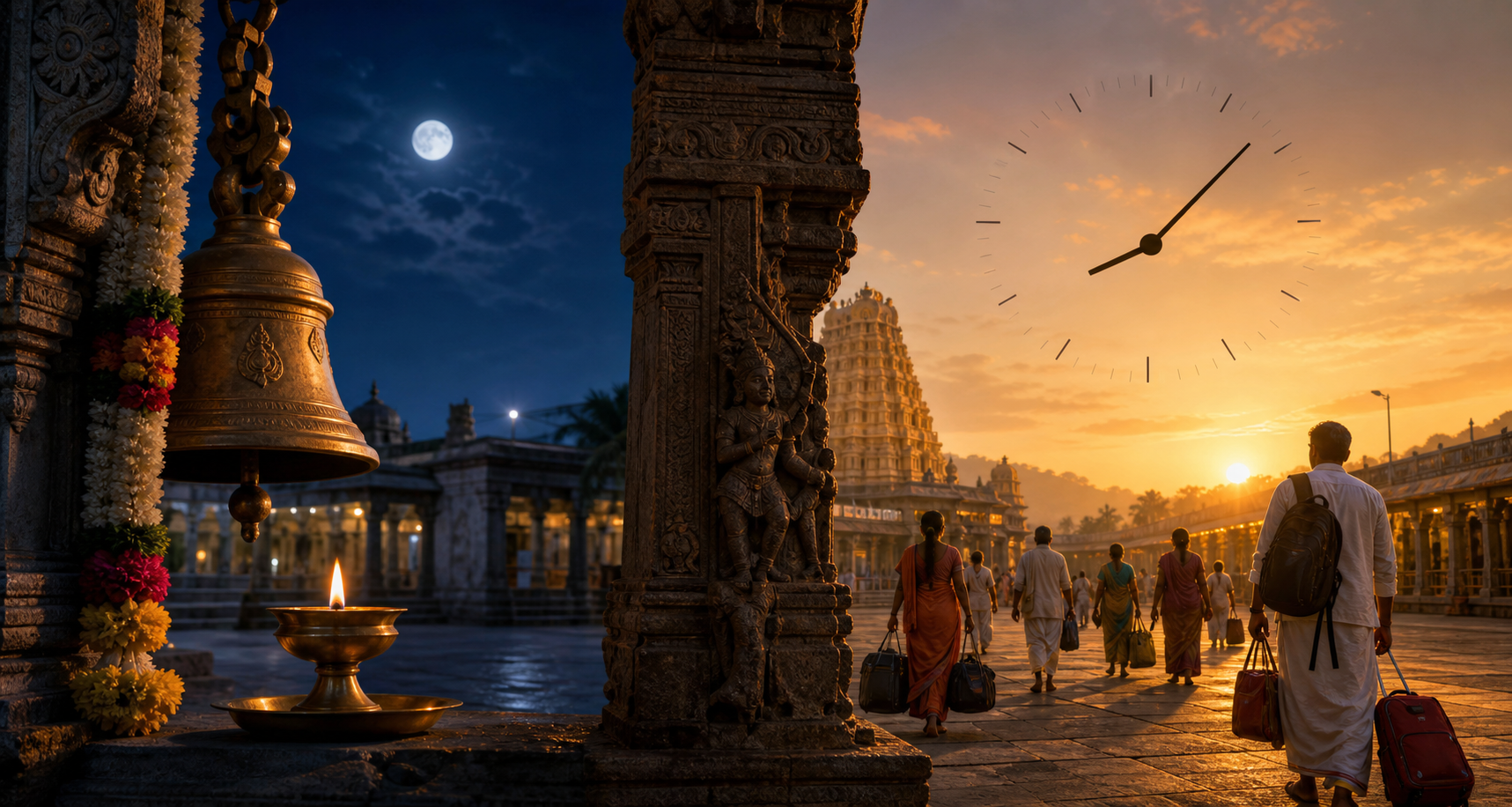
A civil calendar and a temple calendar answer different questions. March 30-April 1 tells you when the 2026 festival occupied the public calendar. Trayodasi, Chaturdasi, and Purnima identify its place within the lunar-liturgical cycle of Chaitra Shukla Paksha.
A tithi does not necessarily begin at midnight or occupy one complete civil day. That is why the three tithi names should not be read as fixed, all-day labels for the three dates. TTD could adjust an individual service to the tithi prevailing at Tirumala while also accounting for daily temple worship, crowd movement, security, and other operational requirements.
This distinction matters whenever you record or plan a temple festival. Keep the civil date, lunar tithi, announced service time, and entry arrangement as separate pieces of information. If one of them is missing, do not infer it from the others. A three-day festival announcement is not a minute-by-minute timetable, and a timetable is not an admission entitlement.
The sacred cycle also began before the main public observances. Ankurarpana, the ritual sowing of seeds, was customarily performed on the eve of Vasanthotsavam. The act places germination at the threshold of the festival: before devotees encounter flowers, sandalwood, music, and processional splendor, the liturgy invokes new life in its smallest and most disciplined form.
Vasanthotsavam is therefore more than a seasonal pageant attached to the temple calendar. Its form belongs to the Vaikhanasa Agama tradition governing worship at Tirumala. Its historical continuity reaches into the Vijayanagara era, while several traditions associate royal patronage with Achyuta Devaraya, who ruled from 1529 to 1542. That attribution should be understood as a received historical tradition, not used to reduce a living Agamic festival to the work of a single patron.
What happened from procession to Snapana Tirumanjanam
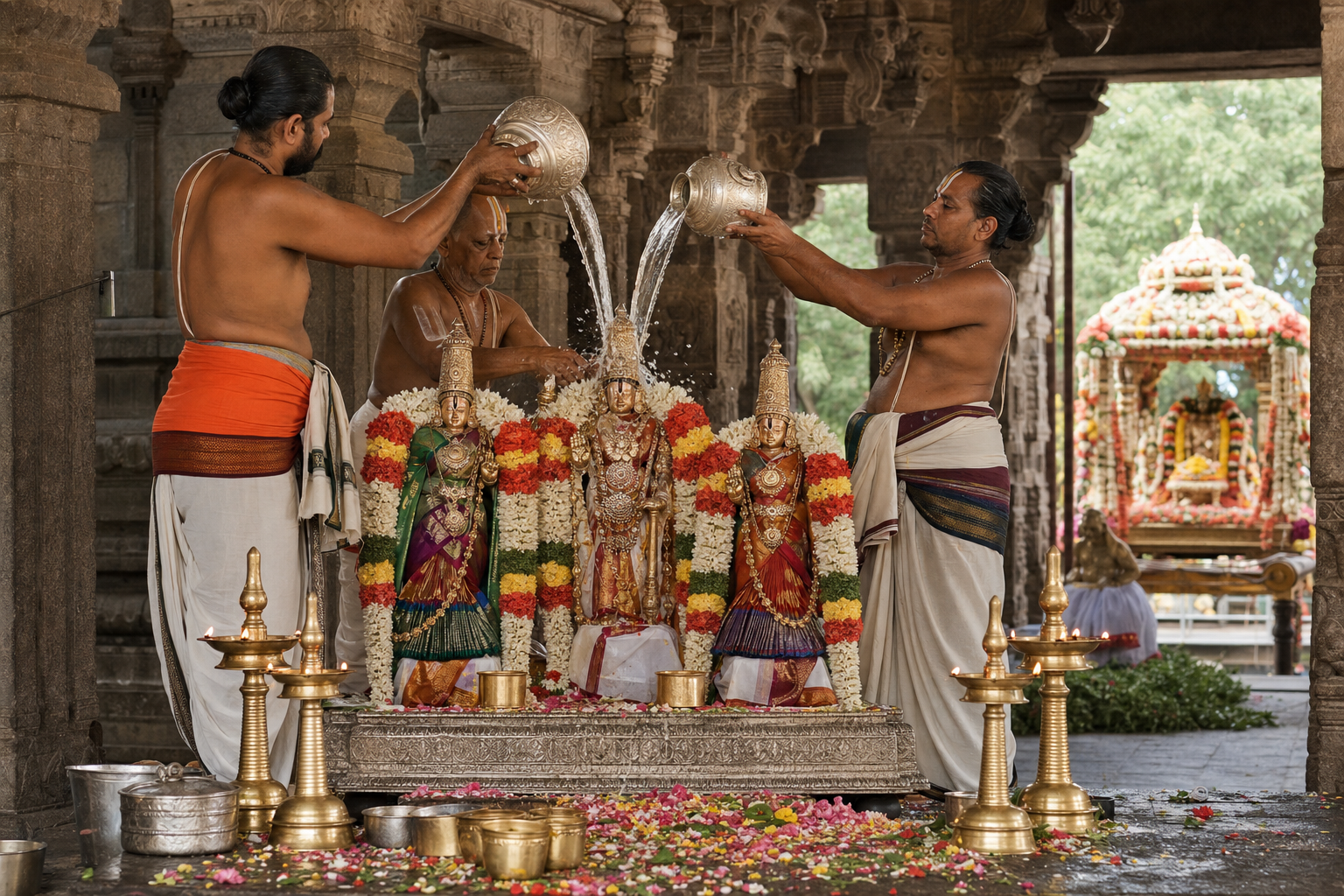
The first distinction to notice is between the Mula Murti and the Utsava Murthis. The Mula Murti is the immovable presiding form of Sri Venkateswara in the garbha-griha. The Utsava Murthis are the processional forms through which the Lord and His divine consorts come into a setting where a large community can witness special festival honors.
During Vasanthotsavam, Sri Malayappa Swamy with Sridevi and Bhudevi received the public festival rites. This did not interrupt or replace the Mula Murti’s nitya-kainkaryas. The distinction protects the sanctum’s discipline while allowing the festival to unfold in a mandapam suited to processions, recitation, ceremonial bathing, and congregational darshan.
The detailed timing could vary by day, but the general movement of the observance followed a recognizable sequence:
- The regular daily services in the sanctum proceeded according to temple protocol.
- The Utsava Murthis were brought in procession with Mangala Vadyam, including the resonant sound of Nadaswaram and Tavil.
- At designated times, the deities were seated on the unjal and honored through Unjal Seva, archana, offerings, and accompanying recitations.
- Snapana Tirumanjanam was performed with sacred substances that included Panchamrita, turmeric, sandalwood paste, saffron-infused water, and fragrant rose water. Vedic hymns, Vishnu Sahasranama, and Vaishnava stotras accompanied the ablutions.
- The rites culminated in alankara with garlands, jewelry, and other honors. Additional evening processional observances could precede the return to the temple.
The Vasanthotsava Mandapam near the temple gardens was not merely a larger room for handling a crowd. Its floral setting, moving air, music, and Veda Parayanam reinforced the seasonal character of the rite. When watching a recording or studying a festival account, look beyond the final decorated form. The procession, the swing, the bathing, and the adornment form one ritual progression from movement and purification to repose and royal radiance.
How to read the festival’s language of cooling and renewal
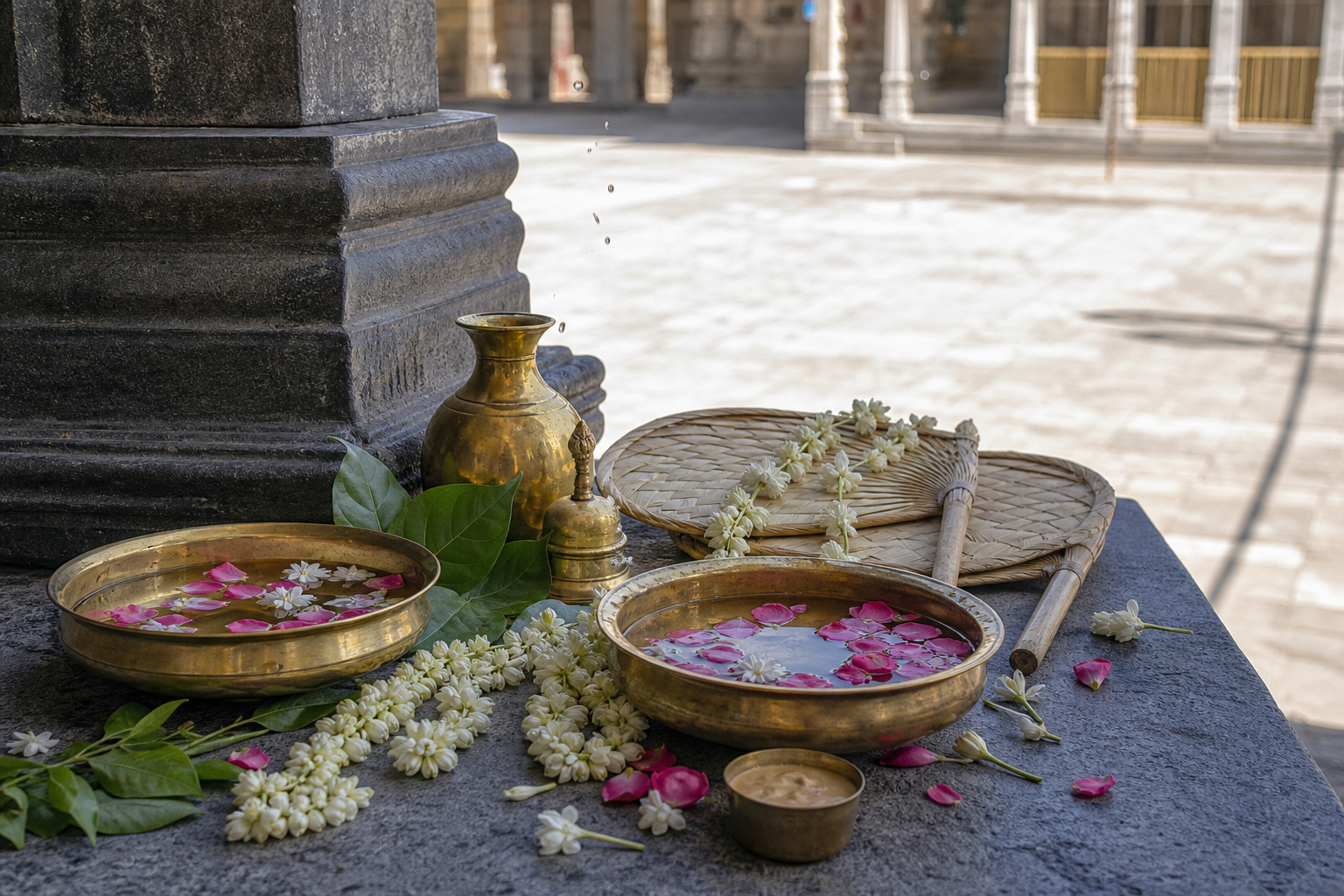
Spring renewal at Tirumala is communicated through material actions, not left as an abstract theme. Sandalwood cools. Floral water refreshes. Garlands make seasonal abundance visible. The measured movement of the unjal gives balance a physical rhythm. Fragrance and sacred sound gather the senses around darshan instead of allowing them to scatter.
The substances used in Snapana Tirumanjanam also carry ritual associations. Milk and curd evoke nourishment and purity. Honey and sugar express sweetness and auspicious speech. Turmeric and sandalwood suggest protection and cooling. Saffron and flower-scented water evoke luminosity, grace, and freshness. No one substance needs to be isolated as a magical object; meaning arises through the prescribed sequence of offering, mantra, bathing, and adornment.
This gives you a practical way to participate even when you are not physically inside the mandapam. Bring one specific sankalpa to the festival’s pattern of renewal. It might be a fixed act of dana, a neglected duty of seva, a commitment to truthful speech, or one concrete reduction of avoidable harm. Keep it narrow enough to perform. A resolve tied to an observable action is more useful than a vague wish to become more spiritual.
Values such as renewal, ahimsa, dana, satya, and community service have resonances across Hindu, Buddhist, Jain, and Sikh life. That shared ethical vocabulary should not erase important distinctions. Tirumala Vasanthotsavam remains a specifically Vaishnava temple festival shaped by Vaikhanasa ritual discipline and devotion to Sri Venkateswara. Civilizational kinship becomes clearer when traditions are allowed to meet without being flattened into sameness.
Use the 2026 schedule without making a future planning mistake
The 2026 festival window has passed. It can help you understand the structure of Salakatla Vasanthotsavam, but it cannot tell you when a future rite will begin, whether a particular seva will be issued, or how seating and queues will be managed. For a new journey, start again with the current TTD announcement.
Ask three separate questions before you commit to travel: What are the festival dates? At what times will the rites occur? What access, ticket, or seating arrangement applies to each one? Keeping those questions separate prevents the common mistake of treating a festival calendar as if it were a confirmed booking.
- Check the latest TTD notice close to departure. Tithi boundaries, security requirements, arjitha-seva allocations, and crowd-management decisions can alter the working schedule.
- Arrive early enough to enter the designated queue without rushing. Movement around the precinct may be phased by volunteers and security personnel.
- Wear modest, traditional attire consistent with TTD expectations. Do not build a plan around changing clothes or negotiating an avoidable dress-code problem at the entrance.
- If you are travelling with elders or children, investigate whether a mid-morning period offers steadier movement. Treat this as a preference to verify, not a guarantee of seating or shorter queues.
- Observe photography restrictions and maintain silence during the central rites. A blocked passage or raised phone can interfere with another devotee’s brief opportunity for darshan.
- Follow the temple’s rules for offerings and waste. The festival’s use of water, flowers, and sacred materials belongs with an ethic of care for the ritual space, not casual disposal after worship.
If you are studying the 2026 celebration rather than planning travel, resist judging it only by the most spectacular processional image. Notice three layers at once: the Agamic liturgy, the seasonal language of cooling and growth, and the public accessibility made possible through the Utsava Murthis. Each layer explains something that the others cannot.
For your next Tirumala spring journey, begin with the official schedule, protect enough time for queues and changes, and arrive with one sankalpa you can carry home. That is how Vasanthotsavam continues beyond the mandapam: not as a memory of flowers and sandal alone, but as disciplined renewal in daily life.