
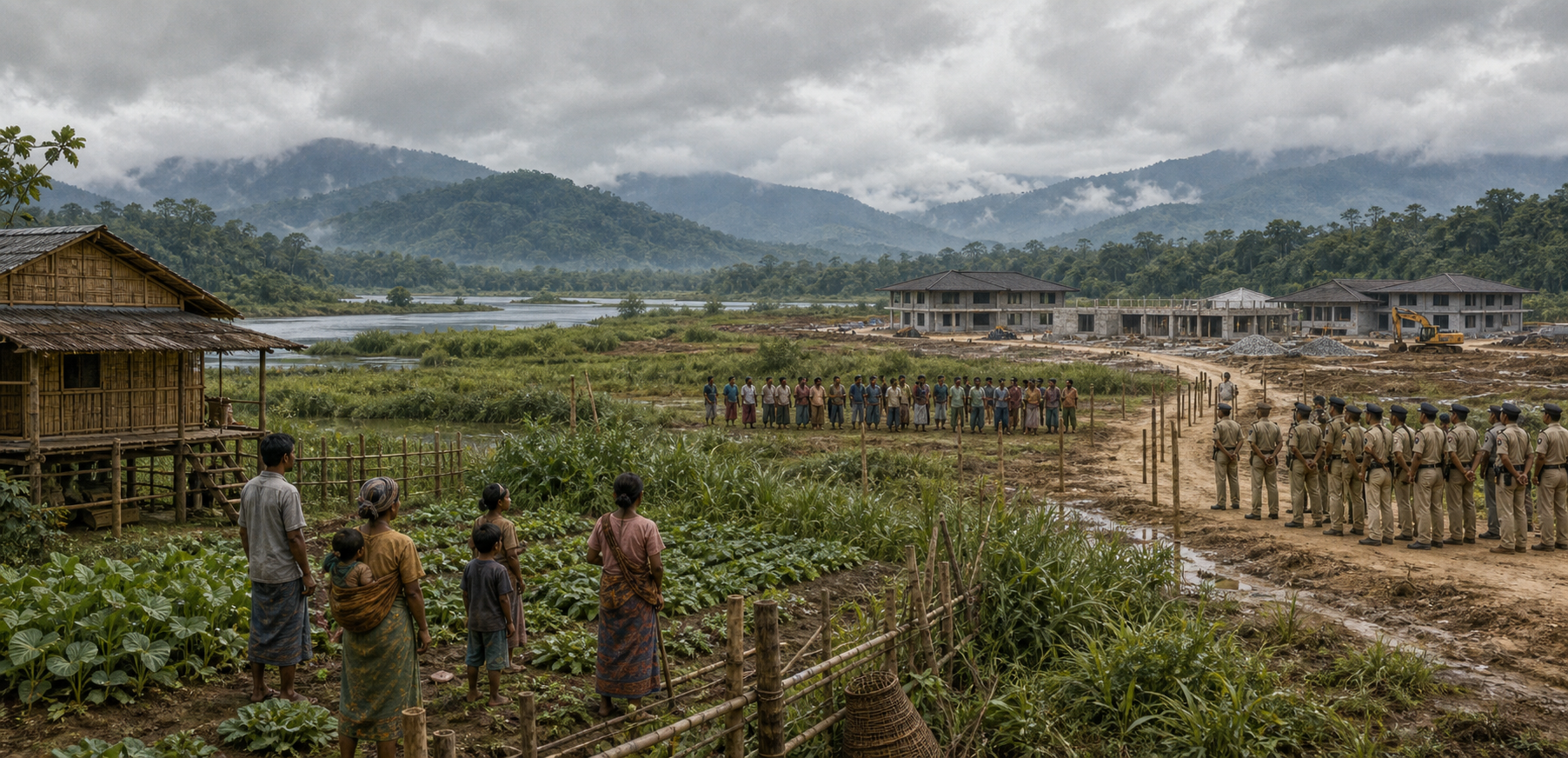
If you are trying to decide whether Assam’s Kaziranga land movement is defending indigenous cultivators or merely obstructing jobs, neither slogan is enough. Four questions must remain separate: who controlled the land, how its classification changed, what the tourism project actually guarantees, and whether police action is tied to individual conduct rather than political opposition.
You can support development in Assam and still demand a lawful, transparent land trail. You can defend the right to protest and still reject threats, assault or property damage. That is not fence-sitting. It is a practical test of rajadharma: public power must preserve order, but it must also hear citizens, disclose its reasons and exercise force with restraint.
Key takeaways
- The immediate dispute concerns roughly 30 bighas at Ingle Pathar allocated to the Assam Tourism Development Corporation for a public-private tourism project near Kaziranga National Park.
- The state describes the site as government land and promises tourism and employment. Residents and activists allege inadequate consultation, changes in land classification and harm to families that have cultivated or used the area over generations.
- Compensation accepted by some families does not settle the claims of every family. At least 12 petitioners approached the Gauhati High Court, alleging that land was taken without prior notice.
- The criminal case turns on alleged conduct during the June 29 protest, including damage, intimidation and injuries to police. Those allegations require evidence against each accused; the political role of an organiser is not itself proof of every alleged offence.
- International criticism raises the cost of opacity, but it does not decide ownership, criminal liability or the proper remedy. Those questions must be answered through records, courts and accountable institutions in Bharat.
The numbers describe different parts of the dispute
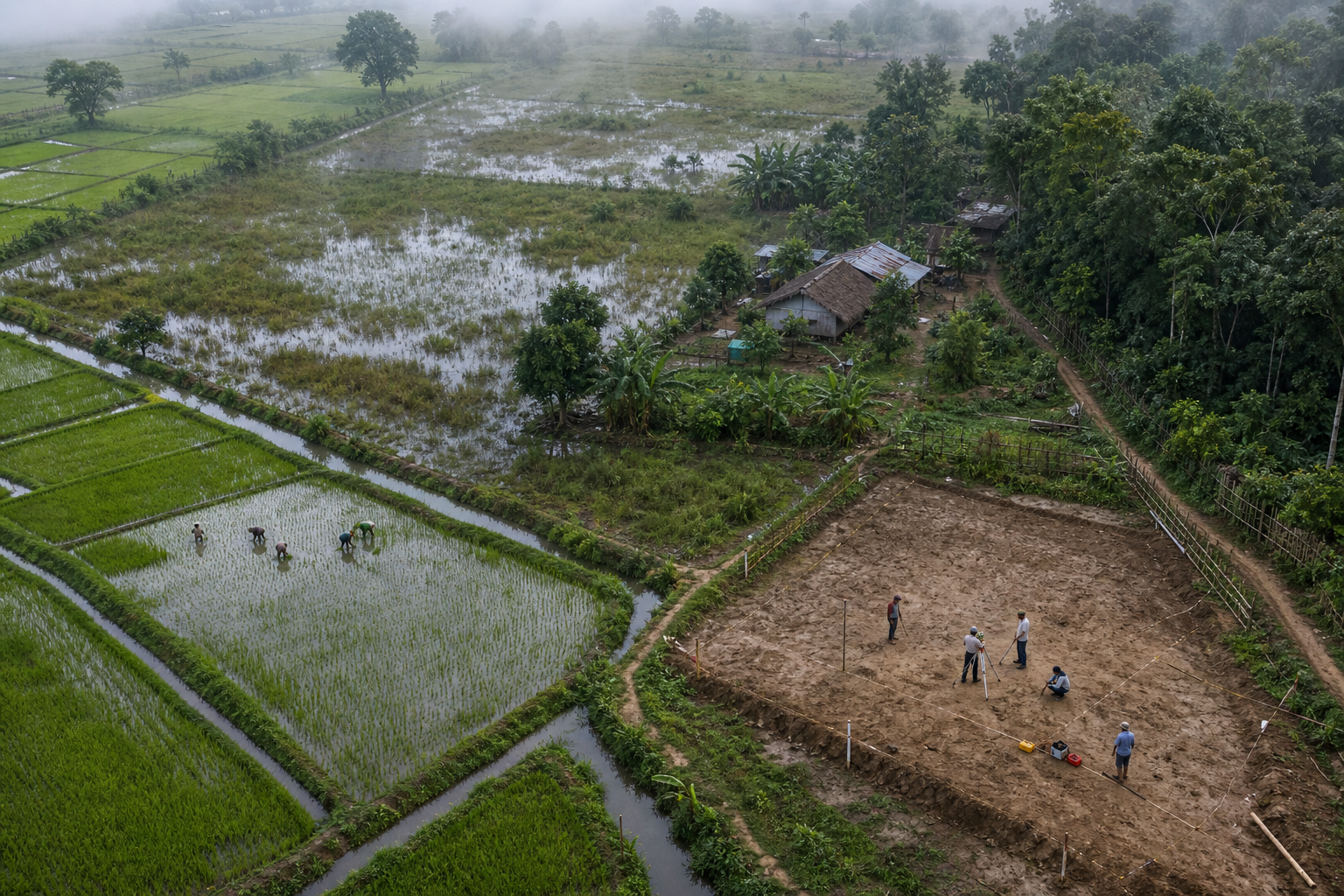
The first discipline is to stop treating every figure as if it measures the same thing. The Assam government allocated about 30 bighas in the Ingle Pathar area to the Assam Tourism Development Corporation. The plan is for a luxury hotel and a museum presenting the heritage of the tea-garden community under a public-private partnership.
Local residents and land-rights campaigners make a broader allegation: more than 60 bighas of agricultural and community grazing land have had their character changed in recent years. The 30-bigha project site and the claimed 60-plus-bigha pattern are therefore not interchangeable figures. One concerns the identified allocation; the other concerns an alleged wider process. Combining them produces a dramatic number but a weaker understanding.
The family counts also have different denominators. An international indigenous-rights organisation has said that more than 45 tribal families are affected. At least 12 people are identified as High Court petitioners. Several families reportedly accepted compensation, while others continue to assert claims. None of those numbers proves or disproves another. A family can be affected without being a petitioner, and compensation accepted by one household cannot be treated as consent given by all.
Bigha itself is a regional unit whose conversion is not uniform across Bharat. Unless an official project or revenue record supplies the applicable conversion, do not convert the figures into acres and present the result as exact. The legally important object is the scheduled parcel: its boundaries, survey identifiers, recorded classification and history of possession or use.
For each parcel, look for four separate records:
- Title and control: Who is entered in the revenue record, and what precisely does the state’s description of government land cover?
- Classification: Was the parcel recorded as agricultural land, grazing land or another category before the project, and what order changed that entry?
- Possession and customary use: Which families cultivated, grazed animals or otherwise depended on it, for how long, and what evidence supports those claims?
- Notice, consultation and compensation: Who received notice, who participated, what was offered, who accepted it and which objections remain unresolved?
The High Court’s June notice to the tourism corporation is important because it places the dispute within a judicial process. It is not a finding that the petitioners’ allegations are true. A notice calls for a response; it should not be marketed as a final victory by either side. The next useful material will be the land schedules, the petitioners’ supporting records, the corporation’s reply and any reasoned interim or final order.
Put the development promise through five concrete tests
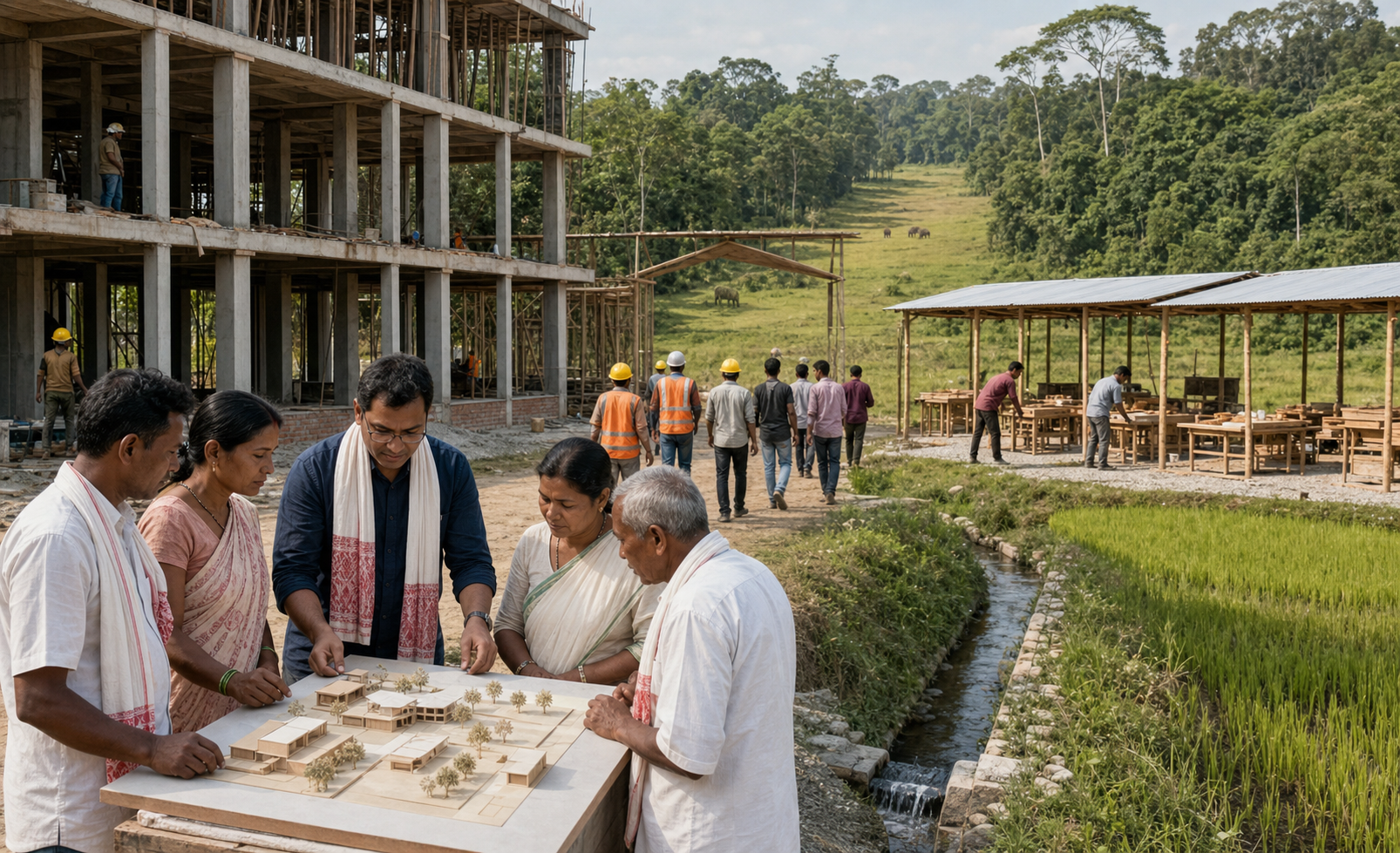
Chief Minister Himanta Biswa Sarma has defended the project as a source of employment and economic strength. Minister Atul Bora has said that the land belongs to the government, that the museum will give wider recognition to tea-garden heritage and that the initiative enjoys broad local support. These are legitimate public objectives. They are also propositions that can be documented rather than accepted on trust.
When you hear that a disputed project will create jobs, ask five questions before deciding whether the benefit justifies the land decision:
- Are the jobs defined? A credible plan should distinguish temporary construction work from permanent hotel, museum and supply-chain employment. It should state whether local recruitment, training or other community benefits are contractual commitments or aspirations.
- Is the public-private agreement available? The allocation, lease or concession should reveal the project’s footprint, duration, private rights, public obligations and consequences if the promised facilities or benefits are not delivered.
- Does the heritage component have community authority? A museum about the tea-garden community cannot substitute for consultation with affected residents. Ask who will select its narratives, govern its collections, receive its economic benefits and correct misrepresentation.
- Are livelihood losses counted alongside compensation? A payment for land does not automatically replace recurring access to cultivation or grazing. The assessment should identify what each affected household loses, what it receives and whether common land users who lack individual title are included.
- Is the Kaziranga location handled precisely? Proximity to a UNESCO World Heritage national park is not, by itself, proof that the project will cause ecological harm. Nor is the label of tourism proof that it will not. The exact site map and whatever environmental or land-use permissions apply must do that work.
This test works in both directions. The government’s case becomes stronger when benefits are measurable, contract-bound and matched by a clean land process. The movement’s case becomes stronger when it connects particular households and parcels to documented losses. A general promise of development cannot erase a defective process, but a general warning about commercial tourism cannot replace parcel-level evidence either.
A dharmic view of prosperity does not reject artha. It refuses to detach artha from duty. Revenue, employment and cultural presentation are public goods only when their burdens are neither hidden nor pushed onto people with the weakest documentary power.
Judge protest conduct and police power separately
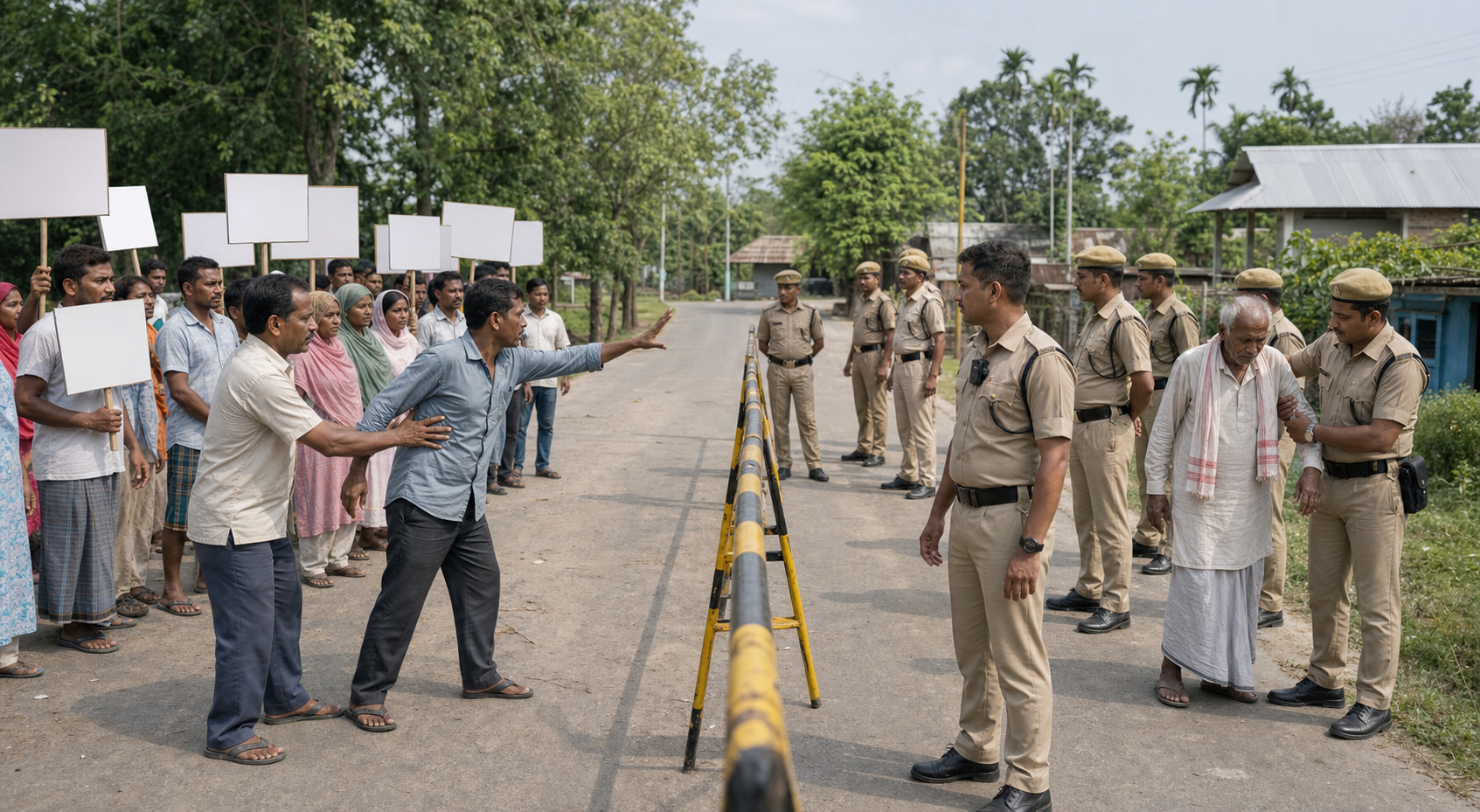
Pranab Doley, a Mising socio-political activist who had opposed the proposed hotel project, was detained from his rented Guwahati home on July 12, transferred to Bokakhat police and formally arrested the following day. The case includes allegations under the Bharatiya Nyaya Sanhita relating to criminal conspiracy, unlawful assembly, rioting, attacks on public servants and intimidation.
The police position is that Doley was among the principal organisers of the June 29 protest at Ingle Pathar. The complaint alleges that a crowd reached the construction site, damaged property, threatened workers and became involved in a confrontation in which more than ten police personnel were injured. Amit Nag and Brijit Kutum were also arrested, while Bhaskar Saikia and Rajiv Pegu surrendered before a local court. A court then placed the five in police custody.
Those are serious allegations, but they remain allegations unless established through evidence and adjudication. The state’s strongest case would identify what each accused allegedly planned, said or did. Simply moving from the proposition that a protest became violent to the conclusion that every organiser conspired in every act would skip the most important evidentiary step.
The movement must meet an equally clear standard. A just land claim does not license damage, threats or attacks on police. If identifiable people committed such acts, calling the entire gathering peaceful cannot make the conduct disappear. Protecting democratic protest requires isolating unlawful conduct, not excusing it.
Use these five checks when assessing the criminal case:
- Does the complaint attribute particular acts or instructions to each accused, beyond calling that person an organiser?
- Are the alleged property damage and police injuries supported by contemporaneous records, and are the people responsible individually identified?
- Do remand and later court orders explain why custody is necessary for each person rather than treating the group as one unit?
- Are peaceful participants, political critics and witnesses being distinguished from suspects accused of violence?
- Are access to legal assistance, family contact, safety and independent medical attention being protected while the accusations are tested?
Civil-society organisations in Assam have described the arrests as an attack on land-rights advocacy, while opposition politicians have accused the government of using police to suppress dissent. Those political claims deserve scrutiny, not automatic adoption. The diagnostic question is whether the state is investigating provable conduct or using broad offences and custody to make continued opposition costly.
International indigenous-rights organisations have demanded release of the arrested men, withdrawal of cases and protection for Doley. UN experts connected with business and human rights have warned that such arrests can constrict civic space and create fear among human-rights defenders. That intervention matters because it focuses attention on retaliation, access and due process. It is not a judicial determination that no violence occurred or that every land claim is valid.
For a pro-Bharat reader, there is no need to choose between treating foreign advocacy as infallible and dismissing every external concern as interference. International organisations are not sovereign arbiters of Assam’s land records or criminal law. A self-confident Bharat should nevertheless be able to answer their strongest due-process questions through transparent domestic records, independent courts and accountable public institutions.
Follow the evidence that can change the judgment
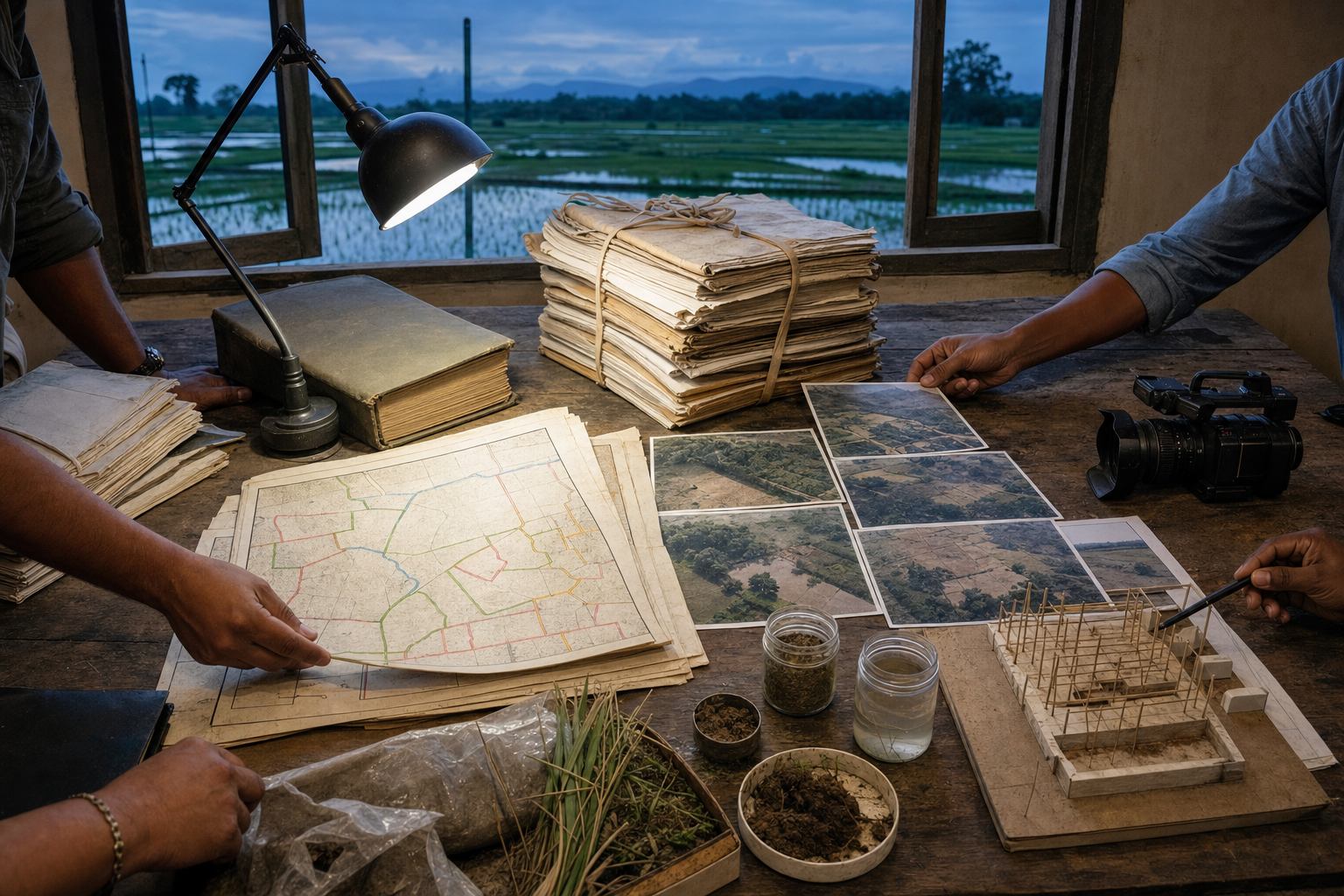
This controversy will generate speeches, solidarity statements and accusations of vested interests. Most will repeat positions already visible. The material worth watching is narrower and more decisive:
| Question | Record to look for | What it can establish |
|---|---|---|
| Who owns or controls the disputed parcels? | Revenue entries, survey identifiers and official land schedules | The exact land covered by the state’s title claim |
| Was land classification changed lawfully? | Earlier and later classifications, change orders and stated reasons | When the change occurred, who authorised it and on what basis |
| Were affected people heard? | Notices, consultation minutes, objections and compensation records | Which families participated, consented, objected or were omitted |
| Are development benefits enforceable? | The public-private agreement, project plan and local-benefit commitments | Whether jobs and heritage benefits are binding, measurable promises |
| What happened during the protest? | The police complaint, damage and injury records, witness material and court orders | Whether allegations are individualised and custody is proportionate |
| How close is the project to protected land? | An official site map and the permissions applicable to that location | The project’s precise footprint and compliance obligations |
Notice what this method prevents. It stops a state claim of ownership from erasing longstanding use before that use is examined. It stops an ancestral-use claim from becoming automatic proof of legal title. It stops an employment promise from floating free of the contract. It also stops allegations against a crowd from becoming guilt by association.
Your next step is simple: place every new claim in the relevant row and ask whether it comes with a record capable of proving it. If it adds only another slogan, treat it as politics rather than evidence. Support the side that opens its records, accepts scrutiny and applies one rule consistently: neither development nor dissent is entitled to outrun dharma and law.