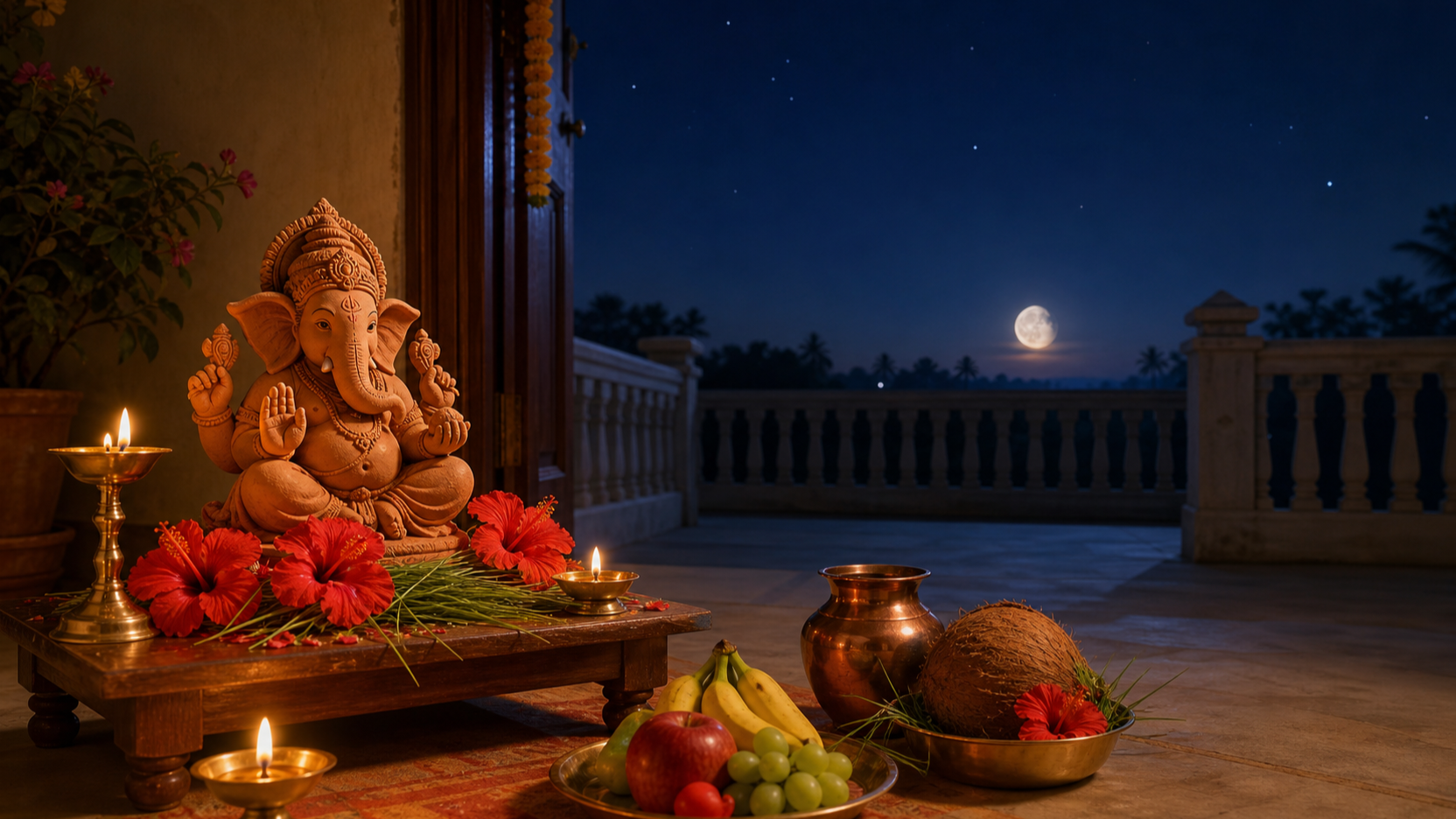
You are probably checking April 5 for one of two reasons: you need to know whether to observe Sankashti Chaturthi, or you want a suitable time for prayer, travel, a purchase, or another important beginning. The date alone cannot settle either question.
Sunday, April 5, 2026 moves from Krishna Paksha Tritiya to Krishna Paksha Chaturthi at 10:04 AM in the prevailing calculation. Use that boundary to shape the day, but verify it for your location before applying it to a vrata or muhurta. Sankashti depends specifically on the tithi present at local moonrise, while Rahu Kalam and similar periods depend on your local sunrise and sunset.
Key takeaways
- Krishna Paksha Tritiya continues until 10:04 AM; Krishna Paksha Chaturthi follows.
- Use the Tritiya portion for planning, skill-building, measured initiative, and completing work already in motion.
- Chaturthi is generally unsuitable for inaugurating a major venture, but it is especially appropriate for Ganesha worship and obstacle-removal sadhana.
- Observe Sankashti on April 5 only if Chaturthi prevails at moonrise in your location. If it does not, the observance moves to the next civil day.
- Do not copy Rahu Kalam, Brahma Muhurta, Abhijit Muhurta, Choghadiya, moonrise, nakshatra, or rashi timings from a calendar prepared for another city.
Use the 10:04 AM transition as the day’s dividing line
A tithi is not a date printed from midnight to midnight. It measures the changing angular separation between the Moon and the Sun, with each tithi occupying a 12-degree interval. A boundary can therefore occur in the middle of the morning, afternoon, or night. That is why April 5 has to be read in two parts.
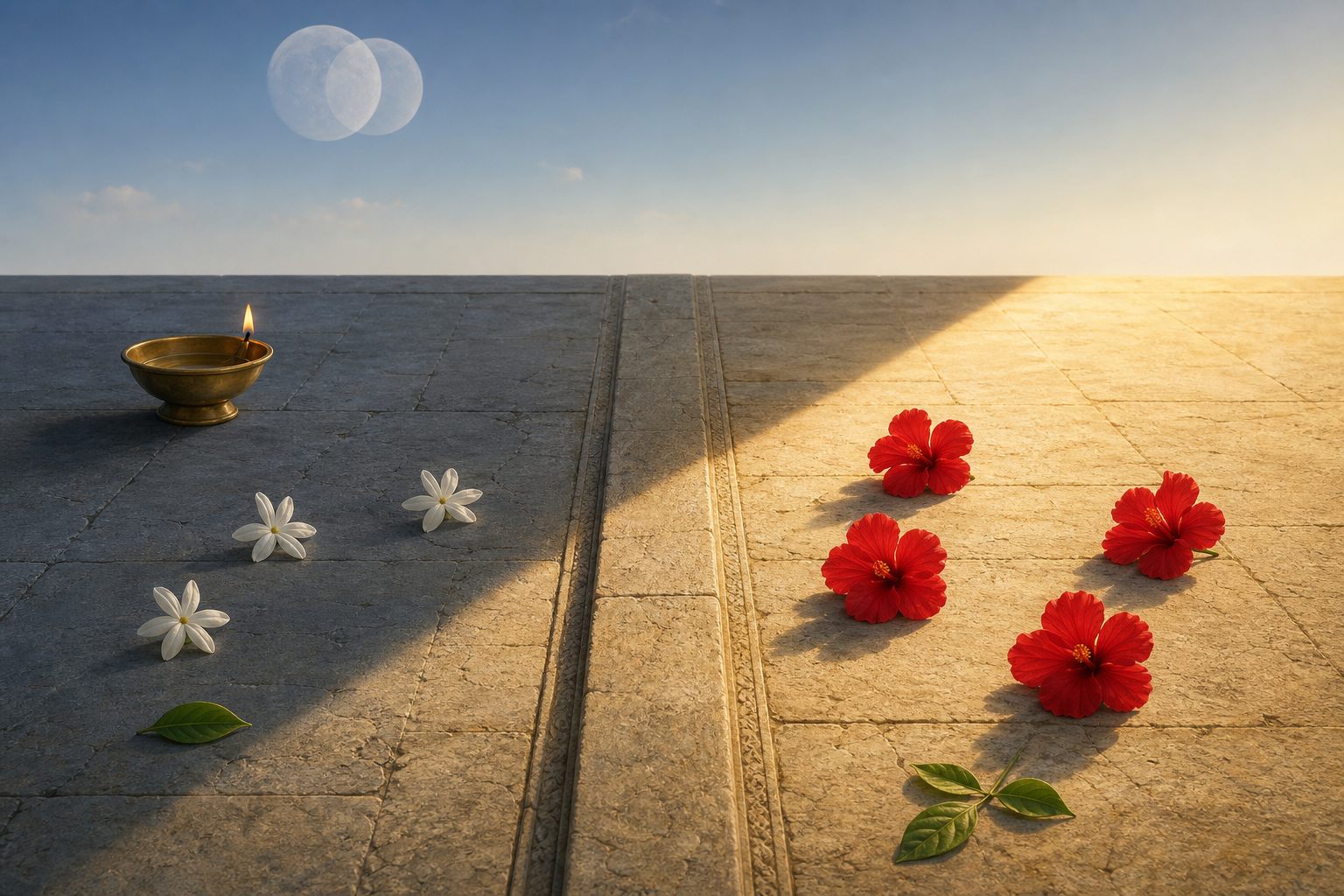
Before 10:04 AM, Krishna Paksha Tritiya prevails. Tritiya belongs to the Jaya class in the Nanda-Bhadra-Jaya-Rikta-Poorna cycle. Its practical emphasis is disciplined initiative rather than spectacle. If you have a proposal to refine, a difficult conversation to prepare for, a skill to practise, or unfinished work to consolidate, place that effort in the Tritiya portion where your local Panchang confirms the same boundary.
After 10:04 AM, Chaturthi prevails. Chaturthi is a Rikta tithi, so it is not the first choice for launching a major business, signing a consequential agreement, conducting an inauguration, or making a ceremonial first start. That does not make the entire afternoon unusable. Routine work, study, service, correction, troubleshooting, and the removal of existing obstacles fit the character of the tithi well.
The distinction matters: beginning something ambitious and clearing what prevents progress are not the same act. If an important launch can move without cost, choose another suitable tithi. If the work cannot move, do not abandon your responsibilities merely because Chaturthi has begun. Avoid the specifically adverse local periods, use an appropriate muhurta, perform a short Ganesha invocation, and proceed with steadiness.
Krishna Paksha is the waning half of the lunar month, leading toward Amavasya. The sidereal Sun also remains in Meena until Mesha Sankranti in mid-April. Together, these rhythms favour closing open loops before taking on unnecessary new ones. A useful question for April 5 is therefore not only, “What should I begin?” but also, “What obstacle or unfinished obligation should I remove before the next beginning?”
Decide the Sankashti observance by local moonrise
Krishna Paksha Chaturthi is observed in many regions as Sankashti Chaturthi, a vrata dedicated to Bhagavan Ganesha. The decisive test is not whether Chaturthi appears somewhere on the civil date. It is whether Chaturthi is present at moonrise where you are.
- Find the moonrise time for your town or city on April 5.
- Check the tithi that prevails at that exact local moonrise.
- If Chaturthi prevails, observe the vrata on April 5 and conclude it after the prescribed moonrise observance.
- If Chaturthi has not yet begun or has already ended at local moonrise, follow the next date assigned by a credible local Panchang.
This rule prevents a common mistake among families living away from Bharat: using an Indian calendar date while following a North American, European, or Australasian moonrise. The astronomical event and the local civil date must belong to the same location. The 10:04 AM transition is useful orientation, but it is not a substitute for a city-specific vrata calculation.
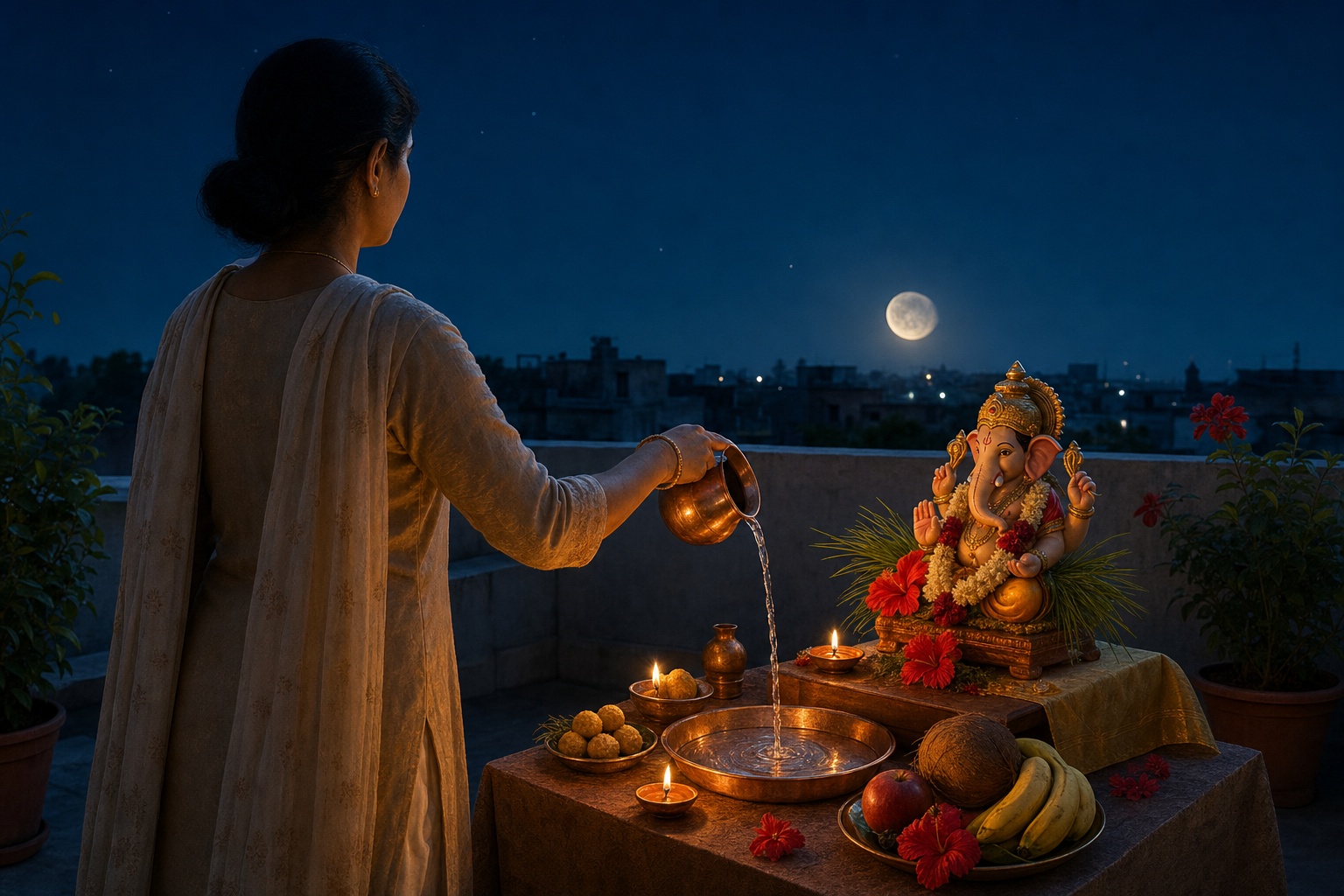
The traditional vrata runs from sunrise until moonrise. At the appropriate time, take darshan of the Moon, offer arghya with water and akshata, worship Ganesha, and then take prasada and complete the fast. The Sankashti Chaturthi katha may be read as part of the observance. Keep the offering simple if necessary; care and concentration matter more than an elaborate arrangement.
If a strict fast conflicts with health needs or an essential duty, do not measure devotion by physical strain. Follow the Dharmic principle of non-harm, adapt the observance in keeping with your sampradaya, and obtain appropriate medical guidance where needed. A moderated sattvic observance, sincere japa, and charity can preserve the vrata’s intention without reckless austerity.
Calculate the useful and adverse periods for your location
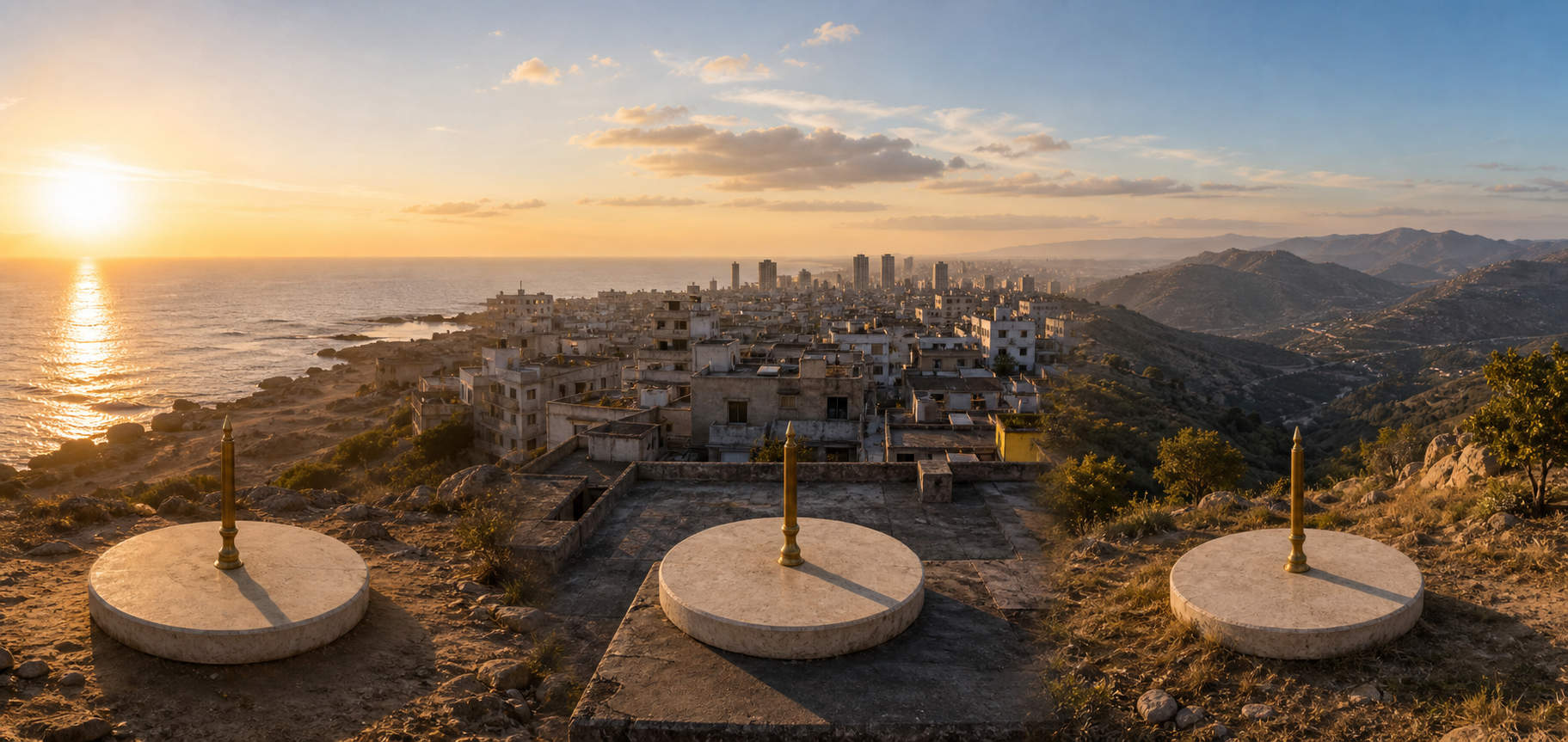
No trustworthy Panchang can give one universal clock schedule for April 5. Sunrise, sunset, true solar noon, and moonrise vary with longitude and latitude. Begin with a reliable local almanac that supplies those four values for your city, then apply the relevant rule.
Brahma Muhurta for japa and meditation
Brahma Muhurta extends approximately from 1 hour 36 minutes before sunrise until 48 minutes before sunrise. Subtract those intervals from your local sunrise rather than copying a time printed for Delhi, Mumbai, Toronto, London, or another city. Use the window for silence, pranayama, mantra-japa, scriptural reading, or preparation for the vrata.
Abhijit Muhurta for a necessary decisive action
Abhijit Muhurta centres on local solar noon and lasts roughly 24 minutes on either side of it. True midday is not automatically 12:00 PM on the civil clock. If you must perform an important action and no clearer auspicious window is available, check the locally calculated Abhijit period. Treat it as one supporting factor, not as permission to ignore the tithi, an adverse yoga, or the requirements of a vrata.
Sunday Rahu Kalam, Yamaganda, and Gulika
Measure the daylight interval from local sunrise to local sunset and divide it into eight equal segments. On Sunday, Yamaganda occupies the fifth segment, Gulika the seventh, and Rahu Kalam the final segment under the standard weekday sequence. The calculation is straightforward: if the daylight duration is D, each segment lasts D divided by eight, and segment n begins at sunrise plus (n minus 1) segments.
Avoid beginning a journey, signing a contract, placing a major order, or making a ceremonial first purchase during the relevant adverse period when you can reasonably reschedule it. Ordinary duties do not need to stop. These intervals govern beginnings more than the continuation of necessary work.
Choghadiya, nakshatra, and rashi
Day Choghadiya divides sunrise to sunset into eight parts, while night Choghadiya separately divides sunset to the next sunrise into eight parts. Amrit, Shubh, and Labh are favourable choices; Rog, Kaal, and Udveg are generally avoided for a new undertaking. Use the day or night cycle that actually contains your proposed action.
Nakshatra and rashi require the Moon’s nirayana, or sidereal, position at the precise time. The 27 nakshatras each cover 13 degrees 20 minutes, while the 12 rashis each cover 30 degrees. Because the Moon can cross a boundary during the civil day, and because calculations can differ with location and ayanamsa, it is unsafe to assign one all-day nakshatra or rashi without a verified computation.
This becomes especially important if you are checking Tarabalam or Chandra Bala for a personal muhurta. Use your own birth nakshatra together with the locally operative lunar position. For a consequential ceremony, also verify yoga and karana at the proposed time. Favourable combinations such as Sarvartha Siddhi Yoga or Amrita Siddhi Yoga, and adverse combinations such as Vyatipata or Vaidhriti, cannot be confirmed from the date alone.
A simple practice for April 5
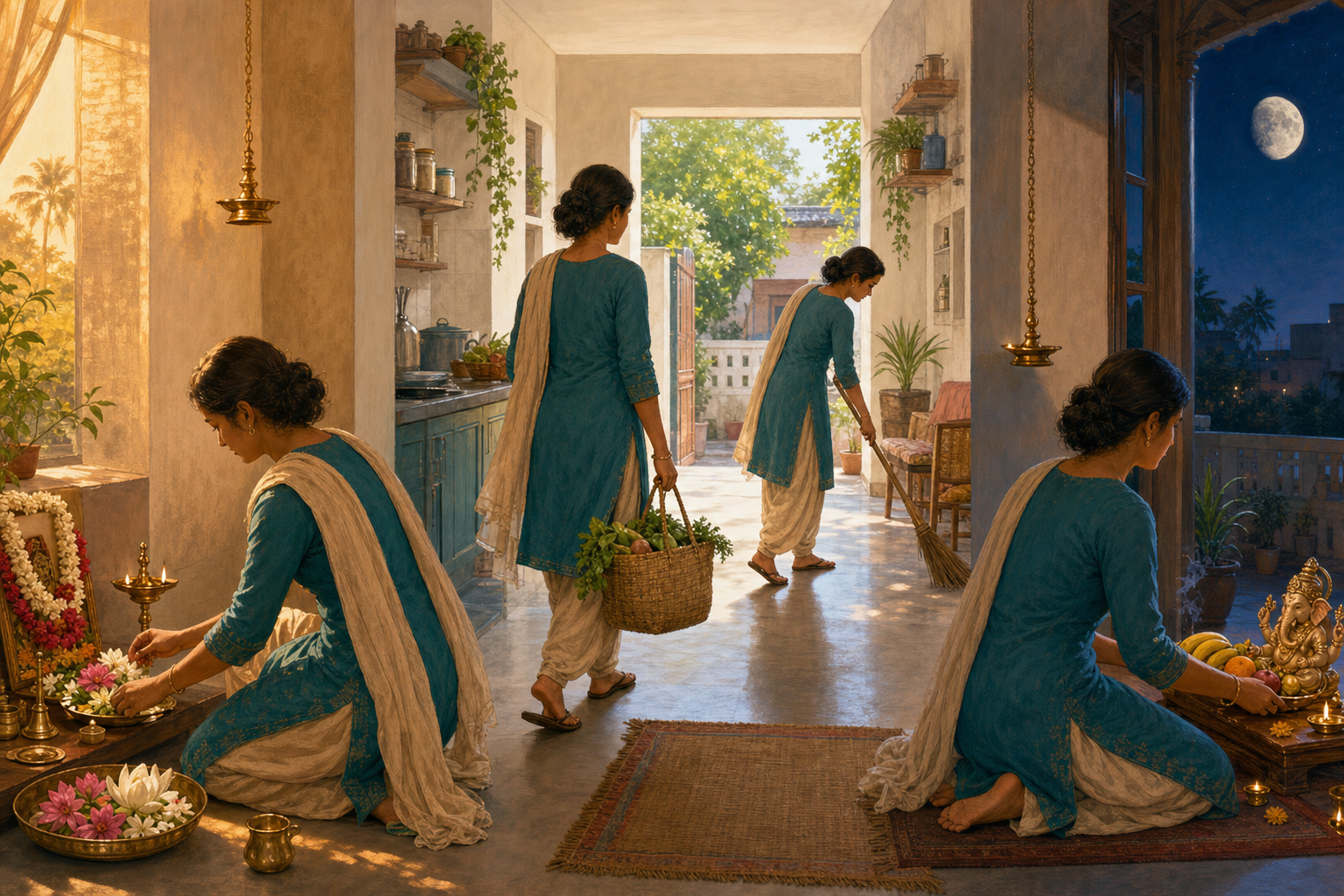
You do not need an elaborate ritual schedule to honour the day. Set the four local anchors first: sunrise, the Tritiya-Chaturthi boundary, sunset, and moonrise. Then arrange your practice around the tithi that is actually present.
- During Brahma Muhurta, sit quietly and establish a clear sankalpa. Keep it concrete: name the obstacle, duty, habit, or unfinished task you intend to address.
- During the locally confirmed Tritiya portion, plan, learn, repair, or complete. Give priority to one pending responsibility rather than opening several new ones.
- After Chaturthi begins, light a lamp and invoke Ganesha. Recite Om Gam Ganapataye Namah, Ganesha Atharvashirsha, or Sankashta Nashana Ganesha Stotram according to your capacity and tradition.
- For a concise Panchopachara puja, offer gandha, pushpa, dhoopa, deepa, and naivedya: fragrance, flowers, incense, a lamp, and food.
- If April 5 is the locally valid Sankashti date, wait for the prescribed moonrise observance before concluding the fast. Offer arghya, complete Ganesha puja, and share prasada.
- Close the day with one act of study, service, or mindful charity. Dedicate the merit to loka-samgraha, the welfare and cohesion of all.
Before April 5 arrives, save your city’s sunrise, sunset, moonrise, and tithi-at-moonrise in your calendar. That short local check will tell you more than a copied list of clock times, and it will let you observe Chaturthi with both reverence and astronomical accuracy.