
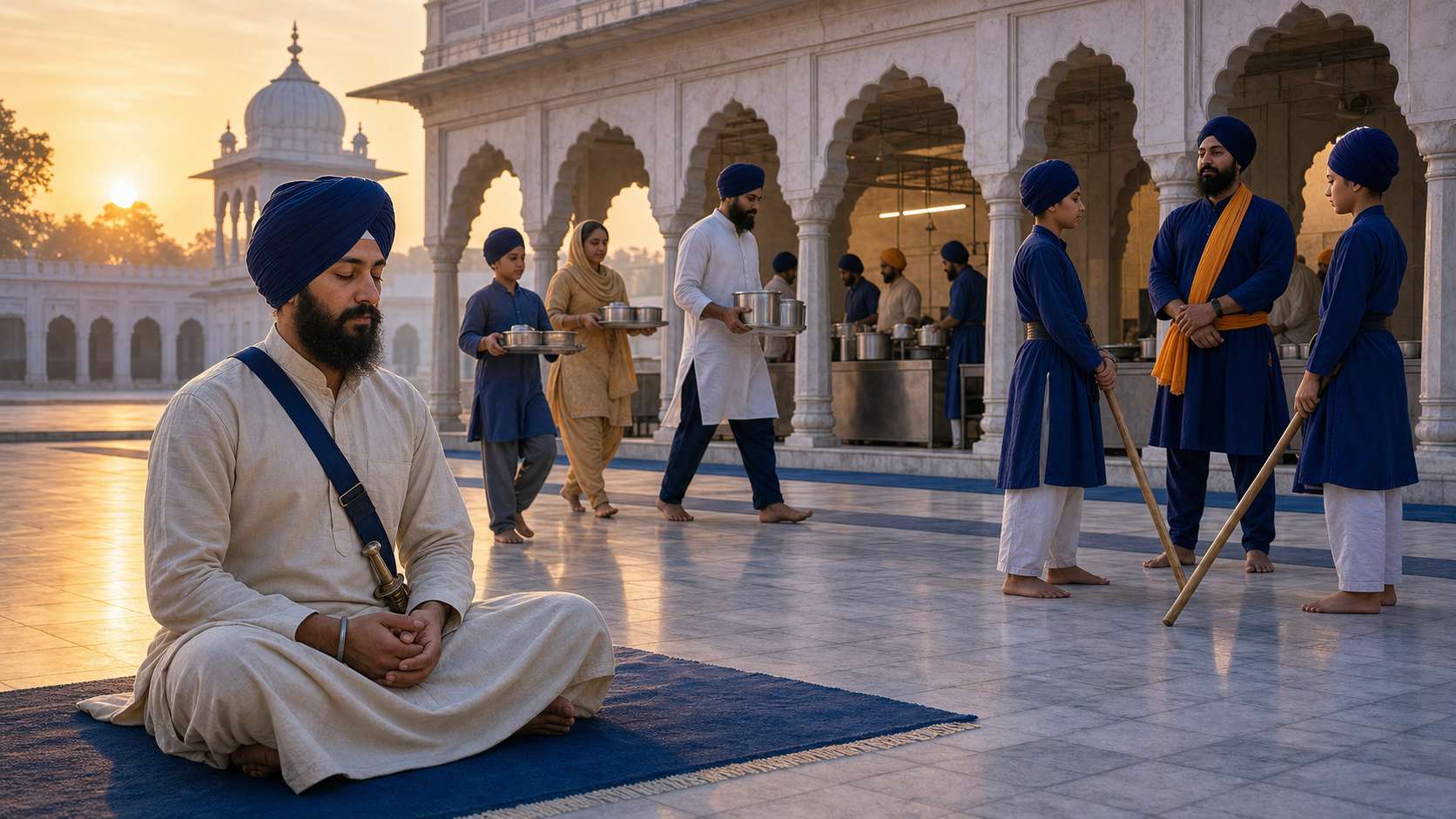
If you are trying to understand how a path centred on Naam, humility, and langar can also honour the kirpan and shastar, do not begin by choosing between peace and strength. Sikh spirituality asks a more demanding question: has strength been purified enough to serve?
That question reaches far beyond battlefield history. It appears whenever you must confront wrongdoing, defend another person, establish a firm boundary, or decide whether anger is disguising itself as courage. The Sikh response is a disciplined sequence: remember the One, loosen the ego’s grip, serve concretely, and use only the strength required to protect. The sequence matters. Remove remembrance, and power becomes self-assertion. Remove service, and spirituality becomes private comfort. Remove courage, and compassion can become an excuse for looking away.
The saint-soldier is one discipline, not a split identity
The Sikh saint-soldier is not a peaceful person who occasionally changes into a warrior. Nor is this an armed person who adds prayer to make power appear sacred. Spirituality and martial responsibility govern each other at every stage.
The Mool Mantar places Nirbhau, without fear, beside Nirvair, without enmity. Keeping the two together prevents a serious moral error. Fearlessness without non-enmity can become intimidation, while non-enmity without fearlessness can become passive avoidance. Nirbhau gives you the steadiness to face what is wrong. Nirvair forbids you from turning the wrongdoer into an object of hatred.
This pairing gives you a practical test. When you feel driven to act, ask what would remain if personal insult were removed from the situation. If the desire to intervene disappears, you may have been seeking vindication rather than justice. If another person’s safety, dignity, or freedom is still at stake, action may remain necessary. Sikh courage is not measured by the intensity of your anger. It is measured by whether you can protect without surrendering your conscience to anger.
The same unity took institutional form through Miri-Piri under Guru Hargobind and the founding of the Khalsa by Guru Gobind Singh in 1699. Temporal responsibility was not placed outside spiritual life. The community had to be capable of prayer, honest livelihood, mutual care, collective discipline, and resistance to oppression. Sovereignty therefore meant responsibility before it meant status.
The everyday foundation is equally important. Naam Japo, Kirat Karo, and Vand Chhako bind remembrance, honest work, and sharing into a single way of life. Naam keeps action answerable to the Divine. Honest livelihood keeps spirituality from feeding on exploitation. Sharing loosens possessiveness and makes another person’s welfare part of your own discipline. Martial readiness grows from this ethical ground; it cannot replace it.
- If contemplation makes you calmer but not more honest, examine the gap between Naam and Kirat Karo.
- If you work honestly but hold everything for yourself, bring Vand Chhako into your use of food, money, time, and attention.
- If you speak often about defending dharma but rarely accept the inconvenience of serving people, begin with seva before speaking about shastar.
- If your service makes you resentful, superior, or controlling, return to remembrance and look for the ego that has attached itself to good work.
Readers from other Dharmic traditions will recognise family resemblances: Naam Simran and japa train recollection; seva and karma yoga discipline action; compassion and non-harm restrain power; Jain many-sidedness encourages humility about one’s own view. These correspondences can deepen mutual understanding, but they should not flatten distinct paths into interchangeable techniques. If you are practising within Sikh tradition, let Naam, Hukam, sangat, seva, and Panthic discipline retain their own integrity.
Train attention before you test courage
A confrontation usually becomes morally confused before it becomes visibly destructive. The mind rehearses grievances, predicts motives, and turns uncertainty into a story of absolute innocence and absolute guilt. Naam Simran interrupts that process by giving attention somewhere truthful to return.
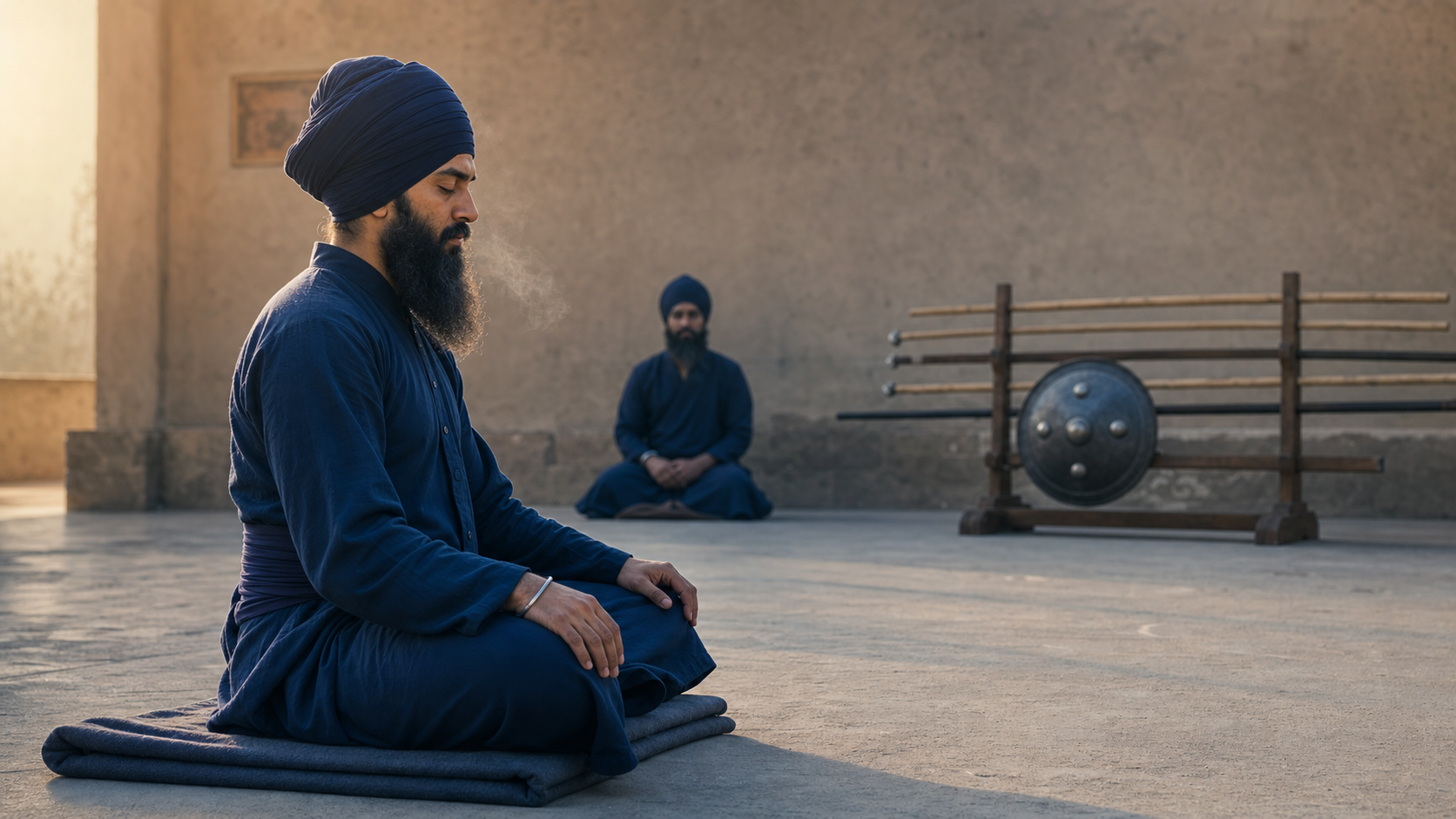
Simran is not a device for suppressing anger or manufacturing a pleasant mood. It trains you to notice mental movement without immediately obeying it. Repetition of Waheguru can be silent, whispered, or sung. When attention wanders, the work is simply to notice and return. That repeated return develops the same capacity you need under pressure: the ability to feel an impulse without treating it as a command.
A modest daily routine is more useful than an elaborate routine you abandon. Where your community prescribes an established discipline, that maryada takes precedence. Otherwise, a simple practice can be organised in four parts:
- Spend five minutes settling your posture and noticing the natural breath without trying to control it.
- Practise Naam Simran with Waheguru for ten to twenty minutes. Notice distraction without constructing an argument about it, and return to the Name.
- Spend two minutes in gratitude for guidance, correction, and the opportunity to serve.
- Offer the benefit of the practice toward the welfare of all beings rather than treating calm as a private possession.
If the breath helps steady attention, you can allow Wahe to accompany the inhalation and Guru to accompany the exhalation. Keep the breath natural, with no strain or retention. The breath supports remembrance; it does not become a performance or replace devotion.
Use a shorter form immediately before a difficult conversation. Take three unforced breaths with Waheguru, then recollect Nirbhau and Nirvair. On the first breath, notice the fear that might make you avoid the truth. On the second, notice the resentment that might make you exaggerate or humiliate. On the third, decide what protection, honesty, or boundary the situation actually requires. Then speak to that need rather than to the emotional drama surrounding it.
Do not grade the practice by unusual sensations. Look for changes in conduct: a shorter recovery after an emotional spike, greater ability to listen without composing a reply, less pleasure in another person’s humiliation, and more readiness to share. Those are sturdier indicators than whether every session felt serene.
Private practice should also make you more available to the sangat, not turn the community into an optional accessory. Kirtan, deep listening, sangat, and langar join attention with collective life. If solitary practice makes other people feel like interruptions, it has not yet matured into Sikh presence.
Let seva expose the ego that meditation can hide
It is possible to feel composed in silence while remaining impatient, possessive, or status-conscious around other people. Seva reveals what meditation alone can leave concealed. An unglamorous task, an inconvenient request, or a person who cannot repay you quickly shows whether remembrance has softened the ego or merely decorated it.
Langar is one of the clearest forms of spirituality made public. Nourishment and dignity are offered together; service is organised around a human need rather than the social rank of the recipient. The lesson extends beyond the kitchen. Good seva reduces a burden while preserving the other person’s agency. It does not use help to purchase obedience, recognition, or moral superiority.
You can test a proposed act of service with four questions:
- What is the actual need? Ask or observe carefully instead of assuming that the help you prefer to offer is the help another person needs.
- Will this preserve dignity? Do not publicise someone’s vulnerability merely to prove that you served.
- Can I do the necessary work without centring myself? Choose at least some tasks whose value remains even when nobody sees who completed them.
- Is the help sustainable and responsible? Do not neglect dependants, promises, or honest livelihood in order to perform a dramatic act of generosity.
Kirat Karo and Vand Chhako keep this service grounded. Honest work asks how resources were obtained; sharing asks where they go. A generous donation does not cleanse dishonest earning, and clean earning does not end your responsibility to share. If money is limited, Vand Chhako can still govern time, food, knowledge, transport, attention, or access. The point is not the display of sacrifice. It is the deliberate loosening of exclusive possession.
Seva also trains martial judgement. Someone accustomed to meeting real needs learns that protection is about the person at risk, not the rescuer’s self-image. You learn to arrive, listen, do what is required, and stop making yourself the centre. In that sense, protection is seva under pressure.
After serving, do not ask only whether your intention was good. Ask whether the burden became smaller, whether dignity remained intact, and whether the recipient gained room to act. Intention matters, but consequences tell you whether compassion found an effective form.
Put every use of force through a strict ethical gate
Sikh martial imagery does not give personal anger a sacred costume. Weapon praise in compositions traditionally associated with Guru Gobind Singh places shastar within devotion, discipline, and the defence of dharma. The weapon’s moral meaning comes from the purpose and restraint governing its use, not from steel by itself.
Many exegetical traditions understand Bhagauti as the Divine Sword or empowered Shakti of the Timeless One. That reading does not turn an object into a licence for aggression. It presents power as answerable to Akal Purakh: capable of cutting through adharma, yet never privately owned by the ego. Interpretive emphases can differ, so serious theological or maryada questions belong in conversation with knowledgeable community guidance rather than improvised certainty.
The range of arms remembered in Shastar Naam Mala, including indigenous and transregional weapons as well as firearms and artillery, makes another point visible: technology does not carry an automatic moral halo. A sword, spear, bow, musket, shield, or newer instrument of power acquires ethical meaning from who controls it, why it is used, what alternatives exist, and whether its effects are restrained.
The symbolism helps only if it disciplines conduct. The sword can represent discernment that cuts confusion. The shield can represent compassion willing to absorb risk so another person need not. The bow resembles a mind able to hold energy without releasing it impulsively, while the arrow resembles a focused vow. These meanings do not erase the historical reality of martial training. They specify the inner mastery without which technique becomes dangerous.
Dharma-Yuddha places force under necessity, proportion, and last resort. You can translate those principles into a decision gate for conflict. It is not a canonical formula, legal permission, or tactical instruction. It is a way to expose the motives that ego prefers to hide:
- Is there a real threat or injustice? Separate danger to a person or community from injury to your pride, reputation, or desire to dominate.
- Is the purpose protection? Name the person, dignity, freedom, or boundary you are trying to protect. If the honest answer is punishment or humiliation, stop.
- Have less harmful means been used where time permits? Listening, warning, withdrawal, documentation, mediation, collective pressure, and lawful intervention may resolve a situation without physical force. Immediate danger can narrow those options, but impatience is not the same as urgency.
- Is the response proportionate? Use no more pressure than the protective purpose requires. A response becomes suspect when its scale is driven by rage rather than necessity.
- Can the action stop when the threat stops? Protection has an endpoint. Revenge keeps going after safety has been restored.
- Can you remain Nirvair? Oppose the harmful act firmly without needing to deny the wrongdoer’s humanity or cultivate permanent hatred.
This gate applies before physical force is even contemplated. In a workplace, it can govern whether you document misconduct, report it, or confront it directly. In a family, it can help you set a boundary without turning the conversation into character assassination. In public debate, it can keep truthful criticism from sliding into dehumanisation. Firmness is often necessary; contempt is not.
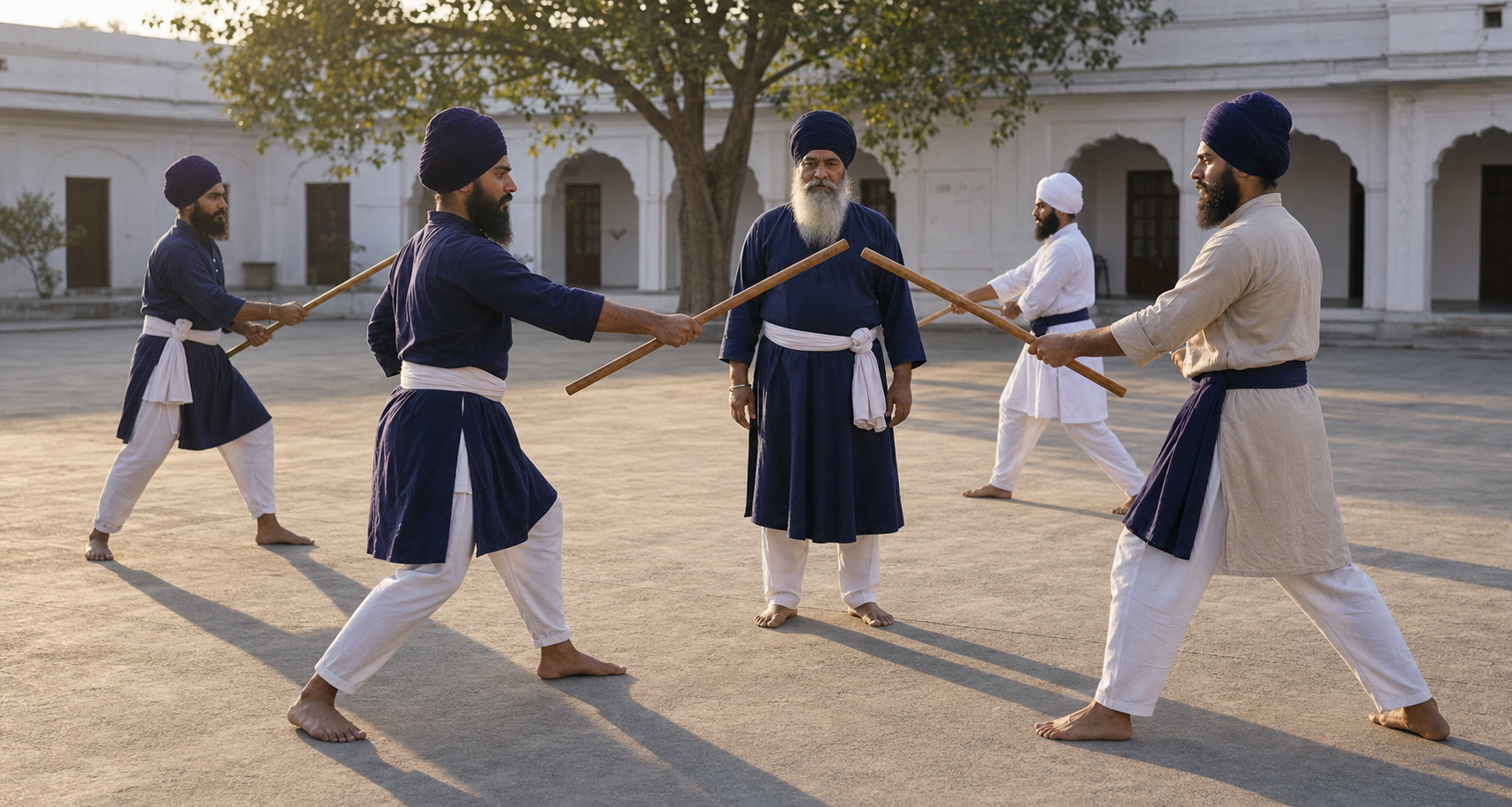
Martial ethics must also include competence. This framework is not an invitation to improvise an armed intervention. Weapon practice requires qualified instruction, controlled conditions, careful storage and handling, and obedience to applicable law. In immediate danger, prioritise moving people toward safety and obtaining appropriate emergency assistance rather than creating another casualty. Honouring shastar is incompatible with carelessness.
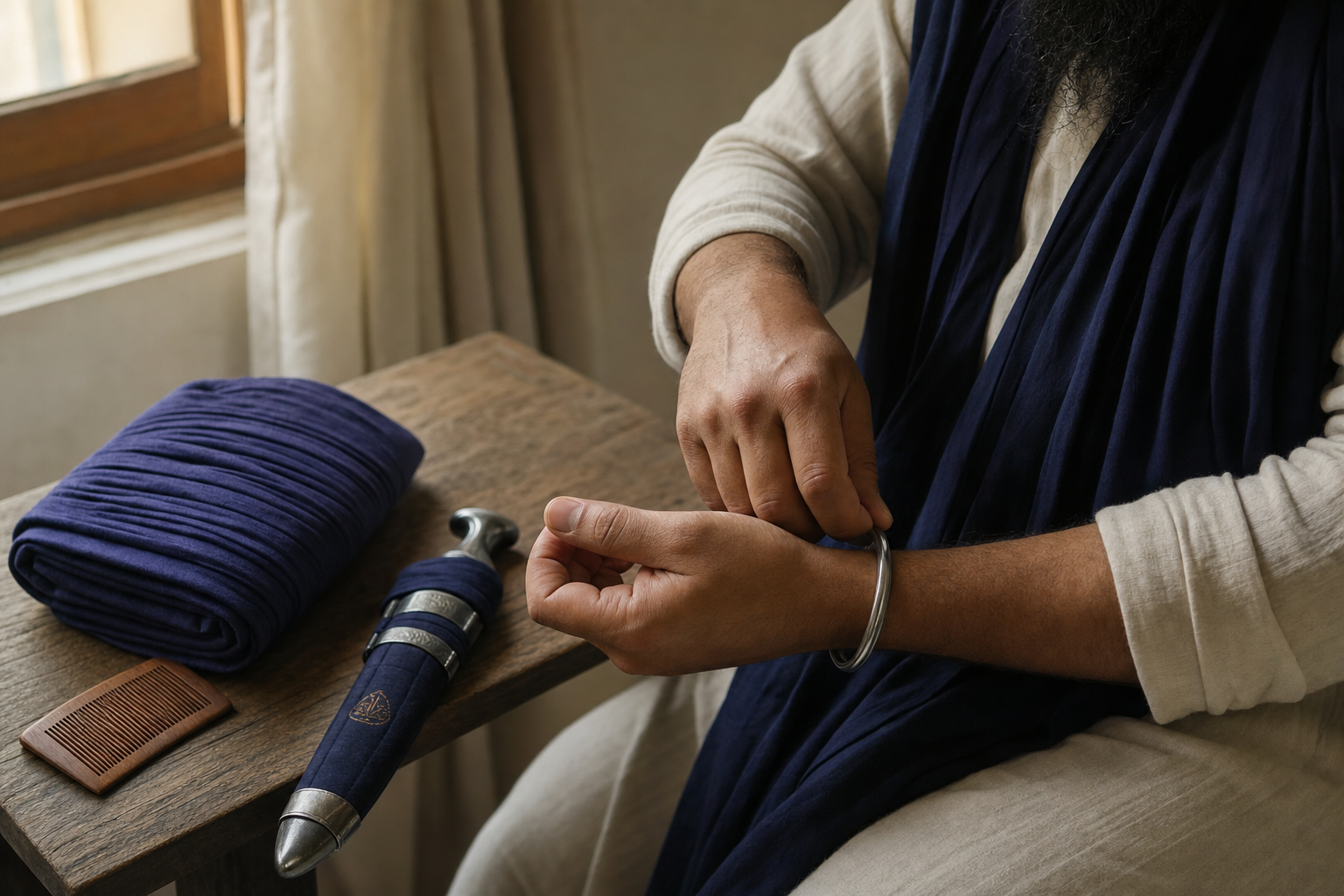
The kirpan therefore signifies more than the possession of a blade. It is a continuing demand for ethical readiness: notice vulnerability, refuse cowardly indifference, develop the ability to respond, and keep that ability under spiritual restraint. Readiness without responsibility is menace. Responsibility without readiness can leave good intentions powerless.
Bring remembrance, service, and courage into the next seven days
Hukam prevents disciplined action from becoming a fantasy of total control. Living in Hukam means accepting reality without collapsing into passivity. You acknowledge what is already present, release the ego’s demand that events obey you, and still make the responsible response. Surrender concerns your claim over outcomes; it does not cancel your duty to act.
Japji Sahib’s movement through Suniai and Mannai gives this a practical order. Listen deeply enough to encounter the situation rather than your preferred story about it. Then internalise what is true strongly enough to let it govern conduct. In a conflict, that means hearing facts and fear before choosing a boundary. In seva, it means hearing the need before supplying an answer. In martial responsibility, it means perceiving the threat clearly before releasing force.
Key takeaways for a seven-day practice
- Begin with Naam. Each morning, settle for five minutes, practise Waheguru Simran for ten to twenty minutes, and close with two minutes of gratitude.
- Correct one part of your livelihood. Notice one transaction, promise, shortcut, or use of another person’s labour where Kirat Karo requires greater honesty.
- Share something concrete each day. Practise Vand Chhako through food, money, time, knowledge, attention, or access, without seeking recognition.
- Perform one unglamorous seva. Choose a useful task that preserves dignity and would still matter if nobody knew you did it.
- Use Nirbhau and Nirvair before conflict. Take three natural breaths, identify what fear is avoiding and what resentment is exaggerating, then state the necessary truth or boundary without humiliation.
- Apply the ethical gate before escalating. Test necessity, protective purpose, alternatives, proportion, a clear stopping point, and freedom from enmity.
- Review the day under Hukam. Ask where fear produced silence, where resentment produced excess, whom your action protected, what you shared, and what now has to be repaired.
At the end of seven days, do not ask whether you managed to feel spiritual all week. Ask whether you recovered from anger more quickly, listened more accurately, shared more readily, and acted more firmly without becoming cruel. Keep the practices that changed conduct, and take questions of deeper discipline to the sangat and qualified guidance.
Start tomorrow with Naam and choose one real act of seva before the day fills up. When the next conflict comes, let Nirbhau help you face it and Nirvair decide how you face it. That is where the saint-soldier ideal stops being an admired image and becomes a discipline another person can safely encounter.

References
- SikhNet — The Eternal Now: Guru Nanak’s Mindfulness for Fearless Clarity and Compassionate Living
- SikhNet — Forged in Faith: Weaponry in the Dasam Granth Sahib – History, Shastra-Vidya, and Symbolic Power