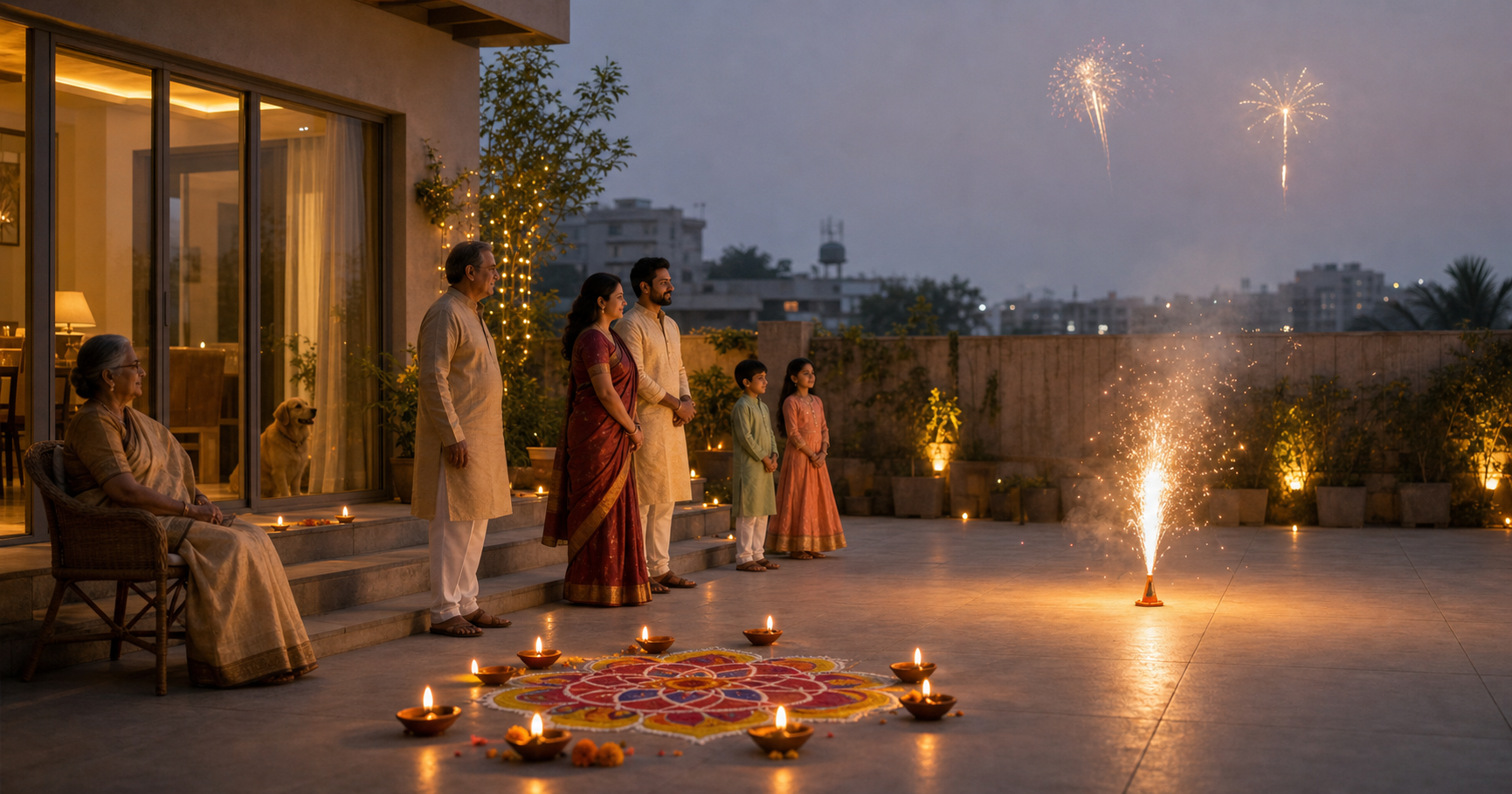
If you want fireworks at Deepavali without dismissing your neighbour’s asthma – or accepting the claim that one evening explains an entire winter of smog – you need a more exact rule. Fireworks are a real, controllable festival-night exposure inside a much larger seasonal air-pollution problem.
That distinction lets you make sensible choices without treating celebration and public health as enemies. You can comply with the law, reduce the sharpest local harms, preserve the festival’s character, and still demand serious action on the pollution sources operating throughout the season.
Key takeaways
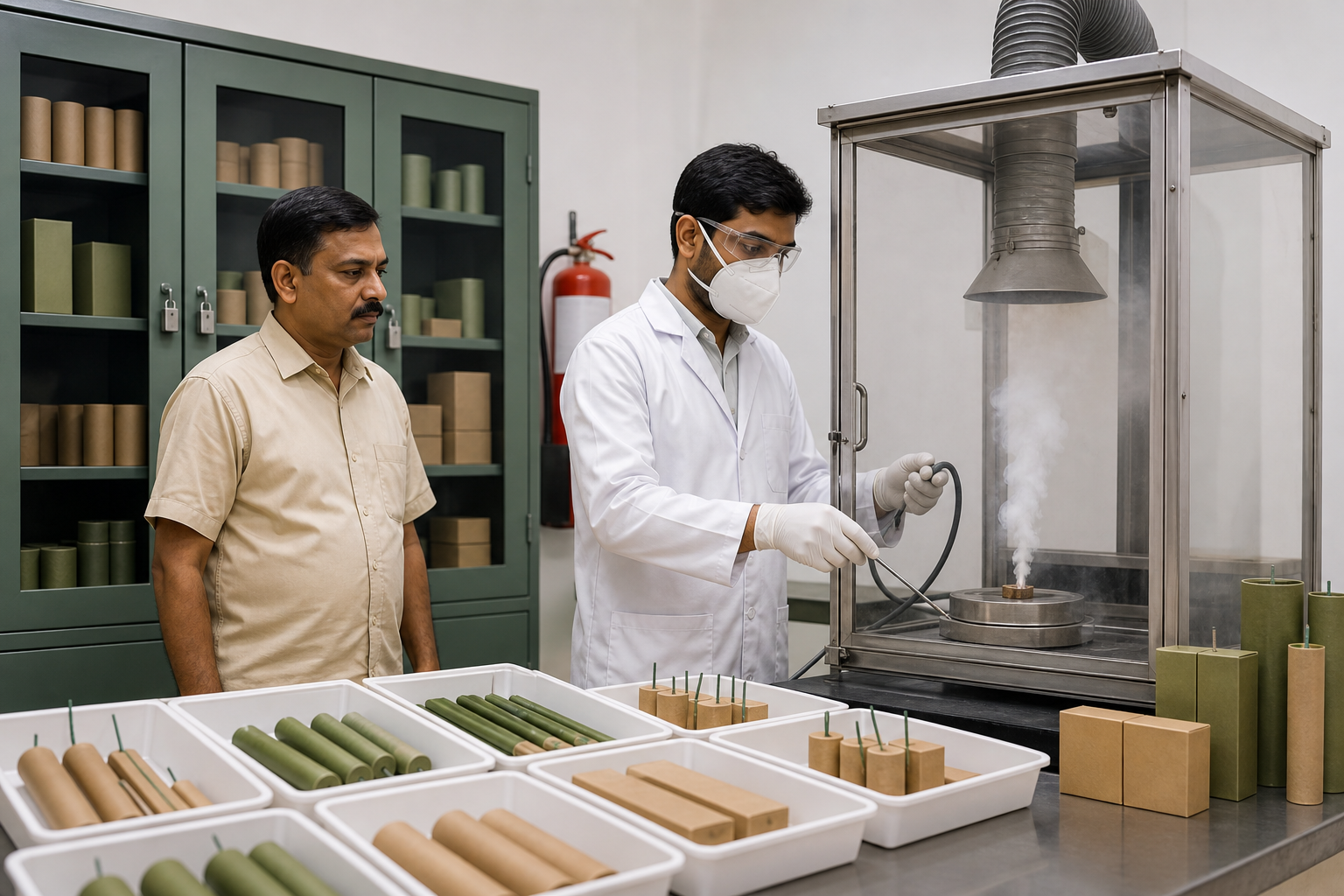
- Certified green crackers are reduced-emission products, not emission-free products. CSIR-NEERI designs such as SWAS, STAR and SAFAL target particulate reductions of about 30-35 percent and lower noise relative to conventional fireworks.
- Legal compliance has three parts: the permitted product, the permitted time and the permitted place. Passing one test does not excuse failing another.
- The most useful household precautions protect children, older people, animals and anyone with asthma, COPD or another cardiopulmonary condition from direct smoke and intense noise.
- A fair clean-air policy must address the festival-night spike and the larger seasonal burden from vehicles, dust, industry, residential fuels and agricultural residue burning.
Separate the festival-night spike from the winter burden
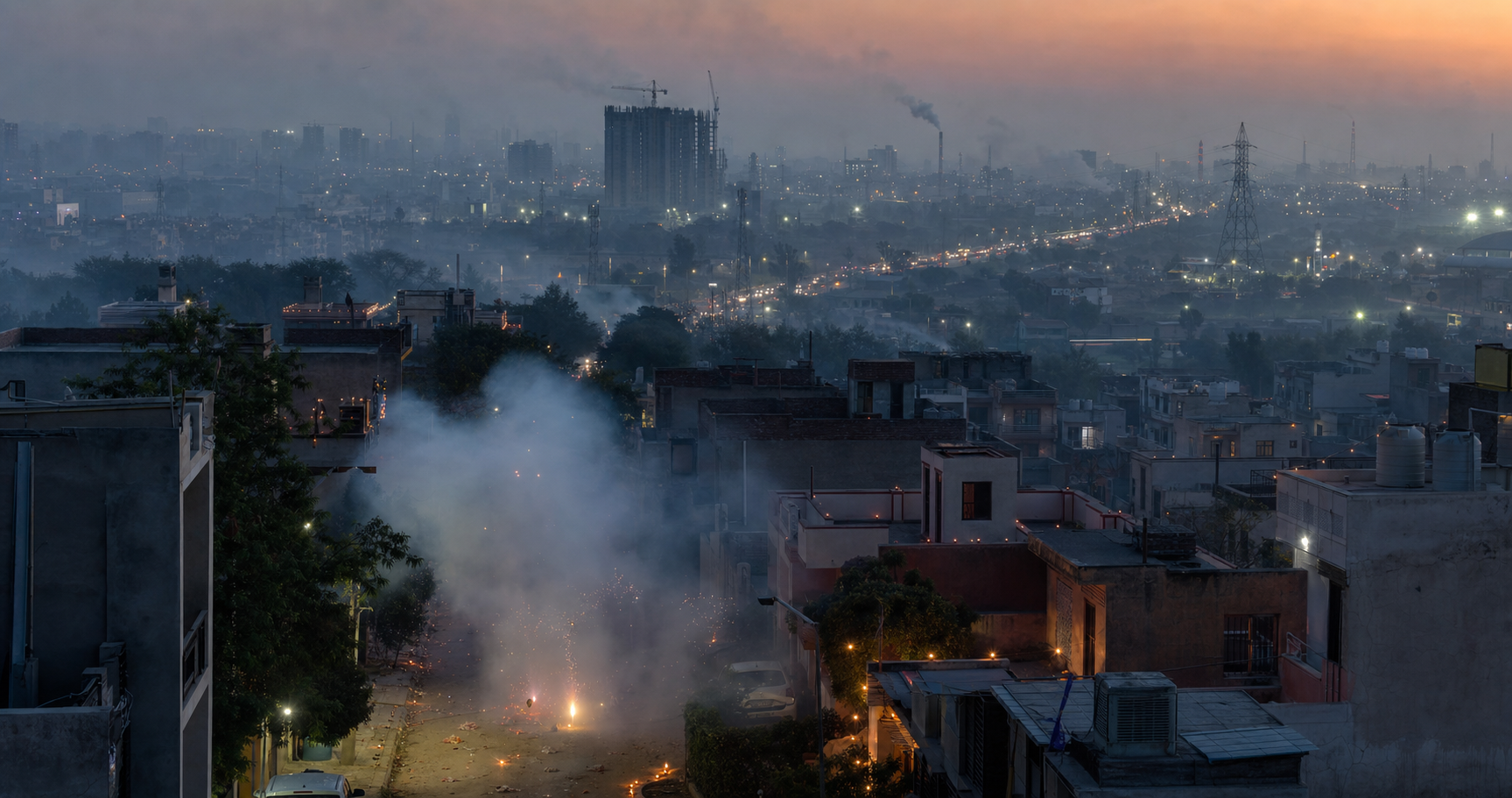
North Indian winter weather makes the Deepavali argument unusually difficult. Low mixing heights and temperature inversions can hold pollution close to the ground. Instead of dispersing quickly, particulate matter and gases from many sources accumulate in the same air that people breathe.
Fireworks add a concentrated burst of pyro-aerosols to that background. Their smoke contains fine particles, while the metal salts used to produce colours add a distinctive chemical component. When the surrounding air is already polluted and wind is weak, this extra load can remain near homes, streets and gathering places rather than disappearing when the last firework fades.
In major-city monitoring by CPCB and SAFAR, Deepavali-night PM2.5 has typically risen to several times the seasonal baseline. The excess can persist for roughly 8-24 hours, depending on wind and humidity. The size of the rise varies sharply between cities and years, but the recurring pattern is clear: fireworks can materially worsen an already unhealthy night.
That is long enough to aggravate asthma and COPD, increase stress on people with cardiopulmonary illness and create avoidable exposure for children and older people. Intense noise can also affect hearing and stress responses in people and animals. Calling the increase temporary does not make it harmless.
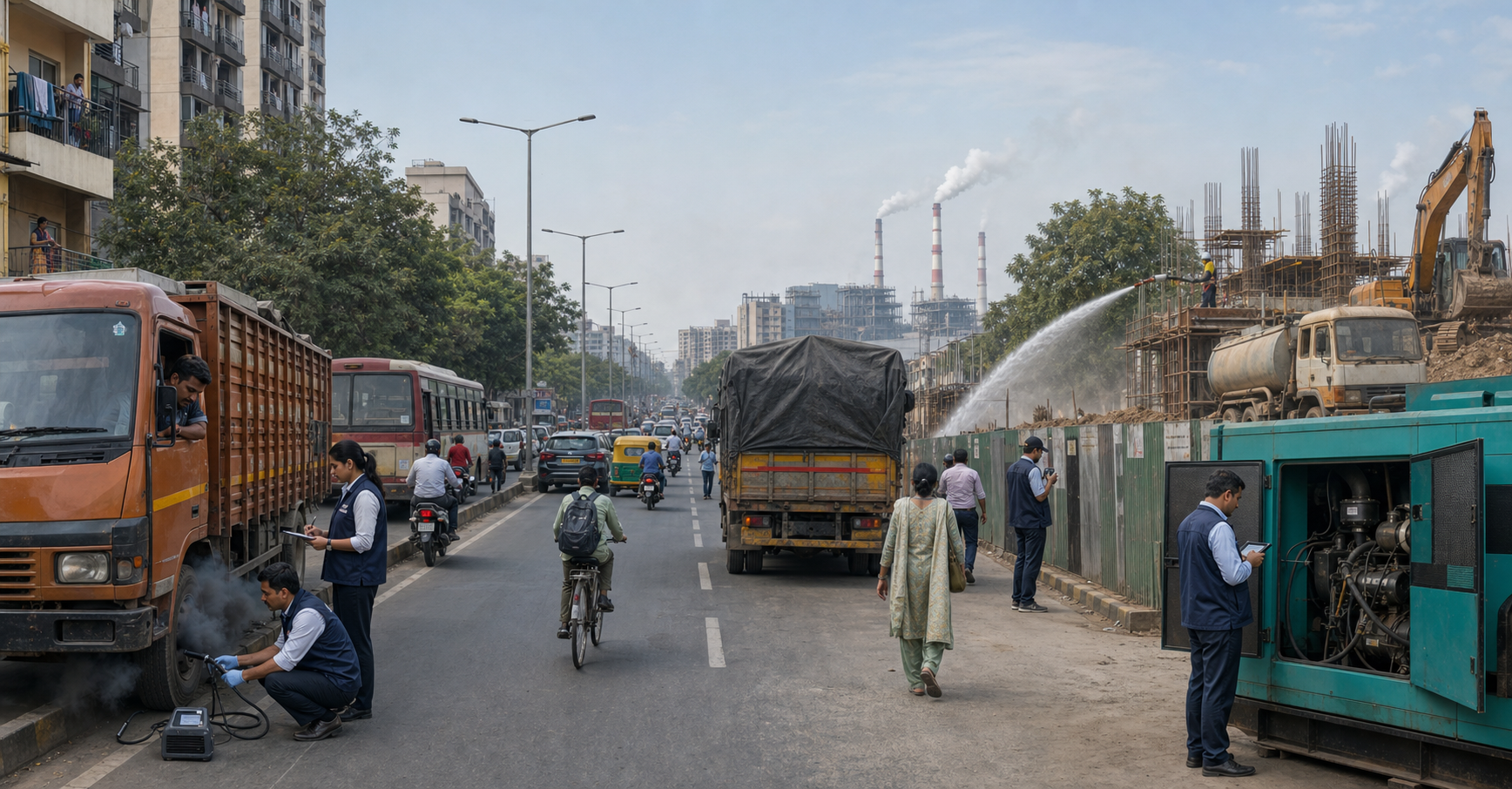
The seasonal question is different. Across the whole pollution period, the larger recurring contributors include traffic, construction dust, industrial and coal combustion, household fuels and crop-residue burning. Their relative shares change with locality and weather, so a single national percentage for the contribution of Deepavali fireworks would conceal more than it explains.
| Question you are asking | Relevant time scale | What follows |
|---|---|---|
| Can fireworks worsen the air people breathe tonight? | Hours to the following day | Yes. Product choice, quantity, timing, location and weather all matter. |
| Do fireworks explain the entire winter pollution burden? | Weeks to months | No. Persistent transport, dust, combustion and agricultural sources require continuing controls. |
| Should festival rules therefore be abandoned? | Immediate exposure management | No. A concentrated, preventable spike still warrants proportionate mitigation. |
| Can festival restrictions substitute for a clean-air programme? | Seasonal and year-round policy | No. A short firing window cannot repair failures elsewhere in the emissions system. |
This is the correction to carry into any discussion. The claim that fireworks make no meaningful difference fails at the festival-night scale. The claim that Deepavali causes the winter smog crisis fails at the seasonal scale. Good regulation must be capable of holding both facts at once.
Compliance means checking the product, time and place
The framework built through the Supreme Court’s 2018 orders and later clarifications permits green crackers rather than conventional formulations, prohibits barium-containing formulations and limits firing to specified time windows. National Green Tribunal and state directions can add restrictions in response to local air conditions. Because those directions can vary, the current local notification – not last year’s forwarded message – is the practical rule for your celebration.
Use this five-part check before you spend money:
- Find the current local order. Check the notification issued for your district or state by the relevant administration, police or pollution-control authority. Confirm the allowed date, time window and any location-specific prohibition.
- Buy sealed, traceable stock. Look for clear manufacturer and product information on the original packaging. Do not accept loose items or a seller’s verbal assurance that an unlabelled product is green.
- Look for the intended verification features. QR-coded packaging was introduced to help deter counterfeits and support enforcement. It is a screening feature, not permission to ignore a time or place restriction.
- Choose for your surroundings. Prefer lower-smoke and lower-noise items in a dense neighbourhood. Do not fire near hospitals, elder-care homes or other places where people cannot readily move away from the exposure.
- Stop when the permitted window closes. A cracker can meet the composition standard and still be used unlawfully. Product compliance does not extend the legal firing period.
The word green needs particular care. A product designed to emit 30-35 percent less particulate matter still produces particulate matter. Reduced noise is not silence. Certification therefore does not justify indoor use, close-range exposure, unlimited quantities or firing through the night.
Supply-chain integrity is part of the policy, not a minor consumer detail. Counterfeit labels and non-compliant goods undermine public trust while placing legitimate manufacturers and artisans at a disadvantage. If the packaging does not let you identify what you are buying, leave it with the seller.
Plan around the most vulnerable person nearby
You do not need to turn a family celebration into a medical exercise. You do need to plan for the person who has the least margin for smoke or noise. A child with asthma, an older neighbour with heart or lung disease, an animal frightened by blasts and a healthy adult do not experience the same evening in the same way.
Before firing begins
- Check the local air-quality forecast as well as the legal window. Poor dispersion means the same amount of smoke may create a worse neighbourhood exposure.
- If someone has asthma, COPD or another cardiopulmonary condition, follow their existing clinician-directed action plan. Do not use a festival precaution as a substitute for prescribed treatment or professional advice.
- Choose a firing point away from doors, windows, hospital boundaries and residences whose occupants cannot easily avoid the smoke.
- Prepare a quieter indoor room for vulnerable family members and animals. Use any indoor air-quality measures that are already appropriate for the household, but do not assume that one device makes prolonged outdoor firing harmless.
- Arrange suitable hearing protection for children and keep them out of the immediate firing area. A lower-noise label does not remove the need to protect their hearing.
During the permitted window
- Avoid scattered firing across many hours. A defined family or community period makes compliance and exposure control easier.
- Do not gather children, older people or anyone with a respiratory condition inside visible smoke. Move them indoors if smoke accumulates rather than waiting for discomfort to become severe.
- Keep the agreed quiet boundary around hospitals, elder-care facilities and nearby households with vulnerable occupants.
- New or severe breathing difficulty is not a debate about festival etiquette. Stop the exposure and seek urgent medical help.
After the display
- Remember that fine-particle pollution can remain elevated after the smoke is no longer dramatic. Vulnerable people should limit unnecessary outdoor exposure while local air remains poor.
- Once spent material is fully cold and safe to handle, clear it promptly. Segregate waste and recover packaging in line with local collection instructions so debris does not enter drains and waterways.
- Wait for outdoor conditions to improve before opening a protected indoor room merely to air it out. The morning after Deepavali is not automatically the end of the exposure period.
These steps do not ask one household to solve a city’s air. They concentrate your effort where an individual choice has real leverage: direct smoke, intense noise, duration and proximity to someone at higher risk.
A fair clean-air policy must last beyond one night
Fairness does not mean exempting fireworks from environmental standards. It means applying the same seriousness to every material source at the time scale on which it operates. A government that enforces a two-hour festival window but neglects months of dust, traffic and combustion has not produced a proportionate clean-air policy.
What competent local action looks like
- Before Deepavali: suppress road dust through appropriate washing and mechanical sweeping, publish useful hour-by-hour air forecasts, inspect fireworks markets and issue targeted health advice for vulnerable residents.
- During the celebration: enforce product and timing rules consistently across neighbourhoods, protect sensitive locations and communicate the rule in language that tells people exactly what compliance requires.
- Afterward: remove spent material quickly, segregate waste, recover packaging and publish the local pollution pattern so the next year’s decisions can use evidence rather than slogans.
- Throughout the season: act on vehicle emissions, construction dust, industrial and coal combustion, household fuels and agricultural residue burning with the persistence their duration demands.
Crop-residue policy is especially relevant because its smoke can enter the same regional air mass during the same season. Practical routes include incentives for in-situ management through equipment such as the Happy Seeder, as well as baling, bioenergy use and decomposer-based approaches. These measures require financing and delivery before the burning period; invoking them after the sky has deteriorated is too late.
Public communication should also be judged by whether it helps you act. A useful warning states the expected timing, affected area, vulnerable groups and protective steps. Sensational crisis metaphors may attract attention, but cultural shaming can reduce trust and make voluntary compliance harder. Public-health communication works best when it is exact about the risk and respectful about the people being asked to change their behaviour.
Artisan livelihoods belong in this compact as well. A transition to compliant products requires dependable certification, safer working conditions, legitimate distribution and enforcement against counterfeits. If policy tightens the retail market without helping lawful producers make the transition, it can punish workers while leaving unsafe goods in circulation.
Keep the celebration recognizably Deepavali
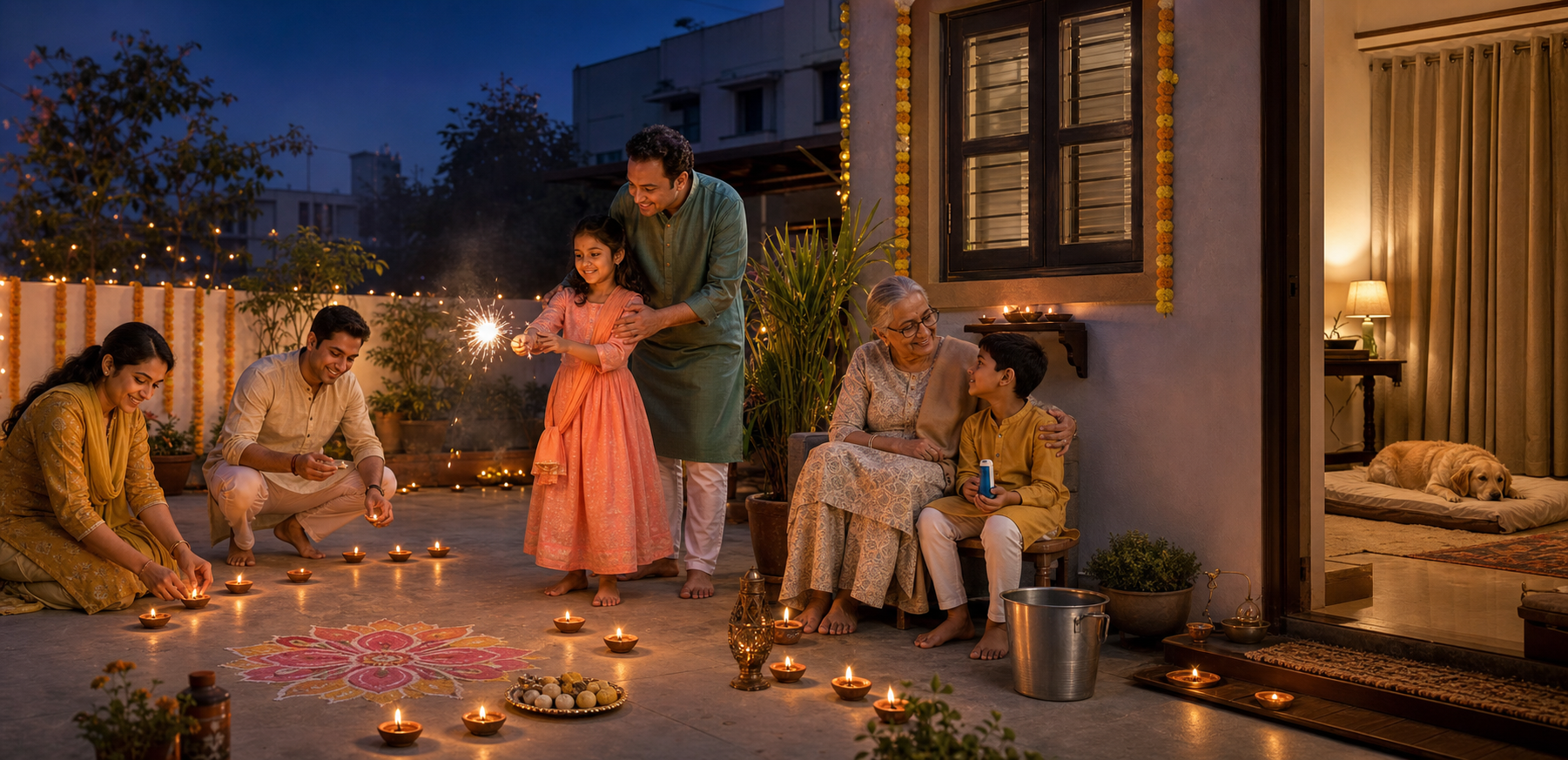
For many families, fireworks express shared joy. They are not, however, the whole of Deepavali. Diyas, puja, dana, family fellowship and the restoration of light and order give the festival a centre that does not depend on the amount of smoke produced.
The Dharmic values of Ahimsa, Seva, Dana and reverence for nature offer a stronger basis for reform than cultural embarrassment. Ahimsa asks you to notice preventable harm. Seva asks you to protect the neighbour who has less choice about exposure. Dana turns celebration outward. Reverence for nature makes cleanup and restraint part of the observance rather than chores imposed from outside it.
A community compact that can work
- Place diyas, puja, hospitality and dana at the centre of the programme so the festival is not reduced to a fireworks argument.
- If fireworks are included, use certified green products within one clearly announced legal window.
- Create a low-noise boundary around hospitals, elder-care homes and households that request protection for a vulnerable person.
- Prefer a controlled community display where local rules and conditions allow it. Central coordination makes product checks, timing and cleanup easier than unplanned firing across the neighbourhood.
- Assign volunteers for post-event segregation and packaging recovery before the celebration begins, not after debris has already spread.
Drone displays, laser shows and carefully engineered lower-noise pyromusicals can add spectacle where communities have the resources and permissions. They work best as additions, not as declarations that inherited forms of celebration are shameful. Families and local communities should retain room to choose within transparent health, noise and emissions limits.
Before you buy fireworks, retrieve the current local order, choose traceable certified stock and speak to the neighbour or family member most likely to need a quieter plan. Then ask your residents’ group or municipality for the same seriousness on dust, traffic, combustion and residue smoke after Deepavali has passed. That is not an apology for the festival. It is what confident stewardship looks like.