

You sit down to chant, but the body is still carrying the speed of the day. The breath is shallow, attention keeps scattering, and every attempt to force the mind into silence creates another struggle.
Begin one step earlier. Settle the body, regulate the breath, give attention a sacred sound, and then rest in quiet observation. The 20-minute practice below turns that sequence into a routine you can actually sustain.
What mental purification actually asks of you
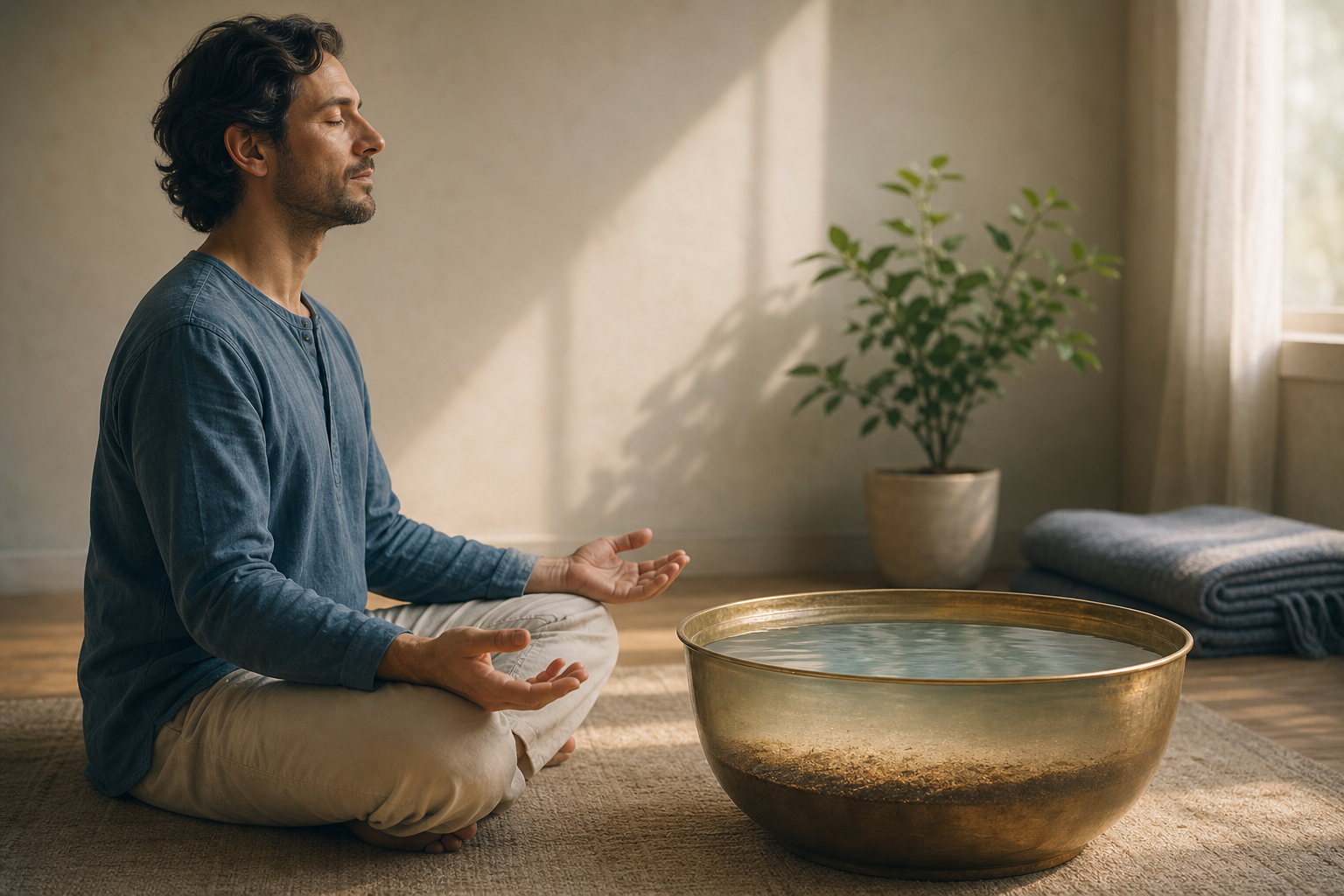
The yogīs who practice such breathing exercises are very soon freed from all mental disturbances.
Śrīmad-Bhāgavatam 3.28.10
Mental purification does not mean preventing every thought from appearing. It means reducing the agitation that repeatedly captures attention: reactive inner speech, sensory restlessness, emotional surges, compulsive rehearsal, and the inability to remain with a chosen object of contemplation.
The verse compares this process to refining gold. Fire represents tapas: steady effort, restraint, and the willingness to remain present when the mind would rather chase stimulation. Air represents regulated prāṇa. Just as carefully directed air sustains refining heat, measured breathing makes disciplined attention steadier and less harsh. The aim is refinement, not suppression.
This distinction changes how you respond to distraction. Do not treat a wandering thought as evidence that the session has failed. Notice it, release the argument around it, and return to the next breath or repetition of the Divine Name. That return is the exercise. Every unforced return weakens the habit of automatic reaction.
Classical yoga describes prāṇa-vāyu moving through a subtle network of nāḍīs and coordinating the life forces. When breath, habit, and attention are unsteady, sensory activity becomes noisy and meditation becomes difficult. Prāṇāyāma helps gather that scattered energy, supports pratyāhāra, and prepares the mind for dhyāna.
Modern physiology offers a complementary description without replacing yogic anatomy. Slow, coherent breathing can engage parasympathetic regulation through vagal pathways, improve heart-rate variability, and stabilize respiratory gas dynamics. Breathing near 5-6 cycles per minute works as a useful starting rhythm for many adults because respiration and cardiovascular rhythms can become more coordinated.
That rhythm is a starting point, not a command. A smaller, natural breath is better than an impressively deep one. If counting creates strain, shorten the count or return to unregulated nasal breathing. Slow breathing should feel quiet and sustainable, not like a test of lung capacity.
The words very soon also need discernment. A regulated breath may produce a noticeable state of calm within one sitting. Stable purification is a longer transformation, visible in how you speak, choose, and respond after the calm has been tested. Do not confuse a pleasant state with a completed discipline.
A 20-minute breath-and-mantra practice
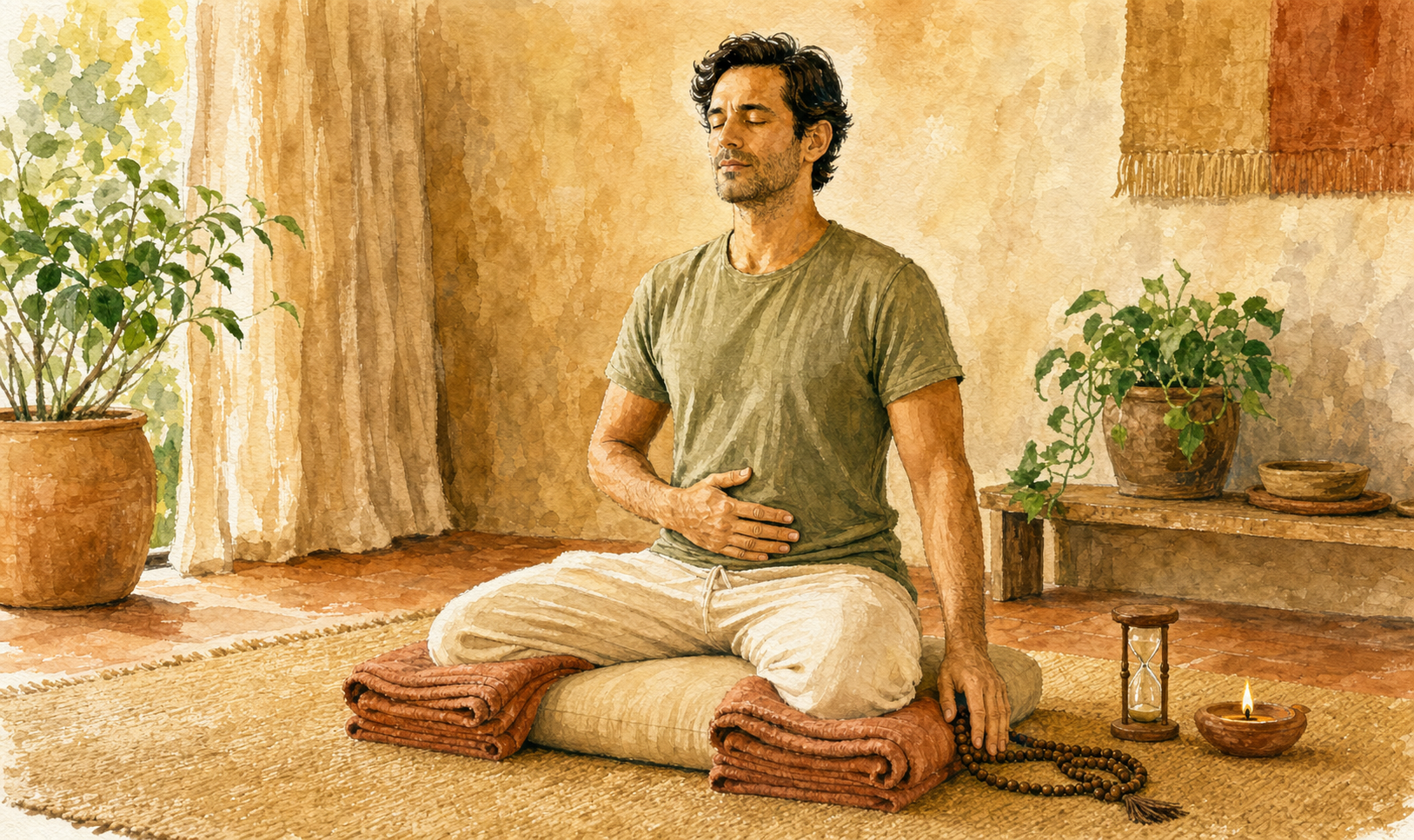
Use the same simple sequence until it becomes familiar. Constantly changing techniques makes it difficult to tell whether the practice is helping. A quiet, well-ventilated place is enough; you do not need elaborate equipment.
- Arrive for 2 minutes. Sit in a stable position with the spine comfortably aligned. Soften the shoulders, jaw, hands, and abdomen. Observe the natural breath through the nose without correcting it. Notice where it is felt most clearly.
- Use coherent breathing for 6 minutes. Inhale gently through the nose for 5 seconds and exhale through the nose for 5 seconds. Keep the airflow smooth and nearly silent. Let the abdomen and lower ribs move without lifting the shoulders. If five seconds feels forced, abandon the count and breathe more naturally.
- Chant for 10 minutes. Softly or mentally repeat Hare Krishna, allowing breath and sound to find a comfortable cadence. Do not squeeze the mantra into a rigid respiratory pattern. If you follow another Dharmic path, use the sacred name or recitation taught within that tradition rather than collecting mantras without context.
- Observe quietly for 2 minutes. Stop counting and chanting. Let the breath return to its natural rhythm. Notice the condition of the mind without trying to manufacture peace or preserve a special feeling.
During the chanting phase, your attention will leave the mantra. When you notice, return to the sound you are making now, not to the repetition you think you spoiled. There is no need to restart, punish yourself, or analyze the distraction. Resume at the next name.
If coherent breathing has become easy and you have learned nāḍī-śodhana correctly, alternate-nostril breathing may be added before chanting. Keep the airflow gentle and omit breath retention in the early stages. Kumbhaka is not required for this routine, and ambitious holds do not make it more purifying.
Let the breath serve the Divine Name

Prāṇāyāma and nāma overlap, but they are not interchangeable. Breath regulation steadies the instrument of attention. Sacred chanting gives that attention a devotional center. In Bhakti, the Divine Name is not merely a calming sound chosen for its acoustic effect; it is remembrance, address, and relationship.
This is why breathing should remain the servant of chanting rather than becoming an obsession with respiratory control. If you spend the entire session policing the length of each exhalation, you may become calmer while remaining preoccupied with yourself. Once the breath is settled, allow the meaning, presence, and devotional intention of nāma to take precedence.
Chanting also regulates the body in practical ways. Repetition couples breathing with phonation, often lengthens exhalation gently, and has been associated with less mind-wandering, reduced rumination, and markers of lower stress. These findings help explain part of the practice’s immediate effect, but they do not exhaust its spiritual meaning.
Kīrtana adds a communal dimension. Shared rhythm, melody, breathing, and response can gather attention more easily than solitary effort when the mind is especially scattered. The emotional warmth of participation also matters. Use it wisely: communal uplift should support remembrance and ethical conduct, not become another sensation that must be continually intensified.
Related disciplines appear across the Dharmic family. Buddhist ānāpānasati refines awareness of breathing and supports calm abiding. Jain samayik joins composure with equanimity and honest self-examination. Sikh simran and kirtan cultivate remembrance of the Divine Name through repetition and sacred music. These practices share confidence in disciplined attention, breath, and sacred recollection, while retaining different metaphysical aims and forms of worship.
You do not need to flatten those differences to appreciate the kinship. If you are rooted in a particular sampradāya, let its teaching determine your mantra, intention, and interpretation. Learn from the wider Dharmic inheritance without turning distinct disciplines into a spiritual sampler.
Measure purification after you leave the seat

A dramatic sensation during practice is a poor measure of progress. The more reliable signs are ordinary and behavioral. Observe whether attention returns more easily, sleep becomes steadier, agitation settles sooner, and a difficult interaction produces a response rather than an immediate reaction.
- During practice: Can you maintain a soft breath without repeatedly making it larger or more forceful?
- Immediately afterward: Is the mind clearer, or merely dull and withdrawn?
- Under pressure: Do you notice irritation before it becomes speech or action?
- In devotion: Is chanting becoming more attentive and sincere rather than merely automatic?
- In daily life: Are consideration, restraint, truthfulness, and steadiness becoming easier to choose?
Resting-heart-rate or HRV trends from a validated device may supplement those observations, but they should not become the object of sādhanā. A favorable number cannot tell you whether pride, resentment, carelessness, or harsh speech is losing its grip.
The classical disciplines of yama and niyama provide the necessary ethical container. Ahimsa, truthfulness, moderation, contentment, and disciplined practice keep calmness from becoming self-absorption. If breathing makes you feel composed but your conduct remains inconsiderate, the practice has produced relaxation without yet reaching its fuller purpose.
Consistency matters more than occasional intensity. A moderate session that leaves you able to fulfill your duties is more useful than a strenuous one that produces dizziness, fatigue, or spiritual self-importance. The gold metaphor includes both heat and a crucible: energy transforms only when it is held by discipline, proportion, and dharma.
Safety rules and key takeaways
Gentle breath awareness and unforced chanting are accessible to many people, but forceful respiratory techniques can cause harm. Dizziness or tingling usually means you are over-breathing. Stop the count, release all breath control, and return to an easy natural rhythm. Do not push through those sensations as if they were proof of spiritual advancement.
Anyone who is pregnant or has a cardiovascular, respiratory, or neurological condition should seek guidance from a qualified health professional before adopting controlled breathing. Prolonged retentions require particular caution and competent instruction. Breath and mantra practices can support composure, but they are not substitutes for medical or psychological care.
Key takeaways
- Mental purification is reduced captivity to disturbance, not the forced elimination of thought.
- Begin with natural observation, then use a gentle 5-second inhale and 5-second exhale if that rhythm is comfortable.
- Let regulated breathing prepare attention; let sacred chanting determine its devotional direction.
- Avoid force, early breath retention, and the pursuit of dramatic bodily sensations.
- Judge progress by attention, sleep, restraint, speech, and conduct outside the practice period.
- Keep the mantra and intention rooted in your tradition rather than mixing methods without guidance.
At your next practice, give this sequence one uninterrupted 20-minute period: 2 minutes of observation, 6 minutes of gentle coherent breathing, 10 minutes of chanting, and 2 minutes of silence. Then carry one question into the rest of the day: when the next disturbance arrives, can you notice it before it speaks through you?