
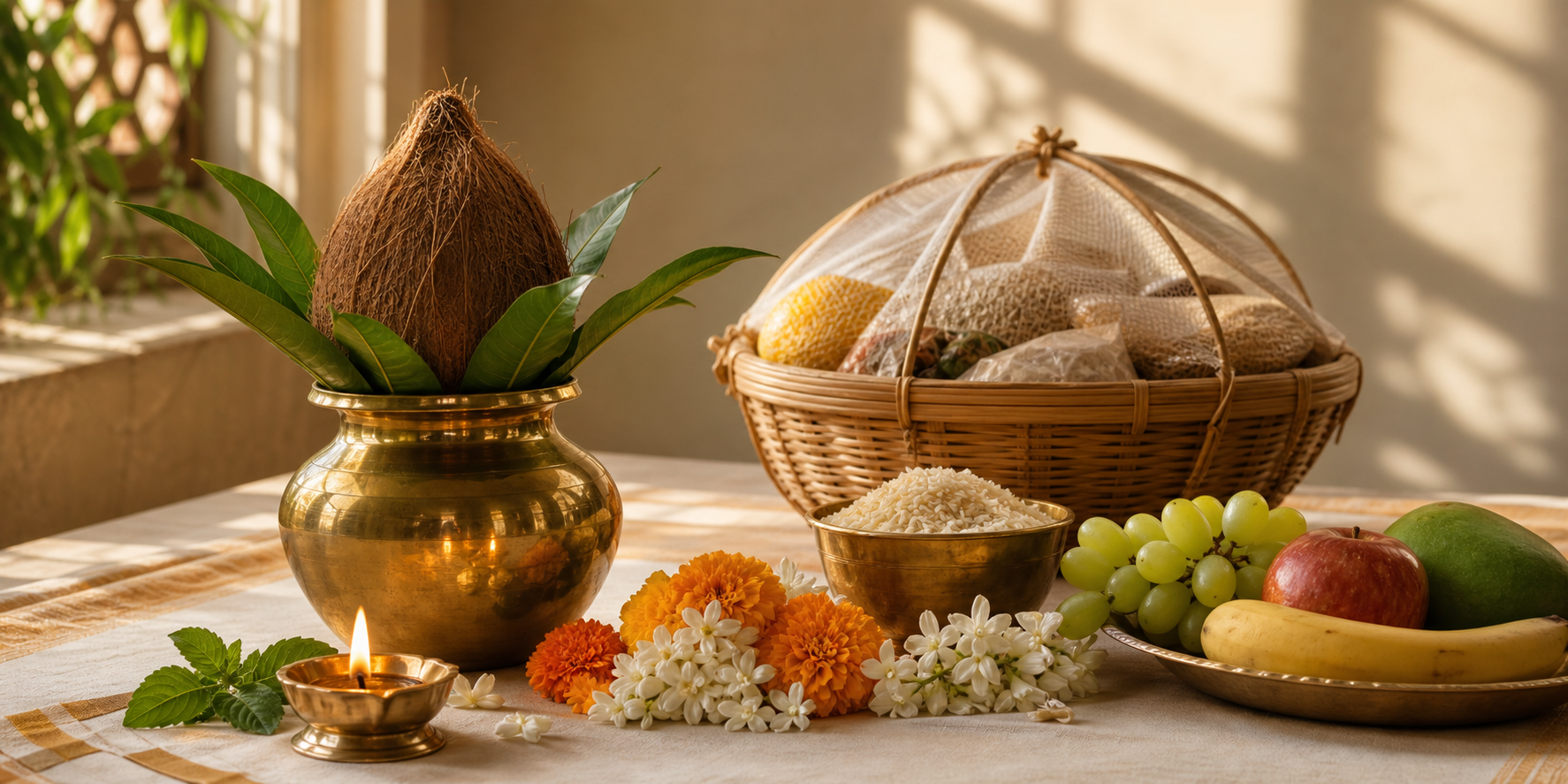
If April 19 is already circled on your calendar but you are still wondering what you must do, what you may simplify, and whether you need to buy gold, start here: a sound Akshaya Tritiya observance needs a correct local date, a sincere sankalpa, focused worship, thoughtful daan, and one practice you are prepared to continue.
You do not need an expensive purchase or an elaborate altar. The aim is to begin something that deserves to endure: ethical earning, disciplined sadhana, relief of another person’s need, or steadier service to your family and community.
Confirm April 19 in your own location
Akshaya Tritiya 2026 falls on April 19 across most Indian panchangas. The observance is Vaishakha Shukla Tritiya, the third lunar day of the waxing fortnight. Its civil start and end times are not identical in every city.
A tithi is determined by the changing angular relationship between the Sun and Moon, not by the midnight-to-midnight civil calendar. That is why an India-based time copied into a Canadian, British, American, Singaporean, or Australian calendar can be wrong for the place where you will perform the puja.
- Open a reliable panchanga and enter the city where you will actually be on April 19. Do not merely convert an Indian muhurat into your time zone.
- Check the local beginning and ending of Shukla Tritiya, the local sunrise, and the displayed puja window. When Tritiya overlaps two civil dates, the tradition generally gives importance to the date on which the tithi prevails at sunrise or during the relevant daytime observance.
- For ordinary home worship, choose a calm period while Tritiya is active. For a wedding, griha-pravesha, bhoomi-puja, or another major family samskara, confirm the local application with your priest and family tradition.
Akshaya Tritiya is counted among the Sade-Teen Muhurat, so many families do not conduct an elaborate search for another auspicious day. That does not make location irrelevant. Some households still prefer a Sthira Lagna or Abhijit Muhurat and avoid Rahu Kalam or Yamaganda for a major initiation. Follow those refinements when they matter to the people sharing the ceremony; do not present one universal clock time as valid everywhere.
Key takeaways for Akshaya Tritiya 2026
- The principal observance date is April 19 across most Indian panchangas.
- Use a city-specific panchanga, especially if you live outside Bharat.
- Keep the puja centered on your ishta-devata, sampradaya, or family tradition instead of combining every available ritual.
- Set aside your daan before budgeting for gold or other personal purchases.
- Begin one recurring dharmic practice; auspicious timing does not replace ethical means, preparation, or sustained effort.
Decide what you want to make akshaya
Akshaya means imperishable or undiminishing. It does not mean that every action performed on the date will automatically succeed. The promise of the tithi is traditionally attached to dharma, punya, daan, vrata, japa, and worthy beginnings. An exploitative contract does not become righteous because it was signed on an auspicious day, and a purchase made through unaffordable debt does not become prosperity.
The day is also remembered as Treta Yugadi and Parashurama Jayanti. Treta Yugadi recalls the beginning of Treta Yuga rather than claiming that a new cosmic age starts every year. Its practical lesson is responsibility: when dharma is no longer effortless, it must be maintained through restraint, right conduct, social order, and conscious practice.
Choose one primary intention before collecting puja materials. Useful choices include:
- Prosperity governed by honest work, a household budget, timely payment of obligations, and regular giving.
- A daily japa or scripture-reading practice that is small enough to keep after the festival.
- Annadaana, water service, educational assistance, healthcare support, gau-seva, or ecological care with a recurring commitment.
- A new course of study, savings discipline, family duty, or enterprise whose first steps are already realistic and ethically sound.
- Reconciliation through truthful, measured speech where anger or pride has damaged a relationship.
Your sankalpa can be spoken in the language in which you can be fully attentive. For example: “On Vaishakha Shukla Tritiya, I offer this worship for inner clarity, righteous prosperity, and the welfare of all beings. May what I begin be sustained through honest effort, daan, seva, and disciplined conduct.” If you have a lineage-specific sankalpa, retain it.
Then make the intention measurable. Instead of promising to be more generous, decide which need you will support and how regularly. Instead of promising more sadhana, choose a mantra, a count, and a place in your daily routine. The customary japa counts of 11, 27, 54, or 108 give you practical starting points, but a smaller practice you sustain is better than a large festival vow abandoned immediately afterward.
Follow a home puja you can actually complete
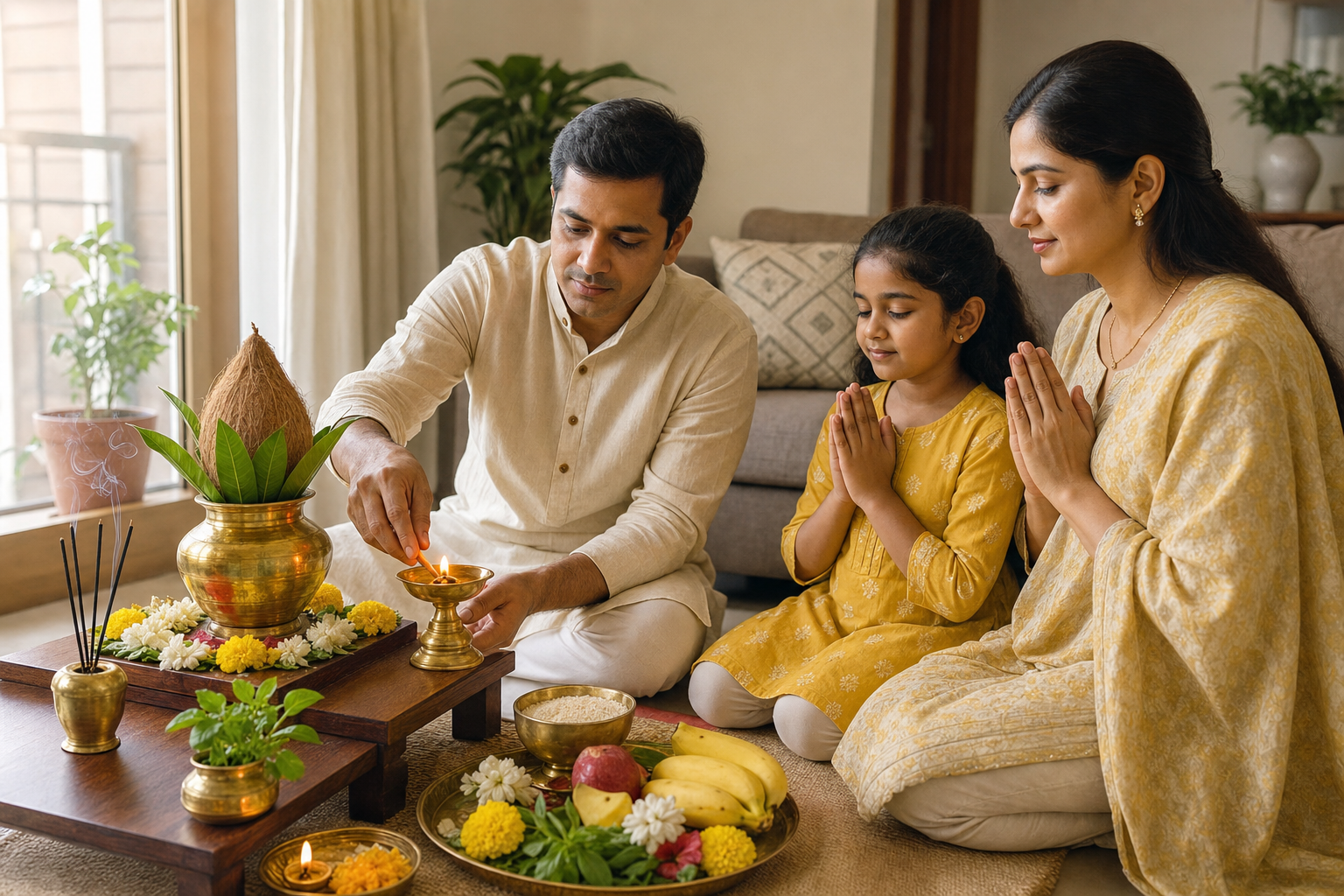
A tidy altar, a lamp, clean water, flowers, a simple sattvic offering, and undistracted attention are enough for a meaningful home observance. If your family has an established paddhati, use it. The sequence below is for a householder who needs a clear and manageable form rather than a replacement for sampradaya-specific instruction.
Prepare the previous evening so that shopping does not consume the tithi. Place a clean cloth on the altar and arrange the image or murti you normally worship. For Lakshmi-Narayana Puja, you may add Tulasi, turmeric, kumkum, sandal paste, akshata, incense, a lamp, fruit or a milk-based naivedya, and a kalasha if it is already part of your practice. Do not buy a long list of items that will be wasted.
- Bathe, wear clean clothing, and settle the puja space. A light fast or sattvic diet may support attention, but neither is a contest of endurance.
- Light the lamp safely. Begin with Ganapati dhyana and guru vandana according to your tradition. A simple opening is “Om Gam Ganapataye Namah.”
- State your sankalpa aloud, naming Vaishakha Shukla Tritiya and the dharmic purpose you have chosen.
- Invoke the principal deity. Lakshmi-Narayana worship is widespread on this day. Offer water, sandal paste, flowers, incense, the lamp, and naivedya with attention rather than speed.
- Choose one recitation. Suitable options include Sri Sukta, Vishnu Sahasranama, Lakshmi Ashtottara Shatanamavali, Kanakadhara Stotram, a passage from the Bhagavad Gita, or your initiated mantra. If a full text is beyond your available time, recite a smaller portion with its meaning in mind.
- For simple Lakshmi japa, use “Om Shrim Mahalakshmyai Namah.” For Vishnu or Krishna worship, “Om Namo Bhagavate Vasudevaya” is a concise option. Keep the mantra given by your guru if you have one.
- If your family observes Parashurama Jayanti, add remembrance of Bhagavan Parashurama and reflect on disciplined strength, restraint, and the right use of power. If you follow the Krishna-centered Chandan Puja custom, offer sandal paste respectfully rather than treating it as decoration.
- Conclude with arati, namaskara, a short period of silence, and distribution of prasada.
- Carry out the daan named in your sankalpa. Do not leave it as a vague intention once the altar has been cleared.
The 15-minute version
If work, travel, caregiving, or limited mobility prevents a longer puja, a concise 15-minute observance remains coherent: light a lamp, offer a Ganapati pranama, speak the sankalpa, place flowers before Lakshmi-Narayana or your ishta-devata, recite one mantra or stotra, offer fruit or milk, perform arati, and complete a planned act of giving. Do not rush several deities and texts into the same quarter-hour.
Full, partial, and fruit-only fasts are all found in household practice. Choose according to age, health, medication, work, and family duties. If fasting could aggravate a health condition, protect your wellbeing and seek appropriate medical advice; a sattvic meal taken mindfully is more dharmic than an austerity that causes preventable harm. Keep lamps away from children, loose cloth, pets, and unattended rooms.
Make daan the center, not the afterthought
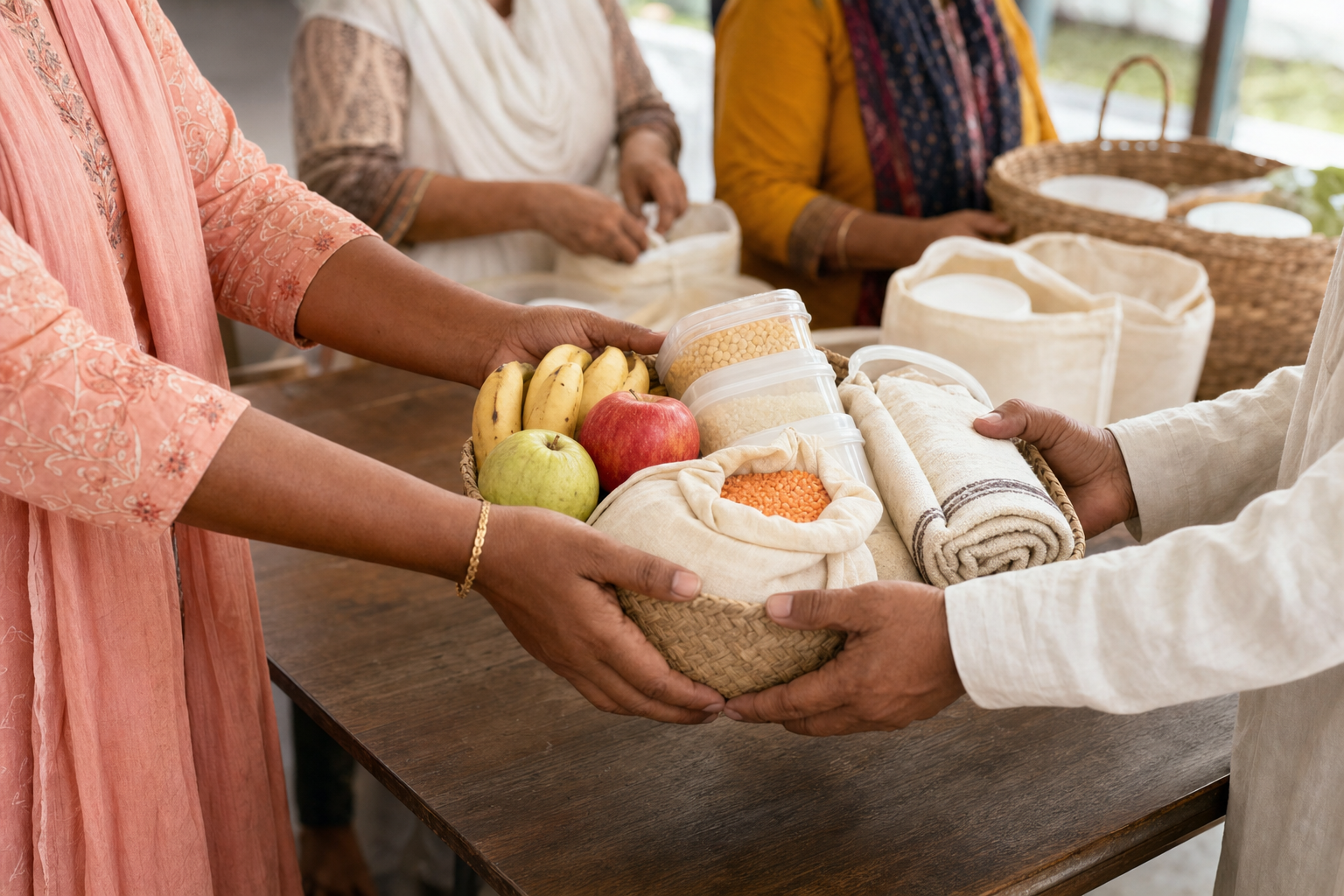
Daan on Akshaya Tritiya is not a payment made to obtain a guaranteed return. Dharmic evaluation considers six connected elements: the giver’s intention, the recipient, the gift, the time, the place, and the manner of giving. A useful gift delivered respectfully to a genuine need is stronger than an impressive object handed over for display.
Choose the need first and the item second:
- For heat and thirst: Support clean drinking water, an established public water station, earthen water pots, umbrellas, footwear, fans, or another form of safe summer relief. A traditional kumbha daanam may include a clean water-filled pot with grain, jaggery, and seasonal fruit. If no one can clean and replenish a public vessel, support a maintained water service instead of leaving an unhygienic container behind.
- For hunger: Sponsor cooked meals, provide good-quality grain or dry rations, or support a dependable community kitchen. Use safe food-handling practices, plan portions realistically, and avoid creating a heap of single-use plastic in the name of annadaana.
- For dignity and rest: Give new or clean season-appropriate clothing, correctly sized footwear, bedsheets, or bedding requested by a shelter, rehabilitation center, elder-care home, or family in crisis. Unusable leftovers are disposal, not daan.
- For long-term capability: Fund educational materials, healthcare needs, skill development, or accountable institutions that help a recipient become more secure.
- For vulnerable beings: Support a transparent goshala that provides adequate fodder, shelter, and veterinary care, rather than choosing solely by a public appeal’s emotional tone.
- For ecological care: Offer Tulasi or native saplings where there is a person or institution able to plant, water, and protect them. Planting without aftercare turns symbolism into waste.
Once you have selected the form of daan, verify the recipient. Ask what is actually needed, check an institution’s accountability where practical, and give items that are clean, functional, and appropriate to the season. Protect the recipient’s dignity. Do not pressure anyone to pose for publicity, perform gratitude, or disclose hardship in exchange for help.
Give within your means. A modest transfer to a trustworthy community kitchen can be more useful than ceremonial goods purchased on credit. If your family also plans to buy gold, set the daan amount first. This keeps the day’s priorities clear: prosperity is consecrated through circulation and care, not merely represented by an object kept at home.
Use the auspicious day without suspending judgement

Akshaya Tritiya is favorable for a worthy beginning; it is not protection from a bad contract, excessive price, unsafe fast, poorly planned event, or speculative loss. The cleanest way to honor an auspicious tithi is to apply more discernment, not less.
Gold, ventures, and major ceremonies
Buying gold is a popular custom, not a compulsory religious act. If you choose to buy in Bharat, verify BIS hallmarking, karatage, the invoice, and making charges. Set an affordability limit before entering the shop. Do not use festival urgency to justify debt, gambling, leveraged speculation, or a high-risk investment you would reject on an ordinary day. An inexpensive puja vessel, grain kept for sowing, or no purchase at all can coexist fully with the observance.
If you are opening a business, beginning a ledger, starting a savings habit, or enrolling in study, define the first real action as well as the ritual action. Review terms, pay legitimate dues, use transparent accounts, commit to fair wages, and understand the risks. Muhurat can mark your beginning; it cannot perform due diligence or honest work for you.
The same distinction applies to weddings, griha-pravesha, and bhoomi-puja. The date may reduce the need to search for another broadly auspicious day, but it does not settle venue safety, consent, legal requirements, family obligations, local tithi rules, or lineage-specific rites. Coordinate those matters independently.
Keep neighboring Dharmic traditions distinct
Hindu households may emphasize Lakshmi-Narayana, Gauri, Krishna, or Parashurama according to region and sampradaya. You do not have to combine them. A focused family practice is not incomplete merely because another region marks the day differently.
For Jains, Akshaya Tritiya carries a distinct remembrance of Bhagavan Rishabhadeva accepting sugarcane juice after prolonged austerity; those completing Varshi Tapa observe the parana with discipline and reverence. This is not simply a Jain version of Lakshmi Puja. Its own center is tapas, ahimsa, right offering, and freedom from attachment.
Buddhist commitments to daana, sila, and meditation, and Sikh institutions of seva and langar, share a recognizable ethic of generosity and disciplined service. That kinship should not be turned into a claim that every Buddhist or Sikh community ritually observes Shukla Tritiya. Shared Dharmic values become clearer when we acknowledge both resonance and difference.
Before your April 19 observance ends, write down the one practice you intend to continue, the next date on which you will do it, and who will benefit. Put it into your calendar or household budget immediately. The puja marks the beginning; keeping the sankalpa is what gives the day a life beyond the tithi.
References
- HinduPad – Akshaya Tritiya Mantras, Prayers & Stotras: An Auspicious, Timeless Puja Guide
- HinduPad – Akshaya Tritiya 2026 (Akha Teej): Treta Yugadi, Timeless Auspiciousness, and Sacred Beginnings
- HinduPad – Akshaya Tritiya Dos & Don’ts: Proven Rituals, Timings, and Ethical Choices for Enduring Prosperity
- HinduPad – Unlock Inexhaustible Merit on Akshaya Tritiya: Daana Rituals, Scriptural Fruits, and How to Give
- HinduPad – Akshaya Tritiya Lakshmi Puja: Auspicious Muhurat, Complete Vidhi, and Timeless Prosperity