
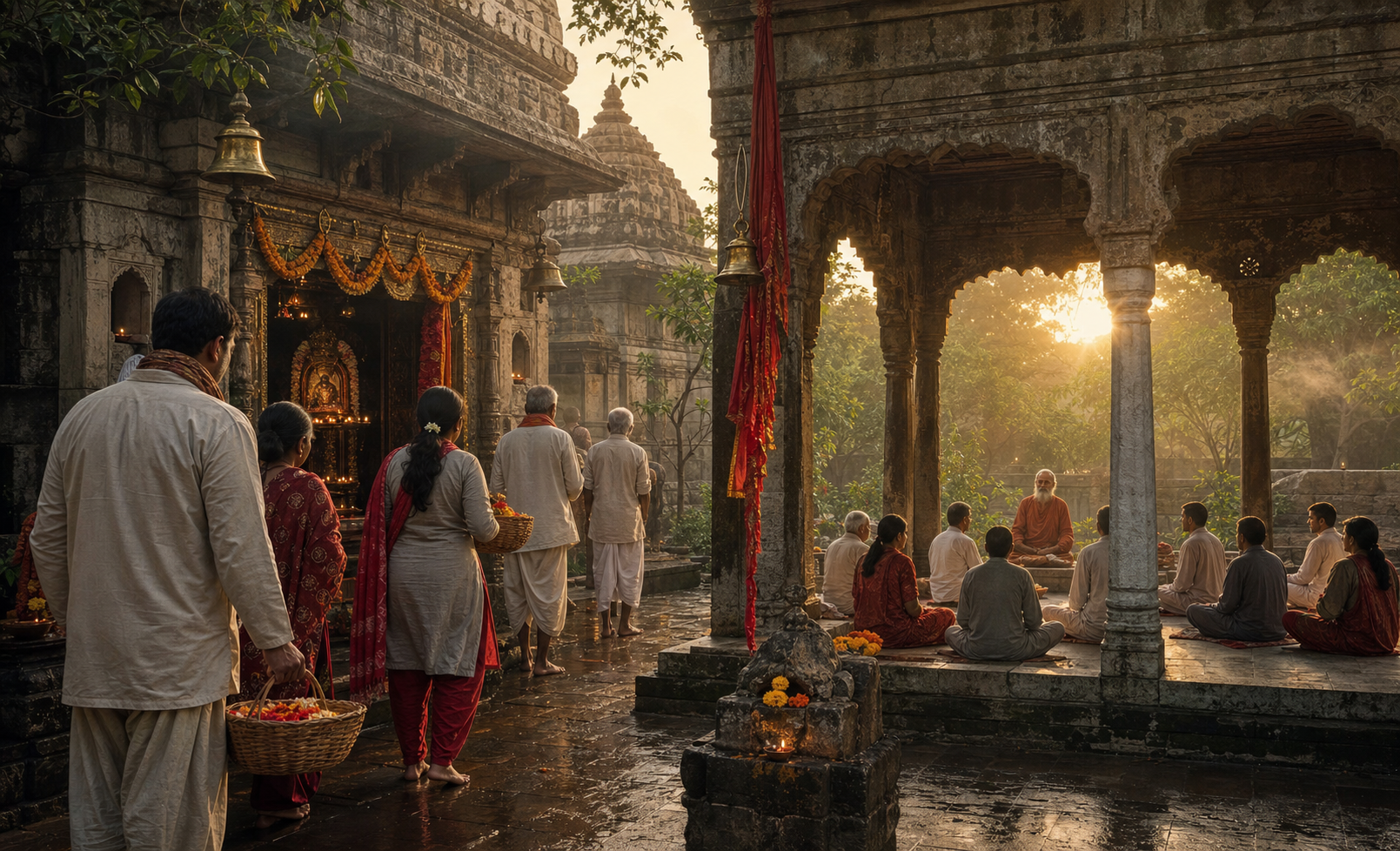
You have found a temple described as a Shakti Peeth, a Siddha Peeth, or both, and you want to know whether those labels actually change how you should approach it. They do. The distinction affects what you look for, what kind of pilgrimage you plan, and whether you arrive primarily for darshan or for disciplined sadhana.
You don’t need to force every shrine into a single category. You need to identify the sacred claim being made, see how the local tradition supports it, and match your conduct to the purpose of the place.
Start with the shrine’s claim, not its label
Peeth means a seat: a place where divine presence, sacred memory, or realized practice has become rooted. Shakti Peeth and Siddha Peeth belong to the same broad sacred vocabulary, but they establish sanctity in different ways.
A Shakti Peeth is grounded in sacred history. Its defining claim links the place to the aftermath of the Daksha Yajna and the falling of a limb or ornament of Sati. The land is therefore encountered as a bodily manifestation of Devi’s presence. A Siddha Peeth is grounded in realized practice: a siddha attained spiritual perfection there, a lineage established powerful sadhana there, or particular forms of anushthana are held to become especially fruitful in that field.
| Question | Shakti Peeth | Siddha Peeth |
|---|---|---|
| What establishes the place? | A recognized connection to Sati’s body or ornaments | The attainment of siddhas or the proven force of sustained sadhana |
| What does the pilgrim first seek? | Devi’s darshan, grace, sacred memory, and participation in worship | A disciplined environment for japa, vrata, homa, or another authorized practice |
| What evidence should you look for? | A Puranic-Tantric association, local mahatmya, sthalapurana, and often a Devi-Bhairava pairing | A living lineage, the memory of named adepts, and a tradition of specific anushthanas |
| What is the common mistake? | Assuming every important Devi temple must belong to one universal list | Treating siddhi as an instant supernatural reward rather than maturation through practice |
The shortest reliable distinction is this: a Shakti Peeth tells you why the place is sacred in Devi’s cosmic story; a Siddha Peeth tells you how realization has been cultivated there. One preserves sacred memory in the landscape. The other preserves a living method. A shrine can do both.
These are anchoring principles, not rigid descriptions of every activity on the premises. A Shakti Peeth may support intense Tantric sadhana. A Siddha Peeth may receive thousands of ordinary devotees seeking darshan. Use the distinction to understand the shrine’s centre of gravity, not to deny the rest of its life.
Why the maps overlap and the traditional counts differ

You will encounter lists of 51 or 52 Shakti Peeth, as well as enumerations of 64 or 108. This variation is not something a pilgrim can settle by finding the most confident page on the internet. Peeth traditions developed through several textual collections, regional mahatmyas, oral transmission, pilgrimage routes, local patronage, and the memories of practising lineages.
The Sati-linked geography appears across the Devi Bhagavata Purana, the Kalika Purana, and later Tantric compilations, including the Pitha-nirnaya associated with Krishnananda Agamavagisha’s Tantrasara. These streams do not produce one uncontested enumeration accepted by every region and lineage. A precise claim should therefore say which tradition, text, or local history recognizes a shrine instead of announcing that all other counts are false.
The same plurality explains why important sites can bear more than one designation. Kamakhya is approached through the sacred geography of Shakti and is also a major centre of esoteric sadhana, especially around Ambubachi Mela. Tarapith joins Devi worship to the living memory of Tara sadhana and adepts such as Bamakhepa. Jwalamukhi’s flames support both Puranic devotion and Tantric reverence. Their overlapping identities are not errors awaiting correction. They show that a sacred place can accumulate scriptural memory, ritual life, saintly attainment, and regional devotion without surrendering any layer.
Some Tantric cartographies also speak of great seats such as Kamarupa, Jalandhara, Purnagiri, and Oddiyana or Uddiyana. Here the language of maha-pitha and siddha-pitha crosses the worlds of Devi, yoginis, siddhas, and disciplined practice. It does not always follow the narrower logic of a later checklist of Sati’s limbs. Before comparing two lists, first determine whether they are trying to map the same kind of sanctity.
This vocabulary also participates in a wider Dharmic conversation. Vajrayana traditions preserve cartographies of pithas and yogini seats that converse with Shakta sacred geography. Jain Dharma uses siddha in the highest sense of a liberated being and venerates tirthas connected with the attainment of kevala-jnana, although its theology and terminology remain distinct. Sikh tradition is centred on the Shabad and the sangat rather than peeth classification, while Sikh sacred history developed amid many of the same regional landscapes. You can recognize civilizational relationship without pretending that all these traditions mean exactly the same thing.
Choose your pilgrimage according to what you intend to do
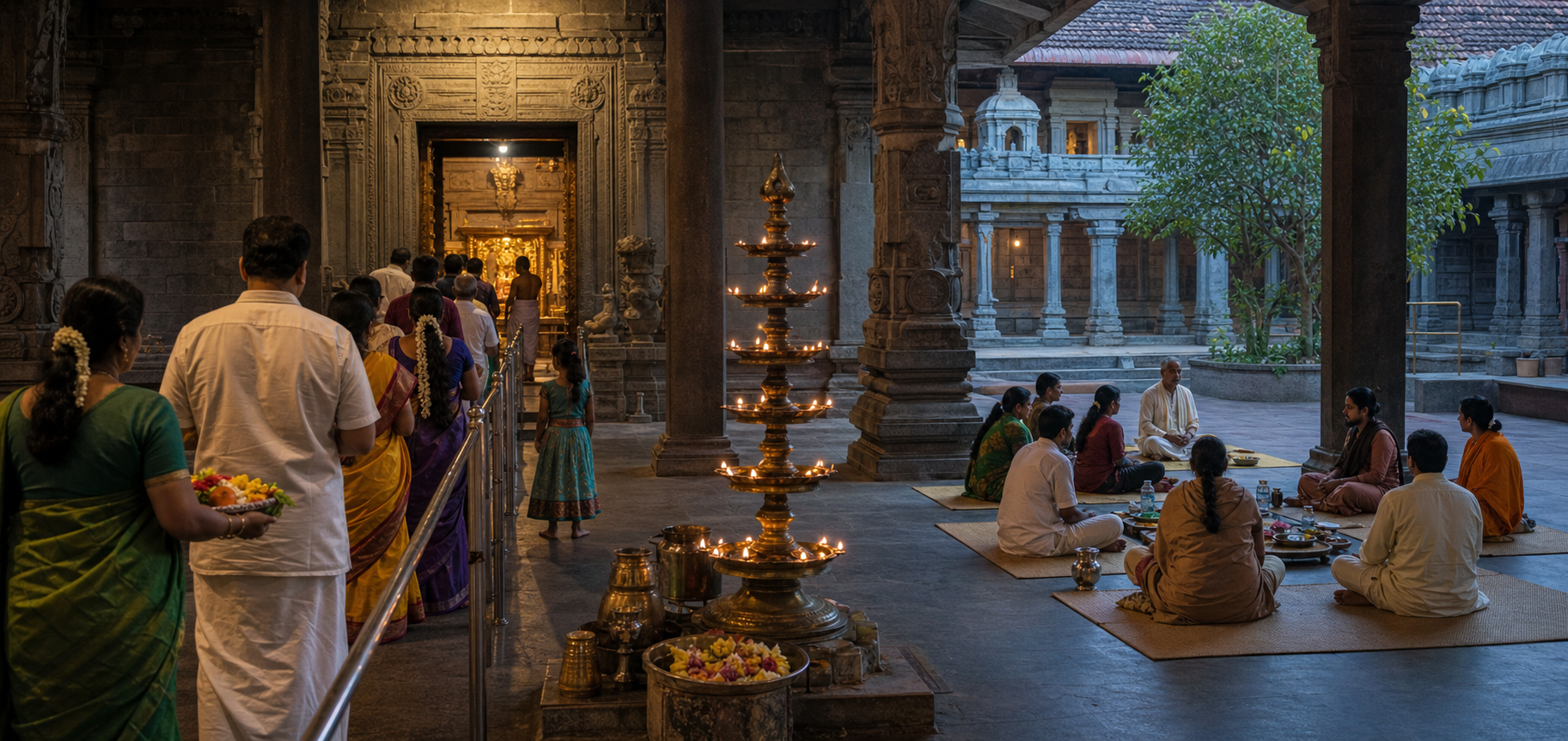
The most useful question is not, “Which type of Peeth is more powerful?” It is, “What am I going there to receive, learn, or practise?” Your answer changes the preparation.
For Devi darshan and a family pilgrimage
A recognized Shakti Peeth is the natural choice when your purpose is darshan, a family vrata, participation in Navaratri or a local Devi festival, or contact with the sacred geography of Sati. Prepare for a living temple rather than a historical monument.
- Learn the local name and form of Devi. Do not assume that every Peeth presents the Goddess through the same icon, ritual mood, or theology.
- Identify the associated Bhairava where the tradition preserves a Devi-Bhairava pairing. Bhairava is not a decorative addition; he is commonly understood as guardian of the sacred field.
- Read the shrine’s own mahatmya before arriving. Note which limb, ornament, or episode the local tradition remembers, but do not turn variations into an argument with priests or pilgrims.
- Decide whether you want a major festival or a quieter darshan. Navaratri, local Shakti utsavas, and melas concentrate collective devotion, while an ordinary worship day may give you more room to observe the temple’s daily rhythm.
- Check the temple’s current rules, opening times, offerings, photography restrictions, and access arrangements directly before travelling. These practical details can change even when the shrine’s sacred identity does not.
During the visit, notice how theology has been made spatial. Look for the relationship between Devi’s sanctum, Bhairava, processional paths, festival spaces, and places where devotees make vows or offerings. That observation will teach you more than merely adding another Peeth to a personal count.
For mantra sadhana or anushthana
A Siddha Peeth becomes relevant when you already have a defined practice and competent guidance. Its significance lies in the adhisthana shakti, the indwelling force associated with sustained tapas and realization, not in a promise that any visitor will obtain an extraordinary result simply by entering the compound.
Traditional work at such a place may involve japa performed to a fixed sankhya, vrata, homa, nyasa, yantra worship, or a lineage-specific prayoga. Those terms describe disciplined ritual structures. They are not a menu from which an uninitiated visitor should casually choose the most dramatic option.
- Ask your guru or lineage guide which practice, if any, is appropriate at that particular Peeth.
- Clarify the mantra, count, duration, dietary or vrata commitments, materials, and concluding rites before the journey. Do not improvise the structure after arriving.
- Confirm that the temple permits the practice and that a suitable area is available. A reputation for siddha sadhana is not automatic permission to use every ritual space.
- If you have no initiation or qualified guidance, remain within public worship, prayer, and practices already established in your own sampradaya. Do not adopt an esoteric mantra, nyasa, or prayoga merely because you encountered it near a famous Peeth.
- Judge progress by steadiness, clarity, devotion, self-command, and depth of realization. Responsible traditions place these above fascination with unusual powers.
The practical difference is preparation. A general darshan can be meaningful without a complex programme. An anushthana depends on method, permission, continuity, and proper completion. If those are absent, visiting a Siddha Peeth as a devotee is still worthwhile; it simply isn’t the same as undertaking lineage sadhana there.
For a shrine recognized as both
When a place is both Shakti Peeth and Siddha Peeth, divide your plan by purpose. Begin with darshan and learn the local sacred account. Then, only if you have permission and an established discipline, move to the designated place and time for practice. This prevents anushthana from becoming hurried sightseeing and keeps private sadhana from obstructing public worship.
Festival intensity and contemplative stillness are both authentic expressions of a Peeth, but they do not always fit the same hour. If your priority is congregational devotion, choose the festival current. If uninterrupted japa is essential, ask the temple or your lineage about an appropriate, permitted window rather than assuming the largest mela will also provide the quietest setting.
Verify a Peeth claim without turning it into a ranking contest
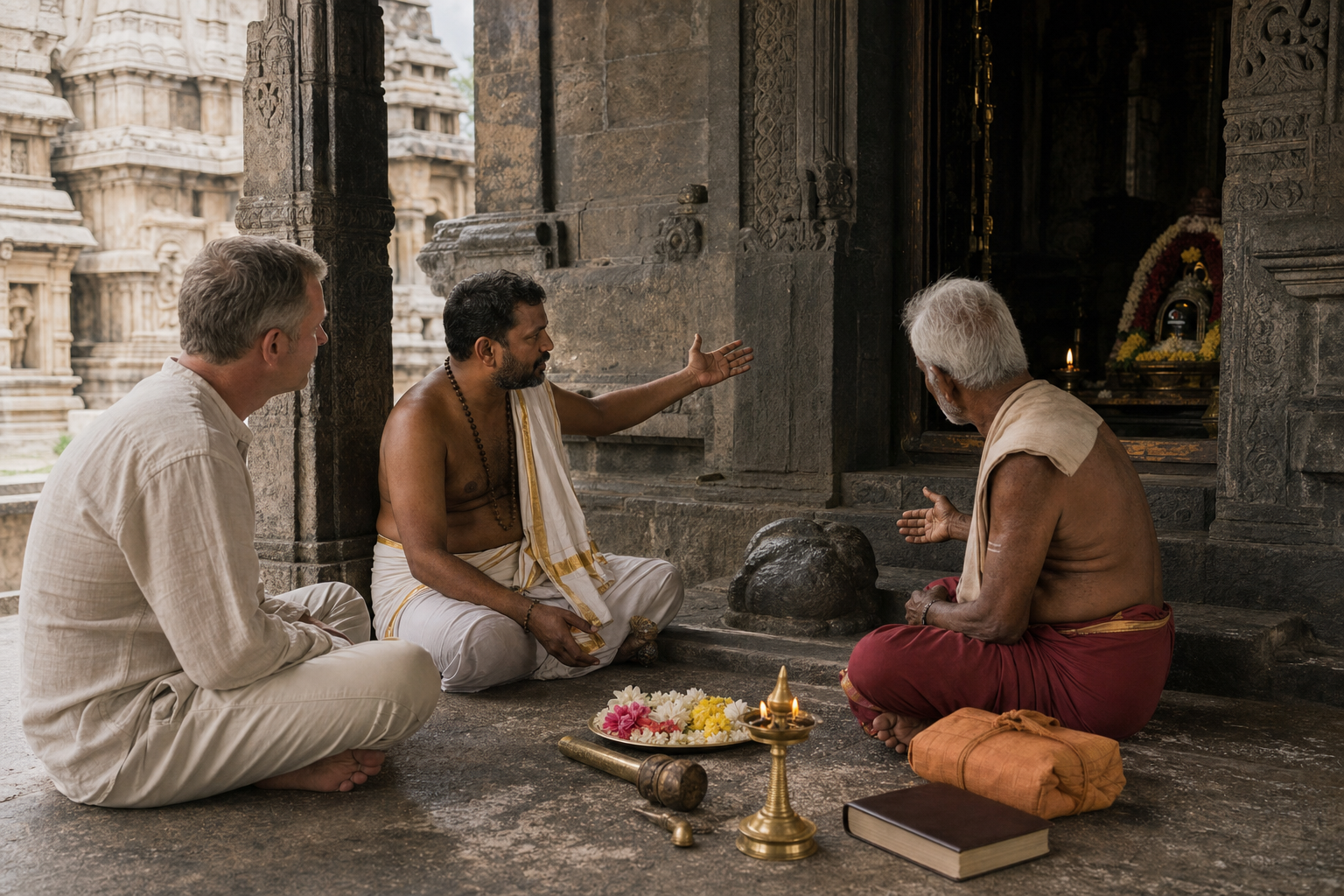
Peeth claims deserve both reverence and precision. Reverence does not require you to accept every promotional description as a universal classification. Precision does not require you to dismiss a strong local tradition because it is absent from one preferred list.
- Name the claim exactly. Is the shrine said to mark a limb or ornament of Sati, to preserve the attainment of a siddha, to support a particular anushthana, or to hold all of these identities? “Ancient” and “powerful” do not answer this question.
- Find the sacred-history basis. For a Shakti Peeth claim, look for a sthalapurana, regional mahatmya, Puranic-Tantric association, or stable oral account linking the location to Sati. Record the tradition that makes the connection.
- Find the practice-lineage basis. For a Siddha Peeth claim, ask which siddhas or saints are remembered, which lineage served there, and which forms of sadhana are traditionally associated with the site.
- Examine the living ritual pattern. Devi-Bhairava worship, major Shakti festivals, the commemoration of adepts, long-form anushthanas, akhand jyoti areas, or spaces reserved for japa can show how the shrine understands itself. Architecture alone is not proof, but living practice can corroborate the stated identity.
- State the conclusion at the right scale. Say that a shrine is recognized by a named region, lineage, text, or pilgrimage tradition when that is what the evidence supports. Do not silently turn local authority into a claim of universal agreement.
This method also helps when two sincere devotees give you different counts. Ask which textual or regional map each person is using. They may be preserving distinct, internally meaningful traditions rather than disagreeing about whether Devi is present.
Quick answers before you travel
- Is every Devi temple a Shakti Peeth? No. A Devi temple may be ancient, beloved, and spiritually powerful without having a recognized connection to the Sati narrative.
- Is every place visited by a saint a Siddha Peeth? Not automatically. The stronger designation rests on a sustained memory of attainment, a living lineage, or an established tradition of fruitful sadhana.
- Does a disputed count make a Peeth inauthentic? Not by itself. Lists differ across texts, regions, and lineages, so the relevant question is who recognizes the shrine and on what basis.
- Does siddhi mean supernatural power? The term can carry several senses, but responsible sadhana places spiritual maturation, insight, and stability ahead of spectacular claims.
Turn the distinction into a better journey
Before you book the journey, write one sentence stating your purpose. If it is darshan, identify the form of Devi, the associated Bhairava, the local mahatmya, and the kind of festival or daily worship you want to encounter. If it is sadhana, identify the lineage, authorized practice, required preparation, temple permission, and suitable setting. If the place carries both identities, decide which purpose leads and give the other its own time.
That single decision keeps pilgrimage from becoming a race through a disputed list. You arrive ready to recognize what the Peeth actually preserves: Devi’s sacred presence, the discipline of realized practitioners, or the fertile meeting of both.