
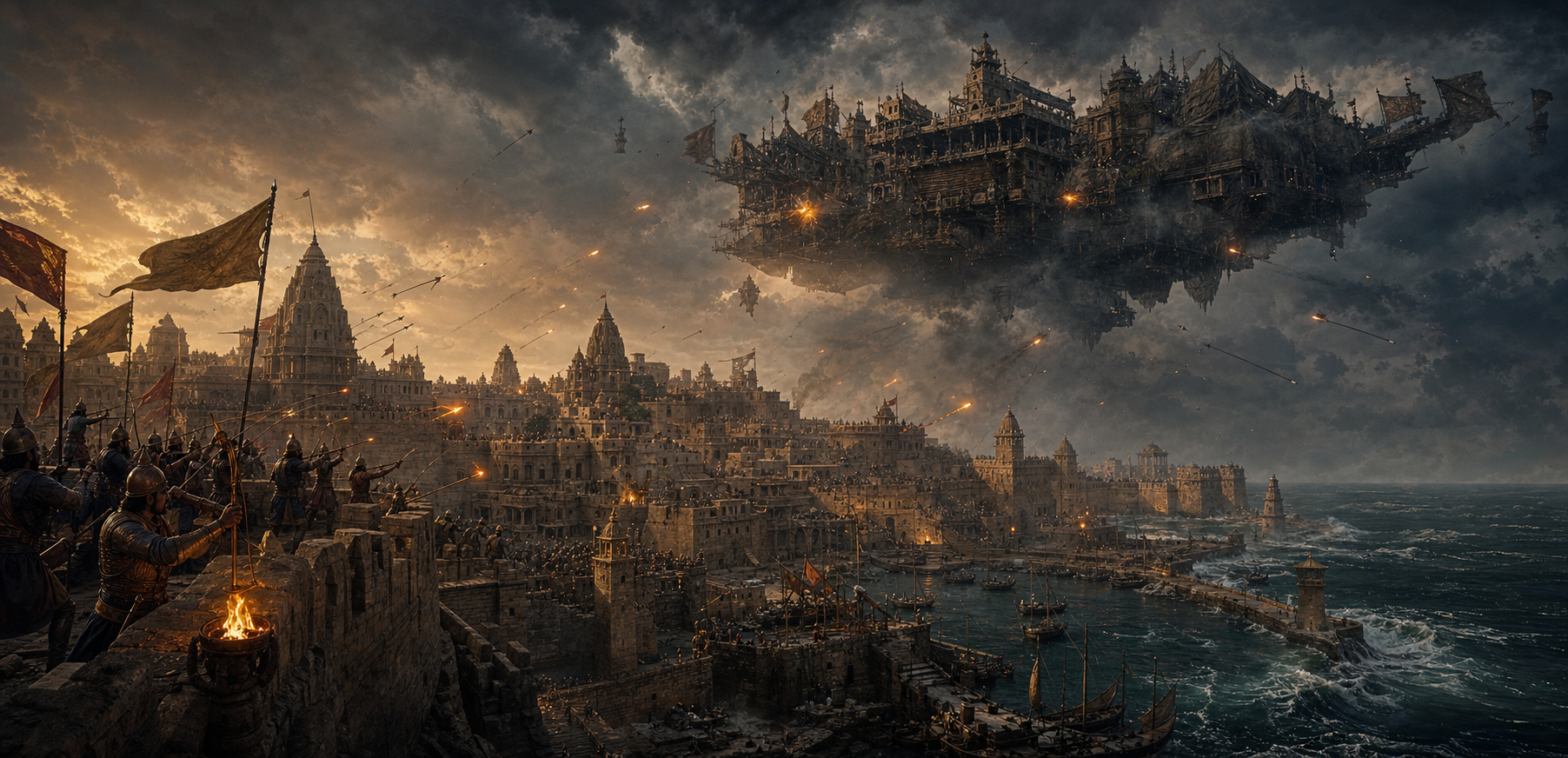
You may have encountered Salva’s attack on Dwarka through a striking claim: an ancient Indian text describes something like an invisible aircraft, so extraterrestrials must have visited Krishna’s city. The first half deserves attention. The second does not automatically follow.
The useful question is not whether the episode sounds modern. It is how much belongs to the inherited account, how much belongs to interpretation, and how much has been added by present-day speculation. Keep those layers separate and you can take the tradition seriously without turning uncertainty into proof.
What Salva’s assault actually places before you
King Salva’s assault on Dwarka appears in the Srimad Bhagavatam and the Mahabharata. At the centre is an airborne attack involving a highly capable flying machine. The vehicle cannot be seen by observers, and destruction descends upon the city from above.
That gives you a compact factual core within the story:
- The aggressor is King Salva.
- The target is Dwarka, the city associated with Krishna.
- The means of attack is a flying machine rather than an ordinary ground assault.
- The machine possesses the extraordinary advantage of being unseen.
- Its purpose in the episode is destructive, not exploratory or peaceful.
Notice what is not established by that list. It does not identify the machine’s maker, physical construction, propulsion system, or place of origin. It does not tell you that its operator came from another planet. It also does not justify equating the machine with any particular modern aircraft.
You should also resist treating the Srimad Bhagavatam and the Mahabharata as interchangeable witnesses. Without checking the relevant passages in reliable editions, do not assume that both works provide identical wording, sequence, or technical detail. The responsible starting point is the shared narrative core, followed by a passage-by-passage reading.
Why an alien invasion is a much larger claim
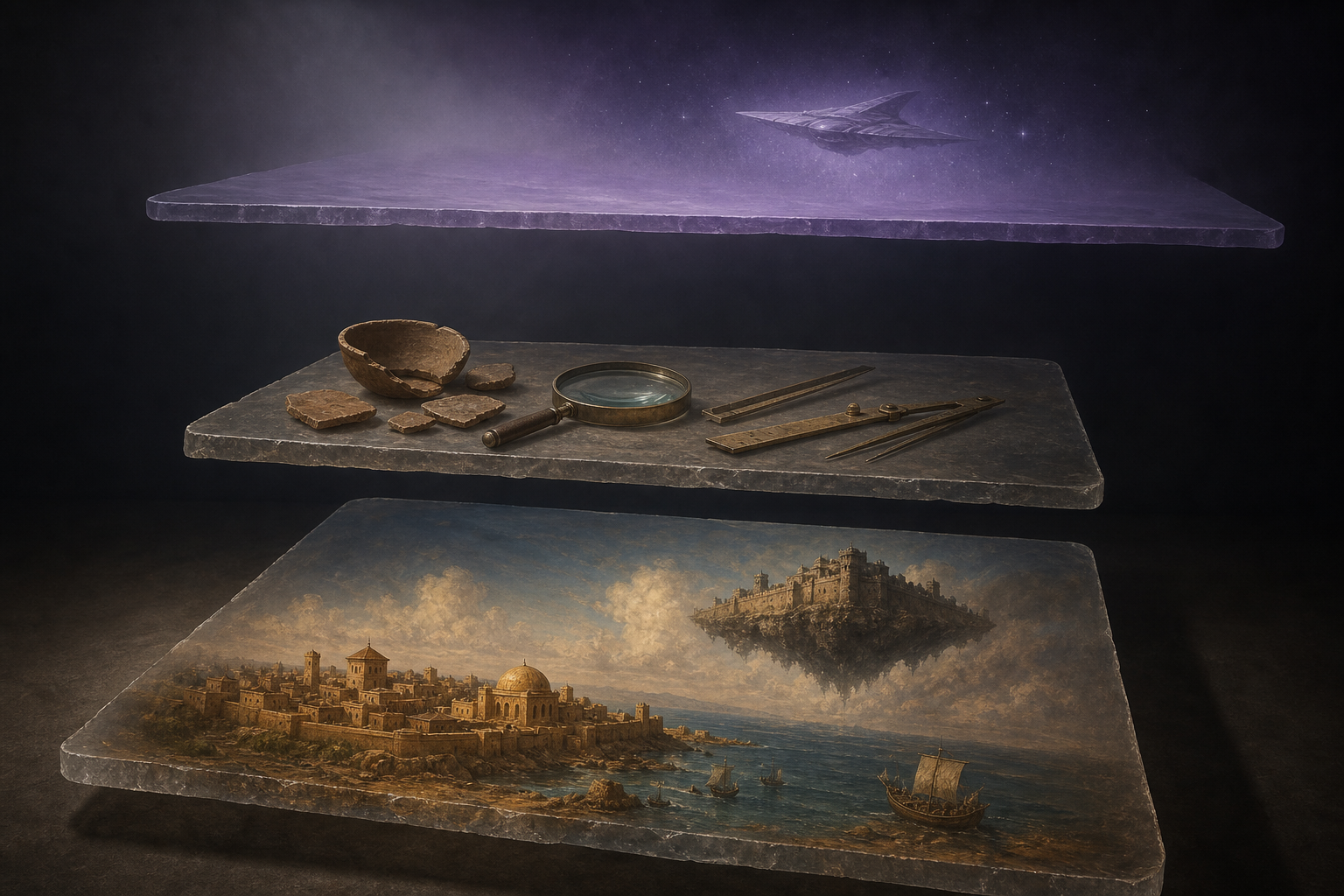
“Flying,” “advanced,” “invisible,” and “unexplained” are not synonyms for “extraterrestrial.” An alien interpretation requires additional premises: that the machine came from beyond Earth, that non-human beings created or operated it, and that the episode preserves a physical encounter rather than sacred history expressed through an extraordinary narrative. Those premises need evidence of their own.
A simple three-level distinction will keep your reasoning clear:
- Narrative claim: Salva attacks Dwarka from the air with a machine that observers cannot see.
- Historical or technological interpretation: the episode may preserve a memory of an actual aerial technology.
- Extraterrestrial speculation: the technology originated outside Earth or was supplied by beings from another world.
The first level is part of the inherited episode. The second is an interpretation requiring historical argument. The third adds an extraterrestrial origin that the basic description does not establish. Moving from one level to the next is not impossible in principle, but every move increases the burden of proof.
The opposite shortcut is equally weak. Calling the whole episode fantasy because its technology exceeds familiar ancient machinery does not explain why aerial mobility, concealment, and urban vulnerability have been combined in this particular form. Dismissal and sensationalism commit the same error: both decide what the episode must be before examining what it actually contains.
A disciplined reader can therefore hold two conclusions at once. Salva’s assault is genuinely remarkable within Hindu sacred literature. It is not, by itself, proof that aliens attacked Dwarka.
Read the invisibility and the weapon through two lenses
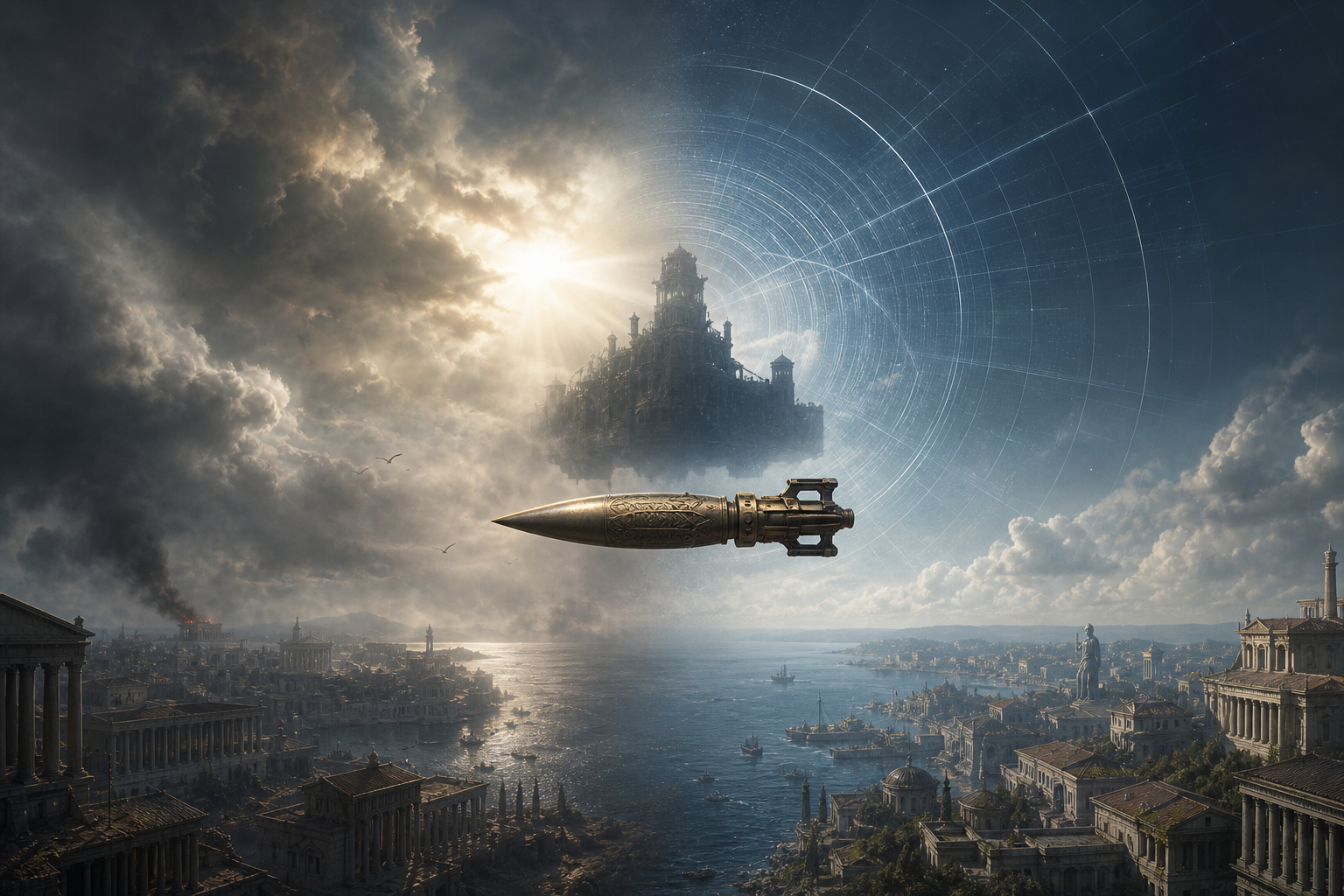
Invisibility describes an effect, not its mechanism
The machine’s invisibility is the feature most likely to attract a technological explanation. Yet the description gives you an observed condition: defenders cannot see the threatening vehicle. It does not, on its own, give you the process producing that condition.
Several kinds of reading are possible. Within the sacred narrative, invisibility can be accepted as a real power possessed by the machine. In literary terms, the unseen attacker can communicate confusion, helplessness, and the collapse of ordinary battlefield awareness. A technological hypothesis may propose some form of concealment, but it remains a hypothesis until a mechanism is independently supported.
Do not collapse these readings into one another. A narrative effect is not a technical specification. A technical analogy is not an identification. The fact that modern readers can imagine ways of concealing a vehicle does not show that any one of those methods operated at Dwarka.
When you investigate the wording, record four things before forming a conclusion: the exact expression used for being unseen, the translator and edition, the actions immediately before and after the description, and whether the condition is continuous or changes during the encounter. Those details can distinguish a precise textual observation from an interpretation added in retelling.
The Dharmic issue is how power is used
The spectacle of flight can distract from the moral structure of the episode. Salva’s technological advantage serves an assault on Dwarka. Mobility and concealment increase his capacity to destroy; they do not grant righteousness to his cause.
This distinction matters whenever ancient technology becomes a subject of cultural pride. Dharmic civilization need not prove its worth by treating every extraordinary weapon as an engineering blueprint. Nor should technological sophistication be confused with spiritual elevation. Power remains subject to dharma, whether it takes the form of a conventional weapon, an unseen aerial machine, or a capability that a modern reader cannot explain.
Ask four moral questions alongside the technical ones: Who exercises the power? For what end? Against whom is it directed? What consequences follow? Those questions prevent admiration for the instrument from erasing judgement of the action.
A five-question test for claims about Salva and Dwarka

Use this sequence when a video, social-media thread, lecture, or conversation presents Salva’s vehicle as proof of ancient aviation or alien contact:
- What is the exact claim? Separate “the episode depicts aerial attack” from “a modern kind of aircraft existed” and from “extraterrestrials supplied it.” These are three different propositions.
- Which passage is being used? Ask for the work, location, edition, and translation. A dramatic paraphrase is not enough when the argument depends on a single technical word.
- What is directly described? List only the stated features: flight, invisibility to observers, attack, and destruction. Do not insert propulsion, materials, occupants, or planetary origin unless the cited passage actually supplies them.
- Where does interpretation begin? Mark every bridge word such as “therefore,” “must have been,” or “could only mean.” The weakest part of an argument often sits immediately after one of those phrases.
- What independent evidence would be needed? A historical technology claim would benefit from material remains, securely dated representations, consistent terminology, or other evidence independent of the story. An extraterrestrial claim would require still more.
This test does not tell you what you are permitted to believe. It tells you what you can responsibly claim. You may regard the episode as sacred history, symbolic narrative, a cultural memory of lost technology, or a combination of layers. Intellectual honesty requires you to label the status of each conclusion.
Two sentences provide a useful boundary. “Salva’s assault contains an extraordinary depiction of airborne, concealed warfare” is supported by the episode’s basic features. “Therefore extraterrestrials attacked the historical city of Dwarka” goes beyond those features and needs evidence not contained in them.
Key takeaways
- Salva’s encounter with Dwarka is an assault, not merely a mysterious aerial visitation.
- The narrative core includes a flying machine, an inability to see it, and destruction directed from above.
- Those features make the episode unusual, but they do not establish extraterrestrial origin or a match with modern aircraft.
- Invisibility identifies what observers experience; it does not specify how the effect is produced.
- A Dharmic reading judges the purpose and use of power instead of worshipping technology for its novelty.
- Before sharing a strong claim, identify the exact passage, translation, direct description, interpretive leap, and missing evidence.
The next time Salva’s aerial machine appears as a one-line proof of aliens or ancient aerospace engineering, slow the conversation down. Ask for the passage, preserve what it genuinely describes, and name every added inference. That approach honours the depth of Hindu tradition more than either ridicule or an inflated claim that the available evidence cannot carry.