
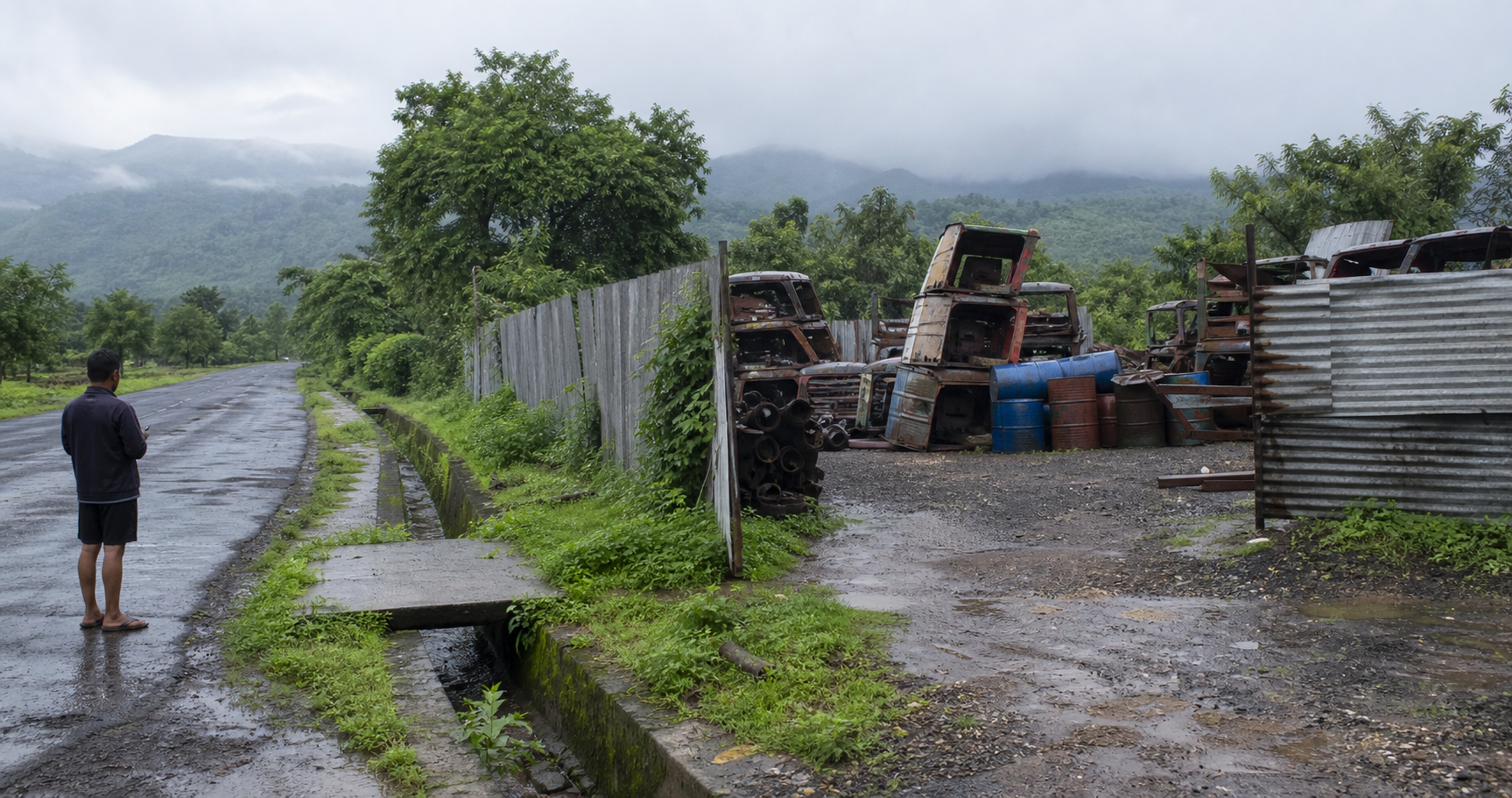
If a scrap yard near your home is burning wire, leaking oily liquid into a drain, stacking cylinders beside cutting work, or blocking the only fire-engine route, your first task is not to prove every legal violation. It is to recognise the immediate danger, document what you can see without entering the premises, and put the right authority on notice.
That distinction matters in Chiplun. Scrap recovery supports livelihoods and keeps useful material in circulation, but unsafe operations can expose workers and neighbours to fire, toxic smoke, corrosive liquids and contaminated monsoon runoff. The answer is firm, proportionate enforcement that stops dangerous practices while giving legitimate collectors a realistic route into lawful recycling.
Separate an untidy yard from an urgent hazard
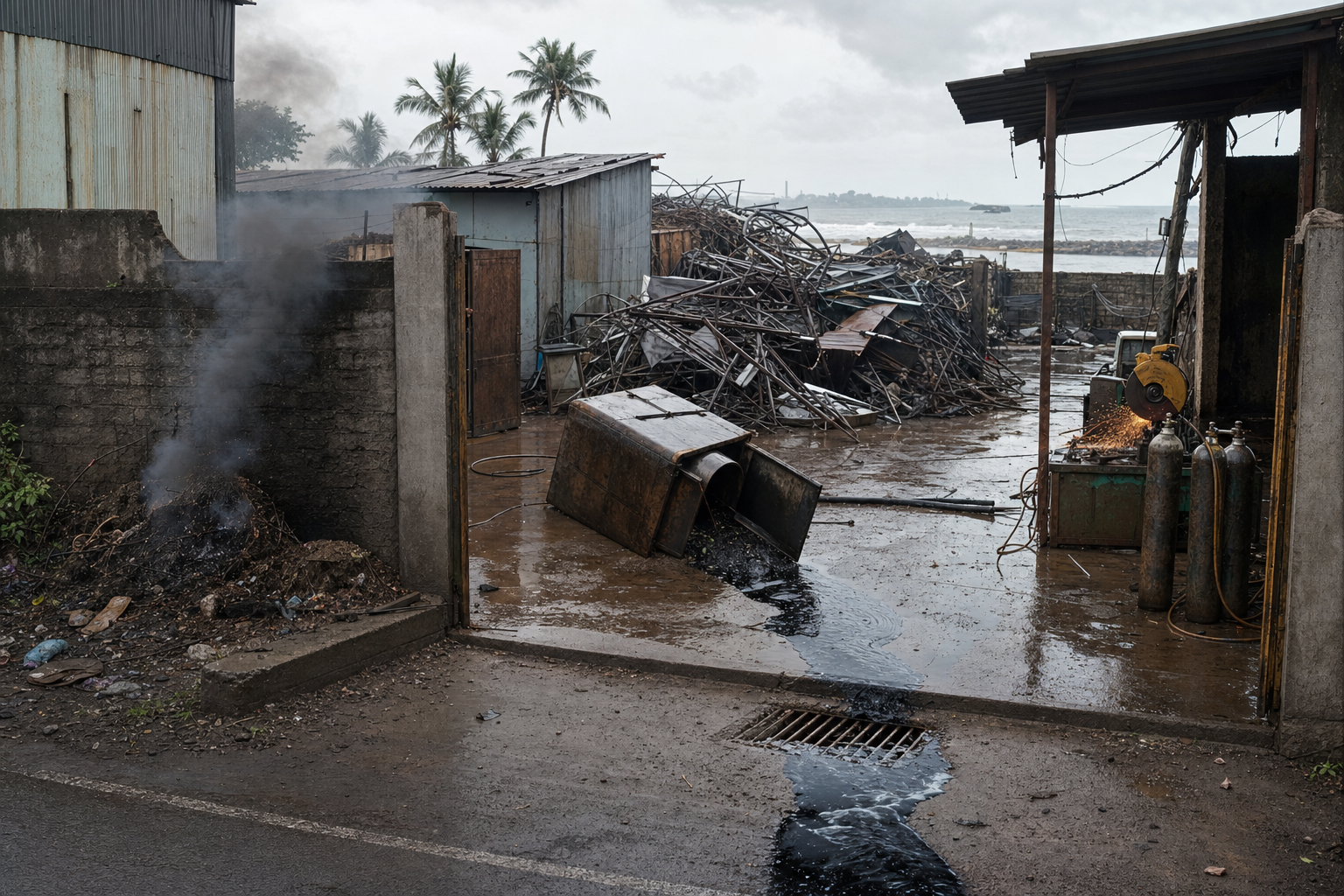
A disorderly-looking yard is not automatically illegal, and a clean-looking premises is not automatically safe. Legal status depends on its location, permissions, materials and activities. As a resident, you should report observable conditions and ask officials to verify compliance rather than making an accusation you cannot substantiate.
Treat these conditions as immediate dangers
- Active burning of wire, plastic or mixed scrap: open burning can produce dioxins and furans. Move away from the smoke, keep children indoors or upwind where practicable, and report the active incident. Do not approach the fire to obtain a closer photograph.
- A fire near cylinders, fuel or solvent storage: heat can turn poor storage into an explosion hazard. Leave the immediate area and contact emergency services or police. Do not wait to assemble a complete complaint file.
- Liquid entering a drain, open plot or waterbody: record the location, time, colour and visible route of the discharge from a lawful public place. Do not touch, smell or collect an unknown liquid yourself.
- Blocked access in a narrow residential lane: metal heaps, vehicles or machinery can prevent evacuation and delay firefighting. Photograph the obstruction only if you can do so without entering the road or confronting workers.
- Acid treatment or uncontrolled dismantling: acid leaching, damaged batteries and electronic dismantling can release corrosive electrolytes, lead, cadmium and other hazardous fractions. Do not handle a discarded battery, circuit board, capacitor or leaking container.
Smoke, discharge, fire and blocked escape routes require a prompt response because the harm may already be occurring. Repeated noise, dust, sharp scrap protruding into public space or regular late-night activity may not be the same kind of emergency, but they still justify a dated record and a formal inspection request.
Ask officials to verify the legal questions
Residents usually cannot determine from the street whether an operator has valid paperwork. Ask the inspecting authority to check the following instead:
- Whether the operation has the applicable Maharashtra Pollution Control Board consent to establish and consent to operate.
- Whether scrap processing is permitted at that location under local zoning, land-use and encroachment rules.
- Whether the premises has the required fire no-objection certificate and functioning fire and life-safety arrangements.
- Whether e-waste and batteries are being handled through the registrations and channels required by the CPCB Extended Producer Responsibility system.
- Whether hazardous fractions are separated from ordinary metal, paper and plastic instead of being mixed in one heap.
- Whether residues, oils, electrolytes or contaminated water are being discharged into soil, drains, open plots or waterbodies.
- Whether an end-of-life vehicle operation falls under the Registered Vehicle Scrapping Facility Guidelines, 2021.
The applicable framework may include the Environmental (Protection) Act, 1986; the Hazardous and Other Wastes Rules, 2016; the Solid Waste Management Rules, 2016; the Plastic Waste Management Rules, 2016 as amended; the E-Waste Management Rules, 2022; and the Battery Waste Management Rules, 2022. Not every rule applies to every collector in the same way. The materials handled and the work performed determine which permissions and duties must be checked.
Chiplun’s monsoon turns poor storage into a wider threat
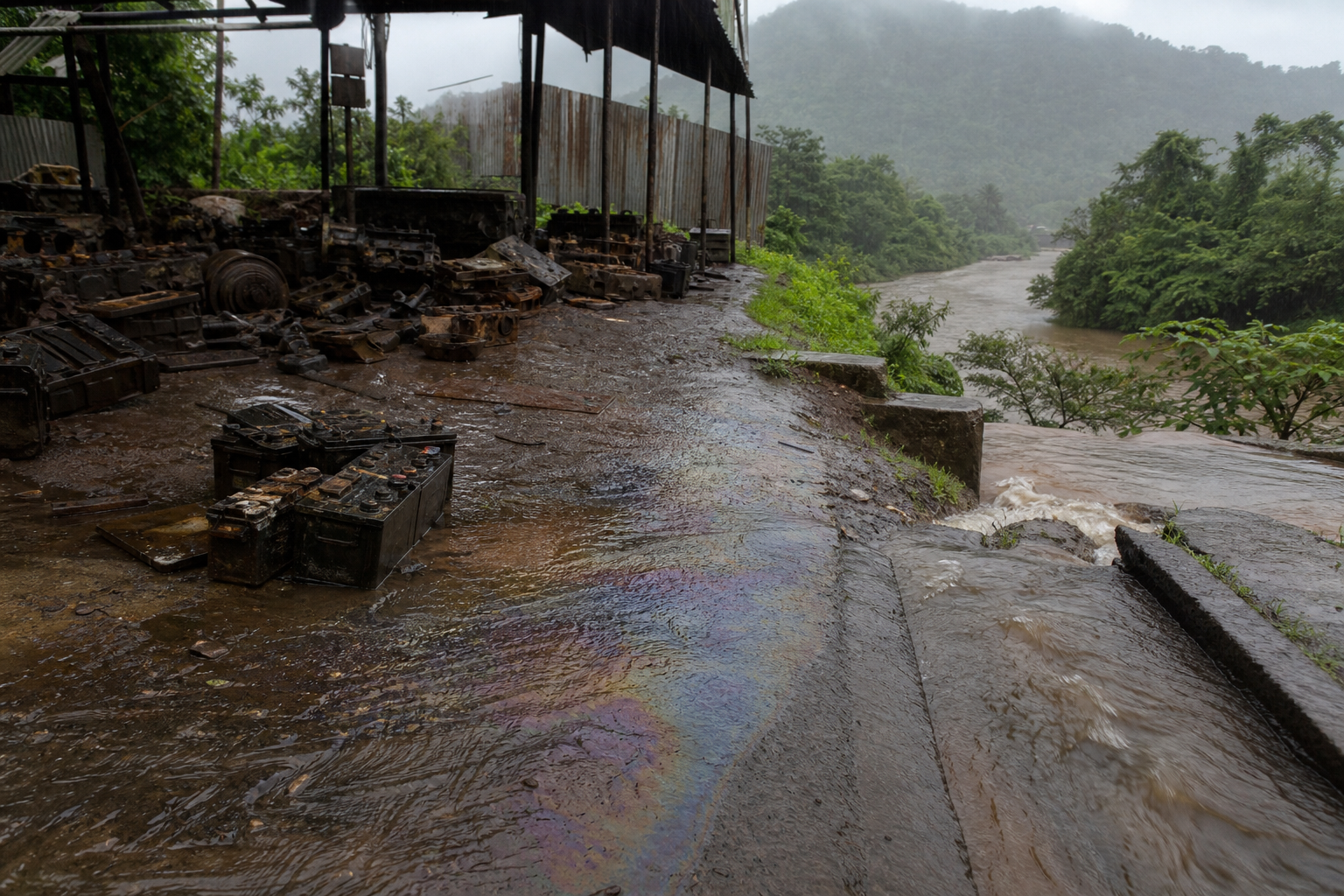
Chiplun sits in the Konkan belt along the Vashishti river and experienced severe flooding in 2021. That geography changes the risk calculation. Oil or battery liquid that remains inside one yard in dry weather can be lifted by floodwater, carried through a drain and spread across soil or surface water during heavy rain. Contamination can therefore travel beyond the property where it began.
Location should affect inspection priority. A yard in a flood-prone pocket, beside a drain or riverbank, on permeable ground, or in a cramped lane near homes deserves faster attention than a low-risk collection point with no dismantling, no hazardous stock and adequate controls. Schools, hospitals and sites with difficult emergency access also warrant priority because evacuation and exposure consequences are greater.
Before the monsoon, ask the municipal council and MPCB whether high-risk yards have completed a recorded de-risking inspection. That inspection should verify concrete measures, not merely collect an undertaking:
- Oils have been removed from vulnerable drums and machinery and placed in safe, labelled storage.
- Batteries, contaminated components and chemical containers have been moved to covered, bunded areas above likely flood exposure.
- Drain inlets around scrap clusters are clear without creating a direct route for contaminated water.
- Spill absorbents and booms are available where oils or chemicals are stored.
- High-risk dismantling is suspended in flood-prone pockets during periods when safe containment cannot be maintained.
- Fire-service access remains usable under waterlogged conditions and workers know the evacuation route and assembly point.
You do not need to enter a yard to check these controls. Request that the inspection team record them, photograph material storage and state in writing whether the site is fit to continue operating through the rainy period.
Build a complaint that officials can inspect and answer
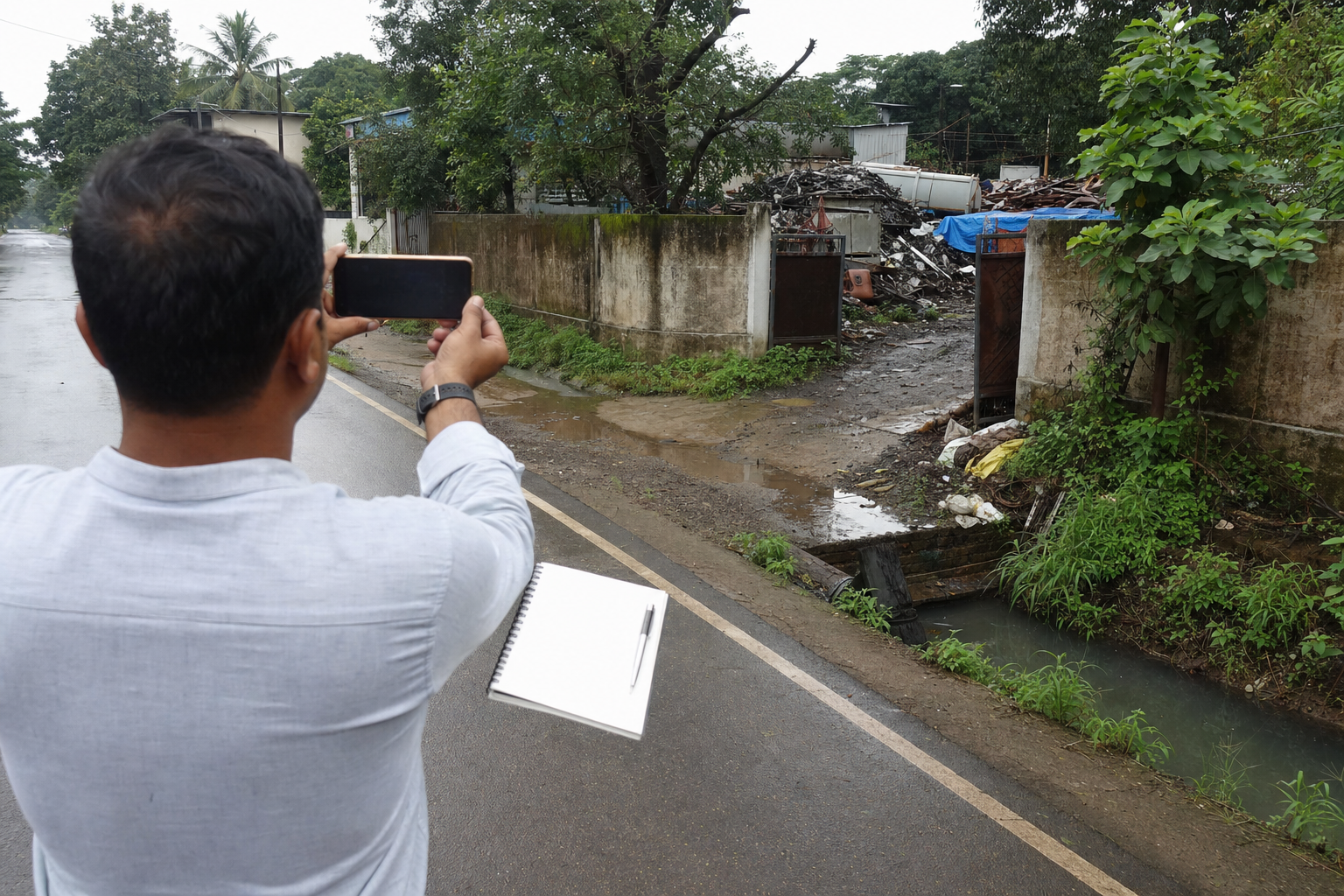
A vague complaint such as “there is illegal scrap everywhere” gives an office little to verify and makes it easier for responsibility to move between departments. A useful complaint identifies one place, one or more observable hazards and the action requested.
- Identify the site precisely. Give the street, nearby landmark, ward if known and a map pin or clear location description. Do not publish a worker’s private details.
- Record what happened. Note the date, approximate time, duration and visible activity: burning wire, cutting beside cylinders, battery breakage, liquid entering a drain, scrap obstructing a lane or another specific condition.
- Collect evidence safely. Take photographs or short video only from a public place where doing so does not put you near smoke, traffic, sharp metal, fire or confrontation. Never trespass to obtain a better angle.
- Describe the consequence. State whether smoke entered homes, a public drain received liquid, the fire lane was blocked or the site sits in a flood-prone location. Keep observation separate from inference.
- Request named checks. Ask for a joint site inspection, verification of MPCB consent, applicable CPCB registration, zoning compliance and fire NOC, along with an assessment of storage, drainage and emergency access.
- Obtain an acknowledgement. Ask for an inward number, complaint number or written receipt. Keep the original submission, attachments and every response in one chronological file.
Send the complaint to the authority whose function matches the problem. The municipal council can address local land use, solid-waste handling, drainage and public obstruction. MPCB should examine consent, emissions, discharges and hazardous, electronic or battery waste. Fire services should inspect cylinders, fuels, extinguishers, accessways and evacuation arrangements. Police should be contacted where an active incident creates immediate danger or public access is being obstructed. Revenue authorities may be needed for land-use or encroachment questions.
Where several issues overlap, request a joint inspection by the municipal council, MPCB, fire services, police and revenue department. This prevents a fire problem, pollution problem and land-use problem from being treated as unrelated files at different desks.
If no response arrives, follow up using the acknowledgement number and ask three narrow questions: Was the premises inspected? What violations, if any, were recorded? What corrective order and deadline were issued? Do not replace this process with confrontation, forced entry, threats or attempts to seize material. Those actions can endanger residents and workers and can compromise lawful enforcement.
Demand enforcement that removes danger and preserves honest work
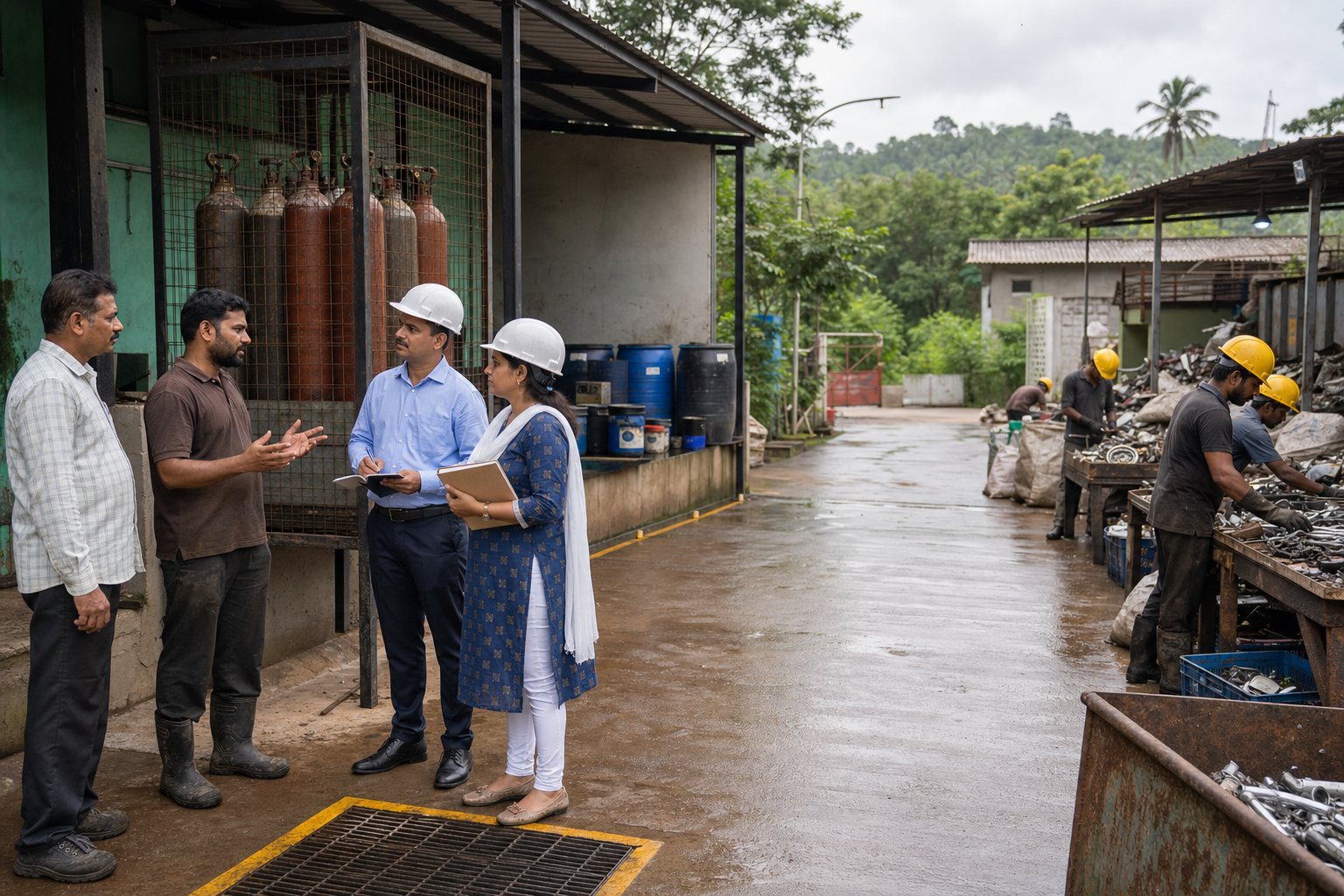
The publicly announced deadline of 27 April 2026 for strict action has passed. A deadline passing is not proof that inspections, closures or safety upgrades occurred. Residents should now ask for measurable outcomes: sites inventoried, inspections completed, violations recorded, hazardous material secured and compliant livelihoods formalised.
A blanket drive against everyone who collects scrap would miss the real target. Collection and material recovery are useful parts of a circular economy. The preventable harm comes from unsafe siting, open burning, acid leaching, uncontrolled dismantling, illegal discharge, dangerous storage and operation without required permissions. A dharmic response should hold those practices accountable while avoiding needless harm to workers whose lawful labour can be brought into a safer system.
A credible Chiplun action programme should contain the following public commitments:
- A citywide, geo-tagged inventory: every scrap-related establishment should be listed and classified as low, medium or high risk using location, materials and existing controls.
- Priority action at high-risk sites: yards in flood-prone areas, dense residential lanes or locations near schools and hospitals should be inspected first. Active burning, hazardous discharge or severe fire risk may justify an immediate stop-work order with a safe-closure procedure.
- Safe closure rather than abandonment: closing a gate does not make batteries, oils, cylinders or contaminated residue safe. Hazardous stock must be segregated, secured and transferred through authorised channels.
- A time-bound compliance route: medium- and low-risk operators should receive a clear checklist, deadlines and a one-stop help desk for MPCB consents, registrations and EPR connections.
- A properly engineered recovery location: a material recovery facility or industrial cluster should offer impermeable sloped floors, covered work areas, bunded storage, stormwater controls, oil-water separation and continuous surveillance away from dense residential pockets.
- Links to registered recyclers: informal collectors should be connected to CPCB-registered recyclers through traceable aggregator arrangements that provide fair compensation without creating an incentive to burn, leach or dump low-value residues.
- Safety-linked financial help: microcredit or equipment support can be conditioned on installing roofed storage, spill kits, extinguishers, signage and other verified controls.
- Graded penalties with due process: warnings and corrective deadlines may suit remediable violations, while fines, hazardous-material seizure and prosecution should remain available for repeat or egregious conduct.
- A public dashboard: ward-level inspection totals, violations, closure orders, compliance deadlines and material transferred safely should be visible so residents can distinguish action from announcement.
Any yard allowed to dismantle or process scrap should meet visible minimum conditions. Work belongs under cover on impermeable flooring. Oils, acids, batteries and other hazardous fractions need separate, labelled and bunded storage. Open burning, acid leaching and discharge to soil or drains are non-negotiable prohibitions. Accessways must remain open; extinguishers must suit the fire risks present; and cylinders require controlled storage away from sparks and flames.
Worker protection is part of compliance, not an optional benefit. Cut-resistant gloves, eye protection, suitable masks for dust or fumes and steel-toe footwear address common exposure and injury routes. Cutting and soldering areas need ventilation or fume extraction. Shredders and cutters require noise controls. Workers should be trained to recognise battery, capacitor and cylinder hazards, use first aid and spill equipment, and follow a marked evacuation route.
Key takeaways
- Report active fire, burning, dangerous cylinder exposure or chemical discharge promptly; do not delay an emergency report while building a full case.
- Describe what you observed and ask officials to verify permissions. A resident does not need to prove illegality before requesting an inspection.
- Never trespass, touch unknown material or confront workers to collect evidence. Record from a lawful, safe public location.
- In Chiplun, proximity to drains, flood-prone land, homes, schools, hospitals and narrow accessways should raise inspection priority before the monsoon.
- Judge enforcement by published inspections, corrected hazards and safe material transfers, not by raids or closure counts alone.
- Support formalisation of legitimate collectors while insisting on zero tolerance for burning, acid leaching, dumping and serious fire hazards.
Choose the highest-risk site you can document safely, prepare a one-page factual complaint and request a joint inspection with a written outcome. One precise, acknowledged case creates more accountability than a broad allegation that no office is required to answer.