
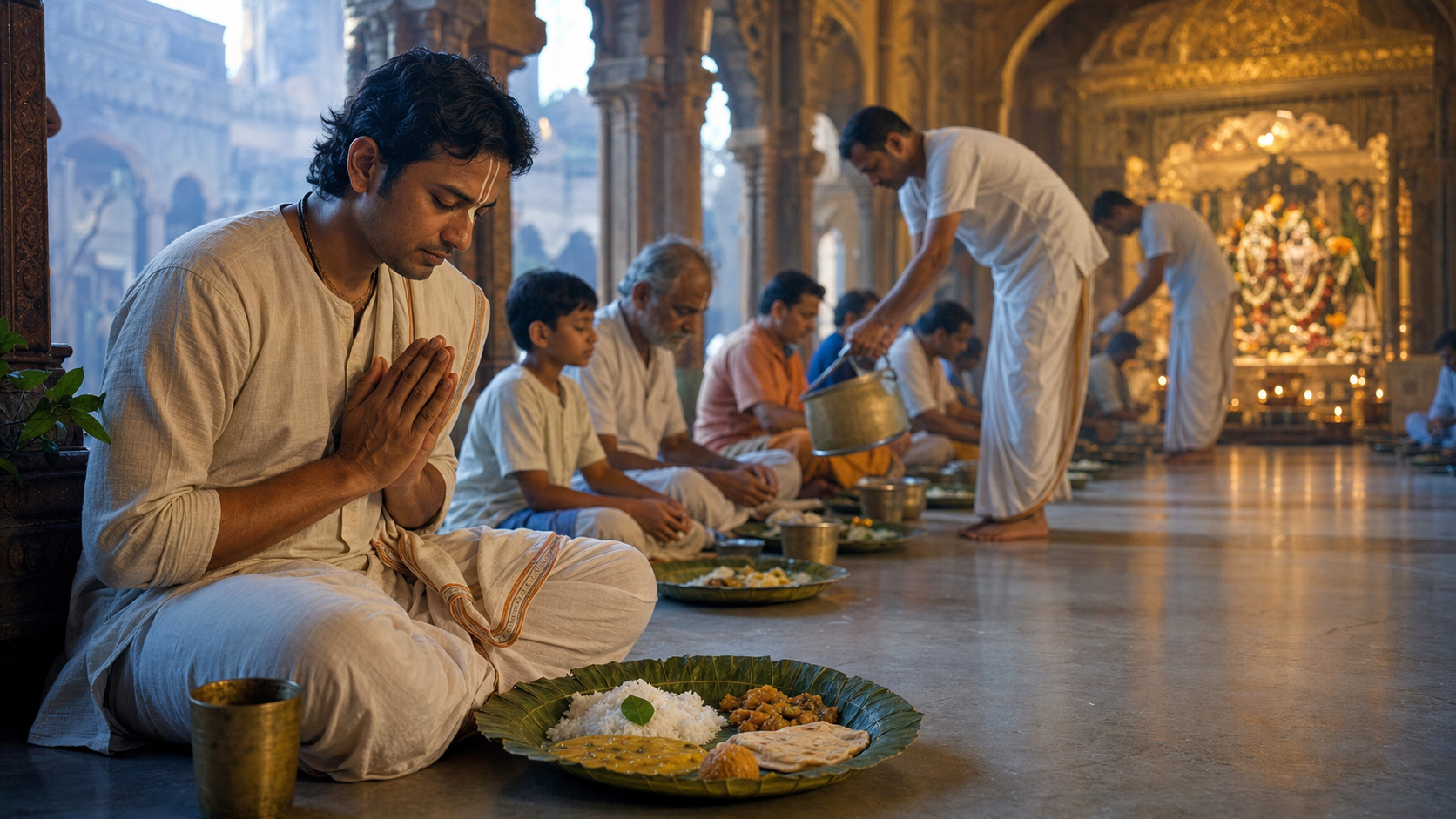
You may have received prasadam at a temple for years and still wondered what it is supposed to do. Is it simply blessed hospitality, or can eating it genuinely deepen your bhakti?
In Gaudiya Vaishnava practice, prasadam can be part of sadhana, but it is not a mechanical shortcut. Its effect begins with a relationship: food is offered with devotion, received as divine mercy, and honored with attention. That simple discipline can accompany the entire movement from initial faith to prema, while gradual changes in your desires and conduct show whether the practice is becoming real.
Food becomes sadhana through relationship, not chemistry
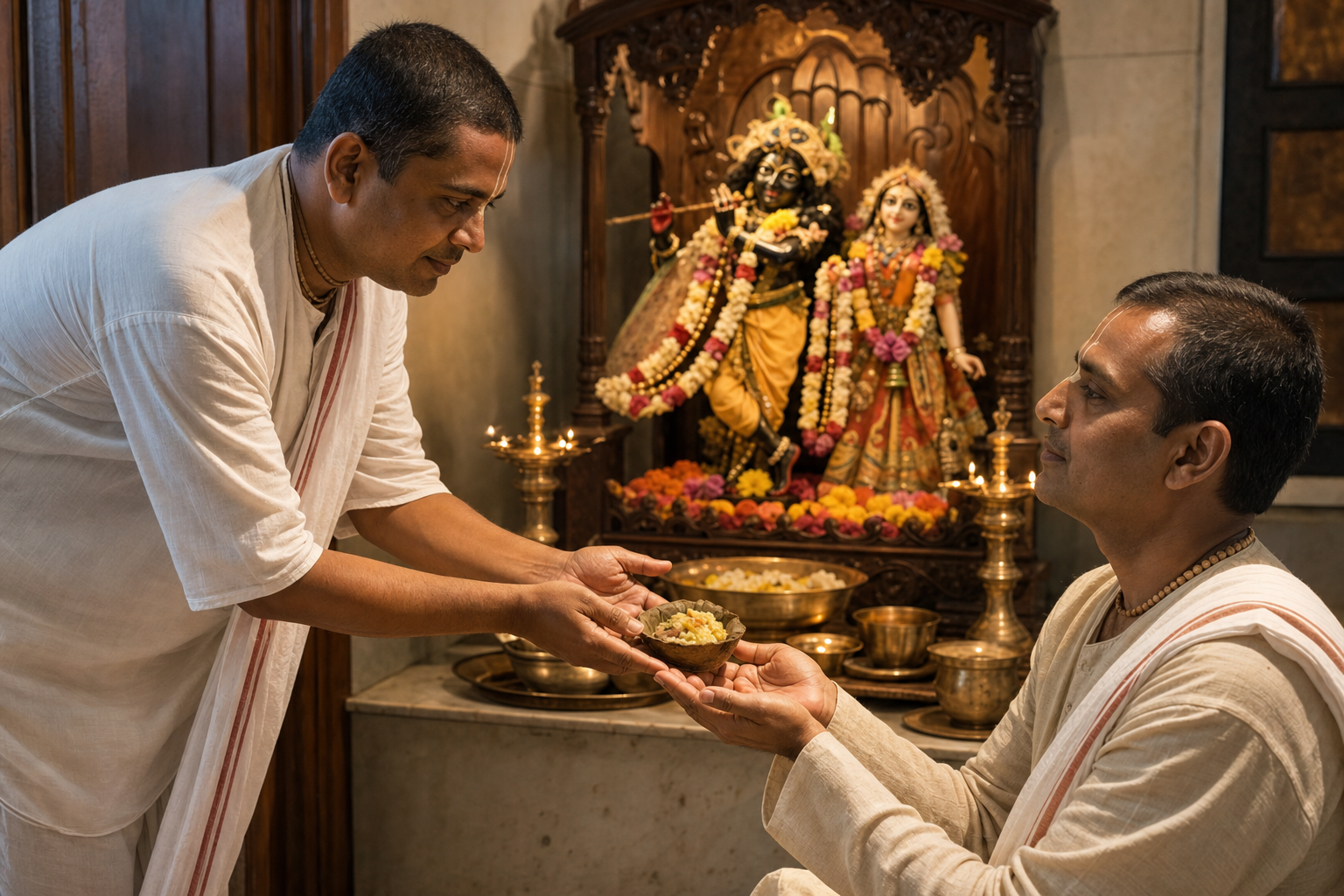
Prasadam literally means mercy. Ingredients that could have been prepared merely for personal enjoyment are first placed within an act of devotion. After the offering, the food is received rather than claimed. The ingredients may still look and taste familiar, but the practitioner’s relationship with them has changed.
This is why prasadam should not be understood as a substance possessing independent magical power. Matter alone is not said to manufacture devotion. The offering, the Divine, the devotee and the person receiving the food are joined in a devotional exchange. Prasadam is sacred because it belongs to that relationship.
In the Bhagavata account associated with Narada accepting devotees’ remnants, respectful contact is connected with purification and an awakening attraction to spiritual life. One sincere encounter can therefore become a beginning. It does not mean that one morsel completes the path, cancels harmful conduct or guarantees an advanced realization.
The connection with devotees matters. Sadhu-sanga is not limited to hearing a discourse. You also enter devotional association when you help prepare an offering, serve a temple meal, receive prasadam from devoted practitioners, share it without discrimination or clean the eating area afterward. Their priorities and habits become visible at close range. Association gradually changes what appears desirable, normal and worth serving.
Gaudiya communities may give particular reverence to prasadam associated with a pure devotee, sometimes describing such remnants as maha-prasada. Terminology and detailed customs can vary. Follow the practice of the temple, guru or sampradaya you are actually approaching rather than turning sacred remnants into objects of curiosity or prestige.
Where prasadam meets the nine stages of bhakti

The familiar progression is sraddha, sadhu-sanga, bhajana-kriya, anartha-nivritti, nistha, ruci, asakti, bhava and prema. It is best used as a map, not a ladder on which you award yourself a rank. Earlier practices do not become unnecessary when a later quality develops. A mature devotee still hears, serves, associates and honors prasadam.
| Stage | What is developing | How to engage with prasadam |
|---|---|---|
| Sraddha | Initial faith or openness | Receive a suitable portion respectfully. Let the experience lead to sincere inquiry instead of demanding an instant spiritual sensation. |
| Sadhu-sanga | Association with devotees | Honor prasadam in devotional company. Observe how practitioners offer, serve, share, speak and avoid waste. |
| Bhajana-kriya | Committed devotional practice | Make offering and honoring food part of a regular routine. Move beyond depending on an occasional temple feast. |
| Anartha-nivritti | Reduction of unwanted habits and impediments | Notice entitlement, distraction, waste, harsh speech and compulsive enjoyment around meals. Use the discipline of prasadam to stop feeding those patterns. |
| Nistha | Steadiness | Maintain respect on ordinary days, not only during festivals, visits from respected teachers or especially elaborate meals. |
| Ruci | Spiritual taste | Look for growing relish in remembrance and service. Do not mistake preference for a favorite preparation for ruci in bhakti. |
| Asakti | Deepening attachment to the Divine | Let attention rest increasingly on the One to whom the food was offered, rather than on the menu or your experience of it. |
| Bhava | Awakening spiritual emotion | Continue to receive mercy humbly. Genuine bhava is not produced by imitating visible emotion or announcing an advanced state. |
| Prema | Pure love of God | Offering, receiving and serving are fully situated within love. Prema is the culmination of grace and devotion, not a status earned by consuming sacred food. |
The crucial distinction is between sensory pleasure and devotional taste. Enjoying the flavor of prasadam is not wrong. Confusing that enjoyment with ruci, however, can hide the real question: are you becoming more eager to remember the Divine, associate well, hear sacred teachings and serve others?
The stages also protect you from discouragement. A distracted meal does not prove that nothing is happening, just as a powerful emotional meal does not prove that you have reached bhava. Watch the direction of your life over time. Steadier attention, weaker attraction to harmful distractions and more considerate conduct are more dependable signs than an isolated feeling.
Turn your next portion of prasadam into deliberate practice
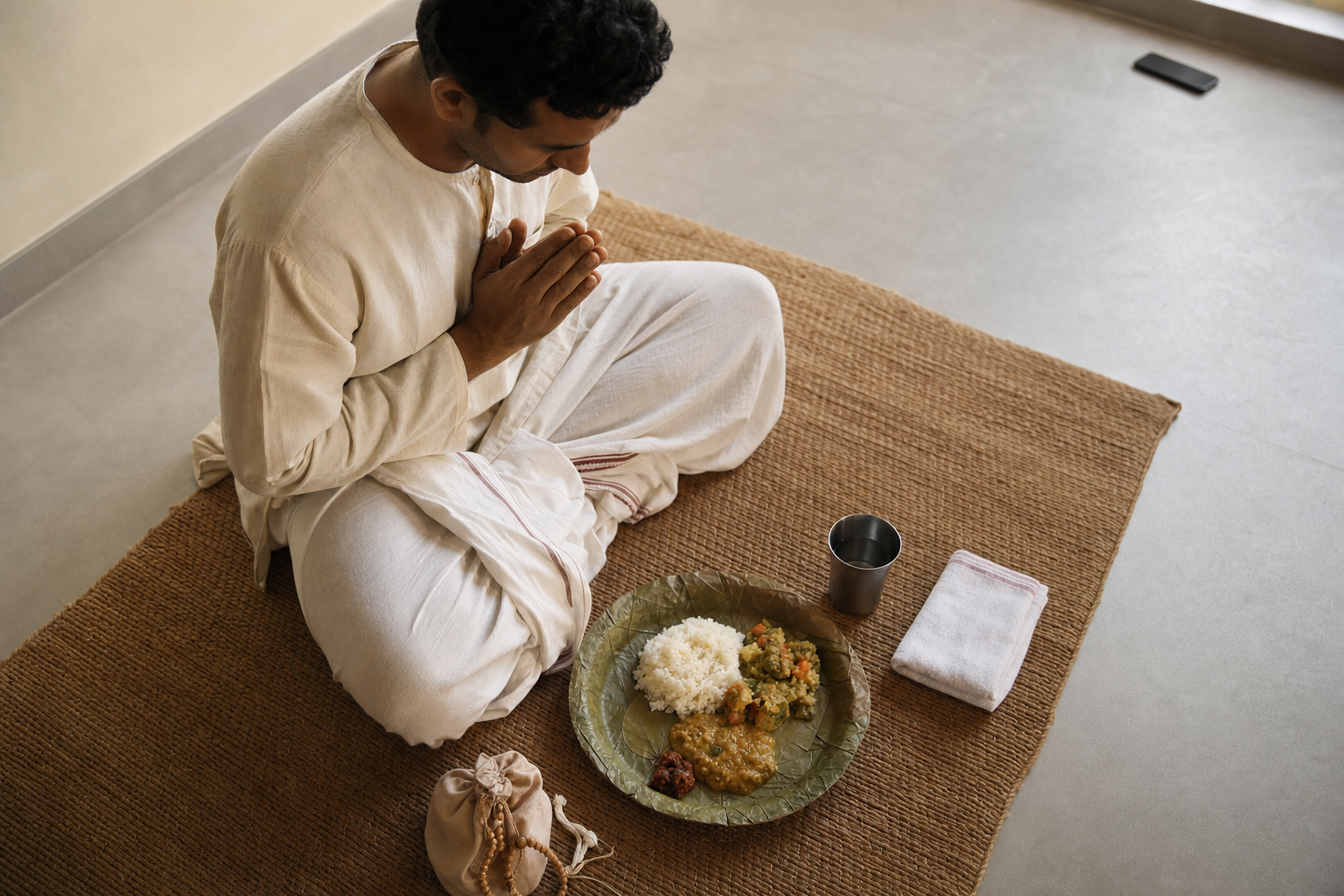
You do not need to manufacture solemnity. A short, repeatable discipline is more useful than an elaborate routine you cannot sustain.
- Begin with cleanliness. Clean your hands, utensils and preparation area. Treat cleanliness as part of service rather than as a decorative sign of religiosity.
- Prepare within your dietary dharma. Favor sattvic, non-violent and responsibly obtained food, while following the standards of your own lineage or temple. Do not assume every community follows precisely the same offering rules.
- Offer before tasting. Use the prayer and procedure you have actually received. If you have not learned one, ask a trustworthy practitioner instead of inventing a ritual from fragments.
- Pause before the first bite. Remember that you are receiving rather than taking. A brief inward prayer of gratitude is enough to interrupt automatic consumption.
- Give the meal your attention. Set aside unrelated distractions at the beginning. Notice whether impatience, criticism or possessiveness appears without turning the meal into anxious self-surveillance.
- Protect your speech. Avoid harsh talk, gossip and quarrelling while honoring prasadam. The mouth receiving mercy should not immediately be used to injure another person.
- Take a modest first serving. You can receive more if needed. This makes respect visible through reduced waste rather than through claims about sanctity.
- Share and serve. Offer prasadam freely where appropriate, make newcomers comfortable and help with cleanup. The discipline continues after your plate is empty.
At a temple, follow the community’s arrangements. Ask before entering offering areas, taking remnants reserved for a particular purpose or serving food yourself. Reverence includes respecting the people responsible for the sacred space.
Respect also does not require ignoring allergies, medical dietary limits or informed choice. Ask what a preparation contains, accept only what is suitable for you and never pressure someone else to eat. A small portion received responsibly is more consistent with dharma than waste, concealment or coercion.
Measure progress by attention, appetite and conduct
Prasadam works at more than one level. Ritual gratitude and attentive eating can train attention. Repeated community service can reinforce generosity and self-regulation. Bhakti makes an additional theological claim: these human disciplines open the practitioner to grace. The behavioral explanation need not erase the sacred one, and the sacred claim should not be used to excuse careless behavior.
Key takeaways
- Prasadam supports bhakti when you receive it as mercy, not when you treat it as a spiritual commodity.
- A single sincere encounter may awaken attraction, but steady association and practice allow that attraction to mature.
- The clearest signs of progress are less distraction, more considerate speech, greater steadiness and a growing desire to serve.
- Enjoying the food is compatible with devotion, but culinary preference is not the same as ruci.
- Cleanliness, non-waste, gratitude and equal regard for those being served are part of honoring prasadam.
A simple review can keep the practice honest. Ask whether you are associating with devotees consistently each week. Notice whether your attention during prasadam is improving, whether your speech is becoming kinder and whether cravings for distracting forms of consumption are weakening. Then ask whether service, kirtan, mantra practice or study of the Srimad Bhagavatam is becoming more attractive.
Record brief observations under attention, appetite and conduct if your impressions are vague. Do not write the experience you think a devotee ought to have. Write what actually happened: distracted but less wasteful, grateful but critical of the preparation, or more willing to serve than before. Such observations reveal the next practice more reliably than trying to identify your stage.
Three errors deserve particular care. First, do not use prasadam as a transaction, as though enough sacred food must purchase a desired result. Second, do not chase special remnants while neglecting truthfulness, compassion and responsibility. Third, do not judge another person’s bhakti by how much they eat, what emotion they display or whether their dietary needs differ from yours. Mercy should make entitlement smaller, not give it religious language.
Shared food expresses a wider Dharmic ethic without erasing differences
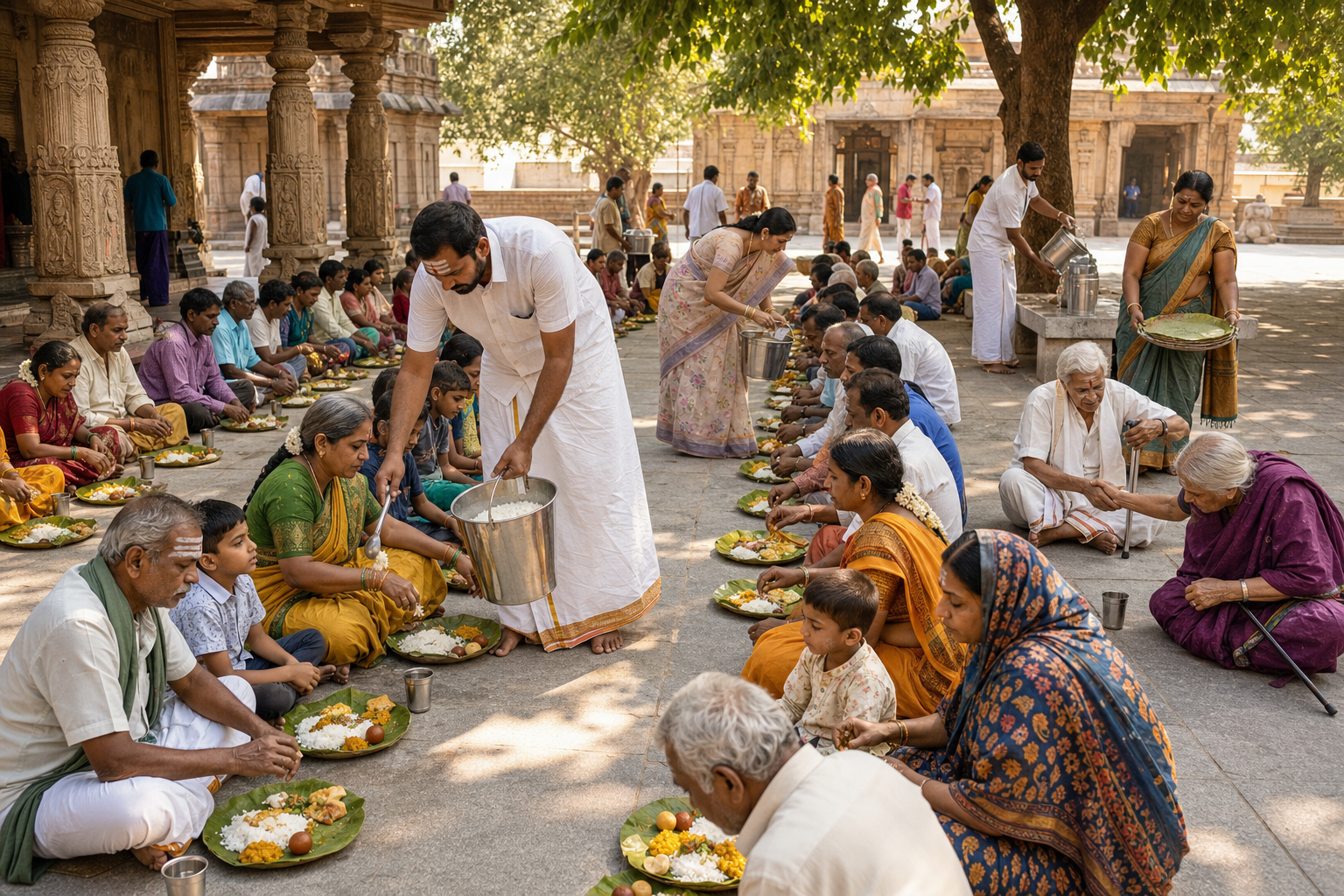
Sanctified or ethically shared food appears across Dharmic life, but the practices should not be flattened into interchangeable versions of one ritual. Vaishnava prasadam arises from an offering-and-receiving relationship with the Divine. Sikh langar enacts hospitality and equality through shared service and a common meal. Buddhist dana centers generosity. Jain food practice gives particular weight to ahimsa, purity and care.
The shared civilizational intuition is practical: food can school desire, weaken social distance and turn nourishment into service. The theological meanings remain distinct. When you visit another Dharmic community, learn the name and purpose of its practice rather than automatically calling every communal meal prasadam.
Within your own community, make equality concrete. Serve without sorting people by wealth, social standing or familiarity. Help the person who does not know the custom. Take the portion you can honor without waste. Thank the cooks and the people cleaning after everyone else has left. These acts show whether sacred food is refining the heart or merely decorating an unchanged social habit.
At your next opportunity, choose one discipline you can sustain: pause before eating, guard your speech, reduce waste or stay to serve. Let that small act become steady. Prasadam does not ask you to pretend that you have reached prema; it gives you a way to practice receiving mercy where you are.