
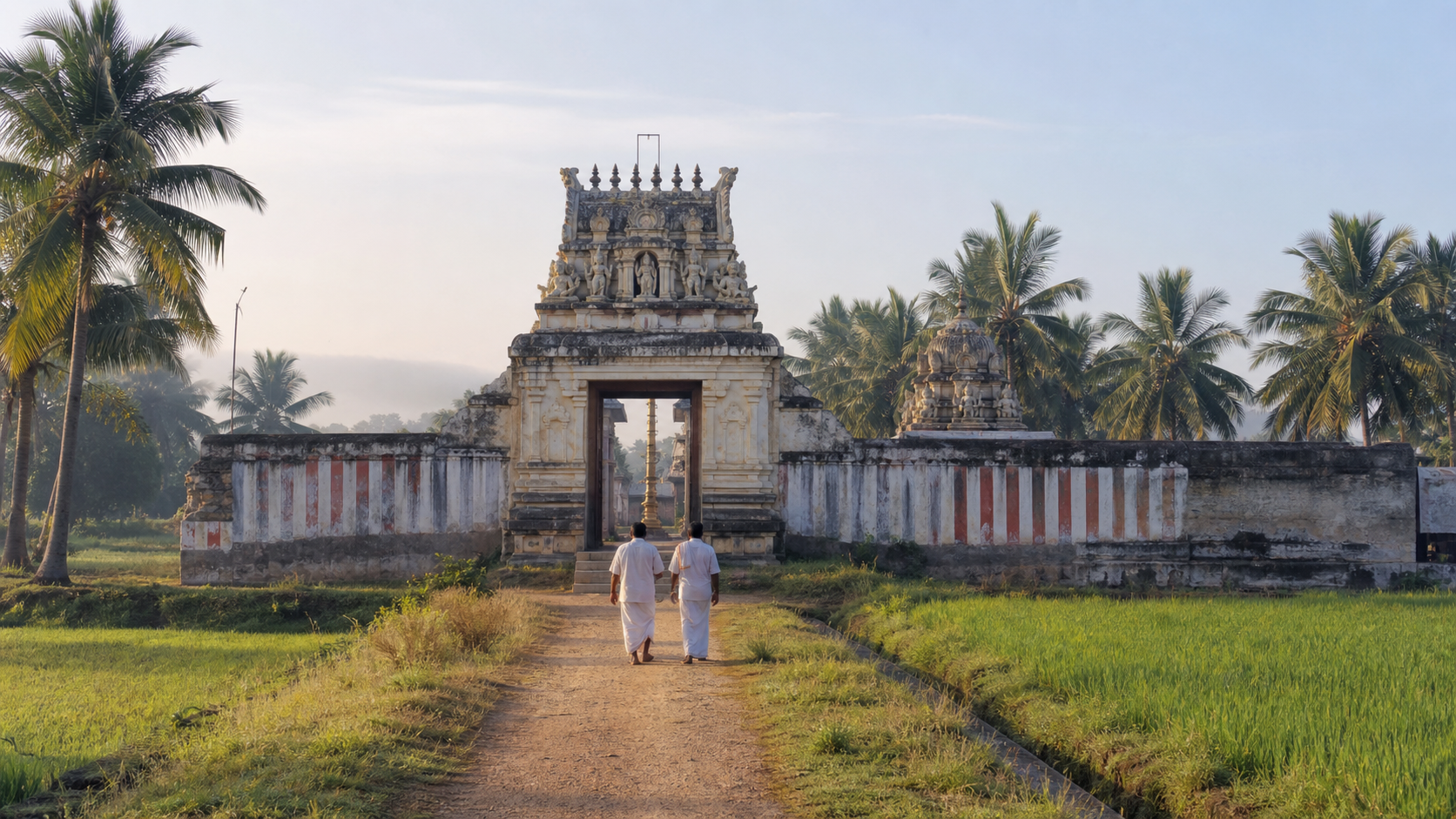
If you are planning the Thirunangur temple circuit, the difficulty is not adding another shrine to your route. It is understanding why Parthan Palli deserves more than a hurried darshan between better-known stops.
This Divya Desam gives you a precise spiritual question to carry into the temple: when duty is clear enough to demand action but the mind is still divided, how should you seek guidance? Its association with Arjuna and Sri Krishna makes the visit especially meaningful when you are facing a decision of your own.
Why the name Parthan Palli matters
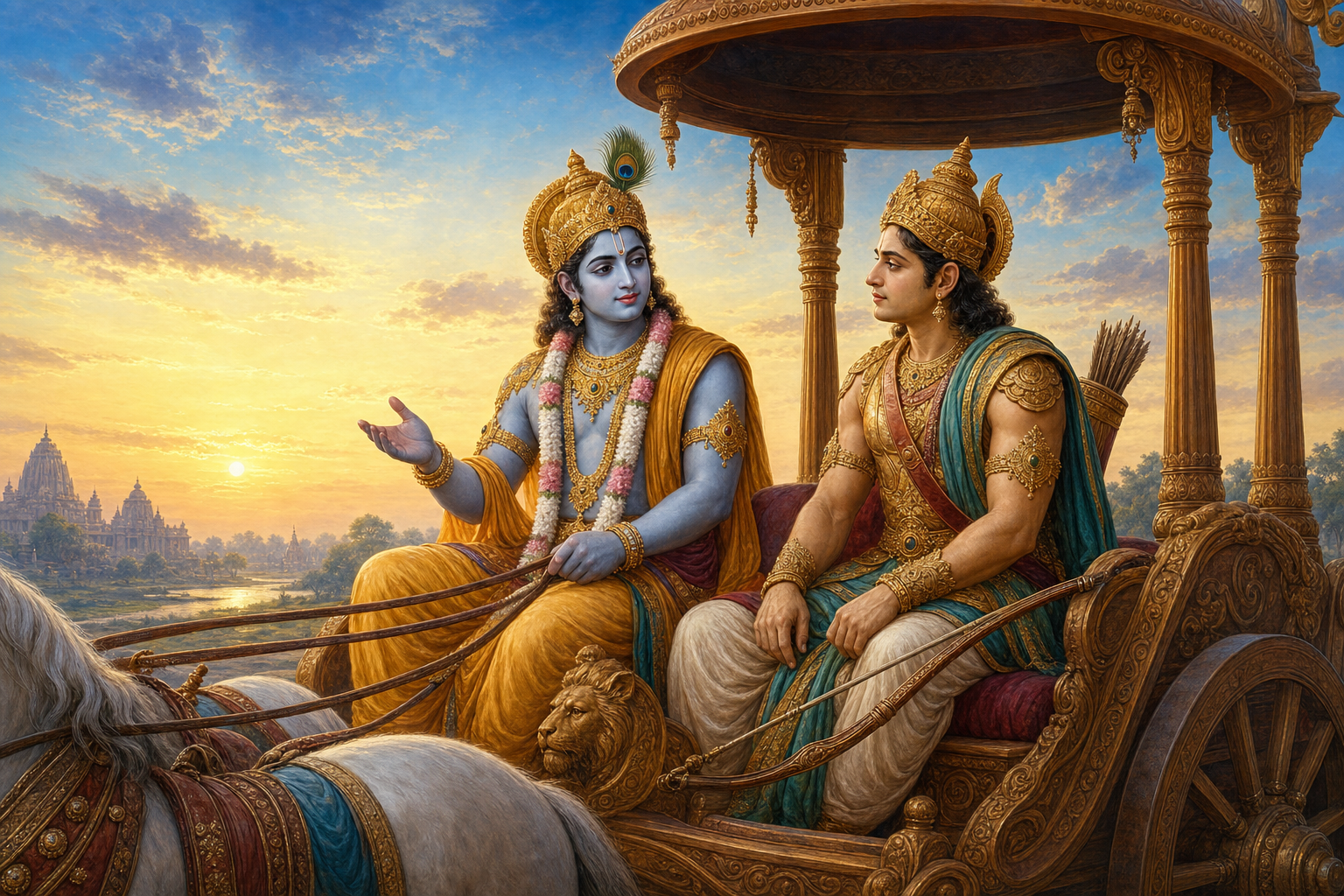
The name itself tells you how to approach the kshetra. Partha is Arjuna. Parthasarathy is Sri Krishna in his compassionate role as Arjuna’s charioteer and guide. In classical Tamil usage, palli can denote a place of learning or instruction. Parthan Palli can therefore be understood as the sacred place where Partha was taught.
The local sthala tradition remembers this as a place where Arjuna received transformative knowledge from Parthasarathy. That tradition should not be turned into a careless geographical claim that relocates the Bhagavad Gita from Kurukshetra. The Gita’s battlefield dialogue remains associated with Kurukshetra; Parthan Palli localizes the enduring pattern of that upadesa within Tamil sacred geography.
This distinction improves the pilgrimage. You do not have to prove that two sacred geographies are the same place. You can instead notice what the temple is preserving: a human being admits that he cannot see his duty clearly, listens to divine instruction and becomes capable of action. Parthan Palli is less about collecting information than learning how confusion can be disciplined by dharma, devotion and right guidance.
Its Divya Desam identity adds another layer. Parthan Palli belongs to the eleven sacred Thirunangur Divya Desams associated especially with Tirumangai Alvar. The continuing recitation of the Nalayira Divya Prabandham connects worship in this relatively intimate temple with the larger Sri Vaishnava tradition of Tamil revelation, temple service and loving surrender.
Read the shrine as a living lesson, not a monument
Parthan Palli does not need monumental scale to communicate its meaning. Its comparatively intimate setting directs your attention toward Parthasarathy Perumal, Thayar, the prakara and the devotional rhythm of worship. Puja, alankara, naivedya and Divya Prabandham recitation matter because this is a functioning sacred space, not an archaeological display.
When you enter, let the temple’s actual sequence lead you. Follow the instructions of the priest or local attendants, make room for regular worshippers and resist the urge to turn every pause into a photography opportunity. A generic online description cannot tell you which ritual is taking place during your visit or whether access has temporarily changed.
Notice the temple’s Vaishnava vocabulary without rushing to decode everything. Parthasarathy presents Bhagavan as both sovereign and guide. The conch and discus commonly associated with his iconography declare divine authority, while the charioteer identity brings that authority close to a person in crisis. Garuda represents steady service. Thayar’s shrine prevents the spiritual lesson from becoming a cold exercise in willpower: divine guidance is approached within a tradition of grace, relationship and surrender.
Circumambulation can slow the mind enough for that structure to become visible. The point is not to manufacture an unusual feeling. It is to become attentive enough to see whether fear, pride, attachment or haste is disguising itself as moral reasoning.
Bring one real dharma question to darshan
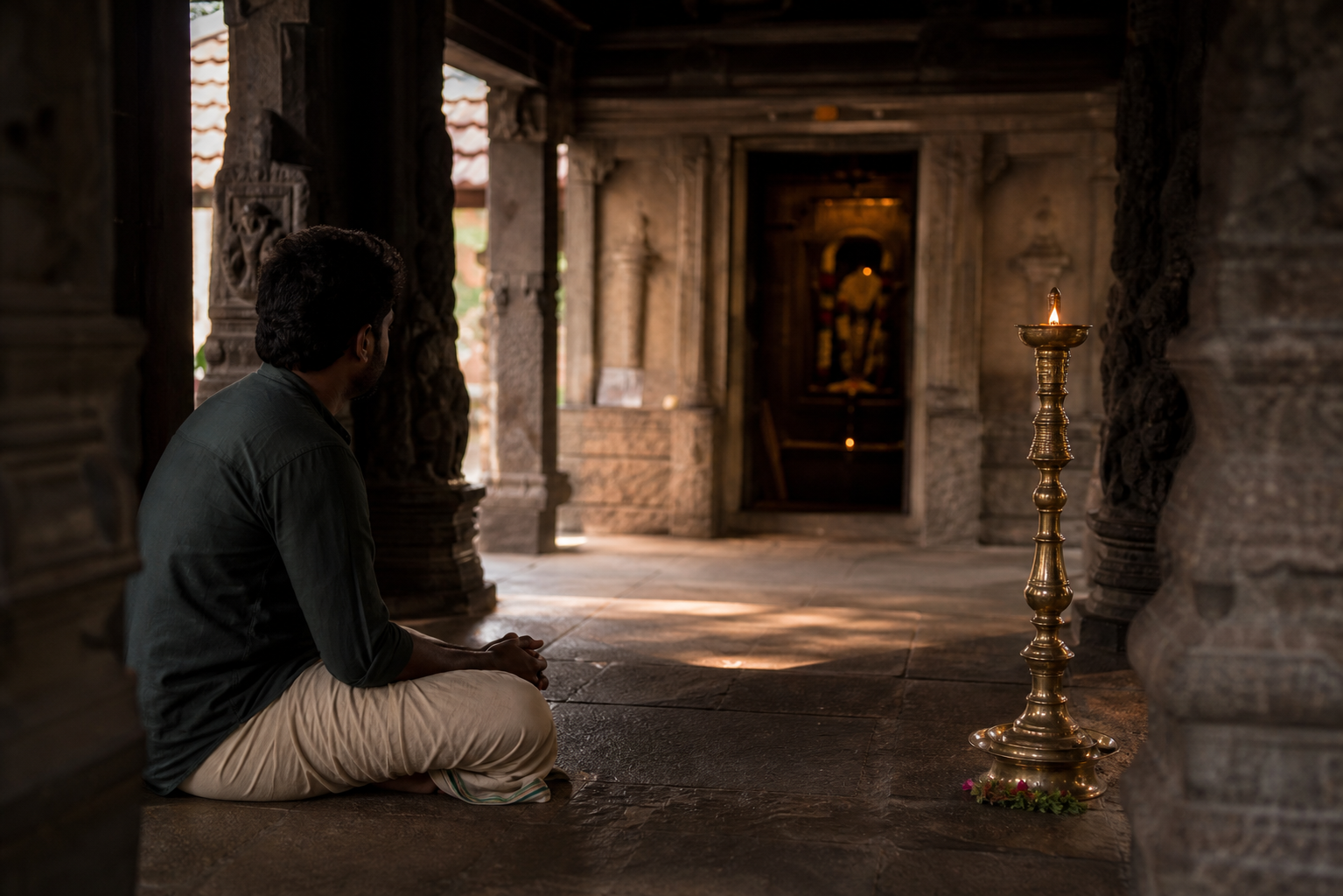
You will get more from Parthan Palli if you arrive with one honest question rather than a long list of wishes. The following reflection is a personal discipline, not a temple-prescribed ritual:
- State the decision plainly. Remove the explanation that makes you look virtuous and name what you are actually reluctant to do.
- Separate duty from outcome. Ask what responsible action is yours, then identify which result you are trying to control.
- Examine your need for approval. Arjuna did not need flattery from Krishna; he needed instruction capable of correcting him.
- During darshan, stop rehearsing arguments. Offer the confusion itself and allow silence, mantra and the form of Parthasarathy to interrupt your preferred answer.
- Before leaving the area, choose the next ethical action that is already within your control. Do not turn the search for perfect certainty into another form of avoidance.
This method draws on the temple’s central themes of karma-yoga, bhakti and discernment. It does not replace study of the Bhagavad Gita, instruction from a qualified acharya or careful consideration of the people affected by your decision. It helps you approach those disciplines with less self-deception.
The same pattern has wider Dharmic resonance. Hindu Upanishadic dialogues, Buddhist inquiry into suffering and right action, Jain attention to the many-sided character of truth, and Sikh reliance on the Guru’s liberating wisdom all refuse the idea that inner confusion is solved by impulse alone. Their doctrines are not interchangeable, but they share respect for disciplined inquiry, ethical conduct and guidance greater than the isolated ego.
Plan the visit around purpose, distance and temple rhythm
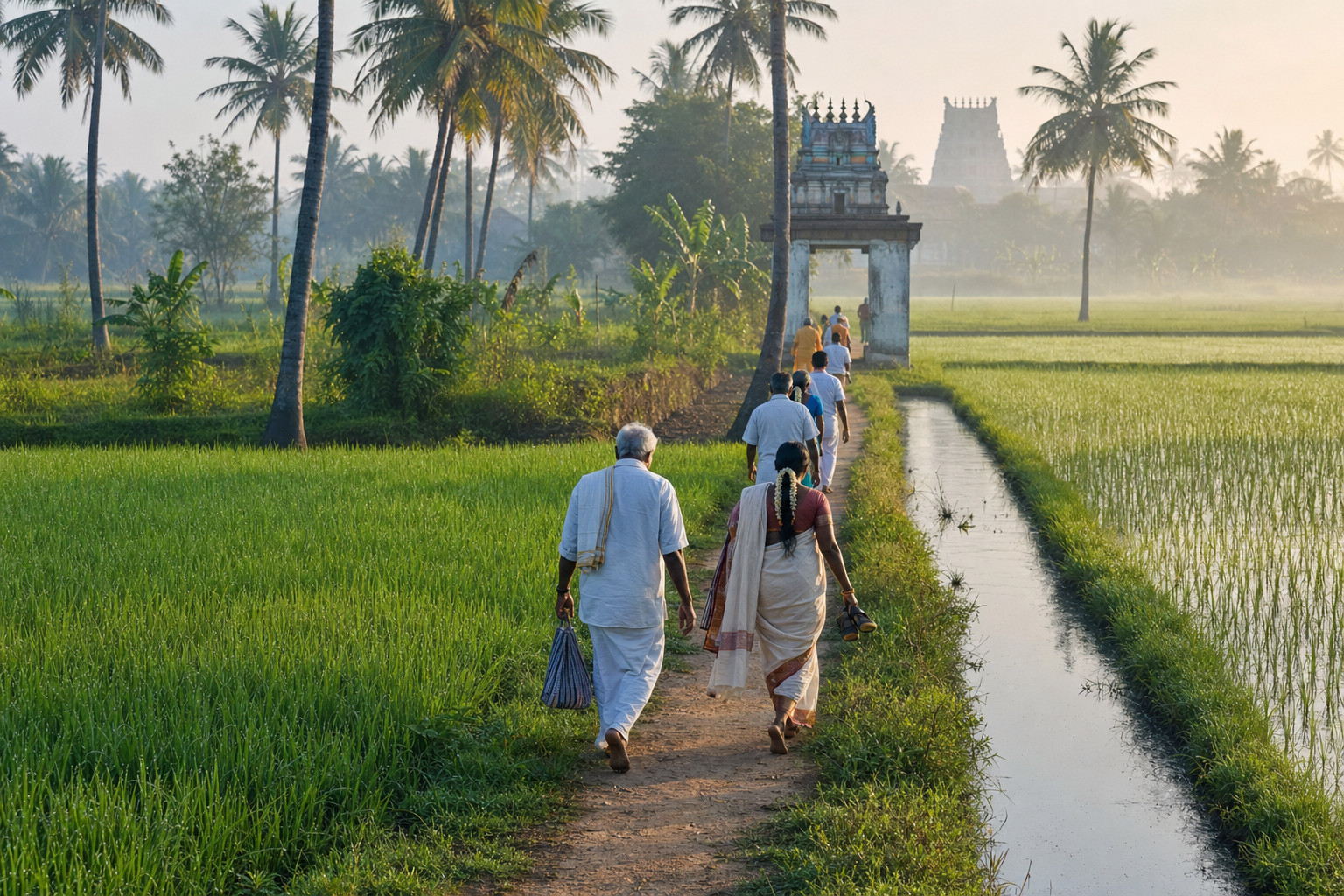
Sirkazhi is the practical base for this pilgrimage. Parthan Palli is situated near Thiruvenkadu and approximately fifteen kilometres from Sirkazhi along the Poompuhar road. The compact geography makes it possible to connect the temple with Thiruvenkadu, other Thirunangur Divya Desams and sites along the coastal corridor. Compact, however, does not mean that a rushed schedule will be spiritually or logistically satisfying.
- Choose a base: Use Sirkazhi for road access to the Thirunangur belt rather than repeatedly returning from a distant city.
- Choose a primary purpose: If Parthan Palli’s Arjuna tradition is the reason for your journey, give it unhurried time before trying to complete the entire cluster.
- Confirm changing details: Verify current opening hours, access directions and festival arrangements locally before departure. Do not build a tight route around an undated online timetable.
- Respect the climate: Travel outside the strongest heat window when possible, especially if you intend to visit several temples.
- Dress for worship: Wear modest clothing suitable for a functioning Vaishnava temple and follow local rules concerning entry, offerings and photography.
- Leave a buffer: Puja, travel between villages and festival movement do not always fit a checklist. Treat waiting as part of the pilgrimage rather than as lost time.
Many pilgrims combine worship at Thiruvenkadu, known regionally as a Budhan Sthalam, with darshan at Parthan Palli. You can include both without collapsing their purposes. Let an astrological remedy remain one practice and Parthasarathy’s lesson about duty and wisdom remain another. Tamil sacred geography often places different devotional needs close together; proximity does not require theological confusion.
Do not judge the day solely by the number of temples completed. If the eleven-shrine circuit becomes a race, the very place associated with the resolution of Arjuna’s confusion can become another unchecked item. A smaller route that leaves room for darshan, Prabandham recitation and reflection may serve you better.
Decide whether you want quiet darshan or Garuda Sevai
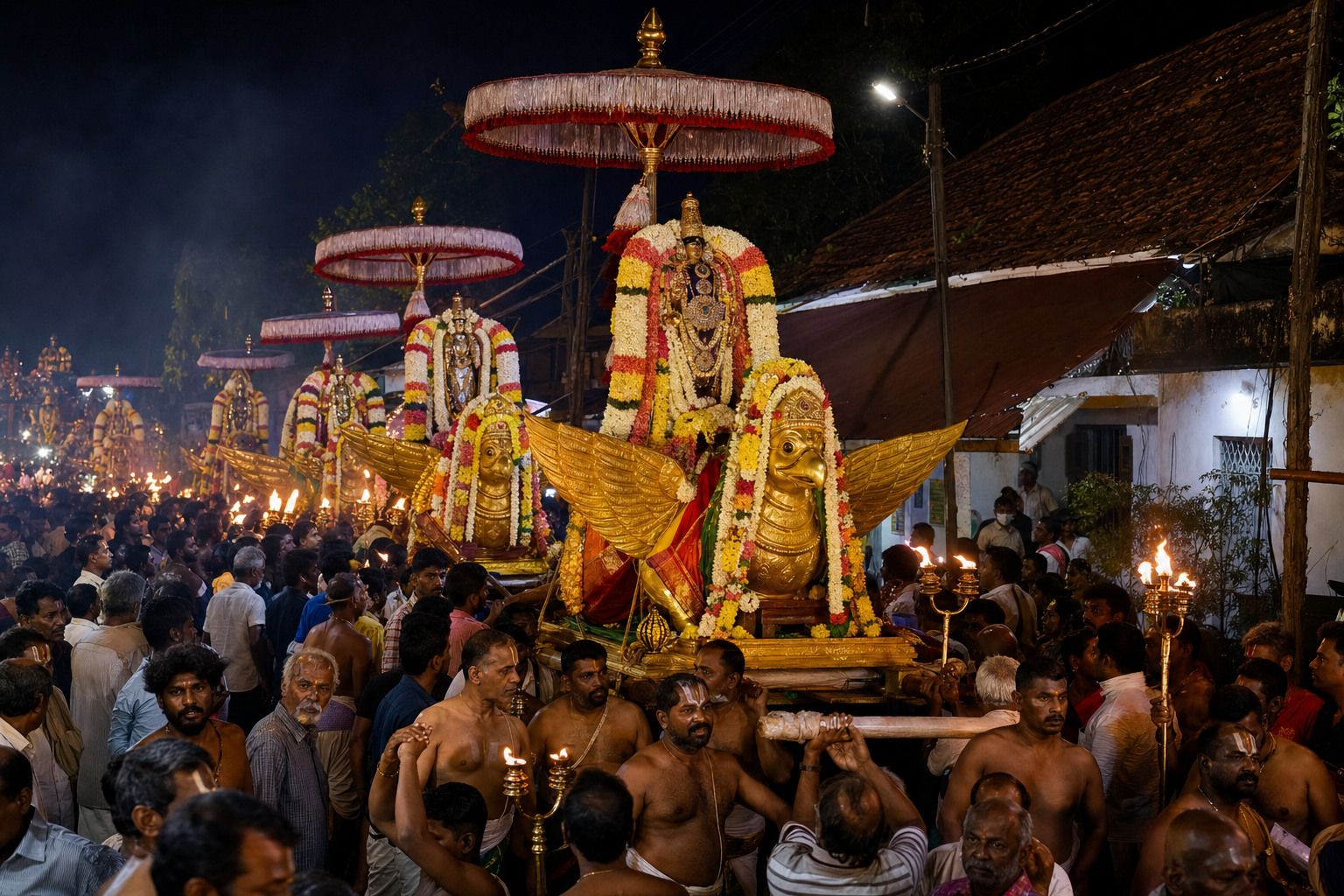
An ordinary visit and a festival visit reveal different dimensions of Parthan Palli. Neither is automatically superior; choose according to what you need from the journey.
On a quieter day, the temple’s intimate scale better supports sustained attention to Parthasarathy, the local tradition of instruction and your own dharma question. This is the better setting if you want to move slowly, observe the shrine and avoid having the circuit dominated by crowd movement.
The annual Thirunangur Garuda Sevai in the Tamil month of Thai offers a collective experience. The utsavar images from the eleven Thirunangur Divya Desams assemble, and Tirumangai Alvar’s pasurams for the individual kshetras are recited. The gathering makes the relationship among distinct temples visible: each retains its identity while participating in a shared Sri Vaishnava devotional world.
Garuda Sevai also brings substantially more people and movement. Arrive early, allow generous travel time and expect contemplation to occur within public devotion rather than solitude. Confirm the exact observance details locally, since knowing that the festival falls in Thai is not enough to plan transport for a particular year.
If circumstances permit, experience the festival and return on a quieter occasion. The festival teaches unity through assembly, poetry and shared worship; the quieter visit lets Parthan Palli address you as a place of instruction.
Key takeaways
- Parthan Palli is one of the eleven Thirunangur Divya Desams and is especially associated with Tirumangai Alvar’s Tamil Vaishnava tradition.
- Its local sacred memory concerns Arjuna receiving divine guidance from Parthasarathy; it expresses the pattern of the Gita’s instruction without relocating Kurukshetra.
- Sirkazhi is the practical base, with the temple near Thiruvenkadu and approximately fifteen kilometres away along the Poompuhar road.
- A quiet visit suits reflection and unhurried darshan; Garuda Sevai in Thai reveals the collective life of all eleven Thirunangur shrines.
- Confirm current timings, access and festival arrangements locally instead of relying on a rigid or undated itinerary.
- Bring one real question about duty, listen without demanding a preferred answer and leave with an ethical action already within your control.
Before setting out from Sirkazhi, write down the duty you are avoiding in a single sentence. Carry that sentence to Parthan Palli, place it before Parthasarathy without embellishment, and let your next step begin with clarity rather than perfect certainty.