
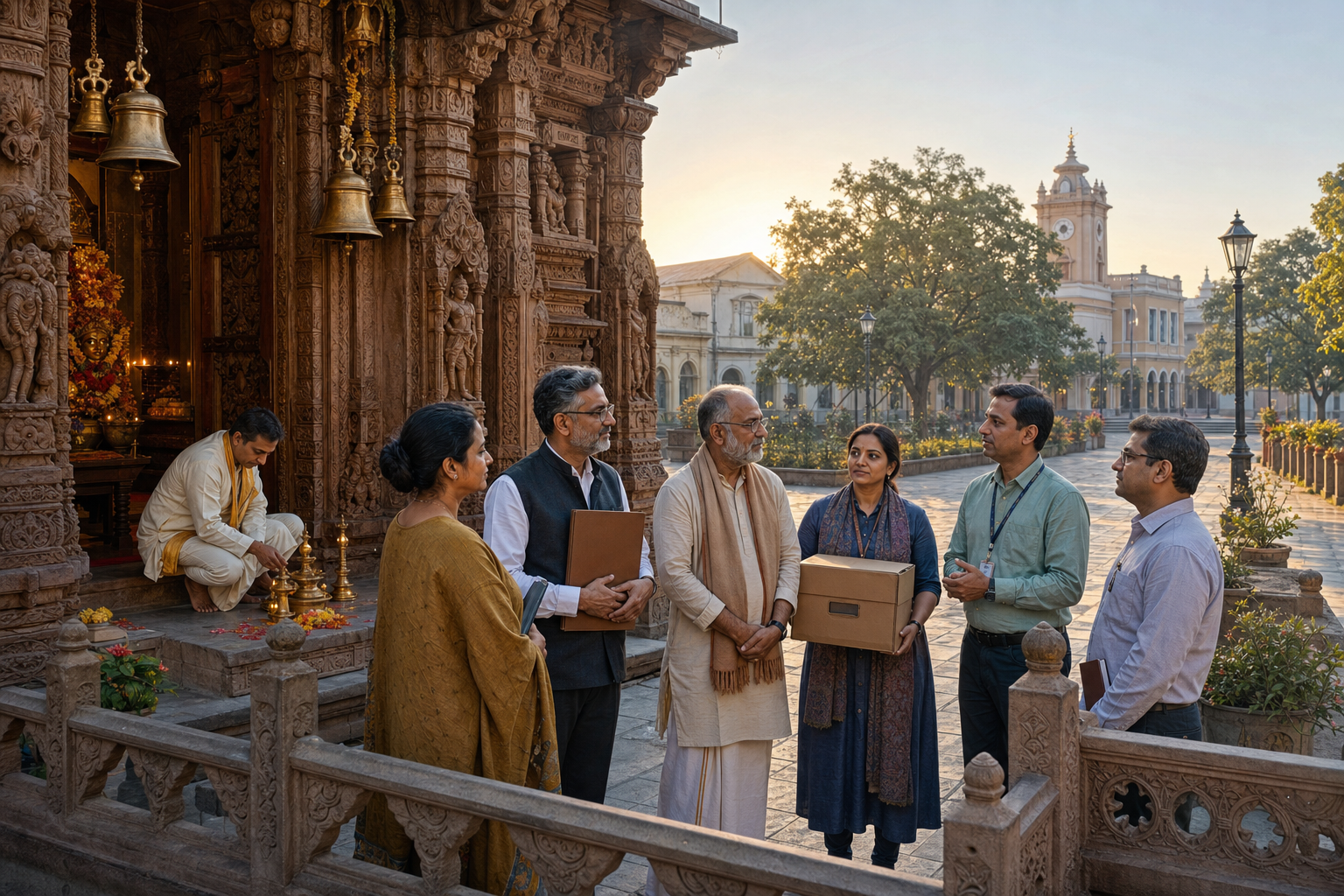
When a temple boundary is threatened or a deity’s image is used carelessly in public, your first instinct may be to react immediately. But speed without discipline can make the injury worse: an angry repost spreads the offensive image, a vague complaint is easy to dismiss, and a land claim becomes harder to defend when the temple’s own records cannot be found.
Effective protection has two parts. You must preserve the sacred boundary in public communication, and you must make the institution behind that boundary competent, transparent, and secure. Here is a practical way for devotees, trustees, priests, community groups, and communicators to do both.
Protect the sacred relationship, not merely the image
A sacred symbol is not decorative material that happens to have religious associations. A murti, deity image, temple emblem, ritual vessel, scripture, dhvaja, or sacred syllable carries relationships: who may approach it, what may be placed before it, how it is handled, and what kind of conduct belongs in its presence.
This is why visual placement matters as much as the object being shown. Proximity, frontal alignment, a shared central axis, common illumination, and the placement of one object directly before another tell the viewer how those objects are related. In an Indian religious setting, food positioned directly before a deity will ordinarily be read as naivedya, not as an unrelated product floating elsewhere in the design.
The distinction became clear when a Vishu restaurant creative placed chicken mandi before an image of Shri Krishna. The issue was not that chicken mandi has no place in Kerala’s plural culinary culture. The composition appeared to place meat before a deity whose Vaishnava offerings are vegetarian and sattvic. The visual grammar converted an ordinary commercial dish into an apparent ritual offering, whether or not the designer intended that meaning. Understanding that ritual relationship explains the objection more precisely than a generic claim that feelings were hurt.
Precision matters because not every uncomfortable use of a religious motif is the same. Before you respond, distinguish among four situations:
- A clear ritual violation: the composition places an incompatible object, gesture, or message in a recognizably sacred relationship.
- Commercial appropriation: sacred imagery is being used to attract attention or sell something without respecting its meaning.
- Careless ambiguity: the creator may not have intended an insult, but the layout predictably communicates one.
- Deliberate provocation: the context supplies credible evidence that desecration, ridicule, or social escalation was the aim.
Do not collapse these categories. Intent affects the appropriate remedy, even when the impact is real. An ignorant design error may call for withdrawal, apology, and a better review process. Deliberate desecration may require a formal institutional and legal response.
Use four questions to make your objection intelligible to someone outside your tradition:
- Which exact image, object, place, or practice is sacred?
- What relationship does the placement or action create?
- Which tradition-specific rule or expectation does that relationship violate?
- What correction would restore the boundary without spreading the misuse further?
This approach protects religious pluralism as well as Hindu dignity. Respect does not require everyone to share the same practice. It requires people to avoid converting another community’s object of worship into a careless commercial prop or an incompatible ritual scene.
When a symbol is misused, respond in an order that works
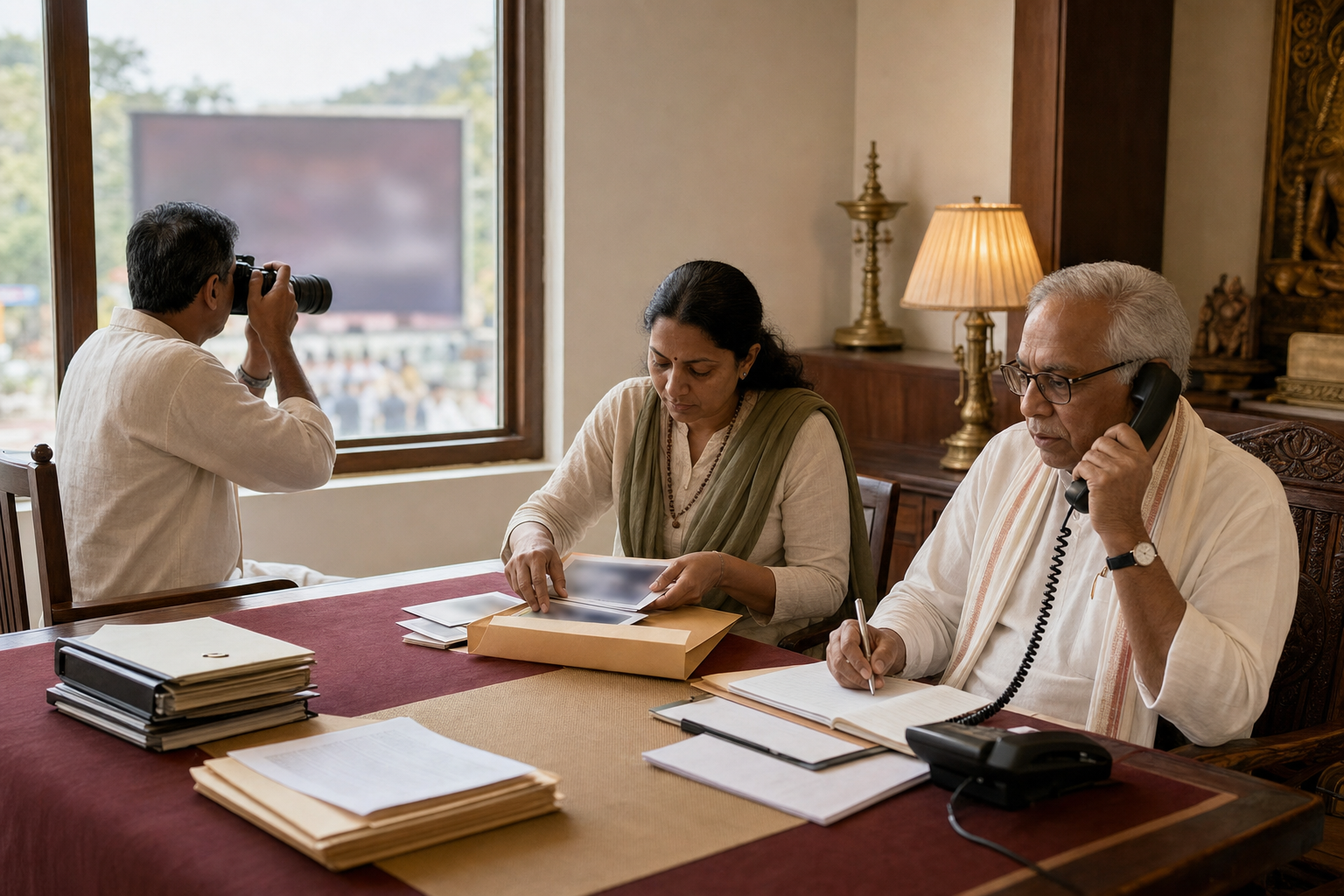
A public response should stop the misuse, obtain a meaningful correction, preserve evidence, and prevent recurrence. It should not create a larger audience for the offending material or expose uninvolved people to harassment.
- Preserve the original context privately. Save the original link, complete image or video, caption, account name, and relevant surrounding material. A cropped screenshot can remove the very context needed to distinguish incompetence from provocation. Keep the record with the organization or responsible advocate; do not circulate it merely to intensify outrage.
- Verify what happened. Check whether the material came from an official account, an outside agency, an impersonator, or a later alteration. Look for the original publication rather than relying on a forwarded screenshot.
- Describe the breach in concrete terms. Name the sacred element, the visual or physical relationship, and the violated norm. Instead of saying only that the content is offensive, explain that placing a meat dish on the same devotional axis as Shri Krishna makes it appear to be naivedya, which conflicts with Vaishnava ritual practice.
- Ask for a proportionate remedy. A useful request normally identifies the content to be withdrawn or revised, the clarification or apology required, and the internal change that will reduce the chance of repetition. An apology without process reform closes the incident but leaves the cause intact.
- Choose a responsible representative. A temple trustee, recognized priest, Dharmic organization, or designated community spokesperson can communicate more clearly than hundreds of contradictory social-media accounts. Give that person the evidence, the requested remedy, and authority to speak within agreed limits.
- Escalate only on verified facts. If the publisher refuses correction, the misuse is deliberate, property is endangered, or credible threats have appeared, obtain advice from a qualified advocate familiar with current law and local procedure. Criminality depends on applicable legal elements, evidence, context, and due process; public anger or an arrest is not proof of guilt. Do not threaten, dox, encourage physical confrontation, or identify private individuals who were not responsible.
- Close the loop publicly. If the harmful material circulated widely, publish a short factual update when it is corrected. State what changed and what safeguard was adopted. Do not keep reproducing the original image after the remedy has been achieved.
A concise first communication can follow this structure: “The creative places [sacred element] in a visual relationship with [incompatible element]. In [named tradition or observance], that placement signifies [ritual meaning], which is why devotees understand it as a violation rather than a neutral juxtaposition. Please withdraw the material, issue a clear correction, and add a community review to future festival campaigns.”
This wording does not minimize the injury. It makes the injury difficult to misunderstand and gives the other party a clear path to repair it.
A sacred institution needs records as much as reverence
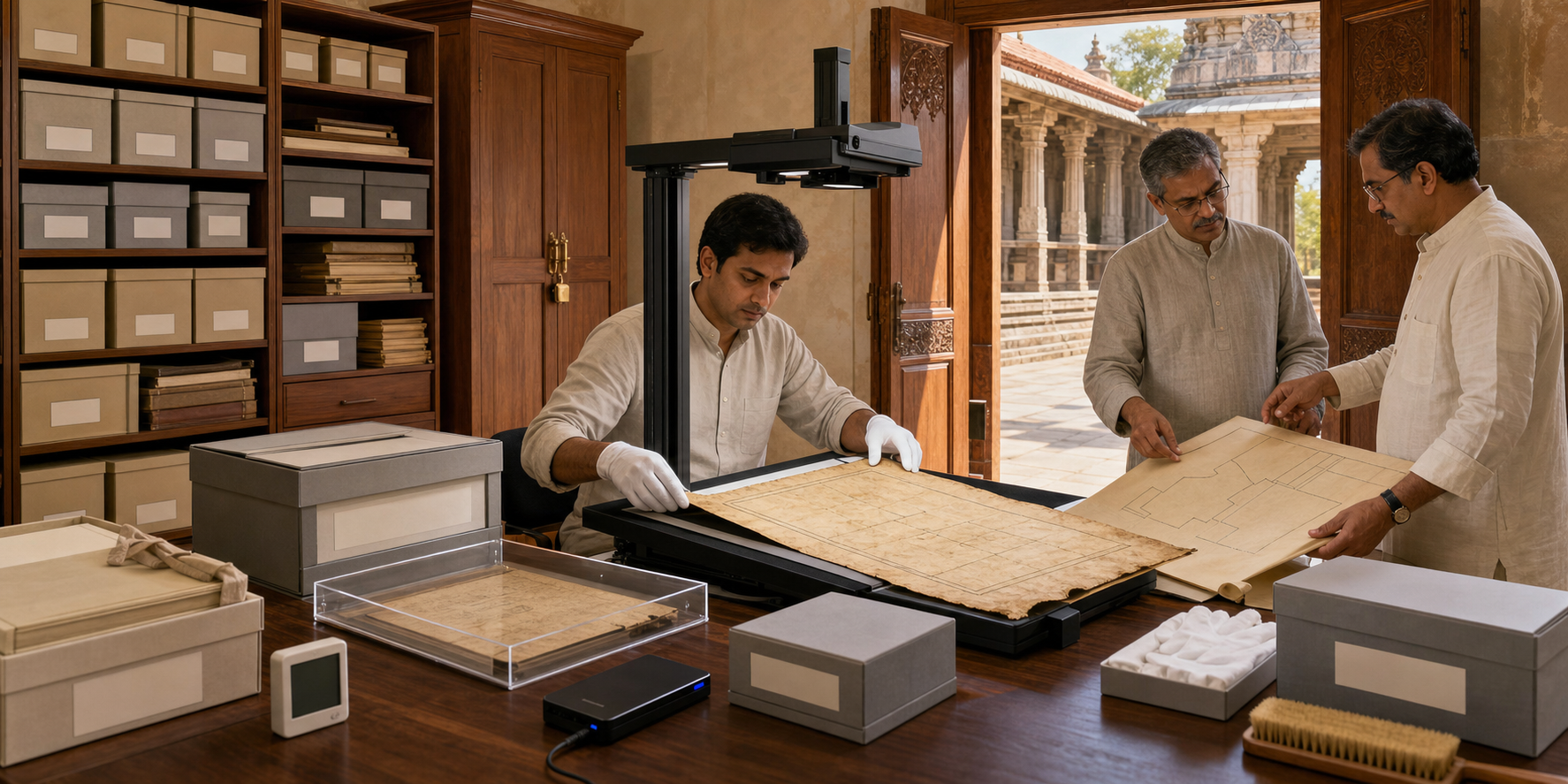
Public controversies are visible, but institutional weakness often does greater damage over time. A temple cannot protect land, heritage, donations, ritual continuity, or devotees through goodwill alone. Its administration should be strong enough that a missing trustee, contested boundary, electrical fault, or compromised digital account does not place the whole institution at risk.
Build one authoritative property record
Every temple should have a canonical property file rather than fragments held by different office-bearers. At minimum, organize the trust deed and registration material, title documents, khasra extracts, official maps, mutation records, leases or licenses, court and administrative orders, notices, and a dated record of the physical boundary.
Compare the official record with conditions on the ground. Geotag important boundary points and use map or GIS overlays where appropriate. Log discrepancies instead of waiting for a dispute. When a court order or administrative decision changes the record, track the corresponding mutation or registry update until it is complete.
Maintain an evidence chain for every encroachment concern: what was observed, who recorded it, which official record applies, what notice was sent, and how the recipient responded. Do not confront suspected encroachers physically or attempt an irreversible self-help remedy. Preserve the site evidence and proceed through a qualified advocate and the appropriate authority.
Smaller temples may not be able to retain their own surveyor or legal team. A district or state federation can pool legal panels, model documents, record-management training, and a land-protection cell. A representative structure with district chapters and dedicated committees for land, finance, ritual, heritage, and education lets institutions share competence without erasing local custom.
Make every donation traceable
Financial opacity weakens moral authority even when no theft has been proved. Write down how money is collected, counted, deposited, approved, spent, and reported. Use dual custody for hundi collections, issue electronic receipts for digital donations, establish approval thresholds, document vendor selection, and arrange periodic internal and external audits.
Separate duties wherever practical. The person authorizing a payment should not be the only person recording and reviewing it. Maintain a risk register for recurring vulnerabilities and provide a protected route for priests, employees, volunteers, or devotees to report misconduct. A complaint process must also guard against retaliation and malicious accusation.
Publish an annual report that an ordinary devotee can understand. It should show the institution’s major activities, donation and expenditure categories, heritage work, seva programs, material risks, and completed audits. Transparency is not a concession to suspicion; it is how trustees demonstrate that offerings are being handled as a trust.
Protect both the structure and the living tradition
Heritage work fails when it treats a functioning temple as either an ordinary building or a museum object. Arrange periodic condition assessments and record moisture, termite activity, and structural concerns. Shikharas and dhwajasthambhas may require specialist consideration of wind and seismic loads. Restoration decisions should involve conservation expertise as well as the people responsible for ritual practice.
Document the intangible heritage too: the ritual calendar, alankara traditions, music, craft knowledge, local oral histories, inscriptions, manuscripts, and sampradaya-specific procedures. Documentation should support transmission, not replace the authority of qualified practitioners. Record who validated the material and which local variations must be preserved.
Devotee safety belongs inside sacred stewardship. Map crowd flow for peak observances, keep emergency exits usable, inspect fire and electrical systems, establish women-and-child safety procedures, and test evacuation arrangements. CCTV can support security, but access, retention, and placement need privacy safeguards. Drills and signs should use languages the local devotee population can understand without turning the temple into an atmosphere of alarm.
Treat digital access as institutional access
A temple’s website, donation account, social channels, pilgrim data, and online seva system are extensions of the institution. Do not let them depend on one volunteer’s personal login. Use controlled administrative access, maintain backups, document who can publish or change payment information, and remove access when a role ends.
Publish a privacy policy for data collected through donations, bookings, or volunteer forms. Create a moderation rule for comments and user-submitted material. Online darshan or seva scheduling can reduce peak-day confusion, while UPI payments and public annual reports can improve access and accountability, but convenience should never obscure who controls the account or how devotee data is protected.
Set public-use rules before the festival campaign arrives
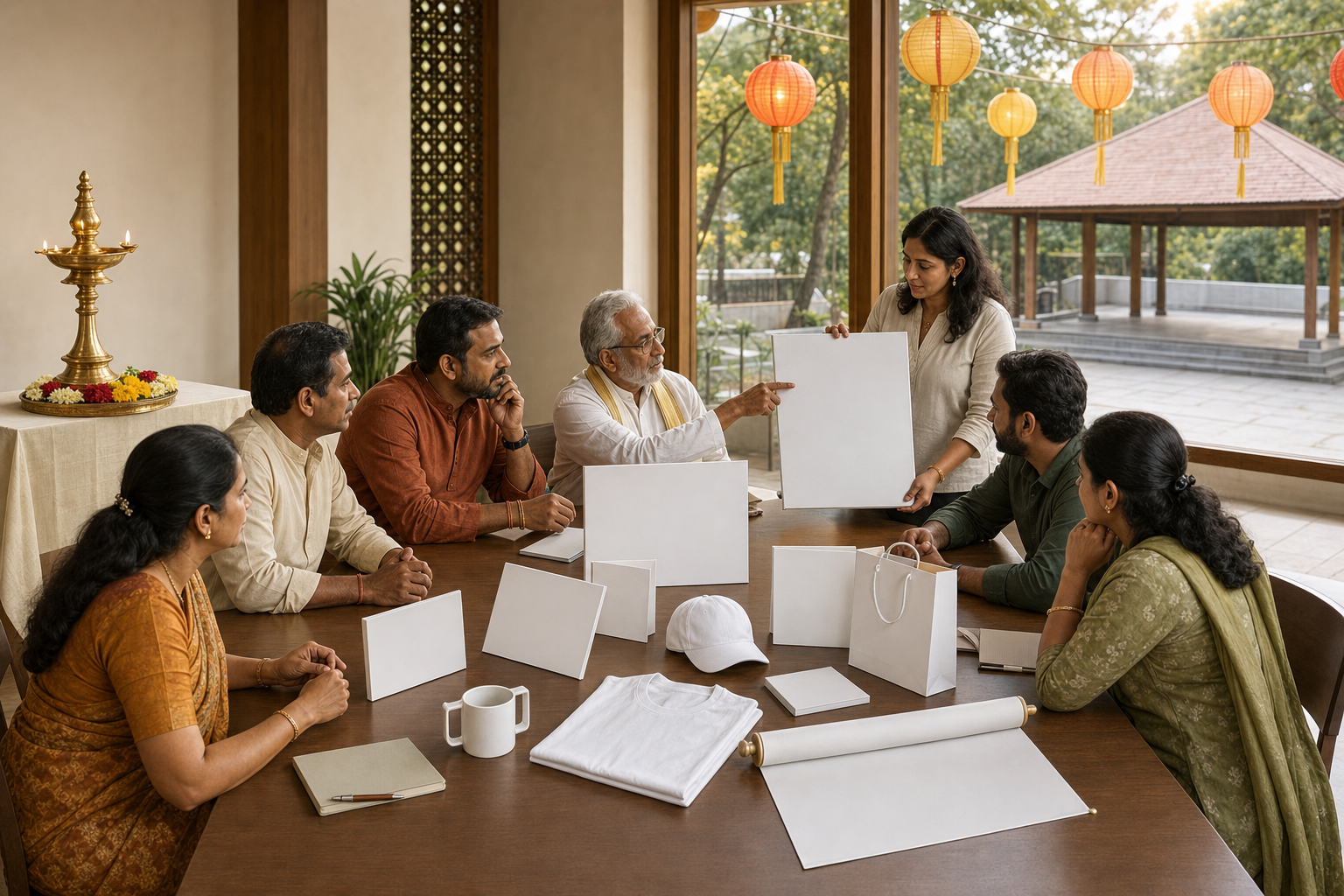
A restaurant, agency, media team, school, municipality, or festival organizer should not wait for a controversy to learn the grammar of sacred imagery. The safest policy is not a ban on religious expression. It is a review system that knows the difference between respectful celebration and a composition that assigns an unintended ritual meaning.
- Identify the precise tradition. “Hindu” is often too broad for a design decision. Record which deity, festival, temple tradition, region, or sampradaya is represented and which practices are relevant.
- Review relationships, not isolated assets. Examine proximity, alignment, scale, foreground placement, common framing, gestures, and lighting. Ask what the complete scene appears to offer, endorse, ridicule, or subordinate.
- Write down red lines. Do not place meat, alcohol, footwear, or other incompatible products before deities, temple sanctums, or sacred symbols. Do not use a murti as a product stand, decorative surface, costume accessory, or disposable prop.
- Use a locally informed reviewer. A person familiar with the relevant practice should examine the near-final composition, including the caption and product placement. Asking for feedback after publication is crisis management, not review.
- Require cross-functional approval. Creative, legal, and community-relations reviewers should each have a defined role. The community reviewer explains ritual meaning; the creative reviewer fixes the composition; the legal reviewer identifies exposure without pretending that technical legality settles whether the design is respectful.
- Prepare an incident procedure. Name who can withdraw content, who verifies the complaint, who speaks to affected institutions, and who approves an apology. The procedure should favor prompt correction, factual language, and a specific prevention measure.
There is no shortage of respectful visual vocabulary. A Vishu campaign can use kani konna blossoms, a nilavilakku, an uruli containing raw rice and coins, fruits, vegetables, a mirror, or the light of dawn entering a pooja room. If Shri Krishna is shown, keep the devotional image free of incompatible commercial food placement. If the product itself creates the conflict, leave the deity out and celebrate the festival through non-sacred regional motifs.
Dharmic solidarity also requires attention to difference. Hindu naivedya, Jain dietary discipline, Sikh langar, and Buddhist monastic practice do not follow one interchangeable rulebook. Their convergences around reverence, hospitality, restraint, and ahimsa can support cooperation, but cooperation must not flatten the practices that make each path distinct.
Key takeaways for trustees, devotees, and communicators
- Explain a symbolic violation by naming the sacred element, the relationship created, and the tradition-specific norm that was breached.
- Preserve evidence privately, verify the context, request a defined remedy, and avoid amplifying offensive material merely to display outrage.
- Do not make criminal accusations from sentiment alone. Where legal action may be necessary, use verified facts, current legal advice, and due process.
- Protect temples through complete land records, traceable finances, heritage assessments, safety procedures, controlled digital access, and public reporting.
- Review festival communication as a complete visual scene. Proximity and alignment can communicate an offering or act of reverence even when the creator did not intend one.
- Pool expertise through temple federations or district networks while preserving each institution’s sampradaya, ritual authority, and local custom.
Choose one bounded task now. If you are a trustee, open the temple’s property file and identify the first missing record. If you manage public communication, add a sacred-imagery review to the next campaign brief. If you are a devotee or cultural advocate, agree on a response protocol before the next controversy arrives. Sacred institutions remain strong in public life when reverence is supported by evidence, competence, restraint, and the courage to draw a precise boundary.
References
- DharmaRenaissance Blog – Chhattisgarh Mandir Mahasangh: A Bold Plan to Protect Temples and Renew Dharmic Heritage
- DharmaRenaissance Blog – Kerala Vishu Poster Furor: Chicken Mandi Before Shri Krishna Spurs Arrest, Harmony Lessons