

If you are trying to decide whether the Ramayana endorses war, unquestioning obedience, or the sacrifice of private happiness for public office, a single appeal to “dharma” will mislead you. The epic tests several duties at once: duty to justice, duty within an office, duty to family, duty to subjects, and duty toward an adversary.
The practical answer is demanding. Force may serve dharma, but only for a just end, after peaceful remedies have been pursued, under moral limits that survive the start of battle. Kingship increases accountability rather than privilege. Loyalty deserves respect, but it cannot turn an unjust command into a righteous one.
A righteous cause must survive four questions
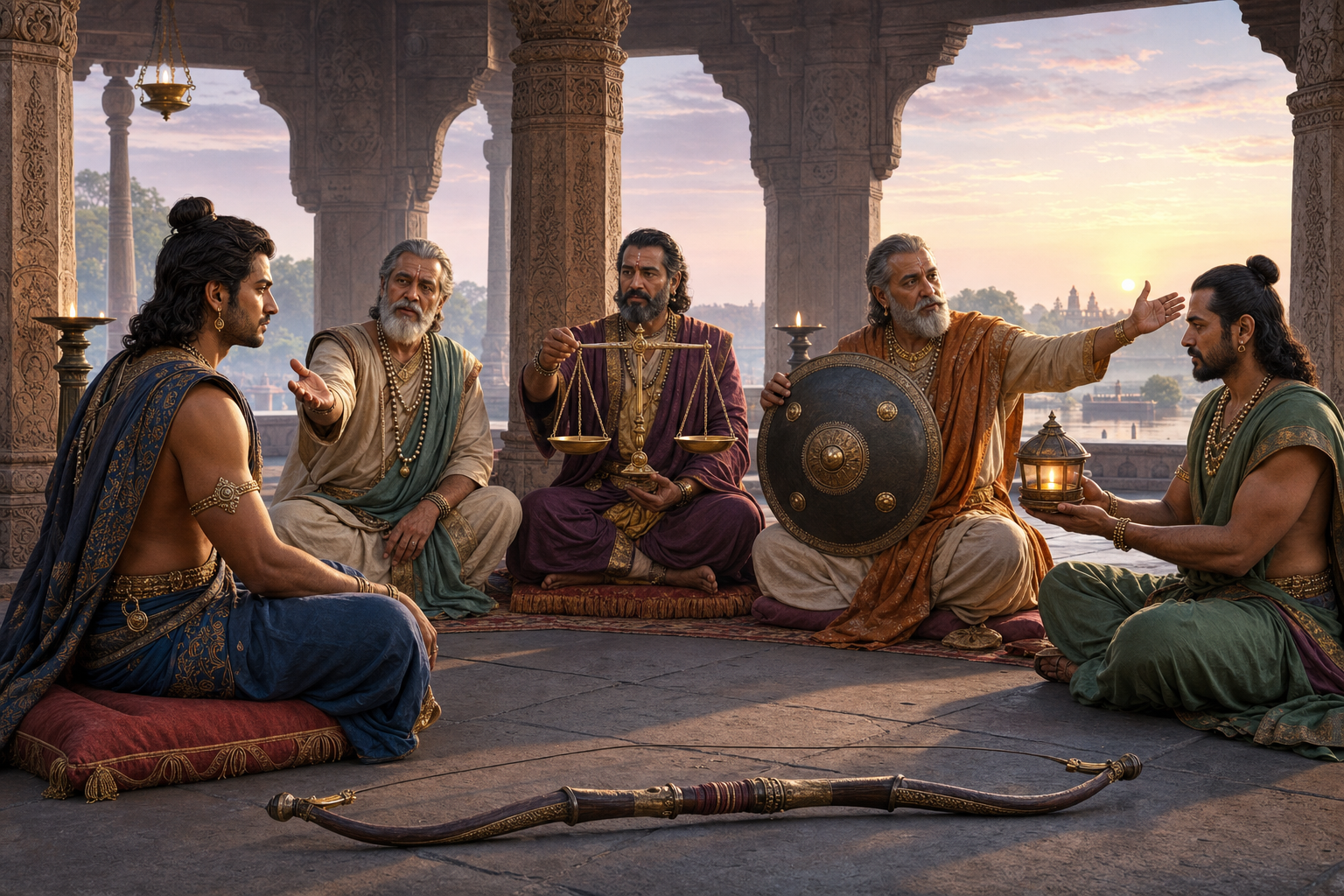
Rama’s campaign begins with a specific wrong: Ravana has abducted Sita and refuses to restore her. The intended end is also specific. It is the recovery of Sita and the restoration of moral order, not the acquisition of Lanka as a prize. That distinction separates corrective force from conquest.
War is not the first morally relevant act. Counsel, warning, intelligence, and diplomatic opportunities precede the decisive fighting. Within Lanka itself, Vibhishana urges Ravana to return Sita, while Malyavan also counsels peace. Their presence matters: Ravana is not trapped by ignorance or deprived of an alternative. He repeatedly chooses possession, pride, and sovereign defiance over restitution.
This is why military capability cannot settle the moral question. Lanka has fortifications, intelligence operatives, elite formations, experienced commanders, and a formidable commander-in-chief in Prahasta. Yet discipline and strategic sophistication remain attached to Ravana’s refusal to correct the original injustice. Victory would not have made that refusal righteous.
Before you describe any conflict as dharma-yuddha, ask four questions:
- What exact wrong is being corrected? Name the violated person, duty, or order. “Our side must prevail” is not a just cause.
- What would restoration look like? A righteous objective should have a stopping point. If the aim expands from repair to humiliation, possession, or permanent domination, the cause has changed.
- Which peaceful remedy was genuinely available? A warning offered merely to justify a predetermined attack is not the same as an honest attempt at settlement.
- Who has authority to act, and what limits bind that authority? Power alone is not legitimacy. A leader must be answerable for both the decision to use force and the manner in which it is used.
These questions prevent a common misreading. Dharma-yuddha does not mean that everything done by the side identified with dharma becomes righteous automatically. The cause, intention, means, and end must remain aligned.
War remains subject to dharma after it begins
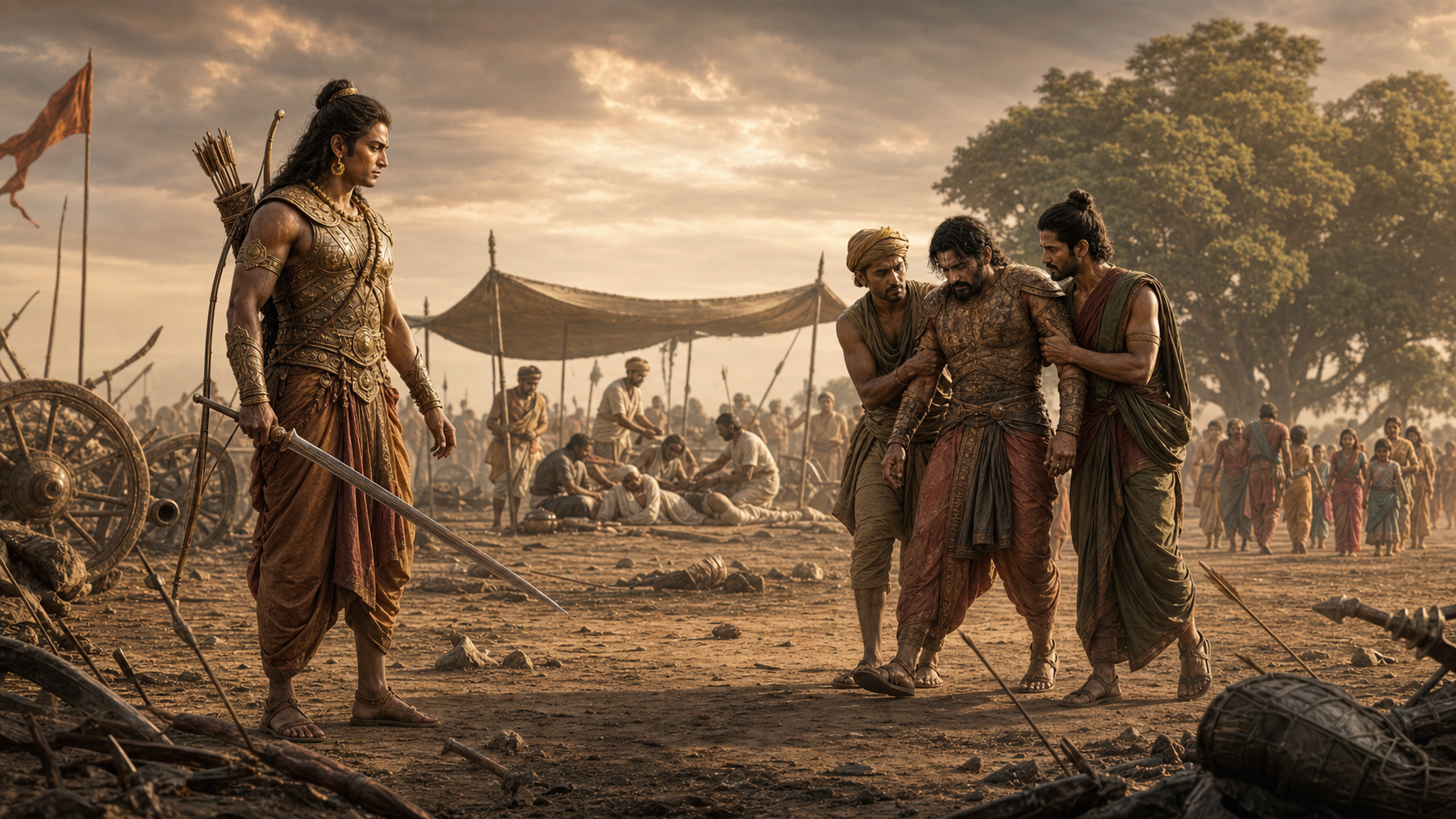
Three ideas help keep the moral terrain clear. Rajadharma concerns the responsibilities of rule. Kshatra-dharma disciplines those entrusted with force. Dharma-yuddha asks whether the resort to war and the conduct of war remain ordered toward justice. They overlap, but none can replace the others. A warrior may be courageous while serving an unjust policy, and a king may possess authority while using it wrongly.
The release of Shuka and Sarana makes the distinction concrete. Ravana’s operatives enter Rama’s camp, are discovered, and are allowed to depart unharmed rather than being killed as messengers. The enemy’s conduct does not cancel Rama’s obligations. Restraint is valuable precisely when retaliation would be easy.
The battlefield itself is fierce. Nila’s combat with Prahasta ends in the fall of Lanka’s commander and the rout of his formation. Ethical restraint therefore does not mean pretending that war can be harmless. It means refusing to make necessity an excuse for cruelty, vengeance, or violence against people who are not legitimate objects of combat.
If you are evaluating whether force remains morally bounded, look at conduct at three moments:
- Before action: Were peaceful remedies attempted in good faith, and were dissenting voices heard?
- During action: Are envoys, captives, and noncombatants protected? Is force limited to what the corrective purpose requires?
- After success: Does action stop when the wrong has been remedied, or does victory become permission for revenge and expansion?
Different dharmic traditions place the boundary around violence differently. Hindu discussions of kshatra-dharma allow ethically constrained force; Buddhist thought emphasizes compassion and the karmic burden of harming; Jain thought presses the demand of ahimsa most rigorously; Sikh dharam yudh permits the defense of justice when peaceful means have failed. These are not identical doctrines. Their shared warning is narrower and stronger: violence carries a moral burden, and neither communal identity nor noble language makes that burden disappear.
Kingship turns private certainty into public responsibility
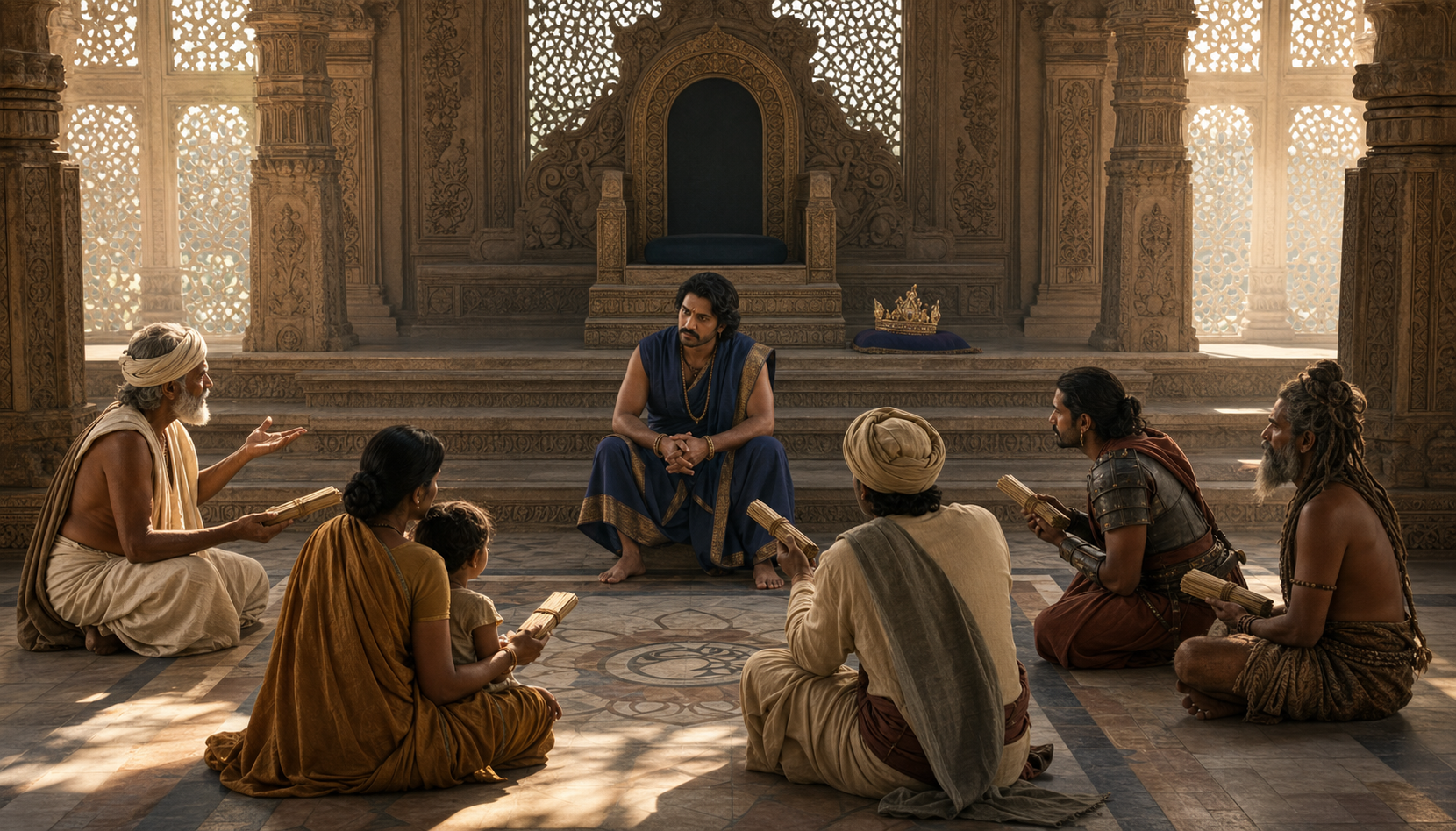
Rama’s hardest decisions cannot be understood by treating him only as a husband or only as a king. Rajadharma places personal knowledge, public confidence, institutional stability, and responsibility for vulnerable people into the same decision. The resulting conflict is tragic because no slogan makes every duty fit neatly.
The Agni Pravesha and Sita’s later exile are often merged into one event, but they present different problems. The Agni Pravesha follows Ravana’s defeat in the Yuddha Kanda and publicly affirms Sita’s purity through Agni as witness. The exile belongs to the Uttara Kanda and arises from a crisis of public suspicion, even though Rama knows Sita to be pure. Later theological retellings introduce Maya Sita, in which the real Sita had been entrusted to Agni and is returned after the war. These traditions consistently protect Sita’s honor while explaining Rama’s burden through different theological frames.
That distinction does not turn either episode into a procedure for modern justice. An ordeal by fire is not a legitimate contemporary test of truth. Nor should public gossip automatically overrule evidence. The enduring question is more difficult: what does a ruler owe the public when private certainty and public confidence diverge, and who will bear the cost of restoring that confidence?
Sita bears the immediate and disproportionate cost of the decision. Her residence in Valmiki’s ashrama provides protection and honor, but safety does not erase separation or loss. Her later appeal to Bhumi Devi, and the appearance of Lava and Kusha as reciters of the Rama-katha, return the unresolved truth to the center of the polity. Public reputation cannot permanently close a case that justice has not healed.
When a leader invokes institutional trust to justify a painful decision, four lines should therefore be written down before acting:
- Fact: What is actually known, and what remains allegation or perception?
- Burden: Who will pay for the decision? Is the person with the least power being made to absorb most of the cost?
- Protection: What concrete safeguards preserve the affected person’s dignity, security, and ability to speak?
- Vindication: What process allows truth to re-enter public life after the immediate crisis has passed?
Rajadharma cannot be reduced to protecting the ruler’s image. It requires the ruler to accept personal loss, protect those exposed by the decision, and remain answerable when the polity’s judgment proves inadequate. Anyone using Rama’s kingship to defend a modern decision should be prepared to meet that full standard, not merely claim that “the institution came first.”
Loyalty is a duty, but never the highest duty
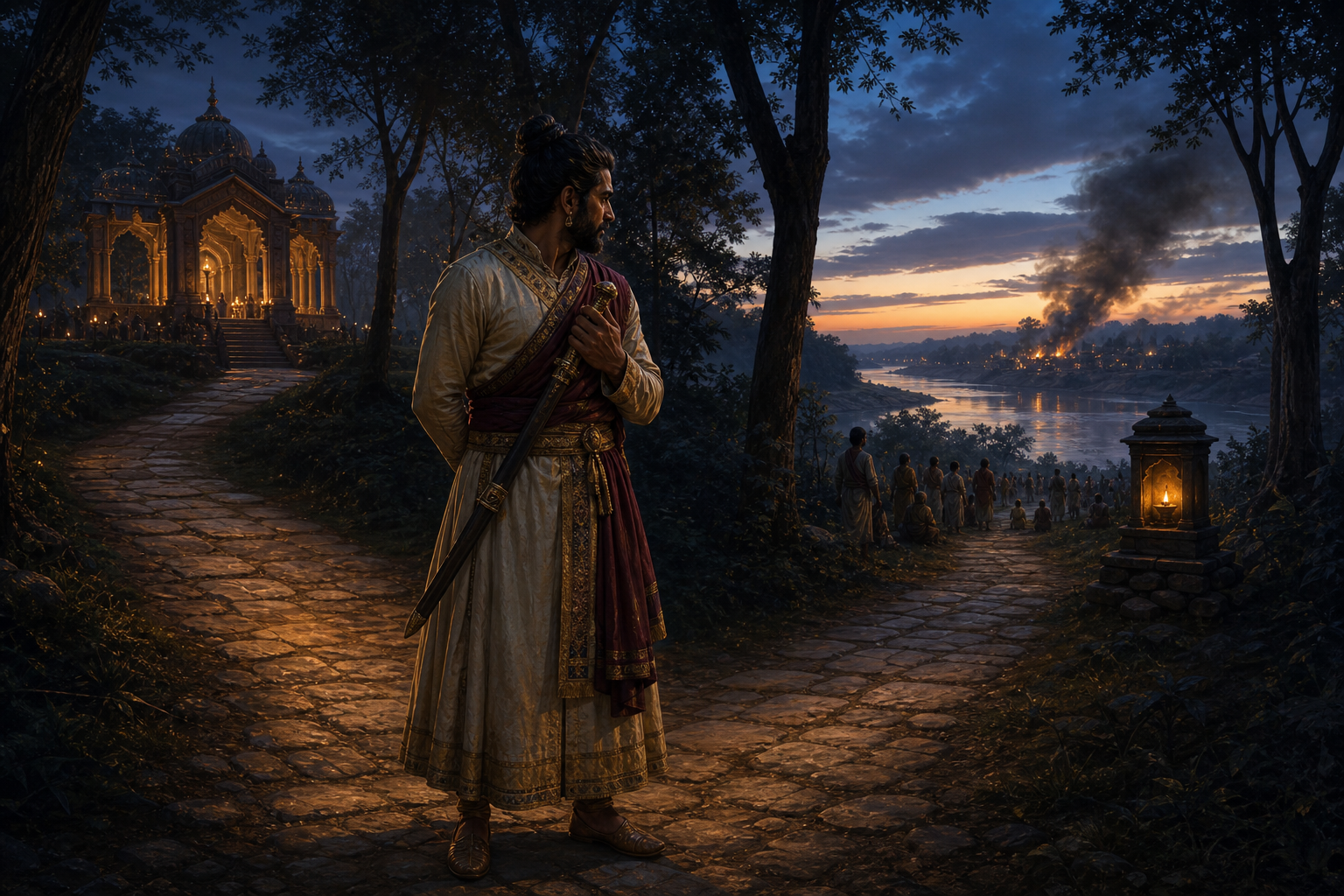
Prahasta sharpens the problem of obedience because he is not portrayed as an incompetent subordinate. He belongs to Lanka’s ruling family, serves as commander-in-chief, helps organize its defenses, operates within its strategic councils, and directs disciplined forces. His ability makes his choice more morally significant, not less.
Vibhishana and Prahasta face the same underlying crisis from different positions. Vibhishana places the return of Sita and the correction of adharma above kinship with Ravana. Prahasta continues to execute Lanka’s war policy. The contrast reveals a hierarchy of duties: service to office and family is real, but allegiance to dharma stands above both.
This does not require you to vilify Prahasta or deny his courage. Moral judgment becomes clearer when it can distinguish personal excellence from the justice of the mission. His eventual fall to Nila breaks a central pillar of Lanka’s command structure, but the deeper failure precedes the battlefield. It occurs when professional skill is placed at the service of an injustice that Lanka’s own counsellors have already identified.
If your role asks for loyalty while your conscience identifies a serious wrong, use a response ladder rather than jumping from silent compliance to impulsive rebellion:
- Clarify the mission. Separate the stated objective from the act you are actually being asked to perform.
- Name the conflict. Explain which duty, promise, person, or principle the command would violate.
- Offer a corrective course. Vibhishana does not merely condemn Ravana; he identifies restitution – returning Sita – as the route away from disaster.
- Use legitimate channels of dissent. In a contemporary military, civil service, or workplace, follow the lawful reporting and refusal procedures governing your role. An epic analogy cannot replace those obligations.
- Do not let obedience erase agency. A superior’s command may distribute responsibility through a hierarchy, but it does not make your own participation morally empty.
Not every disagreement is a conflict between dharma and adharma. Apply this test when the underlying action is unjust, not merely when you dislike a leader’s style or prefer a different tactic. Conscience needs discipline too: identify the wrong precisely, listen to counterarguments, and propose the least harmful correction that can actually work.
A six-line dharma audit for hard decisions
You can bring these lessons into a family dispute, public office, organizational crisis, or debate about state power without pretending that every disagreement is Kurukshetra or Lanka. Before supporting coercion, sacrificing another person’s interests, or obeying a morally doubtful order, write one sentence for each line below.
Key takeaways
- Wrong: Name the concrete injury or violation that must be corrected.
- Authority: Identify who may act and the duties that limit that person’s power.
- Alternatives: Record the peaceful remedies attempted and why they did not resolve the wrong.
- Limits: State whom you will protect, what means you will refuse, and how much force the objective actually requires.
- Burden: Identify who will suffer from the decision and what responsibility the leader will bear personally.
- Exit: Define the condition that ends the action and begins restitution, protection, or reconciliation.
If you cannot name both the original wrong and the stopping condition, you are not ready to call an action dharmic. If the weakest person bears the cost while the leader preserves authority and reputation, examine the appeal to rajadharma again. If loyalty requires you to conceal the injustice that created the crisis, it has crossed into complicity.
The next time someone invokes the Ramayana to justify war, obedience, or a ruler’s sacrifice, ask them to complete this audit. Dharma is not established by victory, rank, or pious vocabulary. It becomes visible in the wrong being corrected, the restraint maintained under pressure, the burden accepted by power, and the truth that remains speakable afterward.
References
- DharmaRenaissance Blog – Unraveling Prahasta: Lanka’s Grand Strategist and Dharma-Yuddha in Ramayana & Ramcharitmanas
- HinduPad – Sita’s Agni Pravesha and Exile: Understanding Sri Rama’s Dharma, Duty, and Moral Dilemma