

If you are arranging an April 2026 pilgrimage to Tirupati, the difficult date is not a festival day with no choices. It is 22 April, when two worthwhile TTD programmes begin at 6:00 PM in different venues. Unless you decide what matters most before you arrive, you may spend the evening moving between locations and experience neither programme properly.
The month also extends beyond the month: Tiruchanur’s three-day Vasanthotsavams begin on 30 April and continue through 2 May. Use the calendar below to choose your devotional emphasis, protect the evenings that cannot be combined, and avoid making travel plans around timings that have not yet been announced.
April 2026 at a glance
| Date | Event and venue | Announced schedule | What it means for your plan |
|---|---|---|---|
| 20-22 April | Sri Bhagavad Ramanujacharya Avatara Mahotsavams, Annamacharya Kalamandiram, Tirupati | 6:00 PM-8:30 PM daily | You can attend on 20 or 21 April if you want to reserve the evening of 22 April for Ankurarpanam. |
| 22 April | Pushpayagam Ankurarpanam, Sri Kodandarama Swamy Temple, Tirupati | 6:00 PM-8:30 PM | This directly overlaps the final evening of the Ramanujacharya Mahotsavams. Choose one as your principal observance. |
| 28 April | Koil Alwar Thirumanjanam, Sri Padmavathi Ammavari Temple, Tiruchanur | Suprabhatam followed by purification from 6:00 | Expect a preparation and sanctification day, not the same experience as the Vasanthotsavams that follow. |
| 30 April-2 May | Annual Vasanthotsavams, Sri Padmavathi Ammavari Temple, Tiruchanur | Daily timings require confirmation through TTD’s final notices | An April-only departure can cut the three-day festival short. Keep 1 and 2 May open if you want the complete sequence. |
Treat the announced start as the start of worship, not your arrival target. Security checks, queues and controlled movement near ritual spaces can absorb the margin you thought you had. For the 6:00 PM programmes, arrive early enough to settle before proceedings begin. For 28 April, confirm the day’s darshan and access arrangements because temple-wide cleansing can change how devotees move through the precincts.
The 22 April decision: acharya remembrance or ritual preparation

The final Ramanujacharya session and the Kodandarama Swamy Ankurarpanam occupy the same 6:00 PM-8:30 PM window. Even if local transport makes some movement possible, you cannot be present for both complete programmes. The sensible choice depends on the kind of participation you want, not on which event appears more visually impressive.
Choose the Ramanujacharya Mahotsavams for listening and study
The three evenings combine literary sessions with devotional music under TTD’s Alwar Divya Prabandha Project. The setting is especially suitable if you want to engage Sri Ramanujacharya through Visishtadvaita, prapatti or surrender, temple-centred bhakti, and the relationship between Sanskrit Vedanta and the Tamil hymns of the Alvars. The announced programme runs on all three evenings, but individual speakers and musical line-ups should be checked closer to the event.
If a particular scholar, musician or subject is the reason for your visit, do not assume that the sessions are interchangeable. Wait for the detailed roster before assigning yourself to one evening. If your aim is a broad encounter with the tradition, attend on 20 or 21 April and preserve 22 April for the temple rite.
You will listen more attentively if you arrive with one question rather than a long reading list. You might ask how Ramanujacharya brings disciplined philosophical reasoning together with accessible devotion, or how the Nalayira Divya Prabandham functions as lived temple theology. That single question gives the discourse and music a focus without turning a devotional evening into an academic exercise.
Choose Ankurarpanam to witness the inner grammar of an utsavam
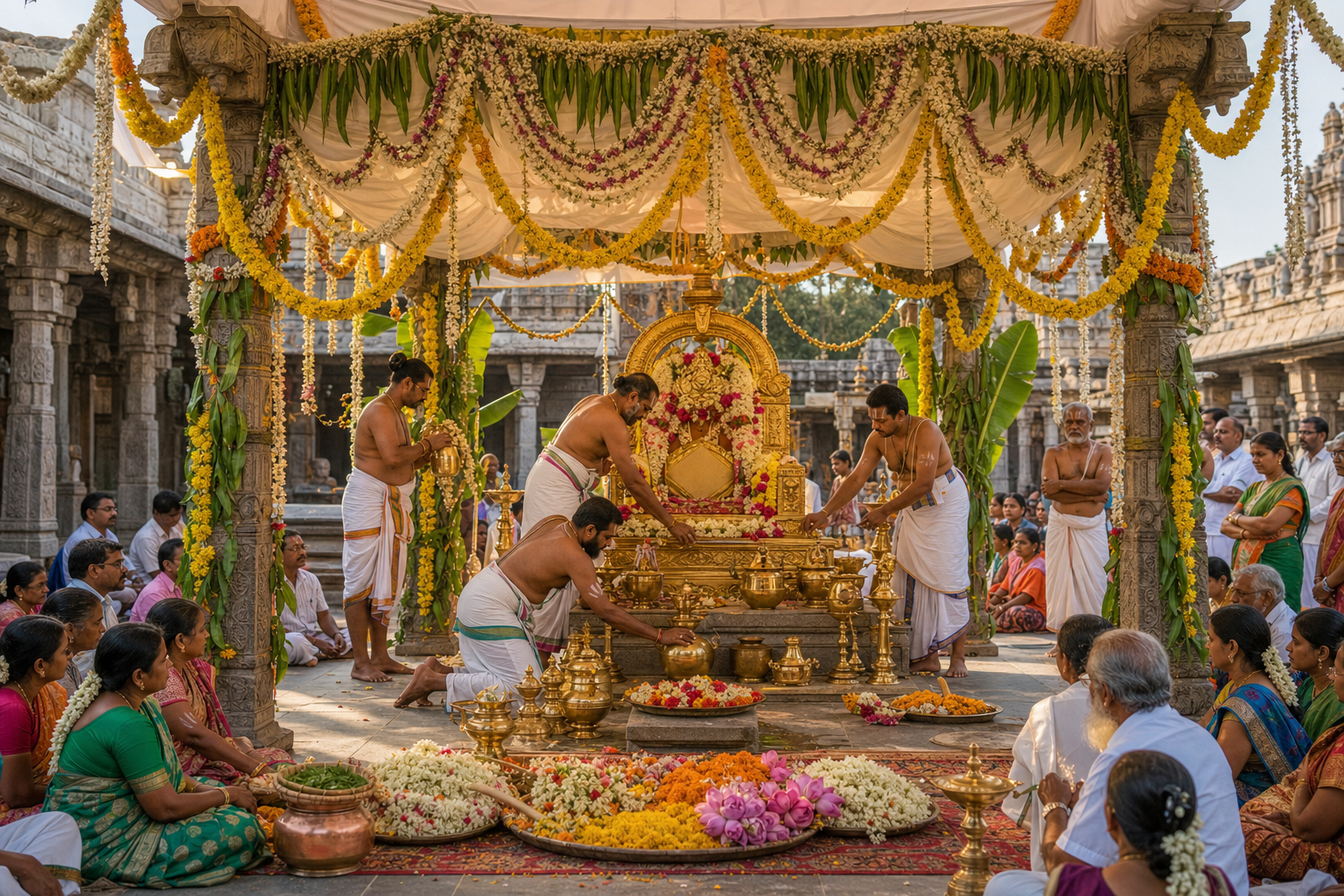
Ankurarpanam is the ceremonial sowing of seeds before a major festival. At Sri Kodandarama Swamy Temple, priests sanctify the ritual setting, establish the sankalpa, prepare consecrated soil and sow seeds in ritual vessels with Vedic and Agamic recitations. Punyahavachanam and homa place that act of germination within a larger movement of purification, intention and auspicious growth.
This is the better choice if you want to understand how a temple prepares for celebration before flowers, alankara and public festivity command attention. The rite follows the temple’s 17-25 March Brahmotsavams and prepares for Pushpayagam, creating a sequence of grand celebration, renewed consecration and floral offering. In the later Pushpayagam, the utsava murtis of Sri Rama, Sita and Lakshmana are honoured with fresh flowers and sacred leaves, including tulasi. The flower offering also carries a parihara dimension for inadvertent ritual lapses during the annual cycle.
Do not assign Pushpayagam a date merely because its preparatory rite is fixed for 22 April. The firm detail here is the Ankurarpanam window; confirm the principal flower ceremony separately before booking another day around it. This distinction matters because an event announcement for a preparatory ritual is not automatically a complete festival timetable.
Read the month as three forms of Vaishnava participation
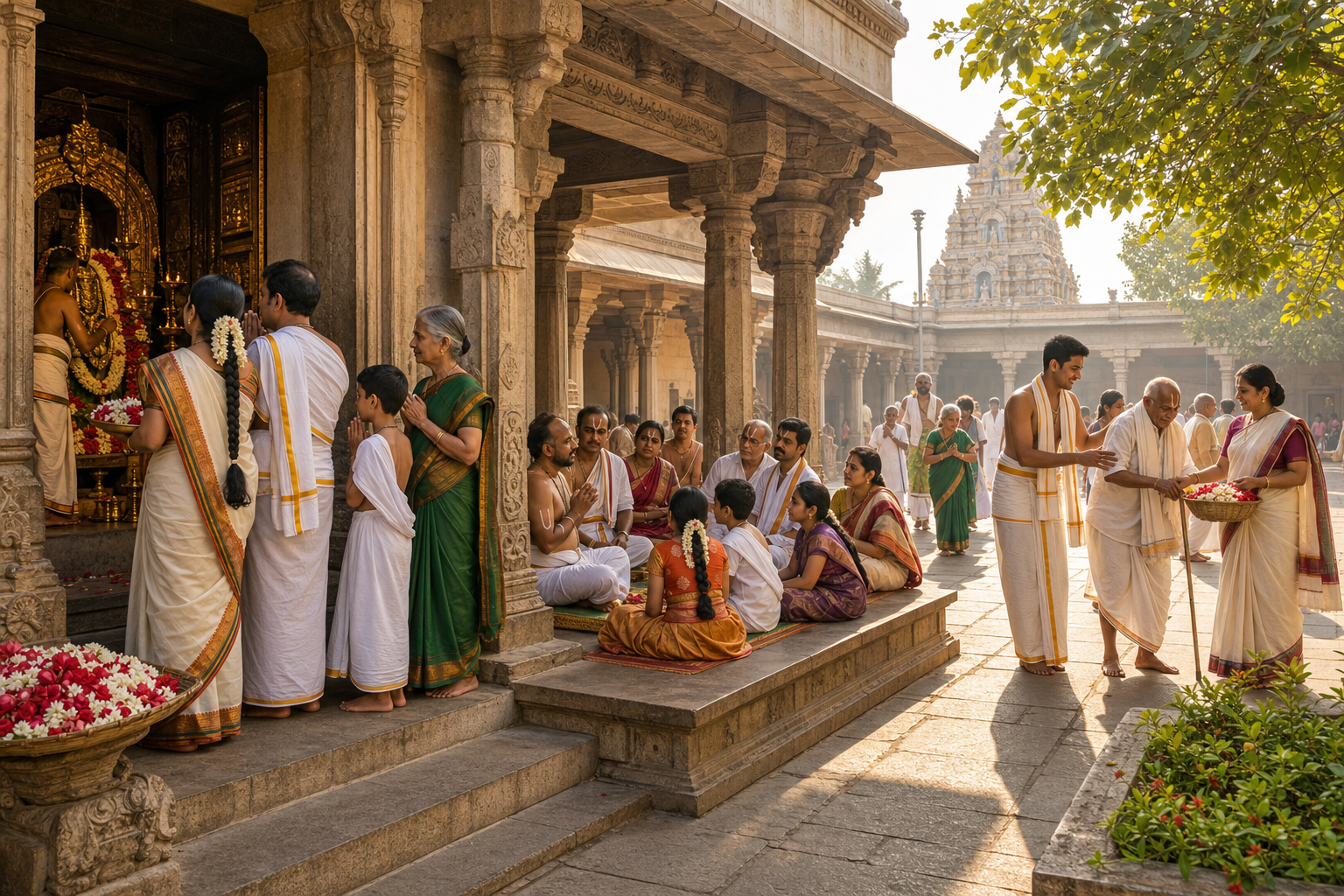
These observances are close together on the calendar, but they do not offer the same devotional experience. Recognising the distinction helps you choose without treating one event as a substitute for another.
Sravana: receiving a living intellectual tradition
The Ramanujacharya Mahotsavams centre on listening: literary reflection, recitation and music. Sri Ramanujacharya’s legacy joins rigorous Vedanta to a devotional life shaped by grace, service and temple worship. The Alwar Divya Prabandha Project gives the Tamil hymns of the Alvars a central place, allowing you to hear the connection between philosophical teaching and sung devotion rather than approaching them as separate cultural compartments.
Your practical role is simple: arrive punctually, silence distractions, and listen through a complete session. If a passage or teaching stays with you, note it after the programme rather than repeatedly reaching for a phone during recitation.
Sankalpa: watching intention become ritual action
Ankurarpanam is quieter and more procedural. Seeds, soil, vessels, directions, mantra and fire offering are arranged into an Agamic act of readiness. Germination is not decorative symbolism added after the fact; it is the ritual language through which growth, order and auspiciousness are invoked before Pushpayagam.
Watch for the sequence rather than trying to capture isolated visual moments: purification, sankalpa, sowing, mantra and completion. That sequence reveals why preparation itself is worship. Follow on-site instructions about designated viewing areas and photography, especially near sanctified zones.
Shaucha and utsava: cleansing before spring celebration
At Tiruchanur, Koil Alwar Thirumanjanam on 28 April prepares Sri Padmavathi Ammavari Temple for Vasanthotsavams. The rite is more than routine maintenance. Floors, pillars, thresholds and sanctum-adjacent areas are cleansed, while an aromatic herbal and sandal mixture known as parimalam is applied as part of the temple’s ritual renewal. Recitation, punyahavachanam, fresh alankara, naivedyam and harati carry the movement from cleansing to reconsecrated worship.
Choose 28 April if you want to observe sacred-space preparation and the discipline of shaucha. Choose 30 April through 2 May if you are primarily seeking the spring festival itself: snapana tirumanjanam, perfumed water, sandal paste, flowers, alankara, recitation and a more openly celebratory atmosphere around Sri Padmavathi Ammavaru. If your schedule permits, attending both lets you see preparation and festival as one continuous act rather than unrelated events.
Build an itinerary around purpose, not event count

A crowded calendar can tempt you to collect appearances: a partial discourse here, a hurried temple visit there, and a departure before the final festival day. A better plan gives each observance enough time to work on your attention.
- For philosophy and music: attend the Ramanujacharya Mahotsavams on 20-22 April. This preserves the full three-evening arc but rules out complete attendance at Ankurarpanam on the final evening.
- For variety within one Tirupati stay: attend the Ramanujacharya programme on 20 or 21 April, then choose Ankurarpanam on 22 April. Check the detailed cultural roster first if a particular speaker or performance matters to you.
- For Sri Padmavathi-centred observance: attend Koil Alwar Thirumanjanam on 28 April and return for Vasanthotsavams from 30 April through 2 May. Do not set 30 April as your departure date if completing the three-day festival is important.
- For a wider ritual study: pair one Ramanujacharya evening with Ankurarpanam, Koil Alwar Thirumanjanam and at least one Vasanthotsavam day. You will encounter teaching, consecrated preparation, purification and celebration as distinct modes of temple life.
Once you select the itinerary, write down the venue beside every date. Annamacharya Kalamandiram, Sri Kodandarama Swamy Temple and Sri Padmavathi Ammavari Temple are not interchangeable labels for one complex. The 22 April overlap is especially unforgiving because matching timings can conceal the fact that the programmes occur in different settings.
Use this day-of checklist
- Check TTD’s latest notice for the event name, venue, date and time. Reconfirm access or darshan arrangements for temple purification and festival days.
- Resolve the 22 April conflict before leaving your accommodation. Do not rely on switching venues midway through two simultaneous programmes.
- Carry only what you need. Photography and personal-item restrictions may apply in sanctified areas, and on-site directions take precedence over a general plan.
- Wear modest, temple-appropriate clothing. Light cotton is practical in Tirupati’s warm late-April conditions.
- Plan hydration and sun protection for daytime observances. Use a reusable water bottle where permitted, but confirm restrictions on carried items before entering a temple queue.
- Leave buffer time before the announced start. Security, queues and regulated movement are part of the practical pilgrimage, especially during major rites.
- Keep 1 and 2 May visible on your calendar. The Tiruchanur Vasanthotsavams begin in April but do not end there.
Families should agree on the priority event before entering a queue, particularly on 22 April. Students and researchers should also distinguish between public visibility and ritual importance: some of the most revealing Agamic actions may be quieter, tightly regulated or visible only from designated areas. Attend to the order of the rite rather than expecting unrestricted proximity.
Key takeaways
- The Ramanujacharya Avatara Mahotsavams run from 20 to 22 April, from 6:00 PM to 8:30 PM each evening at Annamacharya Kalamandiram.
- Pushpayagam Ankurarpanam takes place at Sri Kodandarama Swamy Temple on 22 April from 6:00 PM to 8:30 PM, creating a complete overlap with the Mahotsavams’ final evening.
- Ankurarpanam is the preparatory seed-sowing rite. Do not assume that its announced date is also the date of Pushpayagam.
- Koil Alwar Thirumanjanam begins the Tiruchanur sequence on 28 April by purifying and reconsecrating Sri Padmavathi Ammavari Temple.
- Vasanthotsavams run from 30 April to 2 May, so completing the festival requires a plan that crosses into May.
- Final speaker lists, daily festival timings, access rules and darshan arrangements should be confirmed through TTD’s official communications before travel.
Make two decisions now: choose your 22 April observance, and decide whether your Tiruchanur visit ends on 30 April or continues through 2 May. Once those dates are protected, the rest of the pilgrimage can be built around attentive participation rather than hurried recovery from calendar conflicts.
References
- DharmaRenaissance Blog – Tirupati Kodandarama Swamy Pushpayagam Ankurarpanam: Timings & Complete Guide (22 April 2026)
- DharmaRenaissance Blog – Experience Sri Ramanujacharya Avatara Mahotsavams 2026: TTD’s 3-Day Spiritual Immersion in Tirupati
- DharmaRenaissance Blog – Experience Sacred Renewal: Tiruchanur Koil Alwar Thirumanjanam – 28 Apr 2026, Vasantotsavams Prelude