

If you have seen claims that Vedaranyeswarar Temple lost vast lands and decades of income, the useful question is not whether the numbers sound shocking. It is whether each parcel can be connected to four things: legal title, actual control, money received and a recoverable liability.
That distinction matters to you as a devotee or concerned citizen. It turns outrage into a testable demand for accountability. It also protects the strongest part of the case from being weakened by inflated totals, mixed categories or accusations that run ahead of the records.
The central claim, separated from the surrounding noise
The core dispute concerns 15,439 acres of salt-pan land said to belong to Vedaranyeswarar Temple. The Tamil Nadu government is alleged to have derived revenue from these lands for nearly 70 years. A Special Tahsildar committee constituted in 2015 reportedly concluded that the lands legally belong to the temple.
Separate allegations concern thousands of acres of other temple property described as lost, encroached upon or tied up in disputes for decades. Those descriptions must not be combined casually. Lost can indicate an asset that is no longer properly reflected in institutional control or records. Encroached implies allegedly unauthorised occupation that must be established through identification and due process. Disputed means that title, possession or another right remains contested.
| Question | Claim at issue | What public verification requires |
|---|---|---|
| Who owns the salt-pan land? | The 2015 committee reportedly concluded that 15,439 acres legally belong to the temple. | The complete report, annexures, survey-number schedule and any later orders, appeals or title changes. |
| Who controlled the income? | The Tamil Nadu government is alleged to have derived revenue for nearly 70 years. | The responsible office, legal arrangement, collection accounts, deductions and remittances for each relevant period. |
| What happened to the other property? | Thousands of acres are alleged to have been lost, encroached upon or kept in dispute. | A parcel-by-parcel list that separates occupation, title litigation, record discrepancies and completed recovery. |
These claims are serious enough to require full disclosure. They do not, on their own, establish an exact monetary loss or prove that every acre placed under one of those labels has the same legal status.
Title, possession and revenue are three different tests
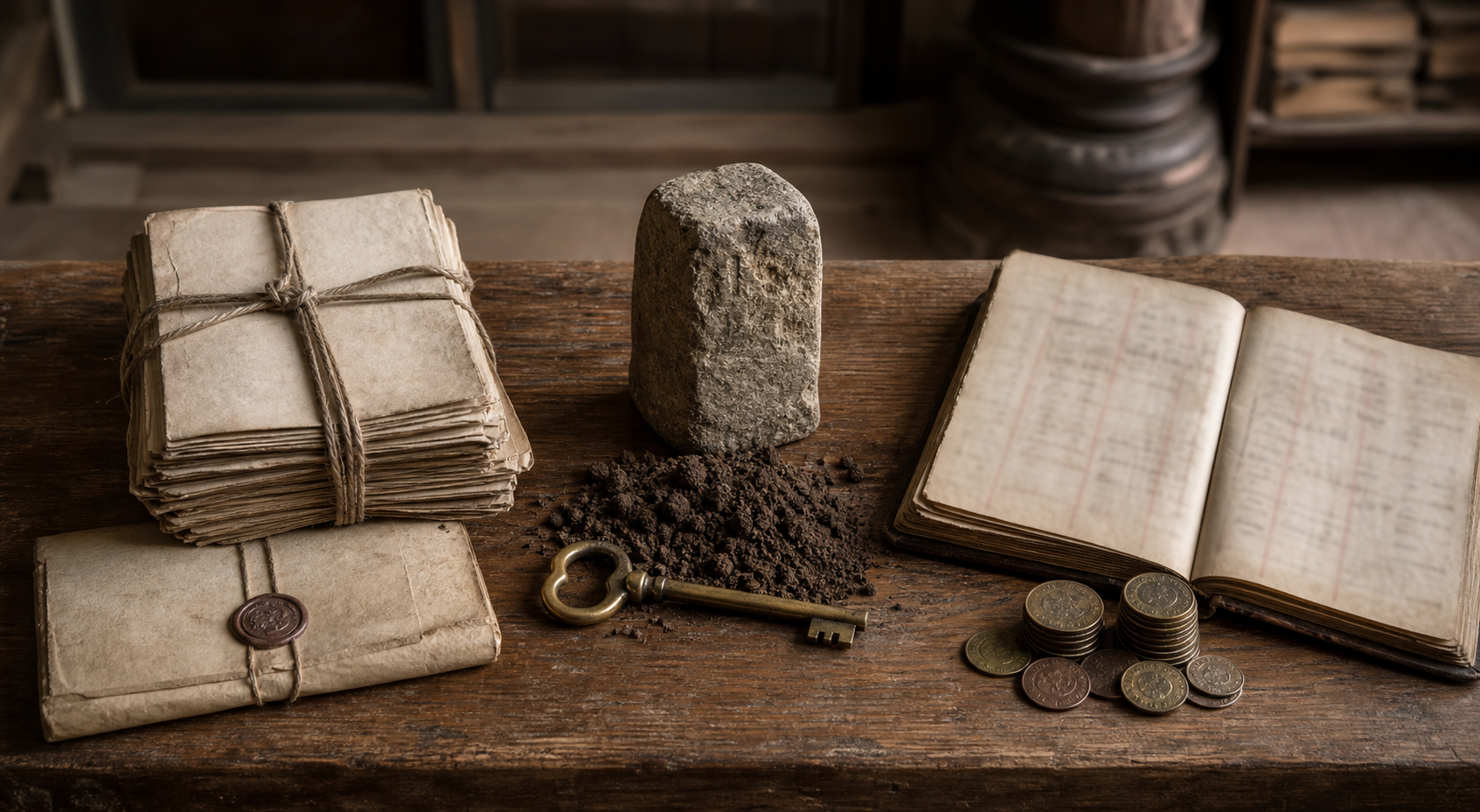
Temple-property disputes become difficult to resolve when three separate questions are treated as though one answer settles all of them.
- Title: Which legal person or institution owns each surveyed parcel, and on what instrument or order does that conclusion rest?
- Possession and control: Who occupied, managed or used the land during each period? A temple may hold title while another body manages a particular use under an order, lease or administrative arrangement.
- Financial liability: What income was collected, what amount was contractually or legally due to the temple, what was remitted, and what balance remains recoverable?
Even if the 2015 ownership conclusion stands without qualification, the recoverable amount still has to be calculated. Ownership does not automatically reveal whether the temple was entitled to gross receipts, a fixed lease payment, a royalty, a share of net income or another form of consideration. The governing instruments and accounts decide that question.
For each parcel and accounting period, a credible calculation needs to identify:
- The land extent and use covered by the calculation.
- The office or entity that collected the money.
- The type and gross amount of revenue actually received.
- Any lawful costs, deductions or adjustments, with their authority.
- The amount transferred to the temple and the date of transfer.
- The unpaid balance, if any, and the legal basis for recovering it.
Do not multiply a present-day per-acre rate by the entire period covered by the nearly 70-year allegation. Such a shortcut can ignore changing land use, historical rates, interruptions, different administrative arrangements and years for which no enforceable payment arose. It may produce a dramatic number, but not an auditable claim.
Keep actual receipts, unpaid contractual dues and hypothetical income separate as well. Money collected and retained is not the same category as rent that should have been collected but was not. Potential market income from a lease that never existed is different again. Combining the three makes recovery harder because no one can tell which figure represents a booked debt and which represents an estimate.
The records that can establish what was lost
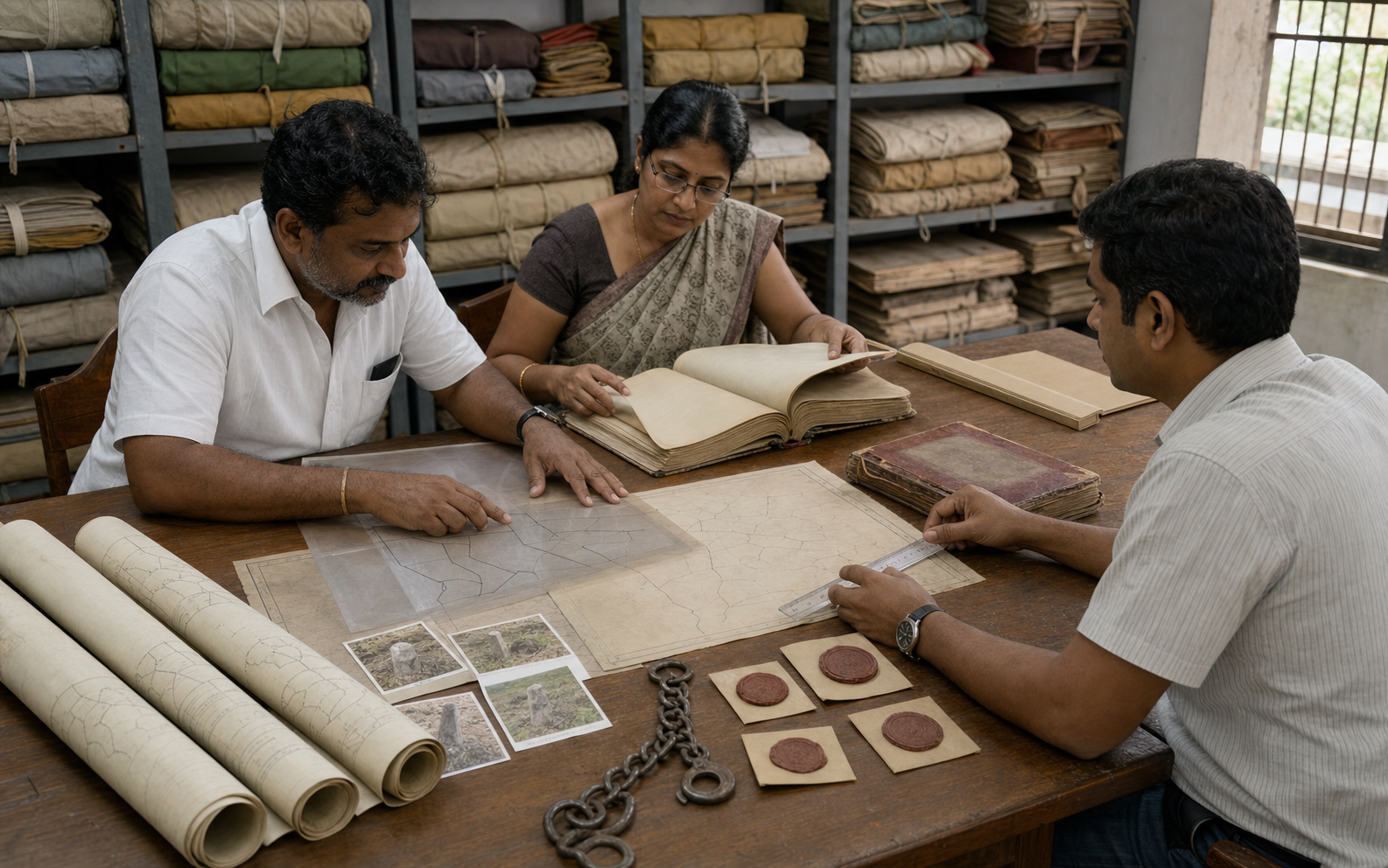
A large acreage figure is a starting point, not an asset register. If you want a result that administrators, auditors or a court can act upon, ask for records that answer one defined question at a time.
- The parcel schedule: Survey number, subdivision, village, classification, recorded owner, extent and present use for every parcel included in the 15,439-acre total.
- The ownership determination: The complete 2015 Special Tahsildar committee report, all annexures, maps and the order through which its conclusion was accepted, rejected or acted upon.
- The subsequent title trail: Later mutations, corrections, administrative orders, appeals or judgments affecting any parcel in the schedule.
- The possession record: The person, department or entity controlling each parcel, the date that control began and the instrument authorising it.
- The revenue arrangement: The lease, licence, departmental order or other authority governing salt-pan income during each period.
- The accounts: Year-wise gross receipts, permitted deductions, net amount, payments to the temple, payment dates and unpaid balances.
- The recovery record: Demands issued, amounts collected, amounts written off or adjusted, proceedings initiated and the present status of each balance.
- The dispute register: Case number, forum, parties, land extent, relief sought, latest order and next procedural step for every parcel described as disputed.
- The reconciliation: A signed comparison between the temple asset register, revenue records, physical possession and the accounts maintained by the collecting authority.
A survey-number schedule is especially important. Without it, the same land can be counted in more than one category, a partial dispute can be presented as a loss of the entire holding, or an old total can continue circulating after some parcels have changed status.
Five answers that should trigger a more precise follow-up
- A total acreage without the survey numbers and subdivisions used to produce it.
- A statement of temple ownership without the committee annexures or later orders that could affect that conclusion.
- A claim that litigation is pending without the case number, forum, land extent and relief under consideration.
- A cumulative revenue-loss figure without year-wise receipts, remittances and a stated calculation method.
- An encroachment total that does not distinguish alleged unauthorised occupation from title disputes, lawful tenancies and record mismatches.
None of these gaps proves wrongdoing. Each one identifies a point at which a claim cannot yet be checked. That is where your next request should be directed.
How you can turn concern into a usable public record
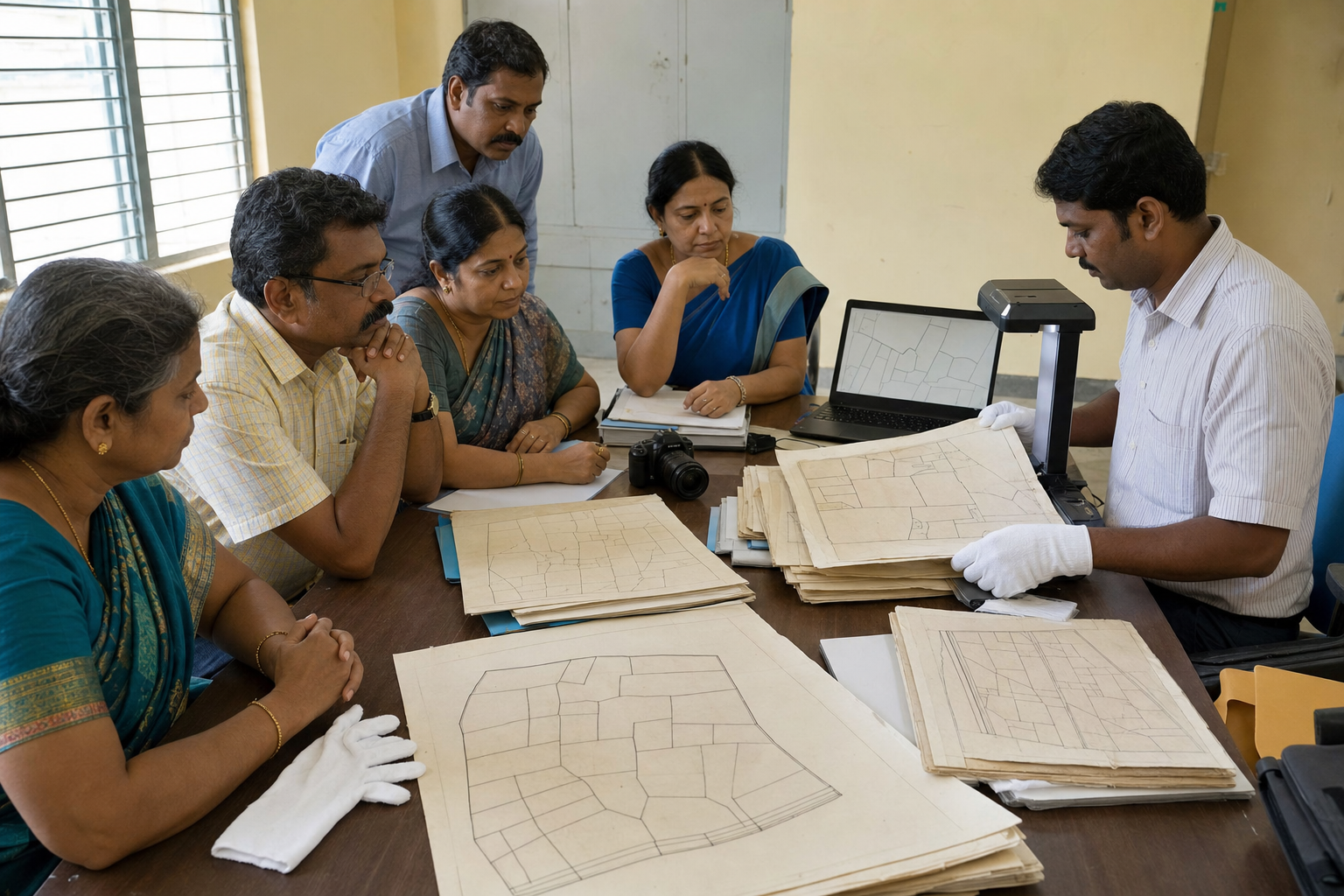
Because Vedaranyeswarar Temple is administered by HR&CE, the accountability trail may involve the relevant HR&CE office, the temple administration and district revenue authorities. Do not begin by asking every office to explain the whole controversy. Begin with one record bundle and follow its references.
- Start with title and identity. Request the complete 2015 committee report, its annexures and the survey-number-wise schedule underlying the 15,439-acre figure. Until the parcels are fixed, financial totals cannot be reconciled reliably.
- Identify the custodians. Use file numbers, signatures and forwarding letters in that bundle to determine which offices hold the land records, salt-pan arrangements and accounts.
- Request existing records, not a new opinion. Ask for copies of registers, orders, ledgers, statements and correspondence. A question such as why the temple suffered a loss invites a general explanation; a request for the year-wise remittance ledger produces something that can be checked.
- Split a long accounting period into traceable series. First identify which office collected each kind of revenue and which account books exist. Then request the relevant year ranges from the responsible custodian instead of sending one undifferentiated demand for nearly 70 years of material.
- Maintain a response log. Record the authority, request date, acknowledgement number, exact item requested, response date, records supplied, records denied and stated reason for any non-availability.
- Reconcile before publishing a total. Check that acreage adds up, date ranges do not overlap, gross and net figures are labelled correctly, and every amount can be traced to a page, ledger entry or order.
- Escalate the missing record, not the rhetoric. If a parcel schedule, annexure or account is withheld or said to be unavailable, identify that precise gap in the next administrative representation or lawful review step.
A focused first request can be simple: provide the complete 2015 Special Tahsildar committee report, all annexures and maps, and the survey-number-wise schedule supporting the 15,439-acre conclusion, together with subsequent orders affecting those lands. Once you have that bundle, ask for the corresponding revenue arrangements and account series by office and period.
If you intend to begin litigation, claim a legally recoverable sum or publicly identify a person as an encroacher, take the records to a lawyer qualified in Tamil Nadu property and religious-endowment matters. Title, limitation, procedural status and lawful occupation can vary from parcel to parcel. An unverified public accusation can also harm people and weaken the temple’s legitimate case.
Temple stewardship is not satisfied merely by repeating that land belongs to a deity. The institution must be able to identify the land, protect possession, account for its income and pursue remedies that survive scrutiny. For a living Dharmic institution, this material foundation supports continuity; it is not separate from the duty of preservation.
Key takeaways for a fair inquiry
- The specific salt-pan claim concerns 15,439 acres, a reported 2015 ownership conclusion and an allegation that the Tamil Nadu government derived revenue for nearly 70 years.
- Those facts justify close scrutiny, but they do not establish an exact recoverable revenue loss by themselves.
- Title, possession, actual collections, temple remittances and legal liability must be proved separately and then reconciled.
- Lost, encroached and disputed land are different categories and should never be merged without a parcel-level schedule.
- The most useful first action is to obtain the complete committee report and survey annexures, then trace the associated accounts through the offices that held them.
If you want this case to move from indignation to accountability, request that first record bundle and publish a clean index of what was received, what was withheld and what could not be located. Once the parcels are fixed, the income trail can be tested. Until then, every sweeping total gives administrators another way to answer a precise question with a vague one.