
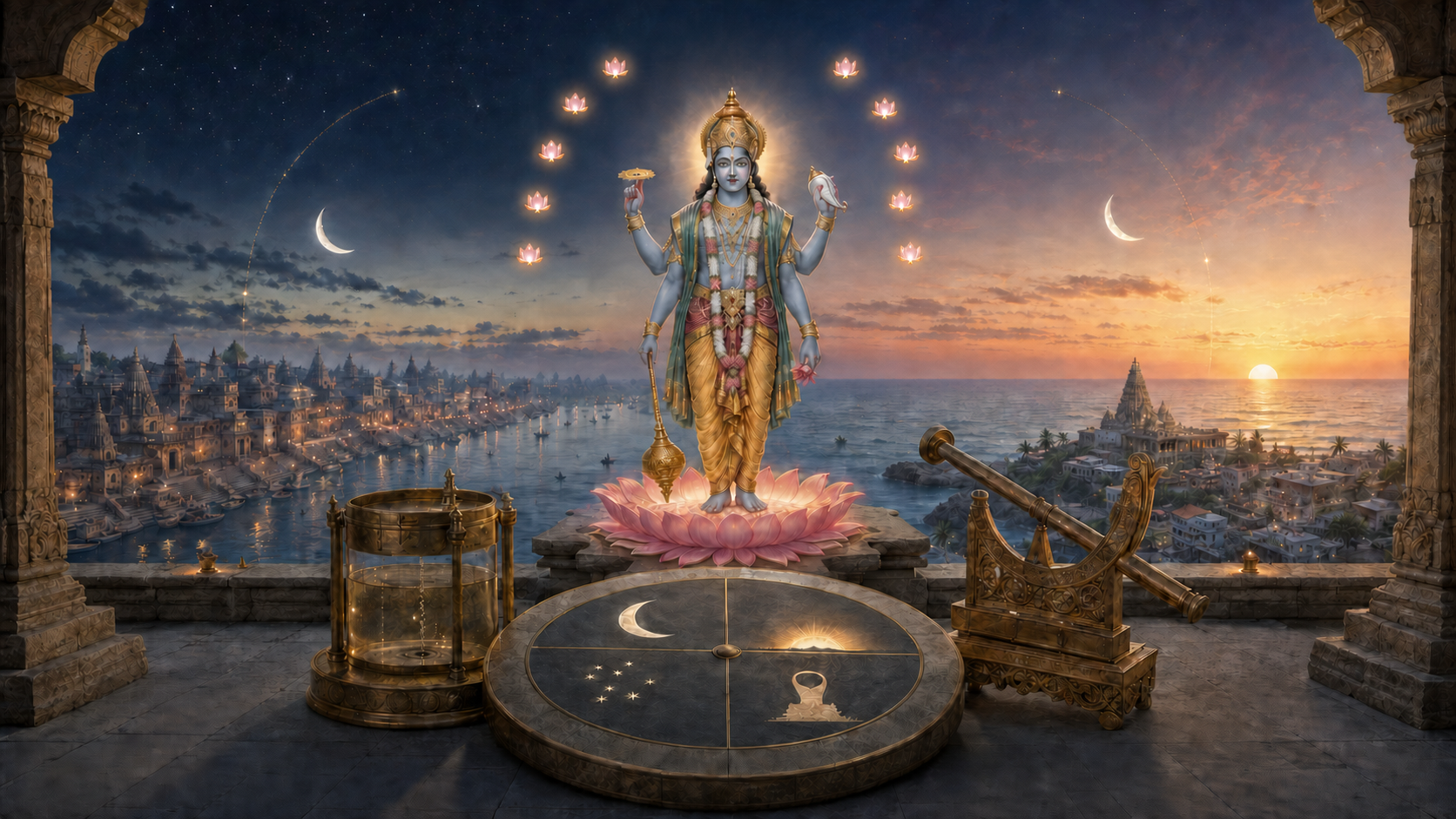
You have one Jayanti date in the family calendar, another in a temple notice, and a third in a phone app. That mismatch does not automatically mean someone calculated badly. A Vishnu avatara Jayanti is attached to a lunar condition in your location, not permanently attached to one Gregorian date.
Before you arrange leave, announce a community puja, or begin a fast, identify four things: your city, the parampara or temple you follow, the required month-paksha-tithi combination, and any prescribed appearance-time or nakshatra rule. Once those are fixed, most apparent contradictions become understandable.
Why the same Jayanti can appear on two civil dates

A civil day runs from midnight to midnight. A tithi does not. It is a lunar division defined through the changing angular separation of the Sun and Moon, so it can begin at 3:00 in the afternoon, end before dawn, or extend across portions of two civil dates. The clock time at which that boundary occurs also depends on location.
Sunrise matters because many Hindu observances use the tithi present at local sunrise to assign the festival to a civil day. But sunrise is a default rule, not a universal rule. Several avatara Jayantis are connected to the time of the avatara’s appearance: madhyahna for Sri Rama and Parashurama, nishita for Sri Krishna, and a sampradaya-dependent madhyahna or pradosha consideration for Narasimha. In those cases, you must ask whether the required tithi overlaps the prescribed kala, not merely whether it touches sunrise.
This is also why you should not copy an India date into a Canadian, British, American, or Southeast Asian calendar and merely convert its clock times. The tithi must be evaluated against sunrise and the relevant kala in your own city. A city-based Panchang or local temple notice has already made that geographical calculation.
Amanta and Purnimanta month systems create another layer of confusion. Amanta months end at the new moon, while Purnimanta months end at the full moon. The systems can label a period differently, but they do not create different moons or different tithis. If two calendars disagree by a day, do not assume that the month system alone explains it. Look next for a special appearance-time rule, a nakshatra condition, or a Smarta-Vaishnava difference in precedence. Month labels can vary while the underlying tithi remains the same.
Use this rule hierarchy before choosing a date
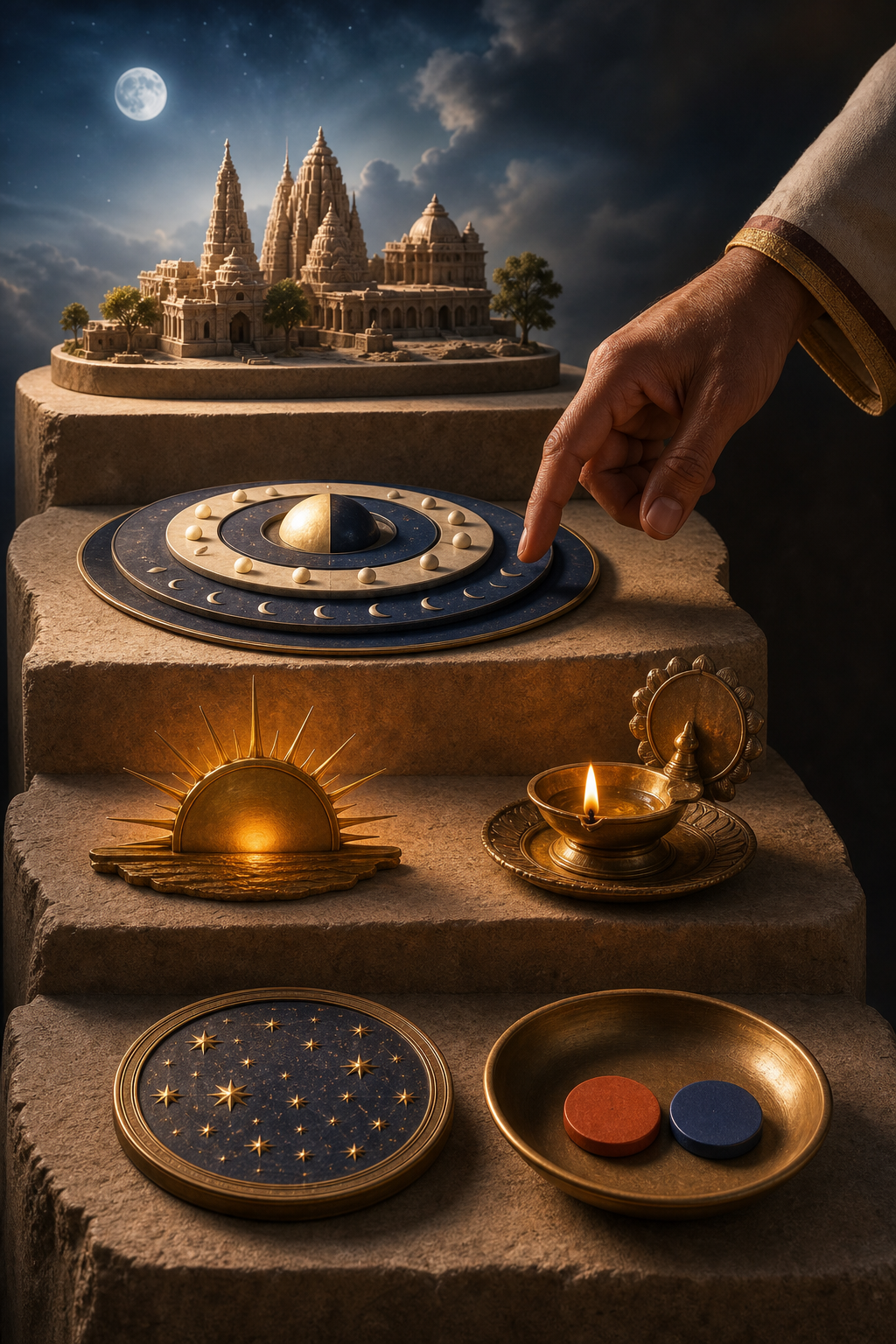
No single one-line formula settles every avatara Jayanti. This practical hierarchy keeps you from mixing rules drawn from different traditions.
- Choose the authority you actually observe with. If your family has an established parampara, begin there. If you will worship at a temple, use that temple’s declared Smarta, Vaishnava, or sampradaya-specific date. Community coherence is more useful than constructing a private hybrid from several apps.
- Identify the lunar anchor before looking for a Gregorian date. Write the lunar month, Shukla or Krishna Paksha, and tithi. For Rama Navami, for example, the anchor is Chaitra Shukla Navami. Searching only for “Rama Navami date” hides the rule you need to verify.
- Check for an appearance-time requirement. Determine whether the tithi overlaps madhyahna, pradosha, or nishita when that kala is part of the observance. A kala-sensitive rule can select a different civil day from a simple sunrise rule.
- Apply a nakshatra condition only as your tradition prescribes. Rohini is important in many Janmashtami calculations, but different Vaishnava and Smarta calendars do not always rank the tithi-nakshatra combination in the same way. Do not invent a compromise between them.
- Use the local-sunrise rule when no stronger festival-specific condition displaces it. For an ordinary sunrise-anchored observance, select the civil day on which the required tithi prevails at sunrise in your city.
- Calculate fasting and parana separately. The date of puja does not by itself tell you when to end a vrata. Narasimha observance may culminate around dusk while parana is made the following morning after sunrise and after Chaturdashi has ended. Vamana worship can intersect with an Ekadashi fast whose parana falls on Dwadashi.
This order prevents two common mistakes. The first is taking the festival date from one Panchang but the puja window or parana from another. The second is treating a general sunrise convention as if it automatically overruled the avatara’s prescribed appearance-time.
The ten Jayantis do not all use the same test
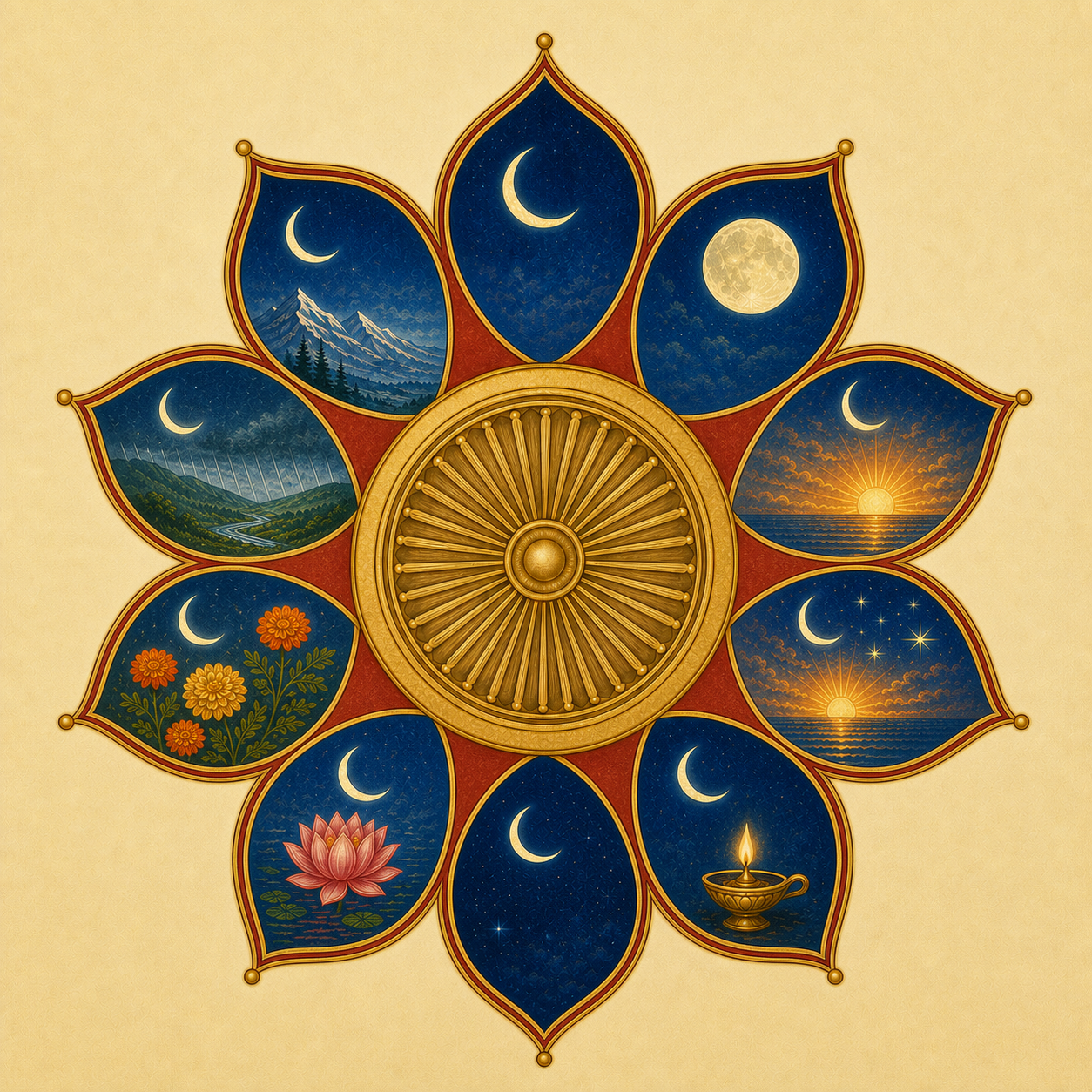
The table below is a rule map, not a permanent list of civil dates. It shows what you need to inspect in your local Panchang. Where more than one tithi tradition is active, your family or temple practice is part of the calculation rather than an inconvenience to be eliminated.
| Avatara Jayanti | Common lunar anchor | Rule that needs attention | What you should do |
|---|---|---|---|
| Matsya Jayanti | Chaitra Shukla Tritiya | Some traditions observe a Dwadashi instead. | Do not override an inherited Matsya Dwadashi practice with a generic Dashavatara calendar. Confirm the tithi used by your parampara. |
| Kurma Jayanti | Vaishakha Purnima | It coincides with Buddha Purnima or Vesak in many calendars. | You may honour both sacred associations, but keep the worship forms clear rather than assuming that concurrence makes the rites identical. |
| Varaha Jayanti | Bhadrapada Shukla Tritiya | Varaha Dwadashi is followed in some traditions. | Record whether your calendar is using Tritiya or Dwadashi before comparing its civil date with another calendar. |
| Narasimha Jayanti | Vaishakha Shukla Chaturdashi | Madhyahna and pradosha conventions vary by sampradaya; temple celebrations often culminate near dusk. | Use the kala rule named by your temple or lineage. A sunrise-only test is insufficient when the operative rule is Chaturdashi overlapping a prescribed worship period. |
| Vamana Jayanti | Bhadrapada Shukla Dwadashi | The tithi at local sunrise is a commonly applied rule. Onam is connected with Mahabali but follows the Thiruvonam nakshatra and is a distinct observance. | Check Dwadashi at sunrise for Vamana Jayanti. Do not substitute the Onam date merely because both celebrations remember the Vamana-Mahabali narrative. |
| Parashurama Jayanti | Vaishakha Shukla Tritiya, concurrent with Akshaya Tritiya | Madhyahna worship is emphasized. | Verify that Tritiya covers the applicable midday period rather than selecting a date solely from the festival name. |
| Rama Navami | Chaitra Shukla Navami | Sri Rama’s appearance is observed around madhyahna. | Choose the day on which Navami satisfies your calendar’s madhyahna rule and schedule the principal puja within the published local window. |
| Krishna Janmashtami | Bhadrapada Krishna Ashtami | Nishita and, in many Vaishnava traditions, Rohini nakshatra affect selection. Smarta and Vaishnava dates may differ. | Use a calendar that explicitly names its Janmashtami tradition. Do not take the Ashtami date from a Smarta calendar and add a Vaishnava parana time from elsewhere. |
| Buddha Jayanti | Vaishakha Purnima | Buddha appears in many Dashavatara lists, while some Vaishnava lineages place Balarama in that position. | Follow the avatara enumeration received in your tradition. Recognize the shared full-moon observance without flattening Hindu and Buddhist forms of practice into one. |
| Kalki Jayanti | Shravana Shukla Shashthi in one active tradition; Shravana Shukla Dwadashi in several others | The assigned tithi itself is not uniform across calendars. | This cannot be solved by a sunrise calculation until you know which tithi your tradition accepts. Some calendars prescribe Shravana Shukla Shashthi, while several others use Dwadashi. Follow your established temple or parampara. |
Matsya, Varaha, Narasimha, Krishna, and Kalki show why a date-only list is not enough. Save the selection rule beside each date in your household calendar. Next year, you will know whether an apparent shift came from astronomy, location, or a different tradition.
How to read a Panchang entry without guessing
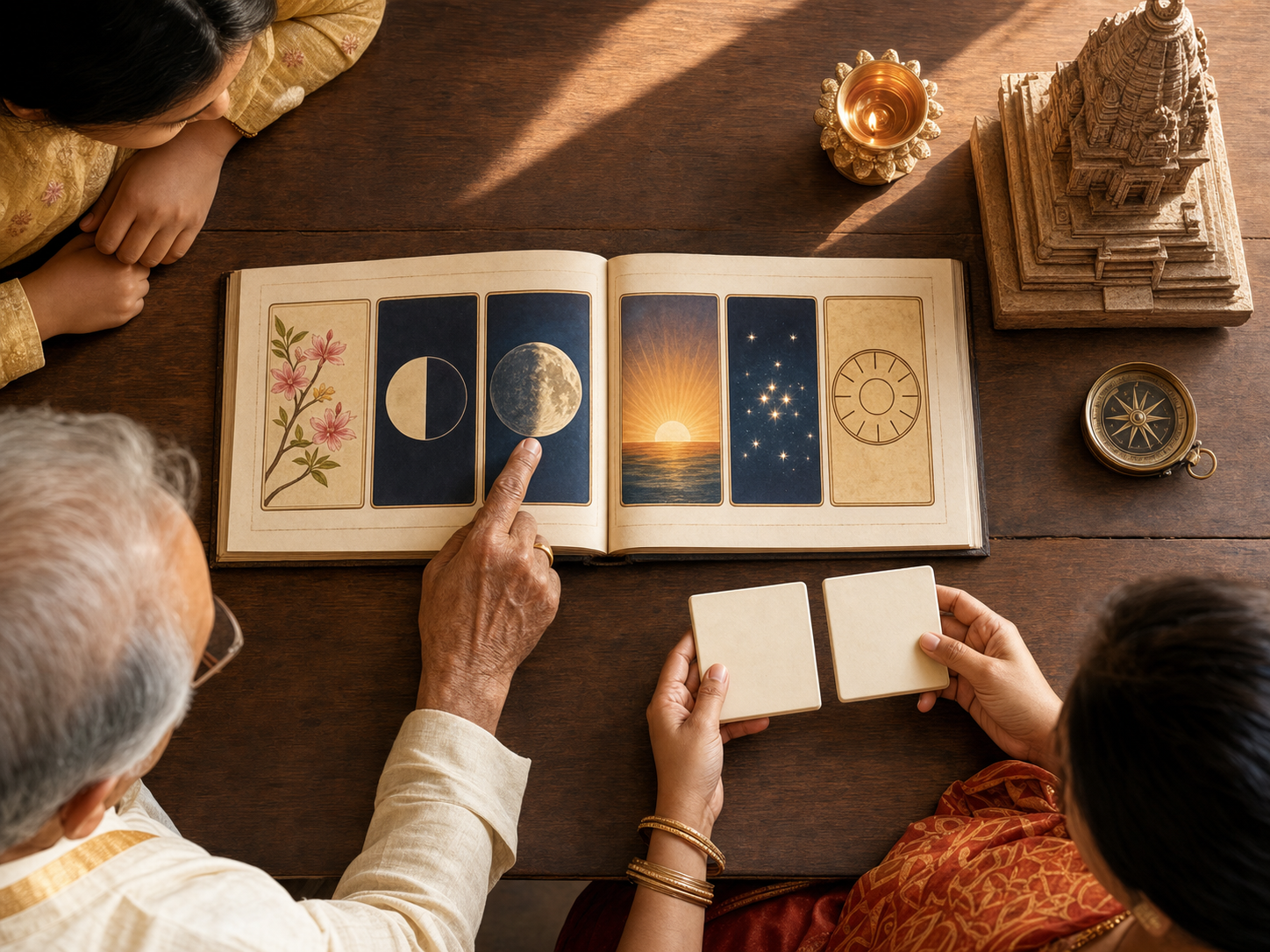
Open a Panchang configured for the place where you will physically observe the Jayanti. Then compare the two adjacent civil days. You need more than the festival label.
- Verify the city and time zone. If the calendar cannot be configured for your location, use a reputable local temple’s timings.
- Write down the required tithi’s start and end times. Do not infer them from the printed festival date.
- Note sunrise on both candidate days. For a sunrise-based Jayanti, ask on which day the tithi is actually present at sunrise.
- Find the relevant kala boundaries. If the Jayanti uses madhyahna, pradosha, or nishita, test the tithi against that interval.
- Check the nakshatra start and end times when your tradition includes a nakshatra condition, especially for Janmashtami.
- Read the tradition label. “Smarta,” “Vaishnava,” or a named sampradaya is not decorative metadata; it can explain a one-day difference.
- Record the vrata and parana instructions from the same calendar. Keep the worship date, fasting window, and fast-breaking time as one package.
Consider three kinds of overlap. If Dwadashi begins after the first day’s sunrise and remains through the second day’s sunrise, a sunrise-anchored observance normally points to the second day. If Chaturdashi misses sunrise but covers the pradosha period used by your Narasimha tradition, the special kala may control the choice. If Ashtami covers nishita on one night while Rohini produces a competing combination, the Smarta or Vaishnava precedence rule decides; a majority vote among apps does not.
When your family and temple calendars disagree, ask one precise question: “Which tithi, kala, nakshatra, and sampradaya rule selected this date for our city?” That question usually produces a useful answer. “Which date is really correct?” often does not, because it hides the assumptions behind both results.
Do not move the religious date simply because the nearest weekend is easier. A community may hold a public kirtan, meal, or children’s program on the weekend, but it should distinguish that convenient gathering from the tithi-based vrata and puja. This preserves both participation and calendrical clarity.
Once the date is settled, keep the ritual proportionate to your circumstances. Vishnu Sahasranama, Om Namo Narayanaya japa, tulasi, flowers, a lamp, sattvic naivedya, avatara-katha, and charity provide a coherent home observance when elaborate worship is not possible. Abhishekam and shodashopachara may be added where they belong to your family practice.
A strict fast is not required to prove sincerity. Nirjala fasting can be unsafe for some people. Children, elders, and anyone with a medical condition should not copy another person’s austerity; follow appropriate medical guidance and use a moderated fast, phalahara, or ordinary sattvic food as needed. Japa, study, restraint, and seva preserve the vrata’s purpose without turning devotion into avoidable harm.
Key takeaways for your family calendar
- A Jayanti date is the result of a lunar rule applied in a particular location, not a Gregorian date that can be copied worldwide.
- Sunrise is the common default, but madhyahna, pradosha, nishita, or a nakshatra condition can determine a kala-sensitive Jayanti.
- Amanta and Purnimanta systems can change month labels without changing the underlying astronomical tithi.
- Some avatara observances have genuine parampara differences, including Matsya, Varaha, Narasimha, Krishna, and Kalki Jayanti.
- Never mix the festival date from one calendar with the puja window or parana from another.
- Save the city, tithi, special kala, tradition, puja window, and parana time beside every date you enter.
For your next Jayanti, do not begin with a search for the Gregorian date. Begin with a note in this form: city; parampara or temple; lunar month and paksha; tithi; required kala or nakshatra; puja window; parana. That small record turns next year’s calendar disagreement from a crisis into a checkable calculation.
References
- DharmaRenaissance Blog — Dasavatara Jayanti 2026–2027: Authoritative Guide to Dates, Rituals, and the Ten Avatars of Vishnu
- DharmaRenaissance Blog — Narasimha Chaturdashi (Narasimha Jayanti) 2026: Date, Puja Timings, Rituals, and Deep Significance
- DharmaRenaissance Blog — Kalki Jayanti 2026: Date, Significance, Puja Vidhi and Panchang Guide for Shravana Shukla Shashti
- DharmaRenaissance Blog — Vamana Jayanti 2026: Celebrate Humility and Dharma on Shukla Dwadashi—Date, Rituals, Meaning