
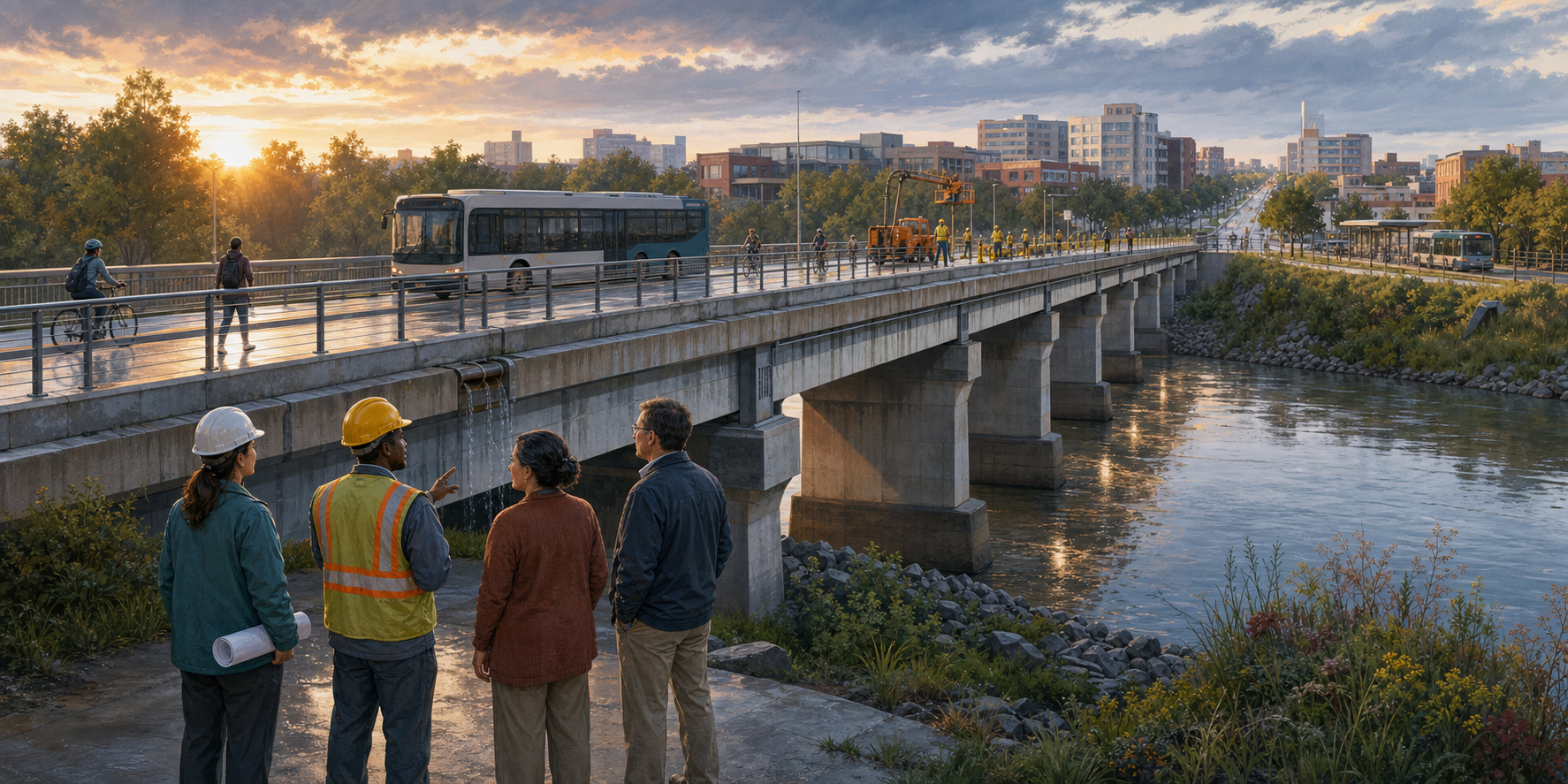
If you are assessing a road, bridge, transit corridor or urban redevelopment plan, the risk schedule may look like a technical appendix. It is actually one of the project’s central moral decisions. Every burden that is transferred will eventually appear somewhere: in a higher bid, a delayed site, a taxpayer claim, a neglected asset or a dangerous journey imposed on the public.
Your first question should therefore be simple: has each risk been placed with the party that can genuinely manage it, or merely with the party that has the least bargaining power? A dharmic approach makes responsibility visible, protects those who cannot protect themselves and gives engineers and public officials enough clarity to do their work without paralysis.
Dharma changes the question from transfer to stewardship

A project does not become dharmic because it receives a blessing before construction. It becomes dharmic when authority follows responsibility, rewards follow service and foreseeable harm is not pushed onto citizens who had no place at the negotiating table.
Bhagavad Gita 2.47 places the emphasis on disciplined action rather than possessiveness over results. In infrastructure, that means doing the difficult work: testing assumptions, disclosing uncertainty, procuring transparently, supervising construction and funding maintenance. Freedom from attachment to an outcome is not freedom from accountability for the work. It is freedom from the fear, vanity and political impatience that distort the work.
Bhagavad Gita 3.20 adds the public test of loka-saṅgraha: action should sustain the welfare and cohesion of society. A contract can be legally sophisticated and still fail that test if it gives the private party an upside while leaving the public with opaque liabilities, or if it saves money by tolerating unsafe crossings, inaccessible footpaths or unreliable maintenance.
The surrender taught in Bhagavad Gita 9.22 and 18.66 concerns corrosive anxiety, not civic duty. A minister may surrender the craving for a headline. An engineer may surrender fear of admitting that a forecast has changed. A contractor may surrender the urge to conceal an error. None may surrender the obligation to act truthfully. This is the practical meaning of transferring the burden: allocate manageable risks contractually, and release the mental burden that prevents honest decisions.
Use three tests whenever someone proposes a risk transfer:
- Control: Can this party prevent the event or reduce its consequences?
- Capacity: Does it have the information, authority, technical skill and financial strength to carry the exposure?
- Consequence: If the allocation fails, who will actually absorb the harm: the contracting parties, taxpayers, workers or road users?
A party that cannot control a risk will either price a large contingency, seek relief later, cut quality elsewhere or fail. The risk has not disappeared. It has only become more expensive and less visible.
Build the risk matrix before choosing the contract model
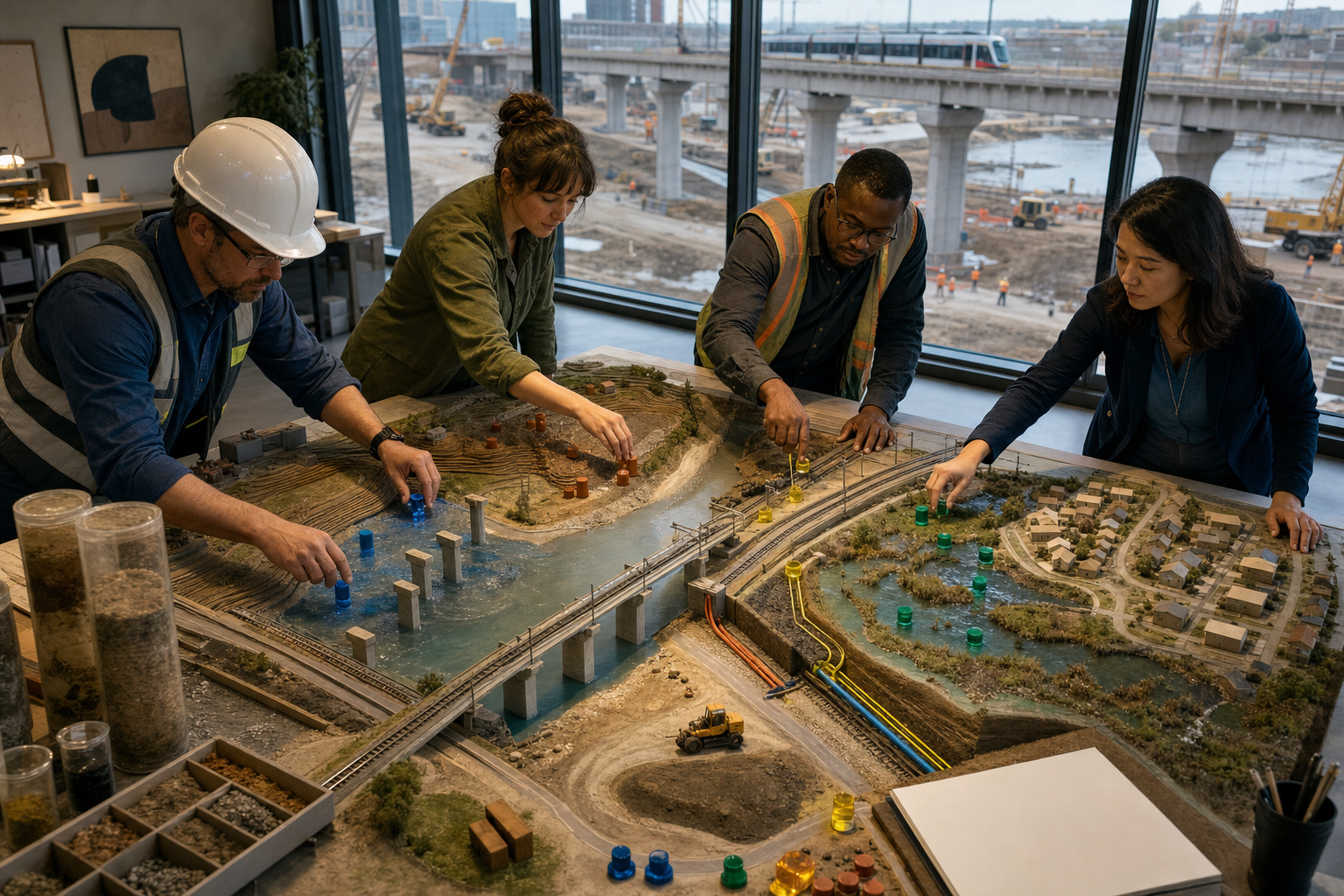
Do not begin with the question, “Should this be EPC, HAM, BOT or TOT?” Begin with the events that could prevent the asset from delivering its intended service. The delivery model should follow the risk pattern, not lead it.
| Risk | Put it primarily with | Condition that makes the allocation credible | Warning sign |
|---|---|---|---|
| Land acquisition and statutory approvals | Government or the responsible public agency | The public authority controls the legal process, inter-agency coordination and access to the site | The contractor is penalized for land or approvals it cannot obtain through its own authority |
| Design and construction | EPC or performance-responsible contractor | The scope, site information, standards and interfaces are sufficiently clear | The agency changes the scope but expects the contractor to absorb every resulting delay and cost |
| Operations and maintenance | Long-term operator | Service levels, inspections, payment rules and deductions are measurable | The contract requires maintenance effort but never defines the condition users must receive |
| Traffic or demand | Public sector under annuity or HAM when uncertainty is high; private concessionaire under BOT Toll when forecasting is reliable | Forecast quality, policy assumptions and the party’s ability to influence performance justify the allocation | A socially necessary corridor with uncertain traffic is made bankable only by optimistic projections |
| Operations on a mature revenue-generating asset | TOT concessionaire, subject to the concession terms | An operating history makes performance and revenue more observable than on a greenfield asset | TOT logic is used to disguise uncertain greenfield demand |
| Climate and physical resilience | Divided across the public authority, designer, builder and operator | The authority defines the design basis and discloses data; the designer complies; the builder executes; the operator inspects and maintains | Everyone calls extreme conditions unforeseeable while routine drainage and erosion duties remain undefined |
| Safety and inclusion | Shared delivery duties under continuing public accountability | Safe-system outcomes, accessibility and response requirements are written into design and maintenance obligations | Compliance is treated as complete even though vulnerable users inherit the danger |
The demand-risk distinction matters. Under an annuity or Hybrid Annuity Model, government can retain demand volatility while the private party remains accountable for construction or performance. Under BOT Toll, a concessionaire can carry demand risk when traffic forecasting is dependable enough to support that exposure. Land, regulatory, construction, maintenance and demand risks require different owners; bundling them under the vague label of private participation is not risk management.
Build the matrix in this order:
- Name the event precisely. Write “the required site is unavailable by the contractual access date,” not merely “land risk.” Write “traffic is below the forecast used for debt service,” not merely “revenue risk.”
- Separate prevention from financial absorption. One party may be able to reduce the probability while another is better able to absorb a rare loss.
- Record the owner, mitigation action, evidence, trigger and contractual consequence for each event. A named owner without a trigger is only an aspiration.
- Test whether bidders can price the exposure from the information supplied. If each bidder must guess at a public authority’s future conduct, the apparent transfer will return as contingency pricing or dispute.
- Show the residual risk retained by government. Public liability does not become smaller merely because it is omitted from the presentation.
- Connect the matrix to the concession agreement, insurance, escrow arrangements, performance security, payment mechanism and dispute-resolution process. Contradictory documents recreate the ambiguity the matrix was meant to remove.
These choices carry substantial legal and financial consequences. Before committing public funds or signing a concession, the project-specific allocation should be reviewed together by qualified engineering, finance, procurement and legal professionals. A general framework can expose weak questions; it cannot determine the enforceability or price of a particular contract.
Judge the asset over its whole life, not on opening day
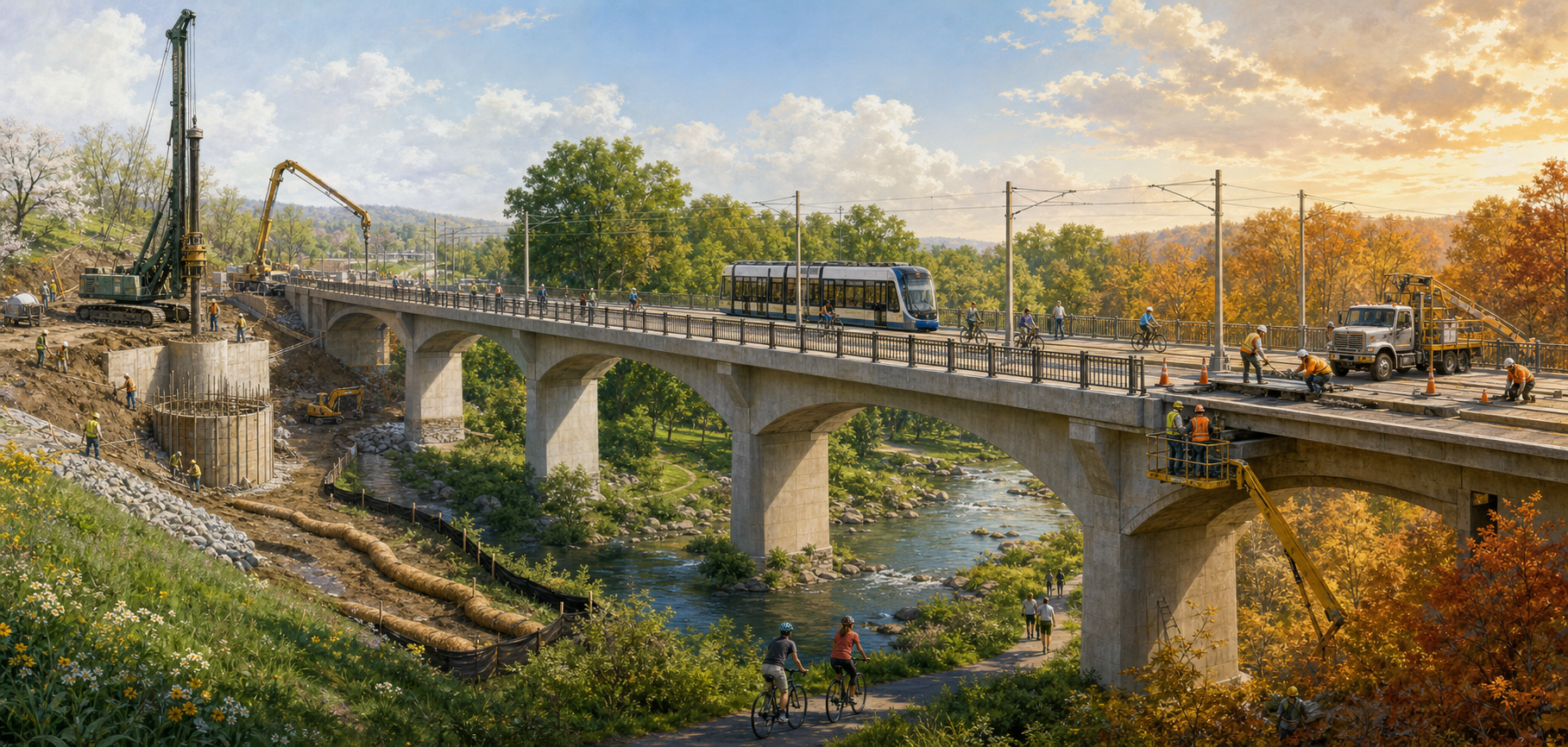
Opening day is the most flattering moment in an asset’s life. The harder test comes after several seasons of loading, drainage, heat, repairs and operational pressure. A procurement decision that minimizes initial construction cost while leaving maintenance unfunded transfers the burden to future users.
Use Value for Money analysis and a Public Sector Comparator before treating a public-private partnership as the default. The comparison should examine the same service outcome over the same life-cycle period, including construction, operations, maintenance, monitoring, transaction costs and the risks government still retains. If the traditional option and the PPP option do not contain equivalent obligations, the cheaper figure does not answer a meaningful question.
Toll-Operate-Transfer can monetize a mature asset and recycle capital into new infrastructure because the existing asset offers a performance and revenue history. That makes TOT different from using optimistic demand to justify a new corridor. Maturity reduces some uncertainty; it does not eliminate the need to inspect asset condition, test revenue assumptions and define handback requirements.
Maintenance should be purchased as a measurable service. A performance-based contract can tie payment and deductions to ride quality, rutting, pothole response, drainage function and other stated service levels. Requiring an operator to “maintain the road properly” invites argument. Defining the condition to be delivered, the inspection method, the response process and the payment consequence creates accountability.
Rehabilitation also requires diagnosis before treatment. Falling Weight Deflectometer testing, Benkelman Beam deflection, coring and roughness profiling reveal different aspects of pavement condition. Those findings should inform the choice among overlays, full-depth reclamation, cold in-place recycling or other interventions. Prescribing rehabilitation without scientific diagnostics risks paying for a surface treatment while the structural problem remains.
For road design, IRC:37-2018 addresses flexible pavements through mechanistic-empirical methods using traffic loading, subgrade strength and climate inputs. IRC:58 governs rigid pavement design where concrete solutions are appropriate, while the MoRTH Specifications for Road and Bridge Works establish material and construction requirements. These are not interchangeable labels. A qualified pavement engineer must apply the relevant standard to the actual traffic, materials, subgrade, drainage and environmental conditions.
A Pavement Management System supported by HDM-4 or an equivalent tool can forecast deterioration and compare the life-cycle effects of intervention timing. GIS inventories, condition surveys, intelligent transport systems and sensors can strengthen the evidence, but more data is not automatically better governance. Name who validates it, who decides from it and what maintenance action a threshold is supposed to trigger.
Climate resilience belongs in the normal service specification. Drainage capacity, erosion control, structure freeboard and slope stabilization protect the asset from water. Material selection can address heat and durability. Permeable shoulders, bioswales and tree canopies can support stormwater management and urban comfort where the right-of-way and engineering conditions permit them. If these requirements appear only in an environmental appendix and not in design, payment and inspection clauses, they are unlikely to carry contractual weight.
Make compassion auditable in safety, access and mobility
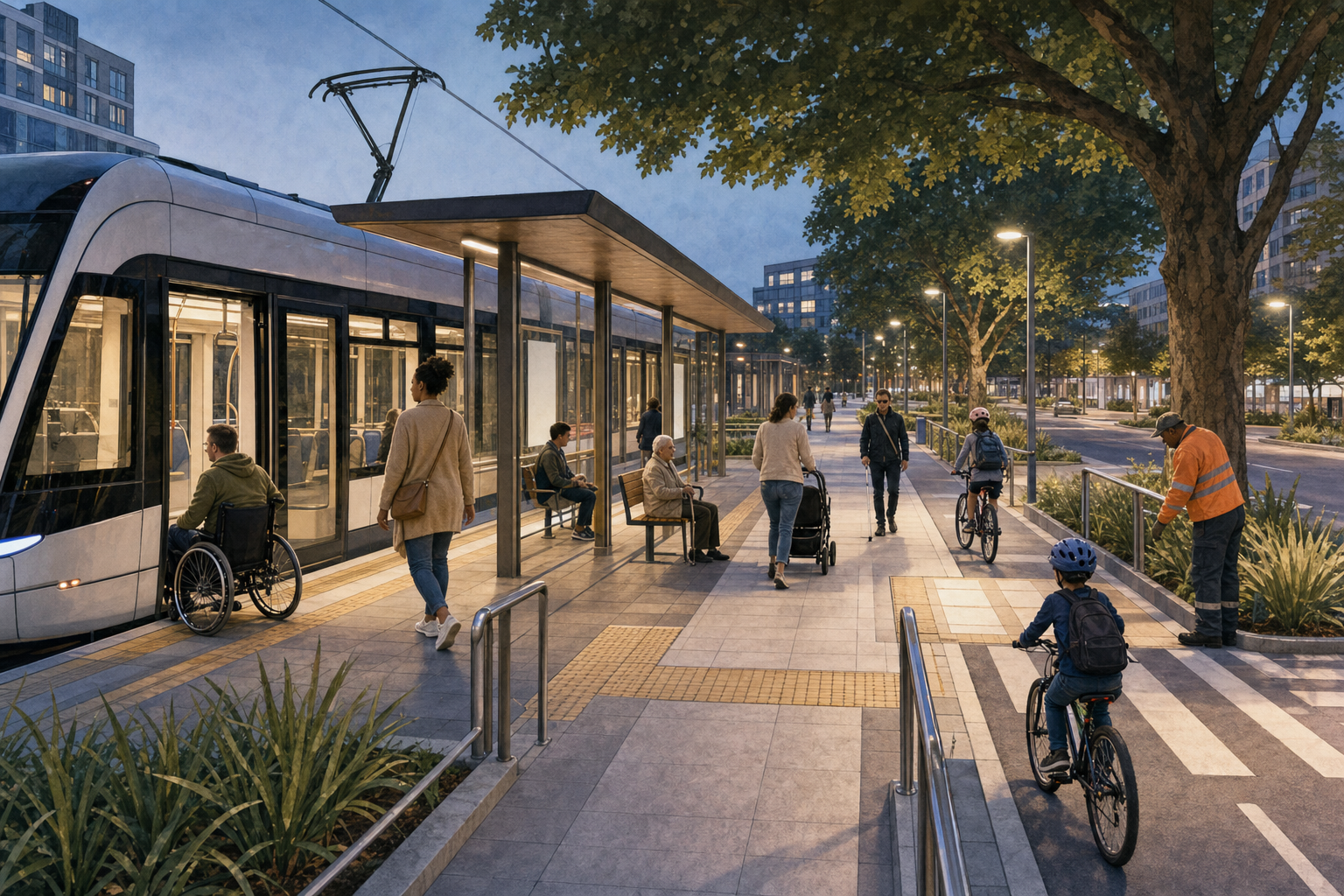
Weak risk allocation usually lands on someone outside the contract. A pedestrian inherits the missing crossing. A wheelchair user inherits the broken kerb ramp. A woman waiting after dark inherits the unlit stop. A family inherits the consequences of a high-speed road designed as though human error never occurs. Dharmic governance notices these transferred burdens before they become injuries or exclusion.
Safety and access must be contract outputs
A Vision Zero approach begins with human fallibility and asks the transport system to prevent an ordinary mistake from becoming fatal. That changes what you specify: median barriers where needed, safe intersection geometry, access control, speed management, protected movement near schools and markets, black-spot remediation and reliable emergency response.
Road-safety audits, iRAP star ratings and the five Es – Engineering, Enforcement, Education, Emergency care and Evaluation – turn compassion into a repeatable management system. None should be used as a ceremonial checklist. Findings need an owner, a funded remedy, a deadline or contractual trigger, and evidence that the remedy was completed.
Apply the same discipline to universal design, gender-sensitive lighting, first-last-mile connections and the condition of footpaths. A project that moves cars quickly while making a bus stop unreachable has shifted travel time from powerful users to less powerful ones. The balance sheet may not record that transfer, but loka-saṅgraha requires the public authority to see it.
When congestion is the burden, reallocate trips
Congestion cannot always be solved by adding road capacity. In dense urban corridors such as those in the National Capital Region, the more durable move is often to shift a share of trips from private cars to mass transit, walking and cycling. Integrated bus-Metro ticketing, safe footpaths, usable cycle routes and dependable first-last-mile links make that transfer possible. Parking policy, congestion-pricing pilots and flexible work hours can manage peak demand rather than leaving every commuter to fight for the same road space at the same time.
Evaluate a mobility proposal by asking what it makes easier. If transit receives capital but transfers remain confusing, footpaths are discontinuous or stations are unsafe to reach, the system has not actually made non-car travel competitive. The burden has moved between agencies while remaining with the passenger.
Use shared dharmic values without flattening traditions
Hindu, Buddhist, Jain and Sikh traditions are not interchangeable, and public ethics should not erase their distinctive teachings. Yet their moral vocabularies offer a practical convergence: Karma Yoga and loka-saṅgraha emphasize disciplined service; Buddhist karuṇā and upāya join compassion with skilful means; Jain ahiṁsā and aparigraha challenge avoidable harm and possessiveness; Sikh seva makes service an active obligation.
That convergence gives you a demanding test. Does the arrangement reduce avoidable harm? Does it serve people beyond the contracting parties? Does it reward competence without encouraging private capture of a public good? Does it leave room to correct a mistake without hiding it? Srimad-Bhagavatam 1.2.13 directs duty toward a purpose higher than personal reward, while 10.14.8 frames adversity as a setting for humility and perseverance. For an institution, humility means updating a forecast, acknowledging a defect and correcting course before sunk costs become an excuse for continued failure.
Key takeaways for your next infrastructure decision
- Allocate each risk by control, capacity and evidence, not by bargaining power or a desire to move liabilities off a presentation.
- Keep land acquisition and regulatory duties with government where sovereign authority is required; do not punish a contractor for events it cannot control.
- Use annuity or HAM structures when public retention of uncertain demand is justified. Use BOT Toll demand transfer only when forecasting is reliable enough to support it.
- Choose a PPP only after a like-for-like Value for Money and Public Sector Comparator assessment. The delivery acronym is not a finding.
- Make maintenance measurable through service levels, inspection methods, response obligations and payment consequences.
- Treat drainage, climate resilience, road safety, universal access and first-last-mile movement as core performance requirements, not optional benefits.
- Transfer anxiety without surrendering duty. When conditions change, disclose the change, update the decision and preserve institutional learning.
At your next project review, ask for three things before endorsing the proposal: a risk matrix naming every owner and trigger, a life-cycle service sheet stating what users will receive, and a public-burden statement identifying who suffers if the assumptions fail. If the project team cannot produce those clearly, pause the commitment until it can. That small act of disciplined stewardship is where dharmic infrastructure begins.