

If you are putting Vaishakha 2026 on your family calendar, the difficult part is not remembering the festival names. It is deciding which civil date applies in your city, which lunar-calendar convention your family follows, and how one vrata affects the next day’s observance.
The safest approach is to plan by tithi first and civil date second. That keeps Akshaya Tritiya and Parashurama Jayanti distinct from Parashurama Dwadashi, preserves the Ekadashi-to-Dwadashi sequence, and explains why Narada Jayanti may be called a Vaishakha observance in one calendar but a Jyeshtha observance in another.
Fix your location and calendar before fixing the date

A tithi is an astronomical lunar day, not a midnight-to-midnight date. It can begin partway through one civil day and end partway through the next. Festival practice commonly looks at the tithi prevailing at local sunrise, although parana and particular puja periods can require their own time windows. This is why a date printed for India should not automatically be copied into a calendar in Toronto, London, Singapore, or another location.
The month name can also change without changing the underlying tithi. On 2 May 2026, Narada Jayanti is Vaishakha bahula Pratipada in the South Indian amanta reckoning but Jyeshtha Krishna Paksha Pratipada in the North Indian purnimanta reckoning. A household using an amanta calendar can therefore list it under Vaishakha, while a purnimanta calendar places the same observance at the beginning of Jyeshtha.
Before sharing dates with relatives or announcing a community program, record four things from one trusted Panchang for the place of observance:
- City and time zone: use the location where the worship will actually take place.
- Calendar convention: note whether the month is being named through the amanta or purnimanta system.
- Tithi span: record the local start and end of the relevant tithi, not only the printed civil date.
- Sunrise or parana rule: identify whether the decision depends on the tithi at sunrise, a prescribed breaking-fast period, or another locally followed rule.
Use the same Panchang and the same tradition throughout the month. Mixing a festival date from one city with a parana time from another is a common way to create a schedule that looks precise but is ritually incoherent. If two reputable calendars differ, take the question to the priest or acharya whose paddhati your household follows.
The Vaishakha 2026 working calendar
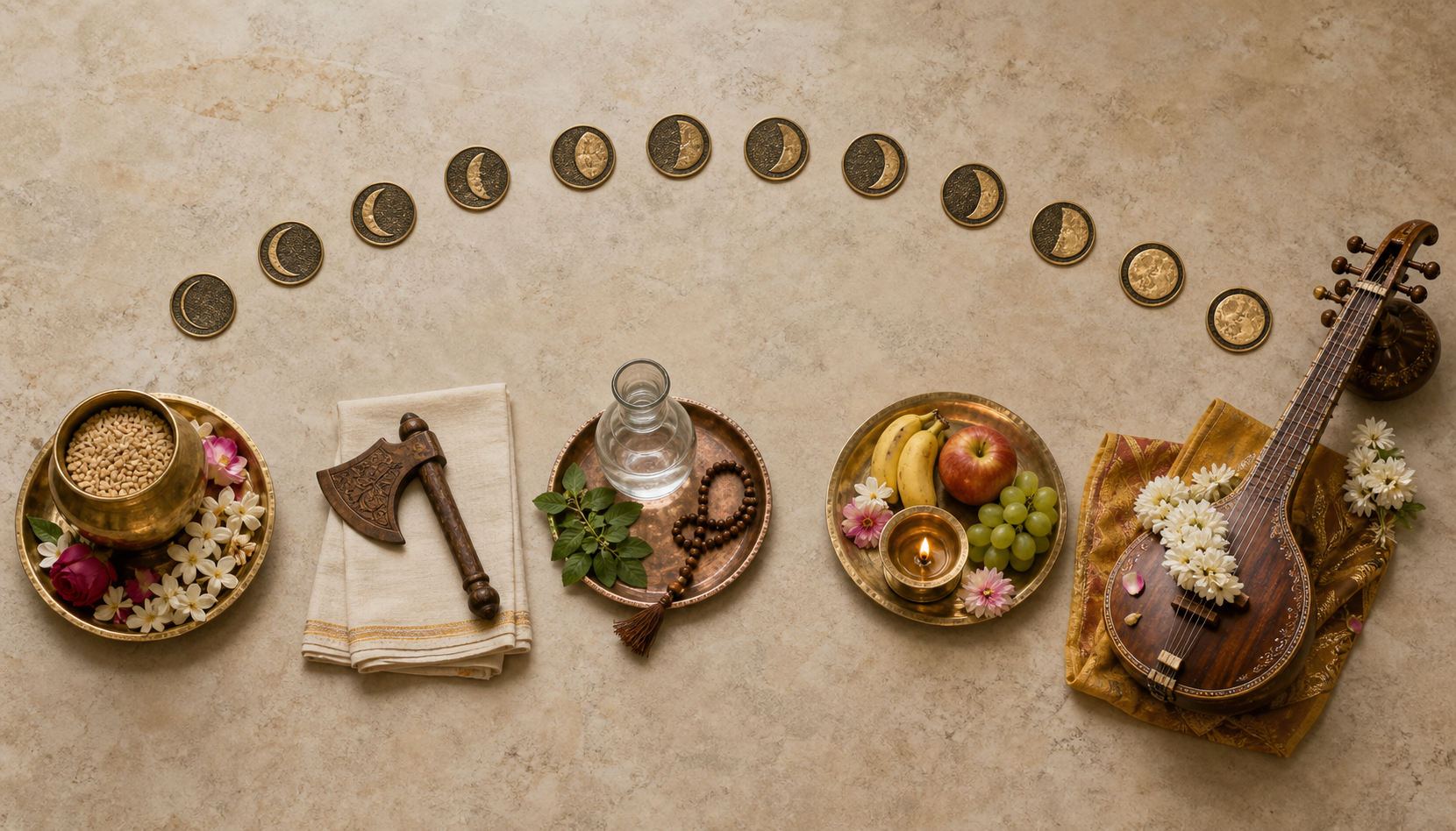
This calendar separates what can be entered now from what must still be checked locally. It is a planning aid, not a substitute for city-specific tithi timings.
| Observance | Lunar marker | 2026 planning entry | What you need to decide |
|---|---|---|---|
| Akshaya Tritiya and Parashurama Jayanti | Vaishakh Shukla Tritiya | Confirm the local civil date before entering it | Schedule this as the Jayanti observance, not as Parashurama Dwadashi |
| Mohini Ekadashi | Vaishakh Shukla Ekadashi | Confirm the local Ekadashi date and Dwadashi parana window | Choose the form of fasting before the vrata begins |
| Parashurama Dwadashi | Vaishakh Shukla Dwadashi | 28 April 2026, subject to local tithi verification | If you kept Mohini Ekadashi, perform parana in its prescribed window and then continue Dwadashi worship |
| Narada Jayanti | Waning Pratipada after the Vaishakha Purnima; Vaishakha bahula Pratipada in amanta and Jyeshtha Krishna Pratipada in purnimanta usage | 2 May 2026, subject to local sunrise and tithi verification | Use your regional month label without treating the alternate label as an error |
Do not force an unverified civil date into the calendar merely to make the list look complete. For Akshaya Tritiya, Parashurama Jayanti, and Mohini Ekadashi, obtain the 2026 date and timings from the local Panchang you will actually use. The known order is more important at the planning stage: Tritiya carries Parashurama Jayanti, Ekadashi carries the Mohini vrata, and the following Dwadashi carries the separate Parashurama Dwadashi observance.
Keep Parashurama Jayanti, Ekadashi, and Dwadashi distinct
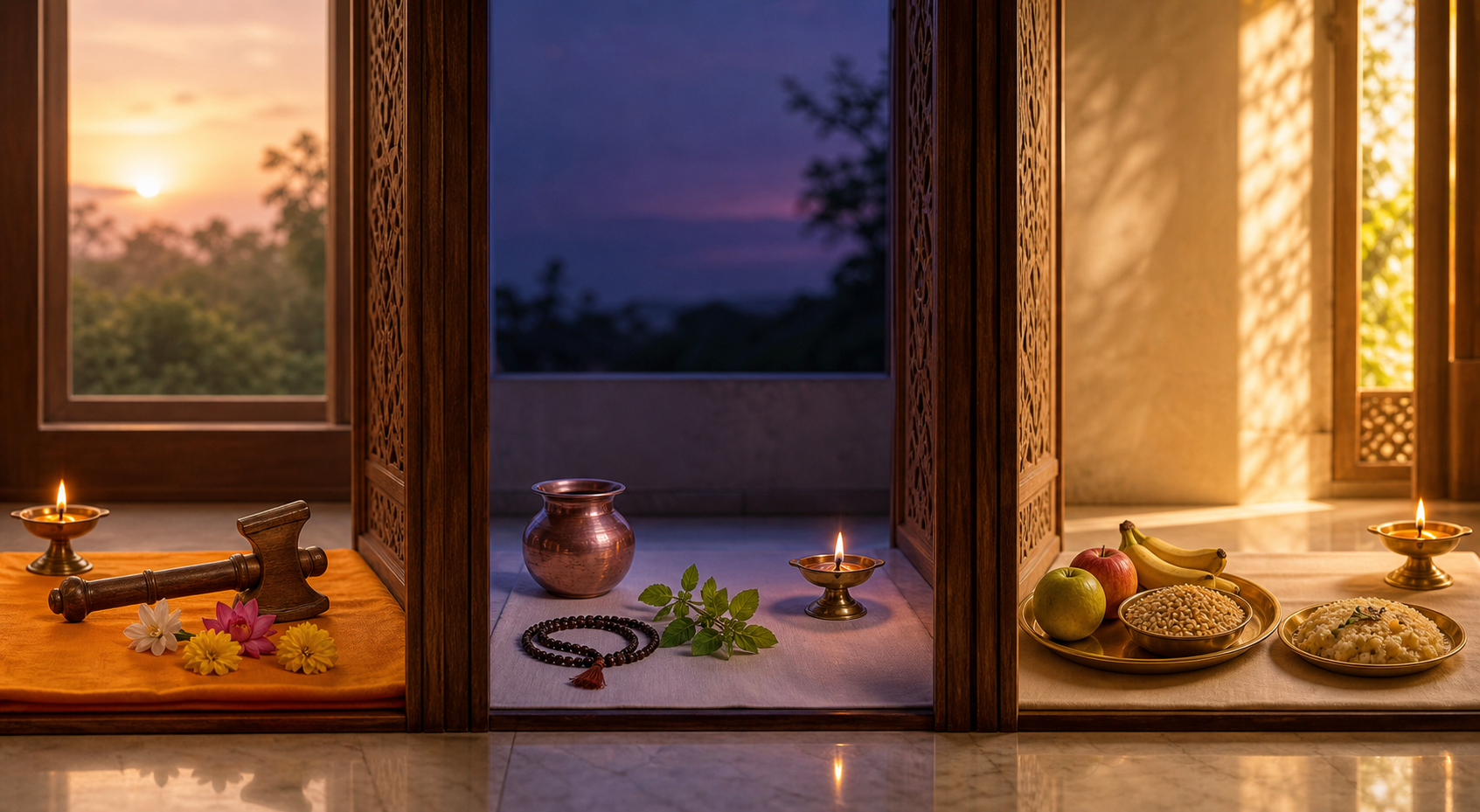
The two Parashurama observances in the bright half of Vaishakha are related by devotion, but they are not interchangeable. Parashurama Jayanti coincides with Vaishakh Shukla Tritiya, associated with Akshaya Tritiya, while Parashurama Dwadashi comes later on Shukla Dwadashi. If your temple or family marks both, create two separate calendar entries and give each a separate sankalpa.
The Dwadashi observance also sits immediately after Mohini Ekadashi. That sequence changes how you plan the fast. A devotee who observed Mohini Ekadashi should not overlook the prescribed Dwadashi parana merely because another vrata is being honored that day. Parana can be completed during the proper Dwadashi period, followed by Parashurama worship and a light sattvic day.
Use this sequence when planning 27-28 April only after your local Panchang confirms the corresponding tithis:
- Before Ekadashi, decide whether you will observe upavasa, phalahar, or another form permitted by your family tradition and capacity.
- Record the local Dwadashi parana window alongside the Ekadashi entry. Do not leave that calculation until the morning after the fast.
- Complete parana at the prescribed time if you observed the Ekadashi fast.
- Begin or continue Parashurama Dwadashi worship with a fresh sankalpa centered on disciplined strength, self-restraint, and righteous action.
- Place the main Dwadashi puja between sunrise and midday when your schedule and local tithi allow. If work prevents that, an evening period of stotra and japa still gives the household a coherent observance.
A vrata should discipline the will, not turn dietary severity into the measure of devotion. People with medical conditions, elders, and expectant mothers should use a partial or symbolic fast when needed and follow appropriate health guidance. The supported alternatives include fruit-based fasting, a light sattvic diet, or worship without a demanding food restriction. The practical test is whether the observance makes you more steady, truthful, and service-minded.
Use a focused home observance instead of an overloaded ritual
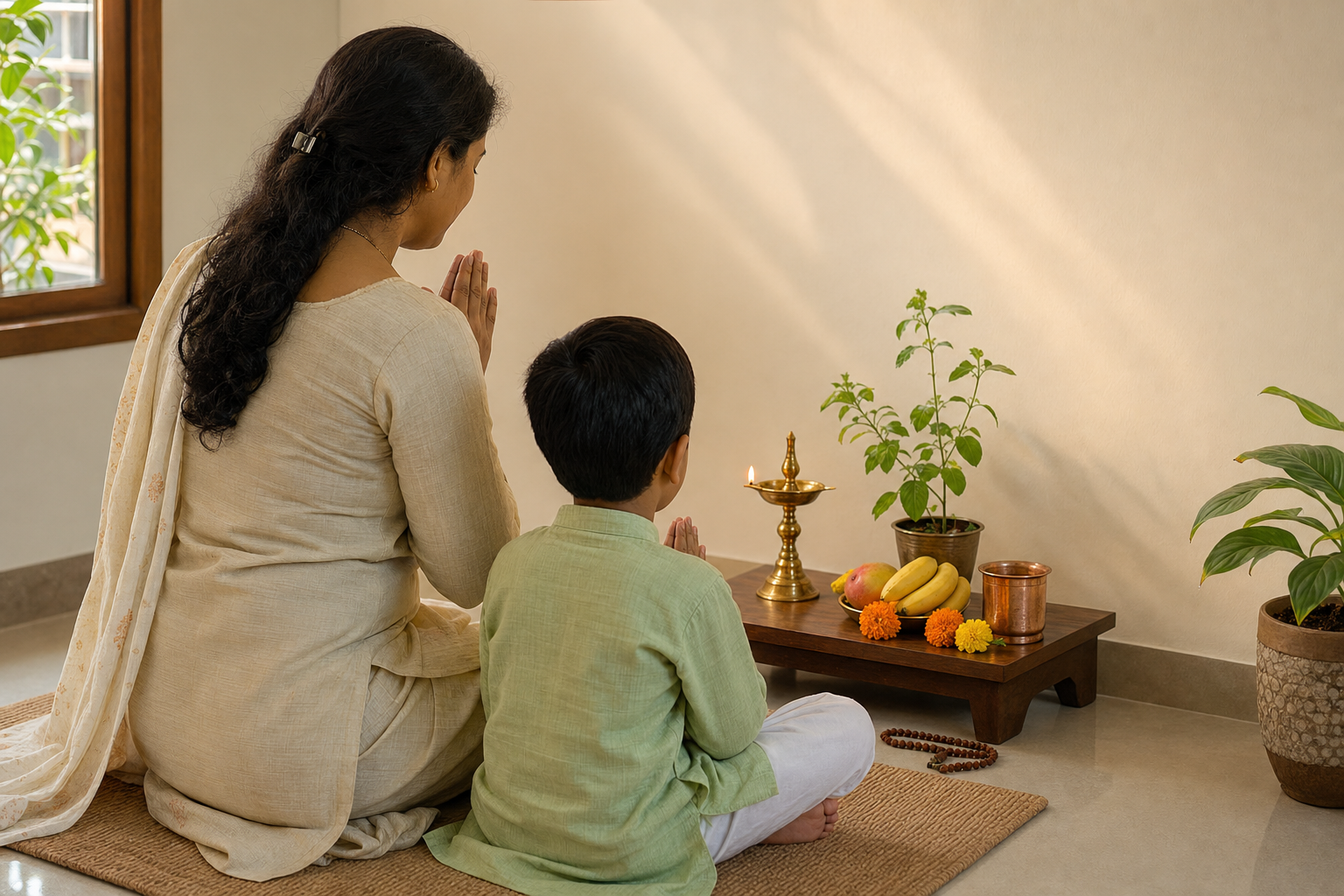
You do not need an elaborate altar or several hours of recitation to keep these vratas meaningfully. Choose one devotional practice, one ethical restraint, and one act of seva for each observance. That structure prevents the day from becoming a collection of hurried offerings with no effect on conduct.
Parashurama Dwadashi: turn strength into guardianship
Lord Parashurama joins brahmana wisdom with kshatra courage. His Dwadashi vrata is therefore well suited to someone confronting anger, responsibility, leadership, or the misuse of power. The aim is not to romanticize force. It is to place personal strength under the authority of dharma.
- After snana, wear clean sattvic clothing and place an image or murti of Parashurama or Vishnu on the altar.
- Make a concise sankalpa: identify one situation in which you will replace anger or domination with firm, accountable action.
- Offer chandan, akshata, flowers, tulasi, a lamp, and suitable naivedya according to household custom.
- Chant Om Parashuramaya Namah. If time permits, add Vishnu Sahasranama or a reading concerning Parashurama’s life and ethical dilemmas.
- Sit in silence after japa and examine where resentment is disguising itself as righteousness. Write down the next dharmic action rather than rehearsing the grievance.
- Complete the vrata through seva. Feeding someone, supporting education or health care, or contributing to environmental care turns the sankalpa toward lokasangraha, the welfare and cohesion of society.
The axe in Parashurama’s iconography should prompt a demanding question: what must be cut away in you before you claim the right to correct anyone else? Pride, uncontrolled anger, and vengeance are the obvious candidates. Courage remains necessary, but courage without restraint reproduces the disorder it claims to oppose.
Narada Jayanti: make speech part of your sadhana
Devarshi Narada is remembered as a celestial seer, devotee of Vishnu, musician, counselor, and transmitter of dharmic wisdom. His veena, Mahati, and the remembrance of Narayana make this Jayanti especially suitable for japa, kirtan, scriptural reading, and a serious audit of speech.
- After snana, clean the altar and light a lamp. Worship Vishnu or Krishna, with reverence to Narada as a guru-like guide.
- Offer gandha, flowers, tulasi, incense, and sattvic naivedya according to your capacity.
- Chant Om Namo Narayanaya. Read a manageable selection from the Narada Bhakti Sutra or Srimad Bhagavatham rather than choosing more material than you can absorb.
- Sing kirtan or listen attentively to devotional music. Let the music support remembrance rather than serve as background noise.
- Review the previous week of communication. Identify one instance each of harsh speech, gossip, exaggeration, or unnecessary argument. Make a specific restraint for the next week.
- Conclude with arati and sattvic prasada. Fruit, milk-based preparations, or pancha-amrita can be used where they suit family custom and individual health.
This speech discipline carries beyond one Hindu festival. It is consonant with careful and non-harming speech in Jain practice, right speech in Buddhism, and the Sikh emphasis on remembrance and kirtan. The useful point for you is immediate: before forwarding, criticizing, or repeating a claim, ask whether it is true, necessary, and expressed without avoidable harm.
Key takeaways for your 2026 plan
- Plan by tithi: a Gregorian date is only a local expression of the lunar observance.
- Use one city-specific Panchang: record tithi spans, sunrise, and parana periods from the place where you will worship.
- Do not merge the Parashurama observances: Jayanti belongs to Vaishakh Shukla Tritiya; Parashurama Dwadashi belongs to Shukla Dwadashi.
- Protect the Ekadashi-Dwadashi handoff: if you keep Mohini Ekadashi, complete parana in its prescribed Dwadashi window before structuring the rest of the day.
- Expect different month labels for Narada Jayanti: 2 May can be Vaishakha bahula Pratipada in amanta usage and Jyeshtha Krishna Pratipada in purnimanta usage.
- Give every vrata a behavioral result: practice disciplined strength on Parashurama Dwadashi and truthful, non-harming speech on Narada Jayanti.
Open your local Panchang now and create the entries before the month becomes busy. Put the tithi and city beside every civil date, add the Mohini Ekadashi parana window to the same calendar entry, and write one sentence of sankalpa beneath each vrata. That small amount of preparation will let you spend the observance in worship instead of resolving calendar confusion.
References
- DharmaRenaissance Blog – Narada Jayanti 2026: Auspicious Date, Rituals, and the Timeless Legacy of Devarshi Narada
- DharmaRenaissance Blog – Parashurama Dwadashi 2026: Date, Puja Vidhi, Fasting Rules, and Deep Significance